
存储涨价周期

Search documents
【点金互动易】存储芯片+AI算力,公司布局3D-DRAM等前沿存储,受益存储涨价周期,NPU算力跨越式提升
财联社· 2026-03-18 01:14
Group 1 - The article emphasizes the importance of timely and professional information interpretation in investment, focusing on extracting investment value from significant events and analyzing industry chain companies [1] - The company is leveraging advancements in storage chips and AI computing power, particularly in 3D-DRAM and NPU capabilities, to build a comprehensive AI technology stack that integrates computing, storage, perception, and execution [1] - The company is also focusing on high-speed copper cables and smart driving technologies, utilizing its core copper cable technology to enhance intelligent cockpit and vehicle network capabilities through advanced research in high-speed connections for intelligent computing centers [1]


存储芯片“估值抢跑”
Xin Lang Cai Jing· 2026-01-28 04:02
Core Viewpoint - The storage chip sector continues to show strong performance, with Puran Co., Ltd. (688766.SH) reaching a record high stock price of 255 yuan, reflecting a single-day increase of 14.75% and a year-to-date increase of over 100% [1][7]. Financial Performance - Puran Co., Ltd. forecasts a net profit of approximately 205 million yuan for 2025, representing a year-on-year decline of 29.89%, while expected revenue is 2.32 billion yuan, an increase of 28.63% [2][8]. - The company anticipates a significant fourth-quarter profit of 146 million yuan, marking a quarter-on-quarter increase of 711.1%, driven by product price increases and the launch of its "Storage+" series [2][3][8]. Market Dynamics - The current price increase in the storage industry is attributed to favorable changes in the supply landscape and a surge in demand from AI servers, high-end smartphones, and PC upgrades [3][5]. - The overall storage chip industry is experiencing heightened capital interest, with several leading companies, including Dongxin Co., Ltd. (688110.SH), Jiangbolong (301308.SZ), and Zhaoyi Innovation (603986.SH), also reaching historical stock price highs [4][10]. Valuation and Expectations - The valuation of Puran Co., Ltd. has significantly outpaced its earnings growth, with a price-to-earnings ratio (PE) of approximately 298 times as of January 27 [4][10]. - The market's high expectations for 2026 performance are evident, with predictions of a 134% year-on-year growth in the global storage industry value, reaching $551.6 billion [5][11]. Future Challenges - The sustainability of high valuations will depend on the actual performance of companies in 2026, particularly the ability to maintain high growth rates following the fourth-quarter surge [5][12]. - Analysts emphasize the importance of identifying companies that can convert cyclical benefits into sustainable growth, focusing on those with technological barriers, customer loyalty, and cost control capabilities [6][12].


存储芯片涨价潮席卷全球,国产半导体设备迎历史性机遇
Di Yi Cai Jing· 2026-01-06 11:53
Core Viewpoint - The global storage chip market is experiencing an unprecedented price surge driven by structural supply-demand imbalances due to the AI boom, with significant price increases expected in DRAM products [1][2][4] Group 1: Market Dynamics - The semiconductor equipment sector in A-shares has seen a strong rally, with leading stocks like Northern Huachuang and Tuojing Technology hitting historical highs as market funds flow in [1] - Samsung Electronics and SK Hynix plan to raise server DRAM prices by 60% to 70% in Q1 2026 compared to Q4 2025, reflecting the ongoing price surge [2][4] - The price of DDR4 16Gb modules has skyrocketed by approximately 1800% over the past year, marking the largest increase in recent memory market history [2] Group 2: Domestic Industry Opportunities - Longxin Technology, a leading domestic storage manufacturer, has had its IPO accepted, aiming to raise 29.5 billion yuan for technological upgrades and R&D, which is expected to drive demand for domestic equipment and materials [1][5] - The domestic storage industry is entering a critical development window as local manufacturers ramp up production in response to the ongoing global storage cycle [4] - The expansion plans of Longxin Technology are anticipated to create significant opportunities for domestic semiconductor equipment suppliers, enhancing the visibility of their performance [5] Group 3: Investment Trends - Capital markets are actively pursuing storage manufacturers, with Samsung's stock rising over 15% in January and more than 160% since 2025, while SK Hynix has increased by over 11% [2][3] - The domestic semiconductor equipment and materials sector is expected to benefit directly from the high utilization rates and ongoing expansion plans of local storage manufacturers [3] - The investment in domestic equipment and materials is seen as a structural opportunity driven by the demand for high-end storage products like HBM [5]
江波龙(301308):首次覆盖报告:国产存储模组龙头迎来涨价周期
Shanghai Aijian Securities· 2025-12-31 11:40
Investment Rating - The report initiates coverage on Jiangbolong (301308.SZ) with a "Buy" rating [7]. Core Insights - Jiangbolong is the largest comprehensive storage module manufacturer in China, offering products that cover NAND Flash and DRAM storage, targeting consumer, enterprise, and industrial applications [7]. - The company is expected to benefit from a price increase cycle in the storage market, driven by major players like Micron, Samsung, and SK Hynix raising their product prices by 20%-30% and 5%-10% respectively [7]. - The report highlights a dual demand pull from both the smartphone market, particularly driven by iPhone upgrades, and the server market, which is experiencing growth in HBM (High Bandwidth Memory) [7]. Financial Data and Profit Forecast - Revenue projections for Jiangbolong are as follows: - 2025E: 239.95 billion CNY - 2026E: 306.18 billion CNY - 2027E: 381.50 billion CNY - Corresponding year-on-year growth rates are 37.4%, 27.6%, and 24.6% respectively [7]. - The forecasted net profit for the same years is: - 2025E: 11.69 billion CNY - 2026E: 21.01 billion CNY - 2027E: 22.53 billion CNY - Year-on-year growth rates are 134.4%, 79.8%, and 7.2% respectively [7]. - The report anticipates an improvement in gross margin from 19.0% in 2024 to 20.2% in 2027 due to optimized product structure [7]. Market Dynamics - The global HBM market is projected to grow from 5.61 billion USD in 2024 to 57.09 billion USD by 2034, with a compound annual growth rate (CAGR) of 26.1% [7]. - The report emphasizes that the storage price increase is expected to be sustained beyond market expectations due to the simultaneous demand from smartphones and servers [7].
史上最强存储上涨周期?瑞银:预计DDR季度环比上涨35%,NAND短缺至少到明年Q3
Hua Er Jie Jian Wen· 2025-12-11 05:56
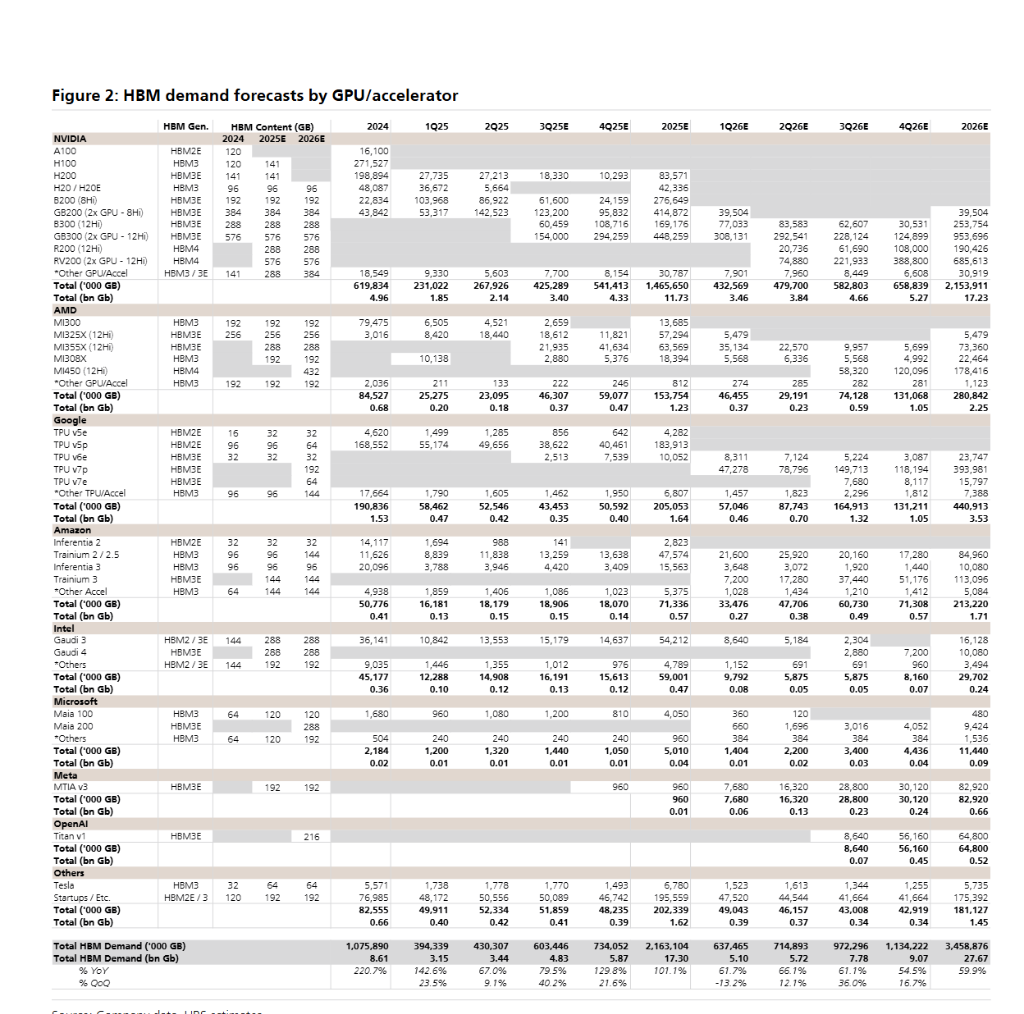
Core Insights - The storage industry is experiencing unprecedented supply-demand tension, with DRAM shortages expected to last until Q1 2027 and NAND shortages until Q3 2026, driven by a significant increase in demand, particularly from AI servers [1][2][6]. Group 1: Supply and Demand Dynamics - DRAM demand is projected to grow by 20.7%, significantly outpacing supply growth of 18.6% [2]. - The supply of DDR contracts is expected to rise by 35% quarter-over-quarter in Q4 2023, with NAND prices increasing by 20% [1]. - Customers are actively securing long-term supply agreements, with major cloud service providers extending pre-purchase orders to 2028 [1][7]. Group 2: Market Trends and Pricing - The current price increases are attributed to genuine demand rather than speculative hoarding, as inventory levels remain low across various customer segments [7]. - Server DDR inventory is approximately 11 weeks, while PC and mobile DRAM inventories are around 9 weeks, and SSD inventories are at 8 weeks [7]. - The HBM (High Bandwidth Memory) market is expected to see a 59.9% year-over-year increase in demand by 2026, reaching 276.7 billion Gb [2]. Group 3: Competitive Landscape - SK Hynix is anticipated to maintain a dominant position in the HBM4 market, expected to capture about 70% of the market share [9]. - UBS has raised target prices for major storage manufacturers, including SK Hynix and Samsung, reflecting positive market sentiment [9].
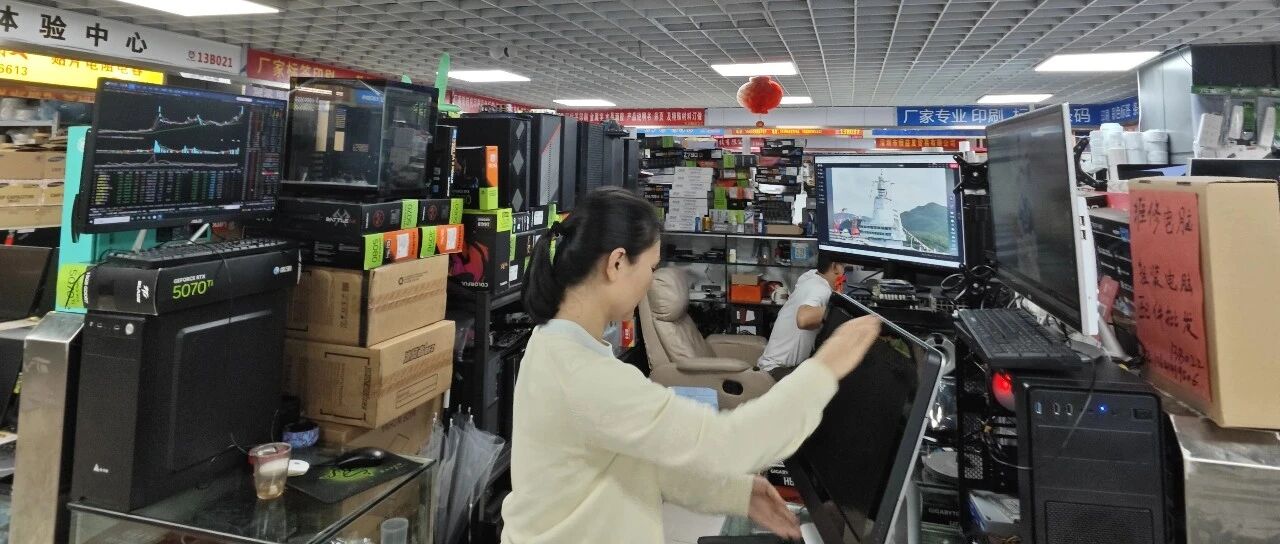
实探华强北丨“一天几个价”!内存条炒成“黑金条”
证券时报· 2025-11-14 00:19
Core Viewpoint - The article discusses the significant price increase of storage products, with some prices doubling or even tripling since April 2023, driven by supply shortages and rising demand, particularly from the AI sector [1][2][10]. Price Trends - Various storage products have seen dramatic price increases, with some memory modules rising from around 1,000 yuan to 4,200 yuan, marking a threefold increase [4]. - The price of 16GB DDR4 memory modules has more than doubled from under 200 yuan to over 400 yuan since the beginning of the year [6]. Market Dynamics - The surge in storage prices is attributed to a supply-demand imbalance, primarily influenced by the expansion of AI data centers, which has significantly increased the demand for storage chips [10]. - Major tech companies like Alibaba and Microsoft are investing heavily in AI infrastructure, further driving demand for high-capacity storage solutions [10]. Impact on Consumer Electronics - The rising costs of storage components are affecting the prices of consumer electronics, leading to a noticeable decline in orders for assembled computers and increased prices for new smartphones [13]. - For instance, the price difference for the Redmi K90 series smartphones has increased by 600 yuan due to rising storage costs, prompting manufacturers to either raise prices or reduce storage configurations [13]. Opportunities for Domestic Manufacturers - The current shortage in the storage market presents a valuable opportunity for domestic manufacturers to capture market share as global competitors reduce their presence [14]. - The low domestic market penetration of NAND and DRAM products indicates potential growth for local firms through technological advancements and product iterations [14].
涨幅高达50%,闪存龙头最新合约价暴涨
3 6 Ke· 2025-11-10 09:55
Group 1 - The storage industry is experiencing significant price increases, with SanDisk raising NAND flash contract prices by 50% in November, marking at least the third price hike this year [2] - The demand for AI data centers is surging, coupled with limited wafer supply, leading to a widening supply-demand gap in the storage sector [1][2] - NAND flash market demand is expected to exceed supply capabilities, with projections indicating that data centers will become the largest demand source for NAND flash by 2026 [2][3] Group 2 - The current storage shortage is described as the most severe in 30 years, driven by AI demand and increasing SSD requirements [3] - TrendForce reports that NAND flash spot prices are rising significantly due to the release of high contract prices, while suppliers are holding back inventory in anticipation of further price increases [3][4] - Major DRAM manufacturers, including Samsung, have paused contract pricing, leading to a 25% surge in DDR5 spot prices within a week [4]
半导体10月投资策略::AI链国产化能力日益增强,存储涨价周期明确
Guoxin Securities· 2025-10-12 12:20
Core Insights - The report maintains an "outperform" rating for the semiconductor sector, highlighting the increasing domestic capabilities in the AI supply chain and a clear price increase cycle in storage [1][6]. Market Review - In September 2025, the SW semiconductor index rose by 14.07%, outperforming the electronic industry by 3.10 percentage points and the CSI 300 index by 10.86 percentage points [3][13]. - The semiconductor equipment sector saw the highest increase at +27.82%, followed by semiconductor materials at +14.72% [3][19]. - The current price-to-earnings (PE) ratio for the SW semiconductor index is 118.97x, placing it in the 91.58 percentile since 2019 [3][23]. Industry Data Update - Global semiconductor sales reached $64.88 billion in August 2025, marking a year-on-year increase of 21.7% and a quarter-on-quarter increase of 4.4% [5][40]. - The sales in China were $17.63 billion, with a year-on-year growth of 12.4% [5][41]. - The prices of DRAM and NAND Flash have continued to rise, with forecasts indicating a quarter-on-quarter increase of 13%-18% for DRAM and 5%-10% for NAND Flash in Q4 2025 [5][47]. Investment Strategy - The report emphasizes the strengthening of domestic AI chip manufacturers, recommending companies such as Cambrian, Aojie Technology, and others in the AI supply chain [6][7]. - The storage chip market is in a price increase cycle, with recommendations for domestic storage manufacturers like Jiangbolong and Demingli [6][7]. - The Ministry of Commerce's anti-dumping investigation into imported analog chips from the U.S. is expected to improve price competition and accelerate domestic substitution, with recommendations for companies like Sanbang Technology and Jiewa Technology [6][7]. Fund Holdings Analysis - In Q2 2025, the proportion of semiconductor holdings in active funds was 10.1%, with a market value of 252.7 billion yuan [4][30]. - The top five semiconductor heavyweights accounted for 37.1% of the holdings, slightly down from 37.9% in the previous quarter [4][37]. Key Company Earnings Forecasts - SMIC is projected to have a net profit of 57.6 billion yuan in 2025, with a PE ratio of 149 [7]. - Huahong Semiconductor is expected to achieve a net profit of 9 billion yuan in 2025, with a PE ratio of 211 [7].
无惧回调!超2亿元逆势冲入芯片ETF,科创半导体ETF近10日“吸金”17亿元
Ge Long Hui A P P· 2025-10-10 02:20
Core Viewpoint - The semiconductor sector in A-shares experienced a significant decline, with major stocks like Baiwei Storage and SMIC dropping over 10% and 6% respectively, despite a net inflow of 252 million yuan into semiconductor ETFs, indicating a mixed market sentiment [1]. Group 1: Market Performance - A-shares opened lower and the semiconductor sector saw a broad retreat, with Baiwei Storage down 10%, Jinghe Integration down over 9%, and SMIC down over 6% [1]. - The Kweichow Moutai ETF and chip ETFs both fell by more than 3%, but there was a notable net buying of 252 million yuan in chip ETFs during the day [1]. - In the past five days, the Kweichow Moutai ETF saw a net inflow of 537 million yuan, while the chip ETF had a net inflow of 649 million yuan over the last ten days [1]. Group 2: Industry Dynamics - The current demand for storage chips is primarily driven by large tech companies' infrastructure needs in the AI era, suggesting a stronger sustainability of demand [1]. - According to Debon Securities, the storage industry is expected to maintain high prosperity in Q3 due to the ongoing strong demand from AI servers and data centers [1]. Group 3: ETF Performance - The largest chip industry ETF, Chip ETF (159995), fell by 3.91%, covering the entire industry chain including leading companies like SMIC and Cambrian [2]. - The "semiconductor content over 50%" Kweichow Moutai ETF (588000) decreased by 3.77%, with key stocks including SMIC and Cambrian [2]. - The Kweichow Semiconductor ETF (588170), focusing on domestic replacement equipment and materials, dropped by 2.69%, including stocks like AMEC and Huahai Qingke [2].

三年锁定期届满,江波龙(301308.SZ)控股股东等自愿承诺不减持,市场吃下定心丸
Xin Lang Cai Jing· 2025-07-31 04:12
Core Viewpoint - The announcement of the lifting of the lock-up period for 300 million shares of Jiangbolong (accounting for 71.57% of total shares) on August 5 is expected to have limited liquidity impact, as the controlling shareholder and executives have committed not to reduce their holdings for 12 months, enhancing market confidence in the company's future development and investment value [1][2][3] Group 1: Share Lock-up and Market Impact - The actual share reduction from the original 300 million shares to 119 million shares significantly alleviates market concerns about concentrated lock-up releases, with the proportion of shares available for reduction dropping from 71.57% to 28.30% [2] - The employee shareholding platform, holding 16.53% of shares (0.69 million shares), will also adhere to strict reduction protocols, further decreasing the actual available shares for reduction by 57.98% [2] Group 2: Company Performance and Strategy - Jiangbolong is advancing its business layout in high-end, overseas, and brand sectors, aiming to establish itself as a competitive global semiconductor storage brand, achieving significant breakthroughs in enterprise-level storage and high-end consumer storage [4][5] - In 2023, Jiangbolong achieved revenue of 10.125 billion yuan, marking its first time surpassing the 10 billion yuan threshold, with a projected revenue of 17.464 billion yuan in 2024, reflecting a year-on-year growth of 72.48% [5] - The company has introduced innovative business models such as PTM (Product Technology Manufacturing) and TCM (Technology Contract Manufacturing), enhancing its market position and operational capabilities [5][6] Group 3: Market Trends and Future Outlook - The storage chip industry is currently experiencing a dual drive of technological innovation and demand recovery, with expectations for continued revenue growth due to rising prices and increased orders in the mid-to-high-end segment [6] - Jiangbolong is positioned to benefit from margin elasticity and the growth of mid-to-high-end orders in the short term, while long-term prospects include enhancing profitability and industry leadership through self-developed main control chips and innovative business models [6]