循环投资

Search documents
刚刚,深圳带头:全面放宽返投
投资界· 2026-03-27 06:02
Core Viewpoint - Shenzhen has officially released the "Shenzhen Angel Investment Guidance Fund Application Guidelines and Selection Method (2026 Edition)", which significantly relaxes the return investment constraints and removes the mandatory local registration requirement for fund managers, marking a pioneering exploration in the venture capital industry for 2026 [2][3]. Group 1: Policy Changes - The cancellation of return investment requirements for early-stage investments is a bold move by Shenzhen, which previously mandated that sub-funds invest a minimum of 1.75 times the amount contributed by the angel fund in local registered enterprises [3]. - The Shenzhen Angel Fund aims to address long-standing marketization issues by ensuring that government funds act as guides rather than leaders in the investment process [4][5]. - The new guidelines are expected to influence other regions, as many local state-owned capital institutions are already studying Shenzhen's new approach [2][4]. Group 2: Investment Strategy - The Shenzhen Angel Fund is exploring a "post-benefit" model, where sub-funds can attract invested companies to develop in Shenzhen and receive rewards based on meeting specific standards, transforming mandatory return investments into positive incentives [6]. - Shenzhen is also developing a "continuity investment" system, where local state-owned capital collaborates with market-oriented institutions to provide follow-up support for projects after initial seed and angel investments [7]. Group 3: Long-term Vision - The concept of "patient capital" is being emphasized, aiming to create a sustainable investment environment that encourages social capital to invest in the venture capital industry and achieve continuous returns [9]. - Shenzhen is moving towards a closed-loop model of "fiscal input - venture capital - technological innovation - industrial growth - capital return", which allows for ongoing operations of government guidance funds rather than one-time financial support [10][11]. Group 4: National Impact - As a "reform test bed" for China's venture capital, Shenzhen's innovative measures are expected to serve as a national benchmark, with the goal of nurturing excellent enterprises across the country rather than fostering regional competition [14].


英伟达(NVDA.US)再掷20亿美元加码Nebius(NBIS.US),“循环投资”泡沫争议再添一环
智通财经网· 2026-03-11 12:44
Core Insights - Nvidia (NVDA.US) is investing $2 billion in Nebius (NBIS.US) as part of a strategic partnership to develop and build AI data centers [1] - The partnership aims to deploy over 5 gigawatts (GW) of Nvidia systems by the end of 2030, enough to power approximately 3.8 million households [1] - Nvidia is leveraging its substantial resources to fund the expansion of AI infrastructure, primarily based on its designed chips, which has raised concerns about potential market bubbles [1] Company Background - Nebius was previously a Dutch holding company of Russian internet giant Yandex and rebranded after selling its Russian business for $5.2 billion in 2024 [2] - Following the initial investment, Nvidia held approximately $33 million worth of shares in Nebius by the end of 2024 [2] Partnership Details - The collaboration will build on Nebius's existing use of Nvidia infrastructure and support the early adoption of the latest generation of chips [1] - Both companies will jointly design, build, and manage AI data centers, enabling Nebius to create infrastructure tailored for "inference," the process of running services after AI model training [1]


深夜英特尔狂飙11%,美股贵金属股重挫,中概股普跌,加密货币超12万人爆仓
2 1 Shi Ji Jing Ji Bao Dao· 2026-01-07 15:56
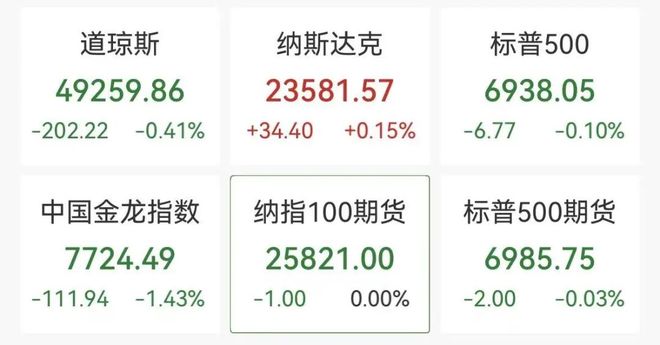
Market Overview - The U.S. stock market opened mixed on January 7, with the Dow Jones down 0.41%, the S&P 500 down 0.1%, and the Nasdaq up 0.15% [1][2]. Major Indices Performance - Dow Jones Index: 49,259.86, down 202.22 points (-0.41%) - S&P 500 Index: 6,938.05, down 6.77 points (-0.10%) - Nasdaq Composite: 23,581.57, up 34.40 points (+0.15%) [2]. Technology Sector Highlights - Intel shares surged over 11%, marking its largest increase since September 18, following the launch of its next-generation PC platform processor, Core Ultra3, at CES [2][3]. - Nvidia rose over 2%, while Google and Microsoft increased by over 1%. Facebook saw a decline of over 2% [2][3]. Chinese Stocks Performance - The Nasdaq Golden Dragon China Index fell by 1.43%. Notable declines included: - Manbang Group down over 7% - Hesai Technology down nearly 4% - NetEase down over 3% - JD.com and Alibaba down over 2% - Conversely, Huya rose over 4%, and iQIYI increased by over 1% [2][3]. Commodity Market - Gold and silver stocks experienced significant declines, with Hecla Mining down 10% and Pan American Silver down over 7%. Spot gold fell over 1% to around $4,440, while spot silver dropped over 6% below $77 [4]. Oil Market - Both U.S. and Brent crude oil prices declined [5]. Cryptocurrency Market - Major cryptocurrencies collectively fell, with Bitcoin down nearly 3% to $91,260. Over 120,000 traders faced liquidation in the past 24 hours [7][8]. Stock Market Outlook - Morgan Stanley's chief U.S. equity strategist predicts continued growth in the U.S. stock market driven by earnings, regulatory easing, and AI applications, with a projected earnings growth rate of nearly 14% for 2026 [10]. - Concerns remain regarding high valuations and capital intensity among large tech companies, prompting some analysts to adopt a more cautious stance [10]. - The founder of Bridgewater Associates warned that the AI-driven surge in tech stocks may be in the "early stages of a bubble" [10]. AI Sector Investment - In 2025, the S&P 500 rose by 16%, with significant contributions from Nvidia, Alphabet, Broadcom, and Microsoft. However, there are growing concerns about the return on investment from the substantial capital expenditures in AI, projected to increase by 34% to approximately $440 billion [11].

深夜英特尔狂飙11%,美股贵金属股重挫,中概股普跌,加密货币超12万人爆仓
21世纪经济报道· 2026-01-07 15:47
Market Overview - Major U.S. stock indices showed mixed performance, with the Dow Jones down by 202.22 points (-0.41%) to 49,259.86, while the Nasdaq gained 34.40 points (+0.15%) to 23,581.57, and the S&P 500 fell by 6.77 points (-0.10%) to 6,938.05 [1] - The Nasdaq Golden Dragon Index, which tracks Chinese stocks, decreased by 1.43% to 7,724.49 [2] Technology Sector Performance - Intel saw a significant increase of over 11%, marking its largest gain since September 18, following the launch of its next-generation PC platform processor, Core Ultra3, at CES [1] - Other major tech stocks also experienced gains, with Nvidia up over 2%, Google and Microsoft each rising over 1%, while Facebook declined over 2% [1][2] Chinese Stocks - The majority of Chinese stocks listed in the U.S. experienced declines, with notable drops including Mabang Group down over 7%, Hesai Technology down nearly 4%, and NetEase down over 3% [2] Precious Metals - Gold and silver stocks faced significant declines, with Hecla Mining dropping 10%, Pan American Silver down over 7%, and Harmony Gold down over 5% [3] - Spot gold fell over 1%, approaching the $4,440 mark, while spot silver dropped over 6%, falling below $77 [3] Oil Market - Both U.S. and Brent crude oil prices experienced declines [4] Cryptocurrency Market - Major cryptocurrencies saw collective declines, with Bitcoin dropping nearly 3% to $91,260, and over 120,000 traders liquidated positions in the past 24 hours [7][8] Stock Market Outlook - Morgan Stanley's chief U.S. equity strategist predicts continued growth in the U.S. stock market driven by earnings, regulatory easing, and AI applications, with expected earnings growth of nearly 14% in 2026 [10] - Concerns remain regarding high valuations and capital intensity among large tech companies, prompting some analysts to adopt a more cautious stance [10] AI Sector Insights - Bridgewater's founder warns that the AI-driven surge in tech stocks may be in the "early bubble stage," with significant capital expenditures expected from major companies in the AI sector [11] - The anticipated capital spending in AI by Microsoft, Alphabet, Amazon, and Meta is projected to grow by 34%, totaling around $440 billion [11]





2026美股展望:AI泡沫的内部熔点与外部拐点
智通财经网· 2025-12-13 01:35
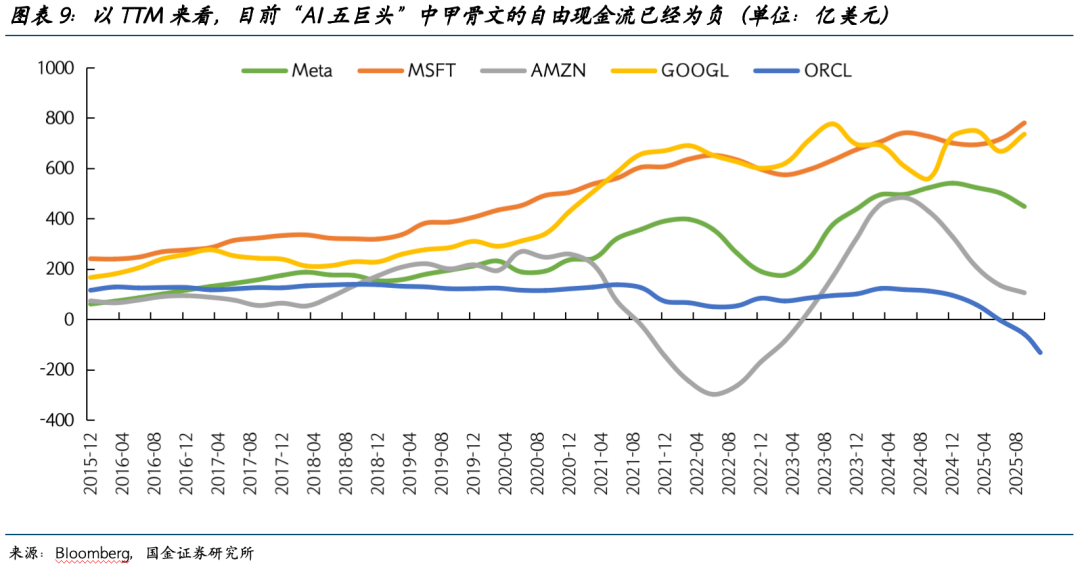
Core Viewpoint - The U.S. stock market in 2025 faced significant challenges from tariff impacts, fiscal shifts, and industrial trends, yet demonstrated resilience post-shock, particularly with the influence of AI investments and favorable monetary policies [1][2]. Group 1: AI Investment and Market Dynamics - The scale and concentration of AI investments today far exceed those during the 2000 tech bubble, indicating that issues with major AI companies could have catastrophic effects on the financial and tech ecosystems [2]. - The current AI investment landscape is characterized by a consensus among market participants, with various stakeholders motivated to inflate the bubble, including tech firms, financial institutions, and media [3]. - The potential bursting of the AI bubble could create a fertile ground for new innovations, similar to the aftermath of the 2000 internet bubble, where excess infrastructure became affordable for future growth [3][4]. Group 2: Industry Structure and Profitability - The AI industry is segmented into three layers: chip manufacturers, cloud service providers, and model developers, with profitability and cash flow varying significantly across these segments [5][7]. - Chip manufacturers, exemplified by Nvidia, are currently enjoying high profitability due to strong demand for AI chips, while cloud service providers like Amazon and Microsoft have established resilient business models [7]. - Model developers face intense competition and higher costs, with companies like OpenAI incurring substantial R&D expenses, leading to a notable disparity in profitability across the AI value chain [7][8]. Group 3: Financial Health and Capital Expenditure - The capital expenditure of major AI firms has surged, with the top five AI companies collectively spending $105.77 billion in Q3 2025, a 72.9% increase year-over-year, raising concerns about cash flow sustainability [9]. - The average capital expenditure to cash flow ratio for these firms reached 75.2%, indicating a significant strain on financial health as they continue to invest heavily in AI [9][12]. - Companies like Oracle are facing challenges with negative free cash flow, relying on external financing to support their capital expenditures [9][13]. Group 4: Risks from Financing Structures - The reliance on off-balance-sheet financing and complex investment structures among tech giants poses significant risks, as these methods can obscure true financial health and lead to systemic vulnerabilities [16][17]. - Historical precedents suggest that such opaque financing practices can lead to major financial crises, raising concerns about the potential for similar outcomes in the current AI investment landscape [18]. Group 5: Political and Economic Influences - Political uncertainty, particularly surrounding the upcoming elections, is expected to impact liquidity and market sentiment, potentially exacerbating vulnerabilities in the AI narrative [19][21]. - The interplay between political decisions and monetary policy will be crucial in shaping the future of AI investments and the broader stock market, with potential implications for economic stability [20][21].

每天都有重磅AI大交易,高盛交易员:市场已经明显“疲了”
美股IPO· 2025-10-29 07:37
Core Insights - The market is showing signs of fatigue regarding the AI trading frenzy, despite significant stock price increases for companies like Nvidia and Microsoft [3][9] - Concerns about "circular investment" are emerging, indicating skepticism about the sustainability of revenue and the authenticity of demand within the AI ecosystem [9][10] - The S&P 500 index reached a historical high, but 398 constituent stocks declined, marking a record for the number of declining stocks at such a peak [3][10] Group 1: Market Performance - Nvidia's market capitalization surged by $245 billion in a single day, driven by over 15 major collaborations announced on October 28 [3][5] - Microsoft also saw a significant increase in market value, adding $80 billion following its partnership announcements with OpenAI [3][9] - The Nasdaq 100 and Philadelphia Semiconductor Index both reached all-time highs, reflecting the concentrated gains among a few AI-related giants [3][9] Group 2: Major Collaborations - Nvidia announced a $1 billion equity investment in Nokia, resulting in a 23% increase in Nokia's stock price and a $10 billion rise in its market capitalization [5][6] - Other companies collaborating with Nvidia include Uber, Eli Lilly, Super Micro, and Palantir, among others, indicating a broad interest in AI applications across various sectors [7][8] - PayPal's partnership with OpenAI to expand payment functionalities in ChatGPT led to a 4% increase in its stock price, adding $3 billion to its market cap [6] Group 3: Market Skepticism - Despite the positive stock performance, market participants are increasingly skeptical about the sustainability of these gains, with "circular investment" being a primary concern [9][10] - Nvidia's CEO Jensen Huang attempted to dispel fears of an AI bubble by highlighting $500 billion in revenue visibility through upcoming product lines, but this did not fully alleviate market doubts [10] - The divergence between the equal-weighted S&P 500 index and the market-cap weighted index indicates a significant concentration of gains among a few AI leaders, raising concerns about overall market health [10]

关税不确定性仍存,全球市场何去何从?
第一财经· 2025-10-26 09:08
Core Viewpoint - The article discusses the current state of global liquidity and market volatility, particularly focusing on the U.S. stock market and its implications for international investors regarding the Chinese bull market outlook [2][3]. Market Outlook - The S&P 500 index has been fluctuating around 6700 points, with potential for a 10% to 15% correction if trade tensions do not ease in the coming weeks [3][5]. - Morgan Stanley's chief U.S. equity strategist, Michael Wilson, indicates that the market sentiment is currently characterized by a "wait-and-see" approach, with high investor confidence in a "phase balance" despite the risks [5][6]. AI Investment Risks - Recent corrections in AI-related stocks like Nvidia and Oracle have raised concerns about the potential risks associated with "circular investments" in the tech sector [8]. - Morgan Stanley's research suggests that while the U.S. leads in AI infrastructure, the high customer concentration could amplify payment risks and revenue growth uncertainties [8][12]. Earnings Expectations - The overall earnings outlook for the S&P 500 remains optimistic, with projected year-over-year EPS growth of 8% and sales growth of 4% for Q3 [9]. - The "Magnificent 7" tech stocks are expected to see a 24% increase in net profit year-over-year, contrasting with a mere 2% growth for the broader S&P 493 index [9]. Chinese Market Sentiment - Chinese stocks have gained renewed interest from international investors, with a focus on sectors like robotics, biopharmaceuticals, and electric vehicles [11]. - Despite recent trade tensions, confidence in China's tech innovation remains strong, although investors are advised to be cautious and avoid "bottom fishing" due to low market tolerance [11][12]. Investment Strategy - Morgan Stanley recommends focusing on high-quality stocks and avoiding small-cap stocks with rapid valuation expansion and low earnings certainty [12]. - The firm has shifted its recommendation from Hong Kong stocks to A-shares, anticipating that A-shares will outperform due to their relative resilience to external shocks [11][12].

关税不确定性仍存,全球市场何去何从?|华尔街观察
Di Yi Cai Jing· 2025-10-26 07:30
Group 1: Market Sentiment and Trends - Investor interest in the Chinese stock market is at its highest in recent years, as reported by multiple Wall Street investment banks during overseas roadshows [1] - The S&P 500 index has been experiencing a correction, with potential declines of 10% to 15% if trade tensions do not ease in the coming weeks [2][3] - Morgan Stanley's chief China equity strategist suggests that A-shares may outperform Hong Kong stocks if external uncertainties persist [1][6] Group 2: AI and Technology Sector Insights - The recent pullback in AI-related stocks, such as Nvidia and Oracle, has raised concerns about potential risks in the "circular investment" model within the tech sector [4] - Despite the pullback, the overall sentiment in the U.S. tech industry remains positive, with expectations for significant capital expenditure driving capacity and infrastructure upgrades [4][5] - The "Magnificent Seven" tech stocks are projected to see a 24% year-over-year increase in net profits for Q3, while the broader S&P 493 index is expected to grow only 2% [5] Group 3: Investment Strategies and Recommendations - Morgan Stanley recommends focusing on high-quality stocks and avoiding small-cap stocks with rapid valuation expansion and low earnings certainty [1][6] - The firm has shifted its investment strategy from Hong Kong stocks to A-shares, anticipating that A-shares will be less affected by external shocks [6] - The current market environment suggests a cautious approach, with investors advised to wait for uncertainties to resolve before making aggressive moves [6]
“看,皇帝没穿衣服”!对冲基金经理:万亿美元的AI投入,赚得回来吗?
华尔街见闻· 2025-10-16 13:36
Core Viewpoint - The podcast discusses the significant investment gap in AI data center construction, estimating that achieving a 10% capital return requires $1-2 trillion in revenue, while good returns may necessitate $3-4 trillion in revenue, highlighting the unsustainable nature of current AI business models [1][10][19]. Investment and Revenue Projections - AI data center construction is projected to require investments in the range of trillions, with $400 billion expected to be spent this year alone [7][10]. - To break even, approximately $500 billion in revenue is needed, indicating a need for a 30-fold increase in revenue to achieve profitability [10][19]. - The current AI industry revenue is estimated at $15-20 billion, which is insufficient to support the projected costs of data center construction [10][19]. AI Business Model Flaws - The AI business models, such as those of ChatGPT and similar platforms, are criticized for their high substitutability and lack of customer loyalty, leading to price wars that could reduce profit margins to just above energy costs [1][10][15]. - The rapid advancement of large language models (LLMs) means that free versions will remain sufficiently effective, discouraging users from paying for premium services [1][14]. Comparison to Historical Bubbles - The current AI investment landscape is likened to the telecom bubble of 2000, where companies created fictitious revenues through financing schemes, suggesting a potential repeat of history with significant losses for investors [2][24]. - The cyclical nature of investments in AI is highlighted, with the potential for repeated failures as companies continuously pour money into projects without clear paths to profitability [19][24]. Market Dynamics and Competition - The competitive landscape is characterized by a race to the bottom in pricing, where companies undercut each other to attract users, ultimately leading to unsustainable business practices [15][17]. - The discussion includes concerns about the long-term viability of major players like Microsoft and Meta, who may face significant write-offs as they invest heavily in AI infrastructure [19][24]. Infrastructure and Investment Strategies - There is a trend of purchasing land for data center construction, reminiscent of the housing market speculation prior to the 2008 financial crisis, indicating a speculative bubble in AI infrastructure [2][41]. - The reliance on private equity and venture capital to fund these investments raises questions about the sustainability and valuation of AI-related assets [2][19].

“看,皇帝没穿衣服”!对冲基金经理:万亿美元的AI投入,赚得回来吗?
美股IPO· 2025-10-15 12:32
Core Viewpoint - The investment return gap in AI data center construction is significant, requiring trillions of dollars in investment over the next 3-5 years, with a comparison to the U.S. Department of Defense's annual budget of $1 trillion [1][2][4] Investment Requirements - To achieve a 10% capital return, AI data centers need $1-2 trillion in revenue, while good returns may require $3-4 trillion [2][4][9] - The current AI industry revenue is estimated at $15-20 billion, indicating a need for 30-fold growth to break even [10][11] AI Business Model Flaws - AI models like ChatGPT and Claude are highly substitutable, leading to low user loyalty and intense price competition, potentially reducing profits to just above energy costs [2][4][17] - The rapid advancement of large language models (LLMs) means free versions will remain sufficient for users, limiting the willingness to pay for premium services [14][15] Circular Investment Concerns - The concept of "circular investment" is likened to the telecom bubble of 2000, where companies like Lucent and Nortel created false revenues through financing and leasing [2][4][23] - Major companies like Meta and Microsoft are accused of using equity and leasing data centers to create "safe" assets, misleading investors about the true nature of their revenues [2][4][19] Infrastructure and Market Dynamics - The construction of AI data centers is compared to building railroads, with investors facing repeated failures throughout capital cycles [18][19] - The current trend of purchasing land for data centers mirrors the housing market speculation of 2006-2007, indicating a potential bubble [6][40] Future Outlook - The expectation of massive investments in AI infrastructure raises questions about the source of funding and the sustainability of such growth [10][14] - The potential for significant losses in the AI sector is highlighted, with predictions that the financial fallout could reach trillions of dollars [23][24]