
战略矿产储备

Search documents
有色金属日度策略-20260212
Fang Zheng Zhong Qi Qi Huo· 2026-02-12 03:46
1. Report Industry Investment Rating No relevant content provided. 2. Core Views of the Report - The non - ferrous metals sector has adjusted significantly and then repaired, with differentiated trends. After the adjustment pressure is fully released, it can still be mainly long - biased on dips according to the strength of fundamentals [13]. - This week, attention should be paid to the rare simultaneous release of non - farm payrolls and CPI in the US due to the short - term government shutdown. In China, the January social financing and inflation data will be released to verify the "good start" of the economy. Additionally, the US and Iran plan to hold a new round of negotiations [13]. 3. Summary by Directory 3.1 First Part: Non - ferrous Metals Operating Logic and Investment Suggestions Macro Logic - The non - ferrous metals market is generally volatile, with the holiday atmosphere becoming stronger and trading turning lighter. There is still volatility despite capital leaving the market as the holiday approaches. The market narrative has shifted from confidence in synchronous growth and abundant liquidity to uncertainties brought by volatility, a weak labor market, and AI - driven disruptions. The Middle East situation remains unstable, and there is still a possibility of fluctuations in overseas commodities during the holiday [12]. - China's January CPI year - on - year increase fell to 0.2%, and PPI year - on - year decline narrowed to 1.4%. Before the important non - farm payroll report, the White House gave a "pre - warning", indicating that employment growth may be lower than expected. US retail sales in December unexpectedly stagnated month - on - month, showing weak consumption at the end of the holiday season [12]. Investment Suggestions for Each Variety | Variety | Operating Logic | Support Area | Pressure Area | Market Judgment | Strategy | Recommendation Intensity | | --- | --- | --- | --- | --- | --- | --- | | Copper | Multiple factors including weak US retail data, dovish Fed stance, potential large - scale downward revision of non - farm payrolls, strategic reserve plan by Trump, and domestic macro - logic. Supply is currently strong but may decline in February due to the holiday, and demand is in a seasonal off - peak. | 98000 - 99000 | 108000 - 110000 | Oscillating upward | Buy on dips | +1 | | Zinc | Dollar adjustment, overseas gas price decline, and uncertainties in Iran negotiations. Supply is expected to increase, and demand is weakening. | 23800 - 24000 | 25000 - 25500 | Phase adjustment | Buy on dips | +0.5 | | Aluminum Industry Chain | For aluminum, there are new capacity releases and changes in demand in different sectors. For alumina, production capacity is increasing. For recycled aluminum alloy, there are both cost - support weakening and some positive factors. | Aluminum: 22000 - 22300; Alumina: 2300 - 2600; Recycled Aluminum Alloy: 21000 - 21500 | Aluminum: 26000 - 27000; Alumina: 2900 - 3000; Recycled Aluminum Alloy: 24000 - 26000 | Aluminum: Oscillating consolidation; Alumina: Oscillating weakly; Cast Aluminum Alloy: Oscillating consolidation | Wait and see | +0.5/ - 0.5/ +0.5 | | Tin | Supply is affected by factors such as tight raw materials and approaching holidays. Demand shows a downward trend in some sectors. | 330000 - 350000 | 450000 - 460000 | Oscillating consolidation | Wait and see | +0.5 | | Lead | Supply is increasing slightly, and demand is weak. The market is affected by holiday factors and inventory changes. | 16400 - 16500 | 17000 - 17300 | Range - bound rebound | Buy on dips | +0.5 | | Nickel | Affected by geopolitical factors, Indonesian policy adjustments, and changes in supply and demand. | 125000 - 128000 | 13800 - 140000 | Phase adjustment | Buy on dips | +1 | | Stainless Steel | Affected by Indonesian policies, cost changes, and seasonal supply - demand patterns. | 12800 - 13000 | 13800 - 14000 | Phase adjustment | Buy on dips | +1 | [14][15][16][17][18] 3.2 Second Part: Non - ferrous Metals Market Review | Variety | Closing Price | Change Percentage | | --- | --- | --- | | Copper | 102180 | 0.61% | | Zinc | 24585 | 0.53% | | Aluminum | 23660 | 0.62% | | Alumina | 2842 | 0.25% | | Tin | 394700 | 3.32% | | Lead | 16740 | 0.45% | | Nickel | 139360 | 4.51% | | Stainless Steel | 14040 | 2.18% | | Cast Aluminum Alloy | 22205 | 0.38% | [19] 3.3 Third Part: Non - ferrous Metals Position Analysis The analysis includes various non - ferrous metals futures contracts, showing information such as price changes, net long - short strength comparison, net long - short position base values, changes in net long and net short positions, and influencing factors [20]. 3.4 Fourth Part: Non - ferrous Metals Spot Market The report provides spot prices and price change percentages of various non - ferrous metals, including copper, zinc, aluminum, alumina, nickel, stainless steel, tin, lead, and cast aluminum alloy [22]. 3.5 Fifth Part: Non - ferrous Metals Industry Chain It presents multiple charts related to the industry chain of each non - ferrous metal, such as inventory changes, processing fees, and price trends [23][25][29][36][44][48][51][55]. 3.6 Sixth Part: Non - ferrous Metals Arbitrage It shows various charts for arbitrage analysis of different non - ferrous metals, including price ratios and basis spreads [58][59][61][65][69][71]. 3.7 Seventh Part: Non - ferrous Metals Options It provides charts related to option historical volatility, weighted implied volatility, trading volume, open interest, and the ratio of call to put open interest for different non - ferrous metals [75][76][77][79][82].
有色金属日度策略-20260210
Fang Zheng Zhong Qi Qi Huo· 2026-02-10 02:36
Report Industry Investment Rating No relevant content provided. Core Viewpoints - The non - ferrous metals sector has significantly adjusted and then recovered, with differentiated trends. After the adjustment pressure is fully released, it is advisable to go long on dips based on the fundamentals [11]. - This week, due to the brief shutdown of the US government, non - farm payrolls and CPI will be released in the same week, and the combination of "weak employment + strong inflation" should be watched out for. China will release January's social financing and inflation data, and a new round of negotiations between the US and Iran is planned [11]. Summary by Directory 1. Non - ferrous Metals Operation Logic and Investment Recommendations - **Macro Logic**: Non - ferrous metals are generally oscillating with rebounds. With the approaching holiday, funds are leaving the market, but volatility remains. The market narrative has shifted from confidence in synchronous growth and abundant liquidity to uncertainties brought about by volatility, a weak labor market, and AI - driven disruptions. The Middle East situation has eased but may still fluctuate, and the US - Iran negotiations continue. The Fed may take up to a year to make decisions regarding its balance sheet [11]. - **Investment Recommendations for Each Variety** - **Copper**: It is expected to oscillate upward. Consider going long on dips, with a support range of 98,000 - 99,000 yuan/ton and a pressure range of 108,000 - 110,000 yuan/ton [12]. - **Zinc**: It is in a stage of adjustment. Consider going long on dips, with a support range of 23,800 - 24,000 yuan/ton and a pressure range of 25,000 - 25,500 yuan/ton [12]. - **Aluminum Industry Chain**: Aluminum is expected to oscillate and consolidate; alumina may weaken; cast aluminum alloy will oscillate and consolidate. It is recommended to wait and see for now, and consider shorting alumina on rallies [13][14]. - **Tin**: It is expected to oscillate strongly. It is recommended to wait and see or go long on dips, with a support range of 330,000 - 350,000 yuan/ton and a pressure range of 450,000 - 460,000 yuan/ton [13][14]. - **Lead**: It will oscillate and recover within a range. It is recommended to wait and see, with a support range of 16,400 - 16,500 yuan/ton and a pressure range of 17,000 - 17,300 yuan/ton [15]. - **Nickel**: It is in a stage of adjustment. With a support range of 125,000 - 128,000 yuan and a pressure range of 13,800 - 140,000 yuan [15]. - **Stainless Steel**: It is in a stage of adjustment. Consider short - term shorting and long - term going long, with a support range of 12,800 - 13,000 and a pressure range of 13,800 - 14,000 [15]. 2. Non - ferrous Metals Market Review - **Futures Closing Prices and Changes** - Copper closed at 101,840 yuan/ton, up 1.74%. - Zinc closed at 24,540 yuan/ton, up 0.37%. - Aluminum closed at 23,540 yuan/ton, up 0.97%. - Alumina closed at 2,868 yuan/ton, up 1.56%. - Tin closed at 384,180 yuan/ton, up 7.61%. - Lead closed at 16,585 yuan/ton, up 0.45%. - Nickel closed at 134,520 yuan/ton, up 2.03%. - Stainless steel closed at 13,735 yuan/ton, up 0.48%. - Cast aluminum alloy closed at 22,165 yuan/ton, up 0.98% [16]. 3. Non - ferrous Metals Position Analysis - Most varieties in the non - ferrous metals sector are in a state where the main force is strongly short - biased. For example, platinum (PT2606), silver (AG2604), tin (SN2603, NI2603), copper (CU2603), alumina (AO2605), aluminum (AL2603), zinc (ZN2603), lead (PB2603), and industrial silicon (SI2605) all have a strong short - position of the main force. Gold (AU2604) has a strong long - position of the main force [18]. 4. Non - ferrous Metals Spot Market - **Copper**: The Yangtze River Non - Ferrous copper spot price was 101,780 yuan/ton, up 1.62%. - **Zinc**: The Yangtze River Non - Ferrous 0 zinc price was 24,650 yuan/ton, up 0.37%. - **Aluminum**: The Yangtze River Non - Ferrous aluminum spot average price was 23,390 yuan/ton, up 1.08%. - **Alumina**: The Antai Ke alumina national average price was 2,646 yuan/ton, with no change [19][20][21]. 5. Non - ferrous Metals Industry Chain - Multiple graphs are provided to show the inventory changes, processing fees, price trends, and other aspects of copper, zinc, aluminum, alumina, tin, cast aluminum alloy, lead, nickel, and stainless steel. For example, there are graphs on the exchange copper inventory changes, zinc inventory changes, and the comparison between the Shanghai aluminum inventory and aluminum price [23][25][27]. 6. Non - ferrous Metals Arbitrage - Multiple graphs are provided for each variety to show the arbitrage - related indicators, such as the copper Shanghai - London ratio change, zinc Shanghai - London ratio change, and the difference between Shanghai aluminum's continuous one and continuous three contracts [60][62][65]. 7. Non - ferrous Metals Options - Multiple graphs are provided for each variety to show the option - related indicators, such as the historical volatility and weighted implied volatility of copper options, and the historical volatility and weighted implied volatility of zinc options [80][81].
特朗普拉11国搞联盟,想断中国稀土后路,机会有多大?
Sou Hu Cai Jing· 2026-02-09 02:08
Core Viewpoint - The "Strategic Critical Minerals Reserve Plan," initiated by President Trump, aims to assist U.S. manufacturing in mitigating supply shocks and reducing dependence on Chinese rare earths and critical metals, with a budget of $12 billion [1] Group 1: Plan Overview - The plan, referred to as the "Treasury Plan," consists of $2 billion in private capital and $10 billion in loans from the U.S. Export-Import Bank, specifically for U.S. manufacturers to procure and store rare earth minerals [1] - The initiative is seen as a blend of national security and industrial policy, allowing companies to avoid the financial burden of inventory risks by having the government back their stockpiling efforts [4] Group 2: Challenges and Limitations - The first major challenge is that stockpiling can only buffer against supply shocks but cannot replace supply chains, as rare earths have significant performance differences based on their source and processing methods, making them less interchangeable than oil [4] - The second challenge is the complexity and high costs associated with mineral storage, which can lead to issues such as warehousing and quality degradation as scale increases [7] - The third challenge is the inherent short-sightedness of private capital involvement, as investors seek stable returns while mineral projects typically have long cycles and high risks, leading to potential withdrawal of funding [8] Group 3: Alliance and Policy Issues - The plan may face structural flaws in its alliance-building approach, as U.S. allies have differing priorities, with countries like Australia and Canada focused on profit, while the EU aims to maintain industry stability, and Japan and South Korea seek reliable supply [8] - U.S. policy cycles are often short, typically aligned with presidential terms, which can create uncertainty for long-term projects that require a decade or more to develop, making allies and investors wary of potential policy shifts [9] - Ultimately, the "Treasury Plan" is viewed as a political maneuver rather than a viable solution to reduce reliance on Chinese critical minerals, as it fails to respect industry realities and underestimates the robustness of China's supply chain [11]


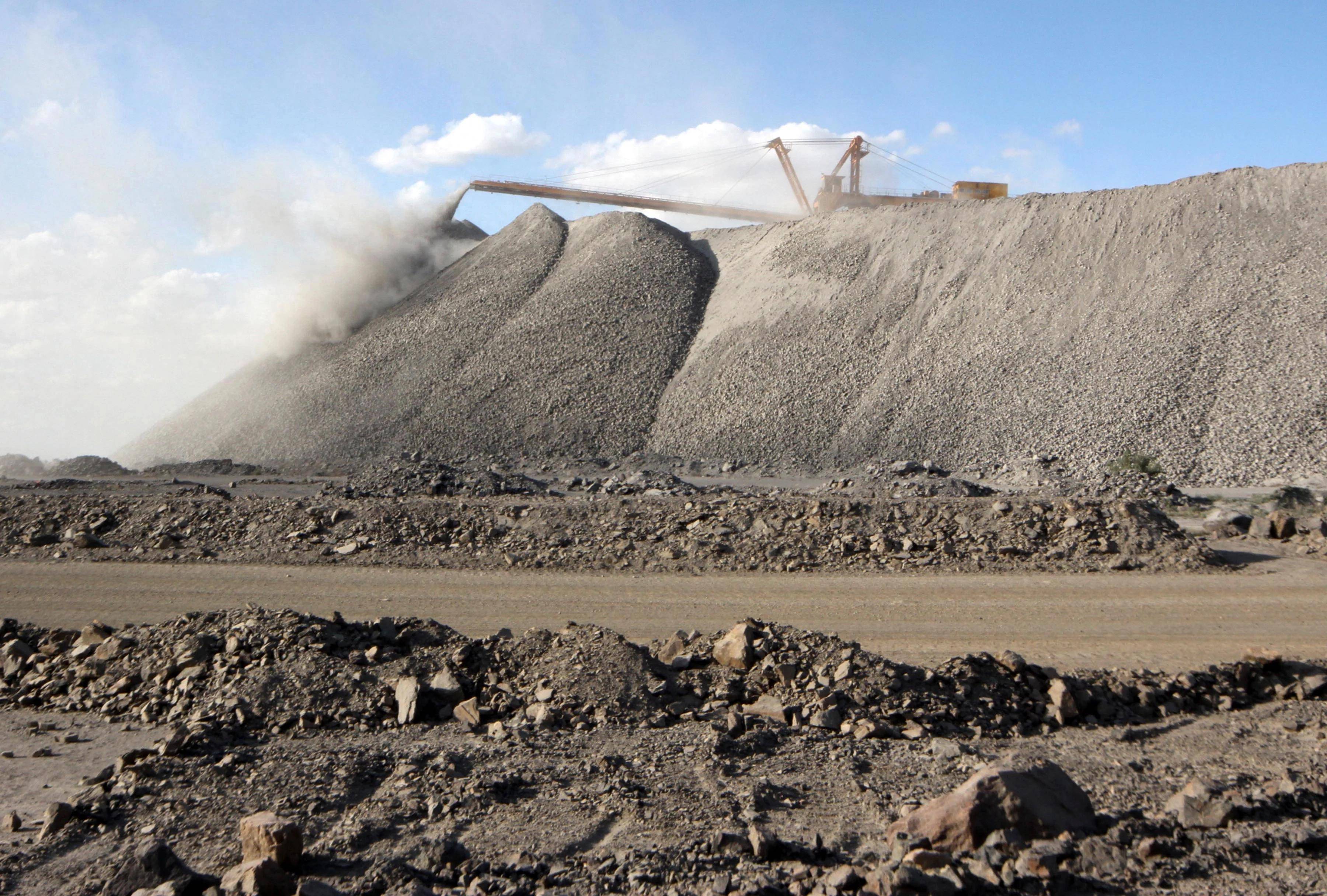
澳大利亚酝酿与美国达成关键矿产协议
Ge Long Hui· 2025-10-13 01:33
Core Viewpoint - Australia is considering setting minimum prices for critical minerals and investing in new rare earth projects as part of a potential resource agreement with the United States [1] Group 1: Government Initiatives - The Australian government has begun discussions with mining companies about co-investing to establish a strategic mineral reserve valued at 1.2 billion AUD (approximately 777 million USD) [1] - Proposed measures under review include possible price floors, government-backed loans, purchase guarantees, and direct investments in Australian projects to support local producers [1]
3 Major Catalysts That Should Keep Precious Metals Prices Elevated as Gold Sets a New Record High
Yahoo Finance· 2025-09-10 16:47
Geopolitical Tensions and Market Impact - The Israeli airstrike on Hamas in Qatar has escalated geopolitical tensions, surprising the U.S. and potentially undermining normalization efforts with Gulf Arab nations [1] - The airstrike may have ended Qatar's role as a mediator in ceasefire negotiations, with other countries like Turkey being put on high alert [1] - Poland's downing of Russian drones has led to heightened tensions, with Poland seeking NATO consultations, which could draw NATO into direct conflict with Russia [3] Precious Metals Market Dynamics - Comex gold futures reached a record high of $3,715.20 per ounce, while silver hit a 14-year high of $42.355 per ounce, driven by geopolitical instability [4] - Increased instability in the Middle East is expected to drive safe-haven demand for precious metals [5] - Major central banks are leaning towards easier monetary policies, with the U.S. jobs growth numbers revised down by 911,000, potentially affecting consumer confidence [6][7] Strategic Mineral Stockpiling - Countries are rushing to stockpile key minerals, with China leading in strategic mineral dominance, prompting other nations to follow suit [10] - The U.S. has initiatives to invest in domestic rare earth mining and processing to reduce dependence on China, while the EU has established a strategic stockpiling program [11] - The trend of stockpiling strategic minerals is likely to continue, positioning both the U.S. and China as major competitors in the rare-earth minerals market, which is bullish for precious metals [12]