
MG4半固态安芯版

Search documents
MG在国内外都吃香,这波“中国智造”很提气
Yang Zi Wan Bao Wang· 2026-02-06 03:54
Core Insights - MG brand is experiencing a resurgence, achieving significant sales growth and technological advancements in a competitive automotive market [3][6][9] Group 1: Sales Performance - In 2025, MG's sales in the European market surpassed 300,000 units, maintaining its position as the top-selling Chinese automotive brand in Europe for 11 consecutive years [3] - In the domestic market, MG's sales from January to November exceeded the total sales for 2024, with the new MG4 model selling over 10,000 units monthly within four months of its launch [6] - In January 2026, SAIC Group reported a total vehicle sales of 327,000 units, a year-on-year increase of 23.9%, with MG contributing significantly to this growth [14] Group 2: Technological Advancements - MG is focusing on integrating advanced technologies such as semi-solid-state batteries and high-performance chips into more affordable models, redefining the value of electric vehicles [11][16] - The introduction of the MG4 semi-solid-state battery model marks a significant milestone, showcasing MG's commitment to innovation and user-centric design [16] - MG aims to enhance user experience and safety, achieving a five-star safety rating in stringent EU E-NCAP tests [11] Group 3: Strategic Vision - MG's strategy emphasizes "technological equality" and "value reconstruction," aiming to position itself as a leader in the electric vehicle market [14][18] - The brand is set to enter a product "explosion period" in 2026, with over ten new energy products planned for release, focusing on smart driving and AI integration [16] - MG's approach is not merely about increasing sales volume but optimizing user experience to achieve both volume and profit [18]

锚定研发与全球化双主线 2025年上汽集团自主品牌销量占比首超65%
Zhong Guo Zheng Quan Bao· 2026-01-08 22:01
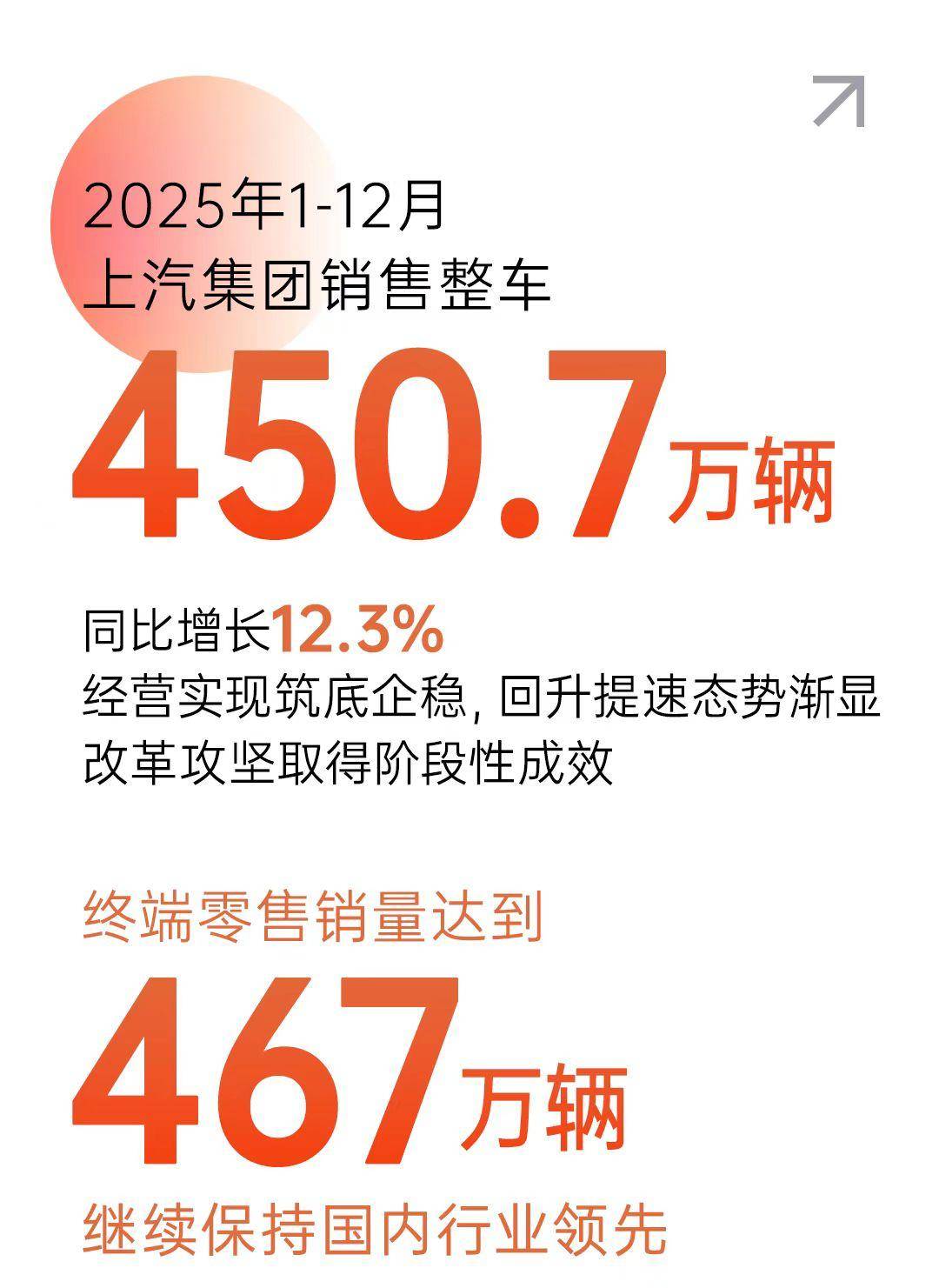
Core Viewpoint - In 2025, SAIC Motor Corporation achieved robust growth amidst a challenging automotive market, demonstrating a successful structural transformation towards smart and autonomous vehicles, serving as a reference for traditional automakers' upgrades [1][4]. Group 1: Sales Performance - In 2025, SAIC Motor's total vehicle sales reached 4.507 million units, a year-on-year increase of 12.3%, with retail sales exceeding wholesale, indicating a healthy market supply-demand structure [1]. - The company's revenue for the first three quarters was 468.99 billion yuan, with a net profit attributable to shareholders of 8.101 billion yuan, reflecting year-on-year growth of 9% and 17.3% respectively [1]. - The sales of SAIC's self-owned brands reached 2.928 million units, a 21.6% increase, with their share of total sales rising from 60% in 2024 to 65% in 2025 [2]. Group 2: Brand and Product Development - The growth of self-owned brands was driven by a collaborative effort across the brand matrix, with SAIC's Roewe and MG brands seeing domestic sales increase by 245.3% [2]. - MG brand's sales in Europe reached 300,000 units, a nearly 30% increase, maintaining its position as the top-selling Chinese automotive brand in Europe for 11 consecutive years [2]. - The high-end brand, Zhiji Auto, achieved sales of 81,000 units, a 23.68% increase, with its LS6 model quickly gaining popularity [2]. Group 3: Joint Venture Transformation - SAIC Volkswagen's terminal sales reached 1.06 million units, with a month-on-month increase of 10.9% in December 2025, and electric models accounting for 15% of total sales [3]. - Despite a 16.5% decline in annual sales for SAIC General Motors, the company maintained profitability for five consecutive quarters through product structure optimization [3]. Group 4: International Expansion - SAIC's overseas sales reached 1.071 million units, a 3.1% increase, with self-owned brands accounting for 75% of this figure, highlighting the strategic value of localized operations [3]. - The company’s factories in Thailand and Indonesia are steadily releasing a combined capacity of 500,000 units per year, while the Mexican factory is strategically entering the North American market [3]. Group 5: Technological Innovation - SAIC's growth is attributed to long-term investments in R&D, with over 150 billion yuan invested in electric and intelligent technology, resulting in nearly 26,000 effective patents [4]. - The MG4 semi-solid battery version achieved over 75,000 orders, while the Zhiji LS9 set a new record for range with 1,508 kilometers [4]. - The company has established a complete technical system covering three vehicle platforms and seven technology bases, enhancing its competitive edge [4]. Group 6: Systemic Transformation - SAIC has restructured its passenger vehicle segment to break down barriers between various business units, improving market responsiveness [5]. - The company is focusing on strengthening its self-owned brand base, expanding globally, and building core technological barriers [5]. - Future prospects include the mass production of solid-state batteries and advanced autonomous driving technologies, which are expected to enhance SAIC's global industry influence [5].

2025年上汽集团自主品牌销量占比首超65%
Zhong Guo Zheng Quan Bao· 2026-01-08 20:50
Core Insights - In 2025, SAIC Motor Corporation achieved a total vehicle sales of 4.507 million units, representing a year-on-year growth of 12.3%, with a healthy market supply-demand structure [1] - The company's revenue for the first three quarters reached 468.99 billion yuan, and net profit attributable to shareholders was 8.101 billion yuan, reflecting year-on-year increases of 9% and 17.3% respectively [1] - The shift towards self-owned brands is evident, with self-owned brand sales reaching 2.928 million units, a 21.6% increase, and their share of total sales rising from 60% in 2024 to 65% in 2025 [1][2] Business Structure and Performance - The growth of self-owned brands is driven by a collaborative effort across the entire brand matrix, with significant increases in sales for the Roewe and MG brands, which saw domestic sales rise by 245.3% [2] - The high-end brand, Zhiji Auto, achieved sales of 81,000 units, a growth of 23.68%, with the LS6 model becoming a representative product in the 200,000 yuan intelligent SUV market [2] - SAIC-GM-Wuling maintained a solid market presence with sales of 1.635 million units, and its new energy vehicles surpassed 1 million units for the first time [2] Overseas Market Expansion - In 2025, SAIC's overseas sales reached 1.071 million units, a year-on-year increase of 3.1%, with self-owned brands accounting for 75% of this figure [3] - The company has established a comprehensive strategy of "local R&D + local production + local operation," with factories in Thailand and Indonesia steadily releasing a combined capacity of 500,000 units per year [3] Technological and Systematic Transformation - The growth in key metrics is attributed to long-term investments in R&D, with over 150 billion yuan invested in electric and intelligent technology, resulting in nearly 26,000 effective patents [3][4] - The MG4 semi-solid state version has achieved over 75,000 orders, while the Zhiji LS9 boasts a record range of 1,508 kilometers [4] - The company has enhanced its core component capabilities through strategic investments exceeding 18 billion yuan, focusing on critical supply chain segments [4] Systemic Changes and Future Outlook - SAIC has restructured its passenger vehicle segment to enhance market responsiveness, leading to successful launches of new models [5][6] - The company aims to strengthen its domestic market base, expand globally, and build core competitive advantages through ongoing technological advancements and local production capacity [6]
上汽集团2025年销量450.7万辆 同比增长12.3%
Yang Zi Wan Bao Wang· 2026-01-07 13:50
Core Insights - SAIC Motor Corporation's 2025 operational results show a total vehicle sales of 4.507 million units, a year-on-year increase of 12.3%, with retail sales reaching 4.67 million units, maintaining industry leadership in China [1][5] - The company's sales of self-owned brands exceeded 2.928 million units, marking a significant year-on-year growth of 21.6%, while new energy vehicle sales reached 1.643 million units, a record high with a growth rate of 33.1% [1][5] Group 1: Innovation and Technology - Innovation is identified as the core engine for industrial transformation and a fundamental strength for companies to navigate through cycles [6] - The shift in the Chinese automotive market from price competition to value competition emphasizes the importance of mastering core technologies for development [6] - SAIC's growth is attributed to its commitment to technological innovation and continuous investment, exemplified by the successful launch of the MG4 semi-solid state battery and the DMH 6.0 hybrid system [10] Group 2: Ecosystem Collaboration - Ecosystem collaboration is deemed essential for modern industrial development and a key pathway to activate innovation [11] - SAIC's strategy of "equal rights-driven advancement, co-creating a better travel experience" fosters a diverse collaborative industrial ecosystem, enhancing high-quality development [11] - Collaborations with companies like Huawei and OPPO have led to innovative products that enhance user experience and facilitate rapid application of cutting-edge technologies [13] Group 3: Global Expansion - Globalization is crucial for expanding development space and signifies the Chinese automotive industry's entry into the global market [18] - SAIC's overseas sales reached 1.071 million units in 2025, reflecting a year-on-year growth of 3.1%, with cumulative sales surpassing 6 million units [20] - The company's Glocal strategy aims to deepen international market penetration, transitioning from product export to value chain upgrades, showcasing the global competitiveness of Chinese automotive brands [20]
上汽集团:以改革之力书写转型新篇
Zhong Guo Qi Che Bao Wang· 2025-12-29 01:39
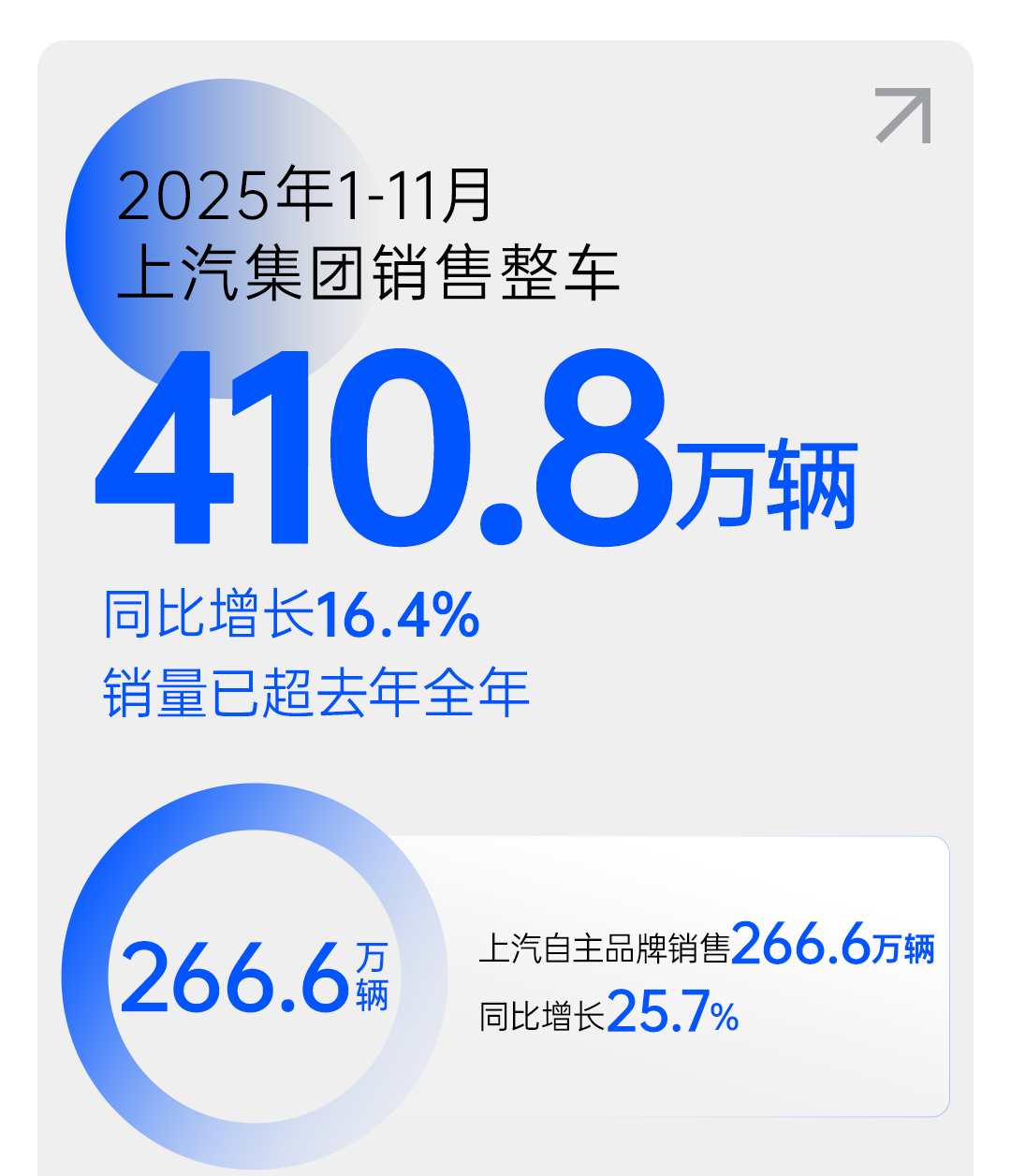
Core Insights - The global automotive industry is undergoing a significant transformation centered on intelligence and electrification, driven by a new wave of technological revolution and industrial change, leading to a shift towards high-quality development focused on technology-driven, ecological collaboration, and green low-carbon initiatives [2] - SAIC Motor Corporation aims to deepen reforms by 2025, with a core value of "understanding cars better and understanding you better," establishing a comprehensive development ecosystem that promotes synergy among brand, technology, product, and market [2] Technological Innovation - The core achievement of the reforms is a systematic breakthrough in technological innovation, with SAIC abandoning fragmented R&D models to create a three-dimensional technology framework labeled "Smart Brain," "Robust Body," and "Powerful Heart," investing over 150 billion yuan in electric and intelligent fields, and accumulating nearly 25,000 effective patents [3] - "Smart Brain" focuses on intelligent driving and interactive experience, achieving 300,000 orders for the Robotaxi service and launching various intelligent cockpit applications [4] - "Robust Body" emphasizes safety and control optimization, introducing an integrated intelligent safety system and a second-generation digital chassis that enhances safety performance by over 20% compared to industry standards [4] - "Powerful Heart" targets breakthroughs in power efficiency and driving range, with a hybrid engine achieving a thermal efficiency of 46.3% and a super range system providing a pure electric range of 450 km [4] User-Centric Approach - In a market characterized by stock competition, SAIC integrates the core concept of "understanding cars better and understanding you better" throughout its operations, transitioning from a manufacturer to a user partner [6] - By 2025, SAIC will refresh its brand identity and position itself as a "partner brand with technology and warmth," while also launching initiatives to resonate with users' experiences [6] - Product upgrades are closely aligned with user needs, featuring thoughtful configurations and establishing efficient user feedback mechanisms to drive product iteration [6] Product Matrix and Market Performance - The integration of technological innovation and user demand has led to a surge in SAIC's product matrix, with multiple new models launching successfully by 2025 [7] - The autonomous segment has seen significant success, with the flagship model, the Zhiji LS9, achieving over 5,000 orders in 25 minutes, and the MG4 model accumulating over 60,000 pre-orders [8] - The company has also seen strong performance in the joint venture segment, with models like the SAIC Audi E5 and Buick models achieving rapid order milestones [8] Financial Growth and Market Position - The multi-dimensional collaboration of technology, users, and products has translated into tangible market performance, with SAIC's vehicle sales reaching 4.108 million units in the first 11 months of 2025, a year-on-year increase of 16.4% [9] - Sales of SAIC's self-owned brands reached 2.666 million units, up 25.7%, while new energy vehicle sales grew by 38.8% [9] - The net profit attributable to shareholders reached 2.08 billion yuan, a year-on-year increase of 644.9%, indicating a strong financial position amid industry challenges [9][10]

MG安芯版开启交付,固态电池经受车用动力检验
高工锂电· 2025-12-19 11:41
Core Viewpoint - The article discusses the delivery of the MG4 semi-solid battery version by SAIC MG, marking a significant advancement in the application of semi-solid state batteries in vehicles, highlighting their safety, long-range capabilities, and the ongoing development of solid-state battery technology [3][10]. Group 1: Delivery and Market Impact - The MG4 semi-solid battery version is the world's first mass-produced vehicle equipped with a semi-solid state battery, with a promotional price below 100,000 yuan [3]. - The semi-solid battery technology has been applied in various vehicles, including 18 models that have received approval from the Ministry of Industry and Information Technology, indicating a broad market acceptance [3]. - Over 10,000 vehicles equipped with semi-solid batteries have been delivered, demonstrating good operational status without any significant after-sales issues [6]. Group 2: Technical Advancements - Clear Tao has developed a multi-layer composite technology route for solid-state batteries, enhancing stability under high voltage and long cycle conditions through surface modification and internal composite structures [4]. - The manufacturing process focuses on the precise control of solid-state electrolyte layers, which is crucial for achieving consistency in mass production, with a key parameter consistency index (CPK) reaching ≥ 1.67 [4][5]. - The semi-solid battery is not merely positioned as a high energy density product but emphasizes safety, low-temperature performance, and long-term reliability in its applications [4]. Group 3: Performance and Applications - The semi-solid battery cells have passed various safety tests, including multi-directional puncture tests, maintaining a non-flammable and non-explosive state, and demonstrating high power output in low-temperature environments [6]. - The application of semi-solid batteries extends beyond high-end products, catering to different segments sensitive to safety, durability, and cost [6]. - In passenger vehicles, the Zhiji L6 model features a semi-solid square aluminum shell battery with an energy density exceeding 285 Wh/kg, achieving over 1000 km range and ultra-fast charging capabilities [7]. Group 4: Future Developments - Clear Tao is also advancing in the development of all-solid-state batteries, having created a composite solid electrolyte material and established pilot lines for production, with successful samples manufactured [9]. - The ongoing research aims to optimize performance and manufacturability, indicating a commitment to future advancements in battery technology [9].
夯实基本盘、打造突围点,上汽集团1—11月销量超去年全年
Zhong Guo Jing Ji Wang· 2025-12-02 06:20
Core Viewpoint - SAIC Motor Corporation has established a new growth framework with three main drivers: strong performance from its self-owned brands, rapid growth in new energy vehicles, and expansion in overseas markets, leading to a significant increase in overall sales in 2024 and 2025 [1][2][3] Group 1: Sales Performance - From January to November 2023, SAIC Motor sold 4.108 million vehicles, a year-on-year increase of 16.4%, surpassing the total sales of the previous year [2] - The sales of SAIC's self-owned brands reached 2.666 million units, up 25.7%, accounting for 64.9% of total sales, an increase of 4.8 percentage points compared to the same period last year [5] - New energy vehicle sales totaled 1.499 million units, reflecting a growth of 38.8% [5] - Overseas sales amounted to 969,000 units, with a year-on-year increase of 3.4% [6] Group 2: New Growth Drivers - The "new three drivers" of SAIC's growth include self-owned brands, new energy vehicles, and overseas markets, with self-owned brands showing the most significant growth [3] - The MG brand has become the best-selling Chinese brand in Europe, with 285,000 units delivered, a growth of over 25% [6] - SAIC's new energy vehicle sales have been bolstered by product and technology advancements, including the introduction of the MG4 semi-solid battery version [5] Group 3: Traditional Pillars - The traditional three pillars—SAIC Volkswagen, SAIC General Motors, and SAIC-GM-Wuling—remain stable, contributing over 70% of total sales [7] - SAIC-GM-Wuling sold 1.491 million units, SAIC Volkswagen sold 936,130 units, and SAIC General Motors sold 487,250 units from January to November [7] - SAIC Volkswagen is expected to exceed one million units in annual sales, supported by its transition to new energy products [8] Group 4: Future Potential - SAIC has identified two potential growth areas: Audi and the newly launched brand, Shangjie [10] - The Audi brand is implementing a dual-brand strategy and aims to establish itself as a young, tech-savvy luxury car manufacturer [10] - The Shangjie brand, developed in collaboration with Huawei, has received significant investment, with an initial funding of 6 billion yuan and a dedicated team of over 5,000 people [13][15]
从广州车展看2026年车市动向:合资车用上“中国脑”
Bei Jing Ri Bao Ke Hu Duan· 2025-11-25 22:45
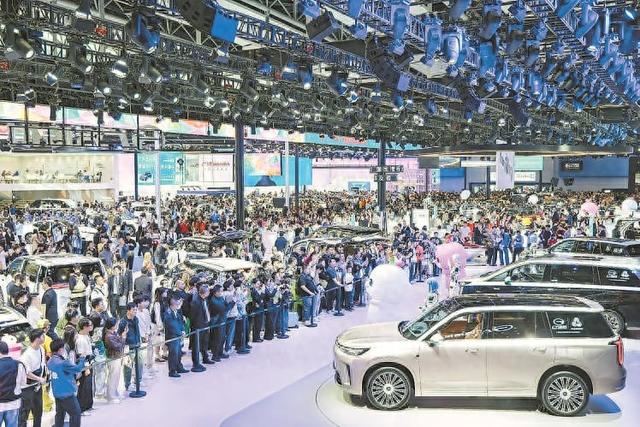
Core Insights - The 2025 Guangzhou International Auto Show showcases 93 new car models and 629 new energy vehicles, highlighting the industry's shift towards electrification and intelligence [1][3] - In October, new energy vehicles accounted for over 50% of total car sales for the first time, indicating a significant market trend [3] - The event emphasizes advancements in L3-level autonomous driving and next-generation battery technologies, which are seen as key areas for technological breakthroughs [4][5] New Energy Vehicles - Out of 1,085 vehicles displayed, 629 are new energy models, making up 58% of the total [3] - Notable new energy models include Xiaopeng's X9 Super Extended Range version priced at 309,800 yuan and Leap Motor's D19 Extended Range version with a 500 km pure electric range [3] - The market is witnessing a diversification in demand, with extended range vehicles addressing range anxiety while pure electric vehicles offer lower operating costs [3] Technological Advancements - Huawei's booth was one of the most popular, showcasing its smart driving solutions, including L3-level autonomous driving tests in seven major cities [4] - GAC Group's flagship model, the A800, has begun L3-level highway testing at speeds of 120 km/h, marking a significant milestone in autonomous vehicle testing [4] Battery Technology - SAIC MG introduced the MG4 model featuring semi-solid-state batteries, set for delivery in December [5] - GAC Group announced the production of a pilot line for solid-state batteries, aiming for small-scale trials by 2026 and mass production by 2027-2030 [5] Market Dynamics - Several luxury brands, including Beijing Hyundai and Lamborghini, were absent from the show, indicating a potential decline in competitiveness in the Chinese market [5] - Joint ventures between foreign brands and Chinese tech companies are emerging, with Volkswagen and Xiaopeng collaborating on a new electric SUV featuring L2-level assisted driving [5][6] Collaborations and Innovations - Audi launched the A5L with Huawei's smart driving technology, while BMW and Mercedes are partnering with Chinese tech firms to enhance their models with localized smart features [6] - These collaborations aim to shorten development cycles and quickly adapt to market changes, reflecting a strategic shift among joint venture brands [6]
华为全新序列启境、奕境品牌发布!吉利、小米、小鹏发布三季度财报!岚图泰山、小鹏X9超级增程等新车上市!丨一周大事件
电动车公社· 2025-11-24 16:21
Core Insights - The article highlights the recent developments in the electric vehicle (EV) market, focusing on new model launches and significant financial results from key players in the industry. New Car Launches - Lantu Taisan was launched with a price range of 379,900 to 509,900 yuan, featuring advanced technologies such as a three-chamber air suspension and dual 16° rear-wheel steering [5][6][14] - The new Galaxy Starship 7 EM-i was launched at a limited-time price of 95,800 to 123,800 yuan, offering enhanced safety and comfort features [15][16][31] - Dongfeng Xinghai S7 was launched with a price range of 105,900 to 135,900 yuan, featuring a spacious design and competitive electric range [32][40] - The new Xiangjie S9 was launched with a price range of 309,800 to 369,800 yuan, offering a luxurious interior and advanced driving assistance systems [41][56] - Xiaopeng X9 range-extended version was launched at a price of 309,800 to 329,800 yuan, featuring high-performance specifications and advanced AI capabilities [57][66] - Changan Q05 was launched with a price range of 79,900 to 109,900 yuan, featuring a compact SUV design and advanced connectivity options [69][75] - Tesla Model S/X was relaunched with prices of 882,900 and 942,900 yuan respectively, featuring minor updates and improved comfort [76][82] - Lantu Dreamer Mountain River was launched at a price of 709,900 yuan, featuring a luxurious MPV design and advanced technology [88][94] - MG4 semi-solid state version was launched at a limited-time price of 99,800 yuan, featuring innovative battery technology [95][101] - Ford Mustang Mach-E began pre-sales with a price range of 229,800 to 282,800 yuan, featuring a rugged design and advanced technology [102][111] - Deep Blue L06 began pre-sales with a limited-time price range of 132,900 to 154,900 yuan, featuring a sporty design and advanced driving features [114][123] - Leap A10 made its global debut and opened for blind orders, featuring a competitive price and advanced technology [125][133] - Extreme Stone ADAMAS began blind orders at a price of 998,800 yuan, featuring a luxurious SUV design [134][141] - GAC Aopai SSR Cloud Pattern Gold Edition was launched at a price of 1,486,000 yuan, featuring a unique design and high-performance specifications [142][149] - Leado L90 Black Knight Edition was launched at a price of 306,800 yuan, featuring a sporty design and advanced electric capabilities [150][155] - Ora 5 began pre-sales with a price range of 109,800 to 142,800 yuan, featuring a retro design and advanced technology [156][165] - Volkswagen Passat ePro and new Tiguan L plug-in hybrid models were showcased, indicating Volkswagen's commitment to the Chinese market [166][173] Company Dynamics - Geely Auto reported a record revenue of 89.2 billion yuan for Q3, a 27% year-on-year increase, with a net profit of 3.96 billion yuan [3][174][177] - Xiaopeng Motors reported a Q3 revenue of 20.38 billion yuan, a 101.8% year-on-year increase, with a gross margin of 20.1% [3][179][182] - Xiaomi's automotive and AI business achieved profitability for the first time in a single quarter, with revenues of 29 billion yuan [3][184][187] - The launch of the Qiji and Yijing brands marks a significant step in Huawei's automotive strategy, focusing on high-end intelligent mobility solutions [3][188][191]





汽车视点 | “一车双能”、厂家“三担责”……在广州车展透视2026车市关键信号
Xin Hua Cai Jing· 2025-11-23 06:21
Core Insights - The 2025 Guangzhou International Auto Show opened on November 21, showcasing 1,085 vehicles, including 93 global and domestic debuts, with 629 being new energy vehicles, highlighting their dominance in the market [1] Group 1: Industry Trends - The scale of this year's auto show has contracted compared to 2024, with the number of exhibition halls reduced from 16 to 14, indicating current industry pressures [1] - The auto show serves as a significant platform for automakers to showcase their annual achievements and forecast market trends for the upcoming year [1] Group 2: Company Achievements - Xiaomi Auto announced the production of its 500,000th vehicle in just 602 days, setting a record for the fastest achievement among global new energy vehicle brands [2] - XPeng Motors celebrated the production of its 1,000,000th vehicle, achieving a 190% year-on-year increase in deliveries from January to October, with significant growth in overseas markets [3] - Seres announced cumulative deliveries of over 900,000 vehicles and introduced its "Seres Magic Cube Technology Platform 2.0" at the show [3] - NIO's small car "Firefly" reached 30,000 deliveries within six months, indicating strong market performance in its segment [3] - Lynk & Co reported 50,000 deliveries of its flagship model Lynk 900 within six months, ranking among the top three in high-end hybrid SUV sales [4] Group 3: Technological Innovations - Automakers are shifting focus from price competition to technological advancements, with several brands unveiling key technology strategies at the auto show [5] - Dongfeng Nissan launched the "Tiida" model equipped with HarmonyOS, marking it as the only fuel vehicle with this feature in the market [5] - GAC Toyota introduced the "Toyota Platinum 7," developed by a local team, integrating multiple high-tech features and a unique warranty policy to alleviate consumer concerns [5] - BMW made advanced driver assistance features standard across its X5 model, enhancing its competitive edge [6] - Leap Motor introduced the A10 model, aiming to provide high-end features at an entry-level price point [6] - MG unveiled the world's first mass-produced semi-solid-state battery vehicle, the MG4, set to start deliveries in December, marking a significant technological milestone [6] Group 4: Market Outlook - The auto show indicates a potential surge in the MPV market in 2026, with several brands launching new MPV models aimed at high-end experiences [7][8] - The upcoming adjustment in the new energy vehicle purchase tax policy, effective January 1, 2026, is expected to impact sales strategies, with many automakers offering cross-year subsidy plans [8] - The China Passenger Car Association forecasts a retail volume of approximately 2.25 million passenger vehicles for November, a year-on-year decrease of 8.7%, while new energy vehicle sales are expected to grow by 6.5% [9]