无就业复苏

Search documents
2026开局不利!美国就业市场陷入“冰冻期”,裁员潮暗流涌动
Jin Shi Shu Ju· 2026-02-09 12:34
Group 1 - The job market in the U.S. remains frozen, with January showing the worst layoff plans since 2009 and only 22,000 jobs added by private employers compared to 140,000 in the same month last year [1] - Major companies like Amazon, Pinterest, UPS, Home Depot, and The Washington Post have announced significant layoffs, indicating a slowdown in hiring, particularly in healthcare and social services [1] - Economists predict a modest increase of 70,000 jobs in the upcoming non-farm payroll report, with the unemployment rate expected to slightly decrease, but revisions to 2025 data may show fewer jobs added than initially reported [2] Group 2 - The number of job vacancies in the U.S. was only 6.5 million at the end of December, significantly below economists' expectations and the lowest level since 2020 [2] - Initial jobless claims rose to 231,000, exceeding expectations, potentially influenced by severe winter weather, although claims had been relatively low prior to this [2] - Some eligible applicants may abandon unemployment benefits due to the complicated application process or insufficient amounts, leading to unclear insights into the actual job market [3] Group 3 - Despite challenges in the job market, other economic indicators show strong performance, with GDP growing at an annualized rate of 4.4% in Q3, the strongest growth in two years, driven by healthy consumer spending and exports [4] - The overall economy is considered robust, with low layoff rates and strong economic growth, although low- and middle-income families continue to face challenges [4] - The potential for AI and productivity growth may continue to drive the economy forward, but the labor market shows signs of downward risk [5]
AI与电力、新药研发、中国经济复苏.....一文读懂高盛行研团队2026年十大投资主题
美股IPO· 2026-01-04 00:51
Group 1: AI Infrastructure Investment - AI infrastructure investment is entering a new phase, with traditional leaders like Nvidia, Microsoft, and Amazon seeing stagnant stock prices since last summer, while new entrants like Broadcom are gaining traction [2][4] - Investors are shifting focus to data centers, looking for companies that can support global computing power regardless of the chip used [4] - The power sector within AI infrastructure is also transforming, with utility stocks stagnating while gas turbine suppliers like GE Vernova continue to rise [5] Group 2: Pharmaceutical Research Shift - The focus in pharmaceutical research is shifting from weight loss drugs to cardiovascular treatments, with significant market changes observed in the GLP-1 weight loss drug sector [9][10] - Eli Lilly continues to outperform the market, while Novo Nordisk's stock has halved, leading to a 33% downward revision in earnings expectations for 2026 [9][10] Group 3: Chinese Economic Growth - Goldman Sachs economists predict that China's economic growth will exceed market consensus, driven by technological advancements and a strong export position [13] - The recovery of the Chinese economy is expected to impact global trade and technology dynamics significantly [13] Group 4: Policy Uncertainty - Policy uncertainty is expected to dominate the market in 2026, with key factors including Federal Reserve actions, Supreme Court rulings on tariffs, and the appointment of a new Fed chair [23] - Current stock valuations in the U.S. have reached their highest levels since the late 1990s, prompting a cautious approach from investors [3][24] Group 5: Emerging Investment Themes - The rise of alternative investments is noted, with private credit markets outperforming private equity and attracting retail funds [15] - The cryptocurrency market is expanding, with companies like Coinbase and Robinhood positioned favorably in this growing sector [16] Group 6: Military and Defense Sector - The defense sector is experiencing evolving militarization, with significant investments needed in Europe to catch up with military capabilities [17][18] Group 7: Robotics and Autonomous Vehicles - Advancements in humanoid robots and autonomous driving technology are expected to drive profit growth for industrial tech companies, including Tesla [19] - China is leading in the autonomous vehicle sector, with projections indicating that the Robotaxi market could reach $47 billion by 2035 [21] Group 8: Nuclear Energy and Rare Earths - Nuclear energy is experiencing a revival due to the demand for clean power to support the AI revolution, despite past accidents that stalled its development [22] - Rare earth metals are becoming critical components in technology, with China currently dominating this supply chain [22]


AI与电力、新药研发、中国经济复苏.....一文读懂高盛行研团队2026年十大投资主题
华尔街见闻· 2026-01-03 10:24
Group 1: AI Infrastructure and Investment Trends - AI infrastructure investment is entering a new phase, with traditional leaders like Nvidia, Microsoft, and Amazon seeing stagnant stock prices since last summer, while new entrants like Broadcom are emerging [1][4] - Investors are shifting focus to companies that can support global computing power regardless of chip usage, indicating a significant transformation in AI investment themes [4] - Memory producers like Micron Technology and connector companies such as Amphenol and TE Connectivity are experiencing stock price surges, while utility stocks are stagnating [5] Group 2: Pharmaceutical Sector Developments - The GLP-1 weight loss drug market is undergoing a notable transformation, with Eli Lilly outperforming the market while Novo Nordisk's stock has halved, leading to a 33% downward revision in earnings expectations for 2026 [7][8] - Investment focus is shifting towards new weight loss products awaiting approval, and there is a transition in biopharmaceuticals from obesity drugs to a "Cardiology Renaissance," indicating a potential large product cycle [8] Group 3: Economic Outlook and Global Trade - Goldman Sachs economists predict that China's economic growth will exceed market consensus, driven by technological advancements and a leading export position, even amidst tariff challenges [11] - The recovery of the Chinese economy is expected to significantly impact global trade and technology dynamics in the coming year [11] Group 4: Productivity and Labor Market Dynamics - The potential for a "jobless expansion" is highlighted, as technology-driven productivity gains may support economic growth while facing labor shortages due to immigration restrictions [13] - Long-term productivity improvements are deemed essential to offset the effects of an aging workforce and declining birth rates [13] Group 5: Alternative Investments and Market Trends - The private credit market is expected to outperform private equity in 2025, attracting retail investor interest [15] - The cryptocurrency market is expanding, with companies like Coinbase and Robinhood positioned favorably in the growing sectors of cryptocurrencies and stablecoins [16] Group 6: Defense and Military Investment - The defense sector is experiencing evolving militarization, with the U.S. Space Force favoring innovators in drone and satellite technology [18] - Europe may require up to $160 billion in investments over the next five years to enhance military capabilities in response to Russian threats [19] Group 7: Robotics and Autonomous Vehicles - Advancements in technology are enhancing the capabilities of humanoid robots and autonomous vehicles, which are expected to drive profit growth for industrial tech companies like Tesla [21] - China is actively building capacity in the humanoid robot supply chain and is leading in the autonomous vehicle sector, with projections indicating a $47 billion market for Robotaxi by 2035 [22][23] Group 8: Nuclear Energy and Rare Earth Elements - Nuclear energy is experiencing a revival due to increasing demand for clean power to support the AI revolution, despite past accidents that stalled its development [25] - Rare earth metals are becoming critical components in technology, with China currently dominating this supply chain [25] Group 9: Policy and Market Sentiment - Policy uncertainties, including the Federal Reserve's actions and the Supreme Court's decisions on tariffs, are expected to dominate market sentiment in the first half of 2026 [26] - Current U.S. stock valuations are at their highest levels since the late 1990s, prompting a cautious approach from investors [2][27]

AI与电力、新药研发、中国经济复苏.....一文读懂高盛行研团队2026年十大投资主题
Hua Er Jie Jian Wen· 2026-01-03 02:54
Group 1: AI Infrastructure and Investment Trends - The AI infrastructure investment is entering a new phase, with traditional leaders like Nvidia, Microsoft, and Amazon seeing stagnant stock prices since last summer, while new entrants like Broadcom are emerging [1][2] - Investors are shifting focus to companies that can support global computing power regardless of chip type, with memory producers like Micron experiencing significant stock price increases [2] - The "power sector" within AI infrastructure is also transforming, with utility stocks stagnating while gas turbine suppliers like GE Vernova continue to rise [2] Group 2: Pharmaceutical Sector Developments - The GLP-1 weight loss drug market is undergoing a notable transition, with Eli Lilly outperforming the market while Novo Nordisk's stock has lost nearly half its value, leading to a 33% downward revision in earnings expectations for 2026 [3] - Investment focus is shifting towards new weight loss products expected to be approved next year, as the biopharmaceutical sector transitions from obesity drugs to a "Cardiology Renaissance" [3] Group 3: Retail Industry Evolution - The boundaries between offline sales, online commerce, and advertising are increasingly blurring, with analysts highlighting opportunities for e-commerce platforms to generate revenue through advertising and marketing agreements [4] - Retailers are exploring alternative revenue sources such as media and membership models, emphasizing the importance of delivery speed and value propositions [4] Group 4: Chinese Economic Growth - Goldman Sachs economists predict that China's economic growth will exceed market consensus, driven by technological advancements and a strong export position, even amidst tariff challenges [6] Group 5: Productivity and Profit Growth - The rise in technology-driven productivity is expected to support economic growth, although there is a risk of "jobless expansion" due to labor shortages caused by immigration restrictions [7] - Long-term productivity improvements are seen as essential to offset the impacts of an aging workforce and declining birth rates [7] Group 6: Alternative Investments - The private credit market is expected to outperform private equity in 2025, continuing to attract retail investor funds, while the cryptocurrency market is expanding with companies like Coinbase and Robinhood positioned favorably [8] Group 7: Military and Defense Sector - The defense sector is experiencing an evolving militarization, with the U.S. Space Force favoring innovators in drone and satellite technology, and Europe potentially needing up to $160 billion in investments over the next five years to enhance military capabilities [9] Group 8: Robotics and Autonomous Vehicles - Advancements in technology are enhancing the capabilities of humanoid robots and autonomous vehicles, with significant profit growth anticipated for industrial tech companies like Tesla [10] - China is actively building capacity in the humanoid robot supply chain and is leading in the autonomous vehicle sector, with projections indicating a $47 billion market for Robotaxis by 2035 [10] Group 9: Nuclear Energy and Rare Earths - The demand for clean energy is reviving interest in nuclear power, which had been sidelined due to past accidents, as it is seen as a potential source of electricity for the AI revolution [11] - Rare earth metals are becoming critical components in technology, with China currently dominating this sector, presenting supply chain opportunities [11] Group 10: Policy Uncertainty - Policy is expected to play a significant role in market dynamics entering 2026, with debates around the Federal Reserve's next steps and leadership potentially dominating market sentiment [13] - Key catalysts affecting market direction include Supreme Court rulings on tariffs, upcoming Federal Reserve meetings, and significant political events [13]
前所未见!全球资本开支激增,而就业增长停滞--“AI时代”来了
美股IPO· 2025-09-29 05:08
Core Viewpoint - The article discusses the unprecedented situation where global capital expenditure is increasing rapidly while employment growth in developed markets is stagnating, highlighting a potential "decoupling" between investment and job creation [2][3][5]. Group 1: Capital Expenditure Trends - According to Morgan Stanley, global capital expenditure is projected to achieve an annualized growth rate of 11% in the first half of 2025, following a modest 4% growth in 2024 [2][5]. - This acceleration in capital spending is widespread across regions, indicating a significant increase in corporate equipment expenditure [5]. - The report notes that this is the slowest employment growth rate since the early recovery period following the global financial crisis, with a projected annualized growth rate of only 0.4% in developed markets for Q3 2025 [5][6]. Group 2: Diverging Employment Growth - The stagnation in employment growth is historically rare, as such a scenario has not occurred in the past 60 years of economic expansion in the U.S. [6]. - Weak employment growth is typically a reliable warning sign of an impending economic downturn, which is a primary reason for the Federal Reserve's potential reintroduction of easing measures [6]. Group 3: Optimistic Interpretation - An optimistic perspective suggests that the current situation may indicate a successful implementation of new technologies, leading to a "no-employment recovery" driven by productivity gains [8][9]. - The surge in AI-related capital expenditure is identified as a key driver of this investment boom, particularly in the technology sectors of the U.S. and Asia [9]. - Morgan Stanley's forecast of a 4% annualized productivity growth in the U.S. for Q3 supports this theory, suggesting that strong productivity growth could offset the negative impacts of a slowing labor supply [10]. Group 4: Pessimistic Warning - Conversely, a more cautious viewpoint warns that the current capital expenditure boom may be unsustainable and could represent a narrow rebound in technology-driven capital spending [11][12]. - The stagnation in employment growth may reflect a broader shift towards business caution, with companies investing in automation and technology to reduce long-term costs rather than expanding their workforce [12]. - Concerns are raised about a potential negative feedback loop, where declining labor income growth could erode consumer confidence and spending, ultimately leading to a broader demand recession [13][14].


前所未见!全球资本开支激增,而就业增长停滞--“AI时代”来了
Hua Er Jie Jian Wen· 2025-09-29 03:41
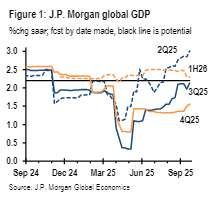
Core Insights - The global economy is experiencing an unprecedented scenario where corporate capital expenditure is surging at an unprecedented rate, while employment growth in developed economies is nearly stagnant [1][3] - JPMorgan's recent report indicates a projected 11% annualized growth in global capital expenditure by the first half of 2025, contrasting sharply with a mere 0.4% year-on-year increase in employment in developed markets [1][3] - This phenomenon has led to two contrasting interpretations: one optimistic, viewing it as a sign of successful technology implementation and productivity gains, and the other pessimistic, warning of a potential capital expenditure bubble driven by technology [1][5][6] Group 1: Investment Trends - Global capital expenditure is expected to rise significantly, with a forecasted annualized growth rate of 10.2% in the first half of 2025, following a modest 4% growth in 2024 [3] - The acceleration in capital spending is widespread across regions, indicating a robust investment environment despite stagnant hiring [3][4] - The report highlights that this situation is historically rare, as weak employment growth typically signals an impending economic downturn [4] Group 2: Optimistic Perspective - An optimistic interpretation suggests that the world is entering a new phase driven by technological revolution, particularly AI, which is reshaping production functions [5] - Companies are investing heavily in efficiency-enhancing equipment and intellectual property products rather than expanding their workforce [5] - Strong productivity growth, projected at 4% annualized for the third quarter in the U.S., supports the notion that economic growth can be sustained without significant job creation [5] Group 3: Pessimistic Outlook - A more cautious viewpoint posits that the current capital expenditure surge may be unsustainable and could diminish as preemptive spending in the U.S. and Asia concludes [6] - The stagnation in employment growth may reflect a broader shift towards business caution, with companies opting for automation and technology investments over workforce expansion [6] - Concerns arise regarding a potential negative feedback loop, where declining labor income growth could erode consumer confidence and spending, leading to a broader economic downturn [7]
人类为什么总喜欢造新词儿
Hu Xiu· 2025-08-03 09:58
Group 1 - The article discusses the disparity in economic recovery in Hong Kong, highlighting a "jobless recovery" phenomenon where GDP is growing but employment is not improving [1][4][5] - Despite a reported 10 consecutive quarters of GDP growth and a 16-month rise in exports, many residents feel the economic situation is poor, with low consumer spending and business closures [2][3] - The term "jobless recovery" is used to describe the current economic state of Hong Kong, indicating a lack of job growth despite overall economic indicators suggesting recovery [4][7] Group 2 - The article references a podcast discussing the economic conditions in Hong Kong, questioning the true state of the economy and the reasons behind the perceived disparity in economic experiences [5] - The concept of "jobless recovery" has historical roots, having been used since the 1990s to describe situations where economic growth does not correlate with job growth [7] - The discussion includes the broader implications of creating new economic concepts to explain unusual economic phenomena, suggesting that language plays a crucial role in shaping economic understanding [8][12][20]