
权益风险溢价

Search documents
Riders on the Charts:每周大类资产配置图表精粹:【资产配置快评】2026年第11期-20260317
Huachuang Securities· 2026-03-17 08:14
Group 1: Geopolitical Impact on Oil Prices - The conflict between the US, Israel, and Iran has led to the near-total closure of the Strait of Hormuz, with the number of oil tankers passing through dropping from 25 to 6 in three weeks, a decrease of 76%[4] - Geopolitical tensions have pushed international oil prices back into a long-term upward channel, with strong resistance levels at $110 and $130 per barrel[6] - As of March 15, gasoline prices in the US have surged, with 87-octane gasoline reaching $3.7 per gallon, a 25% increase since February 28[10] Group 2: Market Indicators and Economic Implications - The Brent-WTI oil price spread narrowed to zero, indicating systemic supply shocks in the oil market, with Brent's 3-month option volatility spiking to 69, the highest in four years[13] - Rising oil prices are expected to significantly increase inflationary pressures in overseas economies, which may not yet be reflected in inflation data[15] - The equity risk premium (ERP) for the CSI 300 index is currently at 4.1%, which is one standard deviation below the 16-year average, suggesting potential for valuation uplift[17] Group 3: Financial Metrics and Trends - The forward arbitrage return for China's 10-year government bonds is at 33 basis points, 63 basis points higher than the level in December 2016[20] - The 3-month USD/JPY basis swap is at -21.8 basis points, indicating increased offshore dollar financing pressure has eased[23] - The copper-gold price ratio has risen to 2.6, indicating a divergence in signals between the offshore RMB exchange rate and global demand dynamics[25]
Riders on the Charts:每周大类资产配置图表精粹:【资产配置快评】2026年第9期-20260303
Huachuang Securities· 2026-03-03 04:46
Group 1: Oil Market Dynamics - The number of tankers passing through the Strait of Hormuz decreased from 229 to 180, a drop of 49 vessels, while the Panama Canal saw an increase from 53 to 93 vessels, up by 40 vessels, and the Suez Canal increased from 72 to 100 vessels, up by 28 vessels[6] - As of March 2, the 12-month Brent crude oil contango reached $12, exceeding the historical average by one standard deviation, marking the highest level since September 2023[7] - Speculative short positions in Brent crude futures were 23,000 contracts, while WTI crude futures had net long positions of 173,000 contracts, indicating a higher risk of a short squeeze in Brent compared to WTI[11] Group 2: Geopolitical Impact - Ongoing geopolitical conflicts have widened the price spread between regional benchmark crude and natural gas, with the Brent-WTI spread reaching $6.9, the highest since February 2023, and the Asian and US natural gas futures spread reaching $14.6, also a peak since February 2025[14] - The price of Brent near-month contracts rose over 6.5% compared to the previous Friday, while the far-month contracts increased by approximately 3%[17] Group 3: Financial Indicators - The equity risk premium (ERP) for the CSI 300 index was 4.1% as of February 27, below the historical average by one standard deviation, indicating potential for valuation uplift[18] - The forward arbitrage return for China's 10-year government bonds was 32 basis points, 62 basis points higher than the level in December 2016[22] - The total return ratio of domestic stocks to bonds was 29.1 as of February 27, above the 16-year average, suggesting increased attractiveness of equity assets relative to fixed income[29]
Riders on the Charts:每周大类资产配置图表精粹:【资产配置快评】2026年第8期-20260224
Huachuang Securities· 2026-02-24 07:15
Group 1: Market Trends - Significant style shift in overseas stock markets, particularly in the U.S., with value stocks outperforming growth stocks[5] - As of February 20, the value long/short hedge fund strategy index rose by 9.7%, while the growth long/short hedge fund strategy index fell by 1.6%, resulting in a performance gap exceeding 10%[7] - The equal-weighted S&P 500 index's monthly performance difference compared to the market-cap weighted S&P 500 index reached 3.4%, the highest level since 2010[16] Group 2: Risk and Returns - The equity risk premium (ERP) for the CSI 300 index was 4.2% as of February 13, which is one standard deviation below the 16-year average, indicating potential for valuation uplift[19] - The forward arbitrage return for China's 10-year government bonds was 29 basis points, 59 basis points higher than the level in December 2016[21] - The total return ratio of domestic stocks to bonds was 28.7 as of February 13, above the 16-year average, suggesting increased attractiveness of equity assets relative to fixed income[29] Group 3: Currency and Commodity Indicators - The copper-gold price ratio reached 2.5 as of February 20, indicating a convergence with the offshore RMB exchange rate of 6.9, suggesting alignment in signals from both indicators[27] - The 3-month USD/JPY basis swap was -16.8 basis points as of February 20, indicating increased offshore dollar financing pressure relief due to higher usage of the Fed's standing repo facility[24]
资产配置快评:Riders on the Charts:每周大类资产配置图表精粹-20260204
Huachuang Securities· 2026-02-04 04:12
Group 1: Gold Market Insights - Last week, gold prices briefly reached a record high of $5,586 but closed below $5,000, indicating a return to the long-term logarithmic channel[4] - The single-day percentage drop in gold prices exceeded 11%, marking the largest drop in at least 50 years, surpassing the previous record of 9.4% on March 17, 1980[7] - The gold-silver price ratio fell to 46, the lowest in 15 years, before rebounding above 50, suggesting potential weakness in gold's recovery[10] Group 2: Currency and Interest Rate Trends - The risk reversal volatility for the euro against the dollar has surged to its second-highest level in 20 years, indicating increased demand for euro call options[12] - As of January 30, the net short position in dollar futures dropped to 13.9% of total open interest, down from 22% the previous week, reflecting reduced bearish sentiment ahead of the new Fed chair nomination[16] - The 10-year Chinese government bond forward arbitrage return is currently at 30 basis points, which is 60 basis points higher than the level in December 2016[20] Group 3: Equity Market Analysis - The equity risk premium (ERP) for the CSI 300 index is at 4.2%, which is one standard deviation above the 16-year average, indicating potential for valuation uplift[17] - The total return ratio of domestic stocks to bonds is 28.8, above the 16-year average, suggesting enhanced attractiveness of equity assets relative to fixed income[28]
【资产配置快评】2026年第3期:Riders on the Charts:每周大类资产配置图表精粹-20260119
Huachuang Securities· 2026-01-19 14:46
Group 1: Inflation and Commodity Performance - The total return ratio of gold to U.S. Treasuries reached 0.41 by December 2025, indicating that high inflation risks may have been fully priced in, as historical comparisons show similar levels during periods of high inflation with CPI at 9.7% and 8.3%[5] - The S&P Goldman Sachs Commodity Index fell by 1% in the first nine months of 2025, while the CRB Commodity Index rose by 1.7%, reflecting a subdued performance in commodities due to the contraction of the U.S. "twin deficits" from 11.5% to 9.8% of GDP[11] - The gold-to-silver price ratio dropped to 51 as of January 16, 2026, below the 60-year average of 59, suggesting potential downward pressure on gold prices[8] Group 2: U.S. Debt and Interest Rates - The weighted average yield of U.S. Treasuries rose to 3.36% by Q3 2025, the highest since Q2 2009, while interest expenses as a percentage of GDP increased to 3.86%[14] - The U.S. mortgage effective rate was 4.2% as of Q3 2025, which is 2.1% lower than the 30-year mortgage rate, indicating a potential overestimation of the pressure on household consumption from high mortgage rates[17] - The weighted duration of U.S. Treasuries decreased from 72 months to 71.3 months, alleviating some pressure on government interest expenses[14] Group 3: Equity Risk Premium and Market Indicators - The equity risk premium (ERP) for the CSI 300 Index was 4.1% as of January 16, 2026, which is below the historical average by one standard deviation, indicating potential for valuation uplift[20] - The total return ratio of domestic stocks to bonds was 29.3 as of January 16, 2026, above the past 16-year average, suggesting increased attractiveness of equity assets relative to fixed income[30] - The forward arbitrage return for China's 10-year government bonds was 34 basis points as of January 16, 2026, which is 64 basis points higher than the level in December 2016[22]
Riders on the Charts:每周大类资产配置图表精粹:【资产配置快评】2026年第2期-20260113
Huachuang Securities· 2026-01-13 07:47
Economic Indicators - The ratio of U.S. household net wealth to disposable income has risen to 7.9 times, up from 7.7 times in Q3 2024, reaching the highest level since Q1 2022, indicating recovery from the negative impact of Federal Reserve interest rate hikes[4] - The debt leverage ratio of non-financial corporations in the U.S. has fallen below 100% for the first time in a decade, now at 98.8%[10] - The global share of U.S. dollars in foreign reserves has dropped to 56.9%, the lowest in 30 years, while the euro's share has increased to 20.3%[12] Market Performance - As of Q3 2025, the S&P 500 index has risen to 6,689 points, while the S&P/Case-Shiller U.S. National Home Price Index has decreased to 329[4] - U.S. pension funds increased their equity holdings to $9.7 trillion in Q3 2025, up from $8.8 trillion in Q2 2025, with a funding gap now below $2 trillion, the lowest since Q2 2008[6] Productivity and Returns - U.S. labor productivity has increased by 66.8% since 1991, significantly outpacing other developed economies, with the Eurozone at 28.9%, Japan at 19.7%, and the UK at 17.6%[16] - The equity risk premium (ERP) for the CSI 300 index is currently at 4%, which is one standard deviation above the 16-year average, indicating potential for valuation uplift[19] Financial Market Dynamics - The forward arbitrage return for China's 10-year government bonds is currently at 37 basis points, which is 67 basis points higher than the level in December 2016[22] - The 3-month USD/JPY basis swap is at -17 basis points, indicating increased offshore dollar financing pressure, while the Libor-OIS spread is at 122.7 basis points, reflecting a rise in the use of the Fed's standing repo facility[25]

看看三个美股的估值指标历史效果如何
雪球· 2025-11-12 08:46
Core Viewpoint - The article analyzes the current state of the U.S. stock market from a valuation perspective, focusing on three key valuation indicators: Equity Risk Premium (ERP), Shiller CAPE, and Buffett Indicator, highlighting that all three suggest the market is currently overvalued and future returns may be lower than in recent years, while also noting that these indicators do not predict short-term market movements [4][19]. Group 1: Equity Risk Premium - Equity Risk Premium (ERP) measures the attractiveness of stocks relative to risk-free assets, calculated as the S&P 500 dividend yield minus the yield on 10-year U.S. Treasury bonds [8]. - Historical data shows that during periods of high market valuations and low dividend yields, such as the 2000 internet bubble and the recent period, ERP often turns negative, indicating that Treasury investments are more attractive [9]. - Conversely, after significant market downturns, like the 2008-2009 financial crisis, ERP can rebound, suggesting that stocks become more appealing compared to Treasuries [9][10]. Group 2: Shiller CAPE - Shiller CAPE, developed by economist Robert Shiller, assesses market valuation by using the inflation-adjusted average earnings over the past ten years, providing a smoother and more stable measure [13]. - The Shiller CAPE has shown three significant peaks in the last 40 years: during the 1999-2000 internet bubble, before the 2007 financial crisis, and in the current post-pandemic period, with the latest peak approaching historical highs [13][14]. - While Shiller CAPE can illustrate market conditions over long cycles, it does not predict short-term price movements, and high valuations do not necessarily lead to immediate declines [14]. Group 3: Buffett Indicator - The Buffett Indicator compares the total market capitalization of publicly traded companies to the country's GDP, indicating whether the market is overvalued or undervalued [17]. - Since 1980, this ratio has significantly increased, with the market capitalization reaching over 200% of GDP in recent years, surpassing levels seen during the 2000 internet bubble [18]. - Although the Buffett Indicator does not specify when the market will peak or decline, it suggests that when market capitalization is significantly higher than economic output, future long-term returns are likely to be lower [19].


美元重夺“最具吸引力资产”地位,套利交易或重创全球股市
智通财经网· 2025-11-11 03:59
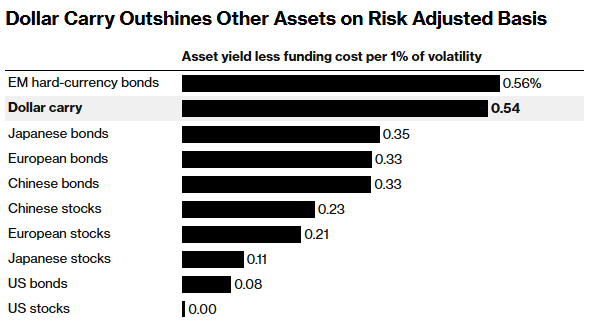
Core Viewpoint - The US dollar is regaining its status as a highly attractive investment asset, contrary to previous concerns about its future due to "sell America" sentiments [1][3] Group 1: Dollar's Investment Appeal - A simple strategy involves borrowing low-yield currencies (like yen or Swiss franc) and investing in dollars, potentially yielding higher returns than European stocks [1] - Despite a nearly 7% decline in the dollar index this year, it has rebounded about 3% from September's lows, partly due to arbitrage trading [1] - JPMorgan's strategist Yuxuan Tang asserts that the dollar will remain a high-yield currency, maintaining a strong position from both trend and yield perspectives [1] Group 2: Impact of Arbitrage Trading - The attractiveness of dollar arbitrage strategies is amplified by significantly reduced dollar volatility, partly due to a prolonged US government shutdown [3] - As investors seek higher returns elsewhere, liquidity tends to increase, driving up high-risk asset prices, although this trend can reverse quickly with market volatility [3] - The S&P 500 index has risen over one-third since its April low, with European and Chinese stock indices also experiencing significant gains [3] Group 3: Comparative Returns and Risks - Investors in Chinese stocks see annualized returns of only 0.23% for each percentage point increase in volatility, while low-risk arbitrage trading yields 0.54% [5] - The potential risks of dollar arbitrage trading include a sudden drop in short-term interest rates, which could diminish its advantages [5] - Deutsche Bank's Jacky Tang notes that the dollar remains an attractive arbitrage asset, although uncertainties exist regarding the Federal Reserve's future interest rate decisions [5][6] Group 4: Long-term Outlook - For investors looking to maintain dollar arbitrage strategies into 2026, there is optimism as US inflation reached 3% in September, above the Fed's 2% target [6] - Wells Fargo's strategist Aroop Chatterjee indicates that as long as the macroeconomic and financial environment remains stable, dollar arbitrage trading may continue to be appealing [6]
Riders on the Charts: 每周大类资产配置图表精粹 第285期
Sou Hu Cai Jing· 2025-11-04 12:25
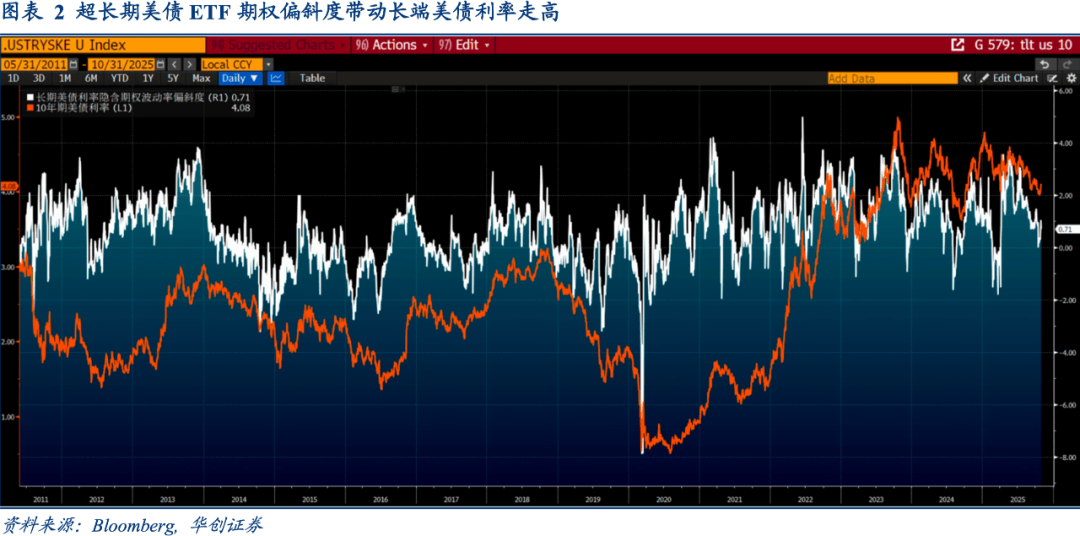
Group 1 - The ratio of total returns between gold and U.S. Treasuries suggests that high inflation risks may have been adequately priced in, with the ratio reaching 0.38 as of October 2023, comparable to levels seen in August 1975 and June 1978 when U.S. CPI was significantly higher [2][4] - The skewness of options for the iShares 20+ Year Treasury Bond ETF (TLT) has rebounded, indicating increased investor concern over inflation risks, leading to a rise in the 10-year Treasury yield to 4.1% despite the Federal Reserve's rate cuts [2][4] - The U.S. Treasury's increased debt issuance has resulted in a surge in the usage of the Standing Repo Facility (SRF), with Treasury cash reserves rising from $330 billion to $1 trillion between June and October 2023, while commercial bank reserves fell significantly [8][10] Group 2 - The equity risk premium (ERP) for the CSI 300 Index was reported at 4.4% as of October 31, 2023, indicating a potential for valuation uplift as it is below the historical average [14] - The forward arbitrage return for China's 10-year government bonds was noted at 27 basis points, which is significantly higher than levels recorded in December 2016, suggesting improved arbitrage opportunities [16] - The total return ratio between domestic stocks and bonds stood at 28.6 as of October 31, 2023, indicating that the relative attractiveness of equity assets compared to fixed income has increased [26]
【资产配置快评】2025年第49期:Riders on the Charts:每周大类资产配置图表精粹-20251104
Huachuang Securities· 2025-11-04 04:41
Group 1: Inflation and Asset Performance - The total return ratio of gold to U.S. Treasuries has surged to 0.38 as of October 2025, indicating that high inflation risks may have been fully priced in[4] - The 10-year U.S. Treasury yield has risen to 4.1%, despite the Federal Reserve's 50 basis point rate cut, reflecting concerns over inflation rather than economic downturn[10] - The equity risk premium (ERP) for the CSI 300 index is at 4.4%, which is one standard deviation below the 16-year average, suggesting potential for valuation uplift[18] Group 2: Market Dynamics and Financing Pressures - The U.S. Treasury has increased debt issuance significantly, leading to a surge in the usage of the Standing Repo Facility (SRF), which reached over $50 billion, a five-year high[13] - Commercial bank reserves have dropped from $3.4 trillion to $2.9 trillion, resulting in increased short-term dollar financing pressures[16] - The 10-year Chinese government bond forward arbitrage return is at 27 basis points, which is 57 basis points higher than the level in December 2016[22] Group 3: Currency and Commodity Indicators - The 3-month USD/JPY basis swap is at -24.6 basis points, indicating higher offshore dollar financing costs, while the Libor-OIS spread is at 106.3 basis points, reflecting eased offshore dollar financing pressures[25] - The copper-to-gold price ratio has fallen to 2.7, while the offshore RMB exchange rate has risen to 7.1, indicating diverging signals between the two metrics[27] - The total return ratio of domestic stocks to bonds is at 28.6, above the average level of the past 16 years, enhancing the attractiveness of equity assets relative to fixed income[29]