物理AI(Physical AI)

Search documents
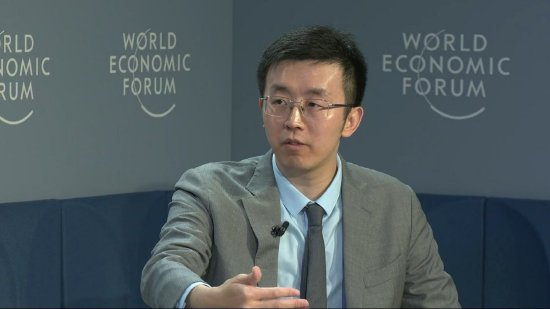
对话梅卡曼德创始人兼CEO邵天兰:当 AI 进入物理世界,部署能力成为真正的护城河
Xin Lang Cai Jing· 2026-02-06 16:50
Group 1 - The discussion at the World Economic Forum is shifting towards how AI can be integrated into the physical world and create scalable industrial capabilities, with a focus on concepts like "Physical AI" and "Embodied AI" [3][32] - The CEO of Mech-Mind Robotics emphasizes that the value of robots lies not in their human-like appearance but in their ability to adapt to complex physical environments, complete real tasks, and achieve rapid deployment at low costs [3][4][32] - Mech-Mind Robotics aims to enhance robots' perception, understanding, and decision-making capabilities to reduce reliance on extensive engineering adjustments, thereby improving deployment speed and cost-effectiveness [4][34] Group 2 - The company has chosen a restrained approach by defining its boundaries clearly, focusing on providing the "eyes, brain, and hands" of robots rather than complete systems or production lines [5][35] - Mech-Mind's clients span various industries, including automotive, battery, photovoltaic, 3C, and logistics, indicating a broad applicability of their technology [6][36] - The company believes that the common needs across different industries, such as perception, recognition, and safety execution, are often underestimated [6][36] Group 3 - The CEO outlines a three-phase development path for Mech-Mind: short-term growth in manufacturing and logistics, mid-term expansion into service industries, and long-term potential for home-use robots [7][28] - The company has achieved significant sales growth, moving from selling approximately 1,000 units in the first four years to over 10,000 units annually in recent times [20][49] - Mech-Mind focuses on standardized products rather than customized solutions, leveraging extensive real-world data to enhance AI capabilities [49][50] Group 4 - The company does not believe in a "full-stack" approach, arguing that no single company can excel in all aspects of robotics, which could dilute resources and core competencies [25][54] - The CEO expresses skepticism about the feasibility of creating highly complex robotic hands that mimic human dexterity, advocating instead for robots designed to complete specific tasks efficiently [26][55] - Mech-Mind's strategy emphasizes the importance of having a unique skill set or competitive edge in key areas, rather than merely assembling components [27][56]

韩国自动驾驶的突围之路:借道中韩合作,冲刺 2027
3 6 Ke· 2026-02-05 10:18
Core Insights - The article highlights the significant collaboration between South Korea and China in the autonomous driving sector, marked by the signing of 32 cooperation agreements during a business forum in Beijing [1][13]. - South Korea aims to achieve Level 4 (L4) autonomous driving commercialization by 2027, positioning itself among the top three global players in the industry [4][16]. Group 1: South Korea's Strategic Framework - South Korea has developed a comprehensive strategy for autonomous driving that includes top-level design, roadmaps, and pilot implementations since 2013 [4]. - Recent policies include the "Plan to Enhance the Competitiveness of the Autonomous Vehicle Industry," which aims for L4 commercialization by 2027, and the designation of Gwangju as the first "city-wide" autonomous driving test city [4][5]. - The government has introduced a regulatory framework that allows for relaxed regulations for Level 3 (L3) and L4 vehicles, empowering local governments to designate pilot areas [5]. Group 2: Commercialization and Application Scenarios - South Korea has seen rapid advancements in autonomous driving applications across various sectors, including public transport and logistics [6][10]. - Seoul is set to launch a daytime autonomous bus route by September 2025, featuring fully automated vehicles without drivers [6]. - The logistics sector has expanded significantly, with autonomous freight trucks now covering 5,224 kilometers of highways, and plans for robot and drone deliveries by 2026 and 2027, respectively [10]. Group 3: Technological Advancements and Infrastructure - South Korea's strength in autonomous driving is supported by its robust capabilities in semiconductors, communications, and automotive manufacturing [9]. - The country is embracing "Physical AI," integrating sensors, vehicle control, and road infrastructure with AI to minimize discrepancies between simulation and real-world conditions [11]. - The establishment of cooperative intelligent transport systems (C-ITS) has been a key focus, with extensive infrastructure already in place to enhance safety and efficiency [12]. Group 4: Sino-Korean Collaboration - The collaboration between Chinese and South Korean companies marks a shift from isolated technical exchanges to a more integrated ecosystem [13]. - Notable partnerships include Lenovo's collaboration with SWM for L4 Robotaxi development and the strategic alliance between Mushroom Carlink and LG Electronics for autonomous vehicle deployment [13]. - This partnership leverages China's data accumulation and cost control expertise alongside South Korea's regulatory framework and supply chain advantages [14]. Group 5: Challenges and Strategic Responses - Despite rapid progress, South Korea faces challenges in transitioning from experimental technologies to large-scale industrial applications [15]. - Issues such as accident liability, data privacy, and public acceptance of autonomous vehicles remain critical hurdles [15]. - South Korea's dual strategy of "open cooperation and technological breakthroughs" aims to address these challenges while enhancing its competitive position in the global market [16]. Group 6: Future Outlook - The collaboration between South Korea and China is seen as a pivotal moment in the global autonomous driving landscape, potentially reshaping industry dynamics [17]. - The next two years are expected to be a "harvest period" for Sino-Korean cooperation in autonomous driving, with the potential emergence of a new global leader in the sector [17].

物理AI时代重磅芯片IPO,5年干到“全球第一”,美团腾讯联手押注
3 6 Ke· 2026-02-02 08:04
Core Insights - Aixin Yuanzhi, a Chinese edge AI chip unicorn, is set to launch its global IPO on February 10, 2024, on the Hong Kong Stock Exchange, offering approximately 105 million H-shares [1][3] - The company specializes in AI inference system chips (SoC) for edge computing and terminal devices, positioning itself as a key player in the "edge brain" sector of the physical AI wave [1][4] Company Overview - Founded in 2019, Aixin Yuanzhi ranks among the top five global suppliers of visual edge AI inference chips, with an estimated shipment of 9.12 million chips in 2024, capturing a market share of approximately 6.8% [3][11] - In the mid-to-high-end visual edge AI inference chip segment, the company holds a leading market share of 24.1% [3][11] - Major shareholders include Meituan's Beijing Kuxun Technology, Tencent, Lenovo Star, and the founder of Haowei Group, Yu Renrong [3] Technology and Product Development - Aixin Yuanzhi's core computing unit, the Aixin Tongyuan hybrid precision NPU, is designed to support mainstream visual and multimodal model architectures, achieving higher energy efficiency compared to general-purpose GPUs [6][7] - The company has developed five generations of SoCs, with cumulative deliveries exceeding 165 million units by September 30, 2025, indicating a successful transition from concept validation to mass production [9][11] - The product matrix includes various SoCs for visual perception, smart vehicles, and edge AI inference applications, with commercialized products like the AX520 series and M55H already in the market [8][16] Market Trends and Future Outlook - The AI industry is shifting focus from cloud-based AI to physical AI, emphasizing real-time performance, reliability, and environmental adaptability [4][17] - Aixin Yuanzhi's technology and production experience position it well to meet the growing demand for efficient and stable edge computing solutions, particularly in smart automotive applications [16][17] - The company is exploring edge computing solutions and adapting large models for deployment at the edge, further enhancing its competitive edge in the market [16]

跳出手机屏幕,千问正在改变物理世界
Jing Ji Guan Cha Wang· 2026-01-12 10:19
Core Insights - The CES 2026 highlighted the arrival of the "Physical AI" era, with a shift from AI generating text and images to interacting with the real world [1] - The Alibaba Cloud Tongyi Intelligent Hardware Exhibition showcased over 1,500 AI-integrated hardware products, emphasizing practical applications rather than theoretical concepts [1][3] - The focus of hardware manufacturers is on embedding AI capabilities into everyday products, transforming how people live and work [3][6] Group 1: AI Hardware Development - The exhibition featured 76 categories and over 200 brands, including major players like Honor and OPPO, as well as innovative startups [1] - AI hardware is moving beyond traditional smartphone applications, with products capable of tasks such as driving, assisting the visually impaired, and adjusting lighting [1][3] - Companies are leveraging the Qianwen model to enhance their products, enabling functionalities like health monitoring and automatic report generation [3][4] Group 2: Market Trends and Innovations - The focus is on practical AI applications that address specific needs, such as the YoooTek AI ONE device that captures voice notes and organizes information [4][6] - The shift towards AI hardware is supported by a new multi-modal interaction development kit, allowing even non-coders to integrate AI into their devices [6] - The competitive landscape is evolving, with a focus on reducing costs and improving efficiency in AI hardware development [6][7] Group 3: Industry Dynamics - The integration of AI into hardware is seen as a way to enhance productivity and redefine interactions in various sectors, including automotive and healthcare [10][11] - The Chinese manufacturing ecosystem is characterized by low trial costs and a willingness to innovate, positioning it as a leader in AI hardware development [11][12] - The Qianwen model's open-source strategy is enabling a broader range of developers to create AI hardware, democratizing innovation [8][12]

CES 2026|新石器无人车“秀肌肉”:X1破局物流配送“最后100米”难题 2026年将加速全球扩张
Zhong Guo Jing Ying Bao· 2026-01-08 15:21
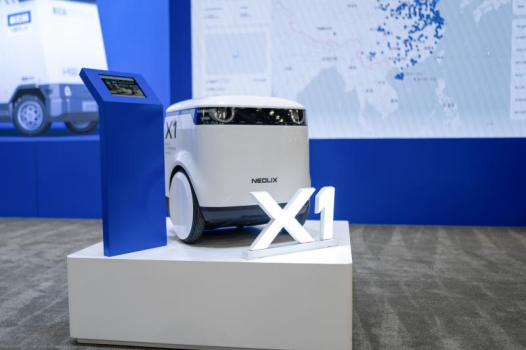
Core Insights - The central theme of CES 2026 is AI, particularly focusing on "Physical AI," which emphasizes the integration of AI with the real world [1] - Neolix, a leading player in the autonomous vehicle sector, showcased its new product, Neolix X1, aimed at solving the "last 100 meters" delivery challenge [1][3] Group 1: Product Development - Neolix has developed a comprehensive RoboVan product matrix ranging from 0.5 to 12 cubic meters, addressing various urban logistics needs [5] - The Neolix X1 is designed for indoor and outdoor navigation, capable of autonomously entering sidewalks and buildings, specifically targeting last-mile delivery [2][3] - Neolix's existing models, X3 and X6, utilize self-developed L4 autonomous driving technology, supporting 24/7 operations with significant load capacities and ranges [2][6] Group 2: Technological Advancements - Neolix introduced an AI-driven next-generation logistics solution featuring a dual-engine architecture for optimizing large-scale autonomous vehicle fleets [6] - The solution includes a comprehensive intelligent scheduling system that automates the entire logistics lifecycle, capable of managing over 100,000 L4 autonomous vehicles [6] - Neolix's L4 autonomous driving technology does not rely on high-precision maps, significantly reducing deployment costs and preparation time [6][11] Group 3: Market Expansion and Performance - Neolix has deployed over 16,000 L4 autonomous vehicles, covering nearly 80 million kilometers in various urban delivery scenarios [7] - The company aims to deliver over 50,000 autonomous vehicles internationally by 2027, starting its global expansion in the Middle East [11] - Neolix's business model has expanded beyond express delivery, with non-express scenarios now accounting for over 50% of total sales [9][10]
暗盘最高涨62.6%,“PhysicalAI”第一股被低估
Ge Long Hui· 2025-12-31 17:21
Core Viewpoint - 51WORLD (五一视界) is set to be listed on December 30, 2023, and has shown significant interest in the dark market, with a peak increase of 62.6% due to its status as a rare "Physical AI" stock [2][5][9]. Group 1: Market Performance - In the Futu dark market, 51WORLD opened at HKD 44.00, reaching a high of HKD 46.98, with a maximum gain of 44.26% [2]. - In the Tonghuashun dark market, the stock peaked at HKD 49.6, with a gain exceeding 62.62%, allowing investors to earn up to HKD 3,820 per lot of 200 shares [5]. - Despite six stocks being listed simultaneously on the Hong Kong Stock Exchange, 51WORLD emerged as a standout technology stock, leading the dark market [5]. Group 2: Company Fundamentals - 51WORLD is positioned in the trillion-dollar Physical AI sector, which is expected to be significantly larger than content AI, with major tech companies like OpenAI and Alibaba investing in this space [9]. - The company possesses essential technologies for Physical AI, including spatial intelligence models, data fuel, and training platforms, with established products like 51Aes and 51Sim [9]. - 51WORLD has demonstrated strong commercial capabilities, serving over a thousand enterprise clients across various sectors, with revenue projected to grow from CNY 170 million in 2022 to CNY 287 million in 2024, and a 62% year-on-year increase in the first half of 2025 [9]. Group 3: Investment Interest - Notable investors, including prominent figures from the private equity sector and leading tech companies, have shown strong interest in 51WORLD during its IPO phase, contributing to its rising stock price [10]. - The IPO is expected to raise approximately HKD 731 million, with a potential maximum of HKD 841 million if the over-allotment option is exercised [11].

地平线首曝BPU「黎曼」架构,用数学流形重构AI计算
机器之心· 2025-12-09 08:41
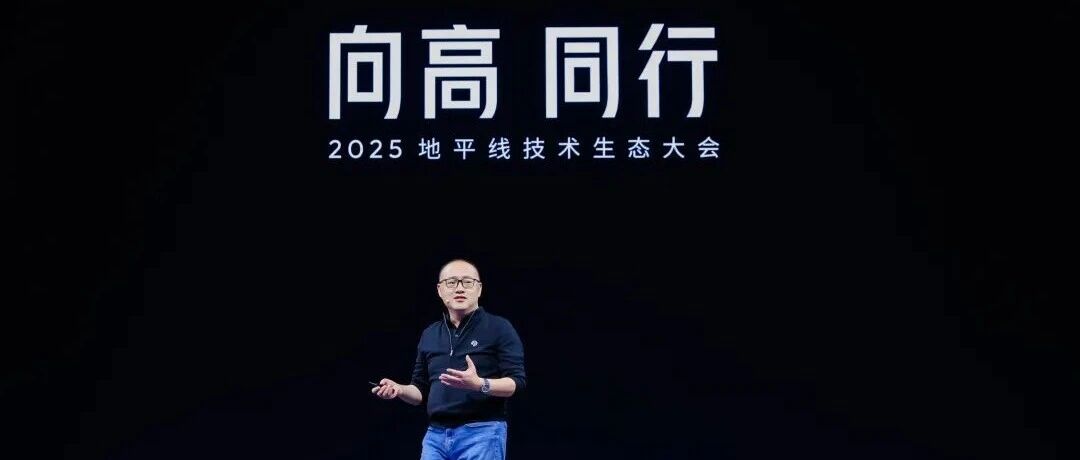
Core Viewpoint - The article discusses the evolution and advancements of Horizon Robotics under the leadership of founder Yu Kai, highlighting the transition from digital intelligence to physical intelligence and the development of new AI architectures and algorithms aimed at enhancing autonomous driving capabilities and robotics [1][2]. Group 1: Company Evolution and Milestones - In December 2012, a significant auction for a deep learning team took place, where Yu Kai represented Baidu, competing against Google, Microsoft, and DeepMind, marking a pivotal moment in AI history [1]. - Horizon Robotics was officially registered on July 14, 2015, coinciding with NASA's New Horizons mission, symbolizing the company's commitment to reaching new heights in AI computing [2]. Group 2: Technological Advancements - At the 2025 Horizon Technology Ecosystem Conference, Horizon Robotics unveiled its full-scene intelligent driving (HSD) production capabilities and introduced the new BPU "Riemann" architecture, aiming to build a foundational "Wintel" ecosystem for physical AI [4]. - The BPU architecture has evolved significantly, with a tenfold increase in key operator performance and a tenfold increase in high-precision operator support, targeting L4/L5 level autonomous driving [7]. - The new Riemann architecture aims to simplify complex real-world structures, enhancing efficiency and performance in AI applications [7]. Group 3: Compiler Innovations - Horizon Robotics introduced the fourth-generation compiler "OpenExplorer 4.0," which incorporates AI-driven optimization strategies, including reinforcement learning and Monte Carlo tree search, to overcome traditional compiler limitations [8][9]. - The new compiler has reduced compilation time from hours to minutes and improved model performance by 20%, optimizing end-to-end latency in HSD applications [12]. Group 4: Business Model Transformation - Horizon Robotics launched the HSD Together model, transitioning from a traditional chip-selling approach to providing a comprehensive algorithm service, allowing partners to leverage a validated intelligent driving system [13][14]. - This model aims to significantly reduce costs and time for partners, enabling them to focus on integration and differentiation while lowering operational expenses by up to 90% [14]. Group 5: Market Accessibility - Horizon Robotics aims to democratize advanced driving assistance systems, targeting the 100,000 RMB market segment, which constitutes a significant portion of the Chinese automotive market [16]. - The company demonstrated that a single Journey 6M chip can effectively handle complex urban driving scenarios, emphasizing cost-effectiveness and adaptability for both electric and traditional fuel vehicles [18][19]. Group 6: Robotics Ecosystem Development - Yu Kai emphasized the importance of mastering autonomous driving as a foundation for future robotics, defining intelligent driving models as the starting point for physical AI [21]. - Horizon Robotics introduced open-source initiatives for its robotics business, including HoloMotion and HoloBrain, aimed at enhancing motion and operational intelligence in robots [20][25]. - HoloMotion has been made available on GitHub, with institutions like Stanford and Tsinghua already utilizing it, indicating a strong interest in developing embodied intelligence [27].
全尺寸人形机器人Agile ONE来了!思灵机器人推进物理AI落地
机器人大讲堂· 2025-11-25 06:20
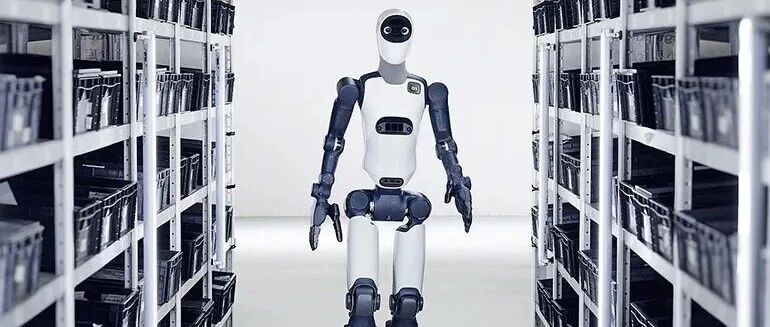
Core Viewpoint - Agile Robots, a leading provider of intelligent robotic solutions, has launched its full-sized humanoid robot, Agile ONE, which embodies the vision of Physical AI, capable of perceiving, understanding, and acting in the physical world [1][3]. Group 1: Company Background and Achievements - Founded in 2018, Agile Robots has approximately 2,500 employees and has seen its revenue multiply several times over the past four years, deploying over 20,000 robots globally, particularly in the automotive and consumer electronics sectors [3]. - The launch of Agile ONE is supported by a strong existing product portfolio, including Agile Hand, FR3 force-controlled robotic arm, and Diana 7 intelligent control robot [3]. Group 2: Key Advantages of Agile ONE - Agile ONE integrates three key advantages: a layered AI system trained on real-world data, dexterous hands derived from the German Aerospace Center (DLR), and a human-robot interaction philosophy based on trust [3][5]. - The layered approach to AI is structured as a "data pyramid," with a foundation of vast multimodal data, high-fidelity physical simulations, and extensive real-world interaction data from over 20,000 deployed robotic systems [5]. Group 3: Cognitive Architecture - Agile Robots employs a "three-layer brain" cognitive architecture, which includes slow thinking (strategic planning), fast thinking (dynamic response), and high-frequency control (instinctive manipulation) [5][6]. Group 4: Dexterous Manipulation Technology - The dexterous hand technology, developed over nearly two decades, allows for precise control and perception of force, enabling the robot to perform complex tasks such as manipulating small screws and operating tools [8][11]. - The integration of joint force sensors and fingertip tactile sensors provides the robot with advanced proprioceptive capabilities, addressing challenges in industrial automation that require human-like flexibility and judgment [8][11]. Group 5: Human-Robot Interaction and Safety - Agile Robots emphasizes that safety should be an inherent characteristic of the system rather than an add-on, aiming to create robots that are trustworthy and enjoyable to work alongside [9][10][14]. - The design of Agile ONE includes responsive features such as illuminated eye rings and proximity sensors to enhance communication and predictability in human-robot interactions [14]. Group 6: Market Potential and Strategic Vision - The humanoid robot market is projected to grow rapidly, with estimates suggesting a global market size of $38 billion by 2035 and the industrial robot solutions market reaching $51.8 billion by 2029 [15]. - Agile ONE is designed for structured industrial environments, focusing on tasks like material handling and precision operations, while its software platform, AgileCore, enables connectivity and data sharing among various robotic systems [15][17].
贝索斯携AI初创公司“普罗米修斯”高调回归硅谷 聚焦太空、机器人以及硬核物理
智通财经网· 2025-11-18 07:19
Group 1 - Jeff Bezos is establishing an AI startup named Project Prometheus, aiming to compete with OpenAI and Elon Musk's xAI, and will serve as co-CEO [1][2] - Project Prometheus has secured $6.2 billion in funding, primarily from Bezos himself, making it one of the best-funded early-stage AI startups [1][2] - The startup focuses on AI applications in various fields, including aerospace, automotive, and advanced manufacturing, aligning with Bezos's interest in sending humanity into space [2][3] Group 2 - Vik Bajaj, a top physicist and chemist, is co-founding and co-leading Project Prometheus, having previously worked at Google X and co-founded Verily [2][3] - The ultimate goal of Project Prometheus is to develop a "super AI model" capable of deep learning in more complex ways than existing AI chatbots like ChatGPT [3] - The company has recruited nearly 100 employees, including senior AI researchers from leading tech firms such as OpenAI, DeepMind, and Meta Platforms [3] Group 3 - The concept of "Physical AI" is emphasized, which involves enabling robots and autonomous systems to perceive, reason, and act in the real world [4] - NVIDIA is focusing on providing the computational power and platforms for "embodied AI," contrasting with the approaches of Tesla and Project Prometheus [4]

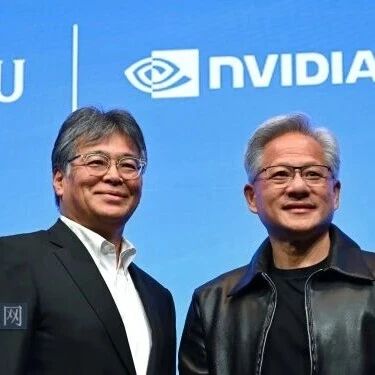
富士通与英伟达联合开发AI半导体
日经中文网· 2025-10-04 08:51
Core Insights - Fujitsu and NVIDIA are collaborating to develop a semiconductor aimed at artificial intelligence (AI) applications, with a goal to connect their chips on the same substrate by 2030, enhancing computational efficiency and energy savings [1][2] - The partnership aims to tap into new markets such as data centers and robotics, leveraging NVIDIA's expertise in GPU technology and Fujitsu's CPU development [1][2] Group 1: Collaboration Details - The joint semiconductor development will utilize NVIDIA's technology to achieve ultra-fast interconnectivity between multiple chips, allowing them to function as a single chip [1] - Fujitsu's new CPU, named "MONAKA," is being developed based on Arm architecture, with a target of achieving double the power efficiency compared to competitors, and is expected to be operational by 2027 [2] - The collaboration is expected to enhance energy efficiency significantly, with Fujitsu's president stating it marks an important step towards an AI-driven society [2] Group 2: Market Expansion and Strategic Goals - NVIDIA is looking to expand its market presence in Japan by leveraging Fujitsu's extensive experience in system construction and its established customer base across various sectors, including government and finance [5] - The partnership also includes plans for future collaboration on the successor to the "Fugaku" supercomputer, aiming for higher computational capabilities by integrating CPU and GPU technologies [5] - Other Japanese companies, such as Hitachi and NTT, are also engaging in partnerships with international firms to enhance energy efficiency in AI data centers, indicating a broader trend of collaboration in the tech industry [4]