稳健理财

Search documents
春节投资钱景∣稳健理财成“香饽饽”,投资者注意!别让空窗期吃掉收益
Bei Jing Shang Bao· 2026-02-12 03:53
Core Viewpoint - The annual Spring Festival financial management window has opened, with various financial companies and banks launching special products aimed at low-risk, stable returns to cater to the increased demand for managing idle funds before the holiday [1][4][5]. Group 1: Financial Products and Strategies - Multiple financial companies, including Postal Savings Bank Wealth Management and ICBC Wealth Management, have introduced pre-Spring Festival financial strategies, focusing on low-risk cash management and stable return products [4][5]. - Postal Savings Bank offers cash products starting from 0.01 yuan, with a maximum redemption of 100,000 yuan, and non-cash products with annualized returns of 3.43% and 3.99% [4]. - ICBC Wealth Management has launched cash management and low-volatility products, with a minimum investment of 1 yuan, featuring annualized returns of 1.70% and 1.84% for different products [4][5]. Group 2: Market Trends and Investor Preferences - The demand for low-volatility, stable-return financial products has surged as deposit rates have entered the "1 era," making these products the preferred choice for wealth management among residents [7]. - As of the end of 2025, the total scale of the bank wealth management market reached 33.29 trillion yuan, with fixed-income products accounting for 97.09% of the total, indicating a strong preference for stability among investors [7]. Group 3: Investment Recommendations - Analysts recommend that conservative investors focus on cash management and pure fixed-income products, while moderate-risk investors may consider "fixed income+" products to enhance returns without significantly increasing risk [9][11]. - For high-risk investors, a strategy of distinguishing between short-term and long-term funds is advised, with short-term funds allocated to low-risk assets and long-term funds to mixed or equity funds [9][11]. Group 4: Timing and Purchase Considerations - Investors are advised to be mindful of the timing of their purchases to avoid the "standing idle" phenomenon, which can occur if funds are not invested before the holiday [10][11]. - Specific deadlines for purchasing different types of financial products have been set by various companies to ensure that funds are effectively utilized during the holiday period [10].


天弘基金姜晓丽总,江湖再见
Xin Lang Cai Jing· 2026-02-10 12:40
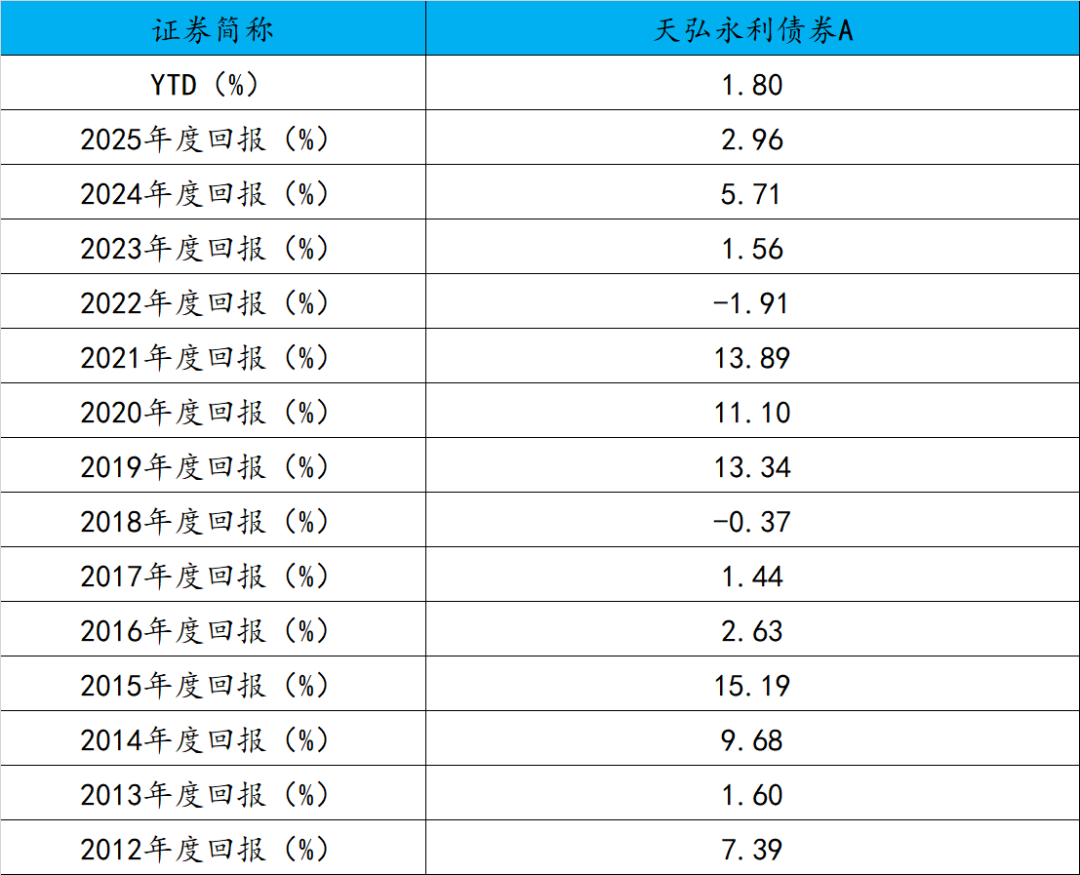
Core Viewpoint - The departure of Jiang Xiaoli from Tianhong Fund marks a significant transition in the investment management landscape, highlighting her dedication to prudent financial management and the trust she built with clients over her 16-year career [3][10][13]. Group 1: Jiang Xiaoli's Career and Achievements - Jiang Xiaoli has been with Tianhong Fund for 16 years, managing over 35 billion yuan in assets and has been recognized with multiple awards, including seven Golden Bull Awards, establishing her as a leading figure in the fixed income sector [3][11]. - Under her management, the Tianhong Yongli Bond B fund achieved a cumulative return of 167.12% over nearly 18 years, significantly outperforming its benchmark by 60.85 percentage points [11]. - Jiang's investment philosophy emphasized "steady financial management," focusing on safeguarding clients' investments and fostering trust [2][9]. Group 2: Industry Context and Trends - The trend of fund manager departures has become increasingly common, with 484 fund managers leaving the industry since the beginning of 2025, reflecting a departure rate of 11.76% [6][13]. - Tianhong Fund has implemented a multi-manager model for its "fixed income+" business to address concerns regarding product management continuity following Jiang's departure [5][12]. - The industry is witnessing a shift towards more collaborative management structures, as evidenced by the appointment of award-winning manager Du Guang to co-manage the Tianhong Yongli Bond fund [5][13].
《急不来》TVC荣获长城奖,信银理财以“稳”叙事赢得行业高度认可
Jin Rong Jie Zi Xun· 2026-02-09 08:16
Core Insights - The Long Wall Award, a prestigious recognition in China's advertising industry, has awarded the promotional video "Not Urgent" by Xinyin Wealth Management, celebrating its fifth anniversary, highlighting the brand's creative execution and emotional resonance [1][2] - The award signifies Xinyin Wealth Management's commitment to its core value of "stability," which has gained widespread recognition in the industry and among the public [1][2] Group 1: Award Recognition - The promotional video "Not Urgent" stood out among numerous entries due to its unique narrative perspective and effective communication, showcasing the brand's comprehensive strength in creativity, storytelling, production, and brand value transmission [1] - The Long Wall Award emphasizes creativity and market effectiveness, selecting the most representative and influential advertising cases each year [1] Group 2: Brand Philosophy and Communication - The video departs from typical financial advertising by focusing on everyday life scenes, using detailed cinematography and genuine emotional expression to convey the wisdom of "not rushing, but progressing steadily" [1] - Since its release, the video has garnered over 100 million views online and received extensive coverage from mainstream media, effectively merging the brand's image of "stability, trustworthiness, and warmth" with a calm mindset [1] Group 3: Company Overview - Xinyin Wealth Management, established in 2020 with a registered capital of 5 billion yuan, aims to provide professional and stable wealth management services to the public and qualified investors [2][3] - The company has developed a comprehensive product system covering various lines, including monetary, fixed income, mixed, and equity products, earning continuous trust from investors due to its clear risk-return characteristics and reasonable tiered structure [2]
终于有人把话说透了:当普通人存款到20–50万,危险的不是没钱
Sou Hu Cai Jing· 2026-02-02 08:21
Group 1 - The article discusses the anxiety associated with saving money, highlighting that having a significant amount in savings can lead to stress rather than comfort [1][3] - It mentions the low interest rates on savings accounts, indicating that inflation can erode the value of savings over time, with an example showing that 200,000 in a bank over five years yields less than 1,500 in interest [3] - The article emphasizes the importance of financial preparedness for unexpected events, such as medical emergencies or job loss, suggesting that savings should be allocated for specific purposes rather than just accumulating wealth [5][7] Group 2 - The author explores alternative financial products, such as structured deposits with a potential risk of losing principal, and the need for careful evaluation of such investments [3] - A focus on community support and sharing information about healthcare and job opportunities is presented as a way to enhance financial security and resilience [9] - The article concludes with a reflection on the importance of understanding the purpose of savings, indicating that financial security is not solely about increasing numbers but knowing how to utilize funds effectively [11][13]

2026北京青年经济:多元深耕科技赋能
Xin Lang Cai Jing· 2026-01-21 21:34
Core Insights - The economic life of Beijing youth in 2026 will be characterized by diversification, technological empowerment, and steady progress, with ten key themes identified through a survey [1] Group 1: New Occupations - The trend of "New Occupations Breaking Boundaries" reflects a shift towards proactive career choices among Beijing youth, with a focus on passion-driven professions [2] - By July 2025, China had released 110 new occupations across various fields, including AI and modern services, creating new employment opportunities for youth [2] Group 2: Steady Financial Management - The financial management approach of Beijing youth is becoming more rational, with 72.8% prioritizing "steady wealth accumulation" as their core goal [3] - A typical financial strategy among youth includes "forced savings + targeted allocation," with examples of individuals successfully managing their finances through automated systems [3] Group 3: Policy Dividends - Beijing has established a comprehensive policy support system covering employment, entrepreneurship, and living security, benefiting over 120,000 recent graduates [4][5] - Policies include relaxed employment criteria for recent graduates and low-interest loans for student entrepreneurs, enhancing youth confidence in their development [4][5] Group 4: Green Consumption - Green consumption has become a norm among Beijing youth, with 68% willing to pay a premium for environmentally friendly products [6] - The market for green products is expanding, supported by government initiatives and a growing awareness of sustainability among consumers [6] Group 5: Skill Development - Skill deepening is a key strategy for Beijing youth to adapt to structural changes in the job market, with a focus on high-demand fields like information technology [7][8] - The "Skills Beijing" initiative promotes collaboration between educational institutions and enterprises, enhancing the employability of graduates [7][8] Group 6: Cross-Regional Collaboration - The "Beijing-Tianjin-Hebei" collaborative development strategy is expanding employment and entrepreneurial opportunities for youth across regions [9][10] - Joint recruitment events and policy integration have facilitated a significant increase in job offerings and entrepreneurial support [9][10] Group 7: Light Asset Entrepreneurship - Light asset entrepreneurship is becoming the mainstream model for youth, characterized by low investment and high flexibility, particularly in AI and cultural sectors [11] - Government support and digital tools are enabling more youth to engage in low-cost, high-quality entrepreneurial ventures [11] Group 8: Health Consumption - Health consumption is increasingly integrated into the lifestyles of Beijing youth, with a significant growth in spending on health-related products and services [12] - The market for personalized health management solutions is expanding, driven by technological advancements and changing consumer preferences [12] Group 9: Embodied Intelligence - The development of embodied intelligence technologies is creating a substantial industry cluster in Beijing, providing numerous opportunities for youth talent [13][14] - The focus is shifting from research to practical applications in various sectors, including manufacturing and emergency services [13][14] Group 10: General Intelligence Applications - General intelligence applications are transitioning from experimental phases to real-world usage, enhancing efficiency and innovation for youth [15] - The integration of AI into daily life is expected to deepen, with youth playing dual roles as developers and users of these technologies [15]
银行“抢滩”年终奖 跨年理财高收益获投资者青睐
2 1 Shi Ji Jing Ji Bao Dao· 2026-01-01 03:18
Core Insights - The article discusses the increasing demand for wealth management products as year-end bonuses are being distributed, highlighting a competitive marketing environment among banks to attract customers [1][2][4] Group 1: Bank Marketing Strategies - Banks are launching exclusive wealth management activities and products to capture the influx of year-end bonuses, with a focus on flexible redemption and low entry thresholds [2][8] - For example, Bank of Communications has introduced a series of wealth management products with an annualized return of 4.68%, allowing daily purchases and redemptions starting from 1 yuan [2][8] - Industrial and Commercial Bank of China is promoting three wealth management products, with one offering a near-month annualized return of 3.09% and a minimum investment of 1 yuan [2][8] Group 2: Product Design Trends - Mid to low-risk products are becoming mainstream for year-end bonus investments, balancing risk control with potential returns to meet the demand for stable investments [3][9] - The trend of lowering investment thresholds, such as allowing purchases from 1 yuan, is expanding the customer base to include ordinary investors with small amounts of idle funds [3][9] - Traditional deposit products are also being enhanced, with Tianjin Bank offering a three-year deposit with a higher annual interest rate of 1.85%, appealing to conservative investors [3][9] Group 3: Investor Preferences - Investors are showing a preference for stable wealth management options, with many prioritizing safety over high returns when managing their year-end bonuses [4][10] - A common strategy among investors is to allocate funds based on purpose, with approximately 10% for emergency cash, 30-40% for liquidity, and over 50% for medium to long-term investments [5][11] - The trend towards "cross-year wealth management" is noted, where investors seek flexible products that do not interfere with holiday spending while still providing higher returns than regular products [6][12]



银行“抢滩”年终奖,跨年理财高收益获投资者青睐
2 1 Shi Ji Jing Ji Bao Dao· 2025-12-31 10:12
Core Viewpoint - The year-end bonus distribution has sparked a competitive marketing wave among banks, with various financial products being launched to attract customers looking to manage their bonuses effectively [2][4]. Group 1: Bank Marketing Strategies - Banks are actively promoting specialized financial products tailored for year-end bonuses, aiming to capture customer interest during this peak funding period [2]. - For instance, Bank of Communications has introduced a series of products with a slogan emphasizing good fortune, offering seven options that cater to diverse liquidity needs, including a product with a 4.68% annualized return [2]. - Industrial and Commercial Bank of China is promoting three products under its "薪管家" (Salary Manager) section, with one product offering a 3.09% annualized return and a minimum investment of 1 yuan [2]. - Postal Savings Bank has launched a themed campaign showcasing three exclusive products, with one achieving a high annualized return of 4.76% since inception [2]. Group 2: Product Design Trends - Mid to low-risk products have become the mainstream choice for year-end bonus investments, balancing risk control with potential returns to meet the demand for stable investments [3]. - Lowering the investment threshold to 1 yuan has significantly broadened the customer base, allowing ordinary investors with small amounts of idle funds to participate easily [3]. - Traditional deposit products are also being promoted to conservative investors, with Tianjin Bank offering a three-year deposit with a 1.85% annual interest rate, higher than usual, complementing net value financial products [3]. Group 3: Investor Preferences - Investors are primarily focused on stability when managing their year-end bonuses, with many expressing a preference for reliable and safe investment options over higher-risk alternatives [4][8]. - A common strategy among investors is to allocate funds based on purpose, with approximately 10% reserved for immediate expenses, 30-40% for liquidity, and over 50% for medium to long-term stable growth [8]. - The trend towards "cross-year" financial products is evident, as investors seek flexible options that do not interfere with holiday spending while still providing higher returns than regular products [8].
利率下行叠加大额存单下架 稳健理财转向保险新赛道?
Jiang Nan Shi Bao· 2025-12-20 01:54
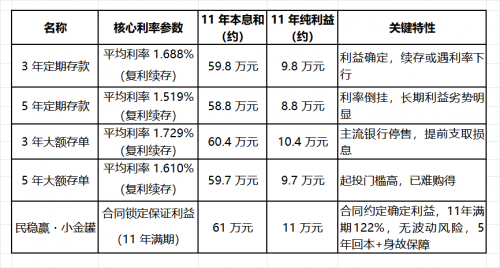
Core Insights - The savings product market is undergoing significant adjustments, with 80% of major banks and 12 joint-stock banks having stopped offering 5-year large time deposits since Q4 2025, leading to a rise in the minimum deposit requirement and a decrease in interest rates [1] - The insurance industry is capitalizing on this market shift by transforming its products to meet the long-term allocation needs of investors, offering guaranteed returns that align with current investor preferences for certainty [1][5] - There is a notable trend of conservative investors moving away from traditional savings towards insurance financial products, as exemplified by individual cases like that of a 58-year-old investor who switched to insurance products due to unfavorable bank deposit rates [3] Savings Product Trends - As of September 2025, the average interest rates for 3-year and 5-year fixed deposits are 1.688% and 1.519% respectively, while for large time deposits, they are 1.729% and 1.610% [2] - The interest rate for 5-year large time deposits has become less attractive, with some banks offering rates lower than those for 3-year deposits, leading to a decline in their appeal [4] Insurance Product Development - Recent insurance products, such as "Minyue Stable Gold Jar," offer guaranteed returns and additional benefits, addressing previous product shortcomings and appealing to investors seeking stability and flexibility [5][6] - The design of these insurance products aligns with the current market demand for certainty, flexibility, and low entry barriers, making them suitable for long-term savings needs [6] Market Dynamics - The demand for "financial + insurance" products is expected to rise, particularly among conservative investors, as traditional high-interest savings options diminish [8] - The evolving preferences of conservative investors reflect a shift towards diversified financial tools, including both banking and insurance products, to mitigate risks and enhance returns [6][8]
稳健理财的“黄金三角”:招商基金三只核心产品全解析与配置指南
Sou Hu Cai Jing· 2025-12-11 06:51
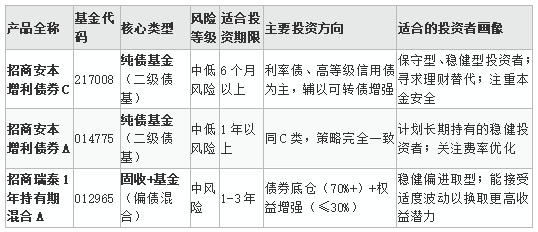
Core Insights - The article discusses how to build a robust wealth foundation through public funds amidst market volatility, highlighting three star products from China Merchants Fund: China Merchants Anben Zengli Bond (Class A 014775 / Class C 217008) and China Merchants Ruitai 1-Year Holding Mixed Fund (012965) [1] Product Overview and Positioning Matrix - A product positioning quick reference table is provided to help investors choose based on their needs, detailing core types, risk levels, investment directions, and suitable investor profiles for each fund [2] Product Deep Dive - **China Merchants Anben Zengli Bond (217008 / 014775)**: - Strong backing from a reputable fixed income team with over 20 years of experience, ensuring professional and safe credit bond investments [3][4] - Investment strategy focuses on government bonds, policy financial bonds, and high-grade credit bonds, with a controlled credit risk approach [4] - Historical data shows lower maximum drawdown compared to peers, with high Sharpe and Calmar ratios, indicating excellent risk-adjusted returns [5] - Class A is suitable for long-term holders, while Class C is designed for those with a holding period of 6 months to 1 year [5][6] - **China Merchants Ruitai 1-Year Holding Mixed Fund (012965)**: - Features a solid "fixed income plus" structure with over 70% in high-grade credit and government bonds, and up to 30% in selected equities for enhanced returns [7] - The 1-year holding period design helps investors avoid market timing mistakes and allows fund managers to implement medium to long-term strategies [8] - Historical performance shows significant outperformance compared to pure bond funds while maintaining strict drawdown controls [8] Common Questions and Product Matching - A table matches common investor queries with the most suitable products, emphasizing the strengths of each fund in various scenarios, such as conservative choices, new investors, and those seeking enhanced returns [9] "Golden Triangle" Practical Configuration - Three investment strategies are proposed based on risk tolerance: - **Conservative Investors**: 70%-100% in China Merchants Anben Zengli Bond Class C for low volatility and steady returns [10] - **Balanced Investors**: 50%-60% in Anben Zengli Bond and 40%-50% in Ruitai 1-Year Holding Mixed Fund for moderate risk and enhanced returns [10] - **Aggressive Conservative Investors**: 70%-100% in Ruitai 1-Year Holding Mixed Fund for better yield potential with acceptable volatility [10] General Selection Principles - The article outlines general principles for selecting quality bond and fixed income plus funds, emphasizing the importance of the fund company's fixed income strength, historical risk control, manager stability, credit quality, and fee structure [11][12]
“余额宝们”收益率跌破1.5% 稳健理财还能怎么选?
Jing Ji Guan Cha Wang· 2025-10-23 10:27
Core Viewpoint - The yields of money market funds, represented by Yu'ebao, have significantly declined, with many products now showing a 7-day annualized yield below 1.5%, leading to a shift in investor sentiment and a search for alternative investment options [2][4][10] Summary by Sections Current Yield Situation - As of July 10, 2023, 182 out of 364 money market funds have a 7-day annualized yield below 1.5%, marking a significant drop from earlier in the year when over 80% of products yielded more than 2% [2][4] - The largest money market fund, Tianhong Yu'ebao, reported a yield of only 1.478% on July 10, down from a peak of 2.453% earlier in the year [4] Reasons for Yield Decline - The decline in money market fund yields is attributed to a relatively loose monetary policy and an overall decline in the yields of underlying assets such as bank deposits and short-term bonds [6][10] - Analysts indicate that the current economic environment, characterized by slow recovery and abundant liquidity in the interbank market, is contributing to the downward trend in yields [6][10] Investor Behavior and Demand - Despite the declining yields, there remains strong demand for money market funds as investors seek low-risk options amid a volatile stock market [7][10] - The continuous decrease in bank deposit rates has led to a shift of funds from banks to money market funds, as investors prioritize capital safety [7] Alternative Investment Options - With the attractiveness of money market funds waning, investors are exploring alternatives such as short-term bond funds and interbank certificate funds, which offer higher yields while maintaining low risk [10][11] - Short-term bond funds are highlighted as a viable option due to their higher potential returns compared to money market funds, although they may have slightly less liquidity [10][11]