绿色新政

Search documents
煤炭友好者?特朗普要这样重振美国煤炭业
Di Yi Cai Jing· 2026-02-12 06:27
Core Viewpoint - The recent executive order signed by President Trump mandates the U.S. Department of Defense to purchase electricity from coal-fired power plants, which may lead to significant financial losses for electricity consumers, estimated to exceed $3 billion annually due to the continued operation of plants that were planned for retirement [1][6]. Group 1: Executive Order and Its Implications - President Trump signed an executive order on February 11, requiring the Department of Defense to enter long-term contracts with coal power plants for electricity supply to military facilities, emphasizing the importance of coal for national and economic security [2][4]. - The executive order does not specify the procurement amount but prioritizes coal in energy contracts, reflecting a shift in energy policy favoring coal over renewable sources [2][4]. Group 2: Financial Impact and Industry Response - The U.S. Energy Information Administration (EIA) projects that coal will account for approximately 17% of the total electricity generation in the U.S. by 2025, down from about 50% in 2000 [4]. - The Department of Energy plans to allocate $175 million for projects aimed at extending the lifespan of coal power plants in rural areas, indicating a governmental push to sustain the coal industry [4]. - Experts have raised concerns that delaying the closure of high-cost coal plants will lead to increased energy bills for consumers without providing any benefits, as these plants were already slated for retirement due to their high operational costs [5][6]. Group 3: Environmental and Economic Concerns - Environmental advocates argue that the government's focus on coal profits over consumer costs will exacerbate air pollution and increase electricity prices, while hindering the adoption of cleaner energy solutions [7]. - A study by Energy Innovation indicates that 99% of coal plants have higher operating costs compared to renewable energy sources, suggesting that the continued operation of coal plants is economically unsustainable [7].
德国总理痛批能源政策属战略性错误,气候变暖引爆了乌俄战争
Sou Hu Cai Jing· 2026-01-24 10:35
Group 1 - The core argument of the articles revolves around the dangers of global warming and the criticism of fossil fuel usage, which is portrayed as detrimental to humanity and the planet [1][2][4] - Germany's energy policy is facing significant strategic errors, as acknowledged by Chancellor Merz, highlighting the unsustainable high costs of energy and the reliance on federal subsidies for green energy [1][2] - The transition to green energy is criticized for its inherent instability and the substantial emissions produced during the manufacturing and distribution of green energy equipment [2][4] Group 2 - The European Union's dependency on Russian fossil fuels has increased, with countries like France and Spain significantly raising their imports of Russian liquefied natural gas by 18% and 27% respectively [4] - The ongoing purchase of Russian oil by Europe is seen as funding a war against themselves, contradicting their environmental goals [6] - The argument is made that reducing oil prices could potentially end the Ukraine-Russia conflict, suggesting that Europe's green policies inadvertently support Russia's economy [6]


欧盟“绿色壁垒”会挡住自己发展
Huan Qiu Shi Bao· 2026-01-05 07:26
Group 1 - The EU's Carbon Border Adjustment Mechanism (CBAM) has officially come into effect, imposing carbon tariffs on high-carbon products such as steel, aluminum, cement, fertilizers, electricity, and hydrogen [1] - The mechanism has faced criticism from both within the EU and from major trading partners like China, India, and Brazil, who argue that the carbon emission default values are too lenient [1][2] - CBAM is part of the EU's broader green policy aimed at achieving a 55% reduction in carbon emissions by 2030 and carbon neutrality by 2050, as mandated by the European Climate Law [1][2] Group 2 - The implementation of CBAM may lead to significant additional carbon costs for China's steel and aluminum industries, potentially amounting to tens of billions of RMB annually [3] - The EU plans to expand the scope of high-carbon products covered by CBAM to include 180 items, such as machinery, automotive parts, and household appliances by 2028, which could create trade imbalances and discrimination against developing countries [3] - The mechanism reflects the EU's declining hard power and international competitiveness, as it resorts to trade protectionism under the guise of environmental policy [3][4] Group 3 - There are internal dissenting voices within Europe, such as the German Chamber of Commerce, which argues for collaboration with other countries rather than imposing unilateral standards [4] - The dual standards of the EU's green policies may ultimately harm relationships with trading partners and jeopardize future economic development in Europe [4]
特朗普内阁会议再开炮!点名日韩“消耗美国”,关税战或再升级?
Sou Hu Cai Jing· 2025-12-04 15:43
Group 1: Trade Policy - President Trump criticized the trade policies of certain allied countries, suggesting they have been detrimental to U.S. interests, specifically mentioning Japan and South Korea in a light-hearted manner [1] - Trump defended the current global tariff policy, claiming it has generated significant fiscal revenue for the U.S. and hinted at the possibility of distributing tariff revenues as "dividends" to American citizens, potentially leading to the elimination of federal income tax [1] Group 2: Domestic Policy - The cabinet meeting addressed various domestic issues, including healthcare, energy, and environmental policies, with Trump reiterating his belief that the U.S. has been treated unfairly in international relations [3] - Trump criticized recent Democratic claims regarding the cost of living, labeling them as "political lies" and asserting that discussions on housing affordability are misused and lack substance for ordinary citizens [3] Group 3: Healthcare and Energy Policy - Trump claimed his administration has successfully reduced drug prices and criticized the Affordable Care Act as a "disaster" from design to implementation, advocating for direct benefits to patients rather than through insurance companies [4] - In the energy and environmental sector, Trump announced the termination of the "Green New Deal" policies, calling it one of the largest policy scams in U.S. history, and publicly questioned the scientific basis of current climate change discussions [4] Group 4: Policy Direction and Impact - The cabinet meeting reflects the continuation of the "America First" policy, emphasizing reciprocal trade relations and focusing on reforms in healthcare and energy [6] - The implementation of these policy proposals is expected to influence U.S. trade relations with certain allies and reveal differing priorities within the U.S. government's economic and social policies [6]
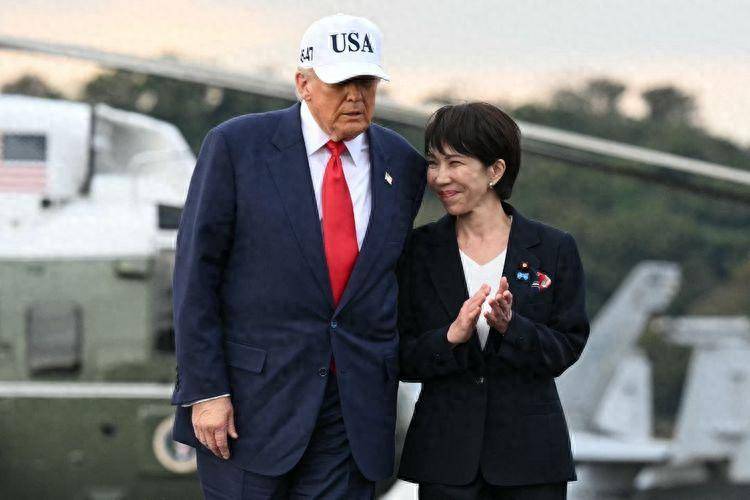
'BETTER DEAL': Trump's UK visit brings new trade deal speculation
Youtube· 2025-09-17 16:00
Trade Deal Negotiations - The US President is open to renegotiating the trade deal with the UK, indicating a willingness to refine the existing agreement [1] - The UK is seeking improvements on specific issues such as steel tariffs and products like scotch whiskey and salmon, although expectations for significant changes are low [4][5] - UK exporters are likely to adapt to the current trade deal as the expected outcome of negotiations is not anticipated to yield substantial changes [6] Investment Relations - Recent announcements of substantial investments from US companies into the UK, including a notable $30 billion investment from GSK, highlight the strong investment relationship between the two countries [3] - The US is viewed as a willing partner in the global race for dominance in AI and other new technologies, benefiting from the UK's regulatory environment that is favorable for AI businesses [10][11] Energy Policy - The UK is moving towards nuclear energy as a supplementary source to support its renewable energy goals, addressing the inconsistency of renewable sources like wind and solar [7][9] - There is a perception that the UK is shifting away from its previous strong commitment to green energy initiatives, although the current energy policy still emphasizes a transition from fossil fuels to renewables [8][9]
冯德莱恩麻烦大了!美俄峰会被踢出局,中方禁令精准反制欧洲银行
Sou Hu Cai Jing· 2025-08-21 09:23
Core Points - Ursula von der Leyen, President of the European Commission, is facing significant challenges, including a costly trade agreement that has not met expectations and has led to dissatisfaction among European businesses [2] - The exclusion of the EU from the US-Russia summit has further intensified the political pressure on von der Leyen, raising concerns about her leadership during this crisis [2] Trade Agreement Issues - The EU agreed to import $750 billion worth of US energy and invest an additional $600 billion, totaling $1.35 trillion, to reduce US tariffs to 15%, which is perceived as an imbalance compared to the UK's lower tariff rate of 10% [6][8] - The agreement allows US agricultural products to enter the EU tariff-free while imposing a 15% tariff on French wine and cheese, highlighting the unequal treatment and dissatisfaction among EU member states [8] Diplomatic Exclusion - The EU was completely excluded from the US-Russia summit discussing the Ukraine conflict, which has embarrassed the EU, as it plays a significant role in the crisis yet lacks a seat at the negotiation table [10] - This exclusion has led to a perception of the EU as merely a financial supporter in US strategic interests, diminishing its influence in international affairs [10] China's Countermeasures - China has imposed transaction bans on two European banks, which, while small in scale, play crucial roles in infrastructure financing in Central and Eastern Europe, further complicating von der Leyen's position [12] - This action by China is seen as a targeted strike against the EU, revealing weaknesses in von der Leyen's approach to China [12][14] Internal Divisions - There are significant divisions among the 27 EU member states regarding the trade agreement, with countries like Germany and Italy supporting it for business interests, while France, Hungary, and the Netherlands oppose it, citing damage to European industry [16][17] - The internal dissent reflects a broader "North-South divide" within the EU, with Northern countries prioritizing security cooperation with the US and Southern countries relying more on trade with China [17] Environmental Policy Controversies - Von der Leyen's "Green Deal" has faced criticism, particularly the 2035 ban on gasoline vehicles, which has pressured European manufacturers and led to investment shifts to North America [19] - The EU's agricultural policies have also come under fire, as allowing Ukrainian grain to be sold at low prices in Eastern Europe has negatively impacted local farmers, leading to accusations of betrayal [19] Conclusion - Von der Leyen's leadership is under significant scrutiny due to both external geopolitical challenges and internal trust issues within the EU, raising questions about the future of EU autonomy and influence in global affairs [22]
中美俄幡然醒悟!原来真正吸血的是欧洲人,如今他们终于要还债了
Sou Hu Cai Jing· 2025-07-23 12:57
Group 1 - The article discusses Europe's reliance on external resources, particularly from countries like the US, China, and Russia, to maintain its high welfare lifestyle, indicating that Europe is now facing the consequences of this dependency [1][3][26] - The historical context of Europe's rise is traced back to the 15th century, highlighting the impact of the Renaissance and colonial expansion on global wealth accumulation [3][9] - The energy crisis resulting from the Russia-Ukraine conflict has exposed Europe's vulnerability, as it previously depended heavily on cheap Russian oil and gas, which has led to skyrocketing energy prices and increased costs for industries and households [5][9][15] Group 2 - The article emphasizes the significant increase in military spending required for Europe to ensure its own security, estimating an additional €250 billion annually and the need for 300,000 new military personnel [7][19] - Europe's previous claims of energy independence are contradicted by data showing that in 2021, 45% of its natural gas imports came from Russia, which is projected to drop to 15% by 2025, resulting in substantial increases in electricity costs for countries like Germany and France [9][11] - The supply chain dynamics have shifted, with Europe now relying on China for critical components, including solar panels and electronic products, which has led to increased costs and longer delivery times for European manufacturers [11][21][23] Group 3 - The article highlights the decline of Europe's industrial competitiveness due to rising energy costs and the loss of cheap gas, which has made it difficult for European companies to maintain their market positions [15][25] - The welfare system in Europe is described as being built on three pillars: cheap energy, external security, and low-cost goods, all of which are now under threat, leading to a precarious situation for the continent [26]

【生态环境周观察】工信部召开会议推动光伏“反内卷”;特朗普签署“大而美”法案;宁德时代启动印尼项目建设
Tai Mei Ti A P P· 2025-07-07 10:38
Group 1: Solar Industry Developments - The Ministry of Industry and Information Technology (MIIT) of China held a meeting to address the issue of low-price disorderly competition in the photovoltaic industry, emphasizing the need for comprehensive governance and sustainable development [3] - Shanxi Province issued management guidelines for distributed photovoltaic power generation, which will take effect on August 1, 2025, and encourage self-consumption of electricity [4] Group 2: U.S. Clean Energy Policy Changes - President Trump signed the "Big and Beautiful" tax and spending bill, which is expected to significantly impact the U.S. clean energy sector, particularly in electric vehicles, photovoltaics, and wind energy [5][6] - The bill plans to reduce taxes by $4 trillion over the next decade and cut at least $1.5 trillion in spending, raising concerns about increasing national debt [6] Group 3: Electric Vehicle and Battery Industry Updates - BYD's first vehicle rolled off the production line at its new factory in Brazil, which is expected to create 20,000 jobs and serve the South American market [7] - CATL announced the groundbreaking of its nickel resource and battery industry chain project in Indonesia, with a total investment of nearly $6 billion, aimed at supporting the production of batteries for 200,000 to 300,000 electric vehicles annually [8] Group 4: Energy Storage Innovations - Envision completed a fire test for its energy storage system, demonstrating its safety and performance under extreme conditions, becoming one of the leading energy storage manufacturers to achieve this milestone [9] Group 5: Market Expansion and IPO Plans - Lithium battery leader XINWANDA plans to list on the Hong Kong Stock Exchange to enhance its global strategy and attract international investors, aiming for a better valuation [10] Group 6: Climate Change Impact - Europe is experiencing extreme heat waves, with record high temperatures reported in several countries, raising concerns about the increasing frequency of such events due to global warming [11]



“大而美”法案,通过!特朗普即将签署
证券时报· 2025-07-04 00:39
Group 1 - The core viewpoint of the article is the passage of the "Big and Beautiful" tax and spending bill by the U.S. House of Representatives, which has been controversial due to its implications for federal aid cuts, long-term debt increases, and tax reductions for the wealthy and large corporations [1][2]. - The bill aims to reduce taxes by $4 trillion over the next decade and cut spending by at least $1.5 trillion, as stated by the Republican proponents [2]. - The bill was passed in the House with a vote of 218 in favor and 214 against, indicating a narrow margin of support [1]. Group 2 - The House Democratic leader, Hakeem Jeffries, delivered a record-breaking speech lasting approximately 8 hours and 46 minutes to protest the bill, highlighting the negative impacts on Americans affected by the proposed cuts [4]. - Jeffries' speech was part of a strategy to delay the bill's passage, showcasing the intense opposition from the Democratic side [3][4]. - The previous record for the longest speech in the House was held by Republican Kevin McCarthy, who spoke for 8 hours and 32 minutes in 2021 [5].

美国会众议院表决通过“大而美”法案
财联社· 2025-07-03 18:58
Core Viewpoint - The article discusses the passage of the "Big and Beautiful" tax and spending bill by the U.S. House of Representatives, which is expected to be signed into law by President Trump, representing a significant shift in fiscal policy aimed at reducing taxes and government spending [1] Group 1: Legislative Details - The bill received 218 votes in favor and 214 votes against, allowing it to pass in the House of Representatives [1] - The "Big and Beautiful" bill is described as an extension and upgrade of Trump's first-term tax policies, while also adjusting the Biden administration's "Green New Deal" and welfare spending [1] Group 2: Financial Implications - The bill plans to reduce taxes by $4 trillion over the next 10 years and cut at least $1.5 trillion in spending [1]