
高抛低吸

Search documents
天齐锂业配股发债抛资产筹资或超70亿 不缺钱却大规模“屯粮”意欲何为?
Xin Lang Zheng Quan· 2026-02-09 09:56
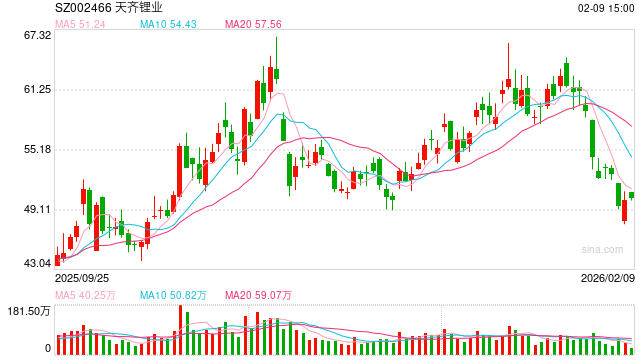
Core Viewpoint - Tianqi Lithium announced a new H-share placement and convertible bond issuance, along with the sale of stakes in Zhongchuang Innovation and SQM, aiming to raise over 7 billion yuan through these capital operations [2][3]. Group 1: Capital Operations - The company plans to issue 65.05 million new H-shares at a price of 45.05 HKD per share and issue convertible bonds totaling 2.6 billion yuan, with an initial conversion price of 49.56 HKD per share [3]. - If all shares are issued and bonds converted, the net fundraising is expected to reach 5.829 billion HKD, primarily for strategic development in the lithium sector, acquisition of quality lithium assets, and operational funding [3][6]. - The total amount raised and cashed out from these operations is projected to exceed 7 billion yuan [3]. Group 2: Financial Health - Tianqi Lithium does not appear to face significant financial or debt pressure, having achieved a turnaround in performance with a net cash inflow of 2.193 billion yuan in operating cash flow for the first three quarters of 2025 [3]. - As of the end of the third quarter of 2025, the company's debt-to-asset ratio stood at 30.50%, significantly lower than the industry average, including competitors like Ganfeng Lithium [3]. Group 3: Strategic Direction - In April 2024, the new chairman, Jiang Anqi, initiated a long-term strategy focusing on strengthening upstream, midstream, and penetrating downstream sectors [2][7]. - However, shortly after taking over, Jiang Anqi halted the second phase of the hydroxide lithium project in Australia and fully provisioned a 1.484 billion yuan impairment, indicating a cautious approach to new projects [7]. - The sale of stakes in Zhongchuang Innovation, a leading battery manufacturer, suggests a potential retreat from deepening ties with downstream partners, highlighting a strategic shortcoming in the company's approach [7][9]. Group 4: R&D Investment - Tianqi Lithium's R&D spending has been significantly lower than that of Ganfeng Lithium, which has actively developed a comprehensive lithium battery supply chain [7][9]. - Ganfeng Lithium has established a vertically integrated system covering lithium resource development, lithium salt processing, battery manufacturing, and recycling, contrasting with Tianqi's focus on upstream resource gambling [9].


甲醇数据日报-20260206
Guo Mao Qi Huo· 2026-02-06 03:18
Group 1: Report Industry Investment Rating - Not provided Group 2: Core Viewpoints of the Report - The methanol market is in a volatile pattern where short - term real - world pressure and medium - term positive expectations are in a tug - of - war. In the short term, price increases are weak due to factors like downstream plant overhauls, seasonal weakness in traditional demand, and high port inventories. However, the core bullish logic for the medium term remains intact. There will be a contraction in imported supply due to overseas plant shutdowns, coal prices are stabilizing to support costs, and demand is expected to pick up after the Spring Festival. The market structure shows a divergence between smooth inventory clearance inland and expected inventory reduction at ports. Short - term volatility provides an opportunity for medium - term investment. It's advisable to consider building long positions in batches near the support area and set stop - losses, waiting for the market to regain upward momentum when post - festival demand recovery and import contraction resonate [5] Group 3: Summary of Each Section Spot Market - **Prices and Changes**: In the spot market, the current prices in Inner Mongolia North Line, Shaanxi Guanzhong, Guangdong, Taicang, Shandong Dongying, and Henan are 2212, 2215, 1798, 1870, 2155, and 2005 respectively. Compared with the previous values, the prices in Inner Mongolia North Line decreased by 26 and 20, while those in other regions remained unchanged [1] Futures Market - **Prices and Changes**: For futures, the current prices of MA2603 and MA2605 are 2200 and 2225 respectively, with a decline of 2.35% and 2.37% compared to the previous values [1] - **Market Performance**: The methanol futures market opened higher and then declined in the morning and fluctuated narrowly in the afternoon. In the spot market, there were rigid - demand negotiations, some unilateral high - selling and low - buying operations in the forward paper market, a strengthening basis, and the overall trading volume was average [1] Taicang Transaction Price Range - The all - day transaction price range in Taicang is 2210 - 2240 and 2235 - 2260 [3]
先减持再低价认购 长盈精密高管“神操作”
Shang Hai Zheng Quan Bao· 2026-01-24 23:30
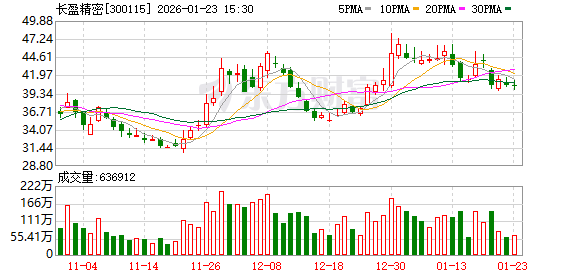
Group 1 - The core point of the article is that Changying Precision (300115) announced a stock option incentive plan for 2025, granting 14.262 million stock options to 870 eligible recipients, amidst concerns about potential arbitrage by executives who disclosed a share reduction plan shortly before participating in an employee stock ownership plan [2][3][5] - The company operates in the electronic components sector, focusing on electromagnetic shielding components, precision connectors, and parts for humanoid robots, with its stock price having doubled since early 2025 [3] - The stock reduction plan was disclosed on December 17, 2025, with five executives planning to sell a total of 132,300 shares, citing personal financial needs [4][5] Group 2 - The employee stock ownership plan allows executives to purchase shares at a significant discount, with the purchase price set at 20.56 yuan per share, compared to a market price around 40 yuan, raising questions about potential "high sell, low buy" practices [7][8] - Legal experts noted that while the actions of the executives are technically compliant with existing regulations, they may create a perception of unfairness in the market, suggesting a need for regulatory improvements to address potential arbitrage opportunities [8][10] - The current regulatory framework lacks clear restrictions on executives participating in employee stock ownership plans during share reduction windows, which could lead to exploitation of this "gray area" [10]

我的十年投资感悟:不是在山顶多风光,而是在低谷时能扛住、敢动手
雪球· 2025-12-26 07:51
Core Viewpoint - The article reflects on a decade of investment experiences, emphasizing the importance of adapting investment strategies over time and setting realistic long-term goals for returns [5][19][27]. Group 1: Investment Performance - The initial investment amount grew from approximately 1 million to around 10 million, with a cumulative return of 219.7% and a compound annual growth rate of about 13.78% over ten years [8]. - The author acknowledges that while the returns may not seem impressive to short-term traders, the steady growth reflects a disciplined approach to investing through market cycles [10][11]. - The investment strategy evolved from a long-term buy-and-hold approach to a more active strategy of high selling and low buying, with a focus on increasing the frequency of trades [24][25]. Group 2: Market Insights - The author highlights the importance of setting a long-term investment goal, suggesting that a reasonable target could be to achieve returns that outpace the annual GDP growth rate, which is currently around 5% [29][31]. - The article discusses the challenges of achieving a long-term annualized return of over 15%, noting that while some years may yield high returns, others may result in losses, making consistent performance difficult [34][38]. - The author mentions that despite facing market downturns, the overall strategy of continuous investment during low points has led to significant total returns [42][46]. Group 3: Risk Management and Tools - The author created a "market temperature gauge" to assess risk boundaries, emphasizing that this tool is not for making buy or sell decisions but for evaluating risk levels [50]. - Continuous learning and data analysis are highlighted as essential practices for navigating the investment landscape, with a focus on understanding market dynamics and company performance [51][52]. - The article concludes with a reminder that true investment success lies in the ability to endure market lows and adapt strategies accordingly [53][56].

如何看待沪深300的追涨杀跌?
雪球· 2025-12-16 08:53
Core Viewpoint - The article emphasizes that annual rebalancing of indices is a systematic process governed by transparent rules rather than subjective market judgments, highlighting the importance of understanding these rules for effective investment strategies [5][8][11]. Group 1: Annual Rebalancing - The second Friday of December marks the annual rebalancing day for most indices, leading to changes in sample stocks and their valuations [5][6]. - Criticism often arises regarding the inclusion of high-performing stocks and the exclusion of underperforming ones, but these changes are a result of established rules rather than market speculation [6][10]. - Understanding that rebalancing reflects adherence to rules rather than market sentiment is crucial for investors [8][35]. Group 2: Market Capitalization Indices - Market capitalization indices, such as the CSI 300 and SSE 50, aim to represent key companies in the market based on size and liquidity, rather than seeking to capitalize on market fluctuations [16][17]. - These indices naturally exhibit a tendency to include companies that have increased in size and performance while excluding those that have declined, which can be misinterpreted as "buying high and selling low" [18][19]. - The design of market cap indices prioritizes transparency and alignment with economic structures over short-term gains [20][21]. Group 3: Strategy Indices - Strategy indices, like dividend indices, focus on specific factors such as dividend yield rather than market capitalization [24][25]. - These indices adjust their components based on the stability of dividend payments, leading to a different risk-return profile compared to market cap indices [28]. - The mechanism of strategy indices allows for continuous alignment with predetermined financial metrics, rather than predicting future market movements [27][28]. Group 4: Understanding Index Characteristics - Market capitalization indices and strategy indices serve different purposes and are not mutually exclusive; they address distinct investment needs [31][32]. - Market cap indices provide a baseline for market returns, while strategy indices can be used for risk management and income generation [32][33]. - Misinterpretation of indices often stems from short-term emotional reactions rather than a proper understanding of their long-term rules [34][35].

侃股:重长期价值轻短期波动
Bei Jing Shang Bao· 2025-12-09 11:31
Group 1 - The core idea emphasizes that for most investors, high selling and low buying strategies do not yield high success rates, and focusing on the intrinsic value of a company's stock is more beneficial than reacting to short-term fluctuations [1][2] - Investors should prioritize companies with stable business models, good growth prospects, excellent management teams, and sustainable profitability, as these factors provide solid support for stock prices [2][3] - Frequent trading can lead to increased investment costs due to transaction fees, which can accumulate and significantly erode investment returns, potentially turning profits into losses [2][3] Group 2 - Maintaining a long-term perspective does not mean ignoring market changes; investors should regularly assess the fundamentals of their investments to ensure continued growth potential [3] - Studies show that investors who trade frequently often achieve lower returns compared to those who hold stocks for the long term, as increased trading frequency raises investment risks [3]
价值投资不是长期投资,小投资者最好的投资方法
雪球· 2025-12-03 08:37
Core Viewpoint - Value investing is not synonymous with long-term investing; the focus should be on the underlying value of the asset rather than merely holding it for an extended period [3]. Group 1: Investment Philosophy - The essence of value investing lies in assessing the intrinsic value of a company, and if a company becomes overvalued or deteriorates, it may be prudent to sell [3]. - Holding onto a stock simply because it is perceived as a good company can lead to missed opportunities, especially if the stock is overvalued [3]. - The investment strategy should prioritize understanding the business rather than fixating on short-term price movements [4]. Group 2: Investment Strategy - Investors should focus on identifying undervalued small companies that they can understand, as these often present better opportunities than well-known large companies [7][9]. - The investment approach should involve patience and a thorough understanding of the company's future cash flows and business model [10]. - Small companies may have less research available, but for investors with time and interest, they can offer significant potential [10]. Group 3: Market Behavior - The notion of "buy low, sell high" can be detrimental to investors, as it may lead to constant trading without substantial gains [4]. - Investors should be wary of market noise and focus on the fundamentals of the companies they invest in [8]. - The market often reflects a company's value, and if a stock is already overvalued, holding onto it for the sake of long-term investment may not be wise [7].


哪里有自动"高抛低吸"的懒人投资方法?
Sou Hu Cai Jing· 2025-11-28 10:41
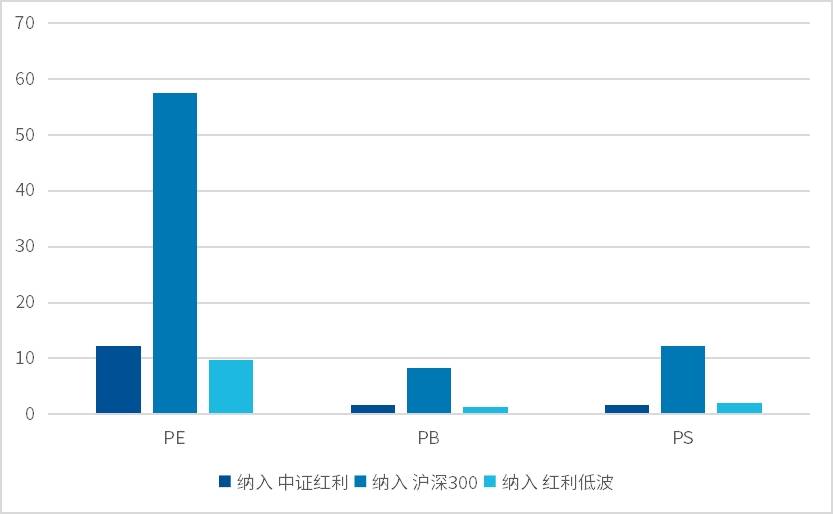
Core Insights - The article discusses the mathematical logic behind dividend indices, highlighting their ability to implement a "buy low, sell high" strategy through dividend yield adjustments as stock prices fluctuate [1][2]. Group 1: Mechanism of "Buy Low, Sell High" - Valuation is a core indicator for determining price levels in investments, with dividend yield serving as a filter for high-valuation stocks in dividend indices [2]. - Data from the past five years shows that newly included companies in the CSI Dividend Index have significantly higher P/E ratios compared to those removed, demonstrating the "buy low, sell high" characteristic of the indices [2][6]. - The sensitivity of the "sell high" mechanism is evident, as 15% of companies removed from the dividend index had price increases exceeding 30% in the previous year, compared to only 6% in the CSI 300 [6]. Group 2: Dividend Yield Dynamics - The largest weight stock in the CSI Dividend Index, Ningbo Huaxiang, has a dividend yield of only 1.6%, which is below the index average of 4%, raising questions about the core logic of dividend strategies [8]. - This situation illustrates the effectiveness of the dividend mechanism, as the stock's price surged over 200% while maintaining stable dividends, leading to a lower yield [8]. - The annual rebalancing of the index automatically removes stocks with reduced yields due to price increases, replacing them with new stocks that have higher yields and more attractive valuations [8]. Group 3: Industry Composition and Resilience - There is a common misconception that the dividend index is limited to specific sectors like banking and coal; however, the essence of the index is its focus on high dividend yields rather than fixed industries [9][12]. - The weight of the banking sector in the index has changed significantly over the years, currently at 23%, while coal has increased to 17%, showcasing the dynamic nature of the index [10]. - The dividend index operates on a principle of "ironclad dividends, fluid industries," maintaining a focus on high dividend standards regardless of market trends, which enhances its resilience during market fluctuations [12]. Group 4: Investment Strategy - The "buy low, sell high" strategy of the dividend index is not about timing the market but is achieved through strict dividend yield selection rules, ensuring a disciplined investment approach [13]. - The index does not attempt to predict market peaks or troughs but reallocates funds to the most cost-effective high dividend assets through annual rebalancing [13]. - The investment wisdom lies in constructing a simple, executable system that aligns with long-term trends, allowing investors to benefit from consistent dividend income and capital gains without extensive analysis [13].
币圈老吕:比特币不站稳88300不盲目追涨,以太坊关注2830支撑
Sou Hu Cai Jing· 2025-11-25 13:36
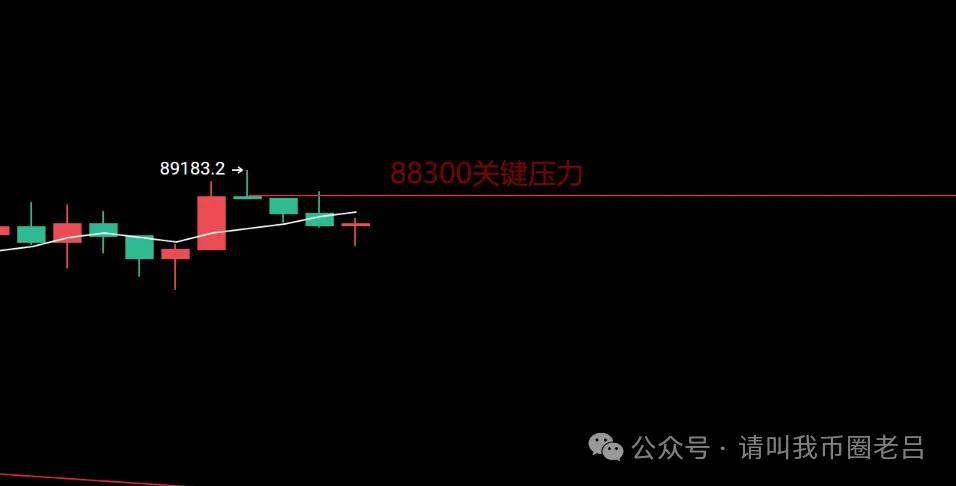
Core Viewpoint - The market is currently experiencing a tug-of-war between bulls and bears, with Bitcoin's price fluctuating around key resistance and support levels, indicating indecision among traders [1][2][4]. Group 1: Market Analysis - Bitcoin has not yet established a firm breakthrough above $88,300, with a recent peak at $89,183 being labeled as a false breakout [2]. - The current price action suggests a consolidation phase, with both bullish and bearish positions facing challenges due to the lack of clear direction [1][4]. - Ethereum's price movements are closely tied to Bitcoin's performance, indicating that Bitcoin's trends will significantly influence Ethereum's market behavior [4]. Group 2: Trading Strategies - Traders are advised to adopt a cautious approach, focusing on timely profit-taking and avoiding prolonged positions to mitigate potential losses [1]. - Key support and resistance levels have been identified: Bitcoin's resistance at $88,300 and support at $84,800, while Ethereum's range is between $2,966 and $2,835 [4]. - Suggested trading strategies include entering long positions near support levels with tight stop-loss orders to manage risk effectively [4].
关税冲击下市场震荡,四季度股债如何配置?
Mei Ri Jing Ji Xin Wen· 2025-11-04 02:15
Equity Market Review - The core viewpoint is that the trend remains bullish, awaiting a breakthrough, with A-shares experiencing significant fluctuations due to tariff impacts, similar to previous market behaviors in April [1] - The market has shifted to a wider trading channel, making high-selling and low-buying strategies more effective as each dip is followed by higher lows, indicating a strong upward trend [2] - Normal corrections are expected after significant gains, driven by profit-taking psychology and external factors like trade disputes, but the long-term confidence in China's economy remains strong [2][3] - The market's upward movement is supported by expectations rather than current realities, with investors more inclined to bet on rising prices rather than declines [3] - A solid economic recovery would further strengthen the upward trend, while ongoing policy support can prevent significant downturns, making corrections good opportunities for accumulation [3][4] Bond Market Review - The bond market outlook is less optimistic than equities but still positive, with a core conclusion of favorable support and a mid-term positive trend [5] - The fundamental backdrop is influenced by supply-demand mismatches, with PPI remaining negative for 36 consecutive months, but recent policy shifts indicate a change in attitude towards economic quality and pricing [6] - Recent government policies aim to maintain liquidity and promote lower financing costs, which is positive for the bond market, although interest rates are already at low levels [6] - Technical indicators show a significant oversold condition in the bond market, suggesting a potential rebound phase, with ten-year government bonds being a key investment choice due to their balance of yield and volatility [7]