
千问AI

Search documents
传媒行业周报:传媒回调行情仍在,智能新纪元撬动注意力经济
Huaxin Securities· 2026-03-01 07:45
Investment Rating - The report maintains a "Buy" rating for the media industry, highlighting potential growth opportunities driven by AI and content generation technologies [1][8]. Core Insights - The media sector is currently experiencing a slight pullback after a strong start to 2026, but the outlook remains positive with expectations for AI-driven narratives to enhance the attention economy [3][15]. - The report emphasizes the importance of AIGC (AI Generated Content) in driving content supply and enhancing the value of quality content, which is expected to stimulate the attention economy [3][15]. - Upcoming events such as MWC 2026 in Barcelona are anticipated to boost the practical application of AI products and services [3][15]. Summary by Sections Industry Review - The media industry has shown varied performance, with the AI wearable device index seeing significant gains while the influencer economy index has declined [13][19]. - Notable stock movements include significant gains for companies like CITIC Publishing and Jinling Sports, while Bona Film and Light Media faced substantial declines [13]. Key Recommendations - The report suggests focusing on companies like Shunwang Technology, Yaoji Technology, and Perfect World, which are expected to benefit from new product launches and AI integration [4][8]. - Other recommended stocks include Mango Super Media, Wanda Film, and Huace Film, all of which are positioned to leverage AI advancements in their operations [4][8]. Market Dynamics - The report notes that the gaming sector is witnessing a surge in female-oriented games, with titles like "My Garden World" achieving top rankings during the Spring Festival period [22]. - The approval of new game licenses is expected to provide a stable supply of content, with a total of 152 games receiving approval in February 2026 [23]. AI Integration - The report highlights the competitive landscape of AI applications, particularly between ByteDance's Doubao and Alibaba's Qianwen, with both companies enhancing user engagement through innovative features [14][15]. - AI's role in content production is evolving, with the introduction of new models like Google's Nano Banana2.0, which is expected to further enhance content creation capabilities [15]. E-commerce Trends - Alibaba's "38 Opening Red & 38 Renewal Week" promotional event is set to drive consumer engagement, while JD.com is investing heavily in its "Billion Supermarket" channel to boost sales [24][25]. - Meituan's AI assistant "Xiaotuan" has significantly improved user experience during the Spring Festival, indicating a growing trend in AI-driven customer service [26]. Film and Television - The report notes a surge in interest in AI-driven content creation, particularly in the realm of animated dramas, with major companies like Tencent and ByteDance entering the market [27]. - The approval of virtual reality films and the establishment of industry standards are expected to enhance the production quality and marketability of new content [28][29].






未知机构:千问6天AI订单量破12亿单千问方面披露春节免单活动数据过去6天A-20260213
未知机构· 2026-02-13 02:30
Company and Industry Summary Company: 千问 (Qianwen) Key Points - **Order Volume Achievement**: 千问 reported that during the "Spring Festival Free Order" promotion, the AI system completed over 120 million orders in just six days [1] Additional Important Information - **Promotion Impact**: The significant order volume indicates a strong consumer engagement and the effectiveness of promotional activities in driving sales [1] This summary captures the essential information regarding 千问's recent performance during a promotional event, highlighting the impressive order volume achieved within a short timeframe.
国元香港晨报-20260209
Guoyuan Securities2· 2026-02-09 05:09
Economic Indicators - The U.S. Treasury Secretary supports a strong dollar policy under the Trump administration[4] - Global chip sales are projected to exceed $1 trillion for the first time this year[4] - The average price drop for new passenger cars in January was 37,000 yuan[4] Market Performance - The 2-year U.S. Treasury yield increased by 5.54 basis points to 3.498%[4] - The Nasdaq index rose by 2.18% to close at 23,031.21[5] - The Dow Jones Industrial Average increased by 2.47% to 50,115.67[5] - The S&P 500 index rose by 1.97% to 6,932.30[5] Commodity Prices - The price of Brent crude oil increased by 0.81% to $68.10[5] - The London gold spot price rose by 3.98% to $4,966.61[5] - The CME Bitcoin futures price surged by 10.64% to $70,580.00[5] Currency Exchange - The U.S. dollar to Chinese yuan exchange rate was 6.94, down by 0.01%[5]
传媒行业周报:从春节档到AI春晚,迎2026年新篇章关注AIGC
Huaxin Securities· 2026-02-08 07:45
Investment Rating - The report maintains a "Buy" rating for the media industry, highlighting strong performance in the sector compared to the broader market indices [1]. Core Insights - The media sector is expected to benefit from AI applications and consumer spending, with significant growth in digital marketing and advertising driven by AI technologies. Major internet companies are leveraging digital red envelopes to attract new customers for AI products during the Spring Festival [2][3]. - The report emphasizes the potential of the AIGC (AI Generated Content) sector, particularly in digital marketing, e-commerce, and AI-driven content creation, as key areas for investment [2][3]. Industry Overview - The media industry has shown resilience, with the Shanghai Composite Index and Shenzhen Component Index experiencing declines of -1.27% and -2.11% respectively, while the media sector has outperformed with significant gains [12]. - The report notes a resurgence in the digital marketing sector, particularly with the GEO (Geolocation) advertising model, which is expected to drive growth in 2026 [2][3]. Recommended Stocks and Rationale - Key stocks to watch include: - Wanda Film (002739): Actively embracing AI and participating in major Spring Festival films [3]. - Bona Film (001330): Expected to recover with participation in the Spring Festival film lineup [3]. - Mango Excellent Media (300413): Anticipated to benefit from AI integration in its core business [3]. - BlueFocus Communication Group (300058): A leading digital marketing firm actively adopting AI [3]. - Bilibili (9626.HK): Expected to see increased commercial value from community video content [3]. - The report suggests a focus on cinema chains and companies involved in the digital marketing and e-commerce sectors as potential investment opportunities [2][3]. Market Dynamics - The report highlights the competitive landscape in the AI-driven content creation space, with major players like Alibaba and ByteDance actively engaging in the AI Spring Festival initiatives [13][31]. - The cinema sector is gearing up for the 2026 Spring Festival with a diverse lineup of films, which is expected to attract various audience segments [14]. Financial Projections - The report provides earnings per share (EPS) forecasts for several companies, indicating a positive outlook for the media sector: - Huace Film & TV (300133): EPS projected to grow from 0.13 in 2024 to 0.27 in 2026 [7]. - Mango Excellent Media (300413): EPS expected to increase from 0.73 in 2024 to 0.82 in 2026 [7]. - Wanda Film (002739): EPS forecasted to rise from -0.43 in 2024 to 0.85 in 2026 [7].


靠红包砸出来的热度,能持续多久
Qi Lu Wan Bao· 2026-02-06 12:44
Core Insights - The 2026 Spring Festival marketing battle has been significantly influenced by artificial intelligence, with major tech companies like Tencent, Alibaba, and Baidu investing over 4.5 billion yuan in the "red envelope war" [1][2] - AI has become the essential entry point for all platforms, transforming from a supplementary feature to the core component of the red envelope activities [2] Investment Scale - The total investment in the red envelope campaign has reached a record high, with Alibaba leading at 3 billion yuan, followed by Tencent with 1 billion yuan and Baidu with 500 million yuan, totaling over 4.5 billion yuan [2][3] Competitive Strategies - Different platforms are employing distinct strategies based on their ecosystems: Tencent focuses on social interactions through WeChat, Alibaba integrates AI into various consumer services, and Baidu leverages its search and content strengths [3][4] - The competition has evolved from merely attracting traffic to enhancing technical capabilities, scene coverage, and ecosystem collaboration [3] User Engagement and Retention Challenges - Despite the initial surge in user engagement, there are concerns about long-term user retention, as many platforms still rely on traditional growth tactics that may lead to user fatigue [4][5] - The homogeneity of AI functionalities across platforms raises questions about the ability to create unique value propositions and maintain user interest [4] Future Outlook - The red envelope campaign serves as a pressure test for the industry, highlighting the need for AI to transition from being a novelty to a necessity in daily life [6] - The long-term success of these platforms will depend on their ability to refine products, deepen user engagement, and integrate AI into everyday services, moving beyond short-term marketing tactics [6]



大厂抛洒“红包雨” AI应用江湖风云再起
Shang Hai Zheng Quan Bao· 2026-02-05 17:52
Group 1 - Major AI companies are engaging in a competitive "red envelope" marketing strategy, with Tencent investing 1 billion yuan, Baidu 500 million yuan, and Alibaba 3 billion yuan [2][3] - This competition is reminiscent of the early days of mobile payment wars, indicating a significant escalation in the battle for AI application dominance [3][4] - Tencent's strategy is seen as a critical move, especially after the appointment of a former OpenAI researcher, which has reportedly improved its AI model capabilities [4][5] Group 2 - Alibaba's investment in its Qianwen AI platform signifies a shift from being a support role to a central player in its ecosystem, indicating a strategic pivot [3][4] - The "red envelope" strategy is viewed as an effective market education tool and a pressure test for the nascent AI industry [5][6] - Despite the initial success in attracting users, the long-term challenge remains in retaining and engaging these users effectively [6]


红包大战背后:AI入口即未来流量
2 1 Shi Ji Jing Ji Bao Dao· 2026-02-04 22:42
Core Insights - The 2026 "red envelope war" marks a significant shift in competition among tech giants, focusing on AI as the new entry point rather than traditional payment methods [1][2] - This competition is not merely about cash incentives but represents a strategic move towards comprehensive AI ecosystem development [2][3] Group 1: AI Integration and User Engagement - Major companies like Tencent, Baidu, and Alibaba are integrating AI into their platforms, requiring users to engage in AI interactions to unlock rewards [2][3] - The goal is to create a habit where users associate their needs with AI, fostering a long-term relationship with the technology [2] Group 2: Ecosystem Competition - The competition has evolved from technical capabilities to a comprehensive battle involving entry points, scenarios, and ecosystems [3][4] - Each company's strategy reflects its AI ecosystem layout, with Tencent leveraging social networks, Baidu focusing on a full-stack approach, and Alibaba integrating AI into core business functions [3] Group 3: Future of AI and User Retention - The expectation is that general-purpose AI will become the core of the next internet generation, potentially disrupting existing traffic entry patterns [4] - While cash incentives attract users, long-term retention will depend on the core value of AI products, which currently face challenges of homogeneity [4][5] Group 4: Long-term Strategy and Value Creation - The real competition will shift from acquiring users through cash incentives to creating value and deepening user engagement with AI [5] - Companies need to invest in technology development and integrate AI into high-frequency daily scenarios to enhance user experience and functionality [5]
腾讯、阿里再加码,二线AI大模型可以写悼词了
Sou Hu Cai Jing· 2026-02-04 06:37
Core Insights - The technology industry is experiencing renewed excitement in early 2026, particularly around AI innovations from major players like Tencent and Alibaba [1][2][3] Group 1: AI Innovation and Industry Dynamics - The public appearances of Ma Huateng and Jack Ma discussing AI signal a critical phase in the AI innovation race, indicating a shift towards more aggressive experimentation [3][4] - Major companies are now more cautious about innovation, focusing on ROI and budget considerations, which has led to a decrease in risk-taking [5][6] - The need for influential voices to encourage innovation is emphasized, as companies may fear the risks associated with AI development [6][7] Group 2: Company Strategies and Developments - Alibaba's Qianwen AI initially aimed at internal technology trials before pivoting to consumer-facing applications, showcasing a strategic shift in its business model [9][10] - ByteDance's Doubao AI has emerged as a significant player, leveraging its existing app ecosystem to enhance its AI capabilities [13][14] - Tencent's new AI social product, Yuanbao, is seen as a strategic move to protect its core social media business while exploring new revenue streams [18][19] Group 3: Competitive Landscape and Market Challenges - The AI industry is entering a new phase of competition, with major players intensifying their efforts, potentially making it harder for mid-tier AI companies to survive [20][21] - Data indicates a significant number of AI-related companies are facing closure, highlighting the challenges for smaller players in the market [22] - The market is increasingly favoring large tech companies, which are better positioned to absorb costs and innovate, leaving independent AI firms at risk of being marginalized [32][40] Group 4: Future Outlook and Trends - The ongoing AI arms race is shifting from a focus on absolute performance to cost-effectiveness, which may impact the viability of smaller players [41][42] - The concept of an "AI slaughter line" suggests that many companies may not survive the competitive pressures of the evolving landscape [23][24] - The narrative of AI innovation continues to evolve, with the potential for new breakthroughs that could reshape the industry dynamics [43]
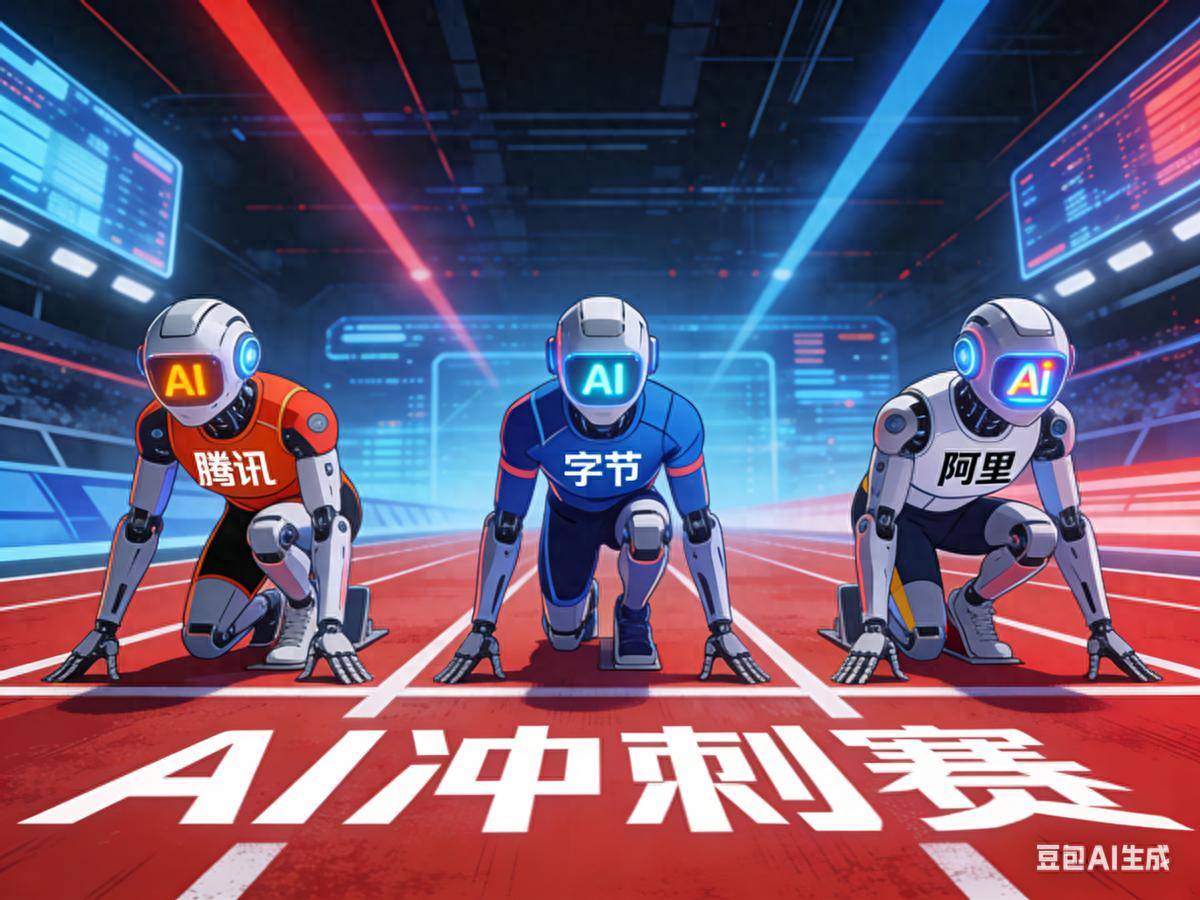
2026春节红包大战:大厂们从“流量争夺”迈入“AI生态比拼”
Sou Hu Cai Jing· 2026-01-30 09:05
Core Insights - The annual Chinese New Year "red envelope war" has evolved from simple cash giveaways to a competition focused on user engagement and product ecosystem penetration, with AI technology now at the forefront [2][3][8] - Major companies like Tencent and Baidu are investing heavily in cash red envelopes, with Tencent announcing a distribution of 1 billion yuan and Baidu 500 million yuan, both integrating AI features into their campaigns [3][4][5] Group 1: Company Strategies - Tencent's strategy includes a 1 billion yuan cash giveaway through its Yuanbao app, with individual red envelopes reaching up to 10,000 yuan, and features like "share red envelopes" to enhance user engagement [3][4] - Baidu's approach involves a 500 million yuan red envelope campaign linked to its Wenxin assistant, offering various interactive AI experiences to users [4][5] - Alibaba is focusing on younger demographics by integrating AI content creation into its New Year's Eve events, while ByteDance is leveraging national-level events like the Spring Festival Gala to promote its AI technologies [5][6] Group 2: AI Integration - The integration of AI technology is a key highlight of this year's red envelope war, with companies aiming to popularize AI applications among the general public during the festive season [5][8] - The use of AI in red envelope campaigns is designed to lower the barriers for user interaction with AI, making it more accessible and familiar to everyday users [8][9] - The competition is not just about cash incentives but also about embedding AI into user experiences, transforming how users interact with technology [9][10] Group 3: Market Implications - The red envelope war represents a strategic move by companies to secure future digital traffic distribution rights, as traditional user acquisition methods become increasingly costly [9][10] - The shift towards AI-driven interactions is expected to redefine user engagement, allowing for personalized services through voice and text commands, thus changing the dynamics of information access [9][10] - The ongoing integration of AI into festive activities is anticipated to solidify AI's role as a central element in future industry competition, moving beyond mere tools to becoming essential components of user experience [10]

平安证券(香港)港股晨报-20251127
Ping An Securities Hongkong· 2025-11-27 02:29
Market Overview - The Hong Kong stock market experienced fluctuations, with the Hang Seng Index closing at 23,831 points, down 145 points or 0.61% [1] - The market turnover decreased to 82.799 billion, with net inflows of 484 million in the Hong Kong Stock Connect [1][5] - The US stock market showed positive movement ahead of the Thanksgiving holiday, with the Dow Jones expected to rise for the fourth consecutive day [2] Investment Opportunities - The report emphasizes the importance of selecting undervalued sectors and companies in the current market environment, particularly in the context of the Hong Kong stock market's wide fluctuations [3] - Key sectors to focus on include artificial intelligence, semiconductors, and industrial software, which are expected to benefit from long-term growth opportunities [3] - The report suggests that companies with lower valuations and higher dividends, particularly state-owned enterprises, are also attractive investment targets [3] Company Highlights - China Unicom (0762.HK) is highlighted for its strong performance in digital services, with a projected revenue of 45.4 billion yuan for its smart network business, reflecting a year-on-year growth of 4.3% [10] - The company has shown significant growth in its cloud revenue, which reached 37.6 billion yuan, up 18.6% year-on-year, and its data center revenue increased by 9.4% to 14.4 billion yuan [10] - China Unicom's average dividend yield over the past five years has exceeded 6%, with a projected interim dividend of 0.2841 yuan per share for 2025, marking a 14.5% increase [10] Sector Developments - The report notes the Chinese government's initiatives to enhance consumer goods supply and demand compatibility, aiming for a significant optimization of the supply structure by 2027 [9] - The 5G application initiative is highlighted, with goals to achieve a base station density of 38 per 10,000 people by 2027, indicating strong growth potential in telecommunications and related sectors [9] - The report suggests monitoring companies benefiting from the AI wave, including major telecom operators and AI server suppliers [9]