
中央经济工作会议

Search documents
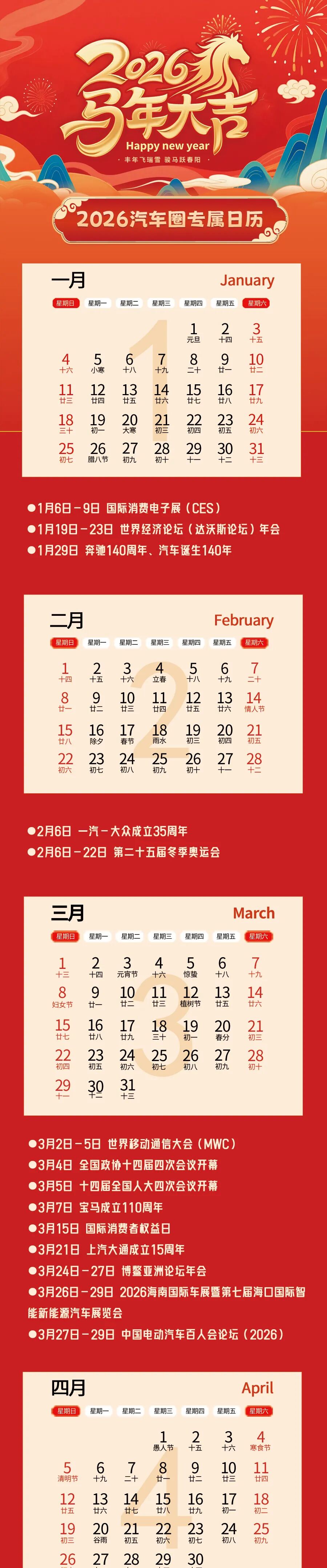
收藏!2026汽车圈全年核心事件日历
Zhong Guo Qi Che Bao Wang· 2026-02-24 01:33
新年启新程,万事尽可期。 借着马年的东风,奔赴下一场山海。 致每一位奋斗的汽车人: 愿你握稳方向盘,跑出中国汽车的加速度。 我们精心整理了2026年汽车圈专属日历。 | 二月 | | 星期日 星期一 星期二 星期三 星期四 | | | 星期五 【星期六 | February | | --- | --- | --- | --- | --- | --- | --- | | 1 | 2 | 3 4 | | 5 | 6 | 7 | | 甲 | 十五 | 十六 / 立春 | | +八 | 十九 | =+ | | 8 | 9 | 10 | 11 | 12 | 13 | 14 | | 甘一 | 甘二 | 廿三 | 日 | 甘五 | 甘六 | 情人节 | | 15 | 16 | 17 | 18 | 19 | 20 | 21 | | 廿八 | 除タ | 春节 | 雨水 | 初三 | 初四 | 初五 | | 22 | 23 | 24 | 25 | 26 | 27 | 28 | | 初六 | 初七 | 初八 | 初九 | 初十 | キー | 十二 | ●2月6日 一汽一大公成立35周年 ●2月6日-22日 第二十五届冬季奥运会 | ...

因地制宜做好经济工作的核心要义与关键举措
Jin Rong Shi Bao· 2026-02-09 01:28
Core Viewpoint - The article emphasizes the importance of "tailored economic work" as a central task in China's modernization, advocating for policies that respect local conditions and resources to achieve high-quality development and regional coordination [1][2][3]. Group 1: High-Quality Development - The transition from high-speed growth to high-quality development necessitates a shift from generic policies to more precise, targeted approaches that align with regional characteristics [2]. - High-quality development requires a deep understanding of regional differences to optimize resource allocation and achieve sustainable growth [2]. Group 2: Regional Coordination - China's vast territory presents significant regional disparities, making it essential to implement strategies that leverage local advantages for coordinated economic development [3]. - Major regional strategies like "Eastern Leading, Central Rising, Western Development, and Northeast Revitalization" reflect the application of tailored approaches to regional development [3]. Group 3: New Quality Productivity - The development of new quality productivity, driven by technological innovation, must be rooted in local industrial ecosystems and innovation systems [4]. - Different regions should focus on their unique strengths and resources to cultivate new industries and technologies, avoiding a one-size-fits-all approach [4]. Group 4: Balancing Relationships - "Tailored economic work" requires a balance between local and national interests, ensuring that regional strategies align with national development goals [5]. - The relationship between government and market should be managed to foster a conducive environment for economic growth while respecting market dynamics [6]. Group 5: Unified Market and Local Characteristics - The construction of a unified national market should complement the development of local economies, allowing for both regional uniqueness and overall economic integration [7]. - Local governments are encouraged to actively participate in the national market while leveraging their unique resources to enhance competitiveness [7]. Group 6: Common Prosperity - Achieving common prosperity is a fundamental goal of modernization, with "tailored economic work" serving as a pathway to balance regional development and wealth distribution [8]. - Developed regions are encouraged to support underdeveloped areas through industrial transfer and resource sharing to promote equitable growth [8]. Group 7: Key Measures for Economic Work - Regions should adapt their industrial positioning in response to global changes, focusing on high-tech sectors and leveraging local advantages [9]. - The development of new quality productivity should be tailored to local conditions, with a focus on integrating digital technologies into traditional industries [10][11]. Group 8: Governance and Evaluation - A correct performance evaluation system is essential for implementing tailored economic strategies, moving beyond GDP-centric metrics to include diverse indicators [13]. - Local governments should be guided by a performance framework that reflects new development concepts, ensuring that regional strategies are effective and aligned with national priorities [13].
“宣宣”学习笔记(120)丨韩文秀解读中央经济工作会议精神
Sou Hu Cai Jing· 2026-01-23 14:37
Core Viewpoint - The Central Economic Work Conference outlines the economic work for 2026, emphasizing the need for a stable and progressive economy while leveraging advantages and addressing challenges [2][3]. Summary by Sections Economic Performance and Outlook - The Chinese economy is expected to grow by approximately 5% year-on-year in 2025, maintaining its position as the largest engine of global economic growth [3]. Key Principles for Economic Work - The conference identifies five essential principles for economic work: 1. Fully explore economic potential 2. Combine policy support with reform and innovation 3. Balance flexibility and regulation 4. Integrate investment in physical assets and human resources 5. Strengthen internal capabilities to face external challenges [4][5]. Focus Areas for 2026 - Eight key tasks for 2026 include: 1. Prioritize domestic demand and build a robust domestic market 2. Drive innovation and cultivate new growth drivers 3. Tackle reforms to enhance high-quality development 4. Promote cooperation and openness in multiple fields 5. Foster coordinated development between urban and rural areas 6. Lead with "dual carbon" initiatives for a comprehensive green transition 7. Focus on improving people's livelihoods 8. Safeguard against risks in critical sectors [6]. Economic Characteristics and Strategies - China's economy is characterized by significant flexibility, internal circulation, and self-reliance, with a focus on expanding consumption and investment, developing technology and industries, and promoting urban-rural integration [8][9]. - The relationship between "flexibility" and "regulation" is crucial for enhancing economic governance, ensuring that market order is maintained while stimulating productivity [10][11]. Employment and Social Policies - Employment is highlighted as a fundamental aspect of people's livelihoods, with a need to prioritize policies that stabilize and enhance job quality, particularly for key groups such as recent graduates and migrant workers [12]. Resilience and Innovation - The emphasis is placed on strengthening the real economy and enhancing independent innovation capabilities to navigate international competition and challenges effectively [13].

战新产业增加值占比大幅提升!地方国企“十五五”发展目标定了
Xin Lang Cai Jing· 2026-01-16 03:31
Group 1 - The core objective of the "14th Five-Year Plan" for local state-owned enterprises (SOEs) is to significantly enhance technological self-reliance, achieve rapid breakthroughs in key core technologies, and steadily increase the number of leading technology enterprises [1] - The focus for 2026 includes improving quality and efficiency, enhancing growth quality, and exploring growth potential while ensuring smooth economic circulation [1] - A total of 500 billion yuan in new policy financial tools has been fully allocated, supporting over 2,300 projects with a total investment of approximately 7 trillion yuan [1] Group 2 - The emphasis on stabilizing growth includes promoting major project implementation in urban renewal, affordable housing, and new infrastructure such as smart logistics and 5G IoT to stimulate consumption [2] - The State-owned Assets Supervision and Administration Commission (SASAC) aims to strengthen the role of SOEs in technological innovation, optimize the layout of state-owned capital, and enhance traditional industries while developing emerging pillar industries [2][3] - Key areas for SOE reform this year include deepening the "three systems" reform, improving innovation mechanisms, and establishing a regulatory model that balances state asset security with development vitality [3]

学习手记 | 抓落实,要“坚决有力”也要“认真探索”
Xin Hua She· 2026-01-15 10:57
Core Viewpoint - The article emphasizes the importance of implementing strict governance within the Communist Party, highlighting the need for resolute and effective execution of major decisions made by the Party leadership, particularly during the critical period of the 14th Five-Year Plan [5][7]. Group 1: Implementation of Party Decisions - The central message from the recent meeting of the Central Commission for Discipline Inspection is the call for a more resolute and effective implementation of the Party's major decisions [5][6]. - Xi Jinping stressed that maintaining the authority and centralized leadership of the Party is a fundamental requirement, and all levels must have a broad perspective and execution capability [7]. - The focus is on understanding and adhering to the strategic intentions of the Party, ensuring that local actions align with national directives without deviation [8]. Group 2: Local Adaptation and Practicality - The article discusses the necessity of adapting policies to local conditions, emphasizing that implementation should not be a mere replication of higher-level directives but should consider local realities [9][10]. - Xi Jinping pointed out the dangers of a one-size-fits-all approach, urging regions to creatively develop methods that suit their specific circumstances while adhering to the overarching goals of the Party [12]. - The importance of a correct view of performance is highlighted, ensuring that local actions do not stray from the Party's ideals and serve the people effectively [12].
中央经济工作会议在北京举行 习近平李克强作重要讲话
Xin Hua She· 2026-01-15 09:07
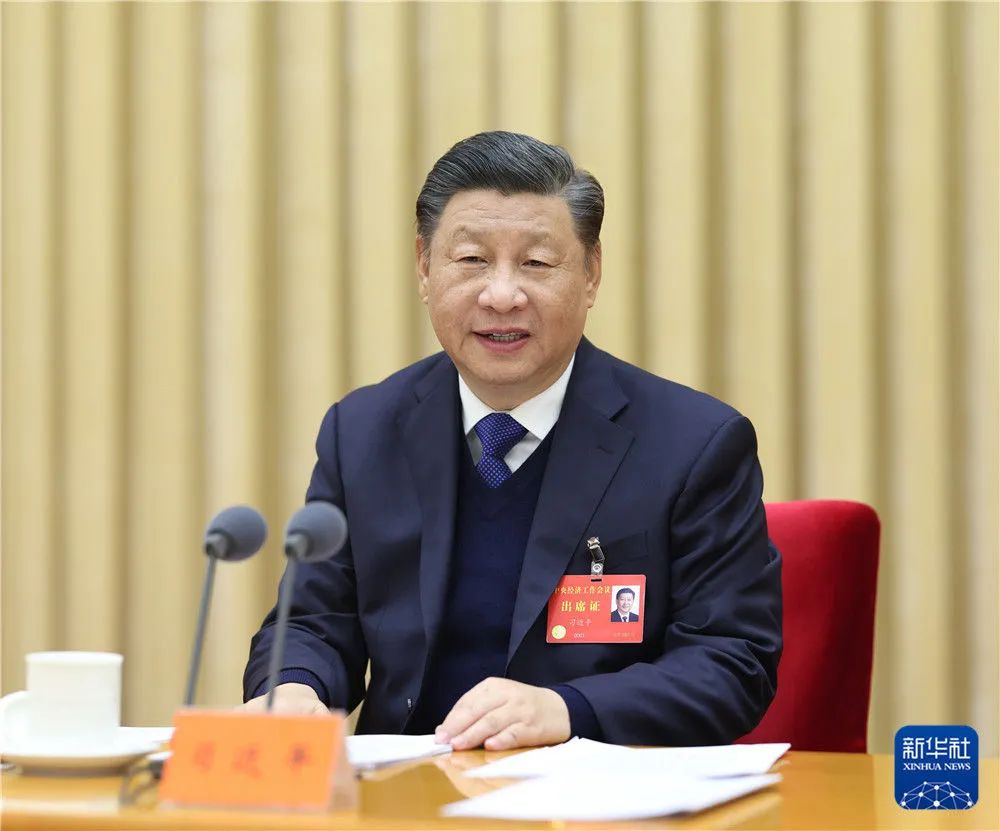
原标题:中央经济工作会议在北京举行 习近平李克强作重要讲话 栗战书汪洋王沪宁赵乐际韩正出席会议 12月8日至10日,中央经济工作会议在北京举行。中共中央总书记、国家主席、中央军委主席习近平出席会议并发表重要讲话。新华社记者 王 晔 摄 会议认为,今年是党和国家历史上具有里程碑意义的一年。我们隆重庆祝中国共产党成立一百周年,实现第一个百年奋斗目标,开启向第二个 百年奋斗目标进军新征程,沉着应对百年变局和世纪疫情,构建新发展格局迈出新步伐,高质量发展取得新成效,实现了"十四五"良好开局。 我国经济发展和疫情防控保持全球领先地位,国家战略科技力量加快壮大,产业链韧性得到提升,改革开放向纵深推进,民生保障有力有效, 生态文明建设持续推进。这些成绩的取得,是以习近平同志为核心的党中央坚强领导的结果,是全党全国各族人民勠力同心、艰苦奋斗的结 果。 会议指出,在充分肯定成绩的同时,必须看到我国经济发展面临需求收缩、供给冲击、预期转弱三重压力。世纪疫情冲击下,百年变局加速演 进,外部环境更趋复杂严峻和不确定。我们既要正视困难,又要坚定信心。我国经济韧性强,长期向好的基本面不会改变。无论国际风云如何 变幻,我们都要坚定不移做好 ...
实现2026年经济目标,深层次改革不可或缺
Di Yi Cai Jing· 2026-01-13 07:18
Group 1 - The core viewpoint emphasizes the importance of policy support and reform innovation in achieving economic stability and growth in 2025, with a GDP growth of 5.2% in the first three quarters and an expected annual growth rate of around 5% [1][2] - The economic structure is continuously optimizing, with emerging industries like artificial intelligence and biomedicine thriving, and significant sales driven by the "two new" policies, including over 2.5 trillion yuan in sales from consumer goods replacement [1][3] - Industrial enterprises have seen a profit increase of 1.9% from January to October 2025, indicating improved corporate performance despite ongoing challenges [1][3] Group 2 - Current economic challenges include insufficient effective demand, with investment showing negative growth and overall consumption remaining weak [2][3] - Price levels are low, with the Consumer Price Index (CPI) fluctuating around zero for two consecutive years and the Producer Price Index (PPI) experiencing negative growth for three years [3][4] - Employment and resident income growth face significant pressure, as highlighted in the "15th Five-Year Plan," indicating a need for focused policy measures [3][4] Group 3 - The central economic work conference has called for more proactive macroeconomic policies to address the ongoing economic downward pressure, including maintaining necessary fiscal deficits and increasing central budget investments [5][6] - A moderately loose monetary policy is to be implemented, focusing on stabilizing economic growth and ensuring reasonable price recovery, with tools like reserve requirement ratio cuts and interest rate reductions [6][7] - The conference outlined "eight persistences" for economic work, emphasizing the need for deep reforms alongside policy support to enhance domestic demand and improve income distribution [7][8]
1月资产配置月度报告:跨年行情多点开花,外需韧性超预期
Sou Hu Cai Jing· 2026-01-13 02:57
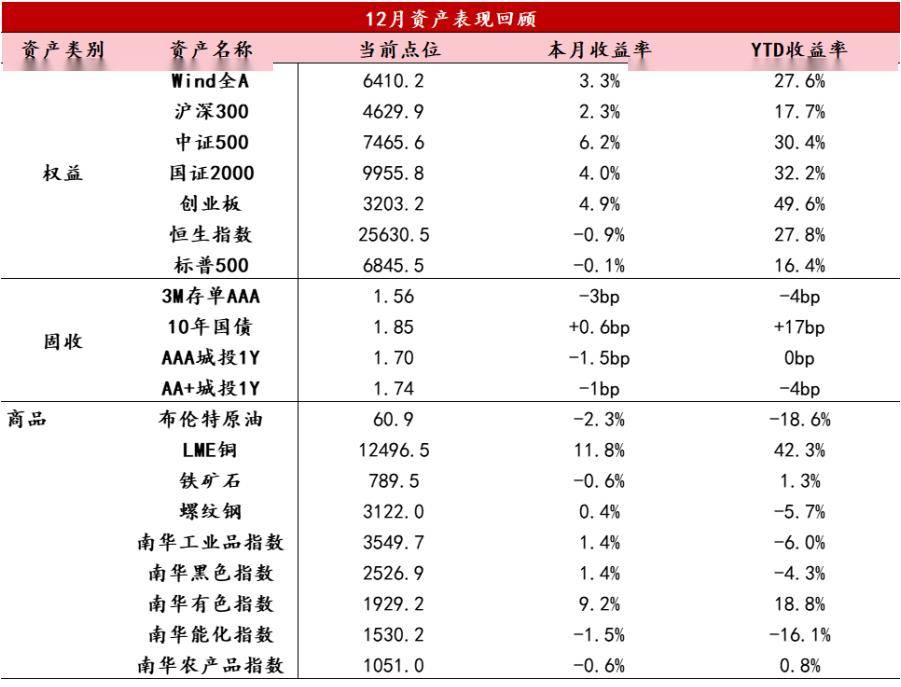
Stock Market Overview - In December, the Federal Reserve's interest rate cut was implemented as expected, leading to fluctuations in future rate cut expectations, while the Nasdaq index experienced volatility [1] - The A-share market showed overall fluctuations, with the Shanghai Composite Index achieving 11 consecutive gains by the end of the month, driven by a positive tone from the Central Economic Work Conference and a declining US dollar index [1] - The Wind All A index recorded a +3.3% increase for the month, with 60% of the Shenwan first-level industries rising, particularly strong performances in defense and military (+17.22%) and non-ferrous metals (+13.68%) [1] Bond Market Overview - The bond market continued to experience wide fluctuations in December, with increased yield volatility and a steeper curve [2] - Despite relatively ample liquidity and the central bank's resumption of bond purchases providing some support, concerns over long-term bond supply and other factors kept the market in a weak oscillation pattern [2] - The 10-year government bond yield ended the month at 1.85%, reflecting an N-shaped trend throughout December [2] Commodity Market Overview - The commodity market showed a bullish atmosphere in December, with precious metals and non-ferrous sectors being the strongest performers [3] - Gold prices fluctuated, with London gold closing at $4318.25 per ounce, up 2.36% from the previous month, while copper prices also saw significant increases [3] - The oil market experienced a downward trend, with Brent crude oil closing at $60.91 per barrel, down 2.26% for the month [3] Macroeconomic Performance - In November, China's exports demonstrated strong resilience, growing by 5.9% year-on-year, driven by a significant increase in machinery and high-tech product exports [5] - However, domestic consumption remained weak, with retail sales growth slowing to 0.3% year-on-year, indicating structural constraints on internal demand [5] - Fixed asset investment continued to decline, with real estate investment adjustments dragging down overall figures, highlighting the challenges in achieving self-sustaining growth [5] Policy Outlook - The Central Economic Work Conference set the tone for macroeconomic policy in 2026, focusing on addressing the structural imbalance of "strong supply and weak demand" [9] - The strategic shift will prioritize investment in human capital and social welfare, aiming to enhance income levels and consumer demand [9] - Fiscal policy is expected to maintain a more active stance, with a nominal deficit rate targeted around 4.0%, while monetary policy will shift focus from total volume to price stability [10][11] Asset Allocation Analysis - In December, net buying in the stock market rebounded to over 2.5 trillion yuan, with significant inflows into equity ETFs [14] - The manufacturing PMI showed a seasonal rebound, indicating improved trade conditions and proactive inventory preparations by companies [15] - Looking ahead to 2026, the market is expected to experience structural trends, with a focus on sectors that demonstrate sustainable performance and profitability [16]
尹艳林:当前的经济形势与深层次改革
Xin Lang Cai Jing· 2026-01-12 12:33
Core Viewpoint - The current macroeconomic situation in China is characterized by both achievements and challenges, necessitating deep reforms alongside supportive policies to ensure stable growth and address existing issues [4][5][6]. Economic Performance - In 2025, China's GDP growth reached 5.2% in the first three quarters, an increase of 0.4 percentage points compared to the previous year, with an expected annual growth rate of around 5% and a total economic output projected to reach 140 trillion yuan [4][14]. - The consumer goods market saw significant activity, with sales from the "old-for-new" policy exceeding 2.5 trillion yuan, including over 11.2 million vehicle upgrades and more than 120 million home appliance upgrades [4][14]. - Industrial profits for large-scale enterprises increased by 1.9% from January to October, indicating improved corporate performance [5][14]. Challenges in the Economy - There are notable issues such as insufficient effective demand, with recent months witnessing negative growth in investment and overall weak consumption [6][15]. - Price levels remain low, with the Consumer Price Index (CPI) fluctuating around zero for two consecutive years and the Producer Price Index (PPI) experiencing three years of negative growth [6][15]. - Employment and income growth pressures are significant, as highlighted in the "15th Five-Year Plan," indicating a need for focused strategies to enhance job creation and income distribution [6][15]. Policy Recommendations - The Central Economic Work Conference emphasized the need for more proactive macroeconomic policies, including maintaining necessary fiscal deficits and increasing central budget investments to support key projects [7][17]. - A flexible monetary policy is recommended to promote stable economic growth and reasonable price recovery, utilizing tools like reserve requirement ratio cuts and interest rate reductions [8][17]. - The government is urged to implement reforms in income distribution, enhance support for low-income groups, and improve the overall income structure to stimulate domestic demand [9][18]. Reform Initiatives - The focus on deep reforms includes addressing barriers in talent mobility between public institutions and enterprises, enhancing the role of innovation in driving economic growth, and improving the financial system to better support technological advancements [10][19]. - The government aims to enhance the synergy between policy support and reform innovation to foster a favorable economic environment and improve market expectations [10][19].
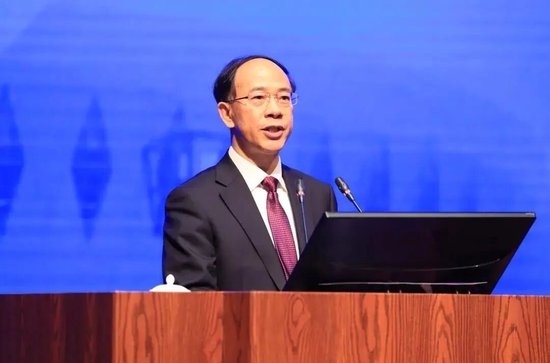
赵乐际:在十四届全国人大常委会第十九次会议上的讲话
Xin Lang Cai Jing· 2026-01-05 11:29
Group 1 - The meeting approved 14 legal drafts, passing 6 of them, including the Dangerous Chemicals Safety Law, which emphasizes safety management across the entire supply chain [1] - Amendments to the Fisheries Law were made to enhance regulations on aquaculture, fishing, resource protection, and supervision, promoting green development in the fisheries sector [1] - The Civil Aviation Law was modified to strengthen safety guarantees in civil aviation and protect passenger rights, while also promoting the development of the aviation manufacturing industry and low-altitude economy [1] Group 2 - The meeting reviewed the draft laws on ecological environment, national development planning, and the promotion of national unity, which are crucial for implementing the Party's decisions [2] - Initial reviews were conducted on several draft laws, including the State-Owned Assets Law and the Childcare Services Law, with recommendations for further refinement [2] Group 3 - The meeting discussed five reports from the State Council, emphasizing the need for improved audit rectification mechanisms and better allocation of higher education resources [3] - Suggestions were made to enhance the conversion of scientific and technological achievements and to deepen the integration of technological and industrial innovation [3] Group 4 - The meeting reviewed reports on the implementation of the Energy Conservation Law and the Circular Economy Promotion Law, advocating for their effective enforcement to promote green transformation [4] - A report on the legal review process was presented, highlighting the review of 2,309 regulatory documents and addressing issues of constitutionality and legality [5] Group 5 - The meeting approved the report on the review of legal documents, resulting in the invalidation of 104 laws and legal interpretations, and proposed further discussions at the upcoming National People's Congress [5] - The meeting concluded with the approval of the qualifications of representatives and personnel appointments, confirming a total of 2,900 representatives in the current session [5]