
印染

Search documents
量化大势研判202603:3月核心推荐预期成长风格
Guolian Minsheng Securities· 2026-03-04 07:27
Quantitative Models and Construction Methods - **Model Name**: Quantitative Market Trend Judgment Framework **Model Construction Idea**: The model aims to identify the dominant market style by comparing asset characteristics and prioritizing superior assets based on their intrinsic attributes. It incorporates a bottom-up quantitative approach to analyze the lifecycle of industries and their corresponding asset styles[6][10][17] **Model Construction Process**: 1. Define five asset style stages: external growth, quality growth, quality dividend, value dividend, and bankruptcy value[6] 2. Use a priority framework of $g > ROE > D$ to evaluate assets based on growth expectations, profitability, and dividend yield[6][7] 3. Compare mainstream assets (expected growth, actual growth, and profitability) and secondary assets (quality dividend, value dividend, and bankruptcy value) based on their crowding levels and fundamental factors[10][17] 4. Allocate industries using equal weights within each strategy, selecting five industries per strategy per period[17] **Model Evaluation**: The framework has demonstrated strong explanatory power for A-share market style rotations since 2009, achieving an annualized return of 27.81%[17] Quantitative Factors and Construction Methods - **Factor Name**: Expected Growth ($gf$) **Factor Construction Idea**: Measures the expected growth rate of industries based on analysts' forecasts, regardless of the lifecycle stage[7] **Factor Construction Process**: 1. Calculate the expected net profit growth rate ($g_{f,ttm}$) for each industry 2. Rank industries based on $g_{f,ttm}$ and select the top-performing ones[7][23] **Factor Evaluation**: The factor has shown consistent performance in identifying high-growth industries, with significant excess returns since 2019[37] - **Factor Name**: Actual Growth ($g$) **Factor Construction Idea**: Focuses on industries with the highest performance momentum ($\Delta g$), particularly during transition and growth phases[7] **Factor Construction Process**: 1. Calculate the actual net profit growth rate ($g_{ttm}$) for each industry 2. Identify industries with the highest $\Delta g$ values[7][27] **Factor Evaluation**: The factor has delivered strong excess returns in growth-dominated environments[38] - **Factor Name**: Profitability (ROE) **Factor Construction Idea**: Targets industries with high ROE and low valuation under the PB-ROE framework, focusing on mature phases[7] **Factor Construction Process**: 1. Calculate the PB-ROE residuals for each industry 2. Rank industries based on residuals and select the top-performing ones[7][41] **Factor Evaluation**: The factor performed well from 2016 to 2020 but weakened from 2021 to mid-2024[41] - **Factor Name**: Quality Dividend (DP+ROE) **Factor Construction Idea**: Combines dividend yield (DP) and ROE to identify high-quality industries, focusing on mature phases[7] **Factor Construction Process**: 1. Calculate DP and ROE for each industry 2. Combine the two metrics into a composite score and rank industries[7][44] **Factor Evaluation**: The factor has shown significant excess returns in 2016, 2017, and 2023[44] - **Factor Name**: Value Dividend (DP+BP) **Factor Construction Idea**: Combines dividend yield (DP) and book-to-price ratio (BP) to identify undervalued industries, focusing on mature phases[7] **Factor Construction Process**: 1. Calculate DP and BP for each industry 2. Combine the two metrics into a composite score and rank industries[7][47] **Factor Evaluation**: The factor has delivered strong excess returns in 2009, 2017, and 2021-2023[47] - **Factor Name**: Bankruptcy Value (PB+SIZE) **Factor Construction Idea**: Targets industries with low PB and small size, focusing on stagnation and recession phases[7] **Factor Construction Process**: 1. Calculate PB and SIZE for each industry 2. Combine the two metrics into a composite score and rank industries[7][50] **Factor Evaluation**: The factor has shown significant excess returns in 2015-2016 and 2021-2023[50] Model Backtesting Results - **Quantitative Market Trend Judgment Framework**: - Annualized return: 27.81% since 2009 - Significant excess returns in 2017, 2020, 2021, and 2022[17][20] Factor Backtesting Results - **Expected Growth ($gf$)**: - Recent performance: Top industries include automotive sales, lithium battery equipment, and tungsten, with mixed returns over the past three months (e.g., -4.47% for automotive sales, +0.25% for lithium battery equipment)[37] - **Actual Growth ($g$)**: - Recent performance: Top industries include photovoltaic equipment and insurance, with mixed returns over the past three months (e.g., -8.92% for photovoltaic equipment, -6.04% for insurance)[39] - **Profitability (ROE)**: - Recent performance: Top industries include agriculture and garden engineering, with mixed returns over the past three months (e.g., -4.19% for agriculture, -2.07% for garden engineering)[41] - **Quality Dividend (DP+ROE)**: - Recent performance: Top industries include forestry and lithium battery equipment, with mixed returns over the past three months (e.g., +1.21% for forestry, +0.25% for lithium battery equipment)[44] - **Value Dividend (DP+BP)**: - Recent performance: Top industries include security and buses, with mixed returns over the past three months (e.g., +6.09% for security, +12.65% for buses)[47] - **Bankruptcy Value (PB+SIZE)**: - Recent performance: Top industries include automotive sales and textile products, with mixed returns over the past three months (e.g., -4.47% for automotive sales, +4.09% for textile products)[50]
十大券商一周策略:A股将迎“春季躁动”胜率最高阶段,涨价仍是核心配置线索,重视关税税率下降后出口链修复机会
Jin Rong Jie· 2026-02-24 00:10
Group 1 - The core investment theme post-Spring Festival revolves around "price increases" and "revaluation of physical assets," particularly in resource, chemical, and midstream manufacturing sectors, leveraging China's pricing power amid global uncertainties [1][2] - The technology sector, particularly driven by AI, remains a key focus, with sub-sectors like computing power, applications, and robotics expected to remain active due to industrial catalysts [1][2] - The recovery of export chains, non-bank financials, and certain consumer and real estate chains are seen as important supplements to market trends under the backdrop of internal and external demand recovery [1] Group 2 - CITIC Securities emphasizes that price increases are a core configuration clue for Q1, with a focus on sectors like chemicals, non-ferrous metals, power equipment, and new energy, while also increasing exposure to undervalued insurance and brokerage stocks [2] - Historical data indicates that February and the period around the Spring Festival are strong for market movements, with small-cap stocks showing a 100% probability of rising from the Spring Festival to the Two Sessions [3] - Guojin Securities highlights the importance of balancing global physical assets against Chinese assets, recommending commodities like copper, aluminum, and oil, as well as sectors with global comparative advantages like equipment exports and domestic manufacturing [4] Group 3 - Industrial sectors experiencing structural price increases due to supply-demand gaps are primarily in midstream materials and manufacturing, with a focus on chemicals, steel, and high-end manufacturing [5] - The potential for recovery in the export chain is noted, particularly in industries with significant exposure to the U.S. market that will benefit from reduced tariffs [5] - The policy uncertainty surrounding tariffs and trade is expected to favor gold as a risk hedge, with market participants anticipating potential shifts in U.S. trade policy [6] Group 4 - Attention is drawn to the post-holiday inventory replenishment in commodities, with a continued positive outlook on technology applications, particularly in semiconductors and AI [7] - Quantum technology is highlighted as a sector receiving dual catalysts from policy and technological advancements, with significant developments in quantum key distribution networks [8] - The AI industry revolution is identified as a key investment theme, focusing on computing power, storage, and applications, with a strong emphasis on the performance of high-growth sectors [9] Group 5 - Localized opportunities are expected in AI applications linked to overseas trends and robotics associated with the Spring Festival, with a cautious approach to market movements anticipated [10] - The current bull market logic remains intact, with a recommendation for investors to maintain confidence despite short-term volatility, focusing on sectors with high securities ratios [11]
国金证券:把握全球实物资产VS中国资产这一重要主线
智通财经网· 2026-02-24 00:07
Group 1 - The investment activities are shifting from being solely AI-driven to a broader spectrum of real sectors, indicating a recovery in global manufacturing cycles supported by a smoother path for U.S. interest rate cuts [1][4] - The revaluation of Chinese assets is expected as capital flows back, promoting internal consumption and inflation cycles [1][4] - The report suggests specific asset allocation strategies, including physical assets like copper, aluminum, and oil, as well as sectors with global comparative advantages such as Chinese equipment exports and domestic manufacturing [1][4] Group 2 - The U.S. GDP growth for Q4 2025 was below expectations, primarily due to government spending disruptions, but investment in AI and non-AI sectors is showing signs of recovery [2] - The manufacturing PMI data indicates a global manufacturing recovery, with Europe exceeding expectations and the U.S. maintaining expansion, suggesting a positive outlook for the manufacturing sector [2] - The recent U.S. Supreme Court ruling on tariffs may ease domestic inflation pressures and support global export recovery, shifting the burden of inflation control from the Federal Reserve to other sectors [2] Group 3 - Commodity prices, particularly for industrial and precious metals, are experiencing high volatility, but there is a shift towards real industrial pricing rather than financial speculation [3] - The geopolitical risks and supply disruptions are expected to maintain a premium on industrial metals, while demand from tech giants for AI investments remains strong [3] - The focus on inflation control is shifting from the Federal Reserve to government actions, which may benefit commodities like gold as a hedge against economic uncertainty [3] Group 4 - The core of market style rebalancing is not about the existence of an AI bubble but rather the macroeconomic impacts of AI combined with monetary policy and major country policy choices [4] - The report emphasizes the importance of physical asset revaluation based on low inventory and stable demand, highlighting sectors such as oil, rare earths, and various manufacturing industries [4] - The report identifies opportunities in sectors benefiting from capital market expansion and a bottoming out of long-term asset returns, particularly in non-bank financials [4]

A股策略周报:节后主线将更加清晰-20260223
SINOLINK SECURITIES· 2026-02-23 13:49
Global Assets: Rebalancing Continues - The current market rebalancing is based on internal and external recovery, with AI trading entering its second phase, leading to a focus on the actual impact of AI on various industries [3][13] - From February 16 to February 20, 2026, global risk assets showed an overall upward trend, but internal performance was mixed, with industrial, financial, and energy sectors gaining favor [3][13] - The focus has shifted from whether AI is a bubble to identifying the real industrial impacts and critical supply-demand issues as AI transitions from a thematic to a macro factor [3][13] Manufacturing Cycle Further Rising - The U.S. GDP data for Q4 2025 showed slower growth primarily due to government spending disruptions, while AI-related investments remained strong [4][25] - Non-AI and residential investment growth is showing signs of bottoming out, indicating a broader recovery in investment activities beyond just AI [4][25] - The February manufacturing PMI data indicated a recovery in global manufacturing, with Europe exceeding expectations and the U.S. maintaining expansion, suggesting a positive trend in manufacturing cycles [4][25][34] Commodities: Transitioning from Financial Overtrading to Industrial Pricing - Recent fluctuations in industrial and precious metals prices are attributed to macro and industrial events, with a return to real supply-demand signals expected [5][44] - Geopolitical risks continue to support industrial metal prices, while demand from tech giants for AI investments remains robust, indicating a potential new support for demand [5][44] - Historical data suggests that current copper and aluminum price ratios are low compared to historical manufacturing PMI levels, indicating potential for price recovery [5][44][45] Focus on Global Physical Assets vs. Chinese Assets - The core of market rebalancing is not about the existence of an AI bubble but rather the macro impacts of AI combined with monetary and major country policy choices [6][56] - The relative smooth path for future U.S. interest rate cuts is expected to support the recovery of the global manufacturing cycle, which may lead to a revaluation of Chinese asset capacity [6][56] - Specific investment recommendations include physical assets like copper, aluminum, and oil, as well as sectors benefiting from capital inflows and consumption recovery in China [6][56]
航民股份:公司印染以中高端产品为主
Zheng Quan Ri Bao Zhi Sheng· 2026-02-11 13:45
Core Viewpoint - The company is focusing on high-end, intelligent, green, efficient, and integrated development in the textile printing and dyeing industry, especially during the pre-Spring Festival period when operations are typically slowed down for maintenance and employee holidays [1] Group 1 - The company is engaged in equipment maintenance and repair as employees return home for the Spring Festival [1] - The company specializes in mid-to-high-end products in the printing and dyeing sector [1] - The company aims to enhance its internal capabilities while advancing towards high-end, intelligent, green, efficient, and integrated operations [1]

航民股份:公司通常错峰采购染料
Zheng Quan Ri Bao· 2026-02-11 13:45
Group 1 - The company typically engages in off-peak procurement of dyes, indicating a strategic approach to manage costs and supply [2] - Price transmission for dyes is influenced by downstream demand, suggesting that market supply and demand dynamics play a crucial role in pricing [2] - Different products have varying requirements, leading to differences in dyeing costs, which highlights the complexity of the dyeing industry [2]

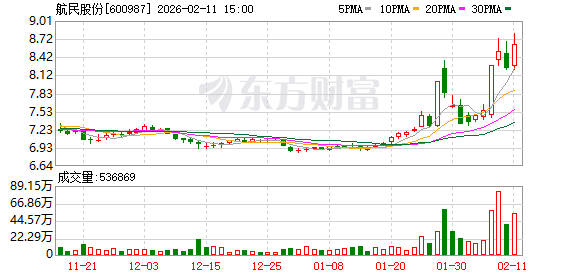
航民股份:染料助剂在染费构成中占比20%多
Zheng Quan Ri Bao Zhi Sheng· 2026-02-11 13:38
Group 1 - The company has over 40 years of experience in the dyeing and printing industry, indicating a deep understanding of market trends and price fluctuations in the dye market [1] - The company generally adopts staggered procurement strategies to manage the volatility in dye prices [1] - The company primarily produces printed and dyed interwoven fabrics, with disperse dyes being used extensively, and dye auxiliaries accounting for over 20% of the dyeing cost structure [1]
【十大券商策略】持股过节,兼具胜率与赔率!眼下是加仓良机
券商中国· 2026-02-08 14:39
Group 1 - The core viewpoint is that there is no need to worry about short-term market fluctuations, as the underlying trends indicate a shift from virtual to real economies in Europe and the US, alongside the disruptive innovation brought by AI [2] - The urgency for strategic security investments and new infrastructure in the US reflects a growing competition, balancing short-term shareholder interests with long-term strategic value [2] - China's capital market has already completed the pricing adjustment from virtual to real, currently undergoing a verification and pricing process for quality and efficiency improvements [2] Group 2 - A potential "favorable timing and conditions" for a new upward cycle in the A-share market is anticipated in the coming months, particularly around the Spring Festival [3] - Historical data shows that February, especially around the Spring Festival, is a period of strong market activity, with small-cap stocks likely to outperform [3] - The recent market pullback is seen as an opportunity to regain confidence and prepare for the upcoming upward cycle, especially around the 4000-point level [3] Group 3 - The global market is quickly pricing in the potential hawkish stance of the Federal Reserve, while the Chinese government is shifting its focus towards domestic demand, which is expected to boost economic prospects [5] - The recent emphasis from the China Securities Regulatory Commission on stabilizing the capital market is expected to support a gradual recovery in the A-share market [5] - Recommendations include focusing on emerging technologies and sectors such as consumer services, food and beverage, and traditional manufacturing [5] Group 4 - The recent global asset adjustment is more about digesting emotions rather than fundamental changes, with a favorable environment for market recovery expected post-Spring Festival [6] - Key sectors to focus on include technology manufacturing, resource products, and infrastructure chains, with a particular emphasis on AI hardware and high-end manufacturing [6] - The upcoming period is expected to see increased industry catalysts and a rise in risk appetite, creating opportunities for thematic investments [6] Group 5 - The Hang Seng Technology Index is seen as having value for investment, with expectations of a rebound once the liquidity shock subsides [7] - The market is expected to experience a stronger performance post-Spring Festival, with a focus on sectors benefiting from the "14th Five-Year Plan" [7] - The rotation of investment focus is anticipated to accelerate in February, particularly towards sectors like oil, food and beverage, and construction materials [7] Group 6 - The global risk-off mode has led to a reevaluation of assets, with a focus on physical assets and a recovery in manufacturing trends [8] - Recommendations include investing in commodities like oil, copper, and lithium, as well as sectors with confirmed bottoming out in the Chinese manufacturing industry [8] - The return of capital and easing of pressure from quantitative tightening are expected to support a recovery in consumer sectors [8] Group 7 - The recent adjustments in the A-share market are primarily driven by internal factors, with external shocks having limited impact on the fundamental industry landscape [9][10] - The market sentiment has been sufficiently released, and a continuation of the spring market rally is anticipated post-Spring Festival [10] - Key sectors to watch include AI computing, chemical industries, and power equipment, with potential catalysts from local policy signals [10] Group 8 - The market is expected to maintain a range-bound oscillation, with a shift towards value and consumer sectors as high-valuation tech stocks face selling pressure [12] - Defensive sectors like banking and food and beverage are likely to attract investment, while growth sectors may regain focus post-Spring Festival [12] - The upcoming policy window and recovery in risk appetite are expected to shift market attention back to growth sectors with clear performance catalysts [12]

机构论后市丨短期结构仍由科技主导,中期高股息板块或成为主线之一
第一财经网· 2026-02-08 10:09
Group 1 - The A-share market has experienced declines, with the Shanghai Composite Index down 1.27%, the Shenzhen Component down 2.11%, the ChiNext down 3.28%, and the Sci-Tech Innovation Board down 4.31% [1] - Citic Securities highlights a conflict between short-term interests and long-term value in overseas markets, driven by a heightened urgency for real economy investments and the disruptive innovation brought by AI [1] - China’s capital market has already transitioned towards real economy pricing, focusing on quality and efficiency improvements, suggesting that short-term market fluctuations should not cause anxiety [1] Group 2 - China Galaxy Securities recommends a "light position for the holiday" strategy to mitigate risks while retaining opportunities for the post-holiday spring market, particularly in a transitional phase where policy expectations have partially materialized [2] - The focus should be on two main lines: the "anti-involution" concept driven by improved supply-demand dynamics and the emphasis on sectors with safety margins in valuations, such as non-ferrous metals, basic chemicals, steel, cement, and financials [2] - The second line of focus includes key areas like semiconductors, AI, new energy, military, and aerospace, which are aligned with the new production capacity logic in the domestic economy [2] Group 3 - Zhongtai Securities indicates that the market will maintain a structurally active and oscillating pattern, with technology sectors remaining active in the short term, particularly in AI applications, robotics, and semiconductor equipment [3] - High-dividend sectors are expected to gain traction as the market transitions from high-elasticity trading to more certain configurations post-Spring Festival, with a focus on low-valuation, stable earnings, and high dividend certainty [3] Group 4 - Guojin Securities notes that the global AI industry cycle is entering a new phase, with a shift in focus towards infrastructure investments that cannot be disrupted by AI, leading to a revaluation of physical assets [4] - Recommendations include investing in physical assets like oil, copper, aluminum, and lithium, as well as sectors with global comparative advantages such as electrical equipment and engineering machinery [4] - The consumption recovery channel is expected to benefit from capital inflows, easing of balance sheet pressures, and trends in personnel re-entry, particularly in aviation, duty-free, hotels, and food and beverage sectors [4]
国金证券:内外需正在开始共振,中国资产重估之路也蓄势待发
Di Yi Cai Jing· 2026-02-08 09:46
Core Viewpoint - The global AI industry is entering a second phase, leading to a shift in the performance of the technology chain, making it complex to determine which companies will succeed [1] Group 1: Industry Trends - The trend of recovery in overseas manufacturing is strengthening, indicating a shift in the core contradictions of AI investment towards infrastructure represented by energy [1] - A quiet revaluation of global physical assets that cannot be disrupted by AI is beginning, with the return of funds from export enterprises signaling a resonance between domestic and external demand [1] Group 2: Investment Recommendations - The revaluation logic of physical assets is shifting from liquidity and dollar credit to low inventory and stabilizing demand, focusing on commodities such as crude oil, oil transportation, copper, aluminum, tin, lithium, and rare earths [1] - The Chinese equipment export chain, which has a global comparative advantage and confirmed cyclical bottom, includes sectors like power grid equipment, energy storage, engineering machinery, and wafer manufacturing [1] - Domestic manufacturing sectors that are at the bottom of the cycle include petrochemicals, dyeing, coal chemicals, pesticides, polyurethane, and titanium dioxide [1] - The consumption recovery channel is driven by the return of funds, easing of balance sheet pressures, and trends in personnel entry, focusing on sectors like aviation, duty-free, hotels, and food and beverages [1] - Non-bank financials are expected to benefit from the expansion of capital markets and the bottoming out of long-term asset returns [1]