
智能穿戴

Search documents
002512,爆雷!千问AI眼镜即将发布,13只高增长潜力股揭晓(附名单)
Xin Lang Cai Jing· 2026-02-28 04:25
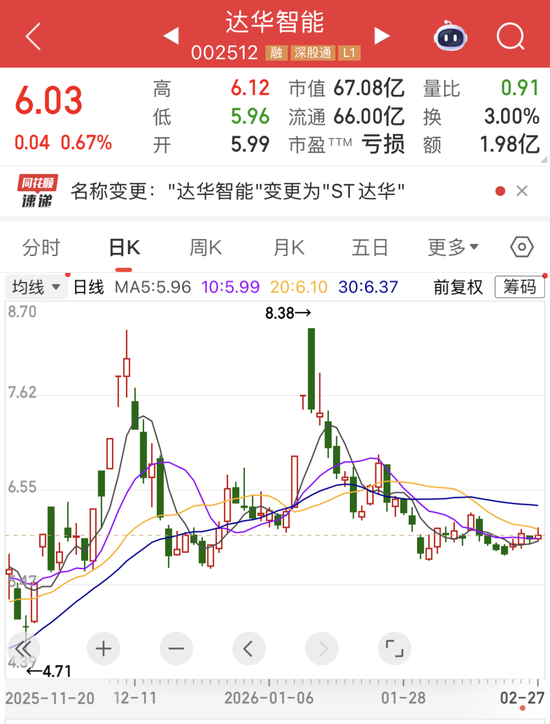
达华智能(维权)即将 被实施其他风险警示 达华智能(002512)2月27日晚间发布公告,公司及相关责任人收到福建证监局出具的《行政处罚事先 告知书》,福建证监局拟对公司罚款600万元。具体来看,福建证监局表示,经查明,达华智能及相关 责任人涉嫌违法事实如下:一是达华智能未按规定披露重大合同及其履行进展情况;二是达华智能2021 年至2023年年度报告存在重大遗漏;三是达华智能2023年年度报告存在虚假记载。 炒股就看金麒麟分析师研报,权威,专业,及时,全面,助您挖掘潜力主题机会! 随着AI技术的不断发展和普及,AI智能眼镜赛道正吸引着众多企业的密集涌入。 公司股票将自2026年3月2日(星期一)开市起停牌1天,自2026年3月3日(星期二)开市起复牌。公司 股票将自2026年3月3日(星期二)开市起被实施其他风险警示,股票简称由"达华智能"变更为"ST达 华",股票交易日涨跌幅限制为5%。 据悉,达华智能以"通信网"(一网)和"数字屏"(一屏)为核心战略,是一家专注于信息通信、光电显 示与数字应用业务的企业。公司预计2025年净利润亏损1.9亿元至2.9亿元。截至2月27日收盘,公司A股 市值为67.08亿 ...


浙江余杭力争“十五五”时期GDP突破5000亿元
Zhong Guo Jing Ji Wang· 2026-02-27 14:24
2月26日,浙江杭州余杭区召开"新春第一会"。该区提出,"十五五"时期,GDP突破5000亿元,数字经 济核心产业增加值超3500亿元,文化产业增加值超3000亿元,财政总收入实现1000亿元,规上营利性服 务业营收迈上万亿台阶。 项目要长出"骨架"和"血肉"。早在"新春第一会"之前,各大项目建设现场早已热潮涌动。余杭国际体育 中心、文一西路西延(二期)、安达仕酒店商业综合体等省"千项万亿"工程重大项目春节"不打烊"。今 年,杭州银泰中心就要开工,加快提速的还有浙江音乐厅、余杭大剧院、余杭国际体育中心、余杭文化 艺术中心、未来城市客厅等城市地标建设进度。 文化产业要长出腾飞的"翅膀"。今年,第四届"良渚论坛"将如约而至。良渚客厅、良渚博物院二期等重 大项目正加速推进。良渚文化大走廊上,将继续一体推进"文化+科技""文化+旅游""文化+民生",持续 擦亮"五千年中国看良渚"金名片。2026年,余杭将实施文化产业高质量发展行动,加快布局游戏、动 漫、微短剧等新兴赛道,推动文化新三样组团出海。 去年,余杭区经济答卷瞩目:GDP达3568亿元,蝉联全省第一;财政总收入839亿元,超越分区前的大 余杭;固定资产投资连续 ...
Meta智能眼镜产品深度解析:技术、生态与商业化全景图
Minmetals Securities· 2026-02-27 08:05
Meta 智能眼镜产品深度解析: 技术、生态与商业化全景图 目前,Meta 已构建起清晰的三级产品矩阵:以 Ray-Ban Meta 为代表的 AI 音频眼镜主打轻量化与内容捕捉,以 Hypernova 为代表的平视显示眼镜探 索神经交互,而以 Orion 为原型的全息 AR 眼镜则展现了从"听觉延伸"向 "视觉增强"逐步递进的战略逻辑。 产品矩阵:摆脱极客玩具定位,构建听觉向视觉递进的三级产品矩阵 穿戴式计算产业已走出早期"极客玩具"的定位局限,转向以时尚属性为核心 的成熟发展阶段。Meta 吸取了 Google Glass 的经验,通过将计算单元隐形 于经典镜框之中的策略,降低了设备的异化感,并在 2025 年第二季度占据了 全球 AR/VR 市场近 60%的份额。 产业拐点:突破续航与 AI 瓶颈,拓展专业运动场景的商业版图 2025 年至 2026 年标志着智能眼镜行业的产业拐点,硬件瓶颈与 AI 能力的双 重突破推动了产品的全天候普及。Ray-Ban Meta Gen 2 通过引入高能量密 度的硅负极电池,将混合续航提升至 8 小时基准,配合端侧 Llama 4 大模型, 实现了低延迟的多模态交互与 ...

全球首家AI眼镜超市“鹿可露可”获国企千万级A轮融资,赋能传统眼镜店抢占时代红利
Jin Tou Wang· 2026-02-26 01:30
近日,杭州鹿可露可科技有限公司,正式宣布完成千万级A轮融资,对于本轮融资的用途,鹿可露可相关负责人表示:本 轮融资将主要用于"鹿可露可AI眼镜超市"的全国渠道建设、AI超市生态完善及AI产品升级。作为全球首家AI眼镜超市,本 次融资的顺利落地,不仅彰显了资本市场对鹿可露可商业模式与发展潜力的高度认可,也将进一步推动AI眼镜行业产业化 进程。 "鹿可露可"不仅拥有自主品牌,同时整合了市面上所有AI眼镜品牌以及AI相关产品。鹿可露可不仅有C段产品,更有企业 定制化AI眼镜产品,精准覆盖不同消费人群需求。相较于市面上的第三方供货,让传统眼镜店拥有更高的利润空间,同时 依托严格的渠道体系,确保每一款产品都对用户产生持续价值,把一次性商品销售,变成长久会员服务。 鹿可露可2026年将在全国每个区县打造专业渠道,解锁货源与流量双优势。作为全球首家AI眼镜超市,鹿可露可look look 早已布局全国,搭建起行业内规模最大的AI眼镜及产品相关产品销售渠道,打破地域限制,让每一家合作的传统眼镜店, 都能享受稳定、充足的货源供应,无需担心缺货、压货难题。更重要的是,依托全国渠道的流量聚合效应,将为合作门店 引流赋能,让门店不仅 ...

陆家嘴财经早餐2026年2月19日星期四
Wind万得· 2026-02-18 23:35
Group 1 - Strong demand for green, smart, and healthy consumption during the Spring Festival holiday, with sales of smart wearable devices increasing by 130%, smart blood pressure monitors and blood glucose meters up over 60%, and organic food sales rising by 52% [3] - The U.S. Federal Reserve's January meeting minutes revealed significant divisions among decision-makers regarding future interest rate directions, with some members discussing the possibility of rate hikes if inflation remains above 2% [3] - High-profile political changes in Japan as Fumio Kishida was confirmed as the new Prime Minister, with expectations to focus on accelerating budget reviews and implementing the U.S.-Japan trade agreement [3] Group 2 - The Spring Festival saw a booming market for holiday consumption and tourism services, prompting regulatory measures to stabilize market prices in various sectors [4] - The Ru Hua Group's founder has been active in the A-share market, investing approximately 400 million yuan in Shen Kai Co. and Su Yan Jing Shen, and acquiring a 5% stake in Wai Jin Ke for 161 million yuan [5] - The appointment of a "post-00s" executive at Xiao Fang Pharmaceutical, with Fang Jing An nominated as a non-independent director candidate, highlights a generational shift in leadership [5] Group 3 - Barclays Bank's report indicates that the AI and robotics market is expected to grow to a trillion-dollar scale by 2035, marking it as one of the most promising investment themes for the next decade [7] - The global semiconductor industry is projected to reach a historical high of $975 billion by 2026, driven by the robust development of AI infrastructure [9] - The global humanoid robot market is anticipated to see significant growth by 2026, with an expected shipment of 30,000 units and China's market size surpassing 8.5 billion yuan [10]



陆家嘴财经早餐2026年2月19日星期四
Sou Hu Cai Jing· 2026-02-18 23:30
Group 1 - Strong demand for green, smart, and healthy consumption during the Spring Festival holiday, with sales of smart wearable devices increasing by 130%, smart blood pressure monitors and blood glucose meters up over 60%, and organic food sales rising by 52% [1] - The U.S. Federal Reserve's January meeting minutes reveal significant divisions among decision-makers regarding future interest rate directions, with some members discussing the possibility of rate hikes if inflation remains above 2% [1] - High-profile political changes in Japan as Fumio Kishida is confirmed as the new Prime Minister, with expectations to focus on accelerating budget reviews and implementing the U.S.-Japan trade agreement [1] Group 2 - The Spring Festival holiday sees a booming market for holiday consumption and tourism services, with regulatory measures in place to stabilize prices in accommodation, dining, and other sectors [2] - Despite not being listed on the capital market, the founder of Lu Hua Group has been active in the A-share market, investing approximately 400 million yuan and 1 billion yuan in recent private placements [2] - The appointment of a "post-00" executive at Xiao Fang Pharmaceutical, with the nomination of a 24-year-old as a non-independent director, highlights a generational shift in corporate leadership [2] Group 3 - The China Real Estate Market Outlook report predicts a 6.2% year-on-year decline in new residential sales area in 2026, with a narrowing decline compared to 2025 [3] - Deloitte forecasts a 26% growth in the global semiconductor industry by 2026, reaching a record high of $975 billion, driven by the development of AI infrastructure [3] Group 4 - Barclays Bank reports that the AI and robotics market is expected to grow to a trillion-dollar scale by 2035, marking it as a key investment theme for the next decade [5] - UBS predicts that 2026 will be a critical turning point for humanoid robots, with global shipments expected to reach 30,000 units and the Chinese market surpassing 8.5 billion yuan [5] - The AI boom is driving unprecedented electricity demand, with gas turbine manufacturers experiencing a backlog of orders extending to 2030 [5] Group 5 - The global AI unicorn Anthropic anticipates paying $80 billion in sales shares to cloud service providers by 2029, a significant increase from $1.3 million in 2024 [7] - Bayer proposes a $7.25 billion settlement in the U.S. related to its flagship herbicide Roundup, addressing over 200,000 cancer-related lawsuits [7] - Volkswagen's marine engine and heat pump production division, Everllence, is attracting interest from top private equity firms, with a potential valuation between €5 billion and €6 billion [7]

Rokid创始人祝铭明: 智能眼镜产业需构建软硬件生态
Zhong Guo Zheng Quan Bao· 2026-02-13 22:25
春节临近,智能眼镜成为当下流行的新年货。全球智能眼镜市场迎来爆发,在这场智能穿戴的产业变革 中,扎根杭州余杭的杭州灵伴科技有限公司(Rokid)成为中国智能眼镜企业中的亮眼代表。 Rokid创始人兼首席执行官祝铭明近日在接受中国证券报记者采访时表示,2025年公司AI+AR智能眼镜 产品乐奇AI眼镜(Rokid Glasses)收获30万台订单,同时公司旗下各类智能眼镜产品在文旅、工业应用 场景不断拓展市场份额。上游供应链产能的突破是智能眼镜产业破局的关键,同时软件生态的构建将决 定智能眼镜的使用体验和未来市场空间。 智能眼镜悄然流行 春节前夕,无论在线下商场还是线上电商平台,智能眼镜成为今年流行的新年货。市场研究机构IDC预 测,2026年中国智能眼镜市场出货量将突破491.5万台,正式迈入规模化增长新阶段。 2025年,一次杭州余杭区政府内部沟通会,让智能眼镜公司Rokid走入大众视野。祝铭明戴着Rokid Glasses样机脱稿演讲的视频广为传播,为企业带来关注度与销量增长。"关注度变高,最直观的变化是 产品销量快速增长,促使生产节奏加快。"祝铭明坐在Rokid位于余杭的展厅内,回忆过去一年企业发展 历 ...
智能眼镜产业需构建软硬件生态
Zhong Guo Zheng Quan Bao· 2026-02-13 20:23
Core Insights - The smart glasses market is experiencing significant growth, with Rokid emerging as a leading player in China, particularly with its Rokid Glasses product expected to receive 300,000 orders by 2025 [1][2] Market Trends - Smart glasses have become a popular item for the upcoming Chinese New Year, with IDC predicting that the shipment volume in China will exceed 4.915 million units by 2026, marking a new phase of scaled growth [1] - The user demographic for smart glasses has expanded beyond tech professionals, now including business people, civil servants, media personnel, teachers, lawyers, and designers, with the proportion of tech workers as users dropping from 50% to about 16% [2] Application Expansion - The application scenarios for smart glasses are diversifying, with significant market share in the cultural tourism sector, where Rokid's AR glasses hold over 90% of the market [3] - Smart glasses are being utilized for various functions such as teleprompting, translation, and information retrieval, as well as in industrial, medical, and educational fields [3] Supply Chain Challenges - Rokid faced production capacity challenges due to a surge in demand, with actual orders for Rokid Glasses reaching 300,000, significantly higher than the anticipated 100,000, leading to delays in fulfilling 30-40% of orders until 2026 [3] - The company is addressing these challenges by collaborating with upstream suppliers to increase production capacity and ensure timely delivery [3] Competitive Landscape - The entry of major companies like Xiaomi, Alibaba, and Li Auto into the smart glasses market is expected to intensify competition, with players categorized into three types: simple audio glasses, non-display smart glasses, and full-featured smart glasses [4] - Rokid positions its products as full-featured smart glasses, emphasizing the importance of system integration, yield rates, production processes, supply chain management, and ecosystem development for future competitiveness [4] Software Ecosystem Development - Rokid is developing a software ecosystem to enhance the functionality of smart glasses, with over 20,000 developers and 4,000 companies already participating in its platform [4] - The company plans to upgrade its products in three phases: solidifying the tool attributes, integrating entertainment and social features, and ultimately expanding to full functionality over the next three to five years [4] Future Outlook - The company believes that smart glasses will not replace smartphones but will transform human-computer interaction, positioning itself as a core platform for interaction in the AI era [5] - With a large base of eyeglass wearers in China and a high acceptance rate for wearing glasses, the market for smart glasses is expected to grow, with Chinese manufacturers projected to account for 45% of global shipments by 2026 [5]
财信证券晨会纪要-20260213
Caixin Securities· 2026-02-13 09:49
Group 1: Market Overview - The overall A-share market showed a slight increase, with the Wind All A Index rising by 0.46% to 6833.88 points, while the Shanghai Composite Index increased by 0.05% to 4134.02 points [6][7] - The ChiNext Index rose by 1.32% to 3328.06 points, and the Sci-Tech 50 Index increased by 1.78% to 1480.99 points, indicating a strong performance in the hard technology sector [6][7] - The trading volume in the market was 21,607.71 billion, an increase of 1,597.27 billion compared to the previous trading day, with 2,107 companies rising and 3,273 companies falling [7] Group 2: Economic Insights - In January, the U.S. non-farm payrolls increased by 130,000, surpassing the expected increase of 70,000, while the unemployment rate stood at 4.3%, slightly better than the expected 4.4% [14] - The average hourly wage increased by 3.7% year-on-year, indicating a stable wage growth environment [14] Group 3: Industry Dynamics - The smart watch and wristband market in China is projected to grow by 13.1% in 2025, with total sales reaching 64.5 million units [24] - Huawei leads the adult smart watch market with a 24.5% share, experiencing a 46.8% year-on-year increase, while Apple holds a 16.5% market share, benefiting from new product launches [25] Group 4: Company Updates - Baiotai (688177.SH) received approval from the European Medicines Agency (EMA) for its Gotenfia injection, which is expected to enhance the company's international market presence [28][30] - Northeast Securities (000686.SZ) has been approved by the China Securities Regulatory Commission to establish a subsidiary in Hong Kong with an investment of 500 million HKD [31] - Huazhong Securities (600909.SH) also received approval for a capital increase of 500 million HKD to its wholly-owned subsidiary in Hong Kong [32] Group 5: Local Economic Policies - Hunan Province announced a subsidy policy for the 2026 Spring Festival, offering up to 1,500 yuan for home appliances and 500 yuan for digital products under the old-for-new program [36][37]
新旧经济的分化与资本市场映射
Ping An Securities· 2026-02-13 09:00
Macro Perspective - Since 2025, China's economy has increasingly shown characteristics of "new and superior" development, with new productive forces being cultivated and diverse consumer preferences becoming more prominent[3] - High-tech manufacturing PMI was 52.0% in January 2026, consistently outperforming the overall manufacturing PMI of 49.3%[21] - High-tech industries' added value grew by 11.0% year-on-year in December 2025, exceeding the overall industrial enterprises' growth by 5.8 percentage points[21] Industry Perspective - Investment in advanced manufacturing, such as aerospace and automotive, grew by 16.9% and 11.7% respectively, outpacing overall manufacturing investment growth[25] - The information technology service sector saw an investment increase of 28.4%, maintaining over 25% growth for 11 consecutive months[25] - The revenue growth of strategic emerging services was 9.9%, while high-tech services grew by 8.6%, both surpassing the overall service sector growth of 7.8%[24] Market Perspective - As of January 2026, the market capitalization weight of the A-share information and communication sector reached 24%, surpassing financial and real estate sectors at 19%[3] - The market capitalization of A-share new economy MAG7 stocks is below that of US MAG7 stocks (20%+) and Hong Kong stocks (10+%), indicating room for growth[3] - The performance of A-share strategic emerging industries showed a profit growth of 15.5%, exceeding the overall non-financial A-share sector's growth of 13.8%[38] Outlook and Risks - The transition from old to new economic drivers is expected to accelerate, positioning new economic sectors as the main growth engine for China's economy[3] - Key investment areas include technology innovation and advanced manufacturing, particularly in AI and innovative pharmaceuticals[3] - Risks include potential market learning effects, unexpected tightening of macro and industrial policies, and significant changes in macroeconomic conditions and liquidity[3]