
老年护理

Search documents
外媒聚焦中国老龄经济新生态——当“银发”遇见“新潮”
Ren Min Ri Bao Hai Wai Ban· 2026-01-19 02:42
Core Insights - The "silver economy" in China is rapidly evolving, focusing on providing diverse products and services for the elderly, reflecting a shift from traditional views of aging to a more modern, vibrant consumer base [3][4][9] - The Chinese government is actively promoting the development of the silver economy through various policies and measures aimed at enhancing the quality and diversity of services available to the elderly [5][6][8] Group 1: Market Trends - The demand from the elderly population is increasingly sophisticated, with interests spanning high-quality food, healthcare, travel, and technology products tailored for their needs [4][9] - By the end of 2024, the elderly population aged 60 and above in China is projected to reach 310 million, with 161 million of them being internet users by mid-2025, indicating a significant digital engagement among seniors [3][4] Group 2: Government Initiatives - The Ministry of Civil Affairs and other departments have issued measures to cultivate the elderly care service sector, focusing on brand development and supply-demand platforms [5][6] - Policies are being implemented to encourage the development of high-quality, diverse consumer offerings for the elderly, including smart health products and recreational services [6][8] Group 3: Investment Opportunities - The silver economy is expected to become a major driver of consumption growth in China, with a projected 129% increase in household spending by those aged 60 and above from 2015 to 2025 [9] - The aging population is stimulating demand for health and retirement insurance products, with estimates suggesting that by 2030, China will contribute to over 25% of global premium growth [8][9]


中国消费迎来“开门红”(国际论道)
Ren Min Ri Bao Hai Wai Ban· 2026-01-11 23:07
Core Insights - The Chinese consumer market is experiencing a significant transformation, moving from quantity to quality, driven by increased consumer confidence and diverse product offerings [8][9][12] - The New Year holiday saw 142 million domestic trips and total spending of 84.789 billion yuan, indicating robust consumer activity [8][12] - Policies aimed at boosting consumption, such as subsidies and financial support, are expected to sustain economic growth and enhance consumer spending [11][12][13] Consumer Activity - During the New Year holiday, ice and snow tourism became a major driver of winter consumption, with record visitor numbers to ski resorts and hot springs [9][10] - Hainan's duty-free sales reached 251 million yuan on January 1, a 93.8% year-on-year increase, highlighting the appeal of warm-weather destinations [9][10] - The rise of "China Shopping" reflects a shift in foreign tourists' purchasing preferences towards high-tech products and cultural items [9][10] Policy Support - The Chinese government is implementing a series of policies to stimulate consumption, including a more proactive fiscal policy and specific actions to boost consumer spending [11][12] - The Central Economic Work Conference emphasized the need for targeted actions to enhance consumption and investment, indicating a commitment to maintaining high growth rates [11][12] - Recent notifications from financial authorities aim to strengthen the collaboration between commerce and finance to further stimulate consumer spending [11][12] Economic Resilience - China's consumer market is showing signs of resilience, with retail sales of consumer goods increasing by 4% year-on-year in the first eleven months of 2025 [13][20] - The focus is shifting from investment and exports to services and consumption, indicating a structural change in the economy [12][20] - The government's measures to enhance social security and provide financial support are expected to improve mid-term growth prospects [13][20] Global Opportunities - International brands are encouraged to adapt their strategies to align with the evolving preferences of Chinese consumers, particularly in terms of value and local tastes [14][20] - The consumption vitality in China's smaller cities presents new investment opportunities for global investors [14][20] - The younger generation's increasing spending on experiential services, such as travel and cultural events, indicates a growing market for service-oriented businesses [14][20]

四部门联合发布!事关老年护理服务 重磅通知来了!
Zhong Guo Ji Jin Bao· 2025-12-13 23:58
Core Viewpoint - The "Action Plan for Enhancing Elderly Care Service Capacity" has been jointly released by four departments, aiming to address the urgent demand for elderly care services in China as the population aged 60 and above is projected to reach 310 million by the end of 2024, accounting for 22% of the total population [1][5]. Group 1: Action Plan Goals - By 2027, the plan aims to effectively expand elderly care resources, improve the elderly care service system covering institutions, communities, and home care, enhance the service capacity of personnel, and continuously improve the quality and accessibility of elderly care services [10][11]. Group 2: Key Tasks - The plan outlines six key tasks: 1. Expand the supply of elderly care resources 2. Strengthen the construction of the elderly care service system 3. Diversify elderly care service models 4. Improve the service capacity of elderly care personnel 5. Ensure the quality and safety of elderly care services 6. Enhance elderly medical care services [11][12][13][14][15][16][17]. Group 3: Resource Supply and System Construction - Local health authorities are encouraged to plan and increase elderly care service supply based on the aging population and service demand, with a focus on establishing nursing homes or centers in cities with significant elderly populations [12][11]. - A collaborative model among medical institutions is to be developed to extend elderly care services from institutions to communities and home settings, with a target of having 90% of community health service centers and township hospitals staffed by qualified nurses by 2027 [12][11]. Group 4: Service Diversification and Technology Integration - The plan promotes the use of "Internet + Nursing Services" to provide professional home care for elderly patients with mobility issues, leveraging information technology and encouraging the application of artificial intelligence in elderly care [14][13]. Group 5: Personnel Training and Quality Assurance - Training programs for elderly care personnel are to be implemented, aiming for 95% participation in training by 2027, while ensuring quality control and monitoring of care services through various safety indicators [15][16]. Group 6: Continuous Improvement of Services - Medical institutions are required to enhance elderly care services continuously, focusing on personalized care based on the specific needs of elderly patients, and improving the overall experience of elderly patients in medical settings [17][16].
四部门联合发布
Zhong Guo Ji Jin Bao· 2025-12-13 11:40
Core Viewpoint - The "Action Plan for Enhancing Elderly Care Service Capacity" has been jointly released by four government departments in China, aiming to address the urgent demand for elderly care services as the population aged 60 and above is projected to reach 310 million by the end of 2024, accounting for 22% of the total population [1][5][7]. Group 1: Key Tasks - The plan outlines six key tasks: expanding elderly care resource supply, strengthening the elderly care service system, diversifying elderly care service models, improving the service capacity of elderly care personnel, ensuring the quality and safety of elderly care services, and enhancing elderly medical care services [1][9][10][14][15]. Group 2: Resource Expansion - It encourages the establishment of at least one nursing home or center in major cities with a significant elderly population and promotes the increase of elderly care service beds in grassroots medical institutions based on local needs [2][9]. Group 3: Service System Construction - The plan aims to create an integrated elderly care service model that extends from institutions to communities and home care, ensuring a comprehensive care system that addresses acute, chronic, and end-of-life care needs [10][12]. Group 4: Training and Capacity Building - By 2027, the plan targets that 95% of elderly care professional nurses in the region will have participated in training programs to enhance their service capabilities [13]. Group 5: Quality Assurance - The plan emphasizes the importance of monitoring key quality indicators in elderly care services, such as the incidence of pressure injuries and unplanned extubations, to ensure safety and quality in care delivery [14]. Group 6: Implementation and Coordination - Local health authorities are tasked with integrating the elderly care service enhancement into their agendas, coordinating resources, and collaborating with insurance departments to support the development of the elderly care service system [16].
中央部署长护险,最新行动方案鼓励融合基层医疗
Di Yi Cai Jing· 2025-12-12 12:52
Core Viewpoint - The aging population in China necessitates the enhancement of elderly care services, with a focus on integrating long-term care insurance to improve affordability and accessibility of care for the elderly [1][2]. Group 1: Policy and Action Plans - The Central Economic Work Conference in December 2025 emphasized the implementation of a rehabilitation and nursing expansion project and the promotion of long-term care insurance [1]. - The National Health Commission and other agencies released an action plan aimed at expanding elderly care resources by 2027, establishing a comprehensive care system covering various stages of elderly care [1][3]. - The action plan encourages local health authorities to plan and increase elderly care resources based on the aging population and service demand in their areas [2]. Group 2: Care Models and Resource Allocation - The action plan proposes a collaborative model between urban medical groups and county medical communities to enhance elderly care services, extending care from institutions to communities and homes [1][3]. - It aims for over 90% of community health service centers and township hospitals to have qualified nurses from secondary hospitals by the end of 2027 [3]. - The plan supports the establishment of day care centers, community-based institutions, and home care services to provide diverse and tiered elderly care options [3][5]. Group 3: Challenges and Solutions - There is a noted disparity in the capabilities and resources between long-term care insurance providers and community hospitals, leading to inefficiencies in service delivery [4]. - The action plan encourages grassroots medical institutions to offer long-term care services and aims to integrate them into the long-term care insurance framework [5]. - Training programs for healthcare professionals in elderly care are to be enhanced, with a target of 95% of nursing staff in relevant institutions receiving training by 2027 [5].
AI与物联网驱动美国老年护理服务谋改革︱鞠川阳子话养老
Di Yi Cai Jing· 2025-11-30 12:53
Core Insights - The U.S. elder care industry is undergoing a dual transformation driven by fiscal pressures and market changes, necessitating a shift towards home and community-based care models to meet the increasing demand from the aging population [1] Policy Reforms in Elder Care - Various authoritative organizations in the U.S. elder care sector have proposed reforms focusing on addressing severe staffing shortages, reducing administrative burdens, ensuring sustainable funding, and leveraging technology to enhance care quality and efficiency [2] - By 2040, the elderly population in the U.S. is expected to reach 80.8 million, representing 22% of the total population, with a significant preference for home and community-based care among seniors [2] Investment Opportunities - Investors in the elder care sector are encouraged to focus on home and community care models, particularly in developing community support networks that provide essential services like meals, transportation, and health management [3] - The federal and state governments are urged to prioritize funding and policy support for home and community care services to build a sustainable care system [3] Technology Applications in Elder Care - The integration of AI and IoT in elder care is accelerating, providing solutions to existing challenges while creating new market opportunities [4] - AI applications in elder care include smart monitoring, virtual care assistants, predictive analytics, and personalized care plans, enhancing service accessibility and reducing costs [4][5] Business Models and Profitability - The business models driven by AI and IoT in elder care encompass B2B, B2C, platform-based ecosystems, and data-driven services, emphasizing interoperability and compliance [6] - The penetration of AI and IoT solutions in both home and institutional settings is expected to rise, leading to a more cost-effective and comprehensive service landscape [6][7] Outcomes of Technology Integration - The use of AI and IoT in elder care has demonstrated significant outcomes, including reduced labor costs, expanded service coverage, decreased medical expenses, and improved service quality [7] - Companies in the U.S. are increasingly adopting AI for predictive and personalized care, as well as IoT for real-time monitoring, indicating a shift towards a technology-driven, home-centered approach in elder care [7]
帮主郑重:2026年就业风向标!这三个赛道将诞生新富豪
Sou Hu Cai Jing· 2025-11-27 16:37
Group 1 - The core viewpoint emphasizes that 2026 will present significant job opportunities in three key sectors: AI, new energy, and healthcare, suggesting that AI will enhance rather than replace jobs [1][3] Group 2 - In the AI sector, nearly 60% of high-tech companies prioritize hiring AI talent, with median monthly salaries for large model algorithm engineers approaching 25,000 and deep learning engineers exceeding 24,000 [3] - New job roles are emerging in AI, such as AI solution architects and prompt engineers, which do not necessarily require traditional qualifications [3] - AI ethics specialists are in high demand, with salaries potentially exceeding 30% above average due to the need for safe and controllable AI applications [3] Group 3 - The new energy and healthcare sectors are identified as long-term growth areas, with salary increases of 15%-20% compared to traditional industries [4] - Positions like photovoltaic system engineers and energy storage technology experts can earn annual salaries between 450,000 and 850,000, with frequent salary increases of 30% when changing jobs [4] - The healthcare sector is experiencing a surge in demand for health management professionals and elderly care roles, with significant salary potential [4] Group 4 - Cross-industry opportunities are increasing, with roles such as sustainable development data analysts and digital twin engineers becoming highly sought after [5] - The low-altitude economy is highlighted as a new pillar industry, with starting salaries for drone engineers and low-altitude traffic management engineers reaching 15,000 to 20,000 [5] Group 5 - Companies are encouraged to invest in employee training, as those that prioritize skill upgrades are more likely to succeed in the evolving market [6] - The importance of T-shaped skills is emphasized, where individuals should master a core technology while also understanding related fields [6] - The talent service sector, including vocational education and flexible employment platforms, is identified as a stable investment opportunity [6]

全球媒体聚焦 | 外媒:智能经济和新兴消费趋势点亮中国经济
Sou Hu Cai Jing· 2025-10-02 06:32
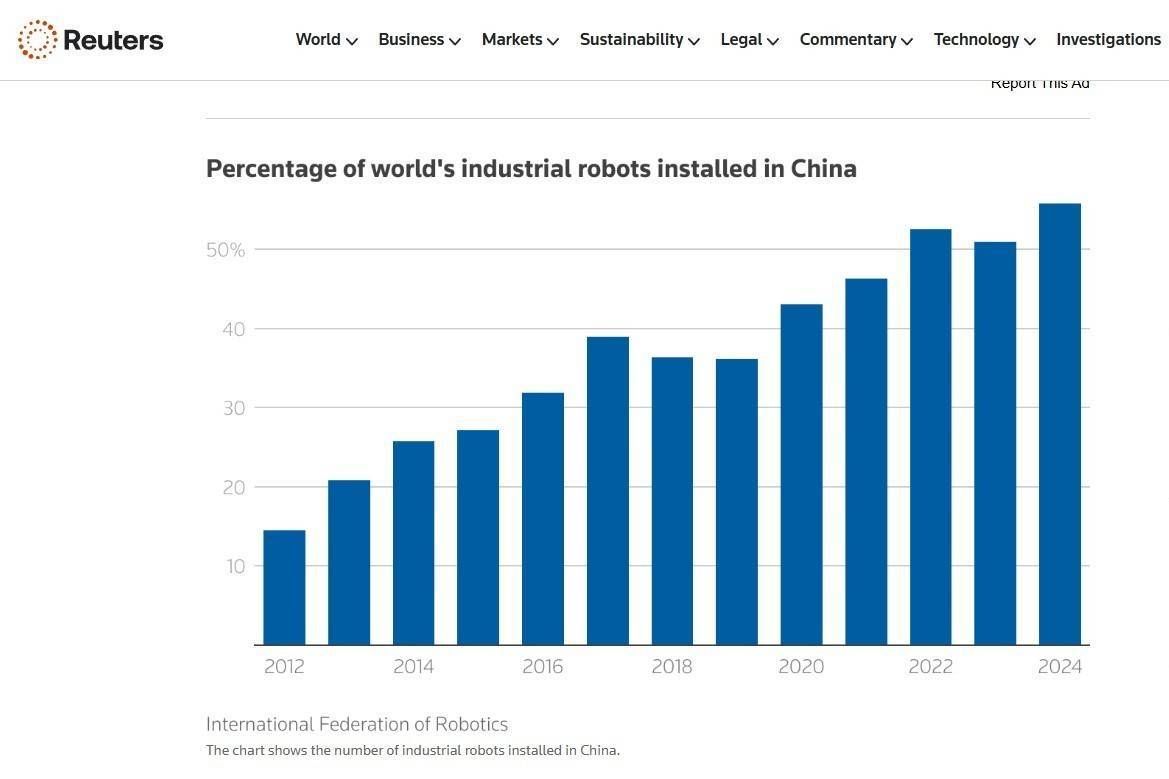
Core Insights - The article emphasizes the importance of a technology-driven "smart economy" in supporting China's economic development and facilitating its economic transformation [1][4]. Group 1: Economic Growth Drivers - Government policies aimed at supporting the "smart economy," including investments in artificial intelligence, semiconductors, and advanced manufacturing, have led to significant growth in the information technology and business services sectors since early 2024 [1]. - The proportion of industrial robots installed in China has been increasing, with over half of the world's industrial robots installed in the country over the past three years [4]. - The retail sector has benefited from targeted government policies, such as the trade-in policy implemented at the end of 2024, which has spurred growth in household appliances, furniture, and communication equipment [4]. Group 2: Consumer Trends - A shift in consumer preferences, particularly among millennials and Generation Z, is driving demand for new domestic products and services that combine tradition with modernity and leverage artificial intelligence and digital technologies [4][6]. - Emerging products and services, such as the sales of Pop Mart's Labubu dolls and the popularity of themed tea shops like "Bawang Chaji," highlight the potential for new consumption trends to break existing categories [4]. Group 3: Aging Population and New Business Opportunities - The aging population in China is creating new business opportunities in areas such as smart home technology, elderly care services, financial pension plans, and specialized healthcare products [6]. Group 4: Long-term Economic Transition - The transition to a sustainable consumption-driven economy in China is expected to be a long and complex process, but investments in advanced industries, innovation in products and services, and flexible policy-making can lay a solid foundation for this shift [6].
Regency Centers(REG) - 2025 Q4 - Earnings Call Transcript
2025-08-25 01:00
Financial Data and Key Metrics Changes - Revenue from services increased to $1,161 million, up 15% from the prior corresponding period [17] - Underlying EBITDA rose to $125.8 million, a 17% increase [17] - Underlying net profit after tax reached $53.4 million, up 37% [17] - Net operating cash flow improved to $306.1 million, a 21% increase [17] - The company ended the year with a net cash position of $192.5 million, a 197% increase from the prior year [26] Business Line Data and Key Metrics Changes - Average occupancy in mature homes increased to 95.6%, up from 94.1% in the prior period [18] - Total average care minutes per resident per day increased from 210.5 minutes to 226.7 minutes [18] - Staff costs increased by $113 million or 15%, primarily due to additional direct care hours and wage increases [23] Market Data and Key Metrics Changes - 26.5% of Australians aged 85 and over accessed residential aged care during FY24 [6] - An estimated 9,300 net new beds are needed each year for the next 20 years to meet demand [6] - Only 6,546 net new beds were added across the four years to FY24, well below the required growth [6] Company Strategy and Development Direction - The company aims to reach a target of 10,000 residential aged care beds by FY28, up from approximately 7,600 beds [46] - The strategy includes disciplined acquisitions, greenfield and brownfield developments, and refurbishment of existing homes [41] - The company plans to open two to three greenfield developments per year over the medium term [7] Management Comments on Operating Environment and Future Outlook - The management highlighted the importance of the New Aged Care Act, expected to commence on 01/2025, which aims to improve funding and care standards [13] - The company is well-positioned to meet the increasing demand for aged care services due to demographic trends and government support [57] - Management expressed confidence in the value of current service packages and the ability to transition to new funding models [60] Other Important Information - The company completed the acquisition of four premium homes from Rockpool, adding 600 beds to its portfolio [3] - The average incoming room price increased by over 12% during the year, reflecting adjustments to the new maximum rates [31] - The company has a robust governance structure with a majority independent board and established liquidity management policies [15] Q&A Session Summary Question: Transition to health from extra services - Management expressed confidence in the value of current packages and plans to transition most services into bundles while ensuring the value exceeds the price [60] Question: Expectations for RAD prices - Management noted that the recent increase in RAD prices was a correction due to the lifting of the soft cap and indicated potential for further increases, estimating mid to high single-digit growth in the next year [62][66] Question: Occupancy expectations for FY26 - Management indicated that while they aim for occupancy above 95%, achieving 100% is not feasible due to operational constraints [69] Question: Staff expenses as a percentage of revenue - Management expects staff expenses to increase slightly in FY26, influenced by government funding decisions [71] Question: CapEx expectations for FY26 - Management projected CapEx around $100 million for FY26, reflecting ongoing investments in greenfield developments and refurbishments [72] Question: Resident profile and RAD penetration - Management anticipates stability in the resident profile, with the Rockpool acquisition expected to increase the number of RAD-paying residents [80]

美媒:拥抱移民,西班牙为何成西方“例外”?
Huan Qiu Shi Bao· 2025-08-13 22:32
Core Viewpoint - Spain is diverging from the Western political trend by welcoming immigrants, with new regulations easing residency and work permit conditions, potentially granting citizenship to over 1 million people [1][2]. Group 1: Immigration Trends - Between 2021 and 2023, nearly 3 million immigrants from outside the EU entered Spain, driven by the country's labor needs and low birth rate of 1.4, which is significantly below the replacement level of 2.1 [2]. - Spain's economy, bolstered by tourism, ranks fourth in the EU, creating demand for low to mid-level jobs that many locals are unwilling to fill [2]. Group 2: Public Sentiment and Historical Context - Spain has a history of being a major emigration country, which contributes to its current high level of tolerance towards immigrants. A 2019 Pew Research Center survey indicated that Spain has the most positive attitude towards immigration among European countries [3]. - The fragmented national identity in Spain, with strong regional nationalisms, makes it difficult for right-wing politicians to rally anti-immigrant sentiments, contrasting with the situation in countries like France [3]. Group 3: Government Policies and Economic Impact - Prime Minister Pedro Sánchez's pragmatic approach prioritizes immigration from Latin America, allowing applicants to seek citizenship after just two years, which facilitates integration due to shared language and culture [4]. - The Spanish government has strategically addressed labor shortages in sectors like technology, hospitality, agriculture, and elder care by issuing work permits to international students [5]. - The Spanish economy has shown resilience, achieving a growth rate of 3.2% post-pandemic, while other major European economies faced contraction, reinforcing the argument for the economic benefits of immigration [5]. Group 4: Ethical Considerations and Future Outlook - Sánchez emphasizes the moral responsibility of Spain to create a welcoming society, reflecting on the historical journeys of previous generations who emigrated [6]. - Despite some rising concerns among Spaniards regarding immigration, the current policies demonstrate that generous immigration strategies can be a resource for growth and revitalization rather than a threat [6].