
高端装备制造等

Search documents
申万宏源助力合肥海恒集团8亿元公司债成功发行
申万宏源证券上海北京西路营业部· 2026-03-13 02:43
Core Viewpoint - Hefei Haiheng successfully issued 800 million yuan of corporate bonds with a record low interest rate of 1.85%, indicating strong market confidence and the issuer's solid financial standing [2]. Group 1: Bond Issuance Details - The bond issuance was led by Shenwan Hongyuan and is the fourth phase of Hefei Haiheng's bond issuance, with a maturity of 3 years and a AAA rating [2][3]. - The issuance is part of Hefei Haiheng's strategy to strengthen its financing capabilities and support regional development [3]. Group 2: Economic and Industrial Context - Hefei Economic and Technological Development Zone ranks 7th nationally in comprehensive development according to the Ministry of Commerce, showcasing its rapid growth [2]. - The zone has established a world-class industrial base in new energy vehicles and integrated circuits, forming a "3+6" industrial system that includes key sectors such as smart home appliances and high-end equipment manufacturing [3]. - The area hosts significant projects and companies, including major players like Volkswagen Anhui and NIO, contributing to a robust manufacturing workforce exceeding 250,000 [3].


央企在战略性新兴产业累计投资超10万亿元
Xin Lang Cai Jing· 2026-01-28 23:07
Core Viewpoint - The State-owned Assets Supervision and Administration Commission (SASAC) reported that since the beginning of the 14th Five-Year Plan, central enterprises have invested over 10 trillion yuan in strategic emerging industries, increasing their investment share from 22% to over 40% of total investments [1][2]. Group 1: Investment in Emerging Industries - By 2025, central enterprises are expected to complete an investment of 2.5 trillion yuan in strategic emerging industries, accounting for 41.8% of total investments [2]. - The revenue scale of central enterprises in strategic emerging industries is projected to exceed 12 trillion yuan by 2025, achieving a consistent annual growth of 1 trillion yuan over three years [2]. - The SASAC is drafting a document to guide central enterprises in cultivating new pillar industries, aiming for leapfrog development in major project investments and key field breakthroughs [2]. Group 2: Upgrading Traditional Industries - Central enterprises are leading large-scale equipment renewal actions, establishing 70 excellent smart factories and nurturing 6 leading smart factories by 2025 [3]. - The SASAC has been promoting the "AI+" initiative for two consecutive years, focusing on energy, manufacturing, and communication sectors to create over 1,000 application scenarios for artificial intelligence [3]. Group 3: Enhancing Supply Chain Resilience - Central enterprises are implementing key industry chain high-quality development actions, focusing on food security, energy resources, and high-end equipment to maintain the safety of the national supply chain [5]. - The SASAC aims to create a number of new pillar industries and strengthen layouts in fields such as new energy, aerospace, and quantum technology, while planning for future competitive sectors [5].
2025年山东规模以上工业增加值同比增长7.6%,高出全国平均水平1.7个百分点
Qi Lu Wan Bao· 2026-01-23 10:49
Core Insights - Shandong Province's industrial economy is projected to show stable growth and structural optimization by 2025, driven by policy support, innovation, and precise services [1][3]. Economic Performance - The industrial added value of Shandong is expected to grow by 7.6% year-on-year, surpassing the national average by 1.7 percentage points [3]. - The manufacturing sector leads with an 8.7% growth rate, while mining and utilities sectors grow by 4.5% and 0.9% respectively, indicating a solid foundation for industrial stability [3]. Industry Highlights - Out of 41 industrial categories, 36 are expected to show year-on-year growth, maintaining a growth rate of over 85% [3]. - Key industries such as automotive, chemical raw materials, electrical machinery, general equipment, and agricultural products are projected to grow by 16.5%, 14.7%, 12.5%, 11.6%, and 10.5% respectively, showcasing a robust growth pattern [3]. New Productive Forces - The equipment manufacturing sector is anticipated to grow by 11.4%, with high-end manufacturing areas like new energy vehicles and industrial robots showing significant production increases [3]. Enterprise Support - The "Enterprise Big Visit" initiative has visited 227,000 enterprises, resolving over 11,000 development issues, enhancing the overall business environment [4]. - The "Luqin Help" service platform has effectively addressed 1,944 enterprise challenges with a completion rate of 99.1%, improving the support for businesses [4]. Future Outlook - Despite the positive growth, challenges remain due to external environmental changes and domestic supply-demand imbalances, necessitating continued focus on growth stabilization and structural adjustments [4].
张玉卓:做强做优做大国有企业和国有资本
Ren Min Ri Bao· 2025-12-22 07:55
Core Viewpoint - The interview with Zhang Yuzhuo, Secretary of the Party Committee and Director of the State-owned Assets Supervision and Administration Commission (SASAC), emphasizes the importance of state-owned enterprises (SOEs) as a pillar of the party's governance and the need for deepening reforms to strengthen and optimize SOEs and state capital during the 14th Five-Year Plan period [2]. Group 1: Enhancing Innovation Capabilities - Central enterprises are identified as the national team for technological innovation, with R&D investments exceeding 1 trillion yuan for three consecutive years, focusing on key technologies such as industrial mother machines and software [3]. - The goal is to enhance mission awareness and focus on solving major technological issues that affect national development and security, aiming for high-level technological self-reliance [3]. - There is a commitment to increase high-quality technological supply and tackle "bottleneck" areas, ensuring more original achievements in critical technologies [4]. Group 2: Reforming State-Owned Enterprises - The 14th Five-Year Plan outlines clear requirements for deepening SOE reforms, with a focus on enhancing core functions and competitiveness [5]. - The strategy includes improving the service capabilities of SOEs in relation to national strategies, emphasizing the importance of aligning SOE functions with national security and public service needs [5]. - There is a push to enhance the modern enterprise system with a focus on governance, management, and talent cultivation to boost operational efficiency [5]. Group 3: Optimizing Industrial Layout - SOEs are working on upgrading traditional industries while simultaneously fostering emerging industries, with an average annual investment growth rate of over 20% in new industries during the 14th Five-Year Plan [7]. - The focus will be on transitioning the industrial system towards higher value-added and technology-intensive sectors, playing a leading role in building a modern industrial system [7]. - Efforts will be made to promote digital transformation in traditional industries and integrate advanced technologies such as AI and big data [8]. Group 4: Developing New and Future Industries - The strategy includes identifying and nurturing new industries with significant growth potential, such as renewable energy and aerospace, while also planning for future technologies like quantum science and 6G [8]. - A specialized and market-oriented investment and financing system will be established to support the development of these industries, utilizing various financial tools and funds [8].
内蒙古外贸行广州启动 全球并购基金与中关村支持产业赋能
Sou Hu Cai Jing· 2025-12-18 18:15
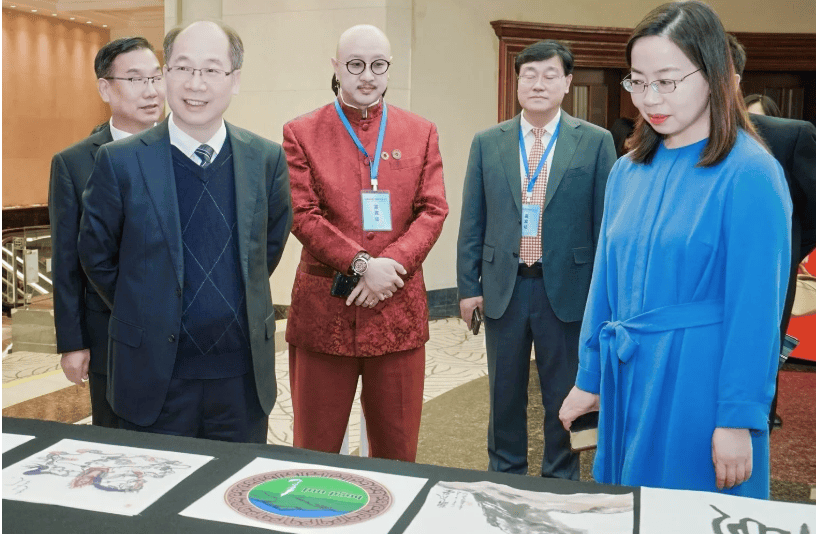
Core Viewpoint - The event held in Guangzhou on December 17 aimed to promote trade and economic cooperation between Inner Mongolia and international markets, showcasing Inner Mongolia's industrial clusters and development opportunities [1][3]. Group 1: Event Overview - The trade and economic negotiation event was organized by the China Council for the Promotion of International Trade and the Inner Mongolia government, with participation from representatives of various countries including the USA, Singapore, Spain, and others [1]. - The event gathered hundreds of political and business representatives to discuss collaboration and opportunities for open trade [1][3]. Group 2: Strategic Agreements - A tripartite agreement was signed between the Global M&A Fund, Zhongguancun Development Investment Co., and Inner Mongolia Tianyi International Cultural Trade Group to establish a long-term strategic partnership focused on industrial collaboration between Guangdong-Hong Kong-Macao Greater Bay Area and Inner Mongolia [4][6]. - The agreement aims to create a "Guangdong-Mongolia Industrial Collaborative Innovation Center" to attract enterprises from the Greater Bay Area to set up regional headquarters and R&D centers in Inner Mongolia [6]. Group 3: Empowering Local Enterprises - Regular events such as "Inner Mongolia Quality Products Promotion Conference" and "Supply Chain Matching Meetings" will be organized to connect Inner Mongolia enterprises with buyers and large corporations in the Greater Bay Area [7]. - The collaboration will provide comprehensive capital services for high-quality Inner Mongolia enterprises planning financing, mergers, or listings [7]. Group 4: Innovation and Productivity - The partnership will facilitate the establishment of "Guangdong-Mongolia Collaborative Innovation Industrial Parks" to support the production and regional business of Greater Bay Area enterprises in Inner Mongolia [8]. - A "New Quality Productivity Empowerment Plan" will be implemented to enhance the technological innovation capabilities and market competitiveness of local enterprises through expert consultations and training [8]. Group 5: Investment Fund Initiatives - The three parties are exploring the establishment of a market-oriented investment fund focused on "Guangdong-Mongolia Industrial Collaboration," targeting high-growth local enterprises in Inner Mongolia and modern service projects [9]. Group 6: Support for Cultural and Tourism Industries - The Global M&A Fund's chairman emphasized the importance of capital and mechanisms in commercializing and internationalizing Inner Mongolia's cultural and tourism resources, aligning with the "14th Five-Year Plan" to develop new quality productivity [11]. - The use of Real Data Assets (RDA) through blockchain technology is proposed to transform resources into marketable assets, providing new financing pathways for cultural tourism projects [13]. Group 7: Broader Collaborative Actions - Three major collaborative actions were proposed, including an "Asset Going Global Plan" to connect Inner Mongolia's quality cultural tourism projects with global capital, a "Platform Co-construction Action" to establish a promotion center in Hong Kong, and a "Fund Interaction Action" to support the upgrade and internationalization of Inner Mongolia's cultural tourism and agricultural industries [15].

中国联通:联通创投拟出资10亿元参与诚通科创(江苏)基金
Xin Lang Cai Jing· 2025-12-15 13:04
Core Viewpoint - China Unicom announced its investment in the Chengtong Science and Technology (Jiangsu) Fund, contributing 100 million yuan, which represents a 10% stake in the fund [1] Investment Details - The total transaction amount is 100 million yuan, funded by China Unicom's own capital [1] - The fund primarily focuses on investments in new materials, high-end equipment manufacturing, next-generation information technology, new energy, life and health, and nuclear-related fields [1] - The fund also targets strategic emerging industry clusters and key future industries supported by Jiangsu Province [1]

冲刺万亿GDP城市,这座地级市胜算大
21世纪经济报道· 2025-12-12 12:08
Core Viewpoint - The expansion of the "trillion GDP club" is a significant highlight of regional economic development in China this year, with cities like Wenzhou, Xuzhou, and Dalian expected to join the ranks of cities with a GDP exceeding one trillion yuan [1][3]. Group 1: Economic Progress of Target Cities - Wenzhou's GDP is projected to exceed one trillion yuan this year, with a first-quarter GDP of 240.37 billion yuan and a growth rate of 6.7% [2][4]. - Xuzhou's GDP for the first three quarters is 729.81 billion yuan, with a growth rate of 6.0%, aiming for a GDP of over one trillion yuan by 2025 [12][17]. - Dalian's GDP reached 724.82 billion yuan in the first three quarters, with a growth rate of 6.0%, and is also targeting the trillion GDP milestone [13][16]. Group 2: Characteristics of the Expansion - The expansion of the trillion GDP cities includes ordinary prefecture-level cities, indicating a trend where economic growth is not limited to major metropolitan areas [2][3]. - The cities in the trillion GDP club are expected to become central nodes for local development, fostering industrial and population agglomeration effects [3][19]. - The trend of ordinary cities joining the trillion GDP club reflects a broader pattern of regional economic development, with more cities expected to achieve this milestone in the coming years [20]. Group 3: Industrial and Economic Structure - Wenzhou's economy is supported by a robust manufacturing base and a strong private sector, with private enterprises contributing approximately 83% to the city's GDP [9]. - The city aims to establish a dual trillion industrial cluster system by 2025, focusing on both traditional and emerging industries [9][10]. - Dalian is focusing on high-tech manufacturing and has set a strategic plan to develop new industries, although it faces challenges in establishing core competitiveness [15][16]. Group 4: Future Prospects and Strategies - The future expansion of the trillion GDP club is expected to include cities with GDPs between 700 billion and 800 billion yuan, such as Shaoxing, Yangzhou, Yancheng, and Jiaxing [19]. - Cities like Shaoxing and Jiaxing are pursuing collaborative development with nearby major cities to enhance their economic prospects [19][20]. - The emphasis on quality over quantity in GDP growth is becoming increasingly important, with a focus on optimizing economic structure and improving residents' welfare [20].
陕西各地各部门认真传达学习省委十四届九次全会精神
Shan Xi Ri Bao· 2025-12-08 23:15
Core Viewpoint - The recent meetings across various departments in Shaanxi emphasize the importance of implementing the spirit of the 14th Provincial Party Congress, focusing on the development goals and tasks for the upcoming "14th Five-Year Plan" period. Group 1: Party History Research - The Provincial Party History Research Office highlighted the significance of the 14th Provincial Party Congress as a guiding document for the next five years in Shaanxi's party history work, aiming to align with the central government's decisions [2] - The office plans to conduct in-depth research on major achievements during the "14th Five-Year" period and provide insights for provincial decision-making [2] Group 2: State-owned Assets Supervision - The Provincial State-owned Assets Supervision and Administration Commission emphasized the need to focus on nurturing new growth drivers and optimizing the layout of state-owned capital, particularly in energy, chemicals, and high-end equipment manufacturing [3] - The commission aims to accelerate innovation-driven development and enhance the reform of state-owned enterprises to boost their internal motivation and innovation capabilities [3] Group 3: Science and Technology - The Provincial Science and Technology Committee stressed the importance of fully understanding and implementing the spirit of the Provincial Party Congress, aiming to enhance the overall effectiveness of the innovation system [4] - The committee plans to leverage the construction of the Xi'an regional science and technology innovation center to strengthen high-quality technological supply [4][5] Group 4: Industry and Commerce - The Provincial Federation of Industry and Commerce called for a rapid response to the Provincial Party Congress's spirit, focusing on unifying thoughts and actions to support the "14th Five-Year Plan" [6] - The federation aims to enhance the quality of services for the private economy and ensure strict adherence to party leadership and discipline [6] Group 5: Local Government Initiatives - The Baoji Municipal Committee emphasized the need to accurately grasp the new requirements from the Provincial Party Congress and plan for the city's "14th Five-Year Plan" [7] - The city aims to stabilize growth, ensure safety, and promote comprehensive rural revitalization while achieving economic and social development goals [7]
深交所科交中心以“科交力量” 推动科技成果从“实验室”走向“产业场”
Zheng Quan Ri Bao Wang· 2025-11-17 12:42
Core Insights - The 27th China International High-tech Achievements Fair (CIHTAF) was held in Shenzhen from November 14 to 16, showcasing cutting-edge technologies in various fields such as artificial intelligence, robotics, semiconductors, and commercial aerospace, attracting over 5,000 renowned companies and international organizations from more than 100 countries and regions [1][2] Group 1: Event Overview - The Shenzhen Stock Exchange (SZSE) Technology Exchange Center made its third appearance at CIHTAF, highlighting its role in connecting technology with capital through a comprehensive service system and the release of high-quality white papers [1] - The event featured 44 selected projects from the SZSE Technology Exchange Center, the highest number in three years, focusing on strategic emerging industries such as new information technology, new energy, and high-end equipment manufacturing [2] Group 2: Project Highlights - The showcased projects included intelligent robots, hydrogen-powered drones, and AI-based brain function monitoring technologies, providing key insights into their core technologies, main products, and market outlook [2] - The SZSE Technology Exchange Center released a white paper titled "Compilation of Technology Enterprises and Achievements," introducing a curated list of high-quality technology projects named "108 Champions" for investors and industry players [2] Group 3: Future Plans - The SZSE Technology Exchange Center plans to leverage the opportunity presented by the comprehensive reform pilot policies in Shenzhen to enhance innovation network construction, streamline capital market channels, and strengthen the trading service ecosystem [3]
解码前三季度北京经济:5.6%的增长来自哪里?
Xin Jing Bao· 2025-10-22 10:51
Economic Overview - Beijing's GDP grew by 5.6% year-on-year in the first three quarters, surpassing the national average by 0.4 percentage points, indicating a stable and positive development trend [1] - The growth is supported by traditional advantageous sectors, effective incremental and stock policies, and the accelerated growth of emerging forces [1] Traditional Advantageous Sectors - The information service industry, financial industry, and manufacturing collectively contributed over 80% to the economic growth, with their combined value added accounting for 52.5% of the city's GDP [2] - The information service sector saw an 11.2% increase in value added, contributing 2.5 percentage points to GDP growth, driven by advancements in software development, cloud storage, and artificial intelligence [2] - The financial sector's value added grew by 9%, contributing 1.5 percentage points to GDP growth, supported by a rapid increase in RMB loans [2] Industrial Performance - The industrial sector's value added increased by 6.5%, with industrial exports showing resilience, reaching 158.9 billion yuan, a 6% increase [3] - Advanced manufacturing, particularly in electronics, grew by 24.6%, significantly contributing to overall industrial growth [4] Emerging Forces - High-tech manufacturing value added increased by 9.9%, accounting for 32.5% of the total industrial value added, while strategic emerging industries grew by 17.9%, making up 46.5% [5] - Production of lithium-ion batteries and new energy vehicles surged by 160% and 150%, respectively, indicating strong growth in advanced manufacturing [5] Investment Trends - High-tech industry investment rose by 51.7%, particularly in integrated circuits and internet information sectors, while information service investment doubled [6] - Major enterprises in the city increased R&D spending by 6.4%, reflecting a growing focus on innovation [6] Policy Effects - Incremental and stock policies have significantly supported economic stability, with equipment investment rising by 83.1%, contributing 14.5 percentage points to overall investment growth [7] - Service consumption has reached its highest level in five years, with service spending accounting for 59.8% of total household consumption [7][8] Market Expectations - The securities trading volume increased by 33.9% in the first three quarters, reflecting improved market confidence [9] - Over 230,000 new enterprises were established, with significant growth in sectors like scientific research and technology services [9] Future Outlook - The economic outlook for the fourth quarter remains positive, with expectations of continued stable growth [10][11] - The city is focusing on expanding demand and enhancing policy effectiveness to sustain economic recovery [11]