养老金融

Search documents
高盛:通往2075(全球老龄化的机会)未来30年养老市场大爆发
Xin Lang Cai Jing· 2025-06-09 01:29
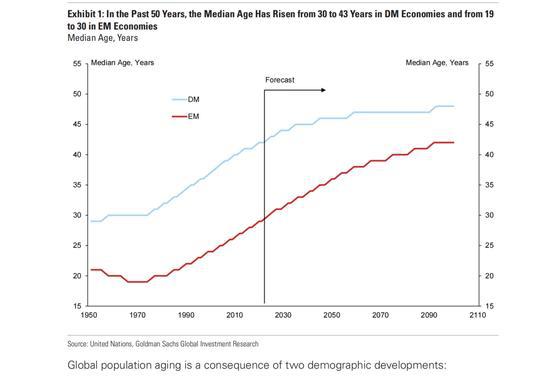
Global Population Trends - The median age of the global population has increased significantly over the past 50 years, with developed economies rising from 30 to 43 years and emerging economies from 19 to 30 years, projected to reach 47 and 40 years respectively by 2075 [2] - The average life expectancy has steadily increased, with developed economies rising from 72 to 82 years and emerging economies from 58 to 73 years, indicating a healthier aging population [4] - The global fertility rate has declined from 5.4 in 1963 to approximately 2.1 today, which is at the replacement level, but the actual threshold to maintain population stability is lower due to increased life expectancy [6] Labor Market Dynamics - Despite a decrease in the proportion of the working-age population in developed economies, the actual employment rate has increased, indicating a rise in labor force participation [10] - The trend of delayed retirement is largely driven by individuals' choices rather than policy changes, with many older adults opting to work longer due to improved health and longevity [11] - Women's participation in the labor force has also increased, contributing positively to overall employment rates and helping to mitigate the effects of an aging population [13] Longevity Economy - The aging population presents opportunities for economic growth through technological advancements and productivity improvements, particularly in sectors catering to elderly care [16] - The rise of "silver technology" is creating new markets, including smart healthcare solutions and elder care services, which are essential as the demand for elderly care increases [16] - The perception of older adults is shifting from being seen as a burden to being recognized as valuable consumers and contributors to the economy [16] China's Aging Population - China has officially entered a moderate aging phase, with over 310 million people aged 60 and above, representing 22% of the total population, indicating significant potential for the "silver economy" [18] - The market for silver economy in China is currently valued at approximately 8 trillion yuan and is rapidly expanding, driven by policy support and changing consumer demands [18] - The Chinese government is prioritizing the development of the silver economy as a national strategy, with various initiatives aimed at enhancing the quality of life for the elderly [19] Consumer Behavior Changes - The consumption patterns of older adults in China are evolving, with a shift from basic needs to quality consumption, including healthcare, cultural activities, and travel [20] - The demand for non-medical services among the elderly is expected to exceed 60% by 2030, indicating a significant market opportunity in sectors like entertainment and education [21] - The segmentation of the elderly population into different age groups allows for more targeted products and services, enhancing the potential for growth in the silver economy [21] Policy and Industry Development - China is actively developing its silver industry as a new driver of high-quality economic growth, focusing on urban-rural integration and technological innovation [22] - The silver economy encompasses a wide range of sectors, including smart devices, healthcare services, and financial products tailored for the elderly [22] - The integration of technology in elder care services is expected to enhance service quality and efficiency, leading to the emergence of a "smart elder care" ecosystem in China [22]

养老金融助力中国式养老事业和银发经济发展 | 财富与资管
清华金融评论· 2025-05-28 10:14
Core Viewpoint - The silver economy is a necessary response to population aging and an important aspect of cultivating new economic momentum, emphasizing the need for high-quality development in pension finance to support China's unique pension system and silver economy [1][2]. Group 1: Importance of Pension Finance - Pension finance is defined as a series of financial activities that support the development of the silver economy, which is crucial for promoting a virtuous cycle of high-quality development in China's financial and pension sectors [2]. - The development of pension finance can enhance the wealth accumulation and consumption capacity of the elderly, provide financing and credit support to enterprises, and promote supply-demand balance through innovative pension service and product models [2]. Group 2: Challenges in the Silver Economy - The supply of pension products and services is inadequate, with a significant gap between the growing demand due to rapid population aging and the current supply capabilities [5]. - The quality of pension products and services needs improvement, as the diverse and layered demands of the elderly are not being met by the relatively uniform supply [5][6]. Group 3: Supply-Side Issues - The reasons for the lag in the development of the pension product and service supply system include the short time and rapid pace of entering an aging society, insufficient recognition of elderly needs by supply entities, and high entry barriers for market participants [6]. Group 4: Demand-Side Issues - There is a significant gap between the actual demand for pension services and the effective demand of the elderly, primarily due to income and consumption level limitations [7][8]. - The overall wealth accumulation of the elderly is insufficient, with a high dependency on pension income and an imbalance in the pension insurance system, leading to limited financial resources available for pension services [8].

第三届老龄产业发展论坛5月28日举办,将发布多项标准和报告
Xin Jing Bao· 2025-05-27 07:08
Core Insights - The third Aging Industry Development Forum will be held on May 28 in Beijing, focusing on the development trends of the silver economy and exploring high-quality development paths for the aging industry [2][5] - The forum will feature speeches from government officials, experts, and industry representatives, discussing various aspects of the silver economy and its potential [2][7] Group 1: Forum Details - The forum is co-hosted by the China Aging Industry Association and the Beijing News, with a theme centered on "New Services, New Business Models, New Trends: Silver Economy Consumption Driving New Development in the Aging Industry" [2] - Keynote speakers include former officials from the National Development and Reform Commission, Ministry of Culture and Tourism, and Ministry of Human Resources and Social Security, among others [2][7] - Reports to be released at the forum include the "Standardization Development Plan for the China Aging Industry Association (2025-2030)" and the "Home Environment Aging Transformation Series Standards" [2][9] Group 2: Roundtable Discussions - The afternoon session will feature roundtable discussions on "Research on the Operation Process of Designated Guardianship" and "Development of Group Standards for Inheritance Planning Professional Competence" [3][9] - Industry professionals from trusts, insurance, and law firms will engage in cross-disciplinary dialogues during these discussions [3][9] Group 3: Key Themes and Presentations - Key themes include embracing the silver economy, the potential of elderly tourism, and the establishment of a multi-tiered pension insurance system [7][8] - Presentations will cover topics such as longevity technology empowering silver life, new skills to meet aging demands, and the role of trust mechanisms in the B-account model [8][9]
构建长效机制推进个人养老金高质量发展
Jin Rong Shi Bao· 2025-05-26 01:48
Core Insights - The development of pension finance is crucial for addressing the challenges posed by an aging population in China, with significant emphasis on personal pension systems as a national strategy [1][2][3] Group 1: Current Demographics and Challenges - As of 2024, the population aged 60 and above in China is 310 million, accounting for 22% of the total population, with projections indicating that this could rise to 400 million by 2035, representing over 30% [2] - The rapid increase in the elderly population is leading to heightened social and fiscal burdens, making the expansion of personal pensions urgent [2] Group 2: Policy Support and System Design - The government is implementing a personal pension system nationwide, with a target of covering 1 billion insured individuals by December 2024 [2] - A dynamic adjustment mechanism for tax incentives related to personal pensions is proposed, shifting from the EET model to a TEE model to reduce tax burdens on low- and middle-income groups [3] - Differentiated subsidy policies are suggested to support farmers and flexible workers, enhancing participation rates [3] Group 3: Flexibility and Accessibility of Pension Accounts - Increasing the flexibility of personal pension accounts is essential, allowing for emergency withdrawals under specific circumstances such as major illness or unemployment [4] - Facilitating the transfer of pension accounts across regions is recommended to support individuals working in different locations [4] Group 4: Product Innovation and Market Supply - Diversifying asset allocation and product offerings is critical for the growth of personal pensions, including low-risk products like government bonds and higher-return equity products [6] - Introducing longevity risk management tools, such as lifetime annuities and reverse mortgage insurance, is essential for providing stable financial support to the elderly [6] Group 5: Financial Institution Capacity Building - Establishing a tiered management system for financial institutions involved in pension finance is necessary to ensure safety and investor interests [7] - Reducing annual management fees can attract more participants and enhance trust in financial institutions [7] Group 6: Education and Public Awareness - Enhancing financial literacy and investment capabilities among residents is vital for the high-quality development of pension finance [8] - Implementing educational programs on pension investment in basic education curricula can foster early awareness and planning for retirement [8] Group 7: Rational Policy Mechanisms - An automatic enrollment mechanism is proposed to increase participation rates in personal pension plans, drawing from successful international examples [9] - Enhancing psychological recognition of personal accounts through visual interfaces can motivate individuals to save for retirement [10] Group 8: Technological Empowerment and Collaborative Governance - Building a digital infrastructure for pension finance, including a one-stop service platform and blockchain technology, is essential for improving efficiency and transparency [11] - Establishing a multi-departmental coordination mechanism is necessary for the effective governance of pension finance [12] Group 9: Stability and Risk Management - Creating a risk reserve fund for personal pensions can help mitigate financial losses during market fluctuations [13] - A dynamic adjustment mechanism for pension policies is needed to align with economic growth and inflation, ensuring fairness and sustainability [14] Group 10: Comprehensive Development Strategy - A multi-faceted approach involving government support, market innovation, technological advancement, and cultural change is essential for the sustainable growth of personal pensions [15]
深度 | 中国香港,如何养老?——养老金融系列之六【陈兴团队•财通宏观】
陈兴宏观研究· 2025-05-19 14:30
Group 1 - Hong Kong's pension system is based on a multi-pillar model, primarily featuring a Mandatory Provident Fund (MPF) as the second pillar, without a traditional government-managed first pillar [1][5][13] - The first pillar provides basic living security for low-income elderly individuals through social welfare programs, while the second pillar focuses on mandatory savings through the MPF and occupational retirement plans [1][6][10] - The third pillar consists of voluntary retirement savings plans, including tax-deductible contributions, annuity plans, and silver bonds [1][6][29] Group 2 - The investment strategy of Hong Kong's pension system is characterized by "government protection + market-driven + individual flexibility," with public pensions funded entirely by government budgets and not involving market investments [2][38] - The MPF plan allows participants to choose from various investment funds, including stock funds, mixed funds, bond funds, guaranteed funds, and money market funds, with a significant portion allocated to equities [2][39][42] - As of the end of 2024, 55% of MPF funds are invested in the Hong Kong market, with 67% of the overall asset allocation in equities [44][46] Group 3 - The third pillar includes innovative financial products for elderly care, with a well-established long-term care and housing security system in Hong Kong [2][54] - Long-term care services are primarily government-led, with private sector participation, providing a range of services from home care to institutional care [2][56] - The housing security system for the elderly includes priority allocation of public housing and various support services tailored to the needs of senior citizens [2][60][63]

企业年金,利好!
券商中国· 2025-05-17 09:48
Core Viewpoint - The introduction of the automatic enrollment mechanism for enterprise annuities in Xiong'an New Area represents a significant innovation in social security policy, potentially serving as a model for expanding enterprise annuities nationwide [2][5]. Summary by Sections Introduction of Automatic Enrollment Mechanism - The automatic enrollment mechanism allows employers and employees to establish enterprise annuities simultaneously while participating in basic pension insurance [4]. - All registered enterprises and institutions in Xiong'an New Area can establish enterprise annuities, encouraging the inclusion of non-staff and labor dispatch personnel [4]. Importance of the Mechanism - This mechanism is seen as a key measure to address the challenges of expanding enterprise annuities, shifting from voluntary participation to automatic enrollment with the option to opt-out [5][6]. - It aims to enhance participation rates among enterprises and employees, thereby improving the overall coverage of the enterprise annuity system [6]. Addressing Expansion Challenges - The mechanism addresses four main challenges in expanding enterprise annuities: 1. **Willingness to Join**: Changing from "voluntary" to "automatic enrollment" encourages retention in the annuity system [6]. 2. **Cost for Enterprises**: Allows for a gradual approach where enterprises can start with a small scope and low contribution rates [7]. 3. **Decision-Making Process**: Provides flexibility in how enterprises can determine their annuity plans through various methods [7]. 4. **Service Efficiency**: Introduces an online registration system to streamline the process, enhancing efficiency for both enterprises and annuity management institutions [7]. Broader Implications - The Xiong'an model is part of a broader trend in China to develop a multi-tiered pension system in response to an aging population [8]. - Other regions in China are also implementing policies to promote enterprise annuities, indicating a growing market opportunity for pension financial institutions [8].
行业动态 | 一周银发产业大事件速览
Sou Hu Cai Jing· 2025-05-16 15:06
Group 1: Elderly Care Services - China leads the development of international standards for age-friendly digital economy, focusing on online shopping, digital banking, and smart community services for the elderly [7][8] - The first national standard for brand value evaluation in the elderly care service industry has been released, detailing 46 indicators for measuring brand strength [7][8] - The Ministry of Human Resources and Social Security plans to add a new occupation, "Elderly Care Specialist," to enhance the workforce in elderly services [8] Group 2: Business Collaborations and Innovations - Haier Health and Zepu Kangdao have partnered to create a new model for smart elderly care, integrating various health technology solutions [8] - Fosun Baodexin and BOE have signed a cooperation agreement to develop an "insurance + elderly care" model, enhancing health management and care services in Sichuan [8] - Jingneng Group reported a 15.09% year-on-year increase in revenue, focusing on expanding institutional elderly care services [9] Group 3: Financial Developments in Elderly Care - China Insurance has announced a plan to acquire 100% of Beijing Jinsui Technology for 302 million yuan, aiming to enhance its health consumption product offerings [12] - The China Insurance Association has released guidelines for elderly service standards, promoting better service for older clients [12] - New financial products and services are being developed to support multi-tiered elderly care systems in Guangzhou and Jiangsu [20] Group 4: Health and Wellness Innovations - JD Health reported a revenue of 16.645 billion yuan in Q1 2025, focusing on AI applications in healthcare services [14] - NuoVation and Oriental Gene have partnered to advance Alzheimer's disease diagnostics, enhancing medical service quality [14] - A new health management program is being developed by Ping An Health and Novo Nordisk, focusing on obesity management [14] Group 5: Technological Advancements - The first intelligent rehabilitation demonstration base has been established in Shanghai, focusing on the application of intelligent robots in rehabilitation [18] - Companies like Huawei and UBTECH are collaborating to develop humanoid robots for home services, enhancing elderly care solutions [18] - "Aoyi Technology" has secured nearly 100 million yuan in funding to advance brain-computer interface technology [18]

2025年期货市场研究报告
Hua Tai Qi Huo· 2025-05-15 04:30
Import and Export Overview - The import volume of the equipment manufacturing industry has increased, with the Guangdong-Hong Kong-Macao Greater Bay Area's import and export value reaching 2.85 trillion yuan, a growth of 5.4% in the first four months of the year, accounting for 96.4% of Guangdong's total import and export value[1] - Exports of "new three items" and motorcycles increased by over 40%, while imports of semiconductor manufacturing equipment, computers and components, and certain consumer goods grew rapidly[1] Monetary Policy and Financial Services - As of the end of April, the broad money supply (M2) stood at 325.17 trillion yuan, reflecting a year-on-year increase of 8%[1] - The balance of domestic and foreign currency loans reached 269.54 trillion yuan, with a year-on-year growth of 6.8%[1] - The balance of RMB loans was 265.7 trillion yuan, up 7.2% year-on-year, with an increase of 1.006 trillion yuan in RMB loans over the first four months[1] Industry Trends - In the upstream sector, international oil prices have continued to rise following the tariff war, while aluminum prices have recently rebounded[2] - The chemical industry is experiencing a seasonal decline in PX operating rates, while polyester operating rates remain high[3] - In the downstream sector, real estate sales in second and third-tier cities are declining, and domestic flight frequencies have decreased compared to the same period last year[4] Market Pricing and Risks - The credit spread across all industries has recently narrowed slightly[5] - Potential risks include unexpected economic policies and global geopolitical conflicts[5]
为银发经济提供必要的金融支持
Nan Fang Du Shi Bao· 2025-05-14 16:14
产业端方面,此番措施从两个方面支持养老产业发展,一是拓展丰富融资渠道,支持符合条件的养老产 业企业扩大直接融资渠道,探索发行养老基础设施领域REITs,探索提升跨境投融资便利化水平;二是 综合衔接协同各项支持政策,发挥小微企业融资协调工作机制,用好广州市普惠贷款风险补偿机制、政 府性融资担保及再担保机制、创业担保贷款政策,以及人民银行结构性货币政策工具等。 金融支持养老产业发展尤为关键,毕竟,归根结底,养老服务的好与坏,主要取决于供给端,行业是否 规范发展,将直接影响服务质量。让人遗憾的是,当下养老产业快速发展,但是也出现鱼龙混杂甚至以 养老为噱头实施诈骗的现象。 广州的养老金融发展有了新的政策支持。5月14日,广州印发《广州市关于促进养老金融高质量发展若 干措施》(简称"12条"),推进做好养老金融大文章,支持广州多层次养老保障和服务体系建设。 在人口老龄化的大背景下,对于养老产业,政策需要从诸多方面给予支持,而金融无疑是养老产业发展 的重要动力。"12条"主要从消费端和产业端发力,支持养老行业规范发展。 消费端方面,强调优化养老金融产品。措施包括两个方面,一是提升对多层次多支柱养老保险体系建设 的金融服务 ...

事关养老金融,多地出台“政策礼包”
Bei Jing Shang Bao· 2025-05-14 12:29
Group 1 - The core viewpoint of the articles emphasizes the importance of pension finance as a fundamental support for elderly care, with multiple cities in China, including Guangzhou, implementing policies to promote high-quality development in this sector [1][5][6] - The ongoing population aging issue necessitates financial industry involvement to alleviate "pension anxiety" and ensure adequate support for the elderly [3][5] - Various provinces, such as Anhui and Guizhou, have introduced comprehensive measures to enhance the pension finance framework, focusing on optimizing enterprise pension policies and promoting differentiated personal pension products [4][5] Group 2 - The People's Bank of China and nine other departments have defined the concept and scope of pension finance at the national policy level, highlighting its role in supporting the silver economy [5][6] - Financial institutions are encouraged to increase their support for pension finance, with a focus on integrating insurance with healthcare and community services to improve service quality [6] - The compatibility of insurance funds with the pension industry is noted, as their large scale, long cycle, and high stability align with the funding needs of the sector [6]