智能汽车

Search documents
斑马智行赴港IPO:阿里分拆智能汽车业务
Jing Ji Guan Cha Bao· 2025-08-21 10:57
Core Viewpoint - Alibaba Group plans to spin off its smart car business, Zhaoma Zhixing, and has submitted an IPO application for independent listing on the Hong Kong Stock Exchange [1] Group 1: Company Overview - Zhaoma Zhixing, established in 2015, is a joint venture between Alibaba and SAIC Motor Corporation, focusing on providing smart car operating systems, smart car solutions, and digital traffic solutions [1] - After the spin-off, Alibaba's shareholding in Zhaoma Zhixing will decrease from approximately 44.72% to over 30%, and Zhaoma Zhixing will no longer be included in Alibaba's consolidated financial statements, although it will remain an important associate company [1]
21评论|深圳创新“四姐妹” 建起全球创新“平行竞争”新格局
2 1 Shi Ji Jing Ji Bao Dao· 2025-08-21 09:33
Group 1: Core Insights - The "Four Sisters" of Shenzhen (Huawei, BYD, Tencent, and Ping An) are experiencing significant positive developments, with Huawei leading the Chinese smartphone market with an 18.1% share by Q2 2025 [1] - Tencent reported a 15% year-on-year revenue increase in its Q2 financial results, while BYD's sales exceeded 2.4 million units in the first seven months, marking a 27% growth [1] - Ping An's stock has reached a four-year high, with its revenue exceeding 1 trillion yuan, ranking 47th in the Fortune Global 500 list [1] Group 2: Innovation and R&D - Huawei's daily R&D investment is nearing 500 million yuan, while Tencent's R&D spending grew by 17% in Q2 [1][5] - BYD holds 7,992 authorized patents in new energy technology, approaching the milestone of 8,000 [1] - Ping An is leveraging AI in financial services, reducing risk assessment times to 3 minutes and saving over 2.1 billion yuan in investment losses [1] Group 3: Shift in Competitive Landscape - Chinese companies are transitioning from a "follower" role to a "parallel competition" model, exploring their own innovation paths rather than merely imitating Western technologies [2][3] - BYD's vertical integration in electric vehicles has led to a 15% lower average cost per vehicle compared to Tesla, with projected global sales of 4.27 million units in 2024 [3] Group 4: Technological Advancements - Tencent's release of the mixed Yuan 3D v2.5 model and its open-source initiatives have garnered significant attention, with over 2.3 million downloads of the mixed Yuan 3D series [4] - Ping An leads in global patents in both financial and medical technology, with 8,582 and 4,176 applications respectively, surpassing traditional giants like Siemens and Philips [4] Group 5: Ecosystem and Market Dynamics - The large domestic market in China provides ample space for experimentation and iteration, fostering a cycle of innovation and breakthrough [6] - The "industry + technology" composite innovation ecosystem is a key differentiator for the "Four Sisters," with each company developing its own large models tailored to their business scenarios [6] Group 6: Global Implications - The parallel competition model is reshaping the global innovation landscape, breaking the monopoly of single technology routes and allowing for diverse development paths in AI, renewable energy, and finance [7] - This shift enables a more optimized allocation of global innovation resources, allowing investments to flow into Chinese cities alongside traditional hubs like the US and Europe [7] Group 7: Challenges Ahead - The "Four Sisters" face challenges such as global economic uncertainty, intensified international competition, and the need for top talent in the tech sector [8] - Continued investment in R&D and the optimization of innovation ecosystems are essential for maintaining competitive advantages [8]



欧菲光增收不增利背后
Zhong Guo Jing Ying Bao· 2025-08-21 07:36
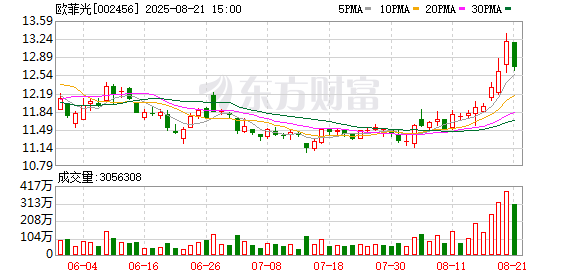
Core Viewpoint - After emerging from losses in 2023, OFILM (002456.SZ) has once again reported losses in the first half of 2025, with a net profit of -1.09 billion yuan, a decrease of 378.13% year-on-year, despite a slight revenue increase of 3.15% to 9.837 billion yuan [2][3]. Financial Performance - The company's net profit attributable to shareholders turned from profit to loss, with a significant drop of 378.13% year-on-year [3]. - The net profit excluding non-recurring gains and losses was -150 million yuan, a decrease of 944.18% year-on-year [3]. - The first quarter of 2025 already showed a decline in net profit, with a loss of 58.95 million yuan, down 470.51% year-on-year [3]. - The main reasons for the profit decline include increased share-based payment expenses due to an equity incentive plan and reduced investment income from joint ventures, particularly from Anhui Jingzhuo Optoelectronics Technology [3][5]. Revenue and Business Segments - In the first half of 2025, OFILM achieved revenue of 9.837 billion yuan, with domestic sales accounting for 87.09% and foreign sales 12.91%, the latter growing by 16.40% year-on-year [6]. - The smart automotive product segment showed strong performance, generating 1.262 billion yuan in revenue, an increase of 18.19% year-on-year [6][7]. - The new field product segment also performed well, with revenue of 1.105 billion yuan, up 9.73% year-on-year, and an overall gross margin improvement of 2.57 percentage points [7][8]. Challenges in Smartphone Business - The smartphone business remains the largest revenue source, generating 7.437 billion yuan, but only a slight increase of 0.43% year-on-year [9]. - The overall gross margin for smartphone products decreased by 1.50% to 9.67%, contributing to a decline in the company's overall gross margin to 10% [10]. - The smartphone market is facing challenges, with a slowdown in global shipments and a decline in domestic smartphone market volume, which fell by 2.8% year-on-year in the first five months of 2025 [11][12]. Future Outlook - OFILM is optimistic about opportunities in high-end imaging systems as domestic brands return to the high-end market, driving increased investment in high-end optical hardware [12].


阿里宣布子公司分拆上市!
证券时报· 2025-08-21 04:53
Core Viewpoint - Alibaba plans to spin off Zhaoma Network Technology Co., Ltd. (Zhaoma) and list it independently on the Hong Kong Stock Exchange, allowing for separate valuation and assessment of both Zhaoma and Alibaba's performance and potential [1][2]. Group 1: Company Overview - As of the announcement date, Alibaba holds approximately 44.72% of Zhaoma's shares, and will retain over 30% post-spin-off [2]. - Zhaoma focuses on automotive system solutions and aims to attract investors in specific sectors, enhancing its independent image and flexibility in accessing bank credit and capital markets [2]. - Zhaoma was established in November 2015 as a technology company co-founded by Alibaba and SAIC Group, with a registered capital of approximately 3.2 billion RMB [4]. Group 2: Market Position and Growth Potential - According to Zhaoma's IPO application, it is the largest software-centric intelligent cockpit solution provider in China based on projected 2024 revenue, and ranks first in terms of solution deployment volume [3]. - The intelligent cockpit solutions market in China is expected to reach 327.4 billion RMB by 2030, with software-based solutions anticipated to grow rapidly [3]. - Zhaoma is one of only two third-party suppliers in China with a fully self-developed automotive operating system and integrates key intelligent automotive experience pillars into a unified solution [3]. Group 3: Recent Developments and Collaborations - Zhaoma has collaborated with over 10 automotive brands and more than 40 models, resulting in over 1 million smart vehicles utilizing its solutions [4]. - In March 2023, Zhaoma, along with Ele.me and Zhiji Auto, launched the "IMAIOS Ecological Cockpit," which integrates Alibaba's AI technology and ecosystem resources [5]. - Zhaoma has received significant funding, including over 1.6 billion RMB in its first round of financing in September 2018 and an additional 3 billion RMB in July 2021 from major stakeholders [5].

极氪携手第二十届全国大学生智能汽车竞赛,共创智能化生态发展
Zhong Guo Qi Che Bao Wang· 2025-08-21 02:24
Core Insights - The 20th National College Student Intelligent Car Competition concluded at Hangzhou University of Electronic Science and Technology, with Zeekr Intelligent Technology as a key supporter, showcasing its commitment to technological investment and talent strategy in the smart driving sector [1][11]. Group 1: Event Overview - The National College Student Intelligent Car Competition, recognized as a national A-level competition by the Ministry of Education, has evolved over 20 editions, covering over 30 provinces and municipalities and involving more than 500 universities, attracting over 650,000 participants [4]. - This year's competition featured over 700 teams and more than 3,000 contestants, highlighting the innovative capabilities and technical pursuits of Chinese university students in the field of intelligent vehicles [4]. Group 2: Company Involvement - Zeekr's participation in the event reflects its commitment to core technology research and development, aligning with the competition's focus on smart driving and chip applications, which resonate with Zeekr's core technologies [9]. - The event serves as a platform for Zeekr to enhance brand recognition among university students in automation, computer science, and mechanical engineering, which aligns with the company's talent needs in the smart automotive sector [9]. Group 3: Strategic Goals - Zeekr emphasizes that technological innovation is the core driving force behind the development of smart mobility and plans to deepen collaboration with universities and industry associations to enhance the research and development of smart automotive technologies and talent cultivation systems [11].

“从今天起,吉利将不再开发不具备AI技术的智能座舱”
Zhong Guo Qi Che Bao Wang· 2025-08-21 01:31
Core Insights - The article highlights the launch of Geely's AI cockpit, which redefines the smart car experience by transitioning from a "functional tool" to an "emotional partner" [1][17] - Geely's AI cockpit, featuring the emotional intelligent agent Eva and the Flyme Auto2 operating system, sets a new benchmark for user experience in the AI era [1][17] Group 1: AI Cockpit Features - Geely's AI cockpit addresses traditional pain points by transforming passive "tool logic" into active "partner logic," allowing for proactive service rather than just reactive commands [3][15] - The AI cockpit utilizes a comprehensive AI technology system that integrates environment perception, demand prediction, proactive service, and feedback evolution [3][12] - Eva can recognize user emotions and preferences, providing personalized suggestions and adjustments, such as recommending rest stops or adjusting climate settings based on user history [9][15] Group 2: Technological Framework - The AI cockpit's success is attributed to Geely's five-layer AI architecture, which creates a full-link AI capability system, enabling seamless interaction and service orchestration [11][12] - The dual-brain collaboration between the cloud-based Starry AI Center and the vehicle's AIBox allows for efficient decision-making and data processing [11][12] - Geely is the first to implement LangChain and LangGraph frameworks in vehicle systems, shifting the focus from application-centric to intelligent agent ecosystems [11][12] Group 3: Strategic Collaboration - Geely's unified AIOS architecture allows for shared user data and experiences across different brands, enhancing user convenience and reducing resource waste [12][15] - The strategy of "one Geely, one cockpit" ensures that advanced technologies are accessible across all Geely brands, breaking the monopoly of high-end models on AI features [12][15] Group 4: Value Proposition Shift - Geely's commitment to not developing traditional smart cockpits without AI capabilities signifies a shift in the industry towards experience-driven competition rather than hardware specifications [15][17] - The AI cockpit enhances user experience through emotional interactions and proactive services, focusing on user comfort and understanding rather than quantifiable metrics [15][17] - The data collected from over 1.4 million users of Flyme Auto contributes to continuous improvement of AI capabilities, creating a positive feedback loop for user experience [15][17] Group 5: Future Outlook - Geely's AI cockpit represents a significant step towards "embodied intelligence," connecting various vehicle capabilities and external ecosystems for a more integrated experience [16][17] - The evolution of the AI cockpit is seen as a precursor to the ultimate form of transportation in the AGI era, where vehicles will function as intelligent terminals [16][17]


英特尔大跌7%,黄金原油齐涨;美联储纪要凸显通胀风险;事关育儿补贴!两部门最新明确;泡泡玛特本周发布迷你版LABUBU丨每经早参
Mei Ri Jing Ji Xin Wen· 2025-08-20 22:13
Group 1 - The U.S. stock market showed mixed results, with the Nasdaq down 0.67% and the S&P 500 down 0.24%, marking the fourth consecutive day of decline for the S&P 500 [4] - Major tech stocks mostly fell, with Intel dropping approximately 7% and other companies like Google, Amazon, Apple, and Tesla declining over 1% [4] - The Chinese concept stocks had mixed performance, with the Nasdaq Golden Dragon China Index up 0.33% [4] Group 2 - International oil prices rose, with West Texas Intermediate (WTI) crude oil up 1.73% to $62.84 per barrel and Brent crude oil up 1.76% to $66.95 per barrel [5] - Precious metals futures also saw gains, with COMEX gold futures rising 1.00% to $3392.20 per ounce and COMEX silver futures up 1.51% to $37.90 per ounce [4] Group 3 - The Chinese government announced that the implementation details for the cross-border asset management in Hainan Free Trade Port will take effect on August 21 [3] - The Ministry of Finance and the State Taxation Administration clarified that child-rearing subsidies will be exempt from personal income tax starting January 1, 2025 [8] Group 4 - The National Financial Regulatory Administration is seeking public opinion on the draft management measures for commercial bank merger loans, which require banks to meet specific conditions [9] - The Ministry of Commerce expressed hope that foreign enterprises will deepen their investment in China and increase R&D efforts [10] Group 5 - The China Securities Regulatory Commission plans to promote the listing of important energy products like liquefied natural gas [11] - Zhejiang Province announced a plan to establish a global digital trade center by 2027, aiming to enhance its digital trade capabilities [12] Group 6 - Huawei officially launched its first MateTV, featuring HarmonyOS 5 and advanced touch control technology [15] - NIO announced legal actions against accounts spreading false information about the brand [19] - Pop Mart's stock reached a new high, with plans to release a mini version of its LABUBU product [20] Group 7 - Apple is in a critical production phase for new iPhones, with hiring at Foxconn indicating increased production capacity [21] - Louis Vuitton launched a high-end makeup line in China, with lipsticks priced at 1200 yuan, aiming to maintain brand prestige [22] - Google introduced a new generation of smartphones integrated with advanced AI technology during its hardware event [23]

理想VLA到底是不是真的VLA?
理想TOP2· 2025-08-20 15:38
Core Viewpoint - The article discusses the capabilities and performance of the VLA (Vehicle Language Architecture) in autonomous driving, particularly in comparison to E2E (End-to-End) models combined with VLM (Vision Language Model) [1][2]. Group 1: Performance Comparison - VLA demonstrates superior defensive driving capabilities, particularly in scenarios with obstructed views, showing smooth deceleration based on remaining distance, unlike E2E models which struggle with such nuanced control [2][3]. - In congested traffic situations, VLA exhibits advanced decision-making by choosing to change lanes after assessing the environment, whereas E2E models typically resort to rerouting logic [2][3]. - VLA's trajectory generation is more stable and less prone to deviations, as it understands non-standard lane widths and adjusts driving strategies accordingly, significantly reducing the "snake-like" driving behavior seen in E2E models [3][4]. Group 2: Technical Insights - The VLA system integrates a large language model (LLM) for enhanced scene understanding, which allows for better decision-making in complex driving environments [2][4]. - The system is not fully autonomous but serves as an advanced driver assistance system, requiring human intervention when necessary [5][6]. - VLA's architecture allows for faster iterations and optimizations across different driving scenarios, improving overall performance compared to traditional E2E models [5][6]. Group 3: Limitations and Considerations - There are still scenarios where VLA may misinterpret traffic signals, indicating areas for improvement in its decision-making algorithms [5][6]. - The system's capabilities differ significantly from E2E models, necessitating driver readiness to take control when required [5][6].

当辅助驾驶 “哑火”,车企将如何重构城市交通的智能基因
3 6 Ke· 2025-08-20 11:04
Core Viewpoint - The auxiliary driving function in the smart car industry is losing its appeal due to regulatory restrictions and technological limitations, prompting companies to seek new strategies for growth and innovation [1][2][8] Group 1: Challenges in Auxiliary Driving - The ban on L2/L2+ systems on certain highways highlights the regulatory push against auxiliary driving, which is seen as a response to safety concerns following accidents linked to these technologies [1][2] - The limitations of current auxiliary driving systems have been exposed, as they struggle to recognize stationary vehicles and other complex scenarios, leading to a loss of consumer trust [2][5] - New regulations require clearer communication from companies regarding the limitations of auxiliary driving features, moving away from misleading marketing tactics [2][8] Group 2: Technological Evolution - The shift from auxiliary driving to a focus on multi-modal interaction represents a significant evolution in how vehicles understand their environment, enhancing safety and decision-making capabilities [4][7] - AI models are being developed to improve the vehicle's ability to predict and respond to various driving scenarios, significantly enhancing safety measures [5][7] - The integration of high-quality data into AI training is crucial for overcoming the challenges faced by auxiliary driving systems, particularly in recognizing unconventional stationary objects [7][8] Group 3: Market Dynamics and Future Directions - The industry is transitioning from a focus on flashy features to a more holistic approach that emphasizes safety and ecosystem integration, driven by new regulations [8][9] - Companies are encouraged to build trust with consumers through transparency and real-time updates on system capabilities, which can lead to increased usage of auxiliary driving features [8][9] - The future of smart vehicles lies in their ability to function as part of a broader urban efficiency infrastructure, transforming the role of car manufacturers into operators of transportation efficiency [9]
罗永浩、李想夸雷军是勤奋的天才,但他早就想撕掉“劳模”标签
Sou Hu Cai Jing· 2025-08-20 08:00
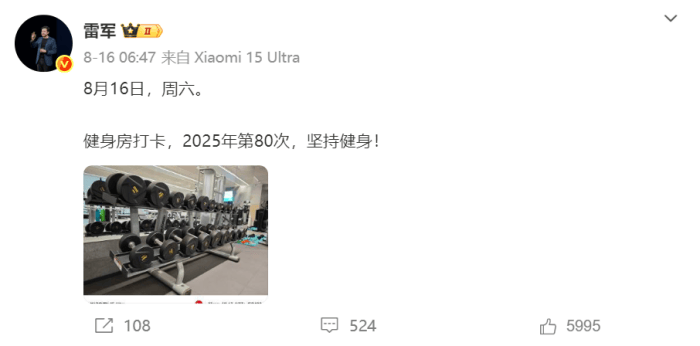
Core Insights - Lei Jun, the founder of Xiaomi, emphasizes the importance of hard work and dedication, having set a personal goal to complete 100 fitness sessions this year, with 80 already achieved [1][2] - Lei Jun's work ethic is recognized by peers and employees, with reports of him working 15-16 hours a day and rarely taking breaks, which has created a high-pressure environment for his staff [4][2] - Lei Jun's commitment to hard work is contrasted with his desire to shift the focus to younger talent within Xiaomi, indicating a need for a balance between dedication and delegation as the company grows [8][10] Work Ethic and Recognition - Lei Jun is often referred to as a "model worker," with anecdotes from industry peers like Luo Yonghao and Li Xiang highlighting his relentless work schedule [1][4] - Employees have noted that Lei Jun's work habits lead to significant pressure on them, as they feel compelled to match his level of commitment [2][4] - Lei Jun himself has expressed mixed feelings about being labeled a "model worker," indicating a desire to redefine his role and allow for the growth of younger leaders within the company [7][8] Leadership Transition - As Xiaomi evolves, Lei Jun aims to transition from a hands-on leader to a more strategic role, allowing younger executives to take on greater responsibilities [10] - The company has implemented a partner system and a new entrepreneurial plan to promote young talent, ensuring a robust leadership pipeline for the future [8][10] - Lei Jun's vision for the next decade includes a shift away from the "model worker" label, focusing instead on fostering a culture of empowerment among the next generation of Xiaomi leaders [8][10]