
家电

Search documents
海外侨胞列席漳州两会:叙乡情谋新篇
Zhong Guo Xin Wen Wang· 2026-01-22 14:37
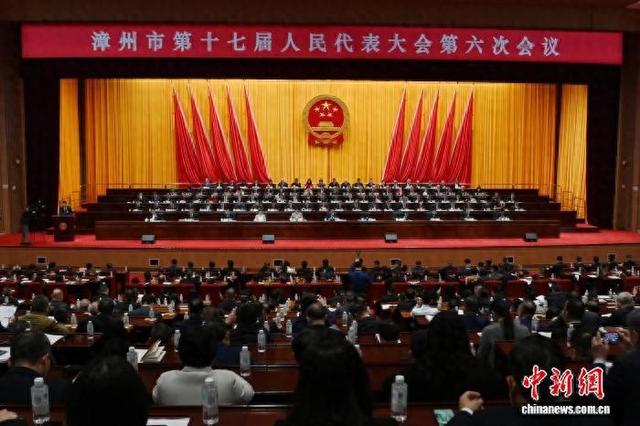
Group 1 - The core viewpoint of the article highlights the gathering of overseas representatives from Zhangzhou at the local congress, emphasizing the collaboration of overseas Chinese in contributing to the development of Zhangzhou [1][3]. - Zhangzhou's mayor reported on the city's progress in enhancing its "9+5" leading industry system and cultivating six trillion-level industrial clusters over the past five years, indicating a significant improvement in comprehensive strength [3]. - The government aims to build a higher-level modern coastal city and establish a more dynamic open economic system during the 14th Five-Year Plan period, which is expected to attract overseas Zhangzhou compatriots to invest in their hometown [3]. Group 2 - Zhangzhou is recognized as a famous hometown for overseas Chinese, with over 1.7 million overseas Zhangzhou compatriots spread across more than 70 countries and regions [3]. - The establishment of the Zhangzhou Talent Association aims to leverage the talent advantage of overseas Chinese to enhance local development [3]. - Various representatives, including those from Australia and Saudi Arabia, expressed their commitment to fostering cultural and economic exchanges, highlighting the potential for cooperation in sectors like tourism, food, and AI technology [3][4].

海信家电:当前公司生产经营正常,不存在应披未披重大风险
Zheng Quan Ri Bao· 2026-01-22 14:10
证券日报网讯 1月22日,海信家电在互动平台回答投资者提问时表示,当前公司生产经营正常,不存在 应该披露但未披露的重大风险。管理层持续优化治理体系,未来公司将通过多种方式竭力维护投资者权 益,增强市场信心。 (文章来源:证券日报) ...

海信家电:公司现金情况请关注定期报告相关内容
Zheng Quan Ri Bao· 2026-01-22 14:09
(文章来源:证券日报) 证券日报网讯 1月22日,海信家电在互动平台回答投资者提问时表示,公司现金情况请关注定期报告相 关内容。 ...
海信家电:公司股价波动受资本市场资金风格、宏观经济及产业变化等多重因素影响
Zheng Quan Ri Bao· 2026-01-22 14:09
Group 1 - The core viewpoint of the article is that Hisense Home Appliances acknowledges that its stock price fluctuations are influenced by multiple factors, including capital market trends, macroeconomic conditions, and industry changes [1] - The company reports that its operations are stable and that the management team is continuously optimizing the governance system [1] - Hisense Home Appliances is committed to maintaining investor rights and enhancing market confidence through various means in the future [1]
索尼退场,日本电视全军覆没
远川研究所· 2026-01-22 13:17
Core Viewpoint - Sony's decision to form a joint venture with TCL for its home entertainment business marks a significant shift in the global television market, indicating the complete exit of Japanese companies from the competitive landscape of television manufacturing [4][10]. Group 1: Sony's Strategic Move - Sony will transfer its television business and the BRAVIA brand to TCL, with TCL holding a 51% stake in the new joint venture [4]. - This move reflects Sony's inability to produce display panels, which are crucial for profitability in the television market, relying instead on LG and TCL for panel supply [4][10]. - Sony's market share in the global television sector has been consistently low, often categorized under "others," indicating a lack of competitive presence [5][10]. Group 2: TCL's Positioning - For TCL, acquiring Sony's brand equity is a strategic advantage, allowing it to leverage its panel production capabilities to challenge Samsung's dominance in the global market [9]. - TCL is currently the only domestic television brand in China with display panel production capabilities, positioning itself uniquely in the industry [25]. Group 3: Decline of Japanese Brands - The exit of Sony signifies the end of an era for Japanese television brands, which have been in decline since the 2010s, with major players like Sharp and Toshiba also having sold their television businesses [10][13]. - The loss of panel production capabilities has been a critical factor in the decline of Japanese brands, as they have lost pricing power and market relevance [29]. - The shift in focus for Japanese companies has been towards higher-margin components rather than low-margin consumer electronics, reflecting a strategic pivot in response to competitive pressures [16][17]. Group 4: Historical Context - The rise and fall of Japanese television brands can be traced back to their initial dominance in the 1990s, where they controlled over 90% of the global market, primarily due to their advanced panel production technologies [20]. - The financial crisis of 2008 and subsequent strategic missteps led to significant losses for these companies, prompting a reevaluation of their business models [15][16]. - The transition from being manufacturers of consumer electronics to component suppliers has been a common theme among Japanese firms, as they adapt to the changing landscape of the electronics industry [29].



海信家电:目前南美区和亚太区经营稳定
Zheng Quan Ri Bao· 2026-01-22 13:13
Group 1 - The company primarily engages in the research, manufacturing, and marketing of various home appliances, including refrigerators, air conditioners, cold storage units, washing machines, kitchen appliances, and automotive air conditioning compressors [1] - The company provides comprehensive smart home solutions centered around the intelligent upgrade of home appliances [1] - The company adheres to a prudent operational strategy, focusing on diversified capacity layout and enhancing supply chain resilience to actively respond to market fluctuations [1] Group 2 - The company's operations in the South America and Asia-Pacific regions are currently stable [1]
持续看涨
第一财经· 2026-01-22 12:52
Market Overview - The three major A-share indices opened higher and closed in the green, with the Shanghai Composite Index experiencing a pullback after a high opening, while the Shenzhen Component and ChiNext indices performed better due to growth stocks [5] - A total of 3,576 stocks rose, while 174 stocks fell, indicating a broad market rally driven by favorable policies and industrial progress, particularly in sectors like commercial aerospace, oil and gas, military industry, and photovoltaics [6] Trading Volume and Sentiment - The total trading volume of both markets reached over 1 trillion yuan, reflecting a 3.5% increase, indicating a warming trading sentiment [6] - Main funds showed a net outflow of 76.1 billion yuan, while retail investors experienced a net inflow, suggesting a divergence in investment behavior [7] Sector Focus - Institutions are focusing on technology and strategic adjustments, with capital flowing into sectors like communication equipment and commercial aerospace, which are supported by strong industrial policies, while reducing positions in semiconductors and home appliances [8] - Retail investors are engaging in "contrarian bottom-fishing," actively buying into semiconductor stocks that institutions are selling off, and some are chasing stocks in the commercial aerospace sector [8] Investor Sentiment - The sentiment among retail investors is reported at 75.85%, indicating a generally optimistic outlook [9] - The average position of investors shows that 49.37% are fully invested, while 30.32% are below half, and 5.98% are in cash [18] Profitability and Positioning - A survey indicates that 6.41% of investors have achieved over 50% profit, while 7.80% have profits between 20% to 50%, and 36.35% have profits within 20% [20] - A significant portion of investors, 30.22%, are experiencing losses of less than 20%, while 10.31% face losses exceeding 50% [20]

商务部1月22日召开例行新闻发布会
Shang Wu Bu Wang Zhan· 2026-01-22 11:05
Group 1: Consumer Market Insights - In 2025, China's total retail sales of consumer goods exceeded 50 trillion yuan, reaching 50.1 trillion yuan, a 3.7% increase from the previous year, with final consumption expenditure contributing 52% to economic growth [4] - The consumer market is characterized by three key aspects: expansion, benefiting the public, and quality improvement. The implementation of a trade-in policy led to sales of 2.61 trillion yuan, benefiting 366 million people [4] - New consumption trends are emerging, with retail sales of new energy vehicles increasing by 17.6%, and by the end of 2025, 60% of passenger cars sold will be new energy vehicles [4] Group 2: Trade with Central Asia - In 2025, trade between China and Central Asian countries surpassed 100 billion USD for the first time, reaching 106.3 billion USD, with a year-on-year growth of 12% [6] - The trade structure is improving, with over 55% of China's exports to Central Asia being electromechanical products, and an increase in the market share of "new three" products [6][7] - Cross-border e-commerce trade reached 800 million USD, growing over 20%, supported by stable operations of China-Europe (Central Asia) freight trains [7] Group 3: Foreign Investment - By the end of 2025, over 50,000 Chinese enterprises were established abroad, with a total foreign direct investment of 174.38 billion USD, a 7.1% increase from the previous year [8] - Chinese enterprises are actively fulfilling social responsibilities, creating over 2 million jobs annually and contributing to various infrastructure projects in host countries [8] Group 4: Trade Agreements and Regulations - A trade agreement between Canada and China was reached regarding electric vehicles and canola seeds, allowing for an annual quota of 49,000 electric vehicles from China with reduced tariffs [12] - China has implemented export controls on dual-use items to prevent military use, ensuring compliance with international obligations while maintaining supply chain stability [11]
近期市场连续三万亿成交背后的逻辑思考
Dongguan Securities· 2026-01-22 11:01
Group 1 - The A-share market has shown strong performance, with the Shanghai Composite Index reaching a peak of nearly 4200 points, supported by a significant increase in trading volume, with a record of over 30 trillion yuan in daily transactions during early January 2026 [10][12][39] - The market's upward trend is attributed to multiple factors, including strengthened policy expectations, global capital inflows, and increased domestic liquidity, which have collectively boosted investor confidence [10][12][39] - The economic fundamentals remain robust, with a steady recovery in demand, active service consumption, and resilience in foreign trade, although the recovery foundation still needs to be solidified [13][14][21] Group 2 - Policy expectations have ignited market enthusiasm, with a focus on expanding domestic demand and stabilizing consumption as key tasks for 2026, supported by various policy measures aimed at stimulating demand [13][30][31] - The central bank has indicated potential for further monetary easing, including interest rate cuts, to support economic recovery and market stability, with expectations for a favorable liquidity environment [33][40] - Regulatory measures have been implemented to manage market overheating, transitioning from a liquidity-driven surge to a performance-driven slow bull market, with an emphasis on earnings recovery to sustain high valuations [28][39] Group 3 - The spring market rally is expected to continue, characterized by structural opportunities, with a focus on low-valuation, stable-profit dividend stocks, technology sectors driving new productivity, and domestic demand expansion [41][42] - Key sectors to watch include financials, non-ferrous metals, public utilities, and transportation, as well as technology areas such as semiconductors and AI, which are aligned with national strategic priorities [41][42] - The importance of domestic demand is highlighted, especially in the context of external pressures, with recommendations to focus on sectors benefiting from domestic consumption, such as food and beverage, automotive, and healthcare [41][42]
个人消费贷贴息政策优化 花呗联动商家补贴同比增长23%
Zhong Zheng Wang· 2026-01-22 10:48
Group 1 - The Ministry of Finance has optimized the personal consumption loan interest subsidy policy, extending the implementation period to the end of 2026 and removing various limits on subsidies, thereby reducing consumer credit costs and enhancing consumption potential [1] - The policy adjustments include the inclusion of credit card installment payments in the subsidy scope and the expansion of eligible financial institutions to hundreds, benefiting more urban and rural consumers [1] - Ant Group, as one of the first financial institutions to implement the subsidy, has reported a 23% year-on-year increase in subsidies linked to its Huabei installment service since the policy's implementation in September 2025 [1] Group 2 - The "National Subsidy" product section launched on Taobao and Tmall has attracted tens of millions of consumers, indicating a growing consumer interest in subsidized products [2] - During the Double 11 shopping festival, the average installment consumption amount increased by 18% compared to September, with certain sectors like apparel and home appliances seeing over 20% growth in interest-free installment transactions [2] - The optimized personal consumption loan subsidy policy is viewed as a significant measure to support consumption through coordinated efforts among the government, financial institutions, and merchants, aiming to lower consumer barriers and boost sales [2]