
农产品加工

Search documents
湖南举办绿色农产品及食品加工产业链招商引资大会
Zhong Guo Xin Wen Wang· 2025-11-16 15:25
Group 1 - The 26th China Central (Hunan) Agricultural Expo is currently taking place in Changsha, where the Hunan Provincial Department of Agriculture and Rural Affairs held an investment promotion conference, signing 28 projects with a total amount of approximately 10 billion yuan [1] - Hunan ranks first in the country for rice area and production, with significant outputs in various agricultural products such as pigs, oil tea, rapeseed, citrus, tea, vegetables, and aquatic products, providing stable and high-quality raw materials for industry development [1] - The Hunan Provincial Rural Revitalization Fund, established with contributions from central, provincial, and municipal financial resources, aims to modernize the agricultural industry chain and attract targeted investments, having already invested over 1 billion yuan in the past three years [1] Group 2 - Anhui San Tiao Niu Agricultural Development Co., Ltd. operates in agriculture and agricultural machinery services across multiple provinces, expressing confidence in investing in Hunan due to the broad market for straw utilization and agricultural machinery services, along with strong government support and a favorable business environment [2] - Various cities and counties, including Zhangjiajie, Wangcheng District, Hengyang, Yueyang, Xinhua County, and Zhongfang County, showcased their unique projects at the conference, covering areas such as hybrid rice seed production, prepared vegetable production, organic waste resource utilization, and tea plantation construction [2]

棕榈油:短期利空暂充分,关注产地去库进程,豆油:美豆端缺乏驱动,震荡运行
Guo Tai Jun An Qi Huo· 2025-11-16 11:24
二 〇 二 五 年 度 2025 年 11 月 16 日 棕榈油:短期利空暂充分,关注产地去库进程 豆油:美豆端缺乏驱动,震荡运行 李隽钰 投资咨询从业资格号:Z0021380 lijunyu@gtht.com 报告导读: 上周观点及逻辑: 期货研究 棕榈油:市场担忧马来四季度产量仍大,同时缺乏 B50 和美豆油的有效需求故事,但印度买兴转好, 产地有企稳迹象,周度震荡运行,棕榈油 01 合约周跌 0.18%,关注 8400-8600 一线支撑。 豆油:巴西产情良好,大供给环境下豆油难以出现独立驱动,跟随油脂板块震荡偏弱为主,但豆油强 劲出口需求及不可避免的去库进程使豆油在油脂品种间仍维持偏强运行,豆油 01 合约周涨 0.88%。 本周观点及逻辑: 棕榈油:马来今年产量及雨水状态整体偏好,可能使四季度产量在去年同期水平之上,10 月库存累至 近 250 万吨后,年末库存可能仍维持在 240 万吨附近的历史偏高水平,至明年四月继续去至 200 万吨左 右,但随 MPOB 报告的落地及对 B50 的再度讨论暂时呈现利空出尽的状态,市场对于 11-12 月产量仍然偏 高的交易可能已经比较充分,只要不再出现单月超过 ...
一捧中亚小麦的东方之旅
Xin Hua Wang· 2025-11-16 03:16
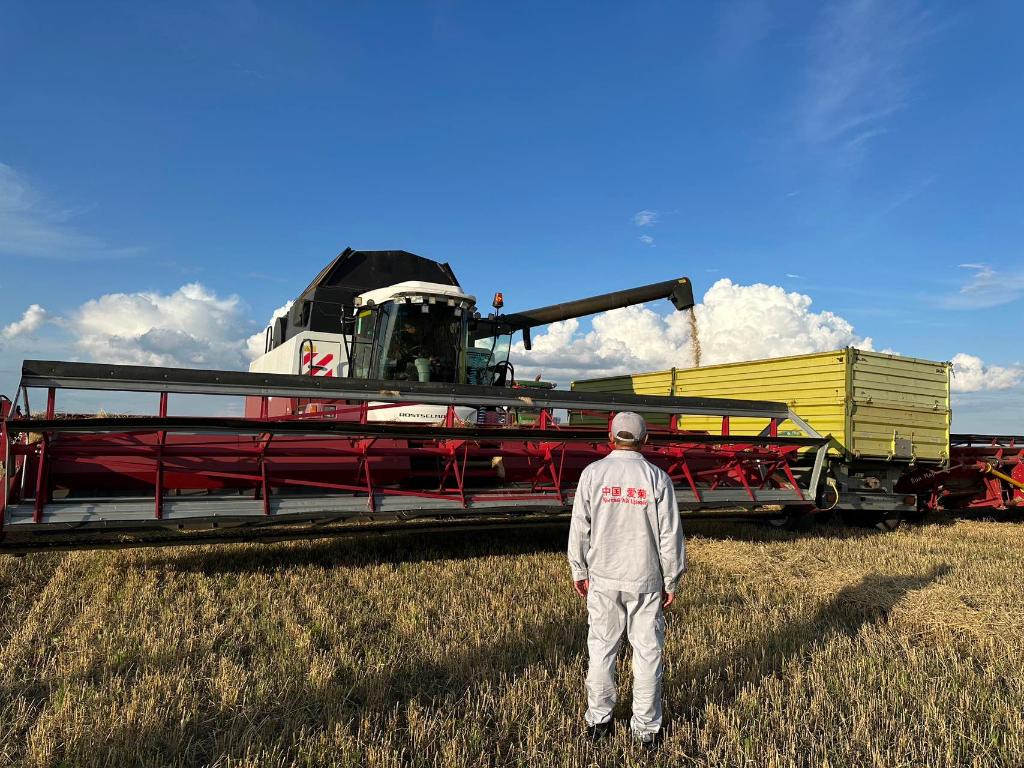
Core Viewpoint - The article highlights the successful collaboration between China's Aijiu Group and Kazakhstan in the agricultural sector, focusing on the efficient transportation and processing of Kazakh wheat to Chinese markets, which symbolizes mutual benefit and cultural exchange under the Belt and Road Initiative [1][9]. Group 1: Agricultural Collaboration - Aijiu Group has established a partnership with Kazakh farmers, utilizing an "order agriculture" model that benefits both parties by ensuring quality wheat production and stable pricing [4][5]. - The collaboration has expanded to 1.5 million acres of farmland in North Kazakhstan, showcasing the scale of agricultural cooperation [5]. Group 2: Transportation and Logistics - Aijiu Group has developed a cross-border transportation system linking North Kazakhstan to Xi'an, utilizing the China-Europe Railway Express, which allows for efficient logistics and quick delivery of agricultural products [5][7]. - The annual trade volume has increased from 30,000 tons to 100,000 tons, demonstrating the effectiveness of the optimized transportation model [7]. Group 3: Cultural Exchange - The journey of Kazakh wheat to Chinese tables also represents a cultural exchange, with local employees sharing their experiences and promoting their products in China [9]. - The presence of Kazakh students in Xi'an, such as Ainaer, highlights the personal connections and cultural ties being fostered through this agricultural partnership [9].

可爱的乡村——跨区域协作助深山苗寨产业发展
Ren Min Wang· 2025-11-15 14:43
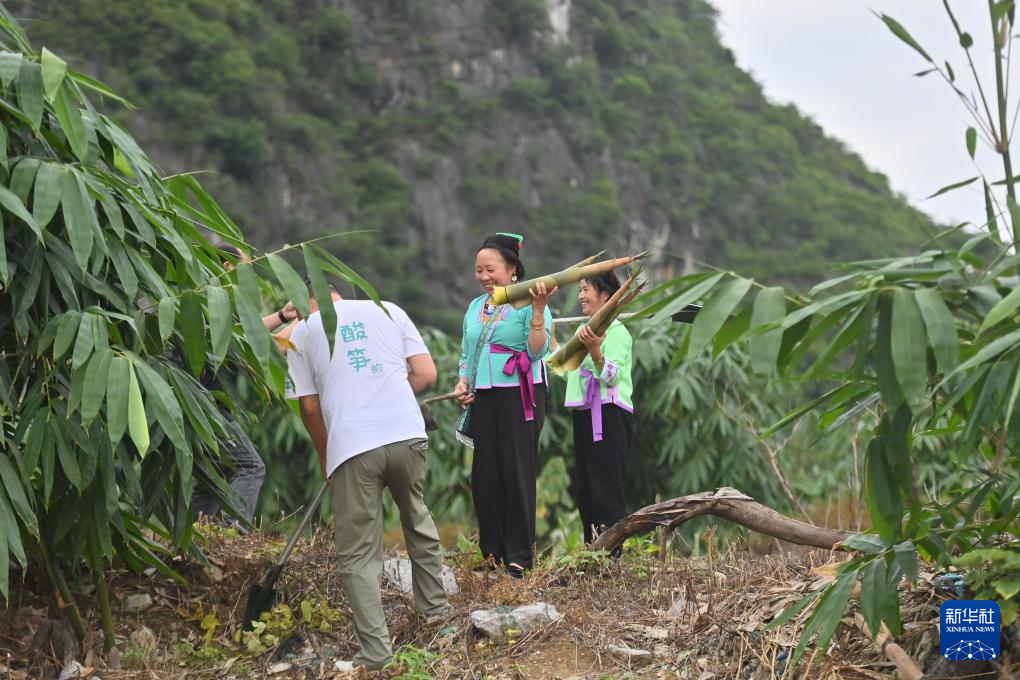
Core Point - The article highlights the efforts of the Wuying Miao Village in Guangxi to develop its local economy through collaboration with enterprises, leveraging cultural heritage and modern agricultural practices to create unique food products that enhance employment and income for villagers [2][4][7]. Group 1: Economic Development - Wuying Miao Village is located in a remote area with poor transportation and limited resources [2][4][7]. - The village has received support from both Liuzhou City and the Rongshui Miao Autonomous County to explore new paths for industrial development [2][4][7]. - Collaboration with enterprises in Liujang District has led to the introduction of specialty food products, allowing local ingredients to reach broader markets [2][4][7]. Group 2: Cultural and Agricultural Integration - The initiative combines local intangible cultural heritage food resources with modern agricultural characteristics [2][4][7]. - Agricultural technology is being utilized to empower local food products, helping them to "walk out of the mountains" and into the market [2][4][7]. - The production of unique food items, such as "sour bamboo shoots," is a key focus of this development strategy [2][4][7]. Group 3: Community Impact - The project aims to boost employment and increase income for local villagers [2][4][7]. - Villagers are actively involved in the production process, from harvesting to processing food items [2][4][7]. - The initiative not only supports economic growth but also promotes local culture and traditions through food [2][4][7].
湖南永州建成238个粤港澳大湾区“菜篮子”基地
Zhong Guo Xin Wen Wang· 2025-11-15 12:51
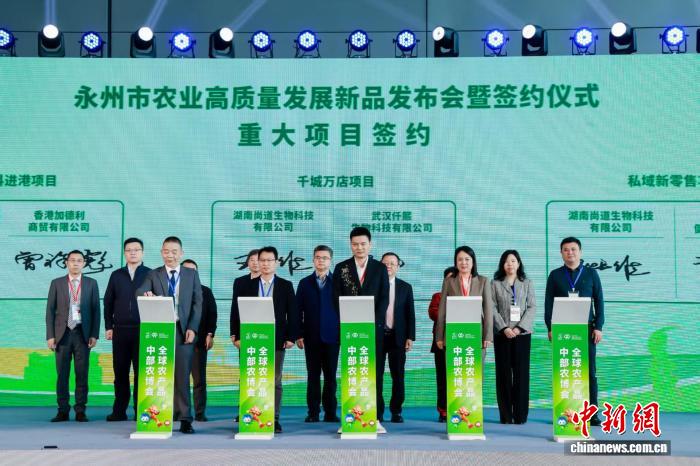
Core Viewpoint - The 26th China Central (Hunan) Agricultural Expo showcases the high-quality agricultural development in Yongzhou, highlighting its significant contributions to vegetable exports and innovative agricultural practices [1][3][5]. Group 1: Agricultural Development and Export - Yongzhou has focused on "local specialties" and extended "industrial chains," establishing six major industrial clusters, including grains, vegetables, oil tea, citrus, pigs, and egg chickens, achieving modern agricultural high-quality development [3]. - In 2024, Yongzhou's fruit and vegetable export value is projected to reach 13.89 billion yuan, maintaining its position as the top city for vegetable exports in China [3]. - Under the "Vegetable Ten Measures" policy, Yongzhou has built 238 "vegetable basket" bases for the Guangdong-Hong Kong-Macao Greater Bay Area, with vegetable exports accounting for over 87% of Hunan's total, and supplying over half of the vegetables to Hong Kong [3][5]. Group 2: Innovative Practices and Market Expansion - The "cooperative + base + farmer" model in Shuangpai County has significantly increased the scale and yield of Hu Zhua ginger, with 20,000 acres cultivated and an annual output value exceeding 400 million yuan [3]. - Yongzhou has implemented reforms such as "batch collection and reporting" and "cross-regional direct supply," successfully establishing a new export channel to the Greater Bay Area, allowing for rapid customs clearance [5]. - The innovative "fruit and vegetable assembly" model has reduced logistics costs by 30% and is being replicated in various regions across the country [5]. Group 3: New Product Launch and Partnerships - During the expo, 11 projects were signed with a total contract value of 1.15 billion yuan, including vegetable export sales orders with companies from Hong Kong [6][7]. - Yongzhou's vegetable industry emphasizes high standards and large-scale bases, with New Tian Dongsheng Farm establishing 18 large planting bases and implementing a comprehensive quality safety traceability system [6]. - The partnerships formed during the expo further solidify Yongzhou's role as a key supplier for the Guangdong-Hong Kong-Macao Greater Bay Area [7].
农产品:关于发行超短期融资券及中期票据的公告
Zheng Quan Ri Bao· 2025-11-14 14:12
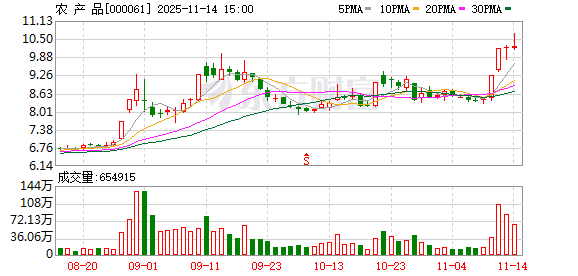
(文章来源:证券日报) 证券日报网讯 11月14日晚间,农产品发布公告称,公司于2025年11月14日召开第九届董事会第三十四 次会议,审议通过了《关于发行超短期融资券及中期票据的议案》。为保障公司发展资金需求,优化融 资结构,公司向中国银行间市场交易商协会申请注册发行不超过20亿元的超短期融资券及不超过20亿元 的中期票据。 ...
粕类周报20251114:报告数据预期偏利多,内外盘走势震荡偏强-20251114
Zhe Shang Qi Huo· 2025-11-14 13:37
1. Report Industry Investment Rating No relevant information provided. 2. Core Views - For soybean meal, the upside space is limited, with pressure at the 3200 price level for the m2601 contract. Abroad, the US government shutdown persists, lacking data guidance, and the market focuses on Sino-US policy agreements and the return of US soybean orders. Domestically, near - term soybean and soybean meal supplies are relatively sufficient, but the supply pressure is expected to ease. The cost - end support for soybean meal is strong, and attention should be paid to Sino - US tariff policies and the growth of South American soybeans [3]. - For rapeseed meal, the upside space is limited, with pressure at the 2500 price level for the RM601 contract. Globally, the 2025/26 rapeseed supply - demand pattern is loose, suppressing the price. Domestically, the anti - dumping preliminary ruling on Canadian rapeseed restricts imports, and downstream aquaculture is in the off - season. The supply is expected to tighten, but demand is also weak. In the long - term, the global supply - demand situation will suppress the price, and in the short - term, it will stabilize with the rebound of soybean meal. Attention should be paid to inventory reduction and Sino - Canadian trade relations [3]. - For different participants: Traders with inventory can hedge against price drops by short - selling a small proportion; those seeking to build inventory can hedge on the futures or options market to prevent sudden price increases. Feed mills can also take similar hedging measures [3]. 3. Summary by Directory 3.1 US Soybean Supply and Demand - The market expects a downward adjustment in US soybean yield in the upcoming USDA report, which may tighten the fundamentals and support the price. The price has been oscillating at a high level between 1100 - 1160 cents/bu. Analysts' average estimate of the 2025/26 yield is 32.85 bu/acre, a decrease from the September estimate. The export and ending inventory are expected to be adjusted downward. The current US soybean has a cost advantage over Brazilian soybeans, but there is still pressure on further price increases without large - scale purchases from China [16][17]. - As of the week ending November 7, 2025, the US soybean crushing profit was $2.02/bu, a 6.40% week - on - week decrease and a 35.87% year - on - year decrease. As of November 6, the US soybean export inspection volume was 1.0886 million tons, in line with expectations. The cumulative export inspection volume since the beginning of the crop year was 8.89 million tons, lower than the previous year [18]. 3.2 South American Soybean Supply and Demand - Brazilian soybean sowing is more than half - completed, but the progress is behind last year due to local rainfall. The sowing in Argentina has started. China's procurement supports the Brazilian soybean premium, which remains oscillating. It is necessary to pay attention to future weather conditions and China's procurement [26][27]. - As of November 8, the Brazilian soybean sowing rate was 38.4%, lower than last year's 66.1% and the five - year average of 57%. Anec expects Brazilian soybean exports in November to reach 4.26 million tons and soybean meal exports to reach 2.47 million tons [27]. 3.3 Rapeseed Supply and Demand - The international rapeseed price has stabilized and rebounded due to Canada's biofuel production incentive plan and the rebound of oilseed soybean prices. The 2025/26 global rapeseed production is expected to increase by 5.23 million tons, with an increase in consumption demand of 2.06%. The trade volume may decline due to trade policies, and the inventory and stock - to - use ratio are increasing [52][53]. - As of November 2, Canadian rapeseed exports increased by 21.2% week - on - week to 188,400 tons. The cumulative exports from August 1 to November 2 were 1.4233 million tons, a 54.1% decrease from the previous year. The commercial inventory was 1.3187 million tons [53]. 3.4 Domestic Meal Supply and Demand - The soybean meal futures continued to oscillate. Although the Sino - US trade policy has changed, the cost of US soybeans is still higher, and the near - term supply is loose, suppressing the upward space. However, the overall import cost increase provides strong support for the price [63][64]. - In October 2025, China imported 3.932 million tons of soybeans, a decrease of 3.387 million tons from September and a 17.25% increase from October 2024. The cumulative import from January to October was 95.682 million tons, a 6.39% increase year - on - year [64]. - As of November 7, the actual soybean crushing volume of 125 domestic oil mills was 1.8057 million tons, with an operating rate of 49.67%. It is expected to reach 2.1579 million tons and 59.36% in the 46th week (November 8 - 14) [86]. - The rapeseed crushing in coastal areas has basically stopped, with a crushing volume of 0 tons and an operating rate of 0% this week and next week [87]. - As of November 7, the soybean inventory of 125 domestic oil mills was 7.6195 million tons, a 7.20% increase from last week and a 35.97% increase year - on - year. The rapeseed inventory was 0 tons, and the rapeseed meal inventory continued to decline [101]. - As of November 13, the total soybean meal transaction was 606,340 tons, a week - on - week increase of 221,100 tons. The daily average transaction was 172,700 tons, a 43.35% increase. The total soybean meal pick - up was 900,000 tons, a week - on - week decrease of 20,500 tons [119]. 3.5 Basis and Spread - The coastal soybean meal spot price ranged from 3010 - 3050 yuan/ton this week, with mixed price changes compared to last week. The national weekly average price was 3080 yuan/ton, a decrease from the previous week. The average basis in coastal markets was between - 21 and - 61 yuan/ton, with mixed changes compared to the previous week. As of November 14, the basis of the January soybean meal contract in Rizhao was - 33 yuan/ton, and that of the January rapeseed meal contract in Dongguan was 128 yuan/ton [137].
深圳援疆牵线搭桥,助推塔县沙棘产业提质增效
Nan Fang Nong Cun Bao· 2025-11-14 13:01
深圳援疆牵线搭 桥,助推塔县沙 棘产业提质增效 _南方+_南方 plus 日前,深圳援疆 前方指挥部、塔 什库尔干塔吉克 自治县人民政府 联合举行沙棘采 购暨产业合作签 约仪式。会上, 近年来,深圳援 疆持续投入援疆 资金,支持塔县 广西梧州甜蜜家 蜂业有限公司与 班迪尔乡、疆域 优品生物科技有 限公司、河北工 程大学签订协 议,启动沙棘鲜 果采购和沙棘蜂 蜜饮料合作项 目。 根据合作协议, 广西梧州甜蜜家 蜂业有限公司将 从疆域优品生物 科技有限公司大 批量采购沙棘鲜 果,生产销售沙 棘蜂蜜饮料,班 迪尔乡政府围绕 沙棘种植、采 摘、加工、冷藏 等提供支持服 务;委托河北工 程大学就塔县沙 棘的功能活性成 分、差异化特征 等进行研究分 析,为后续开发 沙棘系列产品提 供科学依据与技 术支撑。 深圳援疆前方指 挥部塔县工作组 组长、塔县县委 副书记张洪雷介 绍,为深入做好 产业援疆和消费 帮扶,今年6月 以来,深圳援疆 积极对接、主动 引进广西梧州甜 蜜家蜂业有限公 司到塔县考察, 利用海拔3200米 以上的帕米尔高 原沙棘研发沙棘 蜂蜜饮料。"该 饮料口感好、营 养高、零添加, 市场前景广 阔。"他补充 道 ...

菜籽类市场周报:受现货走强提振,菜油期价明显走强-20251114
Rui Da Qi Huo· 2025-11-14 11:40
1. Report Industry Investment Rating No relevant content provided. 2. Core Viewpoints of the Report - For rapeseed oil, although Canadian rapeseed exports have declined significantly, there are policy - side benefits such as the bio - fuel production incentive plan and the agreement with Pakistan. In China, near - month imported rapeseed supply is structurally tightened, and oil mills have exhausted their rapeseed stocks, leading to a common shutdown phenomenon. Rapeseed oil will continue to be in a de - stocking mode, which supports its price. However, the abundant supply of soybean oil and its good substitution advantage keep rapeseed oil demand at a basic level. Recently, rapeseed oil futures prices have strengthened significantly, with increased short - term fluctuations, and short - term participation is recommended [9]. - For rapeseed meal, analysts expect a downward adjustment of the US soybean yield forecast, and the optimistic trade sentiment supports the US soybean market price, which is beneficial to the domestic meal market through cost transmission. In China, the import of Canadian rapeseed and rapeseed meal is still restricted, and oil mills' rapeseed stocks are exhausted with common shutdowns, resulting in less supply pressure. But as the temperature drops, the demand for rapeseed meal in aquaculture weakens, and the abundant supply of soybeans and the good substitution advantage of soybean meal weaken the demand expectation for rapeseed meal. The rapeseed meal market is in a situation of weak supply and demand. Recently, affected by the strengthening of rapeseed oil prices, rapeseed meal futures prices have declined from high levels, and attention should be paid to whether there will be a breakthrough in China - Canada trade policies [11]. 3. Summary According to Relevant Catalogs 3.1 Weekly Key Points Summary Rapeseed Oil - **Market Review**: This week, rapeseed oil futures rose significantly. The closing price of the 01 contract was 9,923 yuan/ton, an increase of 390 yuan/ton compared to the previous week [9]. - **Market Outlook**: Canadian rapeseed exports decreased by 54.1% year - on - year. There are policy benefits, but the China - Canada trade negotiation on rapeseed tariffs has not reached an agreement. Near - month imported rapeseed supply is tight, oil mills have exhausted stocks and shut down, and rapeseed oil is in a de - stocking mode. However, soybean oil has a substitution advantage, and rapeseed oil demand is mainly basic. The futures price has strengthened recently, with increased short - term fluctuations [9]. Rapeseed Meal - **Market Review**: This week, rapeseed meal futures slightly declined. The closing price of the 01 contract was 2,490 yuan/ton, a decrease of 49 yuan/ton compared to the previous week [11]. - **Market Outlook**: Analysts expect a downward adjustment of the US soybean yield forecast, which is beneficial to the domestic meal market. In China, the import of Canadian rapeseed and rapeseed meal is restricted, and oil mills have exhausted stocks and shut down. But the demand for rapeseed meal in aquaculture is weakening, and soybean meal has a substitution advantage. The rapeseed meal market is in a situation of weak supply and demand, and the futures price has declined from high levels [11]. 3.2 Futures and Spot Market - **Futures Price and Position**: Rapeseed oil futures rose significantly this week, with a total position of 248,580 lots, an increase of 38,090 lots compared to last week. Rapeseed meal futures slightly declined, with a total position of 472,680 lots, an increase of 9,194 lots compared to last week [15]. - **Top 20 Net Positions**: This week, the top 20 net position of rapeseed oil futures changed from a net short position of - 8,654 last week to a net long position of + 5,946. The top 20 net position of rapeseed meal futures increased slightly from + 26,405 last week to + 27,455 [22]. - **Futures Warehouse Receipts**: The registered warehouse receipts of rapeseed oil were 5,323 lots, and those of rapeseed meal were 2,745 lots [28]. - **Spot Price and Basis**: The spot price of rapeseed oil in Jiangsu was 10,290 yuan/ton, a slight increase from last week, and the basis between the active contract futures price and the Jiangsu spot price was + 367 yuan/ton. The spot price of rapeseed meal in Nantong, Jiangsu was 2,480 yuan/ton, a slight decrease from last week, and the basis between the Jiangsu spot price and the active contract futures price was - 10 yuan/ton [34][40]. - **Futures Inter - month Spread**: The 1 - 5 spread of rapeseed oil was + 499 yuan/ton, at a medium level in the same period in recent years. The 1 - 5 spread of rapeseed meal was + 65 yuan/ton, at a medium - high level in the same period in recent years [48]. - **Futures - Spot Ratio**: The ratio of the 01 contract of rapeseed oil and rapeseed meal was 3.985, and the average spot price ratio was 4.15 [51]. - **Rapeseed Oil - Soybean Oil and Rapeseed Oil - Palm Oil Spread**: The 01 contract spread of rapeseed oil - soybean oil was 1,667 yuan/ton, and the spread slightly widened this week. The 01 contract spread of rapeseed oil - palm oil was 1,223 yuan/ton, and the spread also slightly widened this week [60]. - **Soybean Meal - Rapeseed Meal Spread**: The 01 contract spread of soybean meal - rapeseed meal was 602 yuan/ton, and as of Thursday, the spot spread of soybean meal - rapeseed meal was 550 yuan/ton [66]. 3.3 Industry Chain Situation Rapeseed - **Supply - Side: Inventory and Import Forecast**: As of November 7, 2025, the total inventory of rapeseed in oil mills was 0.5 million tons. The estimated arrival volumes of rapeseed in October, November, and December 2025 were 650,000 tons, 100,000 tons, and 6.2 million tons respectively [72]. - **Supply - Side: Import Pressing Profit**: As of November 13, the spot pressing profit of imported rapeseed was + 1,247 yuan/ton [76]. - **Supply - Side: Oil Mill Pressing Volume**: As of the 45th week of 2025, the rapeseed pressing volume of major coastal oil mills was 0.0 million tons, a decrease of 0.6 million tons compared to last week, and the weekly startup rate was 0.0% [80]. - **Supply - Side: Monthly Import Volume**: In September 2025, China's rapeseed import volume was 115,300 tons, a year - on - year decrease of 85.71% and a month - on - month decrease of 131,400 tons [84]. Rapeseed Oil - **Supply - Side: Inventory and Import Volume**: As of the end of the 45th week of 2025, the inventory of imported and pressed rapeseed oil in China was 516,000 tons, a month - on - month decrease of 10.00%. In September 2025, the import volume of rapeseed oil was 156,600 tons, a year - on - year increase of 6.99% and a month - on - month increase of 19,000 tons [88]. - **Demand - Side: Consumption and Production of Edible Vegetable Oil**: As of September 30, 2025, the monthly output of edible vegetable oil was 4.95 million tons, and the monthly catering revenue was 450.86 billion yuan [92]. - **Demand - Side: Weekly Contract Volume**: As of the end of the 45th week of 2025, the weekly contract volume of imported and pressed rapeseed oil in China was 40,000 tons, a month - on - month decrease of 10.22% [96]. Rapeseed Meal - **Supply - Side: Weekly Inventory**: As of the end of the 45th week of 2025, the inventory of imported and pressed rapeseed meal in China was 50,000 tons, a month - on - month decrease of 28.57% [100]. - **Supply - Side: Import Volume**: In September 2025, China's rapeseed meal import volume was 157,700 tons, a year - on - year decrease of 29.08% and a month - on - month decrease of 55,700 tons [104]. - **Demand - Side: Monthly Feed Output**: As of September 30, 2025, the monthly output of feed was 3.1287 million tons [108]. 3.4 Option Market Analysis As of November 14, this week, rapeseed meal fluctuated and closed down. The implied volatility of the corresponding option was 20.65%, a decrease of 0.45% compared to last week's 21.1%, and it was slightly lower than the 20 - day, 40 - day, and 60 - day historical volatility of the underlying asset [112].

服务超八成深圳农业龙头企业,解码农行深圳分行“三农”服务逻辑
2 1 Shi Ji Jing Ji Bao Dao· 2025-11-14 11:25
Group 1: Company Overview - Shenzhen Lianzhong Food Co., Ltd. operates a modern automated slaughterhouse in Guangzhou's Zengcheng District, processing pigs through standardized procedures for distribution to schools, markets, and supermarkets [1] - Lianzhong Food is a leading fresh meat distributor in South China, with a complete industry chain from breeding to processing, supporting the meat supply for Shenzhen and surrounding cities [1][3] - The company has been recognized as a national key leading enterprise in agricultural industrialization and is responsible for the policy-based frozen pork reserve in Shenzhen [3] Group 2: Financial Support and Collaboration - Agricultural Bank of China Shenzhen Branch has prioritized serving the agricultural sector, achieving an 83% coverage rate for financial services to agricultural leading enterprises, with 100% support for national-level enterprises [2][6] - The bank provided Lianzhong Food with a short-term loan of 20 million yuan to address cash flow issues during the pandemic, enabling the company to maintain operations and meet government supply stability tasks [3][4] - As Lianzhong Food expands, the bank has increased its credit support, with an additional 30 million yuan credit line established, reflecting the company's robust risk management capabilities [4] Group 3: Agricultural Characteristics in Shenzhen - Shenzhen's agriculture is characterized by high technological content and complete industry chains, with companies like Lianzhong Food leveraging automation and digital systems to enhance efficiency [5] - The bank has developed a diverse range of financial products tailored to the unique needs of agricultural enterprises, such as "Meat Basket e-loan" to support the slaughter supply chain [5][6] - The agricultural sector in Shenzhen is supported by a large consumer market, with the bank focusing on optimizing credit approval processes and enhancing comprehensive services for agricultural enterprises [6]
