餐饮服务

Search documents
罗永浩宣布停战,西贝暂停后厨参观并下架老罗套餐
2 1 Shi Ji Jing Ji Bao Dao· 2025-09-14 13:08
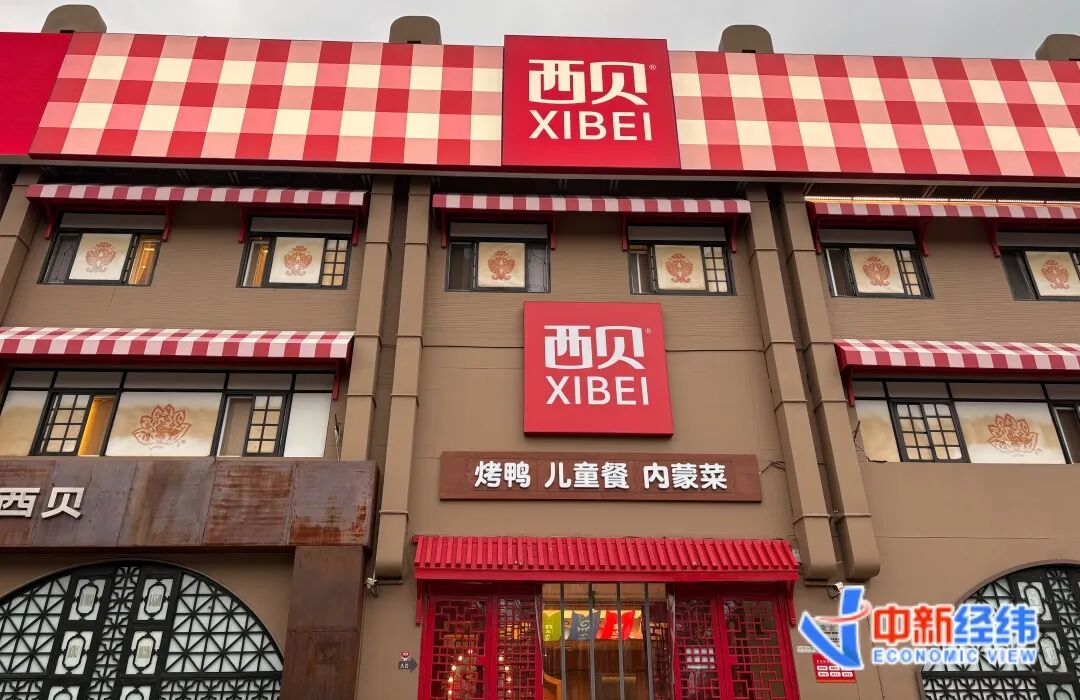
Core Viewpoint - The incident involving Xibei Restaurant Group has led to a significant trust crisis due to allegations of using "pre-prepared dishes" and food safety concerns stemming from a viral video showing unsanitary practices in the kitchen [1][2][3]. Group 1: Incident Overview - On September 12 and 13, media reporters visited Xibei's kitchens, revealing issues with food preparation practices, including the use of a strainer to clean a drain, raising public health concerns [1]. - Following the backlash, Xibei announced that over 370 locations would allow kitchen tours and introduced a "Lao Luo" meal option for customers [2]. - On September 14, Xibei suspended kitchen tours to ensure normal operations and removed the "Lao Luo" meal from the menu, although some items remained available for individual order [2]. Group 2: Regulatory Context - On March 21, 2024, the State Administration for Market Regulation and other departments issued guidelines defining "pre-prepared dishes" and clarifying that dishes made in central kitchens for chain restaurants do not fall under this category [3]. - Xibei's founder, Jia Guolong, stated that none of their dishes are pre-prepared according to national regulations [3]. Group 3: Company Performance and Future Outlook - Xibei operates over 370 stores across 62 cities, employing approximately 18,000 staff members, with annual revenues fluctuating between 50 billion to 62 billion from 2020 to mid-2025 [3]. - The company had plans for an IPO in 2026, including strategic investments to improve its equity structure, but is now facing operational pressures and a slowdown in growth [3][4]. - Moving forward, Xibei aims to enhance supply chain transparency and restore brand trust as key priorities for the next 1-2 years [4].
西贝下架“罗永浩套餐”
财联社· 2025-09-14 09:24
Core Viewpoint - The company has temporarily suspended kitchen visits at its nationwide stores to ensure normal kitchen operations and has removed the "Luo Yonghao" menu from some locations [1][2]. Group 1: Company Actions - On September 12, the company launched the "Luo Yonghao menu," which included 13 dishes, with one dish exclusive to Beijing, and was offered at regular prices without discounts [2]. - As of October 14, the company confirmed that it has notified certain stores to discontinue the "Luo Yonghao" menu [1]. - The company has implemented a policy requiring health certificates for media personnel wishing to visit and film in the kitchen during weekdays [1]. Group 2: Financial Details - A sample bill from the "Luo Yonghao menu" totaled 663.00, with individual dish prices including: - Grassland tender roasted lamb chop: 119.00 - Grilled fish: 89.00 - Various other dishes priced between 23.00 and 79.00 [3]. Group 3: Industry Context - Luo Yonghao expressed a desire for national regulations regarding prepared dishes to be established soon, indicating a potential shift in industry standards [4].

专访西贝贾国龙:我现在陷入自证清白循环
商业洞察· 2025-09-14 09:23
Core Viewpoint - The article discusses the ongoing crisis faced by the company Xibei, led by CEO Jia Guolong, due to public criticism from influencer Luo Yonghao, which has significantly impacted the company's revenue and customer traffic [4][5][6]. Group 1: Impact of Luo Yonghao's Criticism - Luo Yonghao's social media posts and live broadcasts have led to a drastic decline in Xibei's daily revenue, with estimates of a drop of 1 million yuan on September 10 and 11, and projections of 2 to 3 million yuan on September 12 [9][12]. - The company is experiencing a "cliff-like" decrease in customer traffic, which Jia Guolong describes as the most significant external crisis in the company's history [31][32]. Group 2: Company Response and Legal Action - Jia Guolong has expressed a firm decision to pursue legal action against Luo Yonghao, stating that even if the business suffers, the truth must be clarified [13][16]. - Despite receiving advice to take a softer approach, Jia insists on confronting the issue head-on, emphasizing the importance of integrity and accountability [17][18]. Group 3: Company Operations and Strategy - Xibei operates over 370 stores and employs more than 18,000 staff, with a reported revenue of 6.2 billion yuan in 2023 [4][6]. - The company has been focusing on improving its management and operational efficiency, with Jia Guolong returning to the CEO position to lead these efforts [34][35]. Group 4: Clarification on Pre-prepared Dishes - Jia Guolong clarifies that while Xibei utilizes pre-preparation techniques, it does not serve pre-prepared dishes as defined by industry standards [40][42]. - The company has previously operated a fast-food brand that included pre-prepared items, but this brand has since been closed, and no pre-prepared dishes are currently offered in Xibei's main operations [37][38].

西贝:贾国龙开1.8万员工大会为被网暴员工打气
Sou Hu Cai Jing· 2025-09-14 06:12
Core Viewpoint - The recent controversy between Luo Yonghao and Xibei has led to significant public attention, prompting Xibei to hold a large employee meeting to support its staff facing online harassment [1] Group 1: Company Response - Luo Yonghao's live stream on September 12 addressed the ongoing dispute with Xibei, attracting over 100,000 viewers within the first minute [1] - Xibei organized a meeting for its 18,000 employees to encourage them amidst the backlash, emphasizing the importance of service and quality improvement [1] Group 2: Employee Impact - Many Xibei employees have faced online abuse and harassment due to the "Xibei pre-made dishes" controversy, highlighting the negative impact on staff morale [1] - The meeting led by Xibei's leadership aimed to bolster employee spirits and reinforce their commitment to customer service [1]
宇树王兴兴、智元彭志辉有新身份;腾讯辟谣“前 OpenAl 姚顺雨上亿薪资入职腾讯”;马斯克裁撤500名数据标注员 | AI周报
AI前线· 2025-09-14 05:33
Core Insights - The article discusses various significant events and developments in the tech industry, particularly focusing on companies like Tencent, Baidu, JD, and OpenAI, highlighting their strategic moves, employee changes, and industry impacts. Group 1: Company Developments - Tencent officially denied rumors regarding former OpenAI researcher Yao Shunyu joining the company with a salary exceeding 100 million [3] - Baidu's CEO Li Yanhong awarded a team with a $1 million bonus for their innovative project, which achieved end-to-end multimodal content understanding and generation [5] - JD responded to rumors about former Xiaomi executive Wang Teng joining their team, stating there are currently no such plans [6] Group 2: Industry Changes - OpenAI signed a non-binding memorandum of understanding with Microsoft, potentially valuing the company at over $100 billion, and plans to transition its profit-making division into a Public Benefit Corporation [12][13] - The Chinese Ministry of Commerce initiated an anti-dumping investigation into imported American analog chips, citing a 37% increase in import volume and a 52% decrease in prices from 2022 to 2024 [14] - xAI, founded by Elon Musk, laid off 500 employees from its data annotation team, representing about one-third of the team, as part of a strategic shift [9] Group 3: Technological Innovations - Alibaba and Baidu have begun using self-developed chips for training AI models, reducing reliance on NVIDIA chips amid tightening export restrictions from the U.S. [21] - Tencent launched a new AI CLI tool, CodeBuddy, and announced the public beta of CodeBuddy IDE, enhancing its AI development capabilities [30] - ByteDance released the Seedream 4.0 image creation model, allowing various creative modes including text-to-image and image editing [32]



贾国龙先生,官司可以不打,生意一定要做
Mei Ri Jing Ji Xin Wen· 2025-09-14 04:31
Core Viewpoint - The core issue in the "prepared food controversy" involves a misunderstanding between the public perception of "prepared food" and industry standards, highlighting the need for the company to address both legal and public relations challenges [1][2]. Group 1: Company Response and Strategy - The founder of the company, Jia Guolong, emphasizes the importance of addressing public concerns rather than solely focusing on legal battles, indicating a need for a balanced approach to crisis management [2][3]. - The company has experienced a significant decline in customer traffic, with daily revenue losses escalating from 1 million yuan to between 2 million and 3 million yuan [1]. - There is a call for the company to improve its product offerings and customer service by clearly categorizing its food products and addressing consumer feedback directly [3]. Group 2: Industry Context and Implications - The situation reflects a broader responsibility of the company towards its employees, suppliers, and consumers, suggesting that the actions of the founder can have far-reaching consequences beyond personal grievances [2]. - The founder's initial support from another industry leader, Yu Donglai, illustrates the complexities of public support in times of crisis, as positions can quickly change in response to public sentiment [3]. - The emphasis on maintaining business operations and focusing on customer satisfaction is presented as a more sustainable approach for the company in the face of adversity [3].

西贝员工回应儿童餐西兰花保质期两年
Feng Huang Wang Cai Jing· 2025-09-14 03:48
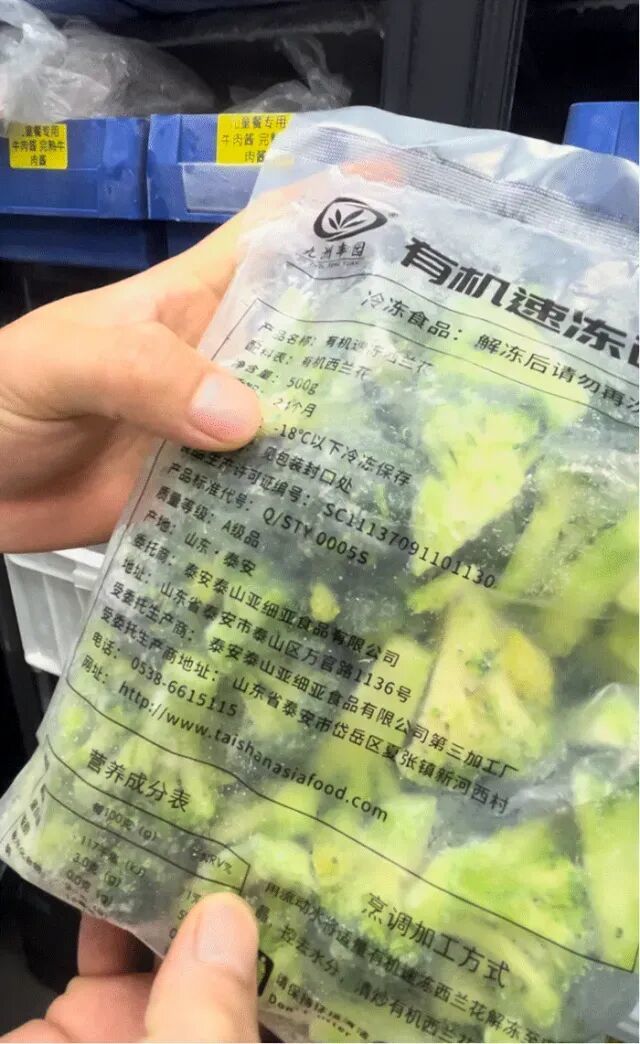
Group 1 - The controversy surrounding Xibei's use of frozen broccoli in children's meals, which has a shelf life of two years, has gained significant public attention following criticism from Luo Yonghao [1][7] - A visit by Phoenix Finance to a Xibei store revealed the presence of frozen broccoli in the kitchen, which was confirmed by the head chef, who stated that the storage time and processing procedures for ingredients vary [3][7] - The head chef emphasized that as long as the ingredients meet national standards, the shelf life is acceptable, and the packaging includes an organic code [9]
收手吧老罗,外面全是预制菜
虎嗅APP· 2025-09-14 03:12
Core Viewpoint - The article discusses the evolution and future of the prepared food industry, emphasizing that while there are criticisms, the trend towards industrialization and prepared meals is likely to continue and evolve rather than decline [5][10]. Group 1: Prepared Food Industry Dynamics - A significant majority (90%) of restaurants in shopping malls and on delivery platforms utilize prepared foods, driven by the need for quick service, cost control, and simplified kitchen operations [5]. - The industrialization of food has expanded supply but has also led to a loss of traditional cooking flavors and personalization in meals [5][6]. - Consumers express a desire for fresh, handmade meals but are often unwilling to pay a premium for them, complicating the market for differentiated food offerings [9][10]. Group 2: Consumer Behavior and Market Challenges - The willingness of consumers to pay for quality and differentiated products is limited, particularly in lower-tier markets where traditional cooking is often a low-cost alternative [9]. - The prevalence of low-cost, industrialized products suppresses the market for handmade items, as consumers are conditioned to expect lower prices [9][10]. - The article highlights the challenge of effectively communicating the quality and freshness of prepared foods to consumers, which is essential for justifying higher prices [9]. Group 3: Economic Implications and Industry Profitability - Despite the widespread adoption of prepared foods, the restaurant industry's profit margins remain low, raising questions about market pricing and hidden costs [10]. - The high turnover of service staff in the restaurant industry aligns with the need for standardized, industrialized products, further entrenching this trend [10]. - The article suggests that the future may see a clearer distinction in pricing between handmade and industrialized food products, similar to trends observed in developed markets [10].
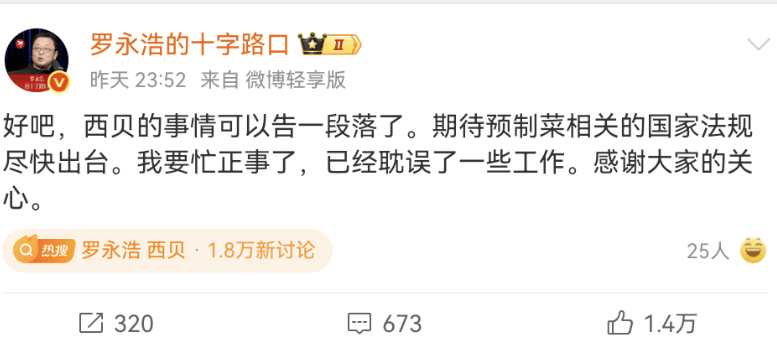
罗永浩:西贝预制菜事件告一段落
Sou Hu Cai Jing· 2025-09-14 03:10
Core Viewpoint - The incident involving pre-made dishes at Xibei has reached a temporary conclusion, with expectations for national regulations on pre-made dishes to be established soon [1][4]. Group 1: Company Actions and Reactions - Luo Yonghao has publicly criticized Xibei for using pre-made dishes, which has sparked significant public discussion [4]. - Xibei's founder, Jia Guolong, announced intentions to sue Luo Yonghao and introduced a "Luo Yonghao Menu" to emphasize that Xibei does not use pre-made dishes, while also allowing kitchen inspections [4]. - Despite Xibei's claims, media investigations revealed that many ingredients used are frozen or refrigerated, with some items, like broccoli in children's meals, having a shelf life of up to 24 months, leading to dissatisfaction among parents [4]. Group 2: Consumer Rights and Regulatory Developments - An article by Xinhua News Agency highlighted consumer concerns regarding the right to know, criticizing businesses that misrepresent pre-made dishes as freshly prepared while charging premium prices [4]. - The article called for the establishment of a disclosure system for pre-made dishes to protect consumer rights, with legal experts suggesting that restaurants should label the use of pre-made dishes in dining areas and provide complaint channels for consumers [4]. - Following the Xinhua article's stance and the impending announcement of national standards for pre-made dishes, Luo Yonghao declared a unilateral ceasefire, while Jia Guolong remained silent [4].
西贝北京最大门店,“堂食客流降七成以上”!罗永浩深夜发声:西贝的事情可以告一段落了 我要忙正事了
Zhong Guo Ji Jin Bao· 2025-09-14 02:59
Core Viewpoint - The recent controversy surrounding "pre-made dishes" has significantly impacted the customer traffic and sales of Xibei, particularly at its flagship store in Beijing, with a reported drop in dine-in customers by over 70% and a decrease in takeout orders by approximately 12.8% [2][5][12]. Group 1: Customer Traffic and Sales Impact - On September 13, Xibei's flagship store in Liuliqiao, Beijing, experienced a significant decline in customer traffic, with only 37 tables occupied for walk-in customers at noon compared to 140 tables the previous Saturday, indicating a drop of over 70% [5]. - The evening saw a further decline, with the dining area having less than 50% occupancy and no waiting customers, contrasting with previous weekends [5]. - Xibei's founder, Jia Guolong, reported a loss of approximately 1 million yuan in daily revenue on September 10 and 11, with an expected decrease of 200,000 to 300,000 yuan on September 12 [12]. Group 2: Controversy Over Frozen Ingredients - The controversy began when internet celebrity Luo Yonghao criticized Xibei for using "almost all pre-made dishes," leading to public scrutiny of their kitchen practices [8]. - Xibei's management defended their use of frozen broccoli, stating it is sourced from a reliable supplier and processed to ensure food safety and quality, with a shelf life of 24 months [9][11]. - The cost of the frozen broccoli used in the store is reported to be 8.9 yuan per jin, while organic broccoli is priced at approximately 18 yuan per jin in retail [9]. Group 3: Industry Standards and Future Regulations - The incident has sparked discussions about the need for clearer regulations regarding pre-made dishes in the restaurant industry, with calls for national standards to be established [12]. - A draft for national food safety standards for pre-made dishes is reportedly set to be released for public consultation, marking a potential shift towards more regulated practices in the industry [12].