
汽车

Search documents
商务部回应加强对日出口管制:制止日本“再军事化”和拥核企图
2 1 Shi Ji Jing Ji Bao Dao· 2026-02-26 12:22
Group 1 - The Chinese Ministry of Commerce has placed 20 Japanese entities on an export control list and another 20 on a watch list due to Japan's accelerated militarization and nuclear ambitions, which are seen as threats to regional and global peace [1][2] - The measures taken by China are aimed at preventing Japan's militarization and nuclear ambitions, and are considered legitimate and lawful, affecting only a small number of Japanese entities and not impacting normal Sino-Japanese trade [1][2] - The Chinese government emphasizes its commitment to international non-proliferation obligations and reassures compliant Japanese entities that they need not worry about these measures [1][2] Group 2 - During the visit of German Chancellor Merz to China, significant discussions took place between over 60 leading companies from both countries, focusing on cooperation in innovation, green technology, and digital sectors [2] - German companies expressed optimism about China's economic development and a willingness to increase investments in China, aiming to share in the opportunities presented by China's modernization [2] - More than ten commercial agreements were reached during the visit, covering various industries including automotive, machinery, energy, logistics, and finance, indicating a robust potential for Sino-German economic cooperation [2]
德国总理访华,中德车企释放三点未来合作方向
Guan Cha Zhe Wang· 2026-02-26 12:11
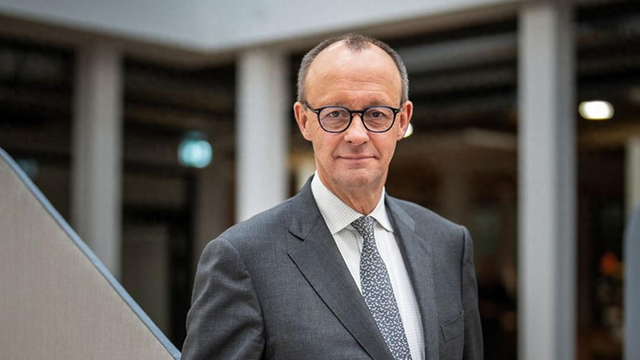
(文/观察者网 张家栋 编辑/高莘) 2月25日至2月26日,德国总理默茨正式开启就任以来的首次访华之旅,在全球经济格局动荡、产业链重 构与地缘政治不确定性上升的背景下,这被外界视为一次具有风向标意义的访问。 第二点是,三家企业对中国角色的定位发生变化。在外企高管眼中,中国不再仅仅是"全球最大汽车市 场",而是被明确定位为技术创新策源地与产业标准塑造者。 德国总理默茨 联合日报 双方会晤中,中方表示,双方应做相互支持的可靠伙伴,坚持互尊互信、开放合作;要做开放互利的创 新伙伴,加强发展战略对接,支持人才、知识与技术双向流动,在人工智能等前沿领域深化对话合作, 共同维护产业链供应链稳定畅通;还要做相知相亲的人文伙伴。 德方表示,作为全球三大经济体中的两个,中德贸易不仅关系两国繁荣,也惠及世界,双方机遇与风险 并存,应在维护自身利益基础上加强伙伴关系,在多领域实现互利共赢。 在双方达成共识的政治与贸易新局面下,汽车产业的重要性进一步凸显。作为中德经贸往来最具规模与 技术含量的支柱产业之一,该行业既承载着双边贸易体量,也连接着电动化、智能化与绿色转型等前沿 议题,成为双方深化创新合作与稳定产业链供应链的关键抓手。 ...

北交所日报:温和上涨,关注金三银四和两会政策预期-20260226
Western Securities· 2026-02-26 12:08
Investment Rating - The report does not explicitly provide an investment rating for the industry, but it suggests a positive outlook based on structural opportunities and market conditions [3]. Core Insights - The North Exchange A-share market experienced a moderate increase, with a trading volume of 18.656 billion yuan on February 25, 2026, up by 2.277 billion yuan from the previous trading day. The North Exchange 50 Index closed at 1,547.201, rising by 0.77%, while the specialized index increased by 1.22% to 2,597.61 [1][8]. - A total of 294 companies were listed on the North Exchange, with 208 stocks rising, 6 remaining flat, and 80 declining. The top five gainers included Tonghui Information (10.3%), Anda Technology (8.2%), and Tianli Composite (6.3%), while the top five losers were Liancheng CNC (-7.1%) and Keli Co., Ltd. (-5.9%) [1][15][16]. - The report highlights structural characteristics within the North Exchange, aligning with the cyclical stock market trends, particularly in rare earths, phosphorus chemicals, and small metals [3]. Summary by Sections Market Review - On February 25, 2026, the North Exchange A-share trading volume reached 18.656 billion yuan, an increase of 2.277 billion yuan from the previous day. The North Exchange 50 Index rose by 0.77% to close at 1,547.201, with a PE_TTM of 65.09. The specialized index also saw a rise of 1.22% [1][8]. Important News - OpenAI's project faced funding issues, shifting its focus to managing internal data center resources rather than owning physical assets. Additionally, OpenAI is behind in custom chip development, with plans to start in 2025 [2][17]. - Murata Manufacturing, a major MLCC manufacturer, is considering raising prices for its passive components [2][18]. Key Company Announcements - Deere Chemical announced a projected revenue of 726 million yuan for 2025, a decrease of 7.21% year-on-year, with a net profit expected to drop by 33.54% [2][19]. - Hongzhi Technology expects a revenue of 47.228 million yuan for 2025, down 1.61% year-on-year, with a net profit decline of 16.96% [2][20][21].
广州花都GDP目标跨两千亿大关,力争汽车整车产值重回千亿
Nan Fang Du Shi Bao· 2026-02-26 11:55
Core Viewpoint - The Huadu District of Guangzhou aims to achieve significant economic transformation during the 14th Five-Year Plan period, focusing on four key areas: development pattern, industrial dynamics, urban functions, and ecological beauty [2][4]. Group 1: Economic Growth Targets - Huadu District targets a GDP growth of 5.5% for the year, aiming to surpass 200 billion yuan in total output [2]. - The district plans to increase industrial output to over 250 billion yuan and fixed asset investment to exceed 70 billion yuan [2]. Group 2: Development Achievements - Over the past five years, Huadu has transformed from a geographical gateway to a strategic hub, increasing its contribution to the city's economic growth from 5.1% in 2021 to a projected 6.6% by 2025 [4]. - The district has experienced significant population growth, surpassing 2.8 million residents, and has maintained a positive trend in enterprise registration capital and quantity for five consecutive years [5]. Group 3: Industrial Development Strategy - Huadu aims to strengthen its industrial base by developing three industries each worth over 100 billion yuan, including automotive, aviation, and new energy sectors [7]. - The automotive sector is expected to achieve a total output value of 100 billion yuan, with a 10% growth in parts production and an export target of 50,000 vehicles [7]. - The district will also enhance seven industries worth over 10 billion yuan and cultivate four industries worth over 1 billion yuan, focusing on areas like biomedicine and intelligent technology [7]. Group 4: Consumer Demand Expansion - Huadu plans to stimulate consumer demand by developing a comprehensive and diverse consumption system, targeting 25 million tourists and generating over 15 billion yuan in cultural and tourism consumption [8]. - The district will promote new sports consumption trends and create distinctive cultural tourism areas to enhance urban consumption vitality [8]. Group 5: Environmental Improvement Initiatives - Huadu is committed to improving its environment by establishing a service system that supports all elements and empowers various sectors, including initiatives like "ranking and signing" and a fast-track mechanism for enterprise requests [8][9].

超5000万元发票奖金,4亿元以旧换新,深圳春节消费热
Nan Fang Du Shi Bao· 2026-02-26 11:45
Group 1 - The core viewpoint of the articles highlights the vibrant consumer market in Shenzhen during the 2026 Spring Festival, with over 10.54 million tourists visiting the city, making it a top travel destination in China [1] - The "Lucky Invoice" initiative launched on February 10 has significantly boosted consumer engagement, resulting in approximately 12.8 million invoices submitted and over 882 million yuan in approved invoice amounts by February 23 [1] - The "Trade-in for New" policy has effectively stimulated sales in various sectors, with around 80,000 items sold during the holiday period, generating approximately 400 million yuan in sales [1] Group 2 - The definition of New Year goods is evolving in Shenzhen, with AI products becoming popular choices for gifts, as evidenced by the "AI Eight Steeds" list released on February 13, which highlights trending tech items [2] - Revenue in Huaqiangbei increased by 35% during the Spring Festival, with sales of AI glasses surging by 70% to 80%, and drones and robots seeing a growth of 30% to 50% [2] - The Shenzhen Municipal Bureau of Commerce has launched the "Spring Festival Consumption Guide," promoting various themes and activities to enhance the festive shopping atmosphere, resulting in an 18.7% increase in foot traffic and a 15.24% rise in revenue across 30 key commercial districts [3]
江苏,何以成为德企投资中国“首选地”
Xin Hua Ri Bao· 2026-02-26 11:45
Core Insights - The visit of German Chancellor Merz and a high-profile business delegation to China signals a strategic focus on long-term market opportunities for German companies in the current complex international trade environment [1] - Jiangsu province is emerging as a key location for German enterprises, providing a favorable business environment and policy continuity that aligns with the cautious investment style of German firms [1] Group 1: German Companies in Taicang - Taicang has become a "second hometown" for over 560 German companies, with total German investment exceeding 6 billion USD and annual industrial output surpassing 65 billion CNY [2] - The city has developed a competitive industrial cluster, attracting six of the top ten German machine tool companies, facilitating a network of suppliers within a 4-kilometer radius [2] - Over 90% of early German enterprises in Taicang have expanded their operations, demonstrating the effectiveness of the local business ecosystem [2] Group 2: Cultural Integration and Talent Development - Taicang has created a cultural integration initiative, including the Rothenburg-style street and German-style bakeries, to help over 1,000 German residents settle in [3] - The introduction of the German dual education system has trained over 10,000 skilled professionals, addressing talent shortages for German companies [3] - Suzhou has become one of the most concentrated cities for German investment in China, with 731 German enterprises by July 2025, including major players like Bosch and Siemens [3] Group 3: Changzhou's Long-Term Strategy - Changzhou has attracted 77 German-speaking enterprises with over 2.3 billion EUR in total investment, focusing on "invisible champion" companies in niche markets [4] - The city emphasizes a long-term approach to project development, exemplified by a decade-long collaboration with the electronics giant Eisele [4] - Changzhou aims to reach 100 German-speaking enterprises by the end of 2026, positioning itself as a preferred location for German companies in China [5] Group 4: Broader Development in Jiangsu - Jiangsu province is witnessing a multi-faceted development of German enterprises, with significant projects in cities like Nanjing, Wuxi, and Nantong [6] - Nanjing has attracted 309 projects with over 2.2 billion USD in German investment, becoming a hub for manufacturing upgrades and digital transformation [6] - Nantong has seen major investments from Merck and other high-end manufacturing giants, contributing to the region's economic growth [6] Group 5: Strategic Partnerships and Growth Opportunities - The collaboration between Jiangsu and German companies is characterized by precise industry alignment and exceptional service, creating a robust industrial chain [7] - German firms are increasingly viewing Jiangsu as a strategic base for deepening their market presence in China, enhancing growth prospects [7]
海泰科:高合汽车已公布重整计划草案,公司作为债权人将依法依规参与债权审议与表决
Zheng Quan Ri Bao Wang· 2026-02-26 11:41
Group 1 - The core viewpoint of the article is that Haitai Technology (301022) is actively participating in the restructuring plan of High-end Automobile as a creditor, aiming to maximize the interests of the company and its shareholders [1] - The company will handle undelivered products based on the progress of the restructuring, contractual agreements, and mutual negotiations to protect its legal rights [1] - Specific updates regarding the restructuring will be provided through official company announcements [1]
德国总理默茨率商业天团访华,两国经贸合作有望提速换挡
2 1 Shi Ji Jing Ji Bao Dao· 2026-02-26 11:24
Group 1 - The visit of German Chancellor Merz to China is seen as a critical point for the pragmatic and stable development of Sino-German relations amidst a complex international landscape [1][2] - The visit is marked by the presence of a high-profile delegation of about 30 German business executives from major companies, indicating strong interest in the Chinese market [7][10] - The bilateral economic cooperation between China and Germany is expected to expand, with Germany being China's largest trading partner in Europe and significant investment opportunities emerging [9][10] Group 2 - The joint statement from both countries emphasizes mutual respect, win-win cooperation, and the importance of open dialogue to address common challenges [2][4] - German companies are increasingly viewing China as a stable market, with a notable increase in direct investments projected to exceed 7 billion euros by 2025, marking a 50% increase compared to 2024 [10][11] - The evolving nature of Sino-German cooperation is shifting from mere technology export to collaborative development, particularly in high-tech sectors, reflecting a deeper integration of industries [11][12]
默茨此访有深意
Xin Lang Cai Jing· 2026-02-26 11:13
Core Insights - German Chancellor Merz's visit to China marks a significant diplomatic engagement, following visits from other European leaders, indicating a renewed interest in strengthening Sino-German relations [1][14] - The visit reflects a shift in Germany's approach towards China, moving away from labeling it as a "systemic rival" and instead seeking a balanced partnership [3][17] - Economic cooperation is prioritized, with Germany recognizing the need for reliable partners amid rising geopolitical tensions and trade challenges from the U.S. [4][18] Group 1: Diplomatic Context - Merz's visit is his first since taking office and comes after a postponed trip in October, highlighting internal policy disagreements within the German government regarding China [3][16] - The visit aims to recalibrate Germany's China policy, focusing on economic needs and stability in bilateral relations [4][18] - The geopolitical landscape, including U.S. tariffs on European allies, has prompted Germany to seek stronger economic ties with China [4][18] Group 2: Economic Cooperation - The visit included meetings with Chinese leaders and visits to German companies operating in China, emphasizing the importance of economic and technological collaboration [7][20] - A large business delegation accompanied Merz, indicating strong interest from German companies in deepening trade relations with China [7][21] - Current trade figures show that Sino-German trade exceeds $200 billion, with over 5000 German companies operating in China, underscoring the mutual benefits of cooperation [8][22] Group 3: Future Opportunities - The alignment of Germany's new development strategies in technology and innovation with China's 14th Five-Year Plan presents new avenues for collaboration [11][24] - Both countries are focusing on green and digital transformations, which could lead to complementary advantages in various sectors, particularly in electric vehicles [11][25] - Merz's visit aims to address trade imbalances and overcapacity issues, emphasizing the need for German companies to adapt and collaborate effectively with China [11][25] Group 4: Strategic Recommendations - Germany should maintain a consistent and stable policy towards China, based on comprehensive dialogue and understanding [12][26] - It is crucial to convert the agreements reached during high-level meetings into actionable policies and projects to reinforce bilateral trust [12][26] - Germany's approach to China should remain independent of external pressures, particularly from third countries, to foster a constructive relationship [12][26]
德国总理默茨访华,会见了哪些中方企业?中德经贸合作一览
2 1 Shi Ji Jing Ji Bao Dao· 2026-02-26 11:07
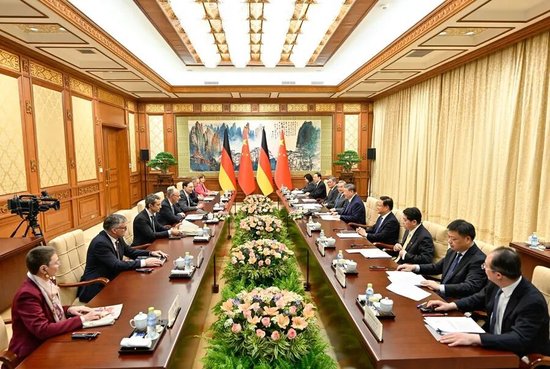
Group 1 - German Chancellor Merz's visit to China on February 25-26 marks his first official trip since taking office, accompanied by around 30 executives from leading German companies in sectors such as automotive, chemicals, biopharmaceuticals, machinery, and circular economy [1][5][8] - During the visit, significant cooperation documents were signed in areas including green transformation, customs, sports, and media, with over 60 entrepreneurs from both countries participating in discussions [1][5] - More than ten commercial agreements were reached between Chinese and German companies, covering industries such as automotive, machinery, energy, logistics, and finance [1][5] Group 2 - The trade volume between China and Germany has consistently exceeded $200 billion, with bilateral investments amounting to over $65 billion, representing nearly a quarter of the total trade volume between China and the EU [12][13] - A report indicates that German investments in China are expected to grow by over 55% in 2025, reaching approximately €7 billion, the highest level since 2021, with 93% of German companies in China planning to deepen their market presence [22][23] - Major German companies are increasing their strategic investments in China, with BASF committing €8.7 billion to build an integrated base in Zhanjiang, marking its largest single investment project to date [28]
