乳制品

Search documents
庄园牧场:内外部经营环境未发生重大变化
Ge Long Hui· 2025-12-18 11:06
格隆汇12月18日|庄园牧场公告,公司未发现近期公共传媒报道了可能或已经对公司股票交易价格产生 较大影响的未公开重大信息;公司近期经营情况正常,内外部经营环境未发生重大变化;公司控股股东 和实际控制人不存在关于公司的应披露而未披露的重大事项,也不存在处于筹划阶段的重大事项;公司 控股股东、实际控制人在公司股票交易异常波动期间未买卖本公司股票。 ...
庄园牧场:股票连续两日涨幅偏离值累计超20%
Xin Lang Cai Jing· 2025-12-18 11:06
庄园牧场公告称,公司股票交易价格在2025年12月17日、12月18日连续两个交易日收盘价格涨幅偏离值 累计超20%,属异常波动。经核查,公司前期披露信息无更正、补充之处,近期经营正常,内外部环境 无重大变化,控股股东和实控人无应披露未披露重大事项,且在此期间未买卖公司股票。此外,公司曾 于12月11日披露减持预公告,减持计划实施有不确定性。 ...
蒙牛乳业12月18日斥资304.72万港元回购20万股
Zhi Tong Cai Jing· 2025-12-18 10:53
蒙牛乳业(02319)发布公告,该公司于2025年12月18日斥资304.72万港元回购20万股股份,每股回购价格 为15.14-15.24港元。 ...

科技策源力引领行业未来 乳业生物技术国家重点实验室第三届学术委员会第5次会议圆满召开
Zhong Guo Xin Wen Wang· 2025-12-18 10:47
Core Insights - The National Key Laboratory of Dairy Biotechnology has made significant progress in research and development, focusing on strategic technological advancements to enhance the dairy industry's innovation capabilities and drive high-quality development [2][3]. Group 1: Laboratory Achievements - The laboratory, established by Bright Dairy, is the only enterprise-level national key laboratory in China's dairy sector, emphasizing strategic and forward-looking technological layouts to meet national strategic needs [2]. - It has led 17 national and provincial-level research projects and contributed to the formulation of several national and industry standards, including those for greenhouse gas management and dairy production processes [2]. Group 2: Technological Breakthroughs - The laboratory has achieved a historic milestone by placing the "Champion Hou" bull in the top 100 of the international breeding rankings, marking a significant advancement in China's dairy genetics [3]. - It has successfully implemented a strategy that integrates core proprietary strains into various high-end products, enhancing their technological value and creating a fully controllable industrial chain from strains to end products [3]. Group 3: Product Innovation - The laboratory has developed innovative products that cater to contemporary health demands, such as the "Youbei 5.0" ultra-fresh milk series, which features a unique processing method that retains natural nutrients while reducing sodium content [4]. - New products like the "Youjia" high-calcium organic milk and low-fat high-protein fermented milk have been introduced to meet the increasing consumer demand for high-nutrition, low-burden options [4][5]. Group 4: Market Trends and Consumer Health - The introduction of low-GI yogurt aligns with national health management trends, addressing the growing consumer focus on sugar control and metabolic health [5]. - The laboratory's ability to translate cutting-edge research into market-ready products demonstrates its commitment to driving innovation and improving public health through technology [5].

蒙牛乳业(02319)12月18日斥资304.72万港元回购20万股
智通财经网· 2025-12-18 10:47
智通财经APP讯,蒙牛乳业(02319)发布公告,该公司于2025年12月18日斥资304.72万港元回购20万股股 份,每股回购价格为15.14-15.24港元。 ...
中国飞鹤(06186)12月18日斥资1232.69万港元回购304.6万股
智通财经网· 2025-12-18 10:40
Core Viewpoint - China Feihe (06186) announced a share buyback plan, indicating confidence in its stock value and future prospects [1] Group 1: Share Buyback Details - The company plans to repurchase 3.046 million shares at a total cost of HKD 12.3269 million [1] - The buyback price per share ranges from HKD 4.02 to HKD 4.05 [1]
护航乳业全产业链低碳转型,渣打集团支持蒙牛集团成功发行首笔可持续发展点心债券
Zhong Guo Shi Pin Wang· 2025-12-18 09:02
Core Viewpoint - The dairy industry is undergoing a significant low-carbon transformation, which is essential for its high-quality development and has a profound impact on global dairy emissions reduction efforts. China's dairy sector is becoming a key player in driving the global dairy value chain towards a low-carbon future [1]. Group 1: Industry Transformation and Challenges - The dairy industry faces unprecedented transformation pressures under the "dual carbon" goals, with over 90% of emissions originating from the supply chain, making collaborative carbon reduction across the entire industry chain crucial [1]. - For Mengniu, its extensive supply chain network, which includes farms, suppliers, and logistics partners, generates significant "Scope 3" emissions, posing a core challenge to achieving its strategic goals of carbon peaking by 2030 and carbon neutrality by 2050 [3]. Group 2: Financial Solutions and Innovations - Standard Chartered Bank and Mengniu Group have collaborated to implement a sustainable financial practice, successfully issuing a sustainable offshore RMB bond totaling 3.5 billion RMB, marking a significant step in aligning China's dairy industry with international standards [1][4]. - The issuance of the sustainable bond was supported by a sustainable development financing framework that meets international standards, ensuring funds are directed towards key carbon reduction projects [5]. Group 3: Market Response and Impact - The bond issuance received overwhelming interest, with total orders reaching approximately 39.9 billion RMB, resulting in a subscription multiple of over 11 times, setting records for the lowest interest rates and largest issuance scale for Chinese dairy companies in the offshore RMB bond market [9]. - The final interest rates were set at 2.000% for the 5-year bond and 2.300% for the 10-year bond, establishing a new pricing benchmark for Chinese companies seeking sustainable financing in offshore markets [9]. Group 4: Future Outlook and Collaboration - The successful issuance of the sustainable bond is a critical step for Mengniu in shaping a globally influential sustainable brand image and driving collaborative carbon reduction across its supply chain [10][13]. - As the "dual carbon" goals advance, more companies are expected to accelerate their green transformations, with international financial institutions like Standard Chartered playing a key role in supporting these efforts [13].


新乳业:完成福州澳牛55%股权收购,支付尾款231.46万元
Xin Lang Cai Jing· 2025-12-18 08:43
新乳业公告称,2019年公司与叶松景签署《投资合作协议》,收购新澳乳业、新澳牧业各55%股权, 2020年初完成工商变更登记。2023年,公司与相关方签订《补充协议》。交易各方确认,收购新公司 55%股权的交易对价为1.11亿元。截至2025年11月,公司累计支付1.09亿元。近日,公司完成剩余股权 转让款231.46万元的支付,福州澳牛收购项目完成。 ...

把广场舞跳上央视:蒙牛悠瑞携手央视打造银发活力盛典助力“积极老龄化”国家倡议
Xin Lang Cai Jing· 2025-12-18 08:14
Core Insights - The event "Jinwu Kaijia Ba!" organized by Mengniu's milk powder brand "Yourui" successfully showcased the vitality of the elderly community and promoted the national initiatives of "active aging" and "Healthy China" [1][2][12] - The event featured over a hundred offline performances across six provinces, culminating in a high-profile broadcast on CCTV, which highlighted the cultural confidence of the elderly population in China [2][4] Group 1: Event Overview - The event was a collaboration between Mengniu, CCTV, the National Sports Administration, and the All-China Women's Federation, lasting eight months and reaching a wide audience [1] - It aimed to break the limitations of traditional square dancing by providing a high-standard platform for performance, integrating elements of "square dance + intangible cultural heritage" and "square dance + fashion" [2] Group 2: Audience Engagement and Impact - The broadcast on December 11 achieved a peak viewership rating of over 0.80%, surpassing the historical average by 28%, demonstrating strong audience engagement [4] - The event's online presence was significant, with a total view count exceeding 12.72 million and an interaction volume of 450,000 across multiple social media platforms [4][9] Group 3: Recognition and Awards - The event received recognition as a "Outstanding Scene Marketing Case" at the "2025 Annual Outstanding Brand Marketing Conference" by Economic Observer, highlighting its impact and effectiveness [8] - The pre-event promotional efforts included a short video that garnered over 7 million views, contributing to an overall exposure of nearly 1.5 billion throughout the year [9] Group 4: Brand Evolution and Community Engagement - Mengniu Yourui has transitioned from being a provider of nutritional solutions for the elderly to becoming a key contributor to the vibrant lifestyle of the elderly community, emphasizing values of vitality, confidence, and culture [11] - The company has established a joint research center with Sun Yat-sen University to focus on the nutritional needs of the elderly, aiming to enhance health through scientific research and innovation [12] Group 5: Future Directions - Mengniu plans to continue collaborating with various sectors to promote a positive social atmosphere for the elderly, aligning with national goals for elder care and active living [14]

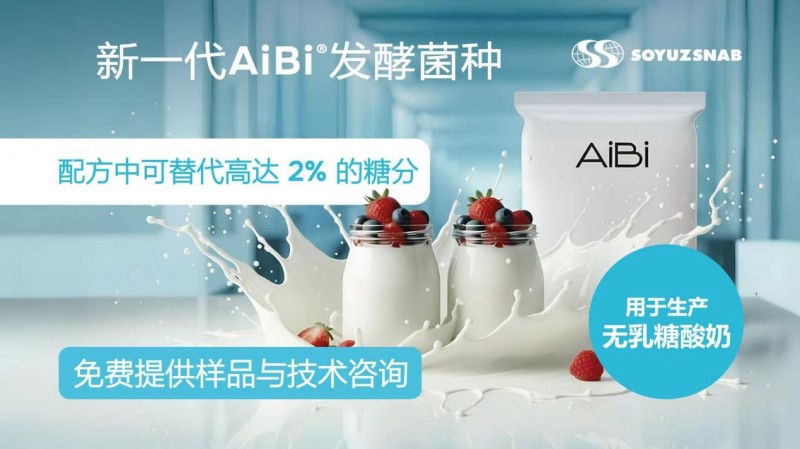
荔枝帮助创造出用于无乳糖乳制品的发酵剂
Zhong Guo Shi Pin Wang· 2025-12-18 07:16
全世界有75%的人口患有不同程度的乳糖不耐受,导致他们在食用含乳糖产品时产生某些不良身体反应。 SOYUZSNAB集团提出了解决这一问题的方案。 "为了防止这个问题,可以使用β-半乳糖苷酶。β-半乳糖苷酶可以从各种来源中分离出来,包括真菌、酵母、植 物、动物和微生物。其应用不仅限于生产无乳糖产品,还可用于乳清加工和益生元的生产。" 埃琳娜·彼得罗芙娜· 鲁萨诺娃介绍说。 传统上用于生产无乳糖乳制品的酶是来自乳酸克鲁维酵母的中性β-半乳糖苷酶。 作为解决方案,SOYUZSNAB提出SWEET发酵剂,它们对牛奶中的乳糖具有极高的天然β-半乳糖苷酶活性,能将 乳糖水解为葡萄糖和半乳糖。此外,这些菌种不会在发酵乳制品储存过程中引发酸度增长。 得益于通过选择性育种从荔枝中获得的嗜热链球菌菌株,SWEET发酵剂能够分解牛奶中含量为4.6-4.7%的乳糖。 使用这些新型发酵剂时,乳糖的分解过程在β-半乳糖苷酶的作用下,在细胞内外同时进行。这些菌株的独特性在 于细胞的超强能力。这些产品既可以与其他发酵剂一起使用,也可以单独使用,为发酵乳制品提供浓稠的粘性质 地和温和的酸乳风味。 SWEET发酵剂不仅在俄罗斯,而且在国外也成功 ...