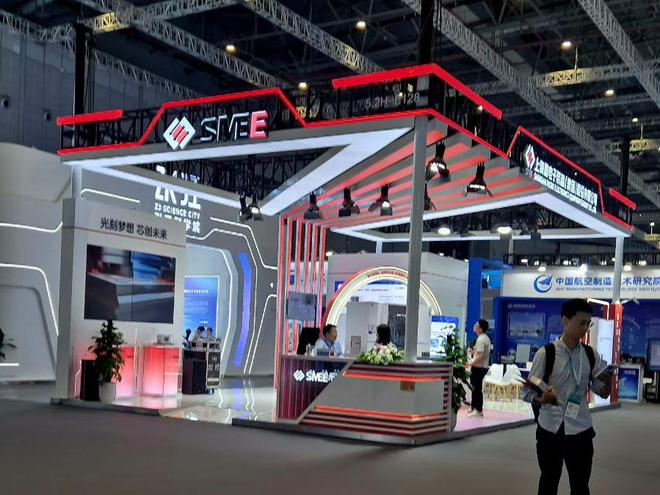
光刻机

Search documents
收评:创业板指低开低走跌4.55% 高位股集体大跌
Xin Lang Cai Jing· 2025-10-10 07:13
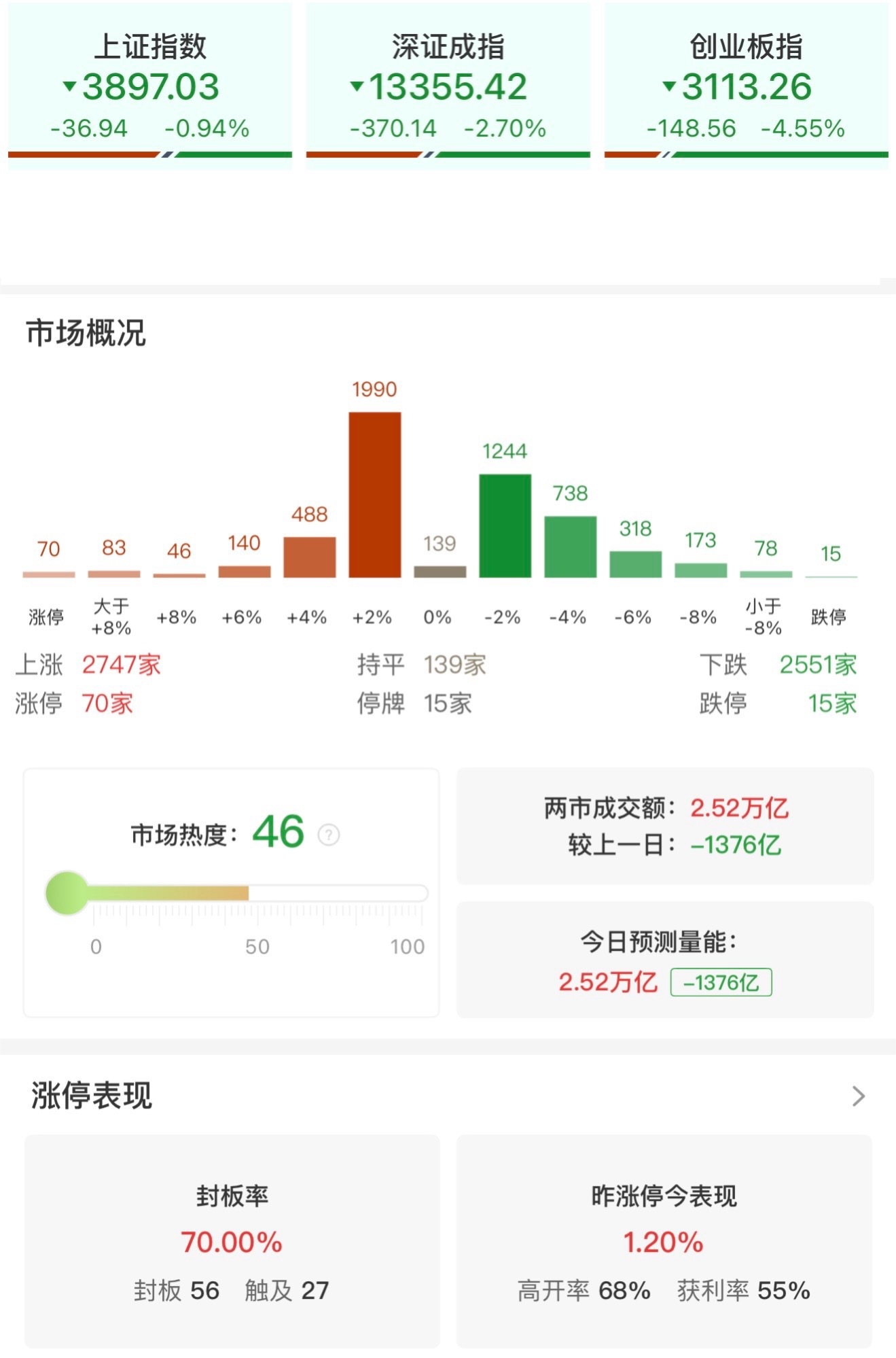
Core Viewpoint - The market experienced a significant decline, with the ChiNext Index dropping by 4.55%, indicating a bearish trend across major indices [1] Market Performance - The three major indices collectively fell, with the Shanghai Composite Index losing nearly 1% and falling below the 3900-point mark [1] - The total trading volume in the Shanghai and Shenzhen markets was 2.52 trillion yuan, a decrease of 137.6 billion yuan compared to the previous trading day [1] Sector Performance - The nuclear power sector showed strong performance, with stocks like Hezhong Intelligent gaining five consecutive trading limits, and China Nuclear Construction and Antai Technology achieving two consecutive limits [1] - The photolithography machine concept stocks saw localized surges, with Newray Materials and Kaimete Gas both hitting the daily limit [1] - Venture capital concept stocks continued their strong momentum, with Dazhong Public Utility achieving three limits in four days, and several other stocks like Seven Wolves also hitting the limit [1] Declining Stocks - High-priced stocks collectively declined, with significant adjustments in battery and chip concept stocks, including Huahong Semiconductor, Yiwei Lithium Energy, and Xian Dao Intelligent, all experiencing substantial drops [1] - Sectors such as gas and coal saw gains, while semiconductor, battery, and precious metals sectors faced the largest declines [1] Closing Figures - At the close, the Shanghai Composite Index fell by 0.94%, the Shenzhen Component Index dropped by 2.70%, and the ChiNext Index decreased by 4.55% [1]

市场全天震荡调整,三大指数集体下跌
Feng Huang Wang· 2025-10-10 07:11
Market Overview - The market experienced a day of volatility with all three major indices declining, showing a clear differentiation between the yellow and white lines [1] - The total trading volume in the Shanghai and Shenzhen markets was 2.52 trillion, a decrease of 137.6 billion compared to the previous trading day [4] Sector Performance - The nuclear power sector showed strong performance, with stocks like Hezhong Intelligent achieving five consecutive trading limits, and China Nuclear Engineering and Antai Technology both hitting two consecutive limits [1] - The photolithography machine concept stocks saw localized surges, with Newray Materials and Kaimete Gas both reaching their daily limits [1] - Venture capital concept stocks continued their strong trend, with Dazhong Public Utilities achieving three limits in four days, and several other stocks like Seven Wolves also hitting their limits [1] - In contrast, high-priced stocks collectively declined, with significant adjustments in battery and chip concept stocks, including major drops in Huahong Semiconductor, Yiwei Lithium Energy, and Xian Dao Intelligent [1] Index Performance - By the end of the trading session, the Shanghai Composite Index fell by 0.94%, the Shenzhen Component Index dropped by 2.70%, and the ChiNext Index decreased by 4.55% [1]

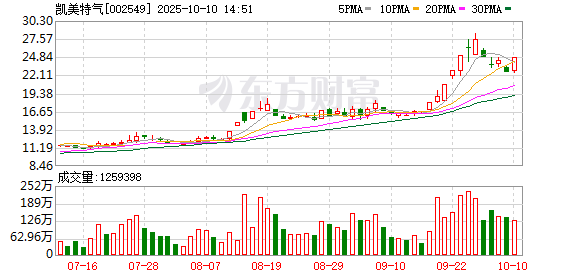
午后异动!002549、300260逆势涨停
Shang Hai Zheng Quan Bao· 2025-10-10 06:50
Group 1 - The semiconductor equipment sector, particularly lithography machine stocks, experienced significant upward movement, with Kaimeteqi (002549) hitting the daily limit up [2] - New Lai Materials (300260) achieved a "20cm" limit up during intraday trading, briefly opening and then re-closing at the limit up price [2] - Other companies in the sector, including Wavelength Optoelectronics, Haili Co., Baiao Chemical, and Xuguang Electronics, also saw price increases [2] Group 2 - On October 10, the three major A-share indices continued to decline, with the ChiNext Index down 4%, the Shenzhen Component Index down 2.49%, and the Shanghai Composite Index down 0.95% [3] - Sectors such as semiconductor chips, photovoltaics, batteries, and non-ferrous metals experienced the largest declines [3] - The total market turnover exceeded 2.1 trillion yuan, a decrease of 131.3 billion yuan compared to the same time the previous day [3]


日本跟进!将我国多家实体列入出口管制“最终用户清单”
是说芯语· 2025-09-30 05:49
Core Viewpoint - Japan's Ministry of Economy, Trade and Industry (METI) updated the "final user list" on September 29, adding multiple Chinese companies while removing two previously listed companies [1][2]. Group 1: Japan's Export Control Measures - Japan has been tightening export controls on high-end semiconductor manufacturing equipment since 2023, with further restrictions planned for 2025, using the "final user list" as a tool to prevent technology from being used for military purposes [2][3]. - The initial expansion of the list in February included 42 Chinese entities, bringing the total number of affected Chinese companies, research institutions, and organizations to approximately 110, primarily in critical technology sectors such as semiconductors, artificial intelligence, and quantum computing [3]. Group 2: China's Response - The Chinese Ministry of Commerce expressed strong opposition to Japan's actions, stating that the listing of Chinese companies lacks factual basis and harms the interests of both countries' enterprises [2][4]. - China welcomed the removal of two companies from the list, viewing it as aligned with mutual interests, and expressed a willingness to enhance communication with Japan to facilitate the removal of more Chinese companies from the list [4].

券商晨会精华 | 节前指数或维持震荡格局
智通财经网· 2025-09-29 00:21
Market Overview - Last Friday, the market experienced fluctuations, with the ChiNext Index dropping over 2.5% during the session. The total trading volume in the Shanghai and Shenzhen markets was 2.15 trillion, a decrease of 224.2 billion compared to the previous trading day. The Shanghai Composite Index fell by 0.65%, the Shenzhen Component Index by 1.76%, and the ChiNext Index by 2.60% [1]. Sector Performance - In terms of sector performance, wind power and insurance sectors saw the highest gains, while gaming, computing hardware, and photolithography sectors faced the largest declines [1]. Analyst Insights - Everbright Securities predicts that the index will likely maintain a fluctuating pattern before the holiday, with the current market style indicating a short-term adjustment in the technology sector, which does not alter the mid-term upward trend. The upcoming Hefei International New Energy Vehicle Conference on September 29 is expected to stimulate related concepts with over 100 million in consumer vouchers and subsidies planned [1]. - GF Securities highlights a significant characteristic in the market structure entering the fourth quarter: since 2005, cyclical industries have had over a 65% probability of rising in Q4, with more than 60% likelihood of outperforming the CSI 300 Index. This is contingent on the cyclical industries benefiting from a "calendar effect" based on improved macroeconomic fundamentals [2].


申万宏源:调整兑现后红十月是大概率事件 科技成长趋势性占优
智通财经网· 2025-09-28 13:06
Core Viewpoint - The A-share market is currently undergoing a small-scale adjustment phase, which is expected to end soon, leading to a probable "Red October" rally as long-term policy layouts approach and technological catalysts continue to unfold [1][2]. Market Adjustment and Outlook - The market has been in a small adjustment phase since early September, with the core issue being a lack of consensus on the structural mainline to push the index higher. The space and time for a technology-driven bull market are limited, leading to a focus on price-performance issues [1]. - The adjustment is not expected to lead to a major downturn, as there are no significant downward risks in the medium term. Economic improvements are anticipated in 2025 H2, and policy measures are expected to gain momentum, supporting the upward supply-demand expectations for 2026 [1][2]. - The recent U.S. tariff disturbances are deemed to have limited incremental impact on the A-share market, provided that trade barriers do not isolate China from its economic partners [1]. Catalysts and Structural Trends - October is viewed as a critical policy layout window, where the adjustment phase may enhance market expectations. The cyclical catalysts are expected to be less impactful in Q4 2025, while the technology sector continues to show upward trends, particularly in AI [2][3]. - The medium-term outlook suggests that technological catalysts will dominate over cyclical catalysts until spring 2026, with potential price-performance issues in the short to medium term [3][4]. Sector Performance and Investment Strategy - The technology sector is expected to maintain a favorable trend, with high elasticity in new catalysts and sectors that have already seen significant gains, such as overseas computing power, innovative pharmaceuticals, energy storage, solid-state batteries, and advanced manufacturing technologies [4][5]. - The transition from structural bull to a comprehensive bull market is seen as critical, with a focus on sectors like photovoltaics and chemicals, which are expected to benefit from increased industry concentration and pricing power [4][5]. Hong Kong Market Outlook - The medium-term outlook for the Hong Kong market remains positive, supported by the anticipated effects of interest rate cuts and the influence of U.S. monetary policy under Trump. This environment is expected to bolster the performance of gold and other commodities [5].

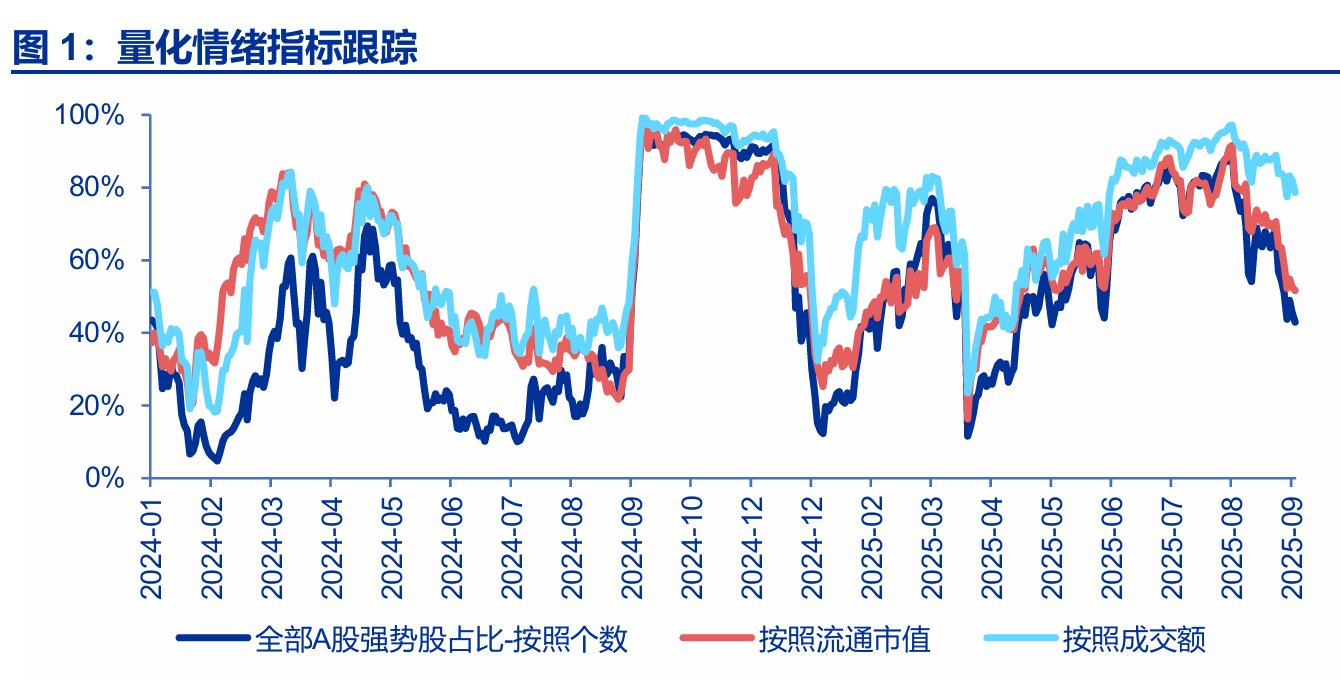
创业板指或将进入中枢震荡状态
Changjiang Securities· 2025-09-28 12:44
- The report does not contain any quantitative models or factors for analysis[1][2][4] - The report primarily discusses market trends, sector performance, and stock movements without introducing specific quantitative models or factors[8][11][49] - No formulas, construction processes, or backtesting results related to quantitative models or factors are provided in the report[8][11][49]
申万宏源策略一周回顾展望(25/09/22-25/09/27):调整后,红十月
Shenwan Hongyuan Securities· 2025-09-27 13:34
Core Viewpoints - The adjustment phase in A-shares is not expected to lead to a major downward risk in the medium term, with a high probability of a "red October" following the current adjustments, as long-term policy layouts are approaching and technological catalysts continue to persist [3][5][6] - The economic outlook for the second half of 2025 remains uncertain, but it is not expected to affect the anticipated upward turning point in supply-demand dynamics in 2026 [3][5][6] - The narrative of a bull market is still valid, with the current phase characterized by increased allocation of equity by residents and improvements in cyclical fundamentals [3][5] Short-term Market Outlook - October is seen as a critical policy layout window, which may stabilize and elevate market expectations after the current adjustments [6][7] - The cyclical catalysts are expected to be limited in the fourth quarter of 2025, while technological industry catalysts are on an upward trend, particularly in AI, both domestically and internationally [6][7] - The ongoing adjustments are likely to improve short-term cost-effectiveness indicators, setting the stage for the "red October" market to unfold [6][7] Medium-term Market Outlook - Before spring 2026, technological industry catalysts are expected to dominate over cyclical catalysts, although there may be short-term cost-effectiveness issues in tech growth [7][8] - Spring 2026 may present challenges for the A-share market, including verification of demand-side dynamics and potential delays in the supply-demand turning point if demand remains weak [7][8] - The long-term cost-effectiveness of the tech industry may reach low levels, similar to previous market conditions in late 2013 and late 2019, potentially leading to a mid-term consolidation phase [7][8] Structural Outlook - The trend in tech growth is expected to remain dominant, with better performance in high-low switches within tech sectors compared to switches between growth and value [8][9] - New catalysts in emerging sectors are anticipated to have high elasticity, with significant growth potential in sectors like overseas computing power, innovative pharmaceuticals, energy storage, solid-state batteries, and advanced manufacturing technologies [8][9] - The structural transition from a structural bull market to a comprehensive bull market is critical, with a focus on industries like photovoltaics and chemicals [8][9] Hong Kong Market Outlook - The medium-term outlook for the Hong Kong market remains positive, benefiting from the anticipated interest rate cuts and the strengthening of new economic trends [9]
申万宏源策略一周回顾展望:调整后,红十月
Shenwan Hongyuan Securities· 2025-09-27 12:45
Core Viewpoints - The judgment that the small-level adjustment wave of A-shares has not ended is being validated, with no medium-term downside risk and the short-term adjustment not being of a large scale. After the adjustment, a "red October" is highly probable due to the approaching long-term policy layout period and ongoing technological catalysts, with short-term price-performance adjustments likely to be resolved soon [1][5][6] Market Adjustment and Outlook - The current market is undergoing a small-level adjustment since early September, with the core issue being the lack of consensus on the structural mainline to push the index higher. The space and time for a technology structural bull market are limited, leading to market resistance in the upward movement as it digests price-performance issues [5][6] - The adjustment is unfolding, and it is emphasized that there will not be a large-scale adjustment in the short term. The core reason is that there is no real downside risk in the medium term. Economic improvement in the second half of 2025 and further policy efforts are expected to support the upward turning point in supply-demand dynamics in 2026 [2][5][6] Expectations for October - October is seen as a critical policy layout window, where the adjustment will be conducive to stabilizing and improving capital market expectations. Potential catalysts are being evaluated dynamically, with a focus on the demand side looking towards a new round of "policy bottom" to "economic bottom" in 2026, while supply-side clearing is expected in mid-2026 [6][7] - The cyclical catalysts for Q4 2025 are relatively limited, but the technological industry continues to show upward trends, particularly in AI, which has not yet reached its boundaries. The current period is characterized by increasing highlights in the technology industry, and the structural heat may re-energize in October [6][9] Medium-term Market Outlook - Before spring 2026, the technological industry is expected to have significantly more catalysts than cyclical ones, although there may be short-term price-performance issues in technology growth. The trend in technology growth may continue, eventually leading to a long-term low price-performance area [6][7] - Spring 2026 may represent a phase peak for the A-share market, facing challenges such as the arrival of a key verification period on the demand side and the potential delay in the supply-demand turning point if demand remains weak. New structural highlights may still need time to emerge, and the long-term price-performance of the technology industry may reach low levels [7][9] Structural Outlook - The trend in technology growth is expected to dominate, with better performance in high-low switches within technology than between growth and value. New catalysts in emerging sectors are anticipated to have high elasticity, with mid-term market space remaining for technology sectors that have already accumulated certain gains [9][10] - The transition from a structural bull to a comprehensive bull market is crucially linked to the anti-involution trend, with a focus on sectors like photovoltaics and chemicals. The mid-term outlook for Hong Kong stocks remains unchanged, benefiting from the strengthening of "Trump's interest rate cut bullish options" and the fermentation of new economic industry trends [9][10]
“零到一”突破期望升温,A股光刻机产业链躁动
2 1 Shi Ji Jing Ji Bao Dao· 2025-09-26 12:50
Core Viewpoint - The semiconductor manufacturing sector, particularly the lithography machine segment, is experiencing significant market interest and activity, especially with domestic companies gaining traction in the A-share market [1][2]. Industry Dynamics - The recent surge in the semiconductor industry has led to rising expectations for price increases, driving the performance of lithography machine stocks [2]. - Major players in the lithography machine concept, such as Zhangjiang Hi-Tech (600895.SH), have seen substantial stock price increases, with Zhangjiang Hi-Tech hitting a historical high [2]. - The domestic lithography machine market is largely dependent on imports from countries like the Netherlands and Japan, indicating a significant opportunity for local manufacturers [2][4]. Company Developments - Shanghai Micro Electronics (SMEE) has showcased its extreme ultraviolet (EUV) lithography machine at the China International Industry Fair, marking a significant step in domestic technology disclosure [1]. - Zhangjiang Hi-Tech has invested approximately 22.345 million yuan in Shanghai Micro Electronics, holding a 10.779% stake [2]. - Jiangfeng Electronics (300666.SZ) is providing critical materials for lithography processes and has entered mass production for core cooling components used in lithography machines [2]. Market Structure - The global lithography machine market is dominated by ASML, which holds over 80% market share, particularly in the high-end EUV segment [5][6]. - Domestic lithography machine manufacturers, led by Shanghai Micro Electronics, currently have a low domestic market penetration rate of 2.5% [7]. - Shanghai Micro Electronics is the only domestic supplier with over 80% market share in China, focusing on ArF, KrF, and i-line technologies [7]. Technological Challenges - The lithography machine industry is characterized by high barriers to entry and significant capital requirements, necessitating a coordinated effort from the state and key industry players to achieve self-sufficiency in the supply chain [13]. - Despite advancements, domestic manufacturers face challenges in technology and supply chain issues, particularly in high-end lithography machine technology [9]. Future Outlook - There is a growing expectation for breakthroughs in the domestic lithography machine industry, driven by geopolitical factors limiting access to ASML's EUV machines [8]. - The industry is seeing increased collaboration among domestic companies and research institutions to foster technological innovation and development [12].