
发电

Search documents
中部第一!山西每万人拥有5G基站33个,数字底座这样筑牢
Sou Hu Cai Jing· 2025-11-28 07:53
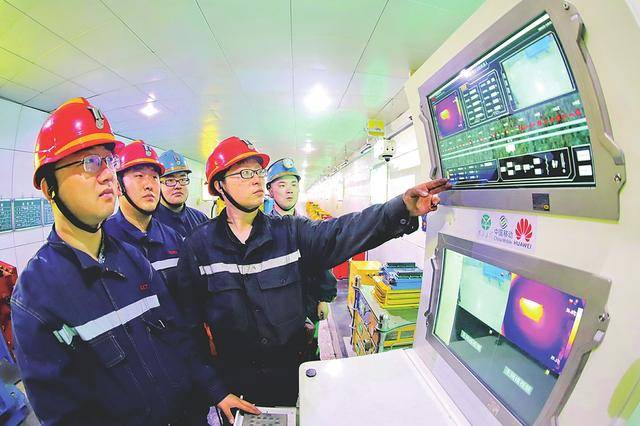
Core Insights - The article highlights the rapid development of the information and communication industry in Shanxi Province during the "14th Five-Year Plan" period, focusing on the establishment of advanced digital infrastructure and its integration with various sectors to drive economic transformation and high-quality development [2][3][10]. Infrastructure Development - Shanxi has built the first 5G coal mine in the country, with a total of 11.5 million 5G base stations established, achieving the "14th Five-Year Plan" goals two years ahead of schedule [2]. - By July 2025, the total number of mobile communication base stations in the province is expected to reach 329,000, with 115 government service centers and 163 scenic spots achieving deep mobile network coverage [3]. - The province's gigabit optical network has expanded significantly, with 776,000 10G PON ports and the construction of seven gigabit cities [3]. Computing Power Infrastructure - Shanxi's comprehensive computing power index ranks 8th nationally, with energy efficiency utilization at 5th and a total of 47 data centers in operation [4]. - The province has established a monitoring platform for computing power infrastructure, enhancing the quality of its network [4]. Industrial Internet Integration - The province is actively promoting the integration of "5G + Industrial Internet," with 1,376 5G virtual private networks established and significant advancements in the industrial internet identification and resolution system [7]. - Shanxi Jin Yun Internet Technology Co., Ltd. has created the first industrial internet platform in the coal industry, serving over 300 coal mines [7]. Smart Manufacturing and Mining - Over 90% of coal mines in Shanxi have adopted smart mining technologies, significantly reducing the number of underground workers and enhancing safety [8]. - Key projects such as "5G One-Key Coking" and "5G + Fully Connected Smart Factory" have been developed, utilizing 5G networks and AI to improve production efficiency and product quality [8]. Digital Inclusion and Public Services - The province has invested 530 million yuan in universal telecom services, achieving 100% coverage of optical fiber broadband and mobile networks in poverty alleviation areas [10]. - The implementation of 5G networks in transportation and tourism has improved public travel experiences, addressing long-standing communication issues in critical areas [11]. Smart Services Enhancement - Shanxi has developed digital health platforms and smart education networks, enhancing service delivery in healthcare and education sectors [12]. - The integration of 5G technology in various sectors, including transportation and tourism, has led to improved management efficiency and user experiences [12]. Future Outlook - Looking ahead to the "15th Five-Year Plan," Shanxi aims to strengthen its competitive edge in the information and communication industry, focusing on the construction of new digital infrastructure and the deep integration of the digital and real economies [14].

浙能电力:目前控股绝大部分还是火电,未包含参股
Zheng Quan Ri Bao Wang· 2025-11-25 13:43
证券日报网讯浙能电力(600023)11月25日在互动平台回答投资者提问时表示,发电行业是重资产行 业,目前公司控股绝大部分还是火电,未包含参股。 ...

生态环境部:发布三大行业碳配额总量和分配方案|碳中和周报
2 1 Shi Ji Jing Ji Bao Dao· 2025-11-25 13:12
Group 1 - The Ministry of Ecology and Environment has released the carbon quota allocation plan for the steel, cement, and aluminum industries for 2024 and 2025, emphasizing a free allocation model based on carbon emissions per unit output [2][3] - The allocation plan focuses on direct emissions from production processes and excludes indirect emissions from purchased electricity and heat [2] - The plan aims to gradually expand the carbon market while ensuring policy continuity and providing institutional support for a stable market expansion [3] Group 2 - The central enterprises are highlighted as key players in promoting green and low-carbon transformation, with a call for them to take the lead in this initiative [4] - The COP30 event showcased China's commitment to green development and its role in global climate governance, emphasizing the importance of corporate responsibility in achieving carbon neutrality [4][6] Group 3 - The "China Energy Transition and New Energy Development" side event at COP30 gathered representatives to discuss systemic challenges and innovative solutions for energy transition [5] - Reports released during the event outlined China's achievements and practices in renewable energy, providing a systematic approach to global energy transition [5][6] Group 4 - In October 2025, the total electricity consumption in China reached 8,572 billion kilowatt-hours, marking a year-on-year increase of 10.4%, with significant contributions from the tertiary sector and urban residential electricity consumption [7][8] - The data indicates a continuous optimization of industrial structure, with strong growth in high-tech manufacturing and modern services contrasting with slower growth in high-energy-consuming industries [8] Group 5 - The Qinghai-Tibet Plateau is reported to have an annual carbon sink of approximately 30 million tons, contributing significantly to China's carbon neutrality goals [9] - The region's carbon sink function is expected to enhance further through ecological protection and restoration efforts [9] Group 6 - The UNITAR side event at COP30 focused on building green and low-carbon cities, showcasing China's innovative practices in urban low-carbon governance [10] - The collaboration between public and private sectors is emphasized as a key factor in achieving carbon neutrality goals [10][12] Group 7 - BCI Group introduced a "vertical integration industry model" aimed at addressing the energy consumption challenges of AI computing power, advocating for a comprehensive approach to sustainable development [11][12] - The model emphasizes the importance of green energy supply and system efficiency in achieving carbon reduction in high-energy-consuming industries [12]
浙能电力(600023.SH):发电行业是重资产行业,目前公司控股绝大部分还是火电,未包含参股
Ge Long Hui· 2025-11-25 10:03
格隆汇11月25日丨浙能电力(600023.SH)在投资者互动平台表示,发电行业是重资产行业,目前公司控 股绝大部分还是火电,未包含参股。 ...
全球首台商用超临界二氧化碳发电机组并网调试
Ke Ji Ri Bao· 2025-11-25 00:06
记者了解到,经过10余年持续攻关,核动力院构建了超临界二氧化碳发电技术的产学研体系,形成了一 条完整的全国产化产业链。2019年10月,核动力院实现了全球首次实验室超临界二氧化碳满功率稳定发 电。 据悉,该项目是核动力院与济钢集团国际工程技术有限公司共同推进的全球首套2×15兆瓦超临界二氧 化碳烧结余热发电示范工程。2023年10月,该示范工程建设启动,推动了烧结余热利用领域技术革新。 项目成功发电后,余热利用率将比现役烧结余热蒸汽发电技术提升50%以上。 科技日报讯(记者吴叶凡)记者11月20日从中核集团中国核动力研究设计院(以下简称"核动力院")获 悉,全球首台商用超临界二氧化碳发电机组日前在贵州六盘水首钢水城钢铁(集团)有限责任公司顺利 完成并网调试,为后续机组的满功率运行奠定基础。 生活中的电70%以上来自于传统的蒸汽发电技术,但水工质在系统复杂度、效率、紧凑性、响应速度等 方面存在不足。超临界是物质的一种特殊状态,当二氧化碳被加压至7.38兆帕、加热至31℃时,会进入 超越气态和液态物质特性的"超临界态",兼具高密度和低粘度的双重优势。超临界二氧化碳发电技术, 就是以超临界态的二氧化碳作为能量传递和 ...
偏不上市,这位80后却成了山东首富
创业家· 2025-11-24 10:12
Core Viewpoint - The article discusses the wealth and business operations of the Zhang family, particularly focusing on Zhang Gang and his father Zhang Xuexin, who control the Xinfeng Group, a major player in the aluminum industry in China. Despite their significant wealth, the company remains private and does not disclose financial statements, raising questions about their operational strategies and financing methods [4][9][13]. Group 1: Company Overview - Xinfeng Group, based in Chipping, Shandong, ranks 20th on the 2025 list of China's top 500 private enterprises, with a revenue of 302.89 billion yuan in 2024, surpassing state-owned enterprises like China Minmetals [8][9]. - The company has a simple ownership structure, with Zhang Gang holding 51% and his mother 19.6%, while three other shareholders hold 9.8% each, indicating a family-controlled business model [9][12]. - The group has expanded its operations from power generation to a comprehensive aluminum industry chain, including bauxite mining, alumina production, and aluminum processing [4][10]. Group 2: Financing and Growth Strategies - Xinfeng Group has been actively acquiring upstream resources, such as a 40% stake in the "Huoyun" lead-zinc mine for approximately 5.5 billion yuan and various bauxite mining rights for a total of 71.81 billion yuan [4][10]. - The company has historically relied on employee fundraising for financing, with high returns promised to investors, which has fostered a strong internal funding mechanism [15][17]. - As of 2023, the group has secured a total bank credit line of 380 billion yuan, with significant loans from local banks, indicating a robust relationship with financial institutions despite not being publicly listed [15][16].

中石油、中石化、中海油、国网、南网、三峡、国能位居行业第一梯队!
中国能源报· 2025-11-24 08:15
Core Viewpoint - The article discusses the release of the evaluation index system for world-class enterprises in 16 industries by state-owned enterprises, highlighting the progress and assessment of central enterprises in building world-class standards [1]. Group 1: Evaluation Index System - The first batch of 11 industry evaluation index systems was released in November 2024, followed by a second batch of 5 in November 2025, covering 16 industries including power grid, oil and gas exploration, and telecommunications [1]. - The evaluation index system aims to assess the construction of world-class enterprises based on data from the year 2024 [1]. Group 2: Assessment Results - Among the 45 central enterprises evaluated, 13, including China National Petroleum, China Petroleum & Chemical, and State Grid, ranked in the top tier of their respective industries [1]. - The overall results indicate that central enterprises are making solid progress in building world-class standards [1]. Group 3: Key Evaluation Metrics - The evaluation metrics include various dimensions such as competitiveness, innovation, control, influence, and risk management, with specific indicators for each dimension [2][4][5]. - Key indicators include total revenue, total assets, profit margins, and R&D investment intensity, which are essential for assessing the performance and competitiveness of enterprises [2][3][4][5].




国网、南网、三峡、国能位居行业第一梯队!
Bei Jing Ri Bao Ke Hu Duan· 2025-11-24 02:36
Group 1 - The core viewpoint of the article is the establishment of a world-class enterprise evaluation index system for state-owned enterprises across 16 industries, aimed at promoting the construction of more world-class enterprises in China [1] - The first batch of evaluation index systems was released in November 2024, covering 11 industries, followed by a second batch of 5 industries in November 2025 [1] - The evaluation index system includes industries such as electric power, oil and gas exploration, telecommunications, automotive, metallurgy, aviation, mining, equipment manufacturing, shipping, construction, petroleum refining, pharmaceuticals, building materials, logistics, inspection and testing [1] Group 2 - A total of 45 central enterprises participated in the evaluation, with 13 enterprises, including China National Petroleum, China Petrochemical, and State Grid, ranking in the top tier of their respective industries [1] - The evaluation results indicate that central enterprises are making solid progress in building world-class enterprises [1] - The evaluation is based on data from the year 2024, assessing the construction of world-class enterprises across the 16 industries [1] Group 3 - The article outlines the construction of the evaluation index system, detailing the calculation methods for various indicators such as operating income, total assets, and net profit [2][3] - Key indicators include operating income, total assets, net profit, and return on equity, which are essential for assessing the competitiveness and efficiency of enterprises [2][3] - The evaluation system aims to provide a comprehensive framework for measuring the performance and competitiveness of state-owned enterprises in various sectors [2][3]

经导财评丨碳市场扩围加速推进,为绿色低碳转型提供支撑
Da Zhong Ri Bao· 2025-11-21 09:45
Core Viewpoint - The Ministry of Ecology and Environment has issued the "Quota Allocation Plan for National Carbon Emission Trading Market for Steel, Cement, and Aluminum Smelting Industries for 2024 and 2025," indicating a significant step towards expanding the carbon market to cover major industrial sectors [1][2]. Summary by Sections Carbon Market Expansion - The national carbon market, which started in 2021, has expanded from covering only the power generation sector to now include steel, cement, and aluminum smelting industries, marking its first major expansion [1][2]. - The types of greenhouse gases covered have also increased from solely carbon dioxide to include carbon dioxide, tetrafluoromethane, and hexafluoroethane [1]. Quota Allocation Framework - The "Quota Allocation Plan" continues the practice of free allocation of quotas based on carbon emission intensity, linking the quota amount to actual production levels without setting an absolute cap on total emissions [2]. - The focus is on direct emissions during production, excluding indirect emissions from purchased electricity and heat, emphasizing a "big fish, small fish" approach to target major emitters [2]. - The plan highlights the importance of data quality, stating that reliable carbon emission data is essential for an effective market, and introduces advanced monitoring technologies like blockchain and AI to combat data fraud [2]. Future Expansion Plans - Preparations for expanding the carbon market to include the chemical, petrochemical, civil aviation, and paper industries have already begun, with a goal to cover major industrial sectors by 2027 [3]. - The policy direction is clear, adhering to the principle of "mature one, include one," and will expand based on industry development, pollution reduction contributions, data quality, and emission characteristics [3]. - The ongoing improvements in the carbon emission management system and the implementation of reduction measures will enhance the role of the national carbon market in promoting green and low-carbon transformation in the economy and society [3].
碳市场扩围“路线图”官宣 2027年化工石化民航造纸全入场
2 1 Shi Ji Jing Ji Bao Dao· 2025-11-20 23:05
Core Points - The Ministry of Ecology and Environment has released a roadmap for expanding the national carbon market, aiming to cover major industrial sectors by 2027 [1][2] - The national carbon market currently includes approximately 3,700 key emission units, covering around 8 billion tons of carbon emissions, which accounts for over 60% of the national total [2][3] - The eight key industries targeted for inclusion in the carbon market account for about 75% of China's carbon dioxide emissions [2][3] Summary by Sections Carbon Market Expansion - The Ministry has initiated preparatory work for expanding the carbon market to include the chemical, petrochemical, civil aviation, and paper industries [4] - The expansion will follow a principle of "mature one, include one," based on industry development status and carbon emission characteristics [1][4] Current Market Status - As of August 2025, 1,277 key emission units from newly included industries have opened trading accounts [5] - The carbon market has expanded to include three major industries: steel, cement, and aluminum smelting, with a total of 1,500 key emission units [6] Allocation and Pricing Mechanism - The allocation method for carbon quotas will be similar to that of the power generation sector, with free allocation based on carbon emissions per unit of output for 2024 and 2025 [6][7] - By 2027, a new mechanism combining total quota control and both free and paid allocation will be implemented, potentially raising carbon prices from around 50 yuan/ton to between 130 and 180 yuan/ton [7][10] Industry Impact - Different industries will experience varying impacts from the carbon market, with power, steel, cement, and aluminum sectors being better prepared compared to the more complex petrochemical and chemical industries [7][8] - The paper industry, primarily composed of small and medium-sized enterprises, may face significant cost pressures and management challenges [7] Data Quality and Management - Ensuring data quality is critical for the carbon market's success, with the Ministry planning to enhance the monitoring and verification (MRV) system [5][11] - The Ministry will also upgrade infrastructure to support the expanded carbon market, focusing on regulatory capacity and data security [4][11] Future Directions - The carbon market aims to establish a transparent and unified pricing mechanism by 2030, with a focus on effective emission reduction and a robust regulatory framework [10][12] - The transition to a paid allocation system and total quota control is a key focus for the upcoming "15th Five-Year Plan" period [12]