动力电池

Search documents
多家企业已通过动力电池新国标
起点锂电· 2025-05-27 10:17
Core Viewpoint - The competition for "safety certification" in the electric vehicle battery industry has intensified, with the new national standard GB38031-2025 mandating "non-flammability and non-explosion" as compulsory requirements [1][2]. Group 1: Industry Developments - The Ministry of Industry and Information Technology released the new safety requirements for electric vehicle batteries, emphasizing extreme scenario testing [1]. - Nine battery manufacturers and twenty automotive companies have announced compliance with the new national standard, establishing safety benchmarks for the industry [2]. Group 2: Company Achievements - CATL became the first company in China to pass the new national standard certification for its Kirin battery, achieving this milestone with multiple product lines [3]. - BYD's blade battery and flash-charging blade battery have both passed the new national standard, showcasing their technological advantages [4]. - Zhongxin Innovation successfully obtained the new national standard certification, being one of the first battery companies to do so [5]. - Ruipu Lanjun's PHEV series battery was among the first to meet the new national standard, emphasizing high safety and long lifespan [6]. - XWANDA's flash-charging battery 3.0 received certification, setting a new safety benchmark for ultra-fast charging batteries [7]. - Zeekr's self-developed battery passed extensive testing, exceeding industry standards in safety [8]. Group 3: Market Trends - Major automotive brands, including Geely and Great Wall, have announced compliance with the new national standard, indicating a widespread industry shift towards enhanced safety [9]. - The majority of top electric vehicle manufacturers have already met the new safety requirements, reflecting a proactive approach to battery safety [9].




4月锂电下游应用市场概况:动力市场表现一般,美国储能出货不及预期
鑫椤锂电· 2025-05-27 08:23
Group 1: New Energy Vehicle Sales - In April, China's new energy vehicle sales reached 1.226 million units, with domestic sales at 1.025 million units, showing a month-on-month decline of 5% but a year-on-year increase of 39.3% [2][4] - For the first four months of 2025, new energy vehicle production and sales totaled 4.429 million and 4.3 million units, respectively, reflecting year-on-year growth of 48.3% and 46.2% [5] Group 2: Battery Installation and Production - In April, the domestic power battery installation volume was 54.1 GWh, a year-on-year increase of 52.8%, but a month-on-month decrease of 4.3% [7] - The cumulative power battery installation volume from January to April reached 184.3 GWh, with a year-on-year growth of 52.8% [7] Group 3: Energy Storage Market - In March, the domestic energy storage battery shipment volume was 47.5 GWh, showing a year-on-year increase of 159.6% and a month-on-month increase of 8.8% [9] Group 4: Market Trends and Policies - The continuation of the vehicle replacement policy and consumer incentives from car manufacturers, along with a half-price purchase tax policy at the end of the year, are expected to sustain growth in China's new energy vehicle market [16] - The U.S. market is anticipated to slow down due to increased tariffs and changes in potential new energy subsidy policies, while the European market is facing stricter carbon emission regulations [16]
A股龙头企业集体奔赴港股
Bei Jing Ri Bao Ke Hu Duan· 2025-05-26 23:06
Group 1 - A-share companies are increasingly pursuing dual listings in Hong Kong, with notable firms like CATL, Heng Rui Medicine, and Weir Semiconductor leading the trend [1][2] - The recent IPOs in Hong Kong include Heng Rui Medicine raising 9.89 billion HKD, marking the largest pharmaceutical IPO of the year, and CATL raising 35.657 billion HKD, the largest global IPO this year [2][4] - Companies are motivated by the desire to enhance their international presence and connect with global capital markets, as seen in statements from SANY Heavy Industry and Haitian Flavoring [3] Group 2 - The Hong Kong IPO market has seen a significant increase in fundraising, with over 76 billion HKD raised this year, a sevenfold increase compared to the same period last year [4] - The influx of A-share companies into the Hong Kong market is expected to improve the market's industry structure and enhance its attractiveness as an international financial center [4]




系列政策陆续落地 内地企业赴港上市积极有为
Zheng Quan Ri Bao· 2025-05-26 16:43
Group 1 - The regulatory environment for domestic companies going public overseas has become more transparent, efficient, and predictable, with 249 domestic companies completing overseas listing filings since the implementation of the new regulations on March 31, 2023 [1][2] - Nearly 90 of the listed companies are technology firms, primarily in sectors such as information technology, new energy, and advanced manufacturing [1] - As of May 23, 2023, there are 168 companies in the filing process, with 133 in the supplementary materials stage and 35 already accepted [1] Group 2 - The new regulations allow companies to reasonably arrange the timing of their filing applications and require that filings be completed before overseas issuance and listing [2] - The pace of overseas listing filings has accelerated, with 64 companies receiving filing notices in 2023, including seven companies in just a few days [2] - The new guidelines provide more flexibility in fundraising and foreign exchange risk management for companies going public overseas [2] Group 3 - Companies are increasingly looking to invest locally and expand globally after listing overseas, with examples like CATL planning to invest 90% of its Hong Kong IPO proceeds in projects in Hungary [3] - The new regulations aim to simplify the procedures for domestic companies going public overseas, shifting some processes from the foreign exchange bureau to banks [3][4] - Common issues in filing supplementary materials include ownership structure, shareholder information, and compliance with foreign investment regulations [4] Group 4 - Hong Kong has become the primary choice for companies going public overseas, with 127 out of 168 companies intending to list on the Hong Kong Stock Exchange [5] - The liquidity of the Hong Kong market has significantly improved, with an average daily trading volume of HKD 250.4 billion in the first four months of 2025, a 144% increase from the previous year [6] - Southbound capital has also surged into Hong Kong stocks, with a net inflow of HKD 621.36 billion in 2023, contributing to a 16.06% increase in the Hang Seng Index [6]
年内全球最大IPO!“宁王”登陆港股加速全球化布局
Sou Hu Cai Jing· 2025-05-26 12:53
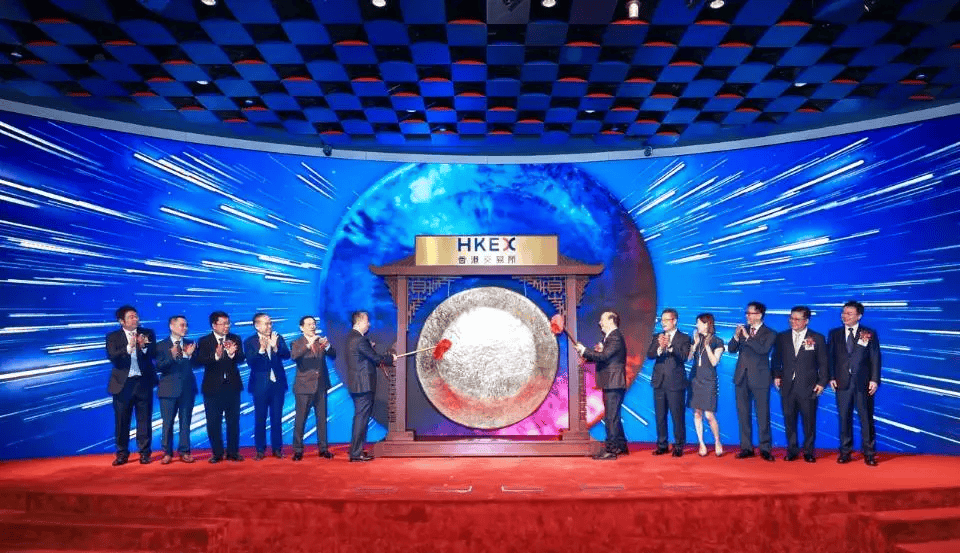
Core Viewpoint - CATL's successful listing on the Hong Kong Stock Exchange marks a significant milestone in its global strategy and is interpreted as a strong comeback in the new energy sector [1][9]. Group 1: IPO Details - CATL's IPO raised a total of HKD 356.6 billion (approximately USD 45.7 billion), making it the largest IPO in Hong Kong in nearly four years and potentially the top global IPO in 2025 [3]. - The share price was set at HKD 263, with an opening price of HKD 296, reflecting a 12.55% increase on the first day, and closing at a 16.43% gain [3]. - The offering attracted significant institutional participation, with cornerstone investors including Sinopec and KIA, each investing USD 500 million, representing 12.5% of the total [3][4]. Group 2: Strategic Importance - The dual listing (A+H shares) enhances CATL's international profile and shareholder diversity, which is crucial for its global business ambitions [3][4]. - The company plans to allocate 90% of the raised funds to the construction of its projects in Hungary, emphasizing the growing demand for battery and energy storage solutions in Europe [4][5]. Group 3: Production Capacity and Market Position - The Hungarian factory will have a planned battery capacity of 100 GWh, with an estimated total investment of up to EUR 7.3 billion, and is expected to supply major European automakers [5][6]. - CATL's product range includes various battery types, catering to different energy density needs and applications across multiple sectors, including electric vehicles and commercial applications [7][8]. - In 2024, CATL reported revenues of CNY 362 billion and a net profit of CNY 50.7 billion, with a 15% year-on-year growth, and achieved a global market share of 38.3% in the first quarter of 2025 [8]. Group 4: Future Outlook - The successful listing is expected to encourage more Chinese companies to consider Hong Kong as a platform for international financing, further solidifying Hong Kong's status as a global financial center [9]. - CATL's founder emphasized the company's commitment to innovation and its role in driving global energy transformation, contributing to China's carbon neutrality goals [9].
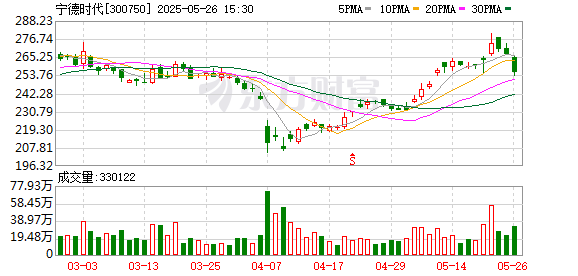
宁德时代再被起诉 遭索赔超6000万元 市值蒸发超500亿元
Xin Hua Cai Jing· 2025-05-26 11:13
Core Viewpoint - The lawsuit initiated by Hanchuan Intelligent against CATL and its subsidiaries over payment disputes has led to a significant drop in CATL's stock price and market value, highlighting financial tensions within the electric vehicle supply chain [2][5]. Company Overview - Hanchuan Intelligent specializes in intelligent manufacturing solutions across automotive electronics, healthcare, and new energy battery sectors, and was one of the first companies listed on the Sci-Tech Innovation Board in 2019 [2]. - In 2024, Hanchuan Intelligent reported a revenue of 474 million yuan, a year-on-year decline of 64.61%, attributed to strategic adjustments in its new energy business [2]. Legal Proceedings - Hanchuan Intelligent has filed four legal actions against CATL and its subsidiaries, seeking over 60 million yuan in total for unpaid equipment and service fees [2][3]. - The lawsuits involve claims for unpaid orders totaling over 160 million yuan, with specific amounts detailed for each case, including 37.68 million yuan from 2022-2023 and 779.7 million yuan from 2021-2022 [3][4]. Financial Performance - CATL reported a revenue of 362 billion yuan in 2024, a year-on-year decrease of 9.7%, but achieved a net profit of 50.74 billion yuan, reflecting a growth of 15.01% [5]. - As of the end of last year, CATL had substantial liquidity with cash and cash equivalents amounting to 303.5 billion yuan [5]. Industry Context - The lawsuit against CATL is not isolated, as other companies in the new energy sector, such as Zhongchuang Innovation, have also initiated legal actions against CATL for patent disputes, indicating broader challenges within the industry [5].

4月锂电下游应用市场概况:动力市场表现一般,美国储能出货不及预期
鑫椤储能· 2025-05-26 09:35
Key Points - In April, China's new energy vehicle sales reached 1.226 million units, with domestic sales at 1.025 million units, showing a month-on-month decrease of 5% but a year-on-year increase of 39.3% [1][3] - Exports of new energy vehicles amounted to 200,000 units, reflecting a month-on-month increase of 27% and a year-on-year increase of 76% [1] - From January to April 2025, the production and sales of new energy vehicles were 4.429 million and 4.3 million units respectively, with year-on-year growth of 48.3% and 46.2% [4] Battery Industry - In April, the total installed capacity of power batteries in China was 54.1 GWh, showing a month-on-month decrease of 4.3% but a year-on-year increase of 52.8% [6] - The share of ternary batteries in the total installed capacity was 9.3 GWh, accounting for 17.2%, with a month-on-month decrease of 7.0% and a year-on-year decrease of 6.3% [6] - Lithium iron phosphate batteries accounted for 44.8 GWh, representing 82.8% of the total, with a month-on-month decrease of 3.8% but a year-on-year increase of 75.9% [6] - Cumulatively, from January to April, the total installed capacity of power batteries reached 184.3 GWh, with a year-on-year growth of 52.8% [6] Energy Storage - In March, domestic energy storage battery shipments reached 47.5 GWh, showing a year-on-year increase of 159.6% and a month-on-month increase of 8.8% [7]

柳暗花明!内地企业掀起赴港上市热潮
Sou Hu Cai Jing· 2025-05-25 15:42
Core Viewpoint - The trend of mainland companies listing in Hong Kong has intensified since 2025, particularly among A-share listed companies, driven by various complex factors and having a profound impact on capital markets [2] Current Status of Mainland Companies Listing in Hong Kong - Over 20 A-share companies have submitted prospectuses for Hong Kong listings, with notable examples including CATL and Hengrui Medicine achieving successful dual listings [2] - CATL's Hong Kong IPO attracted nearly HKD 250 billion in subscriptions, with an oversubscription rate of 9.8 times [2] Industry Distribution - The main sectors driving this listing trend are new energy, pharmaceuticals, and high-end manufacturing, with companies like CATL and Hengrui Medicine showcasing their global competitiveness and innovation capabilities [4] Policy Support - The China Securities Regulatory Commission (CSRC) has implemented supportive measures for mainland companies to list in Hong Kong, including a fast-track review process for eligible A-share companies [4][5] - The "Science and Technology Enterprise Special Line" allows for expedited approvals, significantly reducing the time from application to listing [4] Market Appeal of Hong Kong - The Hong Kong market offers broad financing channels and a diverse investor base, which is particularly attractive for rapidly growing industries like photovoltaics and lithium batteries [7] - The flexible listing mechanisms and higher efficiency of the Hong Kong market are appealing compared to the stricter A-share market [9] Valuation and Market Performance - Hong Kong's valuation system is more favorable for high-growth sectors such as new energy and technology, providing a more appropriate market pricing for these companies [10] - The Hang Seng Index has risen by 14.37% and the Hang Seng Tech Index by 23.89% in 2025, contrasting with the relatively flat performance of the A-share market [10] Corporate Strategy - Companies are pursuing internationalization through Hong Kong listings to enhance their global presence and attract overseas partners [11] - The tightening financing environment in the A-share market has led some companies to view Hong Kong as a critical path for funding and business expansion [11] Impact on Capital Markets - The influx of mainland companies into the Hong Kong market enriches its industry structure and investment options, particularly in emerging sectors [12] - This trend may lead to a redistribution of quality resources from the A-share market, prompting reforms to enhance its attractiveness [13] Interconnection of Capital Markets - The listing trend will deepen the interconnection between mainland and Hong Kong capital markets, improving cooperation in areas such as information disclosure and investor protection [14]
中国动力电池产业的短板在哪里
董扬汽车视点· 2025-05-25 08:13
Core Viewpoint - The Chinese power battery industry, despite its current scale and technological advancements, faces significant shortcomings in ecosystem strength and influence, which could hinder its future development and competitiveness on a global scale [1][3]. Group 1: Current Status and Challenges - China's new energy vehicle industry is leading globally in both technology and scale, which has propelled the power battery industry to a trillion-yuan scale, surpassing typical manufacturing sectors [1]. - The industry lacks strong bargaining power with upstream and downstream sectors, as evidenced by the high lithium carbonate prices impacting battery development and the inability to ensure quality and safety in energy storage projects [1][2]. - There is a weak influence on government policies, with industry players struggling to understand and adapt to policy directions, indicating a lack of strategic foresight [2]. - The industry is characterized by intense price competition leading to low profitability, with some top global companies still incurring losses, which has resulted in reduced R&D investments [2][3]. - The international environment is unstable for the industry, with the U.S. government actively excluding Chinese battery companies and Europe exhibiting a defensive stance towards them [2][3]. Group 2: Recommendations for Improvement - Establish a robust research capability to understand global and national economic policies, similar to major international automotive companies [3][4]. - Develop a strong industry association to enhance cohesion and address common challenges, transitioning from initial innovation alliances to formal industry associations [4]. - Create effective channels for lobbying the government to influence policy decisions that support the industry, similar to practices in other major economies [5]. - Implement industry self-regulation mechanisms to combat detrimental competition and ensure a healthy market environment [5][6]. - Strengthen the intellectual property system to protect innovations and establish a competitive order, including mechanisms for technology sharing and international patent strategies [6]. - Foster a positive online environment to manage public perception and educate stakeholders about battery safety and industry developments [6][7]. - Actively build favorable international relationships with key production and application countries to support the global battery supply chain [7].

突然火了!3家明星公司,H股股价超A股!
证券时报· 2025-05-24 14:09
Core Viewpoint - The recent surge in A-share companies pursuing H-share listings has drawn significant market attention, particularly with companies like CATL and BYD seeing their H-share prices exceed A-share prices, highlighting a potential trend of H-share price appreciation relative to A-shares [1][3][5]. Group 1: H-share Performance - CATL's H-share price reached 322.40 HKD, surpassing its A-share price of 266.99 CNY, resulting in an AH share premium rate of -9.85% as of May 23 [5][7]. - Other companies such as BYD and China Merchants Bank also reported H-share prices exceeding A-share prices, with AH premium rates of -5.23% and -3.51% respectively [7]. - The overall trend indicates a potential resurgence of the AH premium phenomenon, with several companies showing narrowing price gaps between their A and H shares [10][11]. Group 2: Market Trends and Indices - The Hang Seng AH Premium Index has shown a decline from a high of 161.36 points in February 2024 to 131.88 points by May 23, indicating stronger performance of H-shares compared to A-shares [12]. - The Hang Seng Index for H-shares has increased by 7.04% this year, driven by factors such as global economic recovery and increased liquidity in the Hong Kong market [13]. Group 3: Institutional Insights - UBS's research suggests that the AH premium, currently around 30%, has room for narrowing due to factors like improved liquidity in Hong Kong and increased foreign investment [16]. - The report indicates that while the overall AH premium may stabilize, certain stocks could experience an AH discount due to heightened interest from foreign investors [17]. - Open-source securities predict that the AH premium could return to lower levels seen between 2016 and 2019, influenced by the "AI+" narrative and regulatory improvements in the internet sector [18].