加密货币

Search documents
MiCA Won’t Save Us from a Stablecoin Crisis. It Might be Building One
Yahoo Finance· 2025-11-01 13:00
Core Insights - MiCA regulation aims to end the "Wild West" era of stablecoins but may inadvertently legitimize systemic risks associated with them [1] - The distinction between crypto markets and traditional finance is blurring as stablecoins gain regulatory approval, transforming into mainstream payment instruments [2] - Trust in stablecoins as money could lead to competition with bank deposits, affecting the traditional credit-creating mechanisms [3] Group 1: Regulatory Framework - MiCA addresses micro-prudential issues by ensuring issuers do not collapse but overlooks macro-prudential risks related to large-scale shifts from bank deposits to stablecoins [4] - The Bank of England suggests that widely-used stablecoins should be regulated like banks, proposing caps on holdings to mitigate risks [4] Group 2: Economic Implications - A significant transition from commercial bank deposits to stablecoins could threaten banks' balance sheets, reduce credit availability, and complicate monetary policy transmission [5] - Even regulated stablecoins may pose destabilizing risks as they scale, with MiCA's safeguards not fully addressing these structural concerns [5] Group 3: Offshore Risks - The UK's regulatory approach is cautious towards domestic issuers but lenient on offshore stablecoins, leaving consumers vulnerable to risks from overseas entities [6]
a16z: 加密生态现状报告 2025
Sou Hu Cai Jing· 2025-11-01 10:11
Core Insights - The crypto industry is maturing, with 2025 marking a significant transition as it goes mainstream, moving beyond speculative narratives to become an integral part of the modern economy [2][4][5] Market Overview - The total market capitalization of crypto is projected to exceed $4 trillion in 2025, with the number of crypto wallet users reaching a historic high, increasing by 20% year-over-year [5] - Approximately 40 to 70 million active crypto users have engaged in transactions over the past year, representing a small fraction of the total 716 million crypto holders globally [9] - The transaction volume of stablecoins reached $46 trillion in the past year, indicating a significant rise in their adoption and use [31] Institutional Adoption - Major financial institutions, including Visa, BlackRock, and JPMorgan, are actively launching or planning to offer crypto products, signaling a shift towards mainstream acceptance [6][24] - The speed of institutional adoption is accelerating, with traditional firms now providing crypto services akin to trading stocks and ETFs [24][30] - The introduction of regulatory frameworks, such as the GENIUS Act, has fostered a more supportive environment for crypto innovation [44] Stablecoins - Stablecoins have transitioned from speculative tools to mainstream financial instruments, facilitating rapid and cost-effective dollar transfers globally [31] - The total supply of stablecoins has surpassed $300 billion, with USDT and USDC dominating the market [36] - Stablecoins are becoming a significant macroeconomic force, with over 1% of US dollars now existing in tokenized forms on public blockchains [39] Regulatory Environment - The regulatory landscape in the US has shifted from hostility to support, with new legislation providing clarity and encouraging innovation in the crypto space [44][47] - The establishment of a comprehensive regulatory framework is expected to enhance the legitimacy and growth of the crypto industry [44] Blockchain Infrastructure - The throughput of major blockchain networks has increased significantly, with current capabilities matching those of traditional financial systems [62] - Solana has emerged as a high-performance blockchain, while Ethereum continues to expand its Layer 2 solutions, enhancing transaction efficiency [65][68] Intersection with AI - The rise of AI technologies presents new opportunities for the crypto sector, with blockchain potentially addressing challenges related to intellectual property and decentralized identity verification [82][85] - The integration of AI and crypto is expected to create new economic models and enhance the functionality of decentralized applications [82][87]

“十月连涨神话”破灭!比特币本月跌近5%,六年来首次十月收跌
Hua Er Jie Jian Wen· 2025-11-01 03:52
Core Insights - Bitcoin has ended its seven-year streak of gains in October, with a nearly 5% decline this month, marking the first drop since 2018 [1][4] - The cryptocurrency market faced its largest liquidation event in history, with Bitcoin plummeting from a high of over $126,000 on October 6 to around $104,000 by October 10-11 [1][5] - Despite the drop in October, Bitcoin has still risen over 16% year-to-date, supported by regulatory developments and a shift in sentiment towards digital assets [1][7] Market Performance - Bitcoin opened October at $114,000, continuing the bullish sentiment from September, which saw a 5% increase [2] - The price surged to a historical high of $126,000 on October 6 but quickly fell below $120,000, experiencing a flash crash to $104,000 mid-month [2][4] - By the end of October, Bitcoin was consolidating around the $110,000 mark [2] Historical Context - October has historically been a strong month for Bitcoin, with gains recorded every year for the past seven years, earning it the nickname "Uptober" [4] - The last time Bitcoin closed lower in October was in 2018, when it fell approximately 4% from the beginning of the month [4] Liquidation Events - October witnessed the largest liquidation event in cryptocurrency history, with Bitcoin dropping over 20% in a matter of days due to uncertainties surrounding Trump's tariff threats [5][6] - Market participants remain cautious, reflecting on the vulnerabilities exposed by this significant liquidation [5] Market Structure and Future Outlook - The current market structure differs significantly from 2018, with strong bullish fundamentals supporting Bitcoin, including institutional interest in spot Bitcoin ETFs and on-chain data indicating long-term holders are not selling off [7] - Despite the price consolidation around $110,000, volatility is lower than during previous market peaks, suggesting a potential buildup for another breakout [7] - Analysts, including Michael Saylor from Strategy, predict Bitcoin could reach $150,000 by the end of 2025, indicating a potentially strong year ahead for the cryptocurrency sector [7]

重大!行情毫无预兆大跳水,超13万人爆仓!
Sou Hu Cai Jing· 2025-10-31 18:35
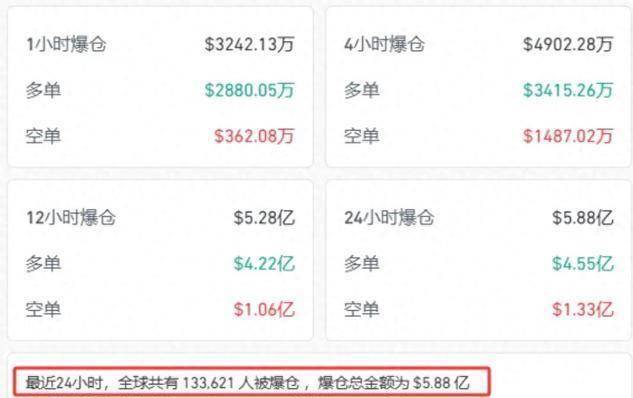
Group 1 - The cryptocurrency market experienced a significant crash, with Bitcoin dropping over $3,500 to below $110,000, resulting in a total liquidation amount of $588 million and affecting 133,621 investors [1] - The crash was triggered by a hawkish statement from Federal Reserve Chairman Jerome Powell following a 25 basis point interest rate cut, which led to increased risk aversion among investors [1] - Bitcoin's price decline erased a month's worth of gains, while Ethereum and XRP also saw declines of over 2%, indicating a widespread sell-off in the cryptocurrency market [1] Group 2 - In contrast to the cryptocurrency market, gold prices rose by 0.6% following Powell's remarks, highlighting gold's appeal as a safe-haven asset during market turmoil [2] - The stock markets in Japan and South Korea reacted differently, with the Nikkei 225 index falling by 0.31% while the Korean Composite Stock Price Index rose by 0.6%, suggesting a flight to stability among investors [2] - The volatility in the cryptocurrency market, exacerbated by the Federal Reserve's policy shifts, raises concerns about the suitability of high-risk investments for average investors [2]
Crypto’s Next Rally on Hold as BoJ and Federal Reserve Stay Hawkish on December Outlook
Yahoo Finance· 2025-10-31 11:17
Core Insights - The anticipated rebound in the crypto market has not occurred, with Bitcoin (BTC) and Ethereum (ETH) facing pressure due to macroeconomic uncertainties [1][6] - Recent policy announcements from the Federal Reserve and the Bank of Japan have created a cautious environment, delaying expectations for global monetary easing [2][4] Group 1: Central Bank Actions - The Federal Reserve's October rate cut of 0.25% was its second easing this year, but the outlook for future cuts was reduced from four to two by 2026, indicating a "higher for longer" interest rate environment [3][4] - The Bank of Japan maintained steady rates but expressed concerns over global inflation and U.S. trade policies, prioritizing inflation control over growth [4] Group 2: Market Reactions - Following the Fed's remarks, the crypto market experienced significant sell-offs, with Bitcoin dropping below $107,000 and Ethereum falling into the $3,600 range, resulting in over $700 million in liquidations across major exchanges [5][6] - The crypto market's stagnation followed a mid-October flash crash that wiped out over $19 billion in leveraged positions, with altcoins plummeting up to 60% [7] Group 3: Investor Sentiment - The renewed hawkish stance from central banks has led to increased caution among investors, pushing many traders to the sidelines as ETF inflows decreased by nearly $1 billion [7][8] - As November approaches, the crypto market remains in a holding pattern due to mixed signals from central banks and resurfacing global trade tensions [8]
金丰来:鹰鸽角力 金价受压
Sou Hu Cai Jing· 2025-10-31 06:38
Group 1: Federal Reserve and Interest Rates - The Federal Reserve recently decided to lower interest rates by 0.25 percentage points, bringing the federal funds rate to a range of 3.75% to 4% [1] - The decision aligns with market expectations, but there is increasing division among committee members regarding economic outlook [1] - Chairman Powell emphasized that the next meeting's decision will depend on economic data, indicating uncertainty in future rate cuts [1] Group 2: Gold Market - Gold prices have accelerated their decline due to increased uncertainty around interest rate cuts and weakened demand as a safe-haven asset amid U.S.-China trade negotiations [2] - Technical indicators suggest that gold's downward trend may continue, with the relative strength index (RSI) rising from an extreme oversold level of 28 to 36, but still below 50 [2] - Key resistance levels for gold are at $4041 and $4111, while a drop below the 200-day SMA around $3937 could increase selling pressure [2] Group 3: Silver Market - Silver prices have rebounded to $47.50 but remain in a challenging position due to lower industrial demand and speculative influences [3] - The price found support near the 50-day SMA at $45.5, and a breakout above $48 could attract selling pressure [3] - Short-term support is at $46.95, with a potential drop below this level leading to further declines towards $45.55 [3] Group 4: Cryptocurrency Market - The cryptocurrency market is experiencing a post-deleveraging phase, with low activity in digital asset enterprises [3] - Progress in U.S.-China trade negotiations is helping to restore normal capital flows, and Solana (SOL) launched its first spot ETF with $800 million in inflows [3] - The upcoming "super earnings week" for tech stocks may also impact cryptocurrency-related stocks like Strategy and Coinbase, with a gradual recovery in market vitality expected [3]
降息周期开启OKX钱包应对宏观波动 XBIT Wallet重塑投资逻辑
Sou Hu Cai Jing· 2025-10-31 05:07
Core Insights - The Federal Reserve has lowered the federal funds rate by 25 basis points to 3.75%-4.00%, marking the second rate cut of the year, which initially seemed positive but led to a significant drop in Bitcoin prices, illustrating the "buy the rumor, sell the news" behavior in the crypto market [1][3] - Fed Chair Jerome Powell's comments indicated uncertainty regarding future rate cuts, with a 75.8% probability of maintaining rates in December, which has reversed previous market expectations [3] - The crypto market is experiencing unprecedented institutionalization, with Bitcoin spot ETFs seeing a net inflow of $4.1 billion this month, and the total assets surpassing $149.98 billion, representing 6.75% of Bitcoin's total market cap [4] - Traditional financial institutions are accelerating their crypto strategies, with significant investments and product offerings, indicating that crypto assets are transitioning from speculative tools to standard financial options [6] - The XBIT Wallet's compliance framework and risk management features are positioned as essential tools for investors navigating the uncertain regulatory landscape [7] Market Dynamics - The recent rate cut has led to increased volatility in Bitcoin prices, with a notable drop from $111,800 to $109,200, reflecting the market's sensitivity to macroeconomic signals [1][3] - The introduction of new altcoin ETFs has generated significant trading volumes, with Solana and Litecoin ETFs achieving $65 million in first-day trading, highlighting the growing interest in diversified crypto investments [4] - The establishment of a clear regulatory framework is anticipated to enhance the legitimacy of the crypto market, with bipartisan support for legislation expected to provide much-needed clarity [6][9] Investment Opportunities - The XBIT Wallet's features, such as multi-signature and hardware-level cold storage, provide users with enhanced control over their assets during market fluctuations, making it a valuable tool in a volatile environment [3][4] - The wallet's ability to manage cross-chain assets and provide a unified interface for asset management positions it as a key player in the evolving crypto landscape [4][6] - The ongoing influx of institutional capital and the maturation of the crypto market are reshaping Bitcoin's value proposition from a speculative asset to a store of value in the digital age [9]

Nakamoto Holdings 股价暴跌 98%,5.63 亿美元 PIPE 融资引发抛售潮
Xin Lang Cai Jing· 2025-10-31 00:25
来源:市场资讯 (来源:吴说) 比特币金库公司 Nakamoto Holdings 股价自 5 月高点暴跌逾 98%,原因是价值 5.63 亿美元的 PIPE 融资 导致投资者集中抛售。公司 CEO David Bailey 表示,计划将 Bitcoin Magazine、比特币大会及对冲基金 210k Capital 并入 Nakamoto Holdings,以增强现金流,打造"比特币优先"集团结构。该公司目前仍持有 5,765 枚 BTC(约 6.53 亿美元),为全球第 19 大上市比特币持仓公司。(Cointelegraph) ...
ETH爆仓潮突袭加密市场,XBIT链上机制缓冲波动冲击
Sou Hu Cai Jing· 2025-10-30 10:33
Core Insights - The Federal Reserve announced a 25 basis point reduction in the federal funds rate target range to 3.75%-4.00%, marking the second rate cut since 2025 and the fifth since the easing cycle began in September 2024 [1][3] - Following the announcement, the cryptocurrency market experienced significant volatility, particularly with Ethereum (ETH), which saw a sharp price drop after initial gains [2][4] Market Reaction - Initially, the crypto market reacted positively, with ETH prices briefly surpassing $3,800, but concerns over the Fed's future policy direction led to a rapid decline, with ETH dropping over 8% within two hours to a low of $3,480 [2][4] - The total liquidation in the global crypto market reached $920 million within 24 hours, with ETH accounting for over 56% of this, amounting to $510 million, affecting nearly 18,000 leveraged traders [4] Trading Platform Performance - XBIT decentralized exchange demonstrated resilience during market volatility, maintaining efficient trading operations and avoiding common issues like withdrawal delays and order freezes [5] - The platform's risk management mechanisms, including automated monitoring through smart contracts, helped reduce the ETH liquidation ratio by 42% compared to the industry average during the price fluctuations [5] Institutional Interest - The Fed's policy shift is seen as a signal for a transition to a looser global monetary policy, attracting institutional investments into digital assets [7] - Traditional financial institutions, such as State Street Bank, are actively developing digital asset services, indicating a growing preference for decentralized platforms in managing large asset operations [7][8] User Engagement - Following the Fed's announcement, trading volume for ETH/USDT on decentralized exchanges surged by 180%, and the number of professional user accounts increased by 67% [7] - The usage rate of the "volatile market protection tool" on XBIT exceeded 50%, which automates profit-taking and stop-loss orders to mitigate risks during price fluctuations [8]

Bybit钱包应对美联储政策波动,XBIT Wallet 助力数字资产战略配置
Sou Hu Cai Jing· 2025-10-30 09:01
Core Viewpoint - The recent shift of the Federal Reserve towards a loose monetary policy has reignited discussions about Bitcoin as a hedge against the devaluation of fiat currencies, with its fixed supply cap of 21 million coins making it a potential inflation-resistant asset [1][7]. Group 1: Bitcoin's Unique Characteristics - Bitcoin's most notable feature is its fixed supply cap of 21 million tokens, enforced by its protocol and reinforced through periodic halving events, which reduce the issuance rate of new tokens by 50% approximately every four years [3]. - This scarcity sharply contrasts with fiat currencies, which can be infinitely expanded; for instance, during the 2020-2021 quantitative easing (QE) period, the U.S. money supply (M2) grew by over 25%, injecting trillions of dollars into the global market [3]. Group 2: Market Dynamics and Bitcoin's Price Movements - Bitcoin's price movements during the Federal Reserve's easing cycles reveal a nuanced relationship with monetary policy; for example, during the 2020-2021 QE phase, Bitcoin's price surged from under $10,000 to nearly $65,000, driven by liquidity injections and a weakening dollar [3][4]. - Following a 25 basis point rate cut by the Federal Reserve in September 2025, Bitcoin's price dropped by 4% within 24 hours, indicating market skepticism regarding the Fed's ability to balance inflation and employment [3]. Group 3: Investment Strategies and Tools - In a liquidity-sensitive market, investors require wallets that support rapid trading and flexible asset management; the XBIT Wallet by Bybit offers seamless fiat deposits and withdrawals, along with support for various mainstream cryptocurrency trading pairs [4][6]. - The XBIT Wallet also provides advanced risk management tools for institutional investors and high-net-worth individuals, including API trading integration and customized security settings, enabling users to make informed investment decisions amidst market volatility [6][9]. Group 4: Future Outlook for Bitcoin - The intersection of the Federal Reserve's easing cycle and Bitcoin's structural scarcity strengthens the argument for cryptocurrencies as liquidity-driven inflation hedges; as central banks continue to expand money supply, Bitcoin's role as a hedge against fiat currency devaluation may become increasingly significant [7]. - The evolving value of Bitcoin, characterized by its scarcity and liquidity sensitivity, positions it as a strategic asset for institutional investors, despite its inherent volatility [6].