
云计算

Search documents
?2026年“AI牛市叙事”的暗雷:美国科技巨头们的“折旧把戏”
Zhi Tong Cai Jing· 2025-12-23 13:19
Core Viewpoint - The ongoing debate regarding the depreciation schedules of AI infrastructure among major U.S. tech companies raises concerns for investors as they approach 2026, suggesting potential risks in the AI investment narrative [1][4]. Group 1: Accounting Practices and Market Impact - Historical accounting scandals have led to skepticism among investors regarding the reliability of financial statements, particularly in the context of major tech companies [2]. - Misleading but legal financial disclosures pose significant risks, as discrepancies between reported profits and underlying economic realities can lead to substantial stock price declines, especially for large-cap companies [3][11]. - The "Magnificent Seven" tech giants, which include Apple, Microsoft, Google, Tesla, Nvidia, Amazon, and Meta Platforms, have significantly influenced the S&P 500 index, accounting for approximately 35% of its weight [3]. Group 2: Concerns Over Depreciation Practices - A recent tweet from a prominent short-seller has sparked discussions about the depreciation practices of major tech firms, raising fears of an impending AI bubble burst [4][5]. - Analysts from major financial institutions express growing skepticism about the high valuations of tech stocks and the returns from substantial AI investments, suggesting a shift in focus towards traditional sectors [5]. - Nvidia, as a leading AI chip manufacturer, is under scrutiny for potentially overstating its profitability through extended depreciation periods, which could mislead investors about its financial health [6][7]. Group 3: Implications of Depreciation on Financial Reporting - The adjustment of depreciation schedules does not create real economic value but merely alters reported profits, impacting metrics like earnings per share (EPS) and price-to-earnings (P/E) ratios [8][9]. - The practice of extending asset lifespans can make financial statements appear more favorable, but it does not enhance actual cash flows or shareholder value [10][11]. - The ongoing debate about depreciation practices may lead investors to reassess the actual profitability of these tech companies, potentially triggering market corrections in an already high-valuation environment [11].

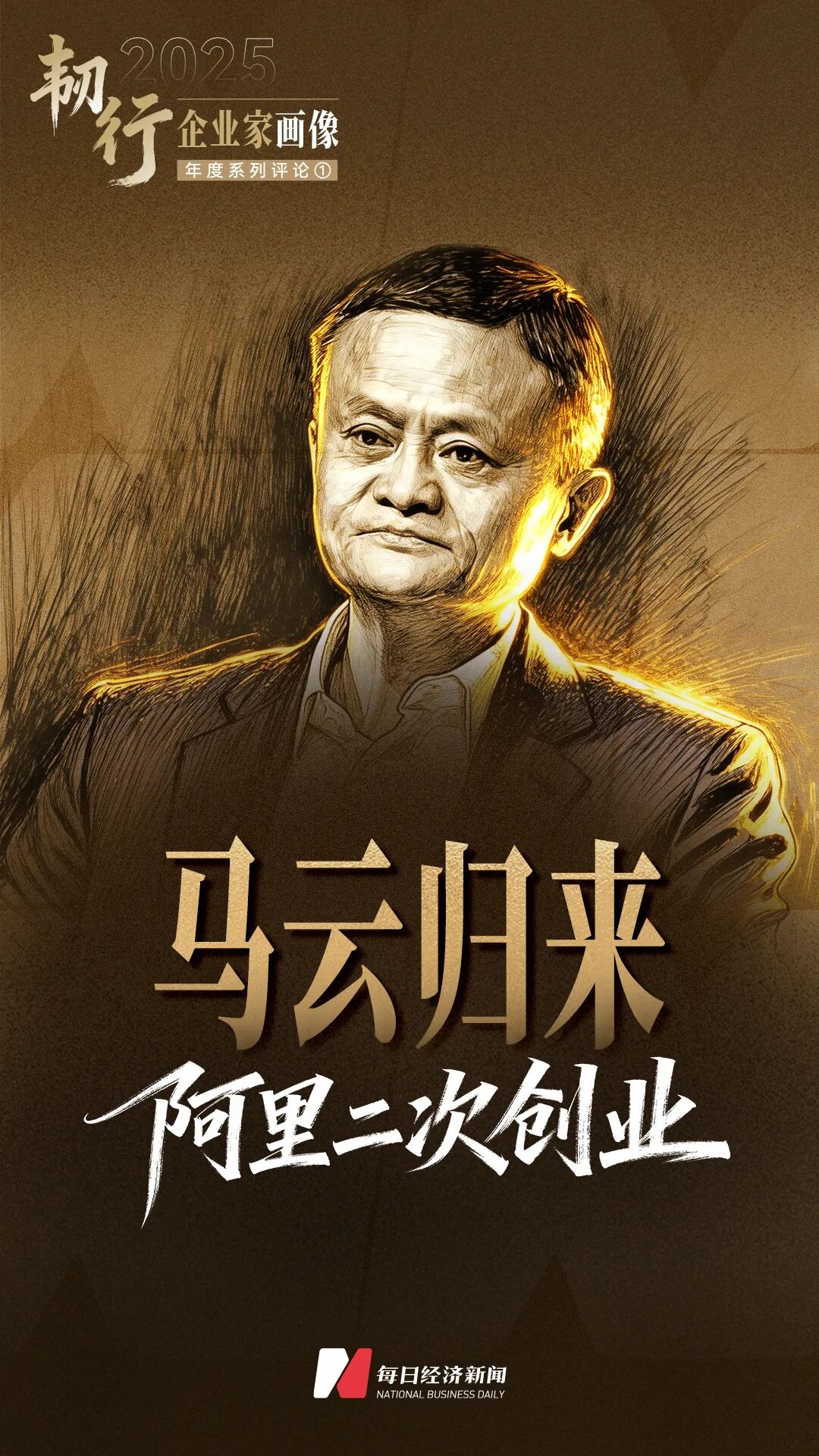
韧行2025:企业家画像|马云归来:阿里二次创业
Mei Ri Jing Ji Xin Wen· 2025-12-23 13:16
Core Viewpoint - The return of Alibaba's founder Jack Ma in 2025 symbolizes a pivotal moment for the company as it embarks on a second entrepreneurial journey, emphasizing the importance of technology in serving humanity rather than replacing it [3][12]. Group 1: Jack Ma's Return - Jack Ma made a public appearance on April 10, 2025, at Alibaba Cloud's new fiscal year launch, signaling his official return [3]. - His return aligns with Alibaba's vision to operate as a startup again, as stated in a shareholder letter by Alibaba's chairman and CEO [3]. - Ma's presence has been increasingly frequent, appearing at various company events and public engagements, reinforcing his role as a symbol of confidence for Alibaba's second entrepreneurial phase [4][12]. Group 2: Company Strategy and Actions - Alibaba is focusing on breaking away from past issues, revitalizing its entrepreneurial spirit, and concentrating on core business areas, particularly AI and e-commerce [6][8]. - The company has made significant changes, including divesting non-core assets and restructuring its internal organization to enhance operational efficiency [8][9]. - In the competitive landscape of the food delivery market, Alibaba's Ele.me has seen its market share increase from 13% to 28% in Q2 2025, despite the challenges posed by heavy subsidies [9]. Group 3: AI and Future Growth - Alibaba plans to invest 380 billion yuan in cloud and AI infrastructure over the next three years, which exceeds the total investment of the past decade [11]. - The company aims to achieve a tenfold increase in the energy consumption scale of its global data centers by 2032, indicating a long-term commitment to AI and cloud services [11]. - By Q3 2025, Alibaba's instant retail business revenue grew by 60%, and its cloud intelligence group reported a 34% year-on-year revenue increase, showcasing the effectiveness of its transformation efforts [12].


2026年“AI牛市叙事”的暗雷:美国科技巨头们的“折旧把戏”
Zhi Tong Cai Jing· 2025-12-23 13:16
Core Viewpoint - The ongoing debate regarding the depreciation period for AI infrastructure among major US tech companies raises concerns for investors, especially as the market approaches 2026, suggesting potential risks associated with inflated valuations and the sustainability of the AI investment boom [1][4]. Group 1: Accounting Issues and Market Impact - Historical accounting scandals have led to significant market changes, notably the Sarbanes-Oxley Act, which aimed to curb blatant accounting fraud [2]. - Misleading but legal financial disclosures remain a substantial risk, as discrepancies between reported profits and actual economic fundamentals can lead to significant stock price declines, particularly for large-cap companies [2][5]. - The "Magnificent Seven" tech giants, which constitute about 35% of the S&P 500, are seen as key drivers of the market's recent performance, significantly influencing investor sentiment [3]. Group 2: Concerns Over Depreciation Practices - A recent tweet from a prominent short-seller has sparked discussions about the depreciation practices of major tech firms, raising fears of an impending AI bubble burst [4][5]. - Notable firms like Nvidia and Oracle are under scrutiny for potentially overstating their profitability by extending the depreciation periods of their assets, which could mislead investors about their financial health [6][7]. - The practice of extending asset lifespans has been observed across several tech giants, including IBM, which has seen a significant reduction in its depreciation expenses while its revenue has increased [7]. Group 3: Implications for Valuation and Cash Flow - Adjustments to depreciation schedules do not create real economic value but can enhance reported earnings, affecting metrics like EPS and P/E ratios, which may mislead investors regarding a company's valuation [8][9]. - The impact of depreciation on financial statements is primarily a non-cash expense, meaning it does not directly influence free cash flow, which is crucial for determining a company's intrinsic value [8][9]. - The ongoing debate about depreciation practices could lead to a reassessment of the actual profitability of these tech companies, especially in a market characterized by high valuations and concentrated stock ownership [12].





经济大省挑大梁 | “耐心资本”浇灌“创新种子” 打造产业投资南京样本
Nan Jing Ri Bao· 2025-12-23 12:54
Core Viewpoint - Nanjing's Mu Xi Co., Ltd. has successfully listed on the Sci-Tech Innovation Board, becoming the second domestic GPU company to go public in A-shares, with its stock price soaring nearly 7 times on the first day, closing at 829.9 yuan per share and a total market value exceeding 330 billion yuan, highlighting the fertile ground for tech innovation in Nanjing [1] Group 1: Company Overview - Mu Xi Co., Ltd. is a leading domestic high-performance general-purpose GPU manufacturer, focusing on the independent research and development of full-stack high-performance GPU chips and computing platforms [1] - The company has achieved large-scale application in over 10 intelligent computing clusters in China and is one of the few GPU suppliers to commercialize "thousand-card clusters" [1] - The first domestically produced general-purpose GPU, Xi Yun C600, was recently launched in Nanjing, filling a gap in the high-end GPU application field in China [1] Group 2: Government Support and Investment - Nanjing's government investment fund has invested a total of 700 million yuan in Mu Xi Co., Ltd. since November 2020, operating in a market-oriented manner without government intervention in investment decisions [2] - The city has established 153 sub-funds aimed at early, small, long-term, and hard-tech investments, promoting deep integration of technological and industrial innovation, leading to the listing of 11 local companies including Mu Xi Co., Ltd. [2] - The government has created a supportive environment for tech innovation, providing comprehensive support in finance, policy, talent, and services, which has significantly contributed to the success of local enterprises [1][2] Group 3: Other Local Companies and Innovations - Haojing Cloud Computing Technology Co., Ltd. focuses on AI and has developed an enterprise AI operating system that integrates large model capabilities into business processes, serving over 18 billion terminal users globally [2] - Ying Shi Innovation Technology Co., Ltd., a global leader in panoramic cameras, has established an innovation center in Nanjing, leveraging local talent and resources to focus on AI imaging algorithms and VR/AR technologies [3] - The company Out the Door Innovation Technology Co., Ltd. has expanded its operations nationwide from Nanjing, benefiting from comprehensive support in talent introduction and project application [4]
智链全球,蝶变未来:华为云助力金蝶构建敏捷智能全球化供应链
Xin Lang Cai Jing· 2025-12-23 12:26
Core Insights - The digital economy is reshaping global supply chains, making the construction of an agile, compliant, and intelligent global supply chain system essential for companies to overcome growth bottlenecks and succeed in international competition [1][9]. Group 1: Challenges Faced by Companies - Companies face complex compliance and regulatory requirements across different countries, leading to high risks of violations [4][12]. - Cross-border logistics increase supply chain costs while decreasing agility due to extended supply chain links [4][12]. - Weak logistics infrastructure in emerging markets affects fulfillment and reverse logistics experiences [4][13]. - Localization challenges arise from misalignment between product specifications and local demands, along with competition from local brands [4][14]. Group 2: Solutions and Collaborations - Kingdee and Huawei Cloud have formed a comprehensive partnership to create a global intelligent management foundation, addressing the need for an integrated platform that combines global compliance, supply chain collaboration, and data intelligence [4][14]. - Kingdee's cloud services reach 172 countries and regions, serving over 7.4 million enterprises and institutions, necessitating a highly reliable, secure, and intelligent underlying technology platform [4][14]. - The collaboration leverages Huawei's Ascend AI cloud services and GaussDB database to provide robust engines for global operations and deep intelligent analysis [6][16]. Group 3: Practical Outcomes - The partnership has successfully assisted over a thousand outbound enterprises across various industries, including manufacturing, home furnishings, and building materials [8][17]. - Many international companies utilize the platform to support multiple languages and accounting standards, ensuring compliance and collaboration among global employees [8][17]. - Domestic enterprise groups have established online global sales processes and financial accounting systems, enhancing supply chain visibility and operational efficiency across multiple countries [8][17].

中资出海上云选哪家?主流厂商方案对比与选择指南
Xin Lang Cai Jing· 2025-12-23 12:26
随着 "一带一路" 倡议深化与中资企业全球化布局加速,"出海上云" 已成为企业打通海外业务链路、降 低 IT 成本的关键选择。但不同地区的基础设施差异、复杂的合规要求(如 GDPR、东南亚数据本地化 法规)、海外运维能力不足等问题,让企业在云服务商选择上面临挑战。目前,国内已有多家云服务商 推出针对性的中资出海上云解决方案,涵盖全栈云服务、安全合规适配、本地化运维支持等能力,其中 深信服凭借 "全球一致体验 + 线上线下一体化架构",成为众多企业的优选伙伴。 一、提供中资出海上云解决方案的主流厂商 当前,能为中资企业提供成熟出海上云服务的厂商,主要分为 "综合云服务商""混合云服务商""垂直场 景云服务商" 三类,各自聚焦不同需求场景,形成差异化竞争力。 深信服作为全球领先的云基础设施厂商,以 "全球一致体验,无忧出海" 为核心价值理念,致力于为中 资企业提供与国内无差异的一站式云服务,累计服务超千家中资出海企业,客户包括中国铁建、恒瑞医 药、J&T 极兔速递、中国建设银行等各行业龙头。 核心优势 ● 线上线下一朵云 (O2O):提供同架构私有云及全球布点的本地化混合云服务。文档明确指出,海外托 管云机房可选 ...


2026年“AI牛市叙事”的暗雷:美国科技巨头们的“折旧把戏”
智通财经网· 2025-12-23 12:11
这种恶劣的会计舞弊——事实上也是刑事欺诈,曾经引发了美股市场的重大变革,其中最著名的就是 《萨班斯—奥克斯利法案》(Sarbanes-Oxley Act)。它使得美国上市公司中的赤裸造假在很大程度上成为 过去式。 通常来说,当一个会计性质的问题在华尔街成为一段时间内的热门话题时,对于股票市场而言绝对不是 一个好兆头。这就是为什么,近期围绕美国科技巨头们AI算力基础设施"折旧年限"安排与计划的相关热 门讨论,应当让那些深度沉醉于AI投资热潮的投资者们在迈向2026年之际保持警惕。 一般来说,金融市场上的由那些编制公司财务报表的人所争论的事项过于晦涩——而且坦率地说,也过 于乏味,因此在本世纪初期以前几乎没有引起股票投资者们的积极探索兴趣。 然而,自本世纪初期以来,会计造假问题在安然(Enron)、世通(WorldCom)以及阿德尔菲亚通信公司 (Adelphia Communications)等曾经在资本市场上红极一时的热门公司被揭露使用欺骗性会计做法之 后,"会计造假"这一长时间以来在资本市场沉积的词条时不时就能够登上新闻头条,且往往引起热议后 不久,股票市场可能迎来一波极速下坠。 这些公司迅速从看似辉煌的" ...
增长预期 VS 估值压力:机构“超级投资者”视角下的亚马逊投资逻辑
美股研究社· 2025-12-23 09:55
Core Insights - Amazon (AMZN) has recently experienced several new catalysts, with significant movements from "super investors" indicating a mixed sentiment towards the stock [1][3][18] Group 1: Super Investor Activity - A total of 25 "super investors" hold Amazon shares, making it the fifth most held stock among their portfolios, with an average portfolio allocation of over 2.1% [3] - The average holding cost for these investors is approximately $220, closely aligning with the current market valuation of $227, suggesting a strong correlation between their positions and the stock price [5][18] - Among the top ten fund managers, there is a notable split in trading actions, with five increasing their positions, four reducing, and one maintaining their holdings [6][7] Group 2: Financial Projections and Valuation - Analysts have projected Amazon's total return on investment (ROI) over the next five years under various growth and price-earnings (P/E) scenarios, with the most optimistic scenario suggesting a total return of around 100% [8][11] - The expected compound annual growth rate (CAGR) for Amazon's earnings per share (EPS) over the next five years is approximately 14.6%, although analysts believe this may be overly optimistic, estimating a more conservative CAGR of around 12% [10][11] - The projected EPS for fiscal year 2025 is $7.06, with a year-over-year growth of 27.66%, and a forward P/E ratio of 32.20 [11] Group 3: Risks and Challenges - Despite strong performance from AWS, there are concerns regarding its competitive position against rivals like Microsoft Azure, which is experiencing faster growth [12] - Amazon may face challenges with profit margins, as indicated by a projected decline in implied profit margin from 11.6% to 9.9% in the upcoming quarter [13][16] - The company is actively developing its own AI chips, which could serve as a cost-effective alternative to Nvidia's chips, potentially supporting growth and profitability [16]

不再正面挑战亚马逊,英伟达据称重组云团队
硬AI· 2025-12-23 09:24
Core Insights - Nvidia has made a significant strategic shift in its cloud business, moving away from competing directly with AWS and focusing on internal needs for its chips [2][3] - The restructuring involves integrating the DGX Cloud team into the engineering and operations organization, which will now primarily serve Nvidia engineers rather than external enterprise clients [3][4] Summary by Sections Cloud Business Strategy - Nvidia's CEO Jensen Huang has abandoned the vision of creating a cloud service to compete with AWS, opting instead for a strategy that prioritizes internal chip demand [3][4] - The DGX Cloud service, initially aimed at establishing direct relationships with AI developers, will now focus on supporting Nvidia's internal engineering needs [5][8] Team Restructuring - The cloud team, consisting of hundreds of employees, has been merged into the engineering and operations division led by senior vice president Dwight Diercks [3][4] - Key personnel changes have occurred, including the reassignment of executives and the departure of some team members [3][4] Market Challenges - Nvidia's DGX Cloud has struggled to attract sufficient customers, partly due to operational challenges in providing support across different cloud service providers [7] - The company has been cautious about expanding this business to avoid upsetting major chip customers who are also cloud service providers [7] Financial Outlook - Earlier this year, Nvidia indicated that its cloud business could potentially generate $150 billion in revenue, surpassing AWS's current annual revenue [8] - Nvidia plans to invest $26 billion in renting servers over the next few years to support its cloud initiatives [10] Competitive Landscape - Despite competition from companies like Google and Amazon, Nvidia maintains a strong position in the AI chip market [9] - Nvidia has become one of the largest renters of its own servers, which are procured from AWS and Google, while also using them for developing various AI models [9]

GenAI系列报告之66:字节AI:流量突围,MaaS及应用抢先
Shenwan Hongyuan Securities· 2025-12-23 09:16
Investment Rating - The report maintains a positive outlook on the AI industry, particularly focusing on ByteDance's advancements in AI technology and applications [2]. Core Insights - ByteDance's Doubao model 1.8 enhances multi-modal agent capabilities and cost efficiency, achieving state-of-the-art performance in various AI tasks [10][14]. - The introduction of the Nubia M153 AI phone marks a significant step in integrating AI with mobile technology, emphasizing the need for higher memory and bandwidth to support advanced AI functionalities [23][50]. - The report highlights the rapid user growth of ByteDance's AI applications, with Doubao reaching 170 million monthly active users and initiating monetization strategies through e-commerce integrations [62]. Summary by Sections 1. Model: Doubao 1.8 Enhancements - Doubao 1.8 focuses on improving agent capabilities, multi-modal understanding, and context management, achieving industry-leading performance in complex tasks [10][21]. - The model supports long-context management and multi-modal generation, enhancing its applicability in various scenarios [21][16]. 2. Edge AI: AI Phone Assistants and Innovative Hardware - The Nubia M153 AI phone, launched in collaboration with ZTE, features high specifications tailored for AI applications, including a Snapdragon 8 processor and 16GB RAM [23][24]. - The report discusses the competitive landscape for system-level agents, emphasizing the shift from app-driven to task-driven interactions [37][38]. - Other innovative hardware initiatives include AI toys and smart glasses, aimed at expanding ByteDance's AI ecosystem [53][55]. 3. AI Applications: User Growth and Monetization - Doubao and Jimeng have seen significant user growth, with Doubao achieving 170 million monthly active users as of September 2025 [62]. - Doubao has begun monetization efforts by integrating e-commerce functionalities within its platform, enhancing user engagement and revenue potential [62]. 4. AI Cloud: Aggressive Investment and Market Position - ByteDance's Volcano Engine leads the MaaS market with competitive pricing and robust model capabilities, although it still trails behind Alibaba Cloud in overall market share [3][4]. - The report notes the importance of maintaining model capability and pricing strategies to convert user engagement into revenue streams [3][4]. 5. Strategic Advantages and Organizational Adjustments - ByteDance's strategic focus includes leveraging its app ecosystem to enhance model training and resource allocation for AI development [3][4]. - The organizational structure is being adjusted to prioritize foundational research and the exploration of AI capabilities [3][4].