
可再生能源

Search documents
张维为《这就是中国》293期:地缘政治安全与中国能源安全
Guan Cha Zhe Wang· 2025-07-27 00:36
Core Viewpoint - China's energy strategy is crucial for national security, especially in the context of ongoing global geopolitical tensions, such as the Russia-Ukraine war and conflicts in the Middle East, which impact energy supply and security [1][3]. Group 1: Energy Production and Consumption - China is the world's largest producer and consumer of coal, accounting for nearly half of global coal production and consumption, approximately 4 billion tons, with coal making up about 54% of its primary energy consumption [3][4]. - As of April 2023, China is also the largest renewable energy country, with solar photovoltaic capacity of about 1 billion kilowatts, representing 40% of global capacity, and wind power capacity of 550 million kilowatts, accounting for 45% of the global total [4][6]. - China ranks as the seventh largest oil producer and the fourth largest natural gas producer globally, while being the largest importer of both oil and natural gas, with a projected oil import dependency of around 72% in 2024 [6][7]. Group 2: Energy Security Assessment - China's energy security can be described as sensitive but not fragile, with a self-sufficiency rate of approximately 85%, as coal does not require imports, and non-fossil energy sources are domestically produced [7][8]. - The implementation of the "Oil and Gas Increase Storage and Production Seven-Year Action Plan" has led to an increase in domestic oil production from 189 million tons in 2018 to 213 million tons in 2024, with a net increase of 4 million tons annually [8][9]. - Current global oil and gas markets are characterized by oversupply, benefiting China's import strategy, as major producers like Saudi Arabia and Russia are increasing their output [9][10]. Group 3: Global Energy Market Integration - China has established a diversified energy import strategy, integrating into the global energy market through various oil and gas cooperation projects across 35 countries, including significant pipelines and strategic partnerships [10][11]. - The development of energy corridors, such as the China-Kazakhstan oil pipeline and the China-Central Asia gas pipeline, has become essential for ensuring energy security and is a hallmark of the Belt and Road Initiative [11][12]. Group 4: Future Energy Transition - The transition to renewable energy is critical, with a focus on key minerals like lithium, cobalt, and nickel, which are essential for energy storage technologies, highlighting the need for domestic production capabilities to reduce import dependency [13][14]. - China's energy strategy emphasizes the importance of maintaining a balance between traditional fossil fuels and renewable energy, with coal's share expected to decrease while natural gas consumption is projected to rise until around 2040 [14][40].



东盟贸促会会长波尚琅:新兴领域正成为中国与东盟合作的新增长点
Zhong Guo Jing Ji Wang· 2025-07-25 08:09
Core Insights - The ASEAN Secretary-General's roundtable in Beijing emphasized the theme of "shared opportunities, co-creating prosperity, and initiating a new journey of cooperation" [1] - ASEAN and China have seen continuous growth in bilateral trade, with China remaining ASEAN's largest trading partner for 16 consecutive years and ASEAN being China's largest trading partner for 5 years [1] - The completion of the China-ASEAN Free Trade Area 3.0 negotiations and the implementation of RCEP provide a solid institutional framework for economic cooperation [1] Group 1 - ASEAN's trade promotion association, led by President Bo Shanglang, highlighted the importance of policy communication, enterprise connection, and ecosystem building in enhancing cooperation [1] - The association aims to integrate expert resources to help businesses leverage policy benefits and mitigate risks, while also promoting trade facilitation and a fair business environment [1] - The focus on cultural exchanges aims to strengthen youth friendships, providing a soft support for deepening economic and trade relations [1] Group 2 - The ASEAN trade promotion association plans to focus on the "Digital Silk Road" and green transformation to advance cooperation [2] - ASEAN countries are actively developing digital infrastructure, and China is positioned to lead in digital technology and industries, promoting collaboration in areas like 5G and artificial intelligence [2] - The association intends to establish more regular and multi-level mechanisms for industry and enterprise-level exchanges, facilitating deeper cooperation in specific fields [2]
中欧发布关于应对气候变化的联合声明,绿色产业合作有哪些新机遇?
Di Yi Cai Jing· 2025-07-25 04:25
Core Viewpoint - The joint statement from the China-EU leaders emphasizes the importance of maintaining policy continuity and stability in addressing climate change, highlighting the solid foundation and broad cooperation space in the green transition between China and the EU [1][3]. Group 1: Climate Cooperation - The joint statement reiterates the core role of the United Nations Framework Convention on Climate Change and the Paris Agreement in international climate cooperation, advocating for the principle of common but differentiated responsibilities [3]. - China and the EU are positioned as key players in global climate action, especially in light of the reduced participation of the United States under the Trump administration [4]. - The successful cooperation in climate issues is attributed to the shared consensus and minimal disputes between China and the EU, focusing on the implementation of the Convention and the Agreement [4]. Group 2: Green Industry Collaboration - The joint statement outlines a commitment to accelerate global renewable energy deployment and promote the flow of quality green technologies and products, ensuring accessibility for all countries, including developing nations [5]. - China's clean energy technology exports, such as solar panels and electric vehicles, are projected to significantly reduce global emissions, with an estimated avoidance of around 4 billion tons of CO2 emissions over the products' lifetimes [5]. - The cooperation prospects in the climate sector are extensive, covering various applications including photovoltaics, hydrogen energy, new energy vehicles, nuclear energy, and clean coal technology [5][6]. Group 3: Specific Technologies and Trade - In the electric vehicle sector, China leads in variety, technology, cost control, and value for money, despite existing trade frictions with the EU [6]. - The collaboration in hydrogen energy is seen as particularly promising, as China's advancements in green hydrogen technology are not geographically constrained, allowing for greater cooperation with Europe [6]. - China's clean coal technology offers innovative solutions for European countries facing energy crises, contrasting with traditional high-pollution methods [6].
中国华电发出“绿动蓝海”联合行动倡议
Xin Hua Cai Jing· 2025-07-24 14:08
Core Viewpoint - The conference organized by China Huadian Group focuses on the innovation and development of marine renewable energy, emphasizing the importance of collaboration among various stakeholders to create a comprehensive industrial ecosystem [1][2]. Group 1: Conference Highlights - The conference, themed "Marine Energy Creates Ecology, Dual Chain Integration for Future," gathered over 50 central enterprises, universities, research institutions, and industry leaders to promote the "Green Movement Blue Ocean" initiative [1]. - The initiative aims to establish national strategic technological capabilities in marine energy, focusing on key technologies such as floating wind power, wave energy generation, offshore flexible direct current transmission, and smart operation and maintenance [1][2]. Group 2: Collaborative Efforts - China Huadian will work closely with various organizations, including Dongfang Electric, China Shipbuilding Technology, and several universities, to sign agreements on key directions for marine renewable energy innovation during the conference [2]. - Since 2024, China Huadian has led the formation of a marine renewable energy innovation consortium, collaborating with 56 industry players to address five major areas: development, transmission, storage, utilization, and operation [2].
古特雷斯:新能源价格越过临界点 游戏规则改变
2 1 Shi Ji Jing Ji Bao Dao· 2025-07-24 14:02
Core Insights - The global transition to renewable energy has reached a critical point, with renewable sources like solar and wind becoming significantly cheaper than fossil fuels, marking the dawn of a clean energy era [1][2] Group 1: Renewable Energy Trends - The installed capacity of renewable energy is nearly on par with fossil fuels, with almost all new power generation capacity coming from renewables last year [2] - In 2022, $2 trillion was invested in clean energy, surpassing fossil fuel investments by $800 billion, reflecting a nearly 70% growth over the past decade [1][2] Group 2: Economic Impact - The clean energy sector contributed 10% to global GDP growth in 2023, with significant contributions from India (5%), the US (6%), China (20%), and the EU (33%) [2] - The clean energy industry now employs nearly 35 million people globally, surpassing fossil fuel employment [2] Group 3: Energy Security and Accessibility - Renewable energy enhances energy security and sovereignty, reducing dependence on fossil fuel price volatility and geopolitical tensions [3] - Renewable technologies can be deployed rapidly and cost-effectively, providing electricity to remote areas, particularly in Africa, which has immense renewable potential [3] Group 4: Opportunities for Action - There are six key areas for action to embrace the clean energy transition, including new national climate plans, modernizing energy systems, and ensuring equitable energy transitions [4][5][6] - Investment in modern, flexible, and digitalized grids is crucial, as the cost of battery storage systems has decreased by over 90% in the last 15 years [4] Group 5: Financing and Investment - Developing countries, particularly in Africa, face barriers to energy transition despite having significant renewable resources, necessitating bold national policies and international cooperation [6] - Reforming global financial structures and increasing the lending capacity of multilateral development banks are essential to support clean energy investments in developing regions [6]
美学者:美国可再生能源政策犯下大错,拉开西方“主角光环”熄灭序幕
Sou Hu Cai Jing· 2025-07-23 14:11
Core Viewpoint - The article discusses the implications of Trump's "America First" policy, suggesting it has led to a decline in U.S. global leadership and provided opportunities for China to strengthen its position in the international arena [1][5]. Group 1: U.S. Policy Impact - Trump's administration is perceived as self-destructive, weakening U.S. soft power and its alliance systems through tariffs and unilateral actions [1][5]. - The reduction of federal clean energy subsidies under Trump's policies is viewed as a significant mistake, giving China a competitive advantage in the renewable energy sector [6][8]. - The article highlights that the U.S. has fallen behind China in renewable energy capacity, with China adding more wind and solar capacity in a year than the total existing renewable energy in the U.S. [8][10]. Group 2: China's Strategic Response - China is seen as adopting a strategy of resilience against U.S. protectionism, increasing trade with other countries and criticizing U.S. policies [5][6]. - The article notes that China's media presence and influence have grown globally, particularly in the wake of U.S. media cuts [2][4]. - Experts suggest that the Trump administration's actions have inadvertently bolstered China's international standing and influence [5][6]. Group 3: Historical Context and Future Implications - Historical analysis indicates that the U.S. is systematically undermining its competitive advantages, leading to a potential marginalization of Western influence [6][10]. - The article emphasizes that the current trajectory could result in a significant shift in global power dynamics, with China emerging as a leader in energy transition [10].

中国领跑!全球能源投资十年巨变
Zhong Guo Dian Li Bao· 2025-07-23 00:41
Core Insights - The global energy investment landscape has undergone a significant transformation over the past decade, with a historic shift towards low-carbon investments, projected to reach $3.3 trillion by 2025, where renewable energy, grid, and storage will account for $2.2 trillion, double that of fossil fuel investments [2][4]. Investment Trends - The period from 2015 to 2025 is identified as a watershed moment, with renewable energy investments surpassing fossil fuel investments by over 50% [4]. - The Asian Infrastructure Investment Bank reported that its renewable energy investment share increased from 28% in 2016 to 80% in 2025, indicating a decisive shift towards clean energy [4]. Investment Structure Changes - Investment in the electricity sector is projected to exceed $1 trillion by 2025, with wind and solar energy growing at an annual rate of over 15% [5]. - The cost of solar photovoltaic and battery technologies has decreased by 60% over the past decade, facilitating the growth of distributed solar projects in developing countries like Pakistan [5]. - Geopolitical tensions post-2022 have accelerated the shift towards clean energy, with examples such as the EU's hydrogen strategy and the U.S. Inflation Reduction Act [5]. China's Role in Global Energy Investment - China is projected to account for over 30% of global energy investments by 2025, with over 70% of that in clean energy [7]. - China's unique approach involves a closed-loop system of resource assurance, technological breakthroughs, and policy coordination, significantly impacting the global energy market [8]. Challenges in Energy Transition - The transition to low-carbon energy is fraught with challenges, including disparities in development among countries, as seen in India and Turkey, which face rising costs due to local industry growth [11]. - The competition for critical mineral resources has intensified, with countries like the U.S. and EU updating their strategic mineral lists, highlighting the importance of supply chain resilience [11]. Solutions for Energy Investment Imbalance - Addressing energy investment imbalances requires multi-dimensional efforts, including policy design, market cultivation, technological breakthroughs, and international cooperation [13]. - Innovative financing tools, such as those introduced by the Asian Infrastructure Investment Bank, are essential for supporting the development of renewable energy policies in developing countries [13]. Future Directions - The evolution of energy investment reflects a shift from policy-driven to market-driven approaches, emphasizing the need for a balance between safety, development, and sustainability [15].
全国绿证累计核发超60亿个!
Zhong Guo Dian Li Bao· 2025-07-23 00:29
Core Insights - The Chinese green certificate system has achieved significant breakthroughs in issuance, trading scale, and application scenarios, marking a rapid advancement in the marketization of green energy in China [1][2] - As of March 2023, China's renewable energy installed capacity reached 1.966 billion kilowatts, a year-on-year increase of 24%, accounting for 57.3% of the total installed capacity in the country and over 40% of the global renewable energy installed capacity [1] Group 1: Green Certificate System - The green certificate serves as a "green ID" for renewable energy electricity, with a comprehensive lifecycle management system established in China to ensure effective tracking of renewable energy production and usage [2] - In March 2023, the global green electricity consumption initiative RE100 fully recognized Chinese green certificates, enhancing their international recognition and influence [2][3] Group 2: Market Development Strategies - The Chinese government aims to create the world's largest green certificate market by improving the issuance and trading mechanisms, promoting distributed renewable energy projects, and ensuring stable market supply [2][3] - The government plans to expand application scenarios for green certificates, linking them with energy consumption responsibilities and carbon emission controls to stimulate consumer demand [3] - International cooperation will be strengthened to enhance global recognition of Chinese green certificates, including collaboration with the EU and organizations like RE100 [3][4]
中国绿色技术加速出海,重塑全球能源格局
Sou Hu Cai Jing· 2025-07-22 14:15
Group 1 - The Hami-Chongqing ±800 kV UHVDC project demonstrates China's advanced capabilities in renewable energy transmission, marking a significant milestone in the country's renewable energy infrastructure [1] - China has established the world's largest renewable energy system, with wind and solar power installations in 2024 expected to exceed the total of all other countries combined, achieving a historic milestone where one-third of the country's electricity is generated from green sources [1] - The U.S. is shifting focus from electric vehicle production to traditional gasoline engines, investing $888 million in V8 engine production, indicating a divergence in energy strategies between the U.S. and China [3] Group 2 - China is the only country to have achieved large-scale commercial operation of UHV technology, which is enhancing the green energy content in its energy mix and driving growth in high-end manufacturing and new energy vehicle sectors [4] - The innovation in China's automotive industry has surpassed that of Japan, Germany, and the U.S., with annual industrial robot installations from 2021 to 2023 exceeding the total of all other countries combined, showcasing China's competitive advantage in power infrastructure and industrial clusters [5] - Chinese green energy initiatives are expanding internationally, with projects like the 950 MW solar thermal power plant in the UAE and the Adama wind farm in Ethiopia, which are addressing local energy needs and promoting green technology innovations in other countries [6] Group 3 - The global energy landscape is witnessing a shift, with China positioning itself as a technology and industry exporter in the green energy sector, while the U.S. continues to rely on fossil fuels, aiming to maintain its energy dominance [3][6] - The future of energy leadership remains uncertain, but the global trend towards clean energy transformation is becoming increasingly evident as countries prioritize climate change responses [6] - The New York Times suggests that while the U.S. could pivot towards renewable energy, it may have already missed critical opportunities to lead in this sector [7]
摩洛哥跻身非洲绿色能源领军阵营
Shang Wu Bu Wang Zhan· 2025-07-22 13:50
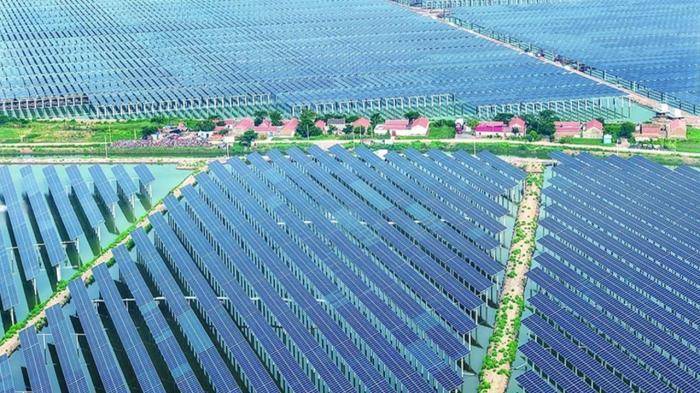
(原标题:摩洛哥跻身非洲绿色能源领军阵营) 得益于国际资本的持续流入,非洲绿色能源项目正在加速推进。摩洛哥等 北非国家凭借前瞻性的产业布局和资源优势,在能源转型浪潮中抢占先机,为 非洲乃至全球绿色能源发展注入了强劲动力。 摩洛哥《经济学人报》7月19日报道,2024年摩洛哥凭借其卓越表现,成 功跻身非洲绿色能源发展的"第一梯队",成为推动区域能源转型的关键力量。 联合国贸发会议发布的《2025年世界投资报告》显示,非洲宣布的绿地项 目总价值从2023年的1780亿美元下降至2024年的1130亿美元,降幅显著。尽管 大多数非洲国家的项目数量有所减少,但北非地区却逆势增长,绿地项目价值 同比增长12%,达到760亿美元,占非洲大陆项目总投资的三分之二。 2024年,非洲共有7个大型可再生能源项目取得重要进展。其中,埃及布 局了三个重大项目:38亿美元的海底电缆项目、25亿美元的太阳能/风能混合 发电站项目,以及22亿美元的风电园区项目。突尼斯则重点推进60亿美元的绿 氢项目。摩洛哥的70亿美元绿氨和合成燃料项目成为区域亮点,该项目由法国 能源巨头道达尔、摩洛哥国家磷酸盐公司(OCP)等企业共同参与,不仅符合 全 ...