跨境电商

Search documents
海淘市场生变,亚马逊海外购寻找“垂直机遇”
2 1 Shi Ji Jing Ji Bao Dao· 2025-11-18 05:49
Core Insights - The article discusses the ongoing consumer enthusiasm in China for imported goods through cross-border e-commerce, particularly during the "Black Friday" shopping season, which will run from November 20 to December 2, 2025, featuring over 300 million overseas products from more than 30,000 international brands [2][3] - Amazon Global Store aims to convey that imported e-commerce products can be competitively priced compared to domestic products, focusing on service quality and unique product offerings rather than merely expanding market share [2][3] Consumer Behavior Trends - There is a noticeable trend towards niche and personalized products among consumers, who are increasingly seeking items that match their interests and specific scenarios rather than generic options [3] - The demand for outdoor sports equipment has become more segmented, with products like urban outdoor amphibious clothing and cycling gear gaining popularity, reflecting an enhancement in consumer lifestyle quality [3] Product Selection and Strategy - Amazon Global Store is focusing on non-mainstream brands and leveraging its direct connection with overseas sites to introduce brands that have not yet entered the Chinese market, providing differentiated offerings [3][4] - Examples include the North American brand Owala, which gained popularity for its fitness-oriented design, and the home appliance brand Ninja, which is projected to achieve a 105% year-on-year sales growth in China by 2025 [3][4] Localization Efforts - To expand its domestic market presence, Amazon Global Store has implemented various localization strategies, including operating a WeChat mini-program and opening an official flagship store on JD.com [4] - The recent launch of a "Black Friday" pop-up store in Shanghai represents an important attempt to integrate online and offline experiences and enhance brand perception among younger consumers [4] Structural Challenges - Amazon Global Store faces structural challenges, including limitations imposed by customs policies, logistics, and consumer education barriers, which hinder new customer conversion [5] - The preference for instant gratification among consumers, driven by the rapid development of domestic flash sales, diminishes the appeal of long-cycle cross-border shopping [5] - Despite efforts to engage younger users through WeChat live streaming and pop-up events, Amazon Global Store needs to break into broader social media channels dominated by content-driven platforms like Douyin and Xiaohongshu [5] Market Outlook - From a macro perspective, the cross-border e-commerce market in China is not shrinking, with customs data indicating a 5.9% growth in imports during the first three quarters of 2025, supported by consumers' ongoing pursuit of quality, uniqueness, and diverse lifestyles [5] - The shift in consumer needs from mere functional satisfaction to emotional resonance and value expression is crucial for Amazon Global Store's future positioning in the Chinese market [6]

第八届进博会首设跨境电商专区 全生态赋能外贸新业态
Zhong Guo Zhi Liang Xin Wen Wang· 2025-11-18 04:52
Core Insights - The China International Import Expo (CIIE) has introduced a cross-border e-commerce zone, aiming to enhance global trade and support Shanghai's development as an international trade center [1][2] Group 1: Cross-Border E-Commerce Zone - The cross-border e-commerce zone is designed to integrate various services, addressing the growing demand for comprehensive financial and industrial support in the cross-border e-commerce sector [2] - The zone features a 40-square-meter service area by the Bank of China, showcasing its core capabilities in cross-border finance and promoting its global service brand "Bank of China Cross-Border E-Commerce" [2][3] - The "Bank of China Cross-Border E-Commerce" product line includes sub-products like "Three-Way Pass," "Cross-Border Pass," "E-Commerce Pass," and "Overseas Pass," tailored for the characteristics of small, high-frequency transactions [2] Group 2: Integrated Services and Support - The zone provides a one-stop service ecosystem for global exhibitors, particularly small and medium-sized enterprises, offering comprehensive support from cross-border settlement to policy consultation [3] - Collaboration with customs and tax authorities in the zone aims to facilitate customs processes and provide precise policy guidance, enabling smaller enterprises to enter the Chinese market more easily [3] - The Shanghai branch of the Bank of China is leveraging its local service and global network to transform the zone's experiences into ongoing support for Shanghai's trade center development [4] Group 3: Future Developments - The Shanghai branch has established partnerships with seven domestic and international payment institutions and cross-border e-commerce platforms, enhancing its ability to meet the needs of the cross-border e-commerce ecosystem [4] - Future plans include deepening collaboration with payment institutions and e-commerce platforms to further integrate cross-border financial services with Shanghai's "Silk Road E-Commerce" initiative [4]

在“湾区之心”读懂中国经济动能
Guang Zhou Ri Bao· 2025-11-18 03:01
Core Insights - The article emphasizes the strategic importance of Nansha in the context of China's economic development, particularly as a central hub in the Guangdong-Hong Kong-Macao Greater Bay Area [1][2][3] - Nansha is positioned as a model area for Chinese-style modernization, leveraging its geographical advantages to foster innovation and attract international talent [1][2] Group 1: Economic Development and Strategic Positioning - Nansha aims to transform its strategic advantages into developmental strengths by aligning with central government requirements and regional needs [2] - The region has implemented 181 innovative reforms that have been promoted at the national and provincial levels, significantly reducing market access approval times by 93.6% [2] - Nansha's comprehensive bonded zone led the nation in cross-border e-commerce import and export volume last year, and its port ranks among the top ten in global throughput [2] Group 2: Innovation and Technology - The article highlights the importance of technological innovation as a key driver for competitive advantage, with Nansha integrating its scientific initiatives into the Greater Bay Area's national science center framework [3] - Nansha is developing platforms for advanced technology applications and has established the first urban-level all-space unmanned system super scene in the country [3] - The region is focused on transforming technological variables into significant contributions to high-quality development [3]
地方积极布局 抢抓中国东盟合作升级机遇——绿色贸易、数字经济等新兴领域潜力巨大
Xin Hua Wang· 2025-11-18 02:55
Group 1 - The China-ASEAN Free Trade Area (CAFTA) upgrade is opening new avenues for regional cooperation, focusing on digital economy and green trade [1] - The signing of the CAFTA 3.0 upgrade protocol on October 28 is seen as a significant milestone for cooperation, promoting digital technology, green industry collaboration, and supply chain connectivity [1][3] - Various provinces in China, including Guangxi, Yunnan, Hainan, and Fujian, are actively preparing to align with the new rules and enhance trade connections with ASEAN [1][2] Group 2 - China has maintained its position as ASEAN's largest trading partner for 16 consecutive years, with bilateral trade expected to reach $982.3 billion in 2024, a 17-fold increase since the establishment of CAFTA [3] - In the first ten months of this year, trade between China and ASEAN totaled 6.18 trillion yuan, a 9.1% increase, accounting for 16.6% of China's total foreign trade [3] - The upgrade emphasizes a shift from traditional tariff reductions to a focus on rules, regulations, and standards, marking a transition to "institutional openness" [3][4] Group 3 - The CAFTA 3.0 upgrade protocol supports the development of small and medium-sized enterprises (SMEs) by promoting e-commerce applications and digital transformation [4] - The rapid growth of cross-border e-commerce is breaking traditional trade barriers and driving bilateral trade expansion [4][5] - The signing of the CAFTA 3.0 protocol is expected to significantly benefit the development of cross-border e-commerce, creating favorable conditions for SMEs to integrate into regional value chains [5][6]
申万宏源研究晨会报告-20251118
Shenwan Hongyuan Securities· 2025-11-18 01:48
Core Insights - The report indicates that China's defense equipment construction is entering a new cycle driven by both "steady growth in domestic demand" and "release of external potential" [15] - The global asset allocation environment is expected to transition from preventive interest rate cuts by the Federal Reserve to a re-inflation cycle driven by both fiscal and monetary policy easing [8][10] - The manufacturing industry is anticipated to experience a structural recovery, with a focus on cyclical assets as economic demand stabilizes and PPI (Producer Price Index) begins to rise [10][11] Group 1: Global Asset Allocation Strategy - The report outlines three major trading themes for 2025, including the breaking of the "American exceptionalism" narrative, the impact of a weak dollar, and the tightening of liquidity due to government shutdowns [8] - It emphasizes the importance of monitoring liquidity turning points and their effects on asset rotation, suggesting a shift from liquidity-driven to fundamental-driven asset logic in China [8][10] - Tactical strategies for 2026 include balancing equity and bond allocations initially, then shifting to an overweight position in equities as inflation and corporate earnings recover [8][10] Group 2: Industry-Specific Investment Strategies - The defense and military industry is highlighted as a key area for investment, with a focus on modernization and technological advancements in military equipment [15] - The report identifies opportunities in the light manufacturing sector, particularly in global supply chain shifts and the competitive advantages of leading companies [15][16] - It suggests that cyclical assets, particularly in sectors like power equipment, chemicals, and non-ferrous metals, will benefit from the anticipated recovery in PPI and economic demand [12][15] Group 3: Economic and Market Trends - The report predicts a stabilization in economic demand and a gradual recovery in PPI, which will influence market style factors and lead to a rotation from technology growth to cyclical assets [10][11] - It notes that the historical relationship between M1-M2 growth rates and A-share performance suggests a potential upturn in corporate profitability and stock market performance in 2026 [11][12] - The report also highlights the importance of government policies, such as the "Fifteen Five" plan, which emphasizes economic construction and modernization of industries [12][15]
省政府召开经济运行调度会议刘小涛主持并讲话
Xin Hua Ri Bao· 2025-11-17 23:29
Group 1 - The provincial government emphasizes the need to focus on stabilizing and promoting consumption, particularly in the restaurant sector and automotive industry, while also enhancing cultural and creative products [2] - There is a strong push for investment recovery, with a focus on major project construction and attracting leading enterprises, especially in technology [2] - The government aims to support high-quality development in the real estate and construction sectors, implementing measures to improve housing quality and support construction companies in infrastructure projects [2] Group 2 - The government is committed to stabilizing industrial and service sector operations, focusing on key industry clusters and supporting innovation in product services [2] - Efforts are being made to maintain foreign trade and investment stability, including support for cross-border e-commerce and improving financial services for businesses [2] - Safety production measures are being reinforced, with a focus on preventing major accidents through comprehensive governance [2][3]
向新向智,中拉合作跑出加速度(环球热点)
Ren Min Ri Bao Hai Wai Ban· 2025-11-17 23:11
Core Insights - The article highlights the growing trade and investment cooperation between China and Latin America, emphasizing the shift towards more diverse sectors beyond traditional commodities [4][5][6][7][9]. Group 1: Trade Developments - Shandong Port Yantai has opened multiple shipping routes to Latin America, enhancing direct maritime connections with countries like Guyana, Ecuador, Cuba, and Suriname, aligning with their infrastructure and livelihood needs [2]. - The trade volume between China and Latin America has been rapidly increasing, with a notable shift from energy resources to advanced manufacturing, electronics, and green industries [4][5]. - In 2024, the trade volume is projected to reach $518.47 billion, marking a historical high, with China importing $241.47 billion and exporting $277 billion to Latin America, maintaining a balanced trade relationship [7]. Group 2: Investment Initiatives - China's direct investment in Latin America has exceeded $600 billion, accounting for 20% of its total foreign direct investment, covering sectors such as energy, mining, manufacturing, and digital economy [7]. - Chinese companies are actively involved in infrastructure projects in Latin America, with over $300 billion in signed engineering contracts, contributing to local economic development and energy transition [7][8]. - The construction of the Chancay Port in Peru, a significant investment project, is expected to generate $4.5 billion in annual revenue and create over 8,000 direct jobs, enhancing maritime service options for the region [8]. Group 3: Emerging Trends and Challenges - The cooperation between China and Latin America is characterized by mutual benefits, equality, and openness, with a focus on expanding into new areas such as green technology and digital cooperation [6][9]. - Despite the positive outlook, challenges remain, including global economic uncertainties, external pressures from the U.S., and political changes in some Latin American countries that may affect cooperation [10][11]. - Experts emphasize the importance of leveraging the current favorable conditions for cooperation, particularly in trade, investment, and technological innovation, to build a resilient and mutually beneficial partnership [9][10].


企业办理信用修复要少跑腿
Jing Ji Ri Bao· 2025-11-17 22:42
Core Points - The article discusses a collaborative agreement signed by Nanning and six other cities to address the challenges of credit repair for transportation and other enterprises, aiming to create a new administrative penalty credit repair mechanism that facilitates information sharing and reduces bureaucratic hurdles [1][2] - The difficulties in cross-regional credit repair include a lack of collaborative mechanisms, repetitive material submissions, and lengthy processing times, which the new agreement seeks to alleviate [1] - The initiative promotes a unified standard for credit repair documents and leverages technologies like big data and blockchain to ensure materials can be verified across regions, enhancing efficiency and reducing the burden on enterprises [2] Summary by Sections Agreement and Mechanism - A cooperation agreement was signed by Nanning and six cities to establish a cross-regional collaborative mechanism for administrative penalty credit repair [1] - The new mechanism aims to streamline processes by sharing information, recognizing materials, and utilizing results across regions [1] Challenges Addressed - The article highlights the challenges faced by transportation enterprises, such as differing material standards and the need to travel between penalty and registration locations, which prolongs the credit repair process [1] - The new collaborative mechanism is expected to significantly improve repair efficiency and align with the characteristics of a unified national market [1] Implementation and Future Outlook - The article emphasizes the importance of standardization and transparency in credit repair processes, advocating for a unified approach to core documents and the use of technology for cross-regional verification [2] - It suggests that the collaborative efforts of the seven cities could serve as a model for further expansion and improvement of credit repair mechanisms across more regions and sectors [2]
揭阳市揭东区加力提速推进增动能 提品质 换新颜 汇合力
Zhong Guo Fa Zhan Wang· 2025-11-17 14:37
Core Viewpoint - The article highlights the progress and initiatives taken by the Jieyang City in promoting the "Hundred Million Project" aimed at enhancing industrial development, urban quality, environmental aesthetics, and social engagement in the region [1]. Group 1: Industrial Economic Growth - The district focuses on manufacturing and aims to promote a balanced development of the tertiary sector, contributing to the "One Transformation, One Sea, Five Optimized Special" industrial development pattern [2]. - A total of 46 new projects were signed with a total investment of 3.551 billion, while 55 new projects commenced with a cumulative investment of 1.015 billion [2]. - The district's industrial output value reached 3.556 billion, growing by 16.2% from January to July [3]. Group 2: Urban Quality Improvement - The district aims to enhance public satisfaction and happiness through urban renewal projects, optimizing urban structure and functionality [4]. - 41 infrastructure enhancement projects with a total investment exceeding 6 billion have been planned, including the long-awaited Xin Heng Avenue expansion [4]. - The district is working towards achieving national standards for basic public services, including education and healthcare, with significant upgrades to facilities [4]. Group 3: Environmental Aesthetics Enhancement - The district is implementing 10 major road beautification projects with a total investment of 582 million, improving 156.7 kilometers of roads [5]. - The district has completed the demolition of 6,823 structures and the enhancement of 4,180 rural houses as part of its environmental improvement efforts [5]. - Over 160,000 trees have been planted, and 502 natural villages have undergone wastewater treatment, achieving full coverage [5]. Group 4: Social Engagement and Collaboration - A robust mechanism has been established for social participation in the "Hundred Million Project," with approximately 60 million in donations received to support 103 initiatives [7]. - The district is leveraging partnerships with state-owned enterprises and private sectors to promote micro-profit projects and enhance community involvement [7]. - The "Double Hundred Action" has initiated 13 collaborative projects, fostering a cooperative framework for development [7]. Group 5: Future Development Strategies - The district plans to intensify efforts in industrial development, village construction, and social participation to achieve significant changes over the next five years [8]. - Key initiatives include the establishment of a high-standard food industrial park and the transformation of traditional industries [8]. - The district aims to enhance urban aesthetics and quality through targeted projects and community engagement [9].
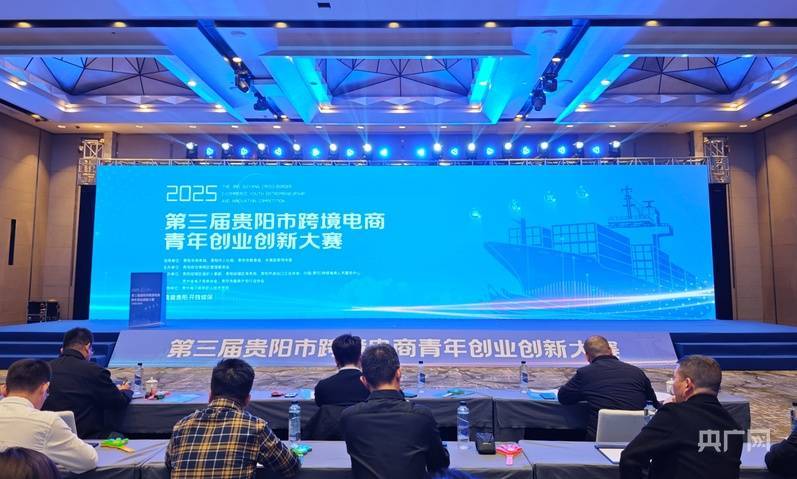
云上筑梦 链通全球!第三届贵阳市跨境电商青年创业创新大赛落幕
Sou Hu Cai Jing· 2025-11-17 14:14
Group 1 - The third Guizhou Cross-Border E-commerce Youth Entrepreneurship and Innovation Competition concluded on November 16, with Guizhou Normal University winning the championship [1] - The competition aimed to stimulate youth entrepreneurship and innovation, cultivate cross-border e-commerce professionals, and promote the integration of Guizhou's特色产业 with cross-border e-commerce [2] - The projects presented during the competition showcased characteristics such as "technology empowerment," "precise positioning," and "diverse integration," highlighting innovative applications of AI in solving real-world cross-border e-commerce issues [2] Group 2 - Judges shared insights on the development of Guizhou's cross-border e-commerce industry and the need for foreign trade talent cultivation, emphasizing the importance of participation from all parties in nurturing talent [6] - The Guizhou Comprehensive Bonded Zone expressed its commitment to providing favorable policies and quality services to support youth innovation and entrepreneurship [6] - The competition not only injected new momentum into Guizhou's cross-border e-commerce industry but also showcased the spirit of the younger generation embracing digital trade and entrepreneurship [8]