
云计算

Search documents
甲骨文百亿项目融资突然「告吹」,美国AI泡沫恐慌来袭?
Xin Lang Ke Ji· 2025-12-19 01:29
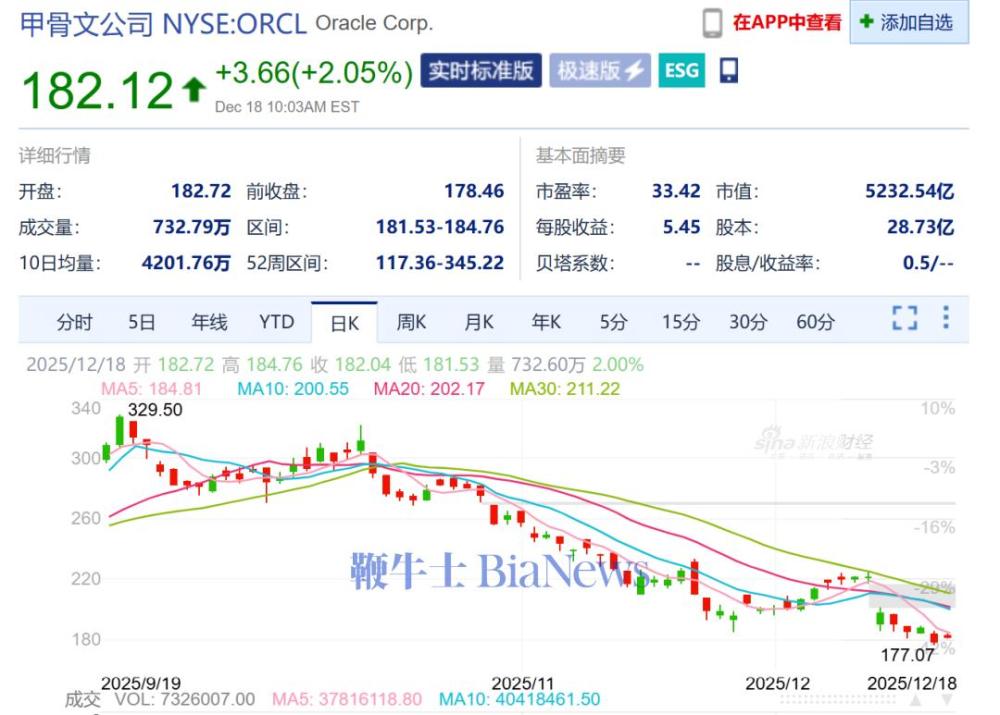
Core Viewpoint - Oracle's $10 billion data center project in Michigan has lost funding support from Blue Owl Capital, raising concerns about the AI bubble and leading to a nearly 45% drop in Oracle's stock price since its peak in early September [1][2]. Group 1: Project Financing and Market Reaction - The withdrawal of Blue Owl Capital is seen as a significant setback for Oracle, with the news amplifying market fears regarding the sustainability of AI investments [2][15]. - Oracle's stock price surged from approximately $122 on April 21 to over $320 in early September, but has since retraced all gains as investors shift focus from growth narratives to the costs of realizing those promises [8][9]. - Concerns have emerged regarding the reliability of OpenAI's commitments to Oracle, with analysts questioning whether OpenAI will fulfill its $300 billion power purchase agreement [17][18]. Group 2: Financial Performance and Analyst Concerns - Jim Chanos, a prominent short-seller, criticized Oracle's rapid asset expansion, indicating that the company's return on new capital investments is only about 8.5%, compared to Microsoft's nearly 40% [11]. - Analysts have pressed Oracle's management for clarity on AI investment costs, but the company has not provided definitive answers, leading to further skepticism [12]. - The market is reevaluating which companies can sustain prolonged delays in returns, especially as Oracle's traditional cash flow model is disrupted by heavy AI investments [22]. Group 3: Competitive Landscape and Strategic Positioning - OpenAI's partnerships with Microsoft and Amazon indicate a diversification of its computing resources, potentially diminishing Oracle's role in OpenAI's ecosystem [19]. - The competitive landscape is shifting, with Google and other well-capitalized firms accelerating their AI initiatives, raising questions about OpenAI's ability to maintain its lead [20]. - Oracle's heavy investment in AI infrastructure contrasts with its previous reliance on predictable cash flows from traditional software, making it more vulnerable to market fluctuations [22].


亚马逊AGI负责人离职,强化学习大佬Pieter Abbeel接任
机器之心· 2025-12-19 00:21
Core Viewpoint - Rohit Prasad, the Senior Vice President and Chief Scientist of Amazon's AGI team, has announced his departure, marking a significant leadership change in Amazon's AI initiatives [1][3][4]. Group 1: Leadership Changes - Rohit Prasad joined Amazon in 2013 and played a crucial role in developing Alexa and leading the Nova foundational model project [3][4]. - Following Prasad's exit, Amazon will centralize AI research under the cloud computing division (AWS), with Peter DeSantis appointed to lead a new organization that will report directly to CEO Andy Jassy [5][6]. Group 2: AI Development Focus - Amazon aims to enhance its AI product development to compete with OpenAI, Google, and Anthropic, having launched its own foundational model series, Nova, and developed custom AI chips, Trainium, to rival Nvidia [5]. - The new department led by Peter DeSantis will oversee the development of core models, support for self-developed chip initiatives, and exploration of quantum computing technologies [10][12]. Group 3: New Appointments - Pieter Abbeel, a leading AI researcher and co-founder of Covariant, will take over the leadership of the foundational model research team, focusing on advancing Amazon's AI research [12][17]. - Abbeel's extensive background in AI and robotics positions him well to drive innovation and collaboration within Amazon's AI initiatives [12][15]. Group 4: Employment Perspectives - AWS CEO Matt Garman expressed confidence that AI will create more jobs than it displaces, emphasizing the importance of nurturing new talent to fill high-value roles in the future [19][20]. - Garman highlighted that junior developers, who are more adept at using AI tools, will play a crucial role in the evolving tech landscape, countering the notion that AI will replace entry-level positions [20].


甲骨文百亿项目融资突然“告吹”,美国AI泡沫恐慌来袭? | 北美前哨
Xin Lang Cai Jing· 2025-12-19 00:16
Core Viewpoint - Oracle's significant data center project in Michigan, valued at $10 billion, has lost funding support from Blue Owl Capital, raising concerns about the AI bubble and leading to a nearly 45% drop in Oracle's stock price since its peak in early September [2][17]. Group 1: Oracle's AI Investment and Market Reaction - Oracle's stock price surged from approximately $122 on April 21 to over $320 by early September, driven by expectations of substantial AI-related revenue from OpenAI [7][21]. - As investors shifted focus from growth narratives to the costs of realizing these promises, Oracle's stock began to decline, indicating a critical point in the AI infrastructure cycle [22][29]. - Jim Chanos criticized Oracle's rapid balance sheet expansion, suggesting that its return on new capital investments is only about 8.5%, compared to Microsoft's nearly 40% [8][22]. Group 2: Financing and Credit Market Dynamics - The private credit market is reassessing risks, with Blue Owl Capital withdrawing from the Michigan project due to increased financing costs and stricter terms, reflecting a shift in market sentiment towards AI spending and Oracle's debt levels [10][25]. - Analysts are questioning the reliability of OpenAI's commitments, with concerns that OpenAI may not fulfill its promise of $300 billion in computing power payments to Oracle, which has a remaining performance obligation (RPO) of $523 billion as of November 30 [12][26][27]. Group 3: Competitive Landscape and Future Uncertainties - OpenAI's position in the AI market is becoming uncertain, especially with new partnerships with Microsoft and Amazon, which diversify its computing power sources and challenge Oracle's role [13][27]. - The pending agreement between OpenAI and Nvidia, which could involve up to $100 billion in investment, remains unfinalized, adding to the uncertainty surrounding Oracle's future revenue from AI [28]. - The market is increasingly focused on which companies can sustain prolonged periods of capital investment without immediate returns, with Oracle's traditional cash flow model being disrupted by the high upfront costs of AI infrastructure [14][29].
阿里一周减持三家上市公司
第一财经· 2025-12-18 14:48
Core Viewpoint - Alibaba Group has accelerated the reduction of its external investments, particularly in the AI sector, while divesting from several listed companies in a short period [3][4]. Group 1: Recent Divestments - On December 17, Huayi Brothers announced that Alibaba's shareholder, Alibaba Venture Capital, reduced its stake by 29,526,820 shares, representing 1.064219% of the total share capital, bringing their total holding down to 4.999996% [3]. - Also on December 17, Aojie Technology reported that Alibaba (China) Network Technology Co., Ltd. completed a reduction of 12,549,000 shares, accounting for 3% of the total share capital, with a total transaction value of 1.056 billion yuan [3][4]. - On December 16, Red Star Macalline disclosed that from December 12 to December 16, Taobao Holdings and New Retail Fund collectively reduced their holdings by 41,646,600 H shares, which is 0.96% of the total share capital, decreasing their stake from 7.33% to 6.37% [4]. Group 2: Shift in Investment Focus - Over the past two years, Alibaba has been focusing on its core business and reducing investments in non-core areas, having previously divested from companies like Kuaigou Dache, Bilibili, and others [4]. - As of the end of 2025, Alibaba appears to be accelerating the divestment of external assets, with a significant shift towards AI investments [4][5]. - Data from Tianyi Think Tank indicates that the proportion of Alibaba's investments in the AI sector increased from 4% before 2023 to 50% after 2023 [4]. Group 3: AI Investment Activity - Alibaba's investments in embodied intelligence have become more active, with notable investments in companies such as Beijing Xingdong Jiyuan Technology Co., Ltd. and others throughout the year [5]. - Alibaba's CEO has indicated that the future may see more agents and robots than the global population, highlighting the importance of embodied intelligence in Alibaba Cloud's future AI applications and computing power usage [5]. - The company's financial reports show a significant cash flow impact, with a net cash flow from operating activities of 10.099 billion yuan, a 68% decrease year-on-year, and a free cash flow outflow of 21.840 billion yuan [5].

开盘:美股周四高开 美光财报与11月CPI数据提振市场情绪
Xin Lang Cai Jing· 2025-12-18 14:30
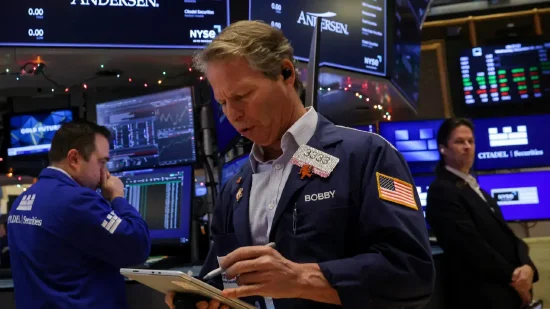
北京时间12月18日晚,美股周四高开。美光科技公布的强劲财报提振了市场信心,帮助主要股指连续下 跌之后反弹。美国11月CPI同比上涨2.7%低于预期。 美光科技股价大涨12%,此前这家高科技公司公布的财年第一季度营收和利润均超出华尔街预期,并对 当前季度给出了强劲的收入指引。 美光的强劲财报帮助提振了市场信心。 美股刚刚经历了一个艰难的交易日,受人工智能相关领先半导体股大幅下跌拖累。标普500指数和道指 连续第四个交易日收跌。纳斯达克综合指数是三大主要股指中表现最差的,下跌1.8%。 甲骨文昨日股价下跌逾5%,此前有报道称,这家云计算基础设施公司的主要投资者退出了其位于密歇 根州、耗资100亿美元的数据中心项目。 市场对甲骨文这类大型数据中心项目背后高昂资本支出的担忧令整个市场感到不安,导致多家芯片制造 商股价同步下跌。博通下跌4.5%,英伟达和AMD等也纷纷下挫。 这是首份涵盖美国政府停摆期间的数据报告。长达43天的美国政府停摆扰乱了数据收集流程,并导致10 月CPI数据发布被取消。该数据原定于12月10日发布。 由于10月CPI数据被取消,周四发布的报告缺少典型CPI报告中的全部常规数据点。劳工统计局表示 ...
阿里一周减持三家上市公司
Di Yi Cai Jing· 2025-12-18 14:21
Group 1 - Alibaba has accelerated the divestment of external assets, having reduced its holdings in three listed companies within a week [1][2] - On December 17, Alibaba's shareholders reduced their stake in Huayi Brothers by 29,526,820 shares, decreasing their ownership from 6.06% to 5% [1] - On the same day, Alibaba Network completed a share reduction of 12,549,000 shares in Aojie Technology, representing 3% of the total share capital, with a total transaction value of 1.056 billion yuan [1] Group 2 - Alibaba's subsidiary, Taobao Holdings, reduced its stake in Red Star Macalline by 41,646,600 shares, which is 0.96% of the total share capital, bringing their ownership down from 7.33% to 6.37% [1] - As of December 18, Alibaba's latest holding in Red Star Macalline is 5.71% [1] - Earlier, on December 10, Meinian Health announced plans for a share reduction of up to 3% of its total share capital by Alibaba's subsidiary [2] Group 3 - A significant trend is that Alibaba's external investments are increasingly focused on the AI sector, with investments in AI rising from 4% to 50% of total investments after 2023 [4] - Alibaba has been actively investing in embodied intelligence, with several investments made throughout the year, including in companies like Beijing Xingdong Jiyuan Technology [4] - The CEO of Alibaba has indicated that the future may see more agents and robots than the global population, highlighting the importance of embodied intelligence in Alibaba's future AI applications [5] Group 4 - Alibaba is increasing its investment in its core businesses, including e-commerce and Alibaba Cloud, with a reported net cash flow from operating activities of 10.099 billion yuan, a 68% decrease year-on-year [5] - The company reported a free cash flow outflow of 21.840 billion yuan, contrasting with a net inflow of 13.735 billion yuan in the same period of 2024, indicating significant cash expenditures in the competitive landscape and AI infrastructure [5]


金山云授出合共440.26万个受限制股份单位
Zhi Tong Cai Jing· 2025-12-18 14:18
Core Viewpoint - Kingsoft Cloud (03896) announced the grant of a total of 4.4026 million restricted stock units to several employee participants under the 2021 equity incentive plan, which represents approximately 0.10% of the company's total issued shares as of the announcement date [1] Group 1 - The company will grant 4.4026 million restricted stock units on December 18, 2025, Eastern Time [1] - The granted units correspond to approximately 4.4026 million shares or about 293,500 American depositary shares, adjusted to the nearest whole number [1] - This issuance is part of the company's ongoing employee incentive strategy [1]
亚马逊重组AI团队,发力大模型、芯片和量子计算研究,CEO称“公司进入转折点”
硬AI· 2025-12-18 14:05
Core Viewpoint - Amazon announced a restructuring of its artificial intelligence (AI) teams, creating a new business unit led by Peter DeSantis from AWS, aiming to develop advanced, multi-purpose AI tools similar to ChatGPT [2][3][4]. Group 1: Organizational Changes - The new organization will integrate Amazon's Artificial General Intelligence (AGI) team, chip manufacturing division, and quantum computing research [2][3]. - Peter DeSantis, previously a senior vice president in AWS, will report directly to CEO Andy Jassy in his new role [4]. - Rohit Prasad, the current head of the AGI team and long-time leader of the Alexa voice science team, is set to leave Amazon by the end of the year [5]. Group 2: Strategic Intent - Jassy emphasized that new technologies are at a critical turning point that will significantly shape customer experiences [4]. - The restructuring indicates Amazon's intent to consolidate AI development efforts, which were previously scattered between the Alexa team and AWS, into a unified organization [4]. - The inclusion of Annapurna Labs, acquired in 2015, strengthens the team's capabilities in developing general-purpose chips and AI hardware [4][6]. Group 3: Competitive Landscape - AWS, while being the largest provider of computing power and data storage, has struggled to replicate its cloud computing dominance in the AI developer space, facing stiff competition from Microsoft, Google, and various startups [4].
青云科技:公司在积极进行国际化布局
Zheng Quan Ri Bao Wang· 2025-12-18 13:41
Core Insights - The company is actively pursuing international expansion, launching products and services in overseas markets [1] - The AI computing cloud service, CoresHub.ai, has been fully launched and is now available for global developers, offering low-cost, high-efficiency, and reliable model services [1] - CoresHub.ai has introduced multiple large models, providing flexible and high-performance model invocation services for global AI application developers, enterprise development teams, and AIGC creators [1] - The company's container software, KubeSphere, is built on Kubernetes and ranks second in popularity within the global open-source container field, demonstrating significant technical influence and being utilized by tens of thousands of users worldwide [1]

2026年大类资产配置展望:动能切换,增长扩散
Guohai Securities· 2025-12-18 13:32
Group 1 - The report identifies four macro clues for 2025: TACO trading, the Federal Reserve's interest rate cut rhythm, AI commercialization, and China's export resilience [8] - It suggests that in 2026, the domestic GDP growth is expected to shift from external demand to investment driven by central finance, alongside a price recovery leading to a restocking cycle [8] - The report emphasizes that the main industry themes for 2026 will focus on "anti-involution" and "hard technology" sectors, highlighting coal, chemicals, construction materials, and power equipment as key areas for potential profit recovery [8] Group 2 - The asset allocation outlook for 2026 recommends a diversified approach, favoring equities and commodities over interest rate bonds, with an overweight on A-shares and Hong Kong stocks [8] - The report notes that the current market is driven by institutional funds rather than retail investors, indicating a preference for sectors with high profitability and fundamental improvements [8] - It highlights that the active equity funds are heavily concentrated in the TMT sector, with over 40% of holdings, leaving room for "anti-involution" and domestic demand recovery sectors [8] Group 3 - The report discusses the performance of various asset classes in 2025, noting that precious metals and Asia-Pacific equities led the gains, while bonds showed lackluster performance [10][11] - It indicates that the dollar index weakened by approximately 8.3%, and the USD/CNY exchange rate decreased by about 3.01% [11] - The report also highlights that the VIX index experienced significant fluctuations due to trade policy uncertainties, impacting market sentiment and asset performance [20]



