
汽车制造

Search documents
机器人春晚表现亮眼,我国首次完成一级箭体海上回收
Huaxin Securities· 2026-02-24 15:05
Investment Rating - The report maintains a "Buy" rating for the automotive industry and highlights the potential of the humanoid robot sector [2][8]. Core Insights - The humanoid robot segment has shown strong performance, with a 2.23% increase in the Huaxin Humanoid Robot Index from February 9-13, 2026, and a cumulative return of 117.3% since 2025 [16]. - The report emphasizes the significance of the recent Spring Festival Gala showcasing humanoid robots, which demonstrated advanced capabilities in cluster control and dynamic movement, indicating a positive outlook for the sector [5][6]. - The commercial aerospace sector is experiencing a dual acceleration phase, marked by technological breakthroughs and substantial capital inflows, particularly following the successful recovery of the Long March 10 rocket's first stage [7]. Summary by Sections Humanoid Robot Sector - The humanoid robot index's trading volume accounted for 17.5% of the CSI 2000 index, indicating a high level of market engagement [16]. - Key components such as actuators, sensors, and lightweight materials are highlighted as critical areas for investment, with specific companies recommended for each component [9][10]. - Notable performers in the humanoid robot sector include Wanlong Magnetic Plastic, Rifa Precision Machinery, and Tianqi Co., with significant price increases observed [24]. Automotive Sector - The automotive index rose by 1.7% from February 9-13, 2026, outperforming the broader market by 1.4 percentage points [34]. - The commercial vehicle index saw a notable increase of 6.3%, while the passenger vehicle index rose by 1.2% [37]. - The report identifies key companies such as Jingzhu Technology and Changyuan Donggu, which have shown substantial price increases, while others like Guansheng Co. have faced declines [42]. Industry Data Tracking - Retail sales of passenger vehicles in China increased by 54% year-on-year during the first week of February 2026, indicating strong consumer demand [56]. - Wholesale figures also reflect a 46% year-on-year increase, suggesting robust supply chain performance [60]. - The report notes fluctuations in commodity prices, with copper, aluminum, and rubber prices decreasing during the reporting period [63].


为什么关税未能缩小美国贸易逆差
Sou Hu Cai Jing· 2026-02-24 14:59
Group 1 - The article discusses the ongoing implementation of tariffs by the Trump administration despite their failure to reduce the U.S. trade deficit, which is projected to reach a record $1.24 trillion by 2025 due to a 4.3% increase in goods imports [3][4][6] - Major exporting countries such as Germany, Japan, South Korea, and Taiwan are responding to U.S. tariffs by introducing government spending plans aimed at supporting manufacturers reliant on overseas markets, thereby partially offsetting the competitive impact of the tariffs [4][5][6] - Germany's spending plan, amounting to approximately €1 trillion (about $1.2 trillion), focuses on supporting manufacturing and subsidizing energy costs to enhance competitiveness in international markets [5][6][8] Group 2 - The article highlights that despite a 9.4% decline in exports to the U.S. last year, Germany remains the largest exporter to the U.S., with a trade surplus of €51.9 billion [6][7] - China's current account surplus is expected to reach 4.3% of GDP this year, while the U.S. has a current account deficit of about 4% of GDP, indicating a significant imbalance in trade dynamics [7][8] - The article emphasizes the challenges of shifting entrenched economic models, as seen in Germany, where efforts to boost imports through government spending are often overshadowed by a focus on maintaining export-driven growth [8][9]

全新换代威兰达AIR版上市,广汽丰田推出8年低息金融方案
Xin Jing Bao· 2026-02-24 14:57
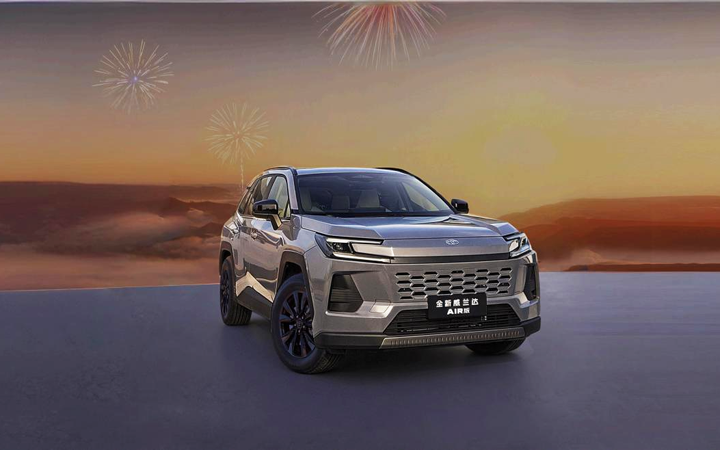
Group 1 - The core point of the article is the launch of the new generation of the Toyota Venza AIR version, starting at a price of 137,800 yuan [1] - GAC Toyota has introduced an "8-year ultra-long-term low-interest financial plan," with a down payment starting at 14,600 yuan and monthly payments as low as 1,650 yuan, aimed at lowering the barriers to car purchases [1] - To address user pain points regarding the high costs of car maintenance, GAC Toyota has launched a "direct sales maintenance package," allowing users to purchase four original factory maintenance services for 2,099 yuan, which is 25% lower than the market price [1]

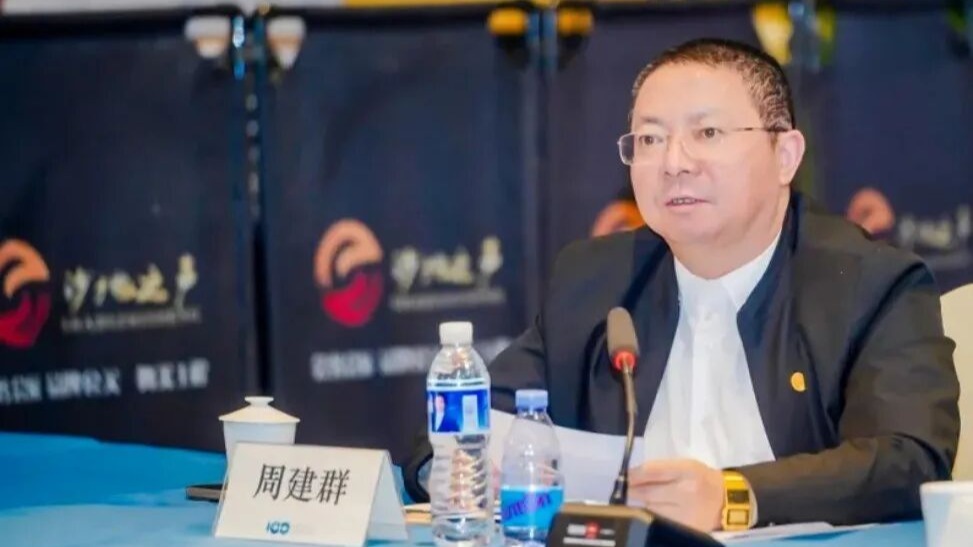
噩耗传来:周建群离世享年61岁,5天前还在开会!他曾是两大浙商得力干将
Mei Ri Jing Ji Xin Wen· 2026-02-24 14:51
Core Viewpoint - The passing of Zhou Jianqun, a key figure in the Chinese automotive industry and a significant contributor to the development of new energy commercial vehicles, is a notable loss for the sector. His leadership in both Wanxiang Group and Geely Holding has left a lasting impact on the industry [1][5][6]. Company Contributions - Zhou Jianqun served as a director and chairman of Hanma Technology, where he was instrumental in establishing the company's dual technology strategy of "pure electric + methanol electric," laying a solid foundation for its sustainable growth and transition to new energy products [3][5]. - His career spanned over 40 years, during which he held various significant positions, including vice president of Geely Holding and general manager of Wanxiang Qianchao, showcasing his extensive management experience and operational expertise [5][6]. Industry Impact - Under Zhou's leadership, Hanma Technology has made significant strides in the methanol electric vehicle sector, with a reported 314.8% year-on-year increase in sales of methanol electric heavy trucks by January 2026. This technology addresses gaps in the application of pure electric vehicles in low-temperature and long-distance scenarios [7]. - Zhou emphasized the importance of methanol as a clean fuel and its potential for large-scale production through innovative processes, contributing to the industry's shift towards greener energy solutions [8][9].

噩耗传来:周建群除夕前离世,享年61岁,5天前还在开会!他曾是两大浙商得力干将,38岁就进入核心管理层
Mei Ri Jing Ji Xin Wen· 2026-02-24 14:40
Core Viewpoint - The passing of Zhou Jianqun, a key figure in the automotive industry and a significant contributor to the development of new energy vehicles in China, marks a notable loss for the sector [1][3][5]. Group 1: Zhou Jianqun's Contributions - Zhou Jianqun served as a director at Hanma Technology and was a core founder of Geely Commercial Vehicle Group, significantly influencing the company's strategic direction [1][3]. - He established a dual technology route for the company, focusing on "pure electric + methanol electric," which laid a solid foundation for the company's sustainable growth and transition to new energy products [3][6]. - Zhou's career spanned four decades, during which he held various leadership roles, including Vice President of Geely Holding and General Manager of Wanxiang Qianchao, showcasing his extensive management experience [2][5][6]. Group 2: Industry Impact and Innovations - Under Zhou's leadership, Hanma Technology achieved a remarkable 314.8% year-on-year increase in sales of methanol electric heavy trucks by January 2026, highlighting the growing acceptance of this technology [7]. - The methanol electric technology is positioned as a third pathway in the new energy sector, addressing gaps in pure electric vehicles, particularly in low-temperature and long-distance applications [7][8]. - Zhou emphasized the importance of methanol as a clean fuel and its potential for large-scale production through innovative processes, contributing to the dual carbon goals of the industry [7][8].

特斯拉(TSLA.US)起诉加州DMV,力求在Robotaxi落地前洗清FSD“虚假宣传”污点
Zhi Tong Cai Jing· 2026-02-24 13:17
Core Viewpoint - Tesla has officially filed a lawsuit against the California Department of Motor Vehicles (DMV) to overturn an administrative ruling regarding alleged "false advertising" related to its autonomous driving systems [1][2] Group 1: Legal Proceedings - Tesla claims that the DMV's conclusion regarding misleading statements in marketing "Autopilot" and "Full Self-Driving" (FSD) features lacks factual basis [1] - The lawsuit follows a history of regulatory scrutiny that began in 2021, focusing on whether Tesla's product naming could mislead consumers into believing the vehicles are fully autonomous [1] - A preliminary ruling by the California Office of Administrative Hearings (OAH) in late 2025 categorized Tesla's terminology as misleading, posing a risk of suspension of the company's vehicle sales license in the state [1] Group 2: Regulatory Compliance and Adjustments - In December, a court ruled in favor of the DMV, recognizing the misleading nature of the terms and suggesting license suspension, although the penalties were later mitigated, allowing Tesla time to rectify the situation [2] - In early 2026, Tesla modified its official descriptions, adding the "Supervised" suffix, and passed the DMV's compliance review on February 17, temporarily alleviating the threat of license suspension [2] - Tesla argues that it has provided adequate risk warnings in user manuals and activation interfaces, aiming to eliminate potential legal risks and protect its brand reputation [2] Group 3: Industry Implications - The outcome of this legal battle is expected to have significant implications for the global autonomous driving industry, particularly in setting compliance standards [2] - If Tesla fails to clear the "misleading consumers" allegations, it could lead to larger-scale consumer class-action lawsuits, potentially impacting the valuation logic tied to AI-driven premiums [3]

广汽集团:2026年1月,公司自主品牌实现海外销量同比增长68.59%
Zheng Quan Ri Bao· 2026-02-24 12:44
Group 1 - The core viewpoint of the article highlights GAC Group's commitment to expanding its overseas market presence, aiming for significant growth in sales of its self-owned brands by 2026 [1] - GAC Group's overseas terminal sales for self-owned brands, including Haobo, Aion, and Trumpchi, are projected to reach nearly 130,000 units in 2025, representing a year-on-year increase of 47% [1] - The company has set an annual sales target for its self-owned brands overseas at "ensuring 250,000 units and striving for 300,000 units" by 2026 [1] Group 2 - In January 2026, GAC Group's self-owned brands achieved an overseas sales growth of 68.59% year-on-year [1]

抢抓“DeepSeek”时刻!小鹏、吉利发声
Zhong Guo Ji Jin Bao· 2026-02-24 12:20
Group 1: Core Perspectives - The CEOs of Geely and Xpeng emphasize the importance of smart technology and international expansion in the automotive industry, marking a historical turning point for the sector [1] - Xpeng aims to leverage the "DeepSeek" moment for autonomous driving by 2026, with plans to introduce its second-generation VLA for L4-level autonomous driving [2][3] - Geely is committed to sustainable development and will avoid vicious competition, focusing on technology, quality, brand, service, and corporate ethics [1][5] Group 2: Company Developments - Xpeng's delivery volume reached 429,400 units in 2025, a 126% year-on-year increase, with over 45,000 units delivered overseas, marking a 96% growth [3] - Xpeng plans to launch at least four new models in overseas markets by 2026, with the P7+ already undergoing trials in Austria [3] - Geely's G-ASD advanced driving assistance system will continue to evolve, with the next version debuting in the Zeekr 8X model, enhancing the driving experience [5] Group 3: International Strategy - Geely views high-quality international expansion as essential, transitioning from "international trade" to "product-oriented" strategies [6] - The company aims to establish a localized system in key markets through product output, brand expansion, and resource integration, striving to transform from "Made in China" to a "global brand" [6] - As of February 24, Geely's stock price was HKD 16.80, with a market capitalization of HKD 181.7 billion, while Xpeng's stock was HKD 70.65, with a market cap of HKD 135.1 billion [4][6]

搭载丰田域控架构 全新换代威兰达AIR版上市
Yang Shi Wang· 2026-02-24 12:19
Group 1 - The new generation of the Toyota Wildlander AIR version continues the exterior design of the North American version and features a new domain control architecture with an LSD limited-slip differential for torque distribution on slippery surfaces [2] - The vehicle is equipped with premium features including a leather steering wheel, high-quality leather seats, heated folding side mirrors, 50W wireless charging, 64-color ambient lighting, and an advanced L2-level Toyota TSS 4.0 intelligent driving system [2] - GAC Toyota has launched a "direct sales maintenance package" allowing users to purchase four original factory maintenance services for 2099 yuan, ensuring the use of original parts and adherence to Toyota's global technical standards [2] Group 2 - In the purchasing process, users can enjoy cash discounts and trade-in subsidies, along with a low-interest financing plan lasting up to 8 years, starting with a down payment of 14,600 yuan and monthly payments from 1,650 yuan [4] - The model offers a lifetime warranty on three major components: the engine, transmission, and power battery [4]
广汽集团:公司正持续构建“广汽AI智能生态链Golink”
Zheng Quan Ri Bao· 2026-02-24 12:09
证券日报网讯 2月24日,广汽集团在互动平台回答投资者提问时表示,AI技术已成为驱动产业变革的核 心力量之一,公司正持续构建"广汽AI智能生态链Golink",全面推进数字化、智能化变革,加速向"数 据+AI"双轮驱动转型,为研发、生产、销售、运营及国际化全链条赋能。例如在智能网联和动力总成 领域开展测试用例自动生成、故障智能诊断、座舱图像生成等创新性AI技术应用,实现模型个性化产 品构建,灵活、快速搭建丰富的智能体。 (文章来源:证券日报) ...