航空航天

Search documents
广联航空(300900):航空工装和零部件核心配套商 前瞻布局新兴战略领域
Xin Lang Cai Jing· 2025-12-16 08:36
Group 1 - The company is strategically positioning itself in rocket and satellite manufacturing, benefiting from the accelerated development of commercial aerospace [1] - In the rocket sector, the company plans to acquire 51% of Tianjin Yuefeng by May 2025, which specializes in processing rocket storage tanks and has advanced welding equipment [1] - Tianjin Yuefeng's output reached 41 million yuan in Q1 2025, a 50% year-on-year increase, driven by the explosive growth in China's rocket demand [1] Group 2 - The company is involved in the development of composite materials and structural components for the C919 and C929 aircraft, with a contract worth 105 million yuan for C929 composite tooling [2] - A strategic cooperation agreement was signed with Shanghai Lingang New Area to promote collaborative projects in the aviation industry [2] - The company is also focusing on large UAV assembly capabilities, having signed a contract worth 55.78 million yuan for composite wings of a large fixed-wing UAV [2] Group 3 - The company is exploring innovative applications of composite materials in unmanned vessels and submarines, aiming to enhance performance and fuel efficiency [3] - The company is expected to generate revenues of 1.119 billion yuan, 1.294 billion yuan, and 1.564 billion yuan from 2025 to 2027, with corresponding net profits of 40 million yuan, 113 million yuan, and 183 million yuan [3] - The company is positioned as a core supplier of aviation tooling and components, focusing on high-value-added composite parts and expanding into emerging strategic areas [3]

中航高科(600862.SH):目前未与“蓝箭航天”和“星河动力”有相关合作或参股计划
Ge Long Hui· 2025-12-16 08:33
Core Viewpoint - The company, AVIC High-Tech (600862.SH), has stated that its main products are applied in the aerospace field and currently has no cooperation or equity participation plans with "Blue Arrow Aerospace" or "Star River Power" [1] Company Summary - AVIC High-Tech's primary products are focused on the aerospace sector [1] - The company has clarified its position regarding potential partnerships, specifically denying any current collaborations with Blue Arrow Aerospace and Star River Power [1]

中无人机:累计回购约64万股
Mei Ri Jing Ji Xin Wen· 2025-12-16 03:55
(记者 王晓波) 每经头条(nbdtoutiao)——中标企业频频弃标 大型医疗设备采购有何难言之隐? 每经AI快讯,中无人机(SH 688297,最新价:46.73元)12月16日午间发布公告称,截至2025年12月16 日,公司通过上海证券交易所交易系统以集中竞价交易方式累计回购股份约64万股,占公司总股本的比 例为0.09437%,回购成交的最高价为50元/股,最低价为45.51元/股,支付的资金总额为人民币2997.06 万元。 2024年1至12月份,中无人机的营业收入构成为:航空航天产品制造及相关服务占比100.0%。 ...

含航量最高的航空航天ETF天弘(159241)最新规模创新高!民航局编制两类航空器适航标准,现征求公众意见
Sou Hu Cai Jing· 2025-12-16 02:39
Core Viewpoint - The aerospace ETF Tianhong (159241) has seen significant trading activity and growth, with a recent increase in scale reaching 606 million yuan, marking a new high since its inception [1][2]. Group 1: Market Performance - As of December 16, 2025, the aerospace ETF Tianhong (159241) had a turnover of 8.58% and a transaction volume of 50.78 million yuan, while the tracked CN5082 aerospace industry index fell by 2.36% [1]. - Over the past week, the aerospace ETF Tianhong (159241) experienced a substantial increase of 64 million shares, indicating strong demand [1]. Group 2: Fund Flows - In the last five trading days, the aerospace ETF Tianhong (159241) recorded net inflows of 75.25 million yuan on three occasions, reflecting positive investor sentiment [2]. Group 3: Industry Highlights - The aerospace industry has shown explosive growth in revenue and net profit in the third quarter, indicating a heightened level of industry prosperity [2]. - The Civil Aviation Administration of China is seeking public opinion on two types of airworthiness standards for limited-use unmanned aerial systems and powered aircraft, which may impact industry regulations [2]. Group 4: Institutional Insights - Open Source Securities emphasizes the importance of the recent establishment of a commercial space administration and the introduction of a three-year development plan for commercial space, highlighting the full-chain ecosystem in China's commercial space sector [2].

陕西智能制造水平居西部前列
Shan Xi Ri Bao· 2025-12-16 00:24
省工信厅相关负责人介绍,智能制造已成为陕西转变工业增长方式、重塑工业增长动力的重要抓 手。陕西汽车、航空航天、输变电装备、水泥建材、石油化工、消费品等行业重点企业广泛采用数控机 床、工业机器人、增材制造、物联网、智能物流仓储等装备技术以及人工智能、工业互联网等先进信息 系统,开展智能制造标准化与新模式应用,企业产品设计周期、劳动生产率、生产成本、产品质量等重 要指标都有了明显改善。 近年来,陕西通过征集智能制造系统解决方案"揭榜挂帅"项目,成立智能制造系统解决方案供应商 联盟陕西分盟,积极培育智能制造系统解决方案供应商。目前,全省共有16家企业入选国家智能制造示 范工厂揭榜单位,35家企业获评国家智能制造优秀场景单位,2家企业入选2024年度国家智能制造系统 解决方案"揭榜挂帅"项目。全省累计有146家企业被认定为省级智能制造示范企业(智能工厂、车间、 生产线)。(记者:沈谦) 12月12日,记者从陕西省智能制造现场会暨"智能制造进园区"专项活动上获悉:随着人工智能和大 数据等新技术的创新应用,陕西智能制造蓬勃发展,智能制造水平居西部前列,智能工厂总数居西北第 一、西部第三。 ...
决胜“十四五” 擘画“十五五”·地方资本市场高质量发展之黑龙江篇: 金融养分滋润黑土地 孕育产业振兴“龙江之花”
Zheng Quan Shi Bao· 2025-12-15 22:24
"经济是肌体,金融是血脉",这一深刻论断在"十四五"时期的黑龙江资本市场发展实践中得到生动印 证。黑龙江资本市场深度融入区域经济发展大局,精准对接国家战略需求,紧密贴合地方特色产业脉 络,在推动产业转型升级的进程中,成为不可或缺的重要驱动力。 为激活产业发展动能,黑龙江资本市场通过拓宽直接融资渠道、优化上市公司结构、并购重组等一系 列"组合拳",解决了企业发展的资金难题,优化了产业发展的生态格局,实现资本市场与区域产业发展 同频共振。 黑龙江资本市场板块结构持续优化。"含科量"的不断跃升,成为黑龙江资本市场提质增效的重要标志。 创业板、科创板上市公司数量较"十三五"时期增加了50%,市值前10名公司中,超半数为科技企业或科 技含量比较高的企业。 黑龙江资本市场融资结构呈现"再融资为主、IPO为辅"的鲜明特征,彰显了资本市场对黑龙江企业的持 续赋能。其中,首发募集资金(IPO)89.09亿元,为企业新的发展按下"启动键";再融资金额达279.64 亿元(含可转债),约为IPO规模的三倍,通过增发、可转债等工具为已上市优质企业"持续输血",支 持其规模扩张与技术改造。这一结构契合黑龙江省产业实际,既助力新兴企业落 ...
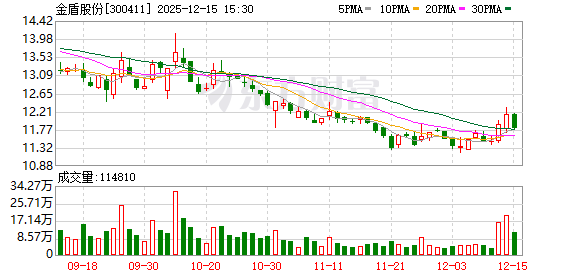
金盾股份:公司已设立全资子公司继续推进多场景“涵道推进器”项目产品的研发及后续产业化
Mei Ri Jing Ji Xin Wen· 2025-12-15 15:59
Group 1 - The company is actively engaged in the low-altitude economy sector, focusing on the development of ducted fan products [2] - The company has successfully integrated its ducted fan products with customer low-altitude aircraft, which have completed vertical takeoff and hovering flight verification [2] - A wholly-owned subsidiary, Zhejiang Hanying Intelligent Propulsion Technology Co., Ltd., has been established to advance the research and industrialization of the ducted propulsion project across multiple scenarios [2]

社评:这个“3000万+”为中国大飞机“蹚了路”
Huan Qiu Wang Zi Xun· 2025-12-15 15:44
Core Insights - The C909 regional aircraft has surpassed 30 million passengers, marking a significant milestone for China's civil aviation industry [1][2] - The delivery of 175 C909 aircraft accounts for over 60% of the domestic regional aircraft market, with operations extending to 12 countries [1][2] - The C909's successful commercial operation has paved the way for future models like the C919 and C929, contributing to the establishment of a trusted brand in the Chinese aviation sector [2][3] Industry Development - The C909 has undergone comprehensive market testing over its nine years of operation, becoming a key player in connecting regional routes within China and gaining international certifications [2][3] - The transition from model development to brand management, exemplified by the C909's rebranding, signifies a critical shift in China's approach to civil aviation [2][3] - The C909's development has addressed fundamental challenges in the early stages of industrialization, creating a skilled workforce across various sectors of the aviation industry [3][4] Economic Impact - The civil aviation sector is a crucial driver of economic growth in China, with significant multiplier effects on various industries, including materials, electronics, and manufacturing [3][4] - The C909 and its successors represent a strategic move to diversify the global aviation market and reduce reliance on Western manufacturers like Boeing and Airbus [3][4] - The ongoing support for the aviation industry is reflected in national policies aimed at fostering the development of strategic emerging industries [4] Future Outlook - The C909's achievements serve as a foundation for future advancements in China's aviation sector, with a focus on maintaining competitive advantages in a rapidly evolving market [4][5] - The emphasis on international collaboration highlights the importance of integrated design and development capabilities rather than complete self-sufficiency [5] - The potential for Chinese-made aircraft to confidently enter global markets is anticipated as the industry continues to evolve and expand [5]
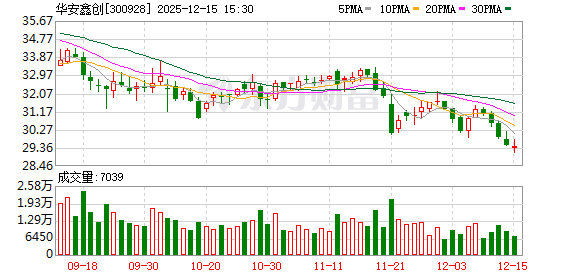
华安鑫创:公司已取得EN9100:2018国际航空航天质量管理体系认证
Zheng Quan Ri Bao· 2025-12-15 12:45
Core Viewpoint - The company has obtained the EN9100:2018 international aerospace quality management system certification, indicating its capability to provide stable and reliable products in the aerospace sector [2]. Group 1 - The certification covers the design and production of flight instrument screens [2]. - The company is actively expanding its customer base in related fields [2].

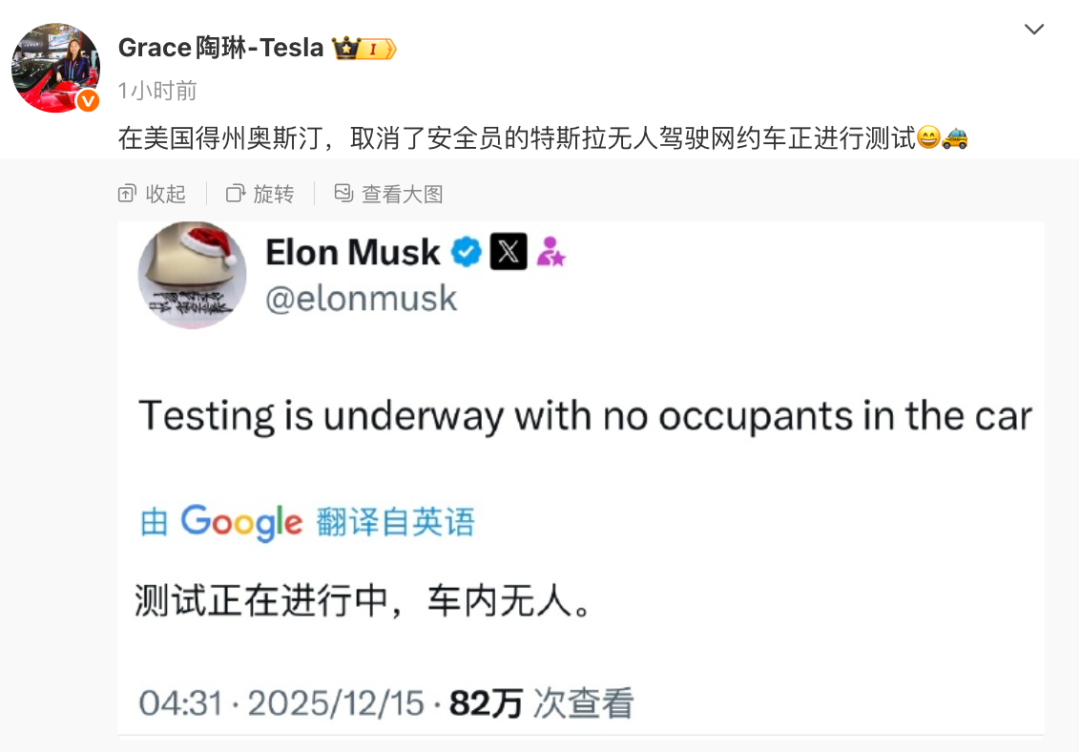
陶琳确认:取消了安全员的特斯拉无人驾驶网约车正在进行测试;黄金、白银齐涨;英伟达将召开电力短缺闭门峰会【美股盘前】
Mei Ri Jing Ji Xin Wen· 2025-12-15 11:02
Group 1 - Major stock index futures are up, with Dow futures rising by 0.40%, S&P 500 futures by 0.42%, and Nasdaq futures by 0.44% [1] - Gold and silver prices have increased, with spot gold at $4344 per ounce, up 0.99%, and spot silver at $63.79 per ounce, up 2.88% [2] - SpaceX is reportedly selecting investment banks for its initial public offering (IPO), aiming to raise over $30 billion, with a target valuation of approximately $1.5 trillion [3] - Tesla has begun testing its Robotaxi service without safety drivers in Austin, Texas [4] Group 2 - The European Commission is expected to withdraw the ban on new internal combustion engine vehicles starting in 2035, leading to pre-market stock increases for Stellantis (up 1.7%), Ford (up 0.07%), and General Motors (up 0.42%) [5] - Elon Musk has publicly criticized nuclear fusion power, suggesting that building small fusion reactors on Earth is impractical, while proposing a plan to deploy solar energy AI satellites [6] - JetBlue Airways has reported a near-collision incident involving a U.S. military aircraft, resulting in a pre-market decline of 0.40% for the airline [7] - NVIDIA is hosting a closed-door summit in California to address the power shortage issues facing data centers, which could hinder AI development [8] Group 3 - Several companies, including Allergan, Ferrovia, Insmed, Monolithic Power Systems, Seagate Technology, and Western Digital, will be added to the Nasdaq 100 index [9]