
化工

Search documents
研究所晨会观点精萃-20260326
Dong Hai Qi Huo· 2026-03-26 02:31
1. Report Industry Investment Rating - No information provided in the content. 2. Core Views of the Report - Overseas, with the continuation of the war and low traffic in the Strait of Hormuz, oil prices have rebounded, the US dollar index remains strong, and US Treasury yields have slightly declined, leading to a cooling of global risk appetite. Domestically, China's economy rebounded more than expected from January to February, exports far exceeded expectations, and inflation continued to recover. The overall economic and inflation situation was better than expected. The government work report set the main development targets and fiscal and monetary policies for 2026, with the overall targets and policy intensity lower than in 2025. The recent market trading logic has mainly focused on Middle - East geopolitical risks. In the short term, although the domestic economy is better than expected, the stock index will fluctuate weakly and with increased volatility due to the mixed geopolitical news. Currently, influenced by the US's signals of easing and a cease - fire, the domestic stock index market has recovered. [3][4] - For different asset classes, the stock index will rebound with short - term fluctuations and increased volatility, and it is advisable to wait and see carefully. Treasury bonds will fluctuate in the short term, and it is also advisable to wait and see carefully. In the commodity sector, the black metals will rebound with short - term fluctuations, and it is advisable to wait and see carefully; non - ferrous metals will rebound with short - term fluctuations, and it is advisable to wait and see carefully; energy and chemicals will fluctuate significantly in the short term, and it is advisable to be cautious in going long; precious metals will fluctuate significantly and rebound in the short term, and it is advisable to wait and see carefully. [3] 3. Summary by Relevant Catalogs Macro - finance - Overseas: With the continuation of the war and low traffic in the Strait of Hormuz, oil prices have rebounded, the US dollar index remains strong, and US Treasury yields have slightly declined, leading to a cooling of global risk appetite. [3] - Domestic: From January to February, China's economy rebounded more than expected, exports far exceeded expectations, and inflation continued to recover. The overall economic and inflation situation was better than expected. The government work report set the main development targets and fiscal and monetary policies for 2026, with the overall targets and policy intensity lower than in 2025. [3][4] - Market: The recent market trading logic has mainly focused on Middle - East geopolitical risks. In the short term, although the domestic economy is better than expected, the stock index will fluctuate weakly and with increased volatility due to the mixed geopolitical news. Currently, influenced by the US's signals of easing and a cease - fire, the domestic stock index market has recovered. [3][4] - Asset Allocation: The stock index will rebound with short - term fluctuations and increased volatility, and it is advisable to wait and see carefully. Treasury bonds will fluctuate in the short term, and it is also advisable to wait and see carefully. [3] Stock Index - Driven by sectors such as military equipment, electricity, and communications, the domestic stock market has continued to rebound significantly. [4] - Fundamentally, from January to February, China's economy rebounded more than expected, exports far exceeded expectations, and inflation continued to recover. The overall economic and inflation situation was better than expected. The government work report set the main development targets and fiscal and monetary policies for 2026, with the overall targets and policy intensity lower than in 2025. [4] - The recent market trading logic has mainly focused on Middle - East geopolitical risks. In the short term, although the domestic economy is better than expected, the stock index will fluctuate weakly and with increased volatility due to the mixed geopolitical news. Currently, influenced by the US's signals of easing and a cease - fire, the domestic stock index market has recovered. It is advisable to wait and see carefully in the short term. [4] Precious Metals - On Wednesday night, the precious metals market rose overall. The main contract of Shanghai Gold closed at 1016.92 yuan/gram, up 1.82%; the main contract of Shanghai Silver closed at 18000 yuan/kilogram, up 2.15%. [5] - As the market weighs the uncertainty of the Middle - East situation, the global market has fluctuated sharply, and the decline of the US dollar index has provided some support for precious metals. Spot gold has stabilized and rebounded, ending a nine - day losing streak, and finally closed up 1.54% at 4474.31 US dollars/ounce, but it is still suppressed by the strong US dollar and rising US Treasury yields; spot silver has turned from a decline to an increase, and finally closed up 2.8% at 71.05 US dollars/ounce. [5] - Precious metals will fluctuate significantly and rebound in the short term. It is advisable to wait and see carefully. [5] Black Metals - **Steel**: On Wednesday, the domestic steel futures and spot markets declined slightly, and market transactions were at a low level. Recently, the steel market has mainly followed the fluctuations of energy prices, and the decline in oil prices has led to the weakness of the steel market in the past two trading days. The fundamentals have changed little, the actual demand is still weak, and although the steel inventory has peaked and declined, the apparent consumption growth rate of the five major varieties has slowed down. After the important meeting, the output of the five major varieties of steel increased by 18.85 tons week - on - week last week. This week, the molten iron output also continued to rise. In the short term, the steel market will still follow the cost. Attention should be paid to the price adjustment risk after the cost decline. [6][7] - **Iron Ore**: On Wednesday, the futures and spot prices of iron ore declined significantly. The decline in oil prices and the news related to iron ore negotiations led to the weakness of iron ore futures and spot prices. On the demand side, the daily average molten iron output of blast furnaces increased by 6.9 tons week - on - week, and the proportion of profitable steel mills is still around 42%, so the demand for iron ore is still resilient. On the supply side, the shipping and arrival volume of iron ore have both increased this week, and the problem of short - term supply - demand imbalance is gradually being resolved. It is expected that there is limited room for the ore price to continue to rise, and attention should be paid to the short - term adjustment risk after the decline of energy prices. [7] - **Silicon Manganese/Silicon Iron**: On Wednesday, the spot and futures prices of silicon iron and silicon manganese declined. The decline in oil prices has weakened the expectation of rising coal prices. The price of silicon manganese 6517 in the northern market is 6050 - 6150 yuan/ton, and in the southern market is 6150 - 6250 yuan/ton. The manganese ore market quotation remains firm. The supply side shows that the national capacity utilization rate of 187 independent silicon manganese enterprises is 35.7%, an increase of 0.08% from last week; the daily average output is 27980 tons/day, a decrease of 225 tons. Currently, the start - up situation in the north is relatively stable, and factories are gradually hedging, with a good profit margin. The ex - factory price of 72 - grade silicon iron in the main production area is 5550 - 5650 yuan/ton, and the price of 75 - grade silicon iron is 5950 - 6100 yuan/ton. The steel procurement in March has basically ended, and the market is waiting for the entry situation in April. It is recommended to view the futures prices of silicon iron and silicon manganese with a bullish - biased and volatile mindset. [8] Non - ferrous and New Energy - **Copper**: According to current news, the US and Iran are indeed in negotiations, and the short - term situation has eased, with risk appetite rising. However, attention should be paid to the actual progress, which may bring significant fluctuations. The spot TC of copper is close to - 70 US dollars/ton, hitting a new low, but the profits from by - products such as sulfuric acid and precious metals have made up for the smelting profit. Coupled with the abundant supply of crude copper and the increase in scrap copper ingot imports, the growth rate of refined copper production is at a high level. The processing fee of southern crude copper is 1800 yuan/ton, a decrease of 600 yuan/ton from the previous high of 2400 yuan/ton, but still at a high level. The core contradiction in the fundamentals still lies in the mine end. It is a consensus in the market that copper mines are tight, but the probability of extreme shortage is not high. The domestic and foreign inventories have continued to accumulate, and the visible inventory of the three major exchanges is close to 1.29 million tons, reaching a record high. The copper price has dropped significantly, and downstream enterprises have replenished their stocks intensively at low prices, resulting in a significant decline in social copper inventory. Attention should be paid to the sustainability of inventory reduction. [9] - **Aluminum**: On Wednesday, the news of the negotiation between the US and Iran overnight stimulated the rise of risk appetite. The easing of the Middle - East situation is actually negative for aluminum, as the aluminum supply in the Middle - East will increase, so the rebound strength of aluminum is weaker than that of other non - ferrous metals. LME aluminum has fallen to the vicinity of the rising trend line. Attention should be paid to the effectiveness of the support. From January to February, the year - on - year increase in domestic primary aluminum production was relatively large, and the pattern of domestic weakness and foreign strength may change temporarily. From the import data, the import of domestic primary aluminum has remained at a high level; the import of scrap aluminum has decreased slightly, and the overseas supply of scrap aluminum is relatively tight. Currently, the domestic aluminum supply is rigid and remains at a high level, with a 3% year - on - year increase in production from January to February, and the previously shut - down production capacity will resume production later, so the supply pressure still exists. [10] - **Zinc**: Domestic zinc mines are mainly distributed in the south. With the resumption of work and production, the zinc ore processing fee in the southern region has rebounded from 1300 yuan/metal ton to 1500 yuan/metal ton, and the processing fee in the northern region has remained at 1500 yuan/metal ton. The TC of imported ore has decreased from 30 US dollars/dry ton to 20 US dollars/dry ton. The domestic smelting capacity is still expanding, and the profits from by - products have made up for the losses, so the domestic smelting output remains at a relatively high level. Overseas smelters cut production in 2025, but will resume production in 2026, with output increasing. The demand side is not optimistic. Real estate, infrastructure, transportation, and emerging fields such as photovoltaics are difficult to bring obvious boosts to photovoltaic demand, and may even decline. After the seasonal inventory accumulation of domestic zinc ingots, the inventory has turned to decline, reaching 219,600 tons, a decrease of 9,400 tons month - on - month, only slightly lower than the same period in 2022; the LME zinc inventory has increased to nearly 120,000 tons, which has increased significantly from the previous period. [10][11] - **Lead**: Due to the continuous opening of the import window from January to February, the imports of refined lead and crude lead in China have increased significantly in the first two months. Among them, the import of refined lead is 33,400 tons, a year - on - year increase of 732%; the import of crude lead is 25,200 tons, a year - on - year increase of 85%. The import of lead ingots will remain at a high level in March. Domestically, the production of primary lead and secondary lead has increased seasonally. The latest weekly production of primary lead is 57,100 tons, at a high level in recent years. The recovery speed of secondary lead production is similar to that of previous years, and currently, the finished product inventory of secondary lead is 13,800 tons, the highest level since 2020. On the demand side, the peak season has passed and is gradually entering the off - season. The trade - in policy has overdrawn the later demand. Due to the decline in price, downstream enterprises have replenished their stocks intensively at low prices, and the social inventory of domestic primary lead has decreased, dropping 17,000 tons from the high point to 63,100 tons, slightly lower than the same period last year. Although the LME lead inventory has not fluctuated much recently, it is still at the highest level in the same historical period in recent years, remaining above 280,000 tons. [11] - **Nickel**: On Wednesday, the Indonesian Ministry of Finance stated that if approved by the government, it will start levying a windfall profit tax on nickel from April 1st. Driven by this news, the nickel price has risen. The mine end is still the core contradiction at present. The RKAB quota of Indonesia in 2026 has dropped significantly to 260 million wet tons. Although there is still room for improvement later, the increase is expected to be limited, and the year - on - year decline compared with 2025 has basically been determined. Since the Indonesian Ministry of Energy and Mineral Resources requires mining enterprises to use one - quarter of the "old quota" in the first quarter, mining enterprises will maintain normal production in the first quarter without a supply gap. In addition, the Middle - East conflict has led to a shortage of sulfur in Indonesia, affecting the production of MHP. In addition, the previous tailings accident has also led to enterprise production cuts, so the supply of MHP is at risk of decline. The nickel price still has support at the bottom, but the upside space is limited by the high domestic and foreign inventories. [12] - **Tin**: On the supply side, in the first two months, the import of tin ore from Myanmar was 13,501 tons, a year - on - year increase of 175%, and the monthly average level was similar to that in November and December last year. With the acceleration of pumping in the mines in Wa State, Myanmar, it is expected that the import volume will still have room for further growth; the import of tin ore from other sources is 21,444 tons, with a year - on - year growth rate of up to 57%, reflecting that the sources of tin ore imports in China are more diverse; the operating rate has slightly decreased by 0.42%, but it is still at a high level in the same period in recent years; due to the continuous closure of the import window, the import of tin ingots from January to February was 3,269 tons, a year - on - year decrease of 27%. On the demand side, in January 2026, the global semiconductor sales increased by 46% year - on - year, with the growth rate further expanding. However, other traditional and emerging industries have performed poorly. The automobile production from January to February decreased by 9.9% year - on - year, the photovoltaic module production decreased by 26% year - on - year, and the home appliance production plan has continued to decline. The industry is significantly differentiated, and the semiconductor alone cannot support the overall demand, which is generally poor. As the tin price has dropped significantly, downstream enterprises have replenished their stocks intensively at low prices, and the social inventory of tin ingots has decreased by 2,770 tons to 11,035 tons. [13] - **Lithium Carbonate**: On Wednesday, the main contract of lithium carbonate 2605 rose 4.34%, with the latest settlement price of 158,220 yuan/ton. The weighted contract increased its position by 2,016 lots, with a total position of 595,800 lots. The SMM quoted the price of battery - grade lithium carbonate at 152,500 yuan/ton (a month - on - month increase of 5,000 yuan), and the basis between futures and spot is - 5,480 yuan/ton. For lithium ore, the latest CIF price of Australian spodumene is 2,155 US dollars/ton (a month - on - month increase of 75 US dollars). The production profit of purchasing lithium mica is 6,289 yuan/ton, and the production profit of purchasing spodumene is 1,602 yuan/ton. The supply and demand of lithium carbonate are both strong, the social inventory is continuously decreasing, and the inventory of smelters is at a low level. The strong - reality situation continues, and the export ban in Zimbabwe may cause a short - term supply - demand mismatch. It is expected that lithium carbonate will fluctuate in the support position range, and it is advisable to make long positions at low prices. [14] - **Industrial Silicon**: On Wednesday, the main contract of industrial silicon 2605 rose 1.74%, with the latest settlement price of 8,685 yuan/ton. The weighted contract position is 370,100 lots, an increase of 20,576 lots. The price of East China oxygen - passing 553 is 9,200 yuan/ton (month - on - month unchanged), and the futures are at a discount of 430 yuan/ton. In the situation of weak supply and demand, overcapacity, and high - level inventory accumulation, industrial silicon is priced close to the cost. The cost side is driven by coking coal. Attention should be paid to the cost support at the bottom, and interval operations are recommended. [14][15] - **Polysilicon**: On Wednesday, the main contract of polysilicon 2605 rose 2.77%, with the latest settlement price of 36,555 yuan/ton. The weighted contract position is 50,700 lots
《能源化工》日报-20260326
Guang Fa Qi Huo· 2026-03-26 02:22
1. Report Industry Investment Ratings - No industry investment ratings are provided in the reports. 2. Core Views of the Reports Pure Benzene - Styrene - Pure benzene supply is expected to decline due to refinery load reduction and planned maintenance, while downstream product prices are rising, improving the supply - demand outlook. Short - term price may follow oil prices, and the strategy is to wait and see and reduce the EB05 - BZ05 spread when it is high [1]. - Styrene supply remains stable with a mix of restarts and maintenance. Demand is weak in procurement, but the supply - demand is still tight. Short - term price follows oil prices, and the strategy is the same as for pure benzene [1]. Glass - Soda Ash - Soda ash has a pattern of strong supply and weak demand, and the market will be a game between supply - demand and cost support, with an expected weakening trend. Attention should be paid to the support at around 1150 for SA605 [2]. - Glass has a similar situation of supply - demand and cost support game. The market is expected to be weak, and attention should be paid to the support at around 1030 for FG605 [2]. Natural Rubber - As domestic production areas start full - scale tapping, supply pressure will dominate the market. The US - Iran conflict affects tire exports, and rubber prices are expected to face pressure [3]. Crude Oil - Oil prices are expected to maintain wide - range fluctuations, with the main factors being geopolitical support and policy suppression. Short - term focus is on the actual resumption of navigation in the Strait of Hormuz and negotiation progress [4]. Methanol - The current market is dominated by reduced imports. High volatility requires caution regarding demand sustainability and policy risks. The 05 contract is expected to see significant de - stocking [7]. Polyester Industry Chain - PX has a situation of weak supply and demand, and its price is expected to follow oil prices in the short term. The strategy is to wait and see and monitor oil prices [9]. - PTA has limited self - drive, and its absolute price follows the cost side. The strategy is the same as for PX [9]. - Ethylene glycol has upward price momentum in the short term, but attention should be paid to the risk of price decline after the rise [9]. - Short - fiber has weak self - drive and follows raw material fluctuations. The strategy for the PF contract is to expand the processing margin when it is below 800 [9]. - Polyester bottle - chip supply is expected to be tight, and the processing margin of the PR main contract is expected to be strong [9]. PVC - Caustic Soda - Caustic soda's fundamentals have marginally improved, but the overall supply - demand is still weak. The price may be affected by export expectations and downstream demand [10]. - PVC has a weak supply - demand situation, but the overall market price is likely to rise due to the impact of rising energy prices [10]. Urea - Urea supply remains in a loose pattern, and demand is weak. The price is expected to fluctuate and consolidate in the short term, with the main contract focusing on the 1830 - 1900 range [11]. LPG - The LPG market shows price declines in futures contracts. Inventory and upstream - downstream开工率 have some changes, but no clear market trend conclusion is given in the report [12]. Polyolefin - Polyolefins are traded based on the logic of "strong cost, reduced supply", with low valuations. However, demand is limited, and long positions can be reduced [13]. 3. Summaries by Relevant Catalogs Pure Benzene - Styrene - **Upstream Prices and Spreads**: Most upstream prices such as crude oil, naphtha, and ethylene decreased on March 25 compared to March 24, with varying decline rates. Some spreads also changed, like the pure benzene - naphtha spread decreased by 335.3% [1]. - **Styrene - related Prices and Spreads**: Styrene prices and related spreads also showed declines, and the EB cash flow (non - integrated) increased by 139.0% [1]. - **Downstream Cash Flows**: Cash flows of downstream products like caprolactam and phenol changed, with some increasing and some decreasing [1]. - **Inventory**: Pure benzene inventory in Jiangsu ports decreased by 6.6%, while styrene inventory increased by 3.6% [1]. - **开工率**: Asian and domestic pure benzene开工率, as well as downstream product开工率, had different degrees of change [1]. Glass - Soda Ash - **Prices and Spreads**: Glass and soda ash spot and futures prices had small changes, and some basis and spreads also changed [2]. - **Supply and Demand**: Soda ash production and float glass melting volume had slight changes, and the supply - demand situation was generally weak [2]. - **Inventory**: Glass and soda ash factory inventories decreased, and glass factories' soda ash inventory days increased [2]. - **Real Estate Data**: Real estate data showed different trends, with some indicators improving and some still negative [2]. Natural Rubber - **Prices and Spreads**: Spot prices of natural rubber and related spreads changed, with some prices increasing and some decreasing [3]. - **月间价差**: 9 - 1, 1 - 5, and 5 - 9 spreads of natural rubber contracts had varying degrees of change [3]. - **Fundamentals**: Production in some countries,开工率 of tire enterprises, and import and export data of tires and natural rubber had changes [3]. - **Inventory**: Bonded area inventory increased, and factory - warehouse futures inventory decreased [3]. Crude Oil - **Prices and Spreads**: Crude oil prices such as Brent, WTI, and SC decreased on March 25 compared to March 24, and various spreads also changed [4]. - **Refined Oil Prices and Spreads**: Refined oil prices and spreads decreased, with significant decline rates in some products [4]. - **Refined Oil Crack Spreads**: Crack spreads of refined oil products decreased, with some products having a 100% decline [4]. Methanol - **Prices and Spreads**: Methanol futures prices, basis, and spreads changed, with some prices decreasing and some spreads increasing [7]. - **Inventory**: Methanol enterprise, port, and social inventories decreased [7]. - **开工率**: Upstream and downstream开工率 of methanol had different degrees of change, with some increasing and some decreasing [7]. Polyester Industry Chain - **Upstream Prices**: Upstream prices such as crude oil, naphtha, and PX decreased, and related spreads also changed [9]. - **Downstream Product Prices and Cash Flows**: Downstream polyester product prices and cash flows had different degrees of change, with some prices decreasing and some cash flows increasing [9]. - **PX - related Prices and Spreads**: PX prices and spreads decreased, and some spreads had significant decline rates [9]. - **PTA - related Prices and Spreads**: PTA prices and spreads decreased, and the basis and processing margin also changed [9]. - **MEG - related Prices and Spreads**: MEG prices and spreads decreased, and the inventory and to - port expectations also changed [9]. - **开工率**:开工率 of various products in the polyester industry chain had different degrees of change [9]. PVC - Caustic Soda - **Prices and Spreads**: PVC and caustic soda spot and futures prices had changes, and some spreads and basis also changed [10]. - **Overseas Quotes and Export Profits**: Overseas quotes and export profits of PVC and caustic soda increased [10]. - **Supply**:开工率 of caustic soda and PVC decreased, and the profit of PVC production also changed [10]. - **Demand**:开工率 of downstream industries of caustic soda and PVC had different degrees of change [10]. - **Inventory**: Factory inventories of caustic soda and PVC decreased [10]. Urea - **Futures Prices and Spreads**: Urea futures prices and spreads changed, with some prices decreasing and some spreads increasing [11]. - **主力持仓**: The main positions of urea trading decreased [11]. - **Raw Material Prices**: Upstream raw material prices such as coal and synthetic ammonia had small changes [11]. - **Spot Prices**: Urea spot prices in different regions had small changes [11]. - **价差**: Regional, cross - border, and basis spreads of urea had different degrees of change [11]. - **Downstream Products**: Prices of downstream products such as melamine and compound fertilizer had different degrees of change [11]. - **Supply and Demand**: Urea daily production,开工率, and inventory had changes, with supply being loose and demand being weak [11]. LPG - **Prices and Spreads**: LPG futures prices decreased, and some spreads and basis also changed [12]. - **外盘价格**: LPG outer - market prices decreased, with different decline rates for different contracts [12]. - **Inventory**: LPG refinery and port inventories increased, and the inventory ratio also changed [12]. - **开工率**: Upstream and downstream开工率 of LPG had different degrees of change [12]. Polyolefin - **Prices and Spreads**: LLDPE and PP futures prices decreased, and some spreads and basis also changed [13]. - **Non - standard Prices**: Non - standard prices of PE and PP decreased, with different decline rates [13]. - **开工率**: PE and PP装置开工率 and downstream加权开工率 had different degrees of change [13]. - **Inventory**: PE and PP enterprise and social inventories had different degrees of change [13].
未知机构:20260325复盘宏观各类资产蕴含的美联储降息预期纳指黄金铜1-20260326
未知机构· 2026-03-26 02:20
Summary of Key Points from Conference Call Records Industry Overview Macro Environment - The market reflects expectations of Federal Reserve interest rate cuts, with the ranking of asset classes indicating that the Nasdaq is perceived to be the most sensitive, followed by gold, copper, 10-year U.S. Treasuries, the U.S. dollar index, 2-year U.S. Treasuries, and federal funds futures [1][1][1]. Geopolitical Developments - Iranian military claims to have launched missiles at the U.S. aircraft carrier "Abraham Lincoln," although the U.S. has not confirmed any damage to the carrier. Iran has warned the U.S. against entering missile range [1][1][1]. - Reports suggest Iran is skeptical of Trump's push for negotiations, viewing it as another potential deception [1][1][1]. - Israel is rumored to have agreed to mobilize up to 400,000 reservists, with U.S. forces, including the 82nd Airborne Division, being deployed to the Middle East [1][1][1]. - Lockheed Martin plans to quadruple the production of precision strike missiles [1][1][1]. Sector-Specific Insights Artificial Intelligence - SemiAnalysis published an article indicating that the Kyber switch tray will feature a CPC or NPC flying line, exceeding expectations for the value chain; the Rubin Ultra 288 will utilize cable cartridges between two cabinets, further expanding the copper interconnect market [2][2][2]. - NVIDIA is reportedly informing its supply chain to shift towards a comprehensive co-packaged copper cable solution [2][2][2]. - GitHub's LiteLLM, which has 40,000 stars and 97 million downloads, has been compromised on PyPI [2][2][2]. - Robotic technology company Roboteq has secured orders worth $600 million [2][2][2]. Semiconductor Industry - SanDisk is set to acquire 139 million shares of Taiwan's Nanya Technology for $1 billion, representing a 3.9% stake, in exchange for a long-term supply agreement [2][2][2]. - Following the acquisition of Biwei, another domestic storage module manufacturer is expected to sign a storage wafer procurement order worth approximately 7 billion RMB [2][2][2]. - Google published a paper on TurboQuant technology, which can reduce KV cache size by six times [2][2][2]. Shipping Industry - COSCO Shipping has resumed new booking services from the Far East to certain countries in the Middle East, avoiding the Persian Gulf and using inland transport to access ports in the region. This service was previously suspended on March 4 [3][3][3]. - Iran reportedly requests details on crew and cargo for vessels passing through the Strait of Hormuz [3][3][3]. Chemical Industry - The President of Indonesia has approved tariffs on coal and nickel exports, with specific rates still under discussion [3][3][3]. - Dow Chemical has doubled the price of polyethylene from $0.15 per pound to $0.30 per pound, effective April 1 [3][3][3]. Satellite Industry - SpaceX plans to submit its IPO prospectus to regulators soon, aiming for a June listing [3][3][3]. - Russia's space agency Bureau 1440 has launched 16 broadband internet satellites into orbit, marking an early operational step for its near-Earth orbit network [3][3][3]. Robotics Industry - Tesla has released a teaser video showcasing various components of its robot project, which aims for an annual production of 10 million units, with land preparation for the project completed [3][3][3]. Military Industry - The domestic unmanned equipment "Atlas" drone swarm combat system has been unveiled [4][4][4]. Hong Kong Market - The market regulatory authority has circulated a notice indicating that the "food delivery war" should come to an end [5][5][5].
甲醇聚烯烃早报-20260326
Yong An Qi Huo· 2026-03-26 02:15
Report Information - Report Title: Methanol Polyolefin Morning Report - Research Team: Energy and Chemicals Team of the Research Center - Date: March 26, 2026 [1] Methanol - **Price Data**: The prices of methanol in different regions and related indicators are presented from March 19 to March 25, 2026. For example, the Jiangsu spot price decreased from 3145 on March 19 to 3045 on March 25, with a daily change of -165. The import profit remained at -1106 during this period [2]. Plastics Plastic (LL, LD, HD) - **Price Data**: The prices of Northeast Asia ethylene, different types of plastics in various regions, import profit, and other indicators are provided from March 19 to March 25, 2026. For instance, the Northeast Asia ethylene price remained at 1450 on March 24 and 25, and the华东LL price decreased from 9100 on March 24 to 8850 on March 25, with a daily change of -250 [4]. PP - **Price Data**: The prices of Northeast Asia propylene, different types of PP in various regions, export profit, and other indicators are given from March 19 to March 25, 2026. For example, the Northeast Asia propylene price remained at 1200 on March 24 and 25, and the华东PP price decreased from 9275 on March 24 to 8615 on March 25, with a daily change of -660 [4]. PVC - **Price Data**: The prices of Northwest calcium carbide, Shandong caustic soda, different production methods of PVC in various regions, import and export profits, and other indicators are shown from March 19 to March 25, 2026. For example, the Northwest calcium carbide price increased from 2650 on March 19 to 2750 on March 25, with a daily change of 15, and the华东电石 - method price decreased from 6000 on March 23 to 5520 on March 25, with a daily change of -300 [4][5]
华泰证券今日早参-20260326
HTSC· 2026-03-26 02:02
Group 1 - The report highlights concerns over global "stagflation," with market expectations shifting towards potential interest rate hikes within the year, leading to adjustments across various asset classes [2] - The analysis of 62 multinational companies operating in China indicates that 51% of them expect improved performance in Q4 2025, while 40% foresee potential declines [3] - Sectors such as finance, consumer goods, and healthcare show higher optimism regarding future performance, with notable growth in paint, food and beverage, and high-end beauty segments [3] Group 2 - The automotive sector report indicates that the economic viability of electric vehicles (EVs) compared to fuel vehicles is improving, particularly in Europe and Southeast Asia, which are expected to drive EV penetration [4] - The report on China Pacific Insurance shows a significant profit increase, with a net profit of HKD 27.1 billion in 2025, reflecting a 221% year-on-year growth, driven by improved investment performance [5] - China Telecom's revenue reached CNY 523.9 billion in 2025, with a net profit of CNY 33.2 billion, indicating a modest growth trajectory despite challenges in revenue acceleration [5] Group 3 - Yancoal Australia is positioned to benefit from a new cycle of coal prices, with production expected to reach historical highs in 2025, capitalizing on geopolitical tensions [6] - Kingsoft Office reported a revenue of CNY 5.929 billion in 2025, driven by successful AI strategy implementation, with a notable increase in active users [7] - Beijing Enterprises Water Group's revenue decreased to CNY 22.06 billion in 2025, but free cash flow significantly improved, indicating potential for future dividend increases [8] Group 4 - Yuyuan Group's revenue fell to CNY 36.37 billion in 2025, with a net loss of CNY 4.9 billion, attributed to asset impairment during its restructuring phase [9] - Kunlun Energy's revenue reached CNY 193.98 billion in 2025, with a proposed dividend of CNY 0.3198 per share, reflecting a commitment to shareholder returns despite a decline in net profit [9] - The report on 361 Degrees shows a revenue increase to CNY 11.15 billion in 2025, with a net profit of CNY 1.31 billion, supported by strong brand positioning and e-commerce growth [17] Group 5 - The report on China Chemical indicates a revenue of CNY 190.1 billion in 2025, with a net profit of CNY 6.44 billion, benefiting from successful execution of overseas projects and improved gross margins [32] - The analysis of Nongfu Spring reveals a revenue of CNY 52.55 billion in 2025, with a net profit of CNY 15.87 billion, driven by strong performance in packaged water and ready-to-drink tea segments [30] - The report on Ruifeng Power highlights a revenue of CNY 3.1 billion in 2025, with a net profit of CNY 410 million, reflecting growth in the clean energy sector [31]
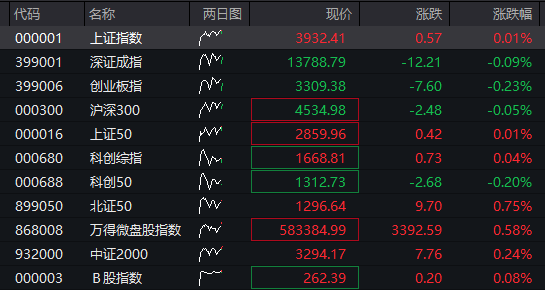
A股三大股指震荡走低,化工反弹,存储器齐跌,恒科指跌近1%,快手重挫超10%,泡泡玛特再跌超7%
Hua Er Jie Jian Wen· 2026-03-26 02:01
Market Overview - The A-share market opened lower on March 26, with all three major indices declining, particularly in the semiconductor and photovoltaic sectors [1] - The Hang Seng Index also opened lower, with the Hang Seng Technology Index dropping nearly 1% [2][3] Semiconductor and Storage Sector - The storage sector experienced a collective adjustment, with companies like Zhaoyi Innovation and Beijing Junzheng seeing significant declines of over 5% [12][13] - U.S. storage stocks fell sharply overnight, with SanDisk and Micron leading the declines [1] Bubble Mart Performance - Bubble Mart's stock fell over 7% for the second consecutive trading day, following target price downgrades from Morgan Stanley and Citigroup due to lower-than-expected earnings guidance and overseas growth slowdown [6][8] - The company's latest financial report indicated a revenue of RMB 37.12 billion for 2025, a year-on-year increase of 184.7%, but highlighted risks due to a high concentration of revenue from a single IP [8][9] - Analysts from various firms have adjusted their earnings forecasts for Bubble Mart downwards, citing concerns over growth sustainability and market performance [9][11] Debt and Commodity Markets - The bond market showed a slight upward trend, with government bond futures rising across various maturities [4] - In the commodity market, most domestic futures saw increases, particularly in chemical products and shipping indices, while energy prices showed mixed results [5][14] Consumer and Technology Stocks - Kuaishou's stock plummeted over 10%, marking its largest intraday drop since April of the previous year, following disappointing earnings guidance [9][19] - The technology sector, particularly AI computing and semiconductor stocks, faced significant declines, while some segments like photovoltaic and satellite navigation showed strength [17]





霍尔木兹海峡无法通行,巴斯夫化工产品再度涨价(附概念股)
Sou Hu Cai Jing· 2026-03-26 01:51
Group 1 - BASF announced a price increase for its commodity amines portfolio in Europe, with increases up to 30% and some products potentially higher, effective immediately [1] - Morgan Stanley highlighted that raw material availability is a critical bottleneck, and if the conflict continues, operational rates in the Middle East and Asia may decline further, impacting global chemical supply chains [1] - As of March 15, approximately 60% of chemical products in China saw price increases, with notable rises in acrylic acid (90.7%), p-nitrochlorobenzene (80.3%), and methionine (56.3%) [1] Group 2 - Shanghai Petrochemical Company is a major integrated refining and chemical enterprise in China, listed in Shanghai, Hong Kong, and New York, focusing on producing synthetic fibers, resins, plastics, and petrochemical products [2] - China Xuyang Group is the largest producer of methanol from coke oven gas in China, with an annual production capacity of 600,000 tons, and is a key player in the "alcohol-ammonia" industry chain [2] - Xinlianxin Fertilizer has diversified its business, with a growing share of revenue from the chemical sector, primarily focusing on methanol, and is expected to see significant revenue and profit growth in Q1 2026 due to rising prices [2]

银河期货每日早盘观察-20260326
Yin He Qi Huo· 2026-03-26 01:46
1. Report Industry Investment Rating The provided content does not mention the industry investment rating. 2. Core Viewpoints of the Report The report analyzes the market conditions of various futures products, including financial derivatives, agricultural products, black metals, non - ferrous metals, shipping and carbon emissions, and energy chemicals. It is affected by multiple factors such as geopolitical conflicts (especially the US - Iran conflict), supply and demand relationships, and policy changes. The market trends of different products are diverse, with some showing upward trends, some in a volatile state, and others facing downward pressure[5][7][9]. 3. Summary by Catalog Financial Derivatives - **Stock Index Futures**: The rebound momentum of ultra - oversold stocks weakened. The market continued to rise widely, but the trading volume did not increase, indicating limited incremental funds. Future stock index trends are still likely to fluctuate. Suggested strategies include grid operation for single - side trading, and IM/IC long 2609 + short ETF for arbitrage[19][20]. - **Treasury Bond Futures**: There is still external uncertainty, and the bond market fluctuated in a narrow range. In the short term, there is a lack of substantial bullish drivers for the bond market to strengthen unilaterally, but there is also certain support. It is recommended to wait and see for single - side trading, and to hold a short position in the 30Y - 7Y term spread after partial profit - taking[23][24]. Agricultural Products - **Protein Meal**: The supply pressure is large, and the market is under pressure. The overseas market has fluctuations, and the domestic fundamentals suggest caution due to the impact of macro and supply factors. It is recommended to place a small number of long positions in the far - month contracts and narrow the MRM09 spread[26][27]. - **Sugar**: International sugar prices are expected to be strong, while domestic sugar prices are expected to follow slightly. It is recommended to go long at low prices and short at high prices for Zhengzhou sugar, and to go long on international sugar and short on Zhengzhou sugar for arbitrage[28][30][31]. - **Edible Oils**: The market is in a high - level shock. The inventory situation is neutral to slightly high, and it is affected by factors such as geopolitical conflicts. It is recommended to wait and see for short - term shocks and consider anti - arbitrage opportunities for p59[33][35][36]. - **Corn/Corn Starch**: The wheat auction price has fallen, and the market is in a weak shock. The external market for corn is expected to be strong in the short term, and the domestic market is expected to be stable in the short term. It is recommended to go long on the callback of the external 05 corn and hold a high - level shock view for the 05 corn, and to narrow the 07 corn - starch spread[36][37][38]. - **Hogs**: The slaughter pressure has increased, and the price has declined. It is recommended to take a short - term bearish view on the near - month contracts and conduct LH79 anti - arbitrage[39][40][41]. - **Peanuts**: The spot is strong, and the market is in a strong shock. It is recommended to go long on the 05 peanuts at low prices and sell the pk605 - P - 7700 option[42][43][44]. - **Eggs**: The demand has recovered, and the price is stable. It is recommended to short the June contract[44][45][46]. - **Apples**: The demand is good, and the price is firm. It is recommended to wait and see for the May contract[47][48][49]. - **Cotton - Cotton Yarn**: The cotton price has strong support at the bottom and is in a shock - upward trend. It is recommended to go long on Zhengzhou cotton at low prices[50][53]. Black Metals - **Steel**: Overseas sentiment affects the futures price, and there is no clear trend. It is recommended to wait and see for single - side trading and short the coil - coal ratio for arbitrage[55][56]. - **Coking Coal and Coke**: The price fluctuates greatly, and the trend is not obvious. It is recommended to wait and see and be cautious about short - term trading[57][58][59]. - **Iron Ore**: The supply is disturbed, and the price is at a high level. It is recommended for spot enterprises to hedge at high prices and conduct 5/9 month - spread anti - arbitrage[60][61]. - **Ferroalloys**: Affected by the sharp fluctuations in crude oil, the price is in a high - level shock. It is recommended to wait and see for arbitrage and sell out - of - the - money put options[62][63]. Non - Ferrous Metals - **Gold and Silver**: The US - Iran negotiation conditions are difficult to reconcile, and the market's optimistic sentiment has declined. It is recommended to consider a range - shock strategy if Shanghai gold and silver can stand above the 120 - day moving average[65][66][68]. - **Platinum and Palladium**: The negotiation is at a stalemate, and the precious metals are in a sideways direction. It is recommended for high - risk - tolerance investors to go long on platinum cautiously and conduct long - platinum and short - palladium arbitrage[71][72]. - **Copper**: Pay attention to the progress of the US - Iran negotiation. The price is in a low - level shock, and it is recommended to wait and see[75][76]. - **Alumina**: Pay attention to the mining policy in Guinea and the Middle East geopolitical conflict. The price is affected by supply and geopolitical factors and is in a shock - weakening trend[78][80]. - **Electrolytic Aluminum**: There is uncertainty in the geopolitical conflict, and the price is in a shock - weakening trend. It is recommended to wait and see[82][85]. - **Cast Aluminum Alloy**: There is uncertainty in the geopolitical conflict. The price is expected to rebound with aluminum prices. It is recommended to wait and see[87][88]. - **Zinc**: Pay attention to the macro and capital sentiment. The price is expected to be in a low - level shock in the short term. It is recommended to wait and see[93]. - **Lead**: The price is in a low - level shock. It is recommended to wait and see[95][96]. - **Nickel**: The short - term price is dominated by the macro. It is recommended to be bullish[97]. - **Stainless Steel**: Supported by cost, it follows the nickel price. It is recommended to be bullish[100][101]. - **Industrial Silicon**: The price reaches the upper limit of the range. It is recommended to short lightly[102][103]. - **Polysilicon**: The demand is weak. It is recommended to take a bearish view[104]. - **Lithium Carbonate**: The low price attracts downstream buyers. It is recommended to be bullish[105][106]. - **Tin**: The price is boosted by the cease - fire expectation. It is recommended to pay attention to the negative impact on tin consumption from the helium blockade[108][112]. Shipping and Carbon Emissions - **Container Shipping**: COSCO resumes bookings to the Middle East, avoiding the Strait of Hormuz. The US - Iran negotiation is still in a game. It is recommended to wait and see[113][115][116]. - **Dry Bulk Freight**: The Middle East geopolitical conflict still exists, and the market is waiting for the result of the US - Iran negotiation. The freight market is affected by multiple factors such as supply and demand and geopolitical situation[116][119]. - **Carbon Emissions**: The Chinese carbon market has dull trading, and the EU carbon market has the March contract delivery. The carbon price in the EU is expected to be in a shock - upward trend in the medium - long term, while the Chinese carbon market is affected by factors such as quota pre - distribution and new - industry inclusion[120][123][125]. Energy Chemicals - **Crude Oil**: The negotiation prospect is unclear, and there is still a supply gap. It is recommended to be bullish at a high level[128][129]. - **Asphalt**: The supply contraction is a reality, and it is necessary to pay attention to the near - term oil price fluctuation risk. It is recommended to hold long positions in the BU2606 contract[130][131]. - **Fuel Oil**: Pay attention to the low - sulfur production reduction and the start - up rhythm of high - sulfur peak - season demand. It is recommended to be in a high - level shock - upward trend and pay attention to the spread between high - and low - sulfur fuel oils[131][133]. - **LPG**: The decline in the external market drives the internal market to weaken. It is recommended to be in a high - level shock - upward trend[135]. - **Natural Gas**: The geopolitical risk is repeated, and the upward trend remains unchanged. It is recommended to sell deep out - of - the - money put options on TTF[138][139][141]. - **PX & PTA**: There is an expected unplanned reduction in supply, and PTA enterprises may be forced to reduce production. It is recommended to wait and see[142][143][144]. - **BZ & EB**: The reduction in refinery load affects the supply of pure benzene, and the benzene import volume has decreased year - on - year. It is recommended to wait and see[147][148]. - **Ethylene Glycol**: The import volume is revised downward. It is recommended to wait and see[149][150]. - **Short - Fiber**: The processing margin fluctuates within a range. It is recommended to wait and see[152]. - **Bottle Chips**: The inventory is continuously decreasing. It is recommended to wait and see[155]. - **Propylene**: The supply is tight. It is recommended to wait and see[157][159]. - **Plastic PP**: The apparent demand for domestic PP has decreased for two consecutive months. It is recommended to wait and see for the L and PP contracts[160][161][162]. - **Caustic Soda**: The price is weakening. It is recommended to wait and see[163][164]. - **PVC**: It is in a strong - shock trend. It is recommended to wait and see[166]. - **Soda Ash**: It is in a high - level shock. It is recommended to short at high levels and sell call options[168][170]. - **Glass**: It is in a shock - downward trend. It is recommended to short at high levels and sell call options[171][173]. - **Methanol**: It is mainly in a rebound trend. It is recommended to wait and see[175]. - **Urea**: It is mainly in a shock trend. It is recommended to wait and see and sell put options on callbacks[179][180]. - **Pulp**: The inventory suppresses the price, and the rebound height is limited. It is recommended to go long at low prices and sell the SP2605 - P - 5100 option[181][183][184]. - **Offset Printing Paper**: The inventory is high, and the upward momentum is weak. It is recommended to short at high prices and sell the OP2604 - C - 4250 option[186][187]. - **Logs**: The price shows mixed trends, with obvious structural differentiation, and the market is generally strong. It is recommended to go long at low prices[187][188][189]. - **Natural Rubber and No. 20 Rubber**: The rainfall in Thailand continues to reduce production. It is recommended to hold long positions in the RU and NR contracts and conduct NR2605 - RU2605 arbitrage[191][192][193]. - **Butadiene Rubber**: The apparent demand for butadiene rubber has decreased. It is recommended to hold long positions in the BR contract and conduct BR2505 - RU2505 arbitrage[195][197].
原油价格上涨对化工品期货的影响及逻辑
Shan Jin Qi Huo· 2026-03-26 01:46
Report Industry Investment Rating - Not provided in the given content Core Viewpoints - The escalation of military confrontation between the US, Israel, and Iran has led to the blockade of the Strait of Hormuz, causing a sharp rise in the geopolitical risk premium of crude oil. The Brent crude oil futures main contract has reached a two - year high and is fluctuating around $100 per barrel. This price increase will trigger a drastic reconstruction of the entire industrial chain from the cost side and have a profound impact on downstream chemical products and terminal industries [1][3]. - The core driver of the oil price breaking through $100 per barrel is the market's extreme concern about the blockade of the Strait of Hormuz and the complete halt of crude oil exports from Iran and multiple Middle - Eastern countries. The conflict has entered the "energy infrastructure war" stage, bringing multiple cost pressures to the energy - chemical industry chain and compressing the profit margins of downstream manufacturing [4]. - As long as the geopolitical conflict does not substantially ease and the Strait of Hormuz does not have substantial free navigation, the Brent crude oil price will be strongly supported above $90. It is possible for the price to break through the recent high of $119.5 per barrel [7]. - The impact of rising crude oil prices on chemical futures is a complex system with cost - driven as the main factor, supplemented by expectation transmission, regulated by cracking spreads, and restricted by substitution effects. In actual operations, it is necessary to dynamically track the three - level spread structure of crude oil - naphtha - chemical products and combine inventory and production capacity cycles to judge the transmission efficiency [1][16]. Summary by Relevant Catalogs Crude Oil Price Breakthrough and Future Outlook - The current oil price breakthrough is due to concerns about the blockade of the Strait of Hormuz and the halt of Middle - Eastern crude oil exports. The conflict has led to the shutdown of over 7 million barrels per day of crude oil production in the Middle East and brought supply shocks to refined oil and natural gas [4]. - The probability of a short - term agreement between the US and Iran is low, and even if an agreement is reached, the damaged oil and gas production facilities cannot be repaired in the short term. The current supply shock of crude oil exceeds any previous ones [5]. - Global crude oil inventory is at a historical low, and the blockade of the Strait of Hormuz has cut off 20% of global crude oil supply. With stable global demand, the Brent crude oil price will be supported above $90, and it may break through $119.5 per barrel [7]. Chemical Product Price Conduction - The price of crude oil is transmitted downstream along the "crude oil - naphtha - intermediate - synthetic material - product" chain. There is significant differentiation among chemical product varieties [8]. - In the naphtha and olefin chain, naphtha prices rise with crude oil, but cracking spreads are compressed. The prices of basic raw materials such as ethylene and propylene increase, leading to a "high - cost, low - profit" situation for downstream plastics [8]. - In the aromatic hydrocarbon chain (PX - PTA - polyester), PX prices rise with crude oil, driving up PTA prices. However, due to the lack of synchronous growth in textile orders, PTA processing fees are compressed, and some devices face the risk of shutdown [8]. - High oil prices theoretically benefit coal - chemical enterprises, but in the current macro - environment, coal - chemical products have difficulty rising. The attack on Qatar's LNG facilities has led to cost increases for gas - based chemical products, offsetting some of the relative advantages of coal - chemical industry [8]. Core Conduction Mechanism - **Conduction Path**: The price of crude oil is transmitted downstream through the "crude oil - naphtha - intermediate - synthetic material - product" chain [8]. - **Conduction Mechanism**: - **Cost - Push Effect**: The cost of key chemical products increases with the rise of crude oil prices. For example, for every $10 per barrel increase in crude oil, the ethylene cost increases by about $80 - 100 per ton. The correlation between PX and crude oil is as high as 0.85+ [10]. - **Cracking Spread Adjustment**: When the cracking spread expands, refinery profits are good, and the supply of chemical raw materials is sufficient, limiting the increase of chemical product prices. When the spread narrows, refinery profits are compressed, and the supply of chemical raw materials tightens, expanding the increase of chemical product prices [12]. - **Substitution Effect and Marginal Pricing**: The rise of crude oil prices makes coal - based products more economical, suppressing the rise of oil - based chemical products. It also increases the correlation between agricultural products such as corn and palm oil and energy prices [13]. - **Sensitivity Analysis of Different Chemical Products**: - **High Sensitivity (correlation coefficient > 0.7)**: PTA/ethylene glycol, polyolefins (LLDPE/PP), and styrene [15]. - **Medium Sensitivity (correlation coefficient 0.4 - 0.7)**: Methanol, PVC, and synthetic rubber [15]. - **Low Sensitivity (correlation coefficient < 0.4)**: Urea, soda ash, and glass/building material - related chemical products [15].
霍尔木兹海峡无法通行 巴斯夫化工产品再度涨价(附概念股)
Zhi Tong Cai Jing· 2026-03-26 01:31
Group 1: BASF Price Increase Announcement - BASF announced a price increase for its commodity amines portfolio in Europe, with increases up to 30% and some products potentially higher, effective immediately [1] - Morgan Stanley highlighted that raw material availability is a critical bottleneck, and if the conflict continues, operational rates in the Middle East and Asia may decline further, impacting global chemical supply chains [1] - As of March 15, approximately 60% of chemical products in China saw price increases, with notable rises in acrylic acid (90.7%), p-nitrochlorobenzene (80.3%), and methionine (56.3%) [1] Group 2: Chemical Sector Companies in Hong Kong - Shanghai Petrochemical Company (00338) is a major integrated refining and chemical enterprise in China, listed in Shanghai, Hong Kong, and New York, focusing on synthetic fibers, resins, plastics, and petroleum products [2] - China Xuyang Group (01907) is the largest producer of methanol from coke oven gas in China, with an annual production capacity of 600,000 tons, and is a key player in the "alcohol-ammonia" industry chain [2] - China Heartland Fertilizer (01866) has diversified its business, with a growing share of revenue from the chemical sector, primarily focusing on methanol, with expectations of significant revenue and profit growth in Q1 2026 due to rising prices and supply disruptions from Iran [2]