
智能终端

Search documents
开辟新赛道 跑出“加速度” 武汉市东西湖区:加快建成产城融合的“中国网谷”
Ren Min Ri Bao· 2025-12-23 22:25
Core Viewpoint - Wuhan's East Lake District is rapidly developing into a vibrant industrial new city, showcasing a blend of ecological sustainability and industrial growth, positioning itself as a key player in China's new industrialization and food industry sectors [1][3]. Group 1: Historical Development - The East Lake area has a rich history dating back 5,000 years, evolving from agricultural roots to a national economic development zone by 2010 [2][3]. - The establishment of the Wujiashan State Farm in 1958 marked the beginning of organized agricultural development, which laid the foundation for the region's economic growth [2]. - The transition from an agricultural to an industrial economy was marked by the introduction of various enterprises, including food and logistics companies, which accelerated regional economic development [2][3]. Group 2: Strategic Initiatives - The establishment of the National Cybersecurity Talent and Innovation Base in 2016 has positioned East Lake as a hub for cybersecurity innovation, attracting over 300 cybersecurity companies [4]. - The Wuhan Land Port National Logistics Hub was approved in 2021, enhancing the region's logistics capabilities and integrating various transportation modes to support economic growth [5]. - The development of a logistics ecosystem that includes rail-water transport and cross-border trade is transforming the region into a logistics hub, contributing to the "port-industry-city" integration [5]. Group 3: Industrial Growth - The East Lake District is focusing on upgrading traditional industries while fostering emerging sectors, creating a modern industrial system characterized by a "343" structure [6]. - Significant advancements in traditional industries, such as food health and equipment manufacturing, are being complemented by the rise of strategic emerging industries like cybersecurity and new energy materials [6][7]. - The region is also investing in future industries, including hydrogen energy and low-altitude economy, with several high-tech enterprises establishing operations [7]. Group 4: Quality of Life and Urban Development - The East Lake District is committed to creating a harmonious living environment, integrating ecological beauty with urban development, and achieving a green coverage rate of 48% [8]. - The development of transportation infrastructure, including six urban metro lines and major highways, enhances connectivity and accessibility within the region [8]. - Cultural and recreational facilities, such as libraries and theaters, are being developed to meet the growing demand for high-quality cultural experiences among residents [9]. Group 5: Demographics and Community - Over the past decade, 470,000 new residents have settled in the East Lake District, contributing to a population nearing one million, which fosters innovation and entrepreneurship [10].


融入服务全国统一大市场,是河南的机遇
Xin Lang Cai Jing· 2025-12-23 12:55
Core Viewpoint - The recent Henan Provincial Economic Work Conference emphasizes the integration and service of the national unified market as a key direction for the province's development over the next five years [2][3]. Group 1: Market Opportunities - Henan has a population exceeding 100 million, with over 22 million in the middle-income group and more than 11 million business entities, representing significant market capacity and consumer potential [6]. - The core opportunity for Henan in the context of the "14th Five-Year Plan" is to leverage its vast consumer potential to shape industrial clusters, transforming market demand into a fertile ground for industry [7]. - The example of the hot pot industry illustrates this, with Henan ranking fourth in the number of hot pot restaurants nationwide, showcasing the province's ability to attract and develop food supply chains [9][10]. Group 2: Transportation Hub Redefinition - Henan has developed a comprehensive transportation network, including a "米" shaped high-speed rail system and over 10,000 kilometers of highways, which positions it as a critical logistics hub [13]. - The province aims to upgrade its transportation hubs into economic hubs, with recent initiatives including the establishment of six economic pilot zones to enhance industrial clustering [15][16]. Group 3: Environmental Improvement - The development of a favorable business environment is crucial for attracting and retaining enterprises, as evidenced by the increase in wintering swan populations in the region, reflecting improved ecological conditions [17]. - Henan's government is focused on creating a conducive environment for business, shifting from competitive land and tax incentives to a holistic ecosystem that promotes fair competition and transparency [19]. - The establishment of a branch of Shenzhen's leading robotics company in Henan highlights the effectiveness of the province's improved business environment in attracting high-tech enterprises [21]. Group 4: Strategic Development Logic - Henan's integration into the national unified market is seen as a strategic move to drive high-quality development, aligning national needs with local capabilities and business expectations [21].



上海培育产业新增长点“十五五”剑指万亿 计划打造一批具有全球影响力的智能终端品牌
Jie Fang Ri Bao· 2025-12-21 02:04
上海是全国低空经济领跑者,金山区华东无人机基地是全国首批"民用无人驾驶航空试验区",全国 50%以上的eVTOL(电动垂直起降飞行器)头部企业已选择上海。闵行区组建低空经济产业联盟,集聚 上海交通大学、华东师范大学,以及中航机载、航天氢能等"国家队",还有整机头部企业、配套企业 等,全区低空经济协同发展格局初步形成。近期,时的科技的E20全尺寸工程样机完成风洞测试与地面 滑行试验,沃兰特航空"VB-2X"验证机完成首飞。这两家闵行区内企业今年以来签约订单总额逾150亿 美元。另外,杨浦区提出打造低空经济产业创新高地和商业应用高地,已实现"三个首次",即首条中心 城区无人机低空物流配送航线、首条跨越高架线航线、首条高校配送航线。据了解,"十五五"期间,上 海要在低空经济技术创新、装备研制、商业示范方面发力,预计到"十五五"末产业规模达1000亿元。 商业航天包括商业火箭、商业卫星、终端设备、运营服务等环节。闵行区正持续推进上海市商业航 天商业火箭特色集聚区建设,围绕链主,精准引进可复用火箭发动机、低成本卫星载荷、激光通信终端 等上下游优质项目。"十五五"期间,上海将全面推动商业航天产业链强链、补链、延链,如加大 ...

上海培育产业新增长点“十五五”剑指万亿
Xin Lang Cai Jing· 2025-12-20 23:40
Core Insights - The 20th Central Committee's Fourth Plenary Session approved the "Suggestions on Formulating the 15th Five-Year Plan for National Economic and Social Development," emphasizing the creation of new pillar industries [1] - Shanghai aims to focus on low-altitude economy, commercial aerospace, embodied intelligence, biomanufacturing, and smart terminals as new growth points, targeting an overall scale of 1 trillion yuan during the 15th Five-Year period [1] Industry Focus - In the field of embodied intelligence, Shanghai has a strong industrial ecosystem and diverse application scenarios, gradually establishing a commercial closed loop from "technology research and development to scenario validation to large-scale implementation" [1] - The Zhangjiang core area has attracted various robotics companies, driving the aggregation of key components such as high-performance solid-state batteries, motors, and dexterous hands [1] - Zhangjiang is also developing a vertical model ecological cluster area called "Moli Community," which gathers nearly 200 upstream and downstream related enterprises and has established the country's first heterogeneous humanoid robot training center and open-source community [1] Future Projections - According to the "Implementation Plan for the Development of the Embodied Intelligence Industry in Shanghai," the core industry scale is expected to exceed 50 billion yuan by 2027 [1] - It is predicted that by 2030, the core industry scale could reach 100 billion yuan [1]
【招银研究|行业深度】AI系列研究——端侧AI将重塑全球智能终端产业格局
招商银行研究· 2025-12-19 08:58
Core Insights - Edge AI is leading a technological paradigm shift, reshaping the new landscape of the smart terminal industry by enabling local execution of AI models, resulting in low latency, high energy efficiency, and privacy protection [4][9][10] - The development of Edge AI is driven by innovations in AI computing architecture, multimodal perception and interaction, and system-level AI integration, transitioning smart devices from mere "computing nodes" to "local reasoning and autonomous decision-making" [4][6][10] Application Ecosystem - Multiscenario integration is accelerating the growth of the Edge AI terminal market, with AI PCs expected to achieve a penetration rate of 64% by 2028, and AI smartphones projected to exceed 900 million units in shipments by the same year [5][6] - AI wearables are anticipated to reach a market size of $153.8 billion by 2030, while AI smart homes are expected to grow to $537.2 billion, highlighting Edge AI as the core growth engine of smart hardware [5][6] Upstream Ecosystem - Breakthroughs in advanced process technology and Chiplet architecture are driving significant performance improvements in Edge AI, with NPU computing power increasing to 50-100 TOPS to meet local model operation demands [6][10] - The global Edge AI processor market is projected to grow from $31 billion in 2022 to $60.2 billion by 2028, with major players like Qualcomm, Apple, and NVIDIA dominating the high-end market [6][10] Business Recommendations - Companies should prioritize Edge AI as a key strategic focus, developing differentiated strategies around terminals, supply chains, and application scenarios to capitalize on this emerging trend [6]

正与字节开展AI手机合作?联想内部人士:一直保持密切沟通
Xin Lang Ke Ji· 2025-12-19 04:02
Core Insights - ByteDance is advancing collaborations with hardware manufacturers such as Vivo, Lenovo, and Transsion to develop AI smartphones, aiming to pre-install AIGC plugins to gain user entry and shift the current passive stance of AI in execution [1] Group 1: Collaborations - ByteDance is working closely with Lenovo, Doubao, and Volcano Engine on various business initiatives [1] - Lenovo has been maintaining close communication with Doubao regarding collaborations in the smart terminal sector [1]

亿道信息:打造优质AI产品解决方案提供商
Zhong Guo Zheng Quan Bao· 2025-12-18 20:23
Core Insights - The company aims to become a leading global provider of AI product solutions, emphasizing the vast potential of AI technology and its integration into various sectors [1][2] - The "AI+" strategy has been elevated to a top-level strategy, focusing on deep integration of AI technology in product design and application scenarios [1][2] AI Strategy Implementation - The company has launched the "Yidao AI Intelligent Computing Solution Matrix," marking its strategic shift from a product provider to a scene-based intelligent computing system builder [2] - The strategy encompasses six major scenarios: personal, family, enterprise, industrial, wearable, and robotics, utilizing a three-in-one infrastructure of hardware computing power, AESOF platform, and AI atomic capabilities [2] - The company is investing more resources to implement the "AI+" strategy, including establishing a corporate research institute to focus on foundational AI technologies [2][3] Industry Chain Integration - The signing of the Yifeng Zhixin advanced packaging project represents a significant step in the company's integration within the semiconductor industry chain [3] - The company is extending its business from consumer electronics to advanced semiconductor packaging, enhancing collaboration across the industry chain [3] - Plans for mergers and acquisitions are underway to enter the smart interactive display and RFID sectors, aiming to enhance the company's competitive edge in AI applications and terminals [3][4] Emerging Business Expansion - The company is actively pursuing the expansion of the AIoT ecosystem, which is expected to generate diverse scene innovations and commercial growth opportunities [4] - AI glasses are a key focus area, with the company’s subsidiary, Yijing Virtual, developing a product matrix that includes AI audio glasses, AI camera glasses, and AI display glasses [5] - The company has also initiated a robotics team targeting the commercial cleaning sector, with the launch of the A10 cleaning robot as part of its new business expansion [5]
深圳宝安:场景开放牵引产业变革
Jing Ji Ri Bao· 2025-12-18 04:50
Core Insights - The article highlights the rapid development of innovative industrial transformations in Bao'an District, Shenzhen, focusing on low-altitude logistics, smart manufacturing, and smart city applications [1][2][3] Group 1: Industrial Innovation and Scene Opening - Bao'an District has opened 158 drone routes, achieving 383,800 low-altitude flights and establishing China's first "air-ground collaborative" smart operation center [1] - The district has organized 641 government-enterprise scene matching activities over the past three years, attracting over 11,700 companies and facilitating transactions exceeding 20 billion yuan [1][2] - The "Baojing Chuangxiang" scene matching conference released over 500 scene opportunities, with more than 60 companies signing contracts, resulting in over 10 billion yuan in intended transaction amounts [2][3] Group 2: Technological and Product Development - Bao'an has become a hub for various innovative companies, including those focusing on perovskite solar technology, benefiting from the district's scene opening initiatives [3][4] - The district has established a development framework for technology-based SMEs, with 7,397 national high-tech enterprises, leading the country for eight consecutive years [4] Group 3: Ecosystem and Support Platforms - Bao'an aims to create a scene innovation ecosystem by leveraging policy innovation and smart manufacturing advantages, promoting a collaborative environment for enterprises [5][6] - The district has developed a supply-demand capability list and opportunity list to facilitate precise matching between enterprises and government-led public service needs [6] - The establishment of the Guangdong-Hong Kong-Macau Greater Bay Area Application Scene Innovation Center in Bao'an will focus on new technology testing and creating a platform for productivity enhancement [8][9]
2025深江产业合作协同发展大会成功举办 携手共绘智能终端产业新蓝图
Jin Tou Wang· 2025-12-18 03:01
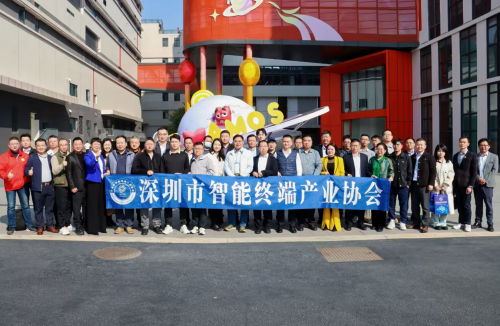
大会在热烈的氛围中拉开帷幕。深圳市智能终端产业协会执行会长安自能首先代表主办方致开幕词。他 指出,深圳作为全球智能终端产业的创新高地,拥有完整的产业链和强大的研发能力,而江门凭借区位 优势、土地资源及完善的产业配套,正成为大湾区制造业转型升级的重要承载地。"深圳研发+江门制 造"的互补模式,不仅能实现资源高效配置,更将推动两地产业向高端化、智能化、绿色化方向迈 进。"安自能强调,本次大会旨在搭建一个开放共享的交流平台,促进深江企业深度对接,加速形成"创 新链在深圳、产业链在江门"的协同发展格局。 江门高新区释放"强磁场"效应 江门市江海区投资促进中心招商部长梁健烽在会上作了专题推介。他通过详实的数据和生动的案例,全 面展示了江门高新区的投资优势: 区位得天独厚:地处粤港澳大湾区"黄金内湾",毗邻深圳,深中通道、黄茅海跨海通道等重大交通枢纽 的建成,使江门与深圳的时空距离缩短至1小时以内; 产业配套完善:已形成高端装备制造、新一代电子信息、新材料等战略性产业集群,与深圳智能终端产 业形成高度契合的上下游链条; 锚定协同发展,共谋产业升级 12月16日下午,以"协同创新.智启未来"为主题的2025深江产业合作协同 ...
五年全国百强园区排名升32位 | 长沙产业园区高质量发展系列访谈 · 望城经开区
Chang Sha Wan Bao· 2025-12-18 00:06
Core Viewpoint - The article emphasizes the achievements and future plans of the Changsha Economic Development Zone, highlighting its growth in industrial strength, innovation, and support for entrepreneurs, particularly in the context of the upcoming "15th Five-Year Plan" [1][4]. Group 1: Achievements During the "14th Five-Year Plan" - The number of market entities in the park increased from 3,700 to 7,000, with total industrial output value expected to exceed 100 billion yuan, marking a significant growth from 67 billion yuan [2][3]. - The park's comprehensive strength improved, ranking 92nd in the national evaluation of economic development zones, a rise of 32 places [2]. - The park has fostered a strong industrial ecosystem, with nearly 90% of the total industrial output value coming from key industries, and over 400 high-tech enterprises established [2][3]. Group 2: Future Plans for the "15th Five-Year Plan" - The park aims to focus on high-quality development, targeting an annual industrial output growth of over 12% and establishing a modern industrial system [4][5]. - Plans include creating four key areas: Advanced Manufacturing Demonstration Zone, Technology Innovation Leading Zone, Reform and Opening Pioneer Zone, and a Model Area for Industry-City Integration [4][5][6]. Group 3: Support for Entrepreneurs - The park will provide comprehensive support for young entrepreneurs, including a 60,000 square meter innovation and entrepreneurship base, and a matrix of entrepreneurial support facilities [7][8]. - Financial support will be enhanced through various funding channels, including risk compensation funds and entrepreneurial loans [7][8]. - The park emphasizes collaboration with universities to foster innovation and entrepreneurship, aiming to attract young talent and create a vibrant entrepreneurial ecosystem [8][9].