新能源

Search documents
云南能投:获得永宁风电场(五期)及永三风电场(三期)项目开发权
Ge Long Hui· 2026-01-28 11:06
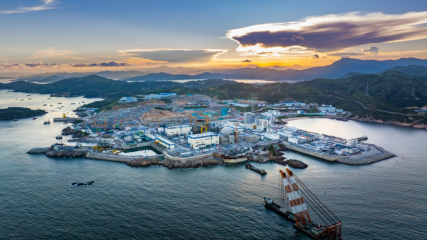
公司本次获得永宁风电场(五期)及永三风电场(三期)项目开发权,预计总装机规模82.8MW,有利于公司 紧抓战略机遇,积极践行国家和云南省能源发展战略,加快绿色能源建设步伐,提升公司新能源装机规 模、市场地位和经营业绩,促进公司新能源业务的做强做优做大,推动公司战略发展目标实现的同时助 推地方经济社会发展。 格隆汇1月28日丨云南能投(002053.SZ)公布,公司于日前收到《永宁风电场(五期)建设业主优选工作中 选通知书》《永三风电场(三期)建设业主优选工作中选通知书》,确定公司为"永宁风电场(五期)建设业 主优选工作"及"永三风电场(三期)建设业主优选工作"的中选企业,公司获得永宁风电场(五期)及永三风 电场(三期)项目开发权。 ...

打造四个万亿级新兴支柱产业
Qi Lu Wan Bao· 2026-01-28 11:05
Group 1 - The core focus is on cultivating and expanding emerging and future industries in Shandong, with a target to develop four trillion-level emerging pillar industries and four hundred billion-level potential industries by 2026 [1] - By 2025, Shandong aims to adjust its industrial structure as a key driver for transformation, promoting intelligent, green, and integrated industrial development, with advanced capacity in key industries exceeding 40% [1] - The province plans to establish eight new provincial-level strategic emerging industry clusters, increasing the total number of such clusters to 50, with a total scale exceeding 3.6 trillion yuan, and a growth rate of 7.1% in high-tech manufacturing value added [1] Group 2 - Shandong is seizing the opportunity of artificial intelligence development by implementing a three-year action plan and a high-quality development promotion scheme, with a provincial fund of 1 billion yuan and a 2 billion yuan industry fund to support initiatives [2] - The province aims to have 1,124 core artificial intelligence enterprises by 2025, with core industry revenue surpassing 120 billion yuan, accounting for approximately 10% of the national total [2] - Digital economy is projected to account for over 50% of Shandong's economy, significantly contributing to the province's economic growth [2]
云南能投(002053.SZ):拟投资建设马龙区新屯光伏发电项目
Ge Long Hui A P P· 2026-01-28 10:54
Core Viewpoint - Yunnan Energy Investment (002053.SZ) has been awarded the bid for the Malong District Xintun Photovoltaic Power Generation Project, part of Yunnan Province's 2025 second batch of renewable energy projects, which will enhance the company's competitiveness in the renewable energy sector [1]. Group 1 - The controlling shareholder, Yunnan Energy Group Co., Ltd., has decided that the company will establish a project company to execute the photovoltaic project development tasks [1]. - The project site is located in the western hillside of Xintun Village, Wangjiazhuang Town, Malong District, Qujing City, Yunnan Province, which is favorable for the construction of the photovoltaic power station [1]. - The total installed capacity of the project is expected to be 30 MW, with a total construction period of 6 months [1]. Group 2 - The Malong District Xintun Photovoltaic Power Generation Project aligns with the strategic opportunities for the company, promoting the growth and optimization of its renewable energy business [1]. - The project supports the national and Yunnan provincial energy development strategies, accelerating the pace of green energy construction [1]. - The initiative aims to enhance the company's renewable energy installed capacity, market position, and operational performance, contributing to local economic and social development [1].
2025年广东外贸突破9万亿,高技术产品增长明显
Sou Hu Cai Jing· 2026-01-28 10:40
Core Insights - Guangdong's foreign trade has reached a historical annual high, with a target of 9.49 trillion yuan in imports and exports by 2025, marking a 4.4% growth [1] - The province's export value is projected to be 6.03 trillion yuan, a 2.5% increase, while imports are expected to reach 3.46 trillion yuan, growing by 7.8% [1] - Guangdong contributes approximately one-fifth of the national foreign trade total and aims for a 3% growth in total trade volume in 2026 [1] Trade Growth and Market Expansion - The province plans to strengthen its presence in emerging markets like ASEAN and cultivate advantageous export industry clusters [1] - Guangdong's foreign trade product structure is optimizing, with high-tech products exceeding 1 trillion yuan in exports for the first time, growing by 15% [3] - Key high-tech exports include electronic information, high-end equipment, medical devices, and electric vehicles, with lithium batteries and medical instruments leading in national export value [3] Supply Chain and Product Trends - Guangdong's supply chain advantages are significant, with over 3,000 robot-related companies in Foshan, making it the largest industrial robot production base in China [3] - The trend towards high-end, intelligent, and green products is increasing, with exports of electromechanical products expected to reach 4.15 trillion yuan, a 7.3% growth [3] - Notable growth rates in exports of smart products include drones (40.9%), 3D printers (37.1%), and industrial robots (33.9%) [4] Regional Performance - Shenzhen's high-tech product exports are projected to reach 1.4 trillion yuan by 2025, with a growth rate of 11.6%, accounting for 30.7% of the city's total trade [5] - The "new three samples" (new energy vehicles, lithium batteries, and photovoltaics) have become significant growth points, with exports exceeding 200 billion yuan, a 30.6% increase [5] Market Diversification - Guangdong's trade partners are diversifying, with trade volumes with ASEAN, Hong Kong, and the EU each surpassing 1 trillion yuan [6] - Emerging markets in Central Asia, Africa, and the Middle East are also seeing significant growth in trade, with increases of 23.6%, 10.7%, and 8.5% respectively [6] New Business Models - The province is transitioning from single product exports to brand globalization, focusing on service and technology [8] - Recent trends show a shift towards self-built production bases for overseas investments, driven by local policies and international trade requirements [8] E-commerce Growth - Cross-border e-commerce in Guangdong is experiencing explosive growth, with exports from overseas warehouses increasing by 9.8 times [9] - Guangzhou's cross-border e-commerce trade reached a historical high of over 210 billion yuan, growing by 15.7% [9] Financial Services and Internationalization - Hong Kong serves as a financial hub, facilitating international investments and providing legal frameworks for businesses [10] - Companies are encouraged to leverage Hong Kong's services for global brand operations and financial management [10]


中广核核电总装机、新能源在运装机双创新高
Zhong Guo Neng Yuan Wang· 2026-01-28 10:27
Core Insights - China General Nuclear Power Group (CGN) has made significant progress in nuclear and renewable energy development during the 14th Five-Year Plan period, with a total of 16 nuclear power units approved and 10 under construction, bringing the total to 20 units in progress [1][3] - The company has achieved a clean energy generation of over 1.67 trillion kilowatt-hours, with operational installed capacity increasing from 62 million kilowatts to 113 million kilowatts, and domestic renewable energy capacity surpassing 70 million kilowatts [1][5] Nuclear Power Development - As of now, CGN operates 28 nuclear power units and has 20 units under construction, with a total installed capacity exceeding 56 million kilowatts [3] - The company is advancing the construction of 18 nuclear power units using the "Hualong One" technology, with a focus on batch construction [3][5] - CGN's nuclear power units maintain a high level of safety and stability, with 82% of operational indicators meeting world-class standards [5] Renewable Energy Achievements - During the 14th Five-Year Plan, CGN's domestic renewable energy capacity has nearly tripled, reaching over 70 million kilowatts, with cumulative grid-connected electricity exceeding 370 billion kilowatt-hours [5][6] - The company plans to add 13.29 million kilowatts of new renewable energy capacity by 2025, achieving an annual self-operated capacity of over 10 million kilowatts [5] Technological Innovation and Digitalization - CGN emphasizes technological innovation, with R&D investment intensity reaching 3.8% and a talent pool of over 8,600 [6][7] - The company has developed a digital monitoring platform for critical components, enhancing operational efficiency and predictive maintenance capabilities [5][7] - Innovations such as the "Ningde Nuclear Power Parallel System" and the "3D Smart Screen" have significantly improved maintenance efficiency and reduced downtime [7] International Expansion - CGN has expanded its overseas renewable energy operations to 18 countries, with an installed capacity exceeding 13 million kilowatts and providing over 370 billion kilowatt-hours of clean electricity [6][7] - The company is actively involved in the development of strategic emerging industries and has supported over 17,000 upstream and downstream enterprises in high-quality development [6]

中自科技:预计2025年全年净亏损4524.11万元—6786.16万元
2 1 Shi Ji Jing Ji Bao Dao· 2026-01-28 09:56
Core Viewpoint - The company, Zhongzi Technology, has announced a significant decline in its expected net profit for the year 2025, projecting a loss between 45.24 million to 67.86 million yuan for the year, indicating a substantial downturn in financial performance [1] Group 1: Financial Performance - The projected net profit attributable to shareholders for 2025 is expected to be between -45.24 million to -67.86 million yuan [1] - The projected net profit after deducting non-recurring gains and losses is expected to be between -106.46 million to -70.97 million yuan [1] Group 2: Reasons for Decline - Increased period expenses due to heightened investment in research and development in hydrogen energy, energy storage, solid-state batteries, and composite materials, as well as increased bank borrowing leading to higher interest expenses [1] - Asset impairment losses were recognized in accordance with the company's consistent impairment policy, contributing to the financial downturn [1]

5单REITs为何集体叫停
Jing Ji Guan Cha Wang· 2026-01-28 09:29
Core Viewpoint - The Shanghai and Shenzhen Stock Exchanges announced the termination or withdrawal of five public infrastructure REITs applications, marking the first occurrence of such terminations since the pilot program began in 2021 [1][2]. Group 1: Termination of REITs Applications - Five REITs projects have been terminated, including those focused on rental housing, industrial parks, logistics, and renewable energy, with the aim of achieving stable cash flow for dividends [1][3]. - The terminated projects include: - Jianxin Jianrong Rental Housing REIT - Chuangjin Hexin Electronic City Industrial Park REIT - Huaxia Wanwei Logistics REIT - Jianxin Jinfeng Renewable Energy REIT - Fuguo Shouchuang Water REIT [1][5]. - The termination is attributed to the projects not responding to regulatory feedback within the required timeframe, as per the new guidelines effective from December 31, 2025 [6][11]. Group 2: Market Context and Regulatory Changes - The public REITs market has surpassed 200 billion yuan in scale, transitioning to a phase of normalized development, with a shift in regulatory focus from quantity to the quality of underlying assets and cash flow stability [2][10]. - The new regulatory guidelines introduced a "termination" mechanism for applications that do not meet response deadlines, aiming to enhance market efficiency and quality [6][11]. Group 3: Challenges Faced by Terminated Projects - The terminated projects faced various structural challenges, such as compliance issues, rental stability, and cash flow predictability, which hindered their ability to meet regulatory requirements [7][8]. - Specific issues included: - Jianxin Jianrong Rental Housing REIT struggled with compliance for non-residential housing conversions and high short-term rental ratios [7]. - Chuangjin Hexin Electronic City Industrial Park REIT had concerns regarding tenant stability and lease renewal risks [7]. - Huaxia Wanwei Logistics REIT faced declining rental prices and high tenant concentration [7]. - Jianxin Jinfeng Renewable Energy REIT was impacted by subsidy reductions affecting cash flow [7][8]. Group 4: Future Outlook for REITs Market - The termination of these projects is seen as a necessary phase for the high-quality development of public REITs, with expectations for structural optimization and resilience in the market as commercial real estate REITs trials deepen [12]. - However, the market still faces challenges related to the stability of underlying assets and macroeconomic cycles [12].
今年或是港股IPO小年
雪球· 2026-01-28 08:50
Core Viewpoint - The article discusses the performance of the Hong Kong IPO market in 2025, highlighting its record fundraising and contrasting it with the US market, while predicting a decline in IPO activity for 2026 due to various factors [3][5]. Group 1: 2025 Hong Kong IPO Market Performance - In 2025, the Hong Kong IPO market saw 117 new listings, raising a total of 286.7 billion HKD (approximately 36.8 billion USD), marking a four-year high [3]. - The article claims that while many reports state Hong Kong led global IPOs in 2025, the US market raised over 70 billion USD, indicating a significant difference in scale [3]. - The fundraising intensity in Hong Kong, measured as new funds raised relative to total market capitalization, was 57.5 basis points, compared to just 10 basis points in the US [3]. Group 2: Factors Influencing 2025 Performance - A significant portion of the 2025 fundraising came from 19 A-share companies that also listed H-shares in Hong Kong, accounting for half of the total fundraising [4]. - The Hong Kong Stock Exchange (HKEX) benefited greatly, with projected net profits for 2025 expected to exceed 18 billion HKD, a 40% increase from 2024 [4]. Group 3: Predictions for 2026 - The article predicts that the IPO activity in 2026 will not match the levels seen in 2025, citing the unique circumstances of 2025 as an outlier [5][6]. - The supply of potential IPOs is expected to diminish, with only a few large companies like Ant Group and ByteDance likely to go public, while most upcoming IPOs will be smaller mid-cap or small-cap companies [6][7]. - The anticipated IPOs in 2026 are expected to have lower fundraising amounts, with many projects estimated to raise around 5 to 10 billion HKD, making it difficult to reach the previous year's total [7]. Group 4: Market Dynamics and Investor Sentiment - The article notes that the large IPOs from 2025 will lead to a liquidity release in 2026, as many of these stocks will face a lock-up expiration, potentially increasing selling pressure in the market [8]. - Despite concerns about excessive IPOs, the article suggests that the market dynamics will limit the ability of the HKEX to flood the market with new listings [9].


明阳智能的芯片回购局:父女资产左手倒右手装入上市公司,9年前1700万元卖掉,如今亏损也要买回
Xin Lang Zheng Quan· 2026-01-28 08:39
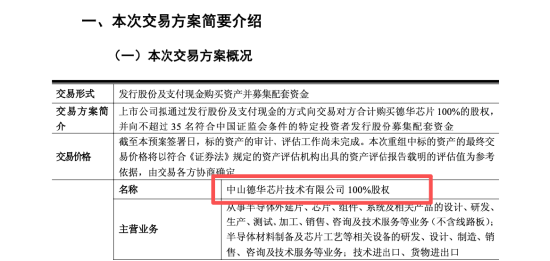
Core Viewpoint - The company Mingyang Smart Energy plans to acquire 100% of Zhongshan Dehua Chip Technology Co., Ltd. through a combination of issuing shares and cash payments, while also raising supporting funds for the transaction and other financial needs [3][5]. Group 1: Transaction Details - The acquisition involves purchasing the entire equity of Dehua Chip, which is engaged in semiconductor design, production, and related services [3][6]. - The final transaction price is yet to be determined, pending the completion of asset audits and evaluations [3][5]. - The controlling shareholder of Dehua Chip is Guangdong Mingyang Ruide Venture Capital Co., Ltd., which is fully owned by Zhang Chuanwei's daughter, Zhang Chao, who is also a director and vice president of Mingyang Smart Energy [3][5]. Group 2: Financial Performance - Dehua Chip has shown a challenging financial status, with projected revenues of 84.74 million yuan and 52.98 million yuan for 2023 and 2024 respectively, and a net profit of 2.16 million yuan in 2023, followed by a loss of 42.58 million yuan in 2024 [7][8]. - Mingyang Smart Energy's revenue has decreased from 30.75 billion yuan in 2022 to 27.16 billion yuan in 2024, with a significant drop in net profit from 3.45 billion yuan to 346 million yuan during the same period [9][10]. Group 3: Market Reaction - Following the announcement of the acquisition, Mingyang Smart Energy's stock price experienced significant volatility, including a 33.60% increase over five trading days prior to the announcement [4][8]. - The acquisition has been associated with the growing enthusiasm in the capital market for aerospace and space photovoltaic concepts, which has contributed to the stock's performance [8][10]. Group 4: Regulatory Scrutiny - The Shanghai Stock Exchange issued an inquiry to Mingyang Smart Energy regarding the necessity and rationale behind acquiring a loss-making entity and the significant stock price fluctuations surrounding the announcement [5][6]. - The company is required to conduct a thorough self-examination of insider trading activities related to the stock [5].

高旭东:把“能力培养”放在企业战略最核心位置
Sou Hu Cai Jing· 2026-01-28 08:15
Core Insights - The article emphasizes that the core capabilities of enterprises, such as technological innovation, leadership, talent development, coordination, and dynamic capabilities, are essential for navigating the current complex business environment [2][4] Group 1: Challenges Facing Chinese Enterprises - Chinese enterprises are currently facing multiple challenges, including geopolitical tensions, technological blockades, and structural contradictions within organizations [2][3] - The shift from a high-growth era to a more competitive and demanding market requires companies to focus on building core capabilities rather than merely relying on strategic planning [3][4] Group 2: Importance of Core Capabilities - High Xudong argues that the effectiveness of a strategy is highly dependent on the underlying capabilities of the enterprise, making capability development a priority [4][5] - The five core capabilities identified are: technological innovation, leadership, talent development, coordination and integration, and dynamic capabilities [4][5] Group 3: Misconceptions About Digital Transformation - There is a prevalent misconception that digital technology alone can solve business challenges; however, the true value of digital transformation lies in the enterprise's ability to integrate technology with its operational capabilities [5][6] - Companies must develop the ability to discern effective digital solutions and ensure that technology aligns with their specific business needs [6][7] Group 4: Leadership and Organizational Structure - Leadership capability is deemed the most critical among the five core capabilities, with a focus on evolving leadership styles to adapt to changing market conditions [9][10] - High Xudong suggests that leaders should embrace a distributed leadership model to enhance decision-making and foster collective intelligence within the organization [12][13] Group 5: Learning and Adaptation - Continuous learning is highlighted as a vital quality for leaders, especially in a rapidly changing environment where traditional business practices may no longer apply [13][14] - Companies must cultivate a culture of learning and adaptability to navigate uncertainties and leverage new opportunities effectively [13][14]