外卖

Search documents
事关平台经济监管、全国统一大市场,市场监管总局最新发声
Di Yi Cai Jing· 2025-08-22 07:13
Core Viewpoint - The article emphasizes the importance of establishing a normalized regulatory system for the platform economy in China, focusing on enhancing preventive and penetrating regulatory capabilities to promote sustainable and healthy development of the platform economy [1][2]. Group 1: Regulatory Developments - The National Market Supervision Administration (NMSA) is committed to balancing innovation encouragement and regulatory development, creating a policy framework that fosters orderly competition and innovation in the platform economy [2]. - New regulations such as the "Network Transaction Supervision Management Measures" and "Interim Measures for Network Transaction Law Enforcement Cooperation" have been introduced to improve regulatory enforcement efficiency [2]. - The NMSA has conducted special actions in network market regulation, resulting in the removal of 4.541 million pieces of illegal product information and the investigation of 105,000 internet-related cases [2]. Group 2: Compliance and Management - The NMSA has issued guidelines to encourage platform enterprises to fulfill compliance management responsibilities, aiming to enhance their compliance mechanisms [3]. - Compliance prompts are released during major events like "6.18" and "Double Eleven" to guide platforms in standardizing promotional practices [3]. Group 3: Market Competition and Fairness - The Central Financial Committee has emphasized the need to advance the construction of a unified national market, focusing on addressing low-price disorderly competition and guiding companies to improve product quality [5]. - The NMSA has established a fair competition review mechanism, reviewing 42,200 important policy measures and suggesting modifications to 11,400 of them to prevent policies detrimental to the unified national market [5]. - The NMSA has intensified the regulation of unfair competition, handling nearly 50,000 cases of various unfair competition, including 4,296 cases related to online unfair competition [6].

14亿人消费力待释放!薪资不涨=内卷无解?3600元补贴够不够?
Sou Hu Cai Jing· 2025-08-22 06:56
Core Insights - The article highlights the paradox of China's economy, where a large population coexists with weak consumer purchasing power despite high GDP figures [1][3][4] - It discusses the struggles of low-income workers, such as delivery riders and factory employees, who face harsh working conditions and low wages, contributing to the wealth accumulation of the affluent [3][6][7] Economic Conditions - China's economic model relies on land revenue to subsidize infrastructure, resulting in low transportation costs and affordable logistics [3][4] - The country is experiencing deflationary pressures, with a significant 18% drop in foreign trade orders and a 40% decrease in land fiscal revenue compared to three years ago [4][6] Labor Market Dynamics - The minimum wage in Shanghai is only 2,690 yuan, while some workers earn as little as 2,200 yuan, highlighting the disparity between high GDP and low wages [3][6] - Many companies fail to provide basic social security for employees, with a significant number of labor disputes arising from inadequate compensation practices [6][7] Government Initiatives - The government introduced a child-rearing subsidy of 300 yuan per month per child, covering 610,000 families in its first year, but the amount is insufficient to cover basic childcare costs [6][7] - The subsidy is designed to be tax-exempt and not deducted from social welfare benefits, yet it may not effectively address the underlying economic challenges faced by low-income families [6][7]

市场监管总局点名“三只羊”“东北雨姐”
Xin Lang Cai Jing· 2025-08-22 06:56
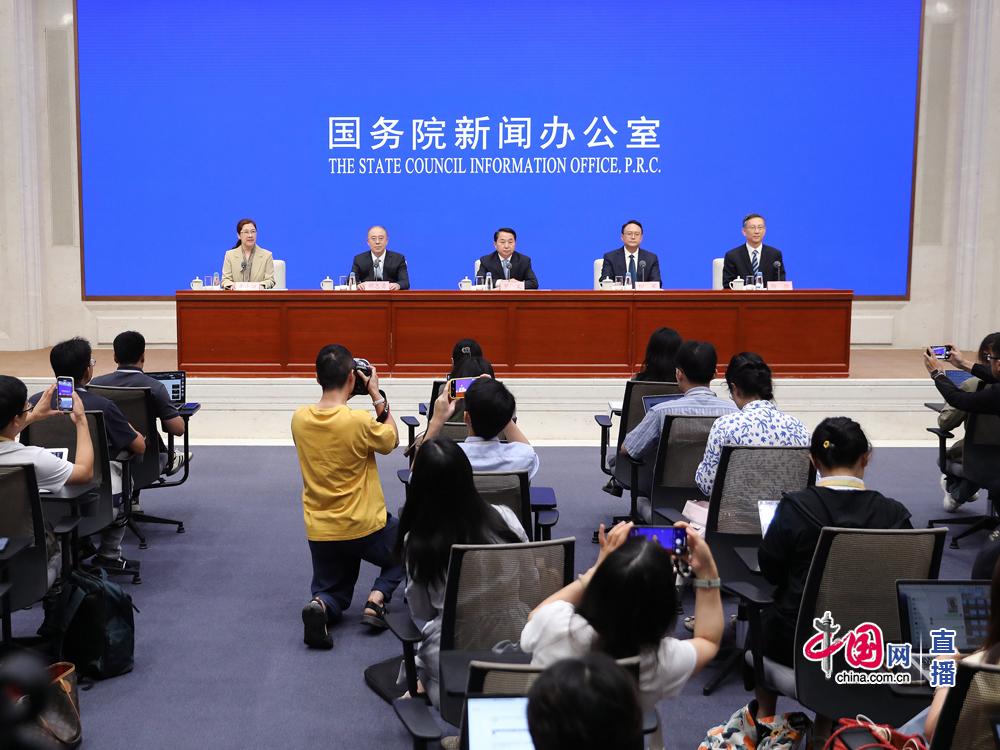
Core Insights - China's platform economy is undergoing a critical transformation, with digital technology accelerating integration across industries, leading to new growth points, but also presenting risks such as traffic prioritization, algorithm abuse, and disorderly competition [2] Regulatory Measures - The State Administration for Market Regulation (SAMR) has introduced several regulations, including the "Network Transaction Supervision Management Measures" and the "Interim Measures for Network Transaction Law Enforcement Cooperation," to enhance regulatory effectiveness and clarify competition rules in the platform economy [2] - SAMR has taken strong actions against irregularities, resulting in the removal of 4.541 million pieces of illegal product information and the suspension of services for 58,000 online stores [3] Compliance and Guidance - SAMR is focusing on guiding platform enterprises to comply with regulations, particularly in new consumption scenarios like online shopping and live streaming, by increasing special inspections and addressing issues such as "ghost deliveries" and false claims [3] - The agency has issued guidelines to help platforms establish compliance management mechanisms and has initiated communication with various stakeholders to ensure a supportive regulatory environment [4]

市场监管总局:抓紧制定平台外卖、直播电商监管制度
Sou Hu Cai Jing· 2025-08-22 06:10
Group 1 - The National Market Supervision Administration has emphasized strict regulation of "emerging industries" since the start of the 14th Five-Year Plan, particularly in response to the rapid development of platform economies and new consumption scenarios such as online shopping, food delivery, and live-streaming sales [3] - The administration has increased special inspections and comprehensive governance to address issues like "ghost deliveries" and false claims, ensuring compliance among platform enterprises [3] - New regulatory frameworks are being developed for online sales, platform food delivery, and live-streaming e-commerce, which will clarify food safety responsibilities for various entities while maintaining consumer convenience and mitigating new risks [3]
市场监管总局:综合治理“幽灵外卖”、虚假声称等突出问题
2 1 Shi Ji Jing Ji Bao Dao· 2025-08-22 05:18
Core Viewpoint - The National Market Supervision Administration is enhancing regulatory measures to address issues such as "ghost deliveries" and false claims in the rapidly growing platform economy, particularly in new consumer scenarios like online shopping, food delivery, and live streaming sales [1] Regulatory Measures - The administration is strengthening compliance guidance for platform enterprises and increasing the frequency of special inspections to tackle prominent issues in the market [1] - New regulatory frameworks are being developed for online sales, platform food delivery, and live e-commerce to clarify food safety responsibilities among various stakeholders [1] Consumer Protection - The efforts aim to maintain consumer convenience while promptly eliminating new risks and hidden dangers associated with emerging consumption patterns [1]
美团Keeta在卡塔尔上线;泡泡玛特股价创新高;华伦天奴任命新CEO
Sou Hu Cai Jing· 2025-08-22 04:21
Investment Dynamics - The Better Meat Co. announced the completion of a $31 million Series A funding round, led by Future Ventures and Resilience Reserve, with participation from other investors [3] - The company, founded in 2018, operates on a B2B model, providing plant-based proteins to food service suppliers and meat processors, enhancing product quality and sustainability [3] Acquisition Dynamics - China Mengniu Dairy is considering selling approximately 20% of its ice cream brand Aice, seeking a valuation of around $1 billion, focusing on Southeast Asian markets [6] - Mengniu's move is seen as a strategy to generate cash flow and refocus on high-margin liquid milk and cheese products [6] Brand Dynamics - Budweiser announced a $15 million investment in its St. Louis brewery to create and maintain manufacturing jobs, part of a larger $300 million investment plan [10] - This investment aligns with Budweiser's strategy to focus on high-margin local craft and ready-to-drink channels amid a saturated global beer market [10] Company Developments - Aland Health Holding is considering selling its shares, with an estimated valuation exceeding $1.5 billion, marking a potential significant merger in China's health supplement industry [8] - Meituan's international delivery brand Keeta has launched in Qatar, with plans to expand further into the Middle East and South America [12] Personnel Changes - Hershey has appointed Natalie Rothman as Chief Human Resources Officer, indicating a shift from a product-driven to an operations efficiency-driven approach [23] - Valentino announced Riccardo Bellini as the new CEO, tasked with inspiring employee engagement and accelerating the brand's creative restructuring [26] - Target's current CEO Brian Cornell will be succeeded by Michael Fiddelke, an internal candidate, which may facilitate a smoother transition amid recent sales challenges [28]






刘强东回归后,京东的三场败局和一个问题
Sou Hu Cai Jing· 2025-08-22 04:04
Core Viewpoint - JD.com's Q2 financial report confirms that the food delivery battle in 2025 will be the most intense commercial competition in the history of China's internet [1] Financial Performance - JD.com reported a quarterly loss of 14.7 billion yuan, indicating that the annualized loss from its food delivery segment alone could exceed Alibaba's announced investment of 50 billion yuan [2] - The report suggests that while JD.com has other new business segments, the food delivery losses are a significant contributor to the overall financial performance [3] Strategic Insights - CEO Xu Ran indicated in a pre-report interview that the food delivery market is experiencing a bubble, with malicious subsidies disrupting the pricing system and not creating incremental value, leading JD.com to refrain from participating [3] - The management stated that the food delivery business is generating synergistic value with its core e-commerce operations, aligning with initial expectations [5] Competitive Landscape - The food delivery market has seen a rapid increase in order volume from 100 million to 250 million, highlighting the extreme price sensitivity of consumers who follow subsidies [9] - If JD.com continues to engage in a direct competition with Meituan and Alibaba's Taobao Flash Sale, it risks significant financial strain due to the high efficiency and funding of its competitors [9][10] Leadership Dynamics - The article discusses the challenges faced by JD.com under the leadership of founder Liu Qiangdong, who has increasingly taken on a hands-on role in operations, reflecting a lack of a strong second-in-command [12][44] - Liu's return to a more active role in management has been marked by significant personnel changes and direct involvement in various business strategies, including food delivery [36][42] Market Positioning - JD.com aims to reshape its pricing strategy to compete effectively against rivals, emphasizing the need for a robust third-party merchant ecosystem [21] - The company has set a target for third-party sales to eventually account for 60% of its business, but current growth rates suggest that achieving this goal will require substantial increases in third-party revenue [26] Conclusion - The ongoing struggles in the food delivery sector reflect broader challenges within JD.com, as it navigates intense competition and seeks to redefine its market strategy while grappling with leadership dynamics [10][44]


市场监管总局:督促网络交易平台取消仅退款、强制运费险等不合理限制
Mei Ri Jing Ji Xin Wen· 2025-08-22 03:04
Core Viewpoint - The National Market Supervision Administration is intensifying regulatory actions in the online market during the 14th Five-Year Plan period, focusing on eliminating illegal product information and enhancing the transparency of fees on platforms [1] Group 1: Regulatory Actions - A total of 4.541 million pieces of illegal product information were deleted from platforms [1] - Platforms were ordered to stop services at 58,000 instances [1] - 105,000 internet-related cases were investigated [1] Group 2: Focus Areas - There is a strong emphasis on addressing issues in live-streaming e-commerce and increasing monitoring of violations [1] - Online trading platforms are required to eliminate unreasonable restrictions such as "refund only" policies and automatic price matching [1] - Delivery platforms are urged to standardize promotional activities and engage in rational competition to foster a healthy ecosystem [1]
美团投资的喜茶上线淘宝闪购,外卖市场真的变天了
3 6 Ke· 2025-08-21 12:10
Group 1 - The core competition in the consumer market this year is the food delivery battle among Meituan, JD.com, and Taobao, with platforms aggressively issuing coupons and discounts to attract consumers [1][2] - Goldman Sachs predicts that the market share in this food delivery battle may stabilize at Alibaba 4.5 : Meituan 4.5 : JD.com 1, indicating a shift in competitive dynamics [2] - Recent reports show that Taobao's flash purchase orders surpassed Meituan for the first time, highlighting the changing landscape of online consumption [2] Group 2 - The rise of flash purchases has significantly improved consumer quality of life, with a wide variety of products now available for quick delivery, indicating a new consumption model [5][19] - Consumer loyalty to major platforms is weakening, leading to increased price-driven behavior and multi-platform usage among consumers [8][10] - Data from iResearch shows that over 55% of respondents have tried JD's instant delivery, and 53% have used Taobao's flash purchase, reflecting the impact of competitive pricing [8] Group 3 - Taobao's flash purchase platform has gained a higher market share than Meituan, challenging the latter's long-held dominance in food delivery [13][16] - The entry of brands like Heytea into Taobao's flash purchase platform indicates a shift in supply-side dynamics, as more brands seek to leverage the growing market share of Taobao [14][16] - The competition is evolving from price sensitivity to a focus on both price and service experience, necessitating platforms to enhance their operational efficiency and service quality [12][28] Group 4 - The rapid growth of the food delivery market has led to increased earnings for delivery riders, with significant growth in active riders and income levels reported [26] - The competition among platforms is transitioning into a long-term battle for user retention and engagement, with a focus on optimizing local supply networks and delivery capabilities [28][29] - Meituan remains a leading player in the food delivery sector, but faces challenges from JD's entry and Taobao's strategic initiatives, which are reshaping the competitive landscape [29][30]

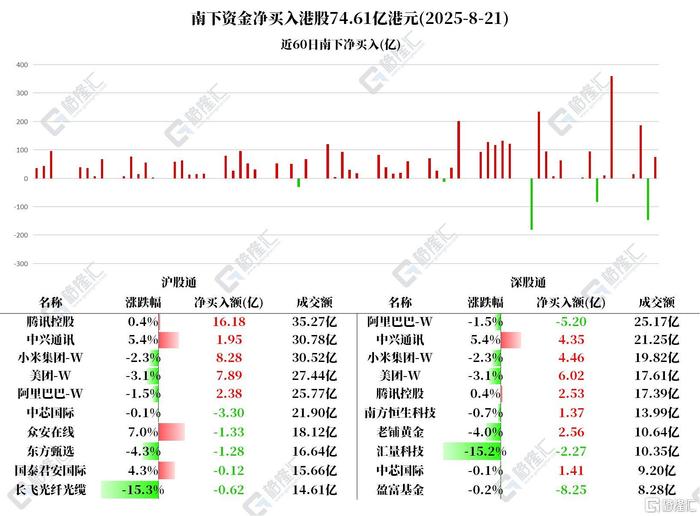
资金动向 | 北水豪买腾讯18.71亿港元,小米连续3日获净买入
Ge Long Hui A P P· 2025-08-21 11:23
Group 1 - Southbound funds net bought Hong Kong stocks worth 74.61 billion HKD on August 21, with notable net purchases in Tencent Holdings (18.71 billion HKD), Meituan-W (13.91 billion HKD), and Xiaomi Group-W (12.74 billion HKD) [1] - Southbound funds have continuously net bought Tencent for 5 days, totaling 55.7254 billion HKD, and Xiaomi for 3 days, totaling 21.9847 billion HKD [1] Group 2 - Tencent's mobile game "Fearless Contract" launched strongly, attracting 1 million USD in player spending on its first day, with approximately 170,000 downloads, matching the performance of its previous game [3] - Meituan's international food delivery brand Keeta launched in Doha, Qatar, marking a significant expansion in the Middle East following its success in Saudi Arabia [3] - Analysts from DBS expect Xiaomi Group-W's valuation to increase due to market share growth across its business segments, driven by IoT and EV business expansion [3] Group 3 - Lao Pu Gold's CFO reported an increase in inventory from 40.88 billion to 86.85 billion, primarily to support new store openings, with inventory turnover days decreasing from 195 to 150 days [4]