
商业地产

Search documents
一周文商旅速报(7.21-7.25)
Cai Jing Wang· 2025-07-26 02:21
Group 1 - Longfor Group is launching its first commercial complex in Xiaoshan, Hangzhou, with a total commercial area of 97,000 square meters, expected to open in 2029 [1] - Link REIT's CEO, Wang Guolong, will step down by the end of June 2026, and the board will initiate a search for his successor [1] - The Beijing government is promoting a summer and National Day film viewing event with a total subsidy exceeding 10 million yuan, covering over 270 cinemas [1] Group 2 - China Duty Free Group's stock surged, with A-shares hitting a limit up at 70.84 yuan per share, following the announcement of Hainan Free Trade Port's closure on December 18, 2025 [1] - The Hainan Free Trade Zone and duty-free sectors experienced a collective surge in stock prices, with several companies reaching their daily price limits [1] Group 3 - The Taihe Building in Shanghai was successfully auctioned for 659.7 million yuan, with an assessed value of approximately 942.4 million yuan [3] - The building has a total area of 25,471 square meters, with an operational above-ground area of 18,275 square meters, translating to a unit price of about 36,098 yuan per square meter [3]



变现520亿,王健林还在卖家当
36氪· 2025-07-25 12:46
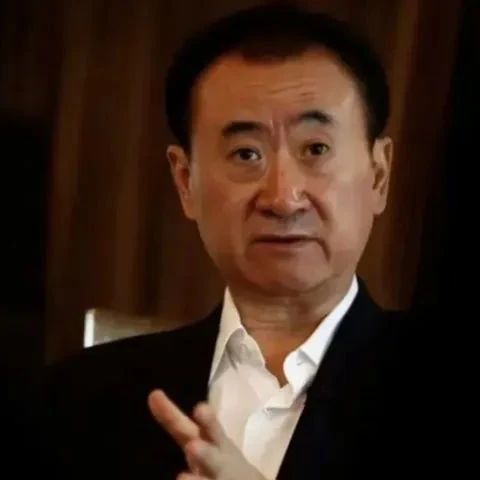
Core Viewpoint - Wang Jianlin is selling off assets to maintain creditworthiness amid financial difficulties, with significant divestitures in his real estate and financial sectors [3][42]. Group 1: Asset Sales - Wang Jianlin announced the sale of a 30% stake in Kuaiqian Financial for 240 million yuan, with the ultimate beneficial owner being Wang himself [5][14]. - This sale is part of a broader trend, as Wang has sold over 55 Wanda Plazas and Wanda Hotels this year, generating more than 52 billion yuan in cash [9][30]. - The divestiture of Kuaiqian Financial marks a significant reduction in Wang's financial assets, as he previously invested 2 billion yuan to acquire control of the company [6][18]. Group 2: Financial Performance and Challenges - Kuaiqian Financial, once a core asset, has seen its valuation drop significantly, with its current estimated worth at 800 million yuan, down from 3 billion yuan when acquired [25]. - The company had transaction volumes exceeding 2 trillion yuan at its peak, but its market position has weakened, potentially falling out of the top ten in the industry [17][22]. - Wang's financial struggles are compounded by ongoing legal issues and debt obligations, with a total of 5 billion yuan in enforced execution against his companies [51]. Group 3: Strategic Shifts - The leadership of Kuaiqian Financial is now in the hands of Ke Liming, who has previously acquired multiple stakes from Wang, indicating a strategic shift in ownership [12][13]. - Wang's asset sales are part of a larger strategy to streamline operations and focus on core business areas, as he has divested from various sectors including hotels and financial services [39][54]. - The remaining valuable assets for Wang include approximately 200 self-owned Wanda Plazas and a 40% stake in Zhuhai Wanda Commercial Management [41].

科技企业需求为北京办公楼市场提供支撑
Zhong Guo Jing Ying Bao· 2025-07-25 10:51
Core Insights - The office market in Beijing is experiencing a buffering period with overall rental performance facing significant challenges, although liquidity improvements are expected to boost market confidence and solidify recovery foundations [1] Office Market - Technology companies are leading in leasing activity, particularly through consolidation and expansion, which enhances market liquidity [1] - In Q2, the overall viewing volume of Grade A office buildings in Beijing decreased compared to the beginning of the year, prompting landlords to actively retain high-quality tenants by offering flexible rent discounts and rent-free periods [2] - The vacancy rate for Grade A office buildings remains stable, with demand from internet giants contributing 70% to the net absorption in Q2, while other market demand is limited [2] Retail Market - The retail real estate market is experiencing a quarterly supply peak, with niche brands focusing on emotional value creating new consumer hotspots [1] Industrial and Logistics Market - The industrial logistics market is entering a high supply cycle, with significant new projects in the Pingguzi market leading to an increase in warehouse space by 531,000 square meters [4] - The overall vacancy rate in the logistics sector rose by 4.4 percentage points to 29.6%, driven by high supply and low absorption rates, with average effective rents declining by 5.9% [4] - Despite current challenges, warehouse demand in Beijing is expected to recover moderately over the next two years, with improved cost-effectiveness of logistics properties potentially stimulating demand [5]
变现520亿,王健林还在卖家当
21世纪经济报道· 2025-07-25 10:17
Core Viewpoint - Wang Jianlin continues to sell off assets, including a 30% stake in Kuaiqian Financial for 240 million yuan, indicating a significant shift in his financial strategy and the need for liquidity [1][2][3]. Group 1: Asset Sales - Wang Jianlin has sold off various assets this year, including Wanda Hotels and 55 Wanda Plazas, generating over 52 billion yuan in cash [3][25]. - The sale of Kuaiqian Financial marks a complete divestment from this financial asset, which was once a core part of his financial strategy [13][14]. - The valuation of Kuaiqian has significantly decreased, with its current estimated value at 800 million yuan, down from the 3 billion yuan he initially invested [14]. Group 2: Financial Condition - Wang's diverse business operations outside real estate have largely diminished, and he has lost control over key management in his commercial operations [4][26]. - Despite receiving substantial investments, his debts remain high, with over 43.9 billion yuan in short-term debts due within a year and only 15.1 billion yuan in cash [27]. - Wang has managed to avoid public debt defaults, demonstrating a strategic approach to asset liquidation to meet financial obligations [28][30]. Group 3: Business Strategy - Kuaiqian Financial, established in 2011, was intended to support Wanda's e-commerce transformation and create a financial ecosystem, but it failed to meet expectations [10][12]. - The new buyer, Ke Liming, has a history of acquiring assets from Wang, indicating a continued relationship between the two [7][15]. - Wang's remaining valuable assets include approximately 200 self-owned Wanda Plazas and a 40% stake in Zhuhai Wanda Commercial Management [25][34].
上半年50+重磅级高管变动,2025商业地产企业都在“大手笔”抢人!
3 6 Ke· 2025-07-25 02:36
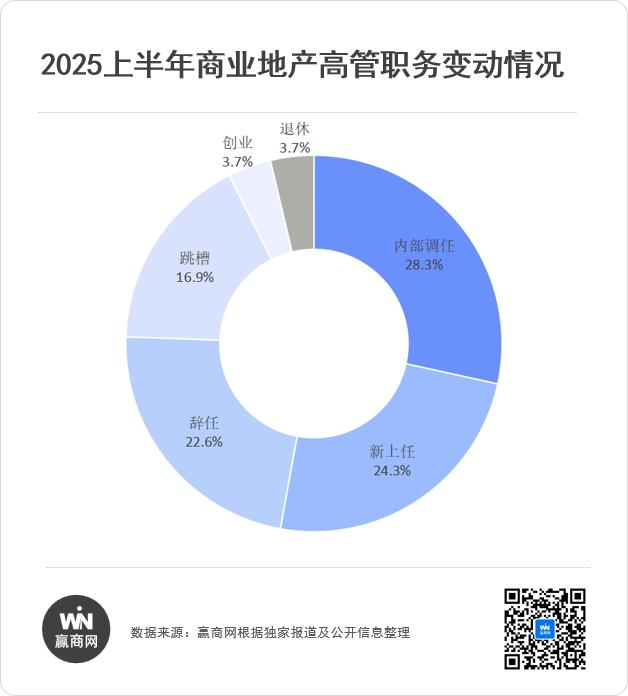
Group 1 - The core management teams of several major real estate companies, including Vanke and Swire Properties, are undergoing significant changes, with at least 53 personnel changes reported in the commercial real estate sector in the first half of 2025 [1][3] - Nearly 10 companies, including Vanke Group, China Resources Land, and Longfor Group, have initiated organizational transformations, focusing on strategic adjustments and streamlining operations [3][4] - Leading commercial management companies in mainland China are forming composite teams that excel in both commercial operations and asset management, achieving breakthroughs in organizational efficiency and product iteration [4] Group 2 - Vanke's commercial segment is transitioning from a "commercial operator" to a "market-oriented asset management platform," with significant organizational restructuring underway [5] - Joy City Holdings has upgraded its commercial management center to a commercial division, emphasizing refined operations and capital loop capabilities to enhance asset value [7] - Hong Kong-based companies are increasingly integrating with the mainland market, actively recruiting talent and adjusting their business strategies to focus on high-end commercial properties [8][9] Group 3 - Swire Properties is enhancing its retail business in mainland China by promoting local executives to key positions, reflecting the importance of the mainland market to its core business [9][11] - Hong Kong Land is accelerating its strategic transformation by hiring several key talents to strengthen its operations in the mainland commercial real estate sector [12][14] - The new strategy aims to recover up to $10 billion by 2035, focusing on high-end commercial assets and enhancing the company's long-term sustainable growth [14] Group 4 - Major players in the commercial real estate sector are prioritizing talent acquisition and development, recognizing that skilled personnel are crucial for driving business forward [15][16] - China Resources Vientiane Life has launched a talent recruitment plan aimed at attracting senior management in commercial and property management sectors, with a comprehensive onboarding program [16][18] - A trend of experienced executives starting their own ventures is emerging, with notable figures like Ling Changfeng and Tian Weilong establishing new companies focused on asset management and urban renewal [19][21] Group 5 - Ling Changfeng's new company, Ningpu Development, is focusing on light asset management and has secured partnerships for significant urban renewal projects [21] - Tian Weilong's Jinlou Group is targeting urban renewal and community commercial projects, with a strategic focus on asset securitization [22][24] - The competitive landscape is intensifying as top executives transition to new roles, with a notable increase in personnel changes within the commercial real estate sector [24][25]




2025H1商业地产数据解读和下半年展望
2025-07-25 00:52
Summary of the Conference Call on Commercial Real Estate in H1 2025 Industry Overview - The commercial real estate market in China has entered a phase of stock management, with a slight increase in the number of centralized commercial projects, totaling 9,201, with 120 new additions in H1 2025 [2][3] - Shopping centers remain dominant, with 7,315 total, but the growth rate of new openings has slowed to about 300 per year, down from 700 in 2015-2016 [2][3] - The average vacancy rate for shopping centers has risen to 10.5%, with cities like Chengdu, Xi'an, and Tianjin experiencing higher rates [1][25] Consumer Behavior and Trends - Consumer behavior has shifted towards rational consumption, favoring affordable alternatives while showing strong interest in experiential and emotional spending [5][27] - The Z generation has emerged as a key consumer group, driving demand for new experiences and products [5][6] - Categories like outlet malls, trendy toys, and health-focused dining are performing well, while traditional clothing and department stores are seeing negative growth [3][27] Market Dynamics - The competition in high-tier cities is intense, with a high per capita commercial area, while lower-tier markets are dominated by large enterprises [7][8] - The sales growth for the commercial real estate sector is projected at 2% to 5% for H1 2025, with rental rates remaining stable or slightly increasing [3][35] - Structural differentiation is evident, with top 20% quality projects capturing a larger market share [35] Future Outlook - The development of shopping centers is expected to continue transitioning towards stock management, with a rise in the proportion of projects being renovated or reopened [9][19] - High-tier cities will continue to lead in innovative themes like cultural tourism, while lower-tier markets will see more penetration from large enterprises [9][19] - The average size of shopping centers in lower-tier markets is around 60,000 to 80,000 square meters, which has been identified as an optimal scale for success [38] Key Challenges - The average first-floor rent has decreased from 565 RMB/sqm in 2022 to 515 RMB/sqm in H1 2025, indicating increased competition and deteriorating conditions for mid-tier and lower projects [26][35] - Approximately 600 commercial projects are currently in non-normal operating states, with over 400 shopping centers and 100 department stores either idle or under construction [14][15] Notable City Performances - Shenzhen, Beijing, and Guangzhou are leading in commercial growth, with notable increases in cities like Foshan and Guangzhou [13] - Shanghai has the highest per capita commercial area, followed by Nanjing and Suzhou, while cities like Tianjin and Shijiazhuang face supply-demand mismatches [13][19] Conclusion - The commercial real estate sector is navigating a complex landscape characterized by changing consumer preferences, increased competition, and a shift towards stock management strategies. The focus on smaller, more adaptable projects in lower-tier markets presents both challenges and opportunities for growth in the coming years [9][38]
成都全面进入夏日消费季,文商旅融合亮点多 新场景释放吸引力 冰凉主题有点“火”
Si Chuan Ri Bao· 2025-07-24 06:20
Group 1 - The core theme of summer consumption in Chengdu is driven by high temperatures, leading to the popularity of cooling-themed activities in shopping centers [1][2] - Chengdu's major shopping centers have reported significant increases in foot traffic and sales, with a 51% increase in visitor numbers and a 28% increase in sales over five days at one location [1] - The integration of cultural, commercial, and tourism sectors is evident, with events like the "King of Glory" pop-up store attracting large crowds and enhancing the retail and dining experiences [3] Group 2 - The "Light and Layer" art exhibition featuring works from Sichuan Fine Arts Institute graduates has attracted nearly 200 visitors daily, showcasing the fusion of cultural art and urban commercial spaces [4] - The emergence of non-standard commercial formats from urban renewal projects is contributing to the cultural and tourism integration in Chengdu, with an expected 97,000 square meters of new supply from 11 non-standard commercial projects [5] - The retail market in Chengdu is anticipated to undergo significant updates by 2025, driven by urban renewal and the evolution of non-standard commercial forms, indicating a shift towards innovative consumption scenarios [5]
机构:供应高企、存量突破千万,成都办公楼空置率上升
Di Yi Cai Jing· 2025-07-23 13:40
Group 1 - The market activity in Chengdu's Grade A office sector has cooled down in the latter half of Q2, with a notable increase in vacancy rates due to persistent supply and weak demand [1][2] - As of the end of Q2, Chengdu's Grade A office vacancy rate reached 32.8%, an increase of 1.7 percentage points in the first half of the year, with the Financial City area seeing a rise to 28.1%, up 5.8 percentage points [1] - The average rental price for Grade A offices in Chengdu has declined to 77.3 yuan per square meter per month, reflecting a 3.7% decrease over the first half of the year, with net effective rent dropping to 66.1 yuan after accounting for an average of 1.7 months of rent-free incentives [1] Group 2 - In the first half of 2025, the supply of new Grade A office buildings in Chengdu is expected to be around 240,000 square meters, which is only 60% of the initial forecast, yet it will push the total stock to over 10 million square meters [2] - The net absorption of office space has shown signs of recovery, reaching approximately 79,000 square meters in the first half of the year, a year-on-year increase of 16.7%, with Grade A office net absorption growing by 34.3% [2] - The ongoing supply has led to an increase in the overall vacancy rate for quality office spaces, which rose by 0.8 percentage points to 28.1% by the end of Q2, while the vacancy rate for Grade A offices increased by 0.3 percentage points to 35.2% [2]
业内权威人士:地产狂欢时代结束了,人们需要面对现实
Sou Hu Cai Jing· 2025-07-22 23:36
Core Viewpoint - The Chinese real estate market is facing significant challenges and risks as the previous growth momentum fades, revealing underlying issues and a potential shift in market dynamics [1][9]. Group 1: Market Trends - Real estate development investment in China is projected to decline by 11.2% year-on-year in the first half of 2025, amounting to 466.58 billion yuan, marking a further increase in the decline from 9.9% in the first quarter [1]. - Despite a reported 10% year-on-year increase in the total transaction volume of new and second-hand homes in the first quarter, this growth is largely attributed to a low base from the previous year and is concentrated in core urban areas [2]. - The broad inventory of residential properties is approximately 2.15 billion square meters, with a depletion cycle of 28.9 months, indicating a significant oversupply in the market [2]. Group 2: Price Dynamics - Goldman Sachs predicts a potential further decline in Chinese housing prices by 20%, supported by data showing unsold housing inventory far exceeding two years of demand [2]. - Vacancy rates are concerning, with first-tier cities at 7%, second-tier cities at 12%, and third-tier cities at 16%, indicating a substantial number of empty homes in the market [2]. Group 3: Consumer Behavior - The attitude of the younger generation towards real estate has shifted fundamentally, with many preferring to save rather than take on heavy mortgage debt, reflecting a change from panic buying to a more rational approach [5][7]. - High-net-worth individuals are the primary active participants in the market, as evidenced by the structural changes in transaction volumes in cities like Shenzhen, where lower-priced homes are seeing decreased sales [3]. Group 4: Commercial Real Estate - The commercial real estate sector, particularly office spaces, is experiencing a downturn, with average rents in major city business districts declining by 0.73% quarter-on-quarter and 2.1% year-on-year [6]. - The shift towards remote work and the struggles of small businesses are contributing to reduced demand for office space [6]. Group 5: Government and Policy Response - Local governments are caught in a dilemma of stabilizing the housing market while avoiding over-reliance on real estate, with some implementing "old-for-new" policies to acquire existing homes for affordable housing [7]. - The government is advocating for a new model of real estate development focused on quality rather than quantity, although this transition may be challenging for both developers and consumers [8]. Group 6: Investment Outlook - Investors are advised to reassess the value of real estate as an investment, as it may no longer be the best option and could become a high-risk asset [9]. - Developers must adapt to new market realities, moving away from high-leverage, high-turnover models towards more sustainable, quality-focused operations [9].
商铺生金、厂房扩产,实业老板扫货不动产
2 1 Shi Ji Jing Ji Bao Dao· 2025-07-22 12:43
Group 1 - The core viewpoint of the articles indicates that the commercial real estate market in the Guangdong-Hong Kong-Macao Greater Bay Area is experiencing increased transaction frequency, particularly in large transactions, despite a shift in investor profiles from institutional to more diverse buyers, including small and medium enterprises [1][3][5] - In the first half of the year, there were 29 large transactions in Guangzhou and Shenzhen, totaling 14.7 billion yuan, with the average transaction size decreasing from 1 billion to 500 million yuan, indicating a more active market compared to the previous year [1][3] - The demand for commercial properties has been driven by the stabilization of prices, with shop return rates in Shenzhen reaching 4.5% to 6%, making them attractive for investment [1][4] Group 2 - The transition in the buyer landscape includes an increase in industrial buyers, particularly from traditional and emerging industries, with factory owners purchasing properties for self-use or investment [3][7] - The demand for industrial properties is rising due to the upgrading of manufacturing industries, with sectors like robotics and medical devices driving the need for factory spaces [2][6] - The average rent for high-standard factory buildings in Shenzhen is projected to reach 65 yuan per month in 2024, reflecting a 12% year-on-year increase, particularly in areas with a concentration of technology-driven industries [7]