智能手机

Search documents
不止轻薄与可靠!华为Mate X7用红枫影像与云锦美学再次引领行业
Cai Jing Wang· 2025-11-25 12:23
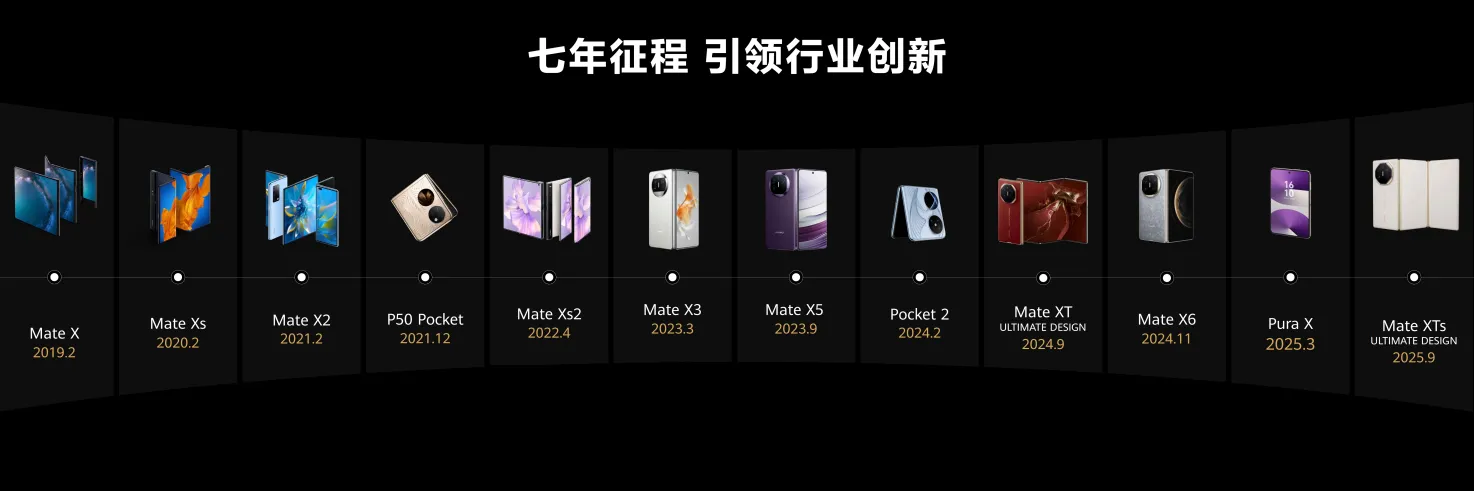
Core Viewpoint - Huawei's Mate X7 redefines the foldable screen industry with innovative technology and design, solidifying its market leadership with a 68.9% share in the domestic foldable screen market as of Q3 2023 [1][2][17] Group 1: Product Innovation - The Mate X7 incorporates advanced features such as a "light-weaving cloud brocade" back panel, merging traditional craftsmanship with modern nanofiber technology, achieving a balance of lightweight and high strength [5] - The device weighs only 235 grams and has a thickness of 9.5mm when folded, with an ultra-thin 4.5mm profile when opened, setting new industry records for thinness and reliability [7] - The dual-screen setup features new immersive display technology, with peak brightness of 3000 nits on the 6.49-inch outer screen and 2500 nits on the 8-inch inner screen, enhancing visibility in various lighting conditions [7] Group 2: Reliability and Durability - The Mate X7 features a robust "玄武" architecture, including second-generation Kunlun glass and a water-resistant design, achieving IP58 and IP59 ratings for dust and water resistance [9][11] - The device is designed to withstand harsh conditions, including high-pressure water jets, addressing user concerns about the fragility of foldable screens [11] Group 3: Performance and Communication - The Mate X7 is equipped with a 5600mAh ultra-thin silicon negative electrode battery and a 3600mm large VC graphene cooling system, addressing concerns about battery life and overheating [12] - It supports advanced communication capabilities, including dual-stream uplink technology and satellite communication, ensuring connectivity in various scenarios [14] Group 4: Imaging Capabilities - The device features a second-generation red maple imaging system, allowing for high-quality photography even in challenging lighting conditions, and includes AI-assisted features for enhanced creativity [15][17] - The 8-inch inner screen serves as a "natural canvas" for photography, enabling users to produce professional-grade images easily [17] Group 5: Market Impact - The launch of the Mate X7 signifies a shift in the foldable screen market from niche products to mainstream devices, driven by Huawei's continuous innovation and user-centric design [2][4][17] - Huawei's leadership in the foldable screen sector is reinforced by its commitment to user experience and technological advancement, setting a new standard for the industry [4][17]

华为Mate X7最大支持20GB运行内存
Zheng Quan Shi Bao Wang· 2025-11-25 11:59
人民财讯11月25日电,华为新推出的新一代折叠屏手机Mate X7,最大内存配置版本为20GB+1TB,是 折叠屏手机领域首款支持20GB运行内存的手机。 ...
Mate系列12年,读懂中国科技的「实力破圈」
36氪· 2025-11-25 11:10
Core Viewpoint - The Huawei Mate series has successfully navigated through 12 years of technological evolution, establishing itself as a strong contender in the high-end smartphone market, particularly with the upcoming Mate 80 series, which embodies the spirit of "infinite exploration" [3][4][19]. Group 1: Historical Context and Evolution - The Huawei Mate series began with the Mate 7 in 2014, breaking the dominance of Apple and Samsung in the high-end market with its large screen, long battery life, and business-oriented design [3]. - The Mate 40 series in 2020 showcased Huawei's integrated software and hardware capabilities, marking a significant milestone in the series' evolution [3]. - The Mate 50 series was launched during challenging times, reflecting Huawei's commitment to product iteration and its soft-hard integration strategy [3][19]. Group 2: Design and Innovation - The Mate 80 series features a "dual-ring" design that symbolizes the brand's commitment to exploration and innovation, representing both a visual identity and a narrative tool [5][6]. - The series incorporates a full metal body design, overcoming engineering challenges related to signal interference, which is crucial for satellite communication [8]. - The Mate 80 Pro Max introduces a unique metal light engraving process and offers four new color options inspired by extreme environments, embodying the spirit of exploration [8]. Group 3: Technological Advancements - The Mate 80 series is equipped with HarmonyOS 6, which enhances user experience through a distributed architecture and system-level AI capabilities, achieving over 98% compatibility within the Harmony ecosystem [8][11]. - The second-generation red maple imaging system significantly improves color accuracy in challenging lighting conditions, with the Mate 80 Pro Max offering groundbreaking macro capabilities [10]. - The AI assistant, now referred to as "Xiao Yi," has been upgraded to support proactive task completion and multi-modal interactions, enhancing user engagement [11]. Group 4: Market Position and Future Outlook - The Mate series has consistently represented a commitment to innovation and has become a symbol of China's technological advancement in the high-end smartphone market [19][27]. - The upcoming Mate 80 series is expected to redefine the concept of flagship smartphones by integrating various capabilities into a cohesive system, moving beyond mere functional enhancements [18]. - Huawei's approach to the Mate 80 series reflects a broader strategy of self-reliance and innovation, positioning the brand as a leader in the high-end smartphone segment amidst increasing competition [27].
华为Mate 80系列发布:麒麟9030 Pro加持,性能提升42%
机器之心· 2025-11-25 10:56
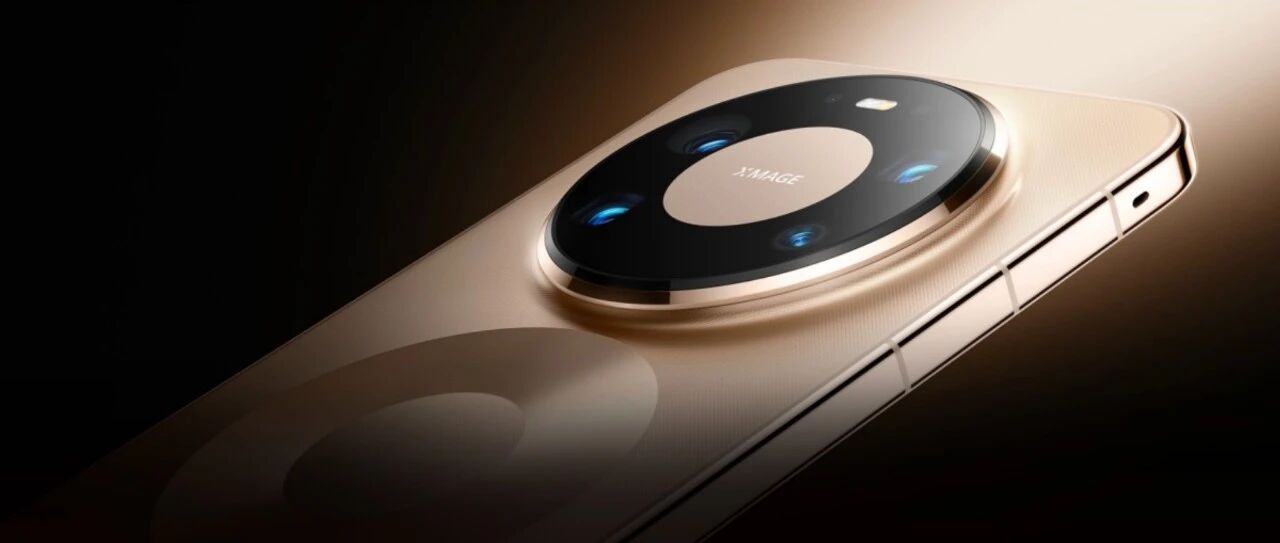
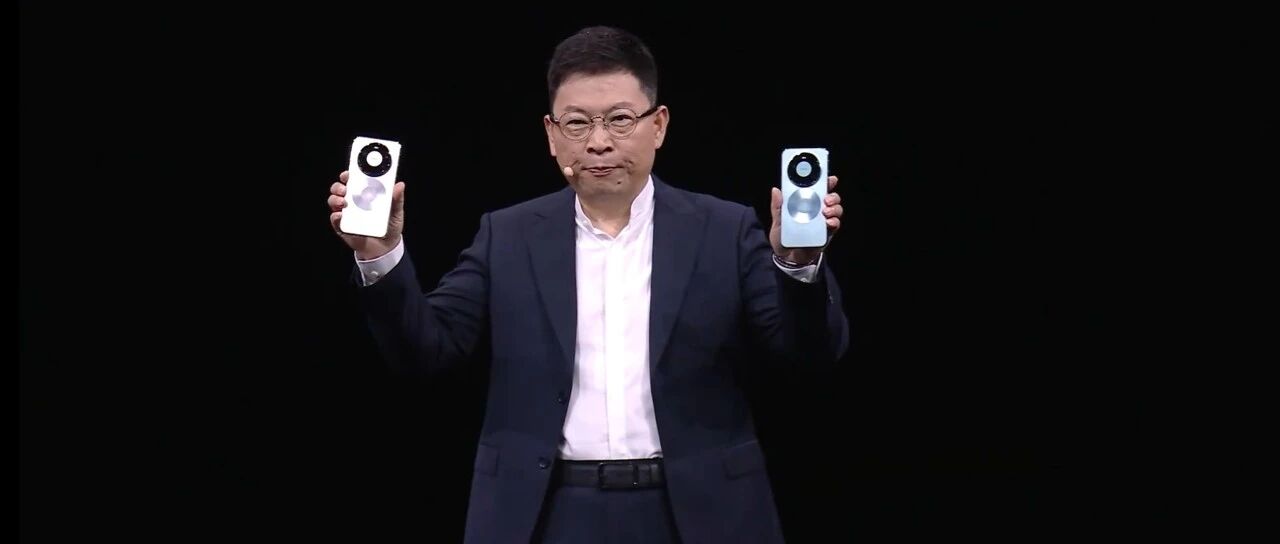
Core Viewpoint - Huawei's Mate 80 series, featuring significant performance enhancements and innovative technologies, aims to strengthen its position in the competitive smartphone market [2][4][16]. Group 1: Performance Enhancements - The Mate 80 series introduces the new Kirin 9020 and Kirin 9030 chips, with overall performance improvements exceeding 35% compared to the previous generation [4]. - The Mate 80 Pro Max achieves a performance increase of over 42% due to advanced thermal management and larger heat dissipation components [4]. - The series supports 3DGS rendering acceleration, improving performance by 33% compared to the Mate 70 series, and features ray tracing hardware acceleration capable of rendering 20 million rays per second [5]. Group 2: Design and Durability - The Mate 80 series maintains the recognizable design of the Mate family, with a classic "star ring" camera module and a dual-ring design in a full metal body [6][7]. - The devices feature upgraded Kunlun glass, enhancing drop resistance by 20 times, bending resistance by 20%, and scratch resistance by 2 times [7]. - The series is rated IP68 for dust and water resistance, with the ability to withstand high-temperature and high-pressure water jets [8]. Group 3: Imaging Technology - The Mate 80 series incorporates the second-generation Red Maple imaging technology, improving color accuracy by 43% and light intake by 96% [12]. - The series allows for multiple shooting effects from a single capture, enhancing user experience in various lighting conditions [12]. - The Pro Max model features a high dynamic range main camera with 17.5EV and a dual telephoto configuration, totaling five cameras [14]. Group 4: Software and AI Integration - The Mate 80 series launches with HarmonyOS 6, enhancing system fluidity and app compatibility, along with immersive lighting effects [16]. - The new AI capabilities include features like "reorder" and "photo guide," improving user interaction and experience [17]. Group 5: Communication Capabilities - The Mate 80 series introduces industry-first 700MHz emergency communication capabilities, enabling connectivity in disaster scenarios over distances exceeding 13 kilometers [19]. - The devices support WiFi 7+, satellite communication, and other advanced connectivity options, enhancing overall communication reliability [19]. Group 6: Pricing and Availability - The standard version of the Mate 80 series is priced slightly lower than its predecessor, indicating a strategic pricing approach [22]. - Pre-orders for the Mate 80 series have begun, with high demand leading to extended shipping times [25].
越展开越心动!华为Mate X7首发A2A智能体协作,定义折叠屏智能体验新高度
Jing Ji Guan Cha Wang· 2025-11-25 10:36
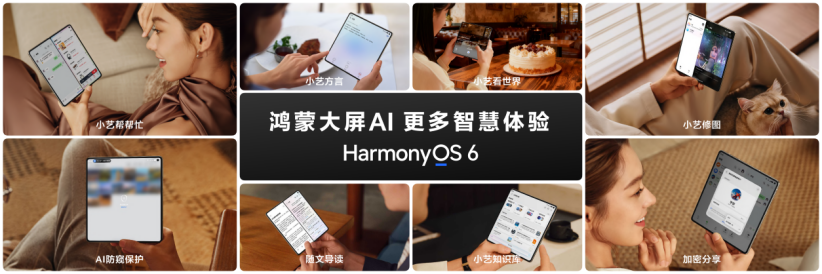
Core Insights - Huawei Mate X7 represents a significant advancement in foldable smartphone technology, showcasing breakthroughs in both hardware and software, particularly with the introduction of HarmonyOS 6 [1][8] - The device features the first commercial implementation of A2A (Agent to Agent) collaboration, enhancing AI capabilities and user experience by allowing seamless interaction between multiple applications [3][8] Group 1: AI and User Experience - The A2A collaboration enables users to issue a single command for complex tasks, such as booking travel or purchasing items, significantly improving efficiency and user convenience [3][5] - New features like "Split Screen Ask Xiao Yi" and "Split Screen Navigation" enhance multitasking capabilities, allowing users to access information without interrupting their current activities [5][7] Group 2: Display and Software Integration - Huawei Mate X7 is equipped with advanced display technology, providing high clarity, brightness, and refresh rates, ensuring an immersive visual experience across various applications [5][7] - HarmonyOS 6 optimizes applications for the 8-inch inner screen, ensuring clear layouts and logical operations for tasks like split-screen work and gaming [5][7] Group 3: Privacy and Security - The device enhances user privacy with upgraded features in HarmonyOS 6, including proactive security measures and a "Super Privacy Mode" that allows users to disable camera, microphone, and location permissions easily [7][8] - The comprehensive security architecture ensures robust protection of personal data while utilizing AI functionalities [7] Group 4: Market Positioning and Availability - Huawei Mate X7 is positioned as a leader in the foldable smartphone market, emphasizing the importance of software ecosystem and intelligent experience as core competitive advantages [8] - The device is available for pre-order, with an official launch date set for December 5, starting at a price of 12,999 yuan [7]
苹果销售部门裁员,iPhone Air产量大幅削减
第一财经· 2025-11-25 10:33
Core Viewpoint - Apple is facing challenges in iPhone sales, leading to layoffs in its sales department as part of efforts to enhance customer engagement while preparing for the annual sales peak during the holiday season [3][4]. Group 1: Layoffs and Sales Strategy - Apple confirmed layoffs in its sales teams to strengthen customer engagement, stating that only a few positions would be affected, and that affected employees could apply for new roles within the company [3][4]. - The impact of these layoffs on the upcoming sales season remains uncertain, but analysts have noted ongoing challenges in iPhone sales, particularly for the newly launched iPhone Air model [3][4]. Group 2: iPhone Air Sales Performance - Early data from IDC indicates that Apple has cut its production plan for iPhones by half shortly after the iPhone Air launch, with sales reaching only one-third of initial expectations [4]. - Morgan Stanley analysts estimate that Apple may produce 90 million new iPhone units in the second half of 2025, an increase of over 6 million from previous forecasts, but this is partially offset by the weak performance of the iPhone Air [4]. - Despite initial consumer interest in the iPhone Air, the conversion rate to sales has slowed, with Similarweb reporting that the product page received 1 million views but the purchase conversion rate was about one-third lower than other models [4]. Group 3: Pricing and Market Position - Forrester's analysis suggests that the iPhone Air's awkward pricing is a significant barrier to boosting sales, as it is only $100 cheaper than the high-end iPhone 17 Pro but $200 more expensive than the base iPhone 17 model [4]. - Analysts from Jefferies noted that the iPhone Air is currently the worst-selling model in the iPhone 17 series, partly due to long delivery wait times in Asian markets [5].


数码博主曝iPhone17国内销量破千万
Guan Cha Zhe Wang· 2025-11-25 10:07
Core Insights - The domestic smartphone market in China saw an approximate 8% week-on-week increase in market size during the week of November 10-16, 2025, with Apple leading at 24.1% market share, followed by Xiaomi at 17.2% and Vivo at 15.8% [1] - The iPhone 17 series achieved cumulative sales of 10.77 million units by November 16, 2025, significantly outperforming competitors like Xiaomi, Vivo, and OPPO [1][2] - Apple's Q4 FY2025 revenue reached a record $102.47 billion, marking an 8% year-on-year increase, while net profit surged by 86% to $27.47 billion [4] Smartphone Market Performance - Apple's iPhone sales in China increased by 37% year-on-year in October 2025, with a market share rise to 25%, the highest since 2022 [2] - Xiaomi's 10 series saw a 7% year-on-year sales increase in October, securing the second position in the market [2] - OPPO's new Find X9 model drove a 19% year-on-year sales growth in October [2] Apple Financial Performance - In Q4 FY2025, iPhone revenue grew by 6.1% year-on-year to $49 billion, although it fell short of analyst expectations [4] - Revenue from the Greater China region declined by 3.6% year-on-year to $14.49 billion, making it the only region to experience a revenue drop [4] - Despite the decline in the Greater China market, there are no immediate signs of a significant drop in demand for the iPhone 17 series [4]

雷军增持1亿港元,小米收涨超4%
Guan Cha Zhe Wang· 2025-11-25 09:57
Group 1 - Xiaomi Group's stock rebounded over 4% on November 25, closing above 40 HKD [1] - Founder Lei Jun invested over 100 million HKD to purchase 2.6 million shares at an average price of approximately 38.58 HKD per share, increasing his ownership to 23.26% [3] - Xiaomi has repurchased 21.5 million shares for over 800 million HKD on November 20 and 21, with a total repurchase amount exceeding 2.3 billion HKD this year [3] Group 2 - Xiaomi's stock price fell from a high of 59.9 HKD in October to a low of 36.62 HKD on November 21, marking a cumulative decline of 38% [3] - The company's Q3 financial report showed revenue of 113.1 billion CNY, a year-on-year increase of 22.3%, with a net profit of 11.3 billion CNY, up 80.9% [3] - Revenue from the smart electric vehicle and AI innovation business reached approximately 29 billion CNY, growing over 199%, while smartphone revenue declined by 3.2% to 46 billion CNY [3] Group 3 - CITIC Securities noted that the Chinese electric vehicle industry is entering a critical phase of consolidation, with profitability becoming a key competitive indicator [4] - Xiaomi's automotive business is showing signs of scalable profitability, indicating that leading players are maturing their business models through technology self-research and supply chain integration [4] - The industry is expected to shift from an "expansion competition" to an "efficiency-driven" structural differentiation cycle over the next two years [4]

首次商用!华为重大发布!
Zheng Quan Shi Bao· 2025-11-25 09:18
Group 1 - Huawei officially launched the Mate 80 and Mate 80 Pro series, with starting prices of 4699 yuan and 5999 yuan respectively, and they will be available for sale starting November 28 [1] - The new Mate X7 foldable phone was introduced, featuring the A2A (Agent to Agent) intelligent collaboration technology, allowing users to perform tasks with a single command [1] - The Huawei WATCH ULTIMATE DESIGN was also launched, priced at 24999 yuan, and includes features such as Beidou satellite voice messaging and 150-meter water resistance [1] Group 2 - According to IDC, Huawei returned to the top of the Chinese smartphone market with a shipment of 12.5 million units, capturing an 18.1% market share, despite a 4.1% year-on-year decline in overall market shipments [2] - Huawei's revenue for the first half of 2025 was 427.04 billion yuan, a 3.94% increase year-on-year, while net profit decreased by 32% to 37.195 billion yuan due to significant R&D investments [2] - R&D expenditure reached 96.95 billion yuan, accounting for 22.7% of revenue, reflecting the company's commitment to future competitiveness amid global market challenges [2]
手机市场“听劝动真格”,单飞五周年荣耀豪赌AI未来
Hua Xia Shi Bao· 2025-11-25 08:59
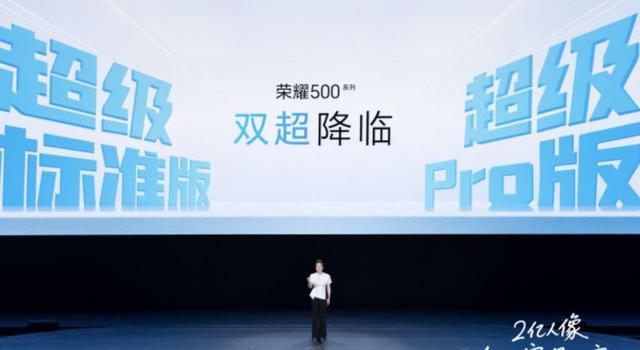
Core Viewpoint - The smartphone market is experiencing intense competition, particularly in the mid-range segment priced between 2000 to 3000 yuan, with AI technology becoming a key focus for companies like Honor [2][3]. Product Launch and Features - Honor's new 500 series, launched on November 24, features two versions: the standard version priced at 2699 yuan and the Pro version at 3599 yuan, both equipped with advanced Snapdragon chips and MagicOS 10 [3]. - The 500 series emphasizes imaging capabilities, featuring a large 1/1.4-inch sensor and a 12-megapixel ultra-wide-angle lens [3]. - Honor's previous 400 series achieved global shipments of over 6 million units since its launch in May [3]. Market Position and Competition - In October, China's smartphone sales grew by 8% year-on-year, with Apple leading the market with a 25% share, followed by Xiaomi at 17%, and Honor at 12%, ranking sixth [5]. - Honor's market share has declined from 19% in Q2 2022 to 12% in October 2023, indicating increasing competition and challenges in the domestic market [5]. Strategic Direction and AI Focus - Honor has been operating independently from Huawei for five years and is now focusing on optimizing its capital structure and planning for an IPO [6]. - The company aims to transform from a smartphone manufacturer to an AI terminal ecosystem company, committing to invest $10 billion over the next five years in AI development [6][7]. - Honor is also venturing into robotics, with plans to unveil a robot phone at the World Mobile Congress in March 2026 [6]. Competitive Landscape - Honor's strategy includes differentiating itself from competitors like Xiaomi, OPPO, and vivo by leveraging AI technology, which has been a historical focus since its time within Huawei [7]. - Analysts suggest that the broader trend among smartphone manufacturers is to extend beyond mobile devices into AI-enhanced products like tablets, TVs, and smart vehicles [7].