操作系统

Search documents
科技周报|以旧换新下半年中央补贴1380亿元,京东进军酒旅
Di Yi Cai Jing Zi Xun· 2025-06-22 04:41
Group 1: Government Subsidies and Consumer Goods - The central government will allocate 138 billion yuan in subsidies for the "old for new" consumer goods program in the second half of the year, with funds distributed in July and October [1] - Local governments are expected to provide additional matching funds, totaling approximately 150 billion yuan for the program [1] - The subsidy is anticipated to support the "old for new" initiative until the end of the year, with an estimated 300 billion yuan allocated specifically for home appliances [1] Group 2: E-commerce and Hospitality - JD.com has officially entered the hotel and travel industry, aiming to optimize supply chain costs for hotels through its established supply chain management system [2] - The company is offering hotel merchants a "JD Hotel PLUS Membership Plan" with up to three years of zero commission [2] - Analysts note that JD.com’s entry may trigger a new round of price competition in the local lifestyle sector [2] Group 3: E-commerce Performance Metrics - Alibaba's Tmall reported a 10% year-on-year growth in GMV after excluding refunds during the 618 shopping festival, with a double-digit increase in purchasing users [3] - This marks the first time Tmall has disclosed GMV excluding refunds as a promotional metric, reflecting changes in promotional strategies [3] Group 4: Technology and Software Development - Huawei announced that the number of developers for its HarmonyOS has surpassed 8 million, with over 40 terminal products and more than 30,000 applications in development [4] - The success of HarmonyOS will depend on the continued participation of developers and partners, which is crucial for establishing a sustainable ecosystem [4] Group 5: Corporate Investments and Partnerships - BOE Technology Group plans to acquire a 30% stake in Rainbow Optoelectronics, which may enhance BOE's capacity in the LCD panel production sector [5] - This acquisition is seen as a strategic move for resource integration and redistribution within the industry [5] Group 6: Space Exploration and Safety - SpaceX's Starship experienced an explosion during a static fire test, but the company confirmed that there were no injuries and no harm to surrounding communities [7] - The incident highlights the high-risk nature of hard technology exploration, with previous test flights also facing failures [7] Group 7: AI in Agriculture - Fengnong Holdings has upgraded to a smart agricultural service platform, integrating generative AI models to enhance its product offerings [11] - The agricultural sector has been slow to adopt AI due to various challenges, but this development indicates a potential shift towards more advanced agricultural practices [11] Group 8: Consumer Health Products - Dongfang Zhenxuan has launched its self-operated sanitary napkin line, with sales expected to exceed 10 million yuan shortly after its release [13] - The increasing consumer awareness of health and quality in sanitary products is driving demand for higher quality offerings in the market [13] Group 9: AI in Welding Technology - Sanqiao Welding has introduced an AI system called Arc Genius, which simplifies the welding process by providing optimized parameters based on user input [14] - This innovation aims to lower the learning curve for operators and improve welding precision, reflecting a trend of integrating AI into traditional manufacturing processes [14]
鸿蒙的成长路线,是穿越“微笑曲线”
半佛仙人· 2025-06-21 13:23
Core Viewpoint - The article discusses the evolution and acceptance of Huawei's HarmonyOS (Hongmeng), highlighting its unique features and the growing ecosystem that supports it, emphasizing the importance of user experience and developer engagement in driving its success [5][8][29]. Group 1: HarmonyOS Development and User Experience - HarmonyOS 6.0 has officially launched its developer beta version, indicating rapid progress [2]. - The user experience of HarmonyOS has improved significantly over time, reflecting a "smile curve" where initial skepticism has turned into satisfaction as the ecosystem matures [5][8]. - The system is designed to operate across various devices, enhancing user convenience and creating a seamless experience [18][22]. Group 2: Ecosystem Growth and Developer Engagement - HarmonyOS has over 800 million developers and more than 300,000 applications, with daily updates and downloads indicating a thriving ecosystem [35]. - Huawei invests significantly in developer support, with annual investments of 6 billion yuan to foster innovation and growth within the HarmonyOS ecosystem [56][60]. - The introduction of the Harmony Star Plan aims to support campus developers with 100 million yuan in cash and resources, further expanding the developer base [59]. Group 3: Challenges and Strategic Decisions - The article highlights the challenges of creating a new operating system in a market dominated by Android and iOS, emphasizing the need for substantial investment and commitment from both Huawei and developers [48][50]. - The success of HarmonyOS hinges on overcoming the "chicken and egg" problem, where user adoption drives developer interest, and vice versa [43][72]. - Huawei's long-term commitment to R&D, with over 100 billion yuan invested annually, is crucial for sustaining the ecosystem's growth [51][52]. Group 4: Future Prospects and AI Integration - The future of HarmonyOS looks promising, especially with the integration of AI capabilities that enhance user experience and developer efficiency [110][116]. - The article posits that HarmonyOS is not just a Huawei product but a collective effort involving users, developers, and the broader ecosystem, emphasizing the need for collaboration to achieve true interoperability [155][161]. - The ongoing development of HarmonyOS is expected to drive innovation in the software industry and create new opportunities for talent and technology [140][148].


鸿蒙时代,品牌如何寻找确定性增长?
36氪· 2025-06-21 09:29
Core Viewpoint - The article discusses the emergence of the "superlink era" driven by the integration of various digital devices and the development of the HarmonyOS ecosystem, emphasizing the need for businesses to adapt to this new paradigm for growth and user engagement [3][40]. Group 1: HarmonyOS Ecosystem Development - The HarmonyOS ecosystem has rapidly evolved since its inception in 2019, with over 1 billion devices connected and more than 8 million registered developers, covering the top 5000 applications and meeting 99.9% of user usage time [6]. - Huawei's "1+8+N" strategy aims to create a seamless smart experience across multiple devices, integrating smartphones, large screens, tablets, PCs, and other smart devices [5]. Group 2: Business Transformation in the Superlink Era - The shift to the superlink era will transform business models, requiring companies to utilize a unified platform for advertising and service distribution, enhancing collaboration and efficiency [7]. - The "Whale Hong Dynamics" initiative integrates advertising within the ecosystem rather than reinventing it, allowing for a more comprehensive user experience across various applications and devices [12][11]. Group 3: Advantages of Whale Hong Dynamics - Whale Hong Dynamics offers a more holistic user experience by enabling cross-device interactions, allowing brands to connect with users in diverse contexts [13]. - It provides complete value insights by linking a single account to all-scene data, enabling brands to track user behavior across multiple applications and devices [15][16]. - The initiative introduces innovative growth services, where interactive terminals can suggest relevant advertisements based on user behavior, enhancing user engagement [18][20]. Group 4: Developer Challenges and Solutions - Developers face challenges such as scarce traffic entry points and a lack of diversified monetization models, with only 28.7 apps opened monthly by average internet users [31]. - Whale Hong Dynamics addresses these issues by providing a unified advertising and monetization platform, optimizing algorithms to ensure stable and effective ad displays [35][44]. Group 5: Case Study - Tongcheng Travel - Tongcheng Travel collaborates with the HarmonyOS ecosystem to enhance user engagement through pre-installed applications and intelligent push notifications, resulting in a 30% increase in new customer conversion rates [28]. - The integration of AI capabilities allows for personalized user experiences, significantly improving conversion paths and overall user satisfaction [27][21].

A股晚间热点 | 国家药监局最新部署!高端医疗器械发展迎催化
智通财经网· 2025-06-20 15:17
Group 1: Medical Devices and Healthcare - The National Medical Products Administration (NMPA) is set to introduce new measures to support the innovation and development of high-end medical devices, which will promote the application of new technologies, materials, and methods in healthcare [1] Group 2: Technology and Software - Huawei's HarmonyOS 6 was unveiled at the 2025 Developer Conference, with the developer Beta version officially launched, indicating a significant demand for talent in the Harmony ecosystem, which has over 30,000 applications in development and more than 8 million registered developers [2] Group 3: Financial Services - The People's Bank of China and the Hong Kong Monetary Authority launched a cross-border payment system to facilitate efficient and secure payment services between mainland China and Hong Kong, set to go live on June 22, 2025 [3] - The Ministry of Commerce reported that from January to May 2025, foreign direct investment in China amounted to 358.19 billion yuan, a year-on-year decrease of 13.2% [5] Group 4: Investment and IPOs - Yushu Technology has completed a C-round financing of approximately 700 million yuan, with a post-financing valuation of about 12 billion yuan, and is actively pursuing an IPO, primarily targeting the A-share market [6] Group 5: Taxation and Revenue - From January to May 2025, the total revenue of the general public budget in China was 96,623 billion yuan, with a slight year-on-year decrease of 0.3%. The securities transaction stamp duty reached 66.8 billion yuan, reflecting a significant year-on-year increase of 52.4% [7] Group 6: Market Trends - The U.S. stock market saw gains, with the Nasdaq rising over 0.5%, and Bitcoin-related stocks performing well, indicating a positive market sentiment [8] - Japan's Ministry of Finance plans to reduce the issuance of super-long-term government bonds by 3.2 trillion yen (approximately 220 billion USD), exceeding market expectations [9] - South Korea's KOSPI index rose by 1.48%, surpassing the 3000-point mark for the first time since January 2022, driven by positive news in the AI sector and fiscal stimulus measures [10]


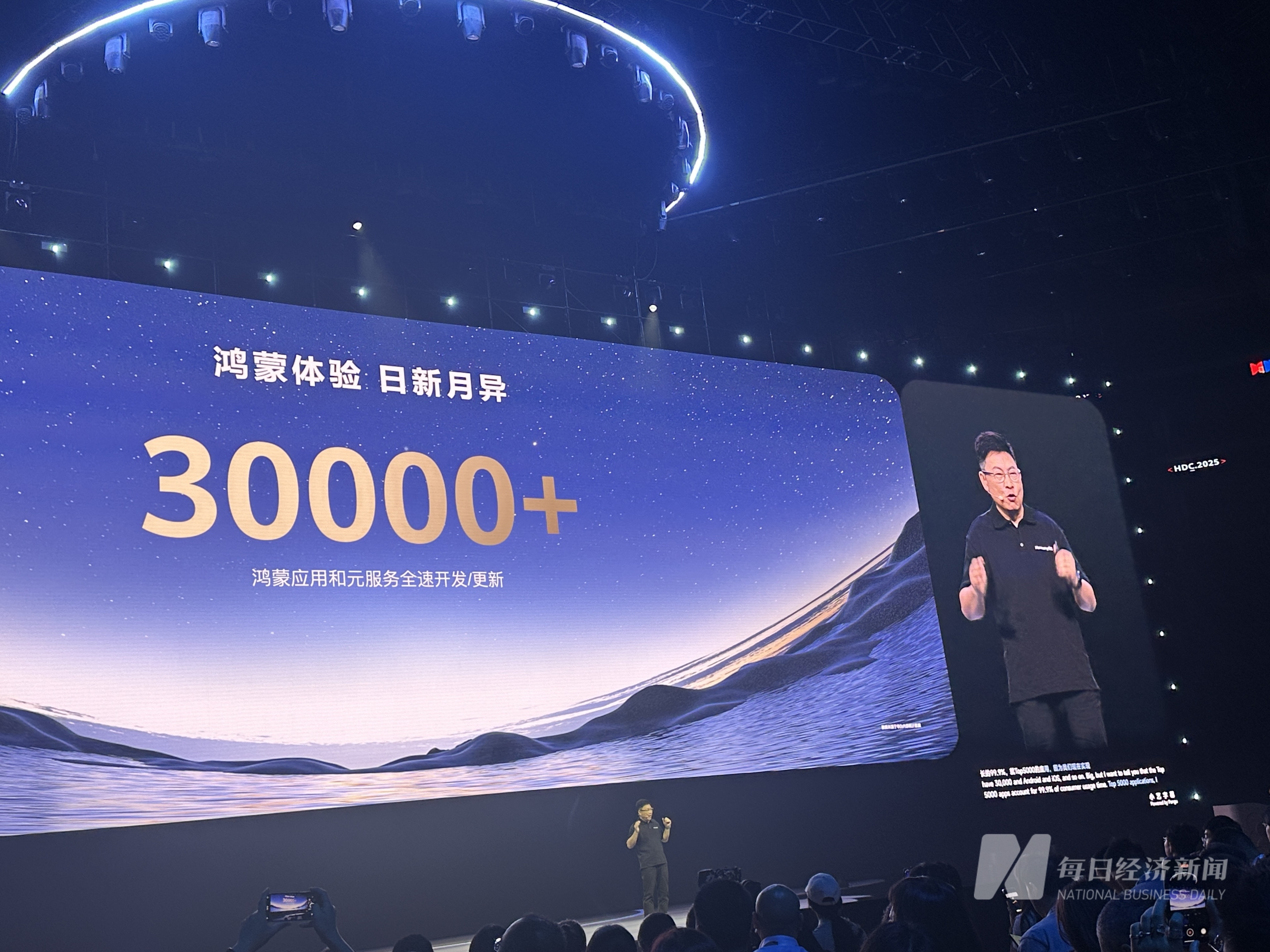
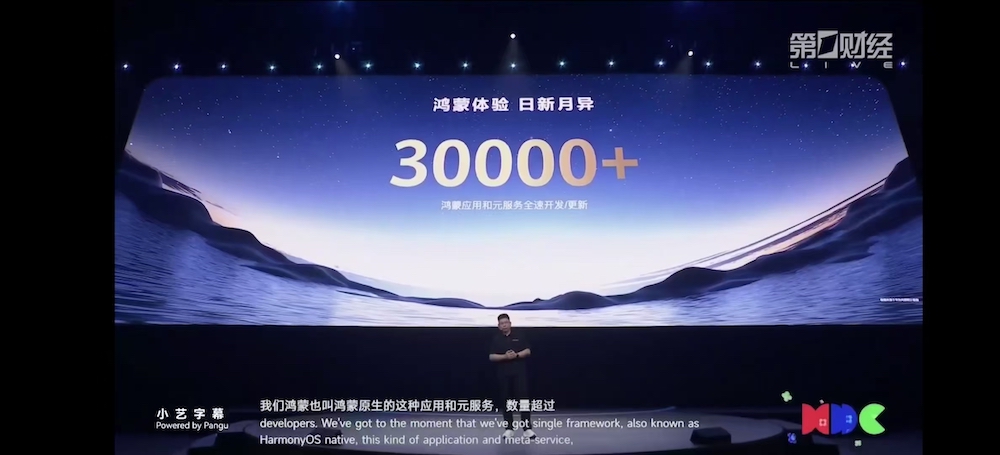
鸿蒙的635个日夜:超3万个鸿蒙原生应用及元服务加速开发中
Mei Ri Jing Ji Xin Wen· 2025-06-20 12:25
Core Insights - Huawei's HarmonyOS ecosystem has surpassed 8 million developers and over 40 terminal products since its launch on September 25, 2023, with more than 30,000 native applications and services in development [1][9] - The launch of HarmonyOS 6 developer beta marks a significant advancement, integrating AI capabilities and a new interconnected architecture [5][6] - The goal of achieving 100,000 applications by 2025 is crucial for the maturity of the HarmonyOS ecosystem, as emphasized by Huawei's leadership [4][9] Group 1: Ecosystem Development - HarmonyOS has completed a breakthrough from 0 to 1 in China's operating system landscape, but its survival hinges on building a robust ecosystem [4][7] - The competition in the mobile operating system market is expected to shift as HarmonyOS gains traction, with its global market share increasing from 2% to 4% and 17% in China, surpassing iOS [6][8] - Huawei is accelerating the development of native applications, with major apps like WeChat and Alipay already adapted for HarmonyOS [8][9] Group 2: Future Goals and Investments - Huawei aims to reach 100,000 applications by 2025, which is seen as a critical milestone for the ecosystem's maturity [9] - The company plans to invest over 6 billion RMB annually to support and incentivize developers, fostering continuous innovation within the HarmonyOS ecosystem [9] - Feedback from users is considered valuable for improving the ecosystem, with nearly 4 million suggestions received since the launch [9]
华为,重大发布!
新华网财经· 2025-06-20 12:17
Core Viewpoint - Huawei's Pangu model has made significant advancements in various industries, demonstrating its capabilities in over 30 industries and 500 scenarios, with the latest Pangu model 5.5 set to enhance natural language processing and multimodal applications [1][4]. Group 1: Pangu Model Developments - The Pangu model has been successfully implemented in sectors such as government, finance, manufacturing, healthcare, coal mining, steel, railways, autonomous driving, and meteorology, showcasing its transformative impact [1]. - Huawei introduced the Pangu Ultra MoE model with a parameter scale of 718 billion, marking a significant leap in the training of ultra-large-scale models on the Ascend AI computing platform [1][2]. Group 2: Technical Innovations - The Pangu team has innovated in model architecture and training methods, achieving stable training of the ultra-large MoE model on the Ascend platform, utilizing over 18TB of data [2]. - Key innovations include the Depth-Scaled Sandwich-Norm (DSSN) architecture and TinyInit initialization method, which enhance stability and load balancing among experts [2][3]. Group 3: Performance Enhancements - The recent upgrades to the training system have improved the efficiency of the pre-training process, increasing the performance of the model from 30% to 41% in the multi-card cluster pre-training [3]. - The Pangu Pro MoE model, with 72 billion parameters and 16 billion active parameters, has demonstrated performance comparable to models with over 100 billion parameters, ranking first among domestic models under 100 billion parameters [3]. Group 4: HarmonyOS Developments - Huawei unveiled HarmonyOS 6, which aims to enhance user experience with lower latency and improved AI capabilities, marking a significant step in the evolution of the Harmony ecosystem [4]. - The Harmony ecosystem is entering a new phase of acceleration, with over 30,000 applications and services in development across nearly 20 industries, highlighting a significant demand for talent in this area [5].

鸿蒙开发者军团冲锋:超3万应用加速开发,生态规模战进入关键期
Di Yi Cai Jing· 2025-06-20 11:05
Core Insights - Huawei's HarmonyOS has become the fastest-growing open-source operating system, with over 130 million lines of code and more than 800,000 developers contributing to its ecosystem [1][4] - The launch of HarmonyOS 5 has seen over 40 Huawei terminal products and more than 30,000 applications and services in development, marking a significant milestone in the ecosystem's growth [1][4] - The transition from a technology-driven approach to a collaborative ecosystem model is crucial for the future success of HarmonyOS, as it aims to attract more developers and partners [1][4][8] Development and Ecosystem - The construction of an operating system ecosystem is more challenging than developing the operating system itself, as evidenced by the failures of past mobile operating systems like Symbian and Windows Phone [2][4] - HarmonyOS has received nearly 4 million pieces of feedback and has undergone over 260 system updates, showcasing a robust collaborative effort from developers and consumers [4][8] - The integration of AI and cloud services into HarmonyOS is expected to enhance application performance and user experience, with the upcoming HarmonyOS 6.0 set to introduce a new architecture [6][7] Developer Engagement - Developers have reported a significant reduction in development costs and time, with some stating that costs have decreased by over 70% when adapting to HarmonyOS [5][7] - The ecosystem is witnessing a shift from developers seeking out the community to the community actively attracting developers, indicating growing confidence in HarmonyOS [5][7] - Collaboration with major applications like WeChat and Douyin has led to the creation of over 50 innovative projects, further enriching the HarmonyOS ecosystem [4][5] Future Outlook - The success of HarmonyOS will depend on the active participation of developers and the overall vibrancy of the ecosystem, as Huawei calls for more enterprise applications to accelerate their adaptation to HarmonyOS [8] - The competitive landscape in the consumer electronics industry is shifting towards AI integration, with Huawei needing to keep pace with rivals like Apple and Google [7][8] - The ongoing development of HarmonyOS is seen as a collective effort of millions of partners, developers, and consumers, emphasizing the importance of collaboration in achieving technological advancements [8][9]
A股盘前播报 | 中美经贸磋商继续进行 任正非最新发声!谈芯片、人工智能
智通财经网· 2025-06-10 00:29
Industry Insights - The Chinese government is promoting the sharing of quality medical resources and improving the basic medical insurance drug directory adjustment mechanism, which is expected to significantly boost the pharmaceutical sector's development [3] - The intelligent elderly care robot market is projected to reach approximately 7.9 billion in 2024, with rehabilitation robots accounting for the largest share at around 45%, and emotional companionship robots experiencing the fastest growth rate of 120% annually [9] - The domestic AI application is accelerating from simple to complex product upgrades, with the ROI expected to become clearer as the Agent technology deepens into enterprise processes [10] - The film industry is witnessing a recovery in supply, with a positive growth trend in the number of films, supported by continuous policy encouragement and national support for cultural consumption [11] Company Developments - Huawei's Ren Zhengfei emphasized that the company has many advantages in artificial intelligence and downplayed concerns regarding chip issues, stating that software limitations are overstated [2] - Apple introduced a new operating system interface at WWDC, focusing on aesthetic and design elements rather than software breakthroughs, which led to a 1.21% decline in its stock price [4] - Huasheng Co. plans to acquire 100% of Yixin Technology, leading to a stock suspension [13] - Chaohongji intends to issue H-shares and list on the Hong Kong Stock Exchange [13] - Maixinlin's subsidiary signed a 1.184 billion contract for computing power services [13]
华为鸿蒙系统本不叫“鸿蒙”,鸿蒙原名竟另有隐情,华为董事长揭秘
Sou Hu Cai Jing· 2025-06-09 01:02
Group 1 - The core viewpoint is that Huawei's HarmonyOS has emerged as a significant third option in the global operating system market, breaking the previous duopoly of Android and iOS, and providing a domestic alternative that is no longer reliant on foreign systems [1][5] - HarmonyOS has achieved substantial growth, with projections indicating that by 2025, devices running HarmonyOS will exceed 700 million, covering 18 major industry categories, and native applications will account for over 60% [5][7] - The open-source model of HarmonyOS has fostered industry collaboration, with companies like Zhongke Chuangda and Runhe Software developing industry solutions based on OpenHarmony, and chip manufacturers like SMIC and Yangtze Memory Technologies deeply adapting to HarmonyOS [7] Group 2 - The name "Harmony" was not originally intended for the operating system; it was initially the name of an internal kernel, and the media's misinterpretation led to its widespread adoption as the system's name [3][5] - The transition from a reliance on Android compatibility to a fully native HarmonyOS has been marked by significant achievements, dispelling earlier doubts about its capabilities [5][6] - Huawei's chairman emphasized that HarmonyOS is not just a Huawei product but a foundational infrastructure for the era of interconnected devices [7]
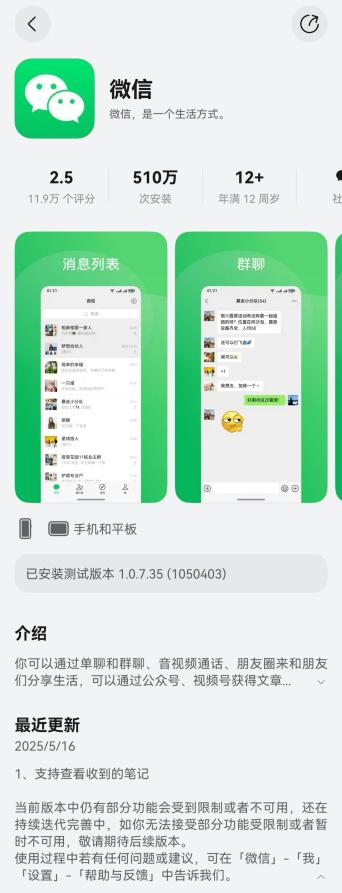
鸿蒙版微信迎重磅更新 安装量已超510万
Zhong Guo Jing Ying Bao· 2025-06-07 13:27
Core Insights - The latest version of WeChat for HarmonyOS, 1.0.7.35, has been updated with several user-requested features, enhancing daily usage scenarios [1][6] - Since its official launch in January, the HarmonyOS version of WeChat has seen over 5.1 million installations, indicating strong user adoption [1][7] - The continuous updates and improvements reflect the rapid development of the HarmonyOS ecosystem, with over 400 million user feedbacks received since the public testing began [7][8] Version Updates - The 1.0.7.35 version introduces significant features such as contact tagging, blacklist management, and improved chat organization [6] - Previous updates from March to May included functionalities like storage management, message editing, and enhanced payment features, narrowing the gap with Android and iOS versions [5][6] - The update also optimizes the image editing feature before sending, ensuring high-quality image sharing [6] Ecosystem Growth - The HarmonyOS ecosystem has expanded significantly, with over 20,000 applications and services launched, including popular apps like Douyin and Alipay, each surpassing 2 million downloads [7][8] - The number of applications available on HarmonyOS has increased geometrically, from 1,500 to over 20,000 in less than a year [7] - The rapid adaptation of HarmonyOS applications on computers has also been noted, with the number of integrated applications doubling in less than two weeks [7] Strategic Positioning - The launch of new Huawei devices, such as the Pura 80 series, will showcase the latest features of HarmonyOS, emphasizing the synergy between hardware and software [6][8] - The development of HarmonyOS is seen as a significant achievement for Chinese technology, demonstrating a shift from following to leading in the operating system domain [8]