电动汽车

Search documents
【美股盘前】Strategy因比特币持仓亏损124亿美元;Stellantis计提220亿欧元损失以缩减电动汽车战略 股价跌超20%;2026年预计支出2000亿美元,亚马逊跌超8%
Mei Ri Jing Ji Xin Wen· 2026-02-06 10:00
Group 1: Market Trends - Major stock index futures showed slight increases, with Dow futures up 0.08%, S&P 500 futures up 0.16%, and Nasdaq futures up 0.08% [1] - Cryptocurrency stocks rebounded, with Coinbase rising nearly 4% and Bitmine Immersion Technologies increasing by nearly 3% [1] - Power sector stocks saw a pre-market rally, with Vistra Energy up 3.75% and Constellation Energy up 2.28% [1] Group 2: Company Performance - Chip stocks also experienced gains, with Nvidia up 1.51% and AMD up 0.85% [2] - Strategy reported a net loss of $12.4 billion for Q4 2025, driven by a decline in Bitcoin holdings [2] - Stellantis announced a write-down of €22 billion to adjust its electric vehicle strategy, leading to a stock drop of over 20% [2] - Toyota raised its full-year outlook, projecting sales revenue of ¥50 trillion and net profit of ¥3.57 trillion, with a quarterly sales revenue of ¥13.46 trillion [3] - Amazon reported Q4 net sales of $213.39 billion, a 14% year-over-year increase, but projected capital expenditures of $200 billion for 2026, leading to an 8.33% drop in stock price [5] Group 3: Regulatory and Strategic Developments - Michigan's Attorney General called for a re-evaluation of DTE Energy's power supply plan for Oracle and OpenAI's data center, citing concerns over consumer protection [4]


特斯拉的销量已经不重要了
投中网· 2026-02-06 06:53
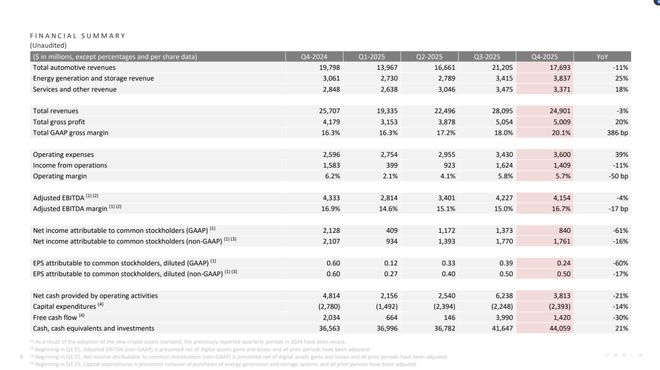
Core Viewpoint - Tesla's financial performance in 2025 shows a significant decline, marking the first annual revenue drop in its history, with total revenue down 3% year-over-year to $94.8 billion and a net income drop of 46% [7][22]. Financial Summary - In Q4 2025, Tesla reported total revenues of $24.9 billion, a 3% decrease year-over-year, with automotive revenues down 11% to $17.7 billion [8][10]. - The company's GAAP net profit for Q4 2025 was $840 million, a 61% decline compared to the previous year, while non-GAAP net profit was $1.76 billion, down 16% [8][10]. - Total gross profit for Q4 2025 was $5.0 billion, with a gross margin of 20.1%, reflecting a 386 basis point increase year-over-year [8]. Delivery and Production - Tesla's total vehicle deliveries in Q4 2025 were 418,227, a 16% decrease year-over-year, with annual deliveries totaling 1.636 million, down 9% [11][20]. - The production of Model 3/Y in Q4 2025 was 422,652 units, a 3% decrease year-over-year, while other models saw a 48% drop in production [12]. Market Response - Despite disappointing financial results, Tesla's stock price remained resilient, closing at $430.46, only a slight drop of 0.1% [14]. - Analysts noted that Tesla's market perception is shifting, viewing it more like a high-risk startup rather than a stable company [15]. Future Investments - Tesla announced a record capital expenditure plan of $20 billion for 2025, focusing on AI, autonomous driving, and robotics [16][29]. - The company plans to build six new factories, including those for battery production and humanoid robots [29]. Autonomous Driving Vision - Elon Musk emphasized that Tesla's future lies in autonomous driving, with plans to produce a new model, CyberCab, designed exclusively for self-driving [24][25]. - Tesla's Full Self-Driving (FSD) subscription model will replace the one-time purchase option, with nearly 1.1 million global paid users reported [26][27]. AI and Robotics - Tesla is investing heavily in AI and robotics, with plans for a new chip factory to support its autonomous driving and AI initiatives [31]. - The company aims to produce 1 million units of its Optimus humanoid robot annually, with the third generation expected to be released soon [29].



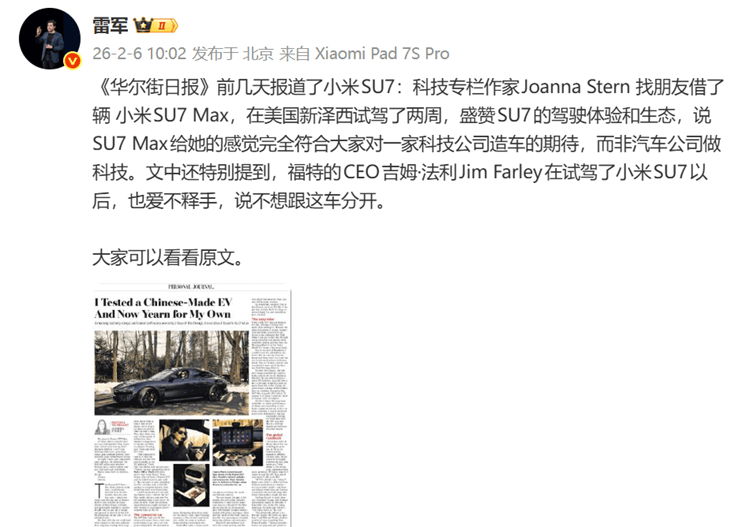
雷军:福特CEO试驾小米SU7之后,爱不释手,甚至不想跟车分开!
Sou Hu Cai Jing· 2026-02-06 06:49
Core Insights - Xiaomi's SU7 Max has garnered positive reviews for its driving experience and technology integration, positioning it as a strong competitor in the electric vehicle (EV) market despite not being available in the U.S. yet [1][8][20] - Ford's CEO, Jim Farley, expressed admiration for the Xiaomi SU7 after test-driving it, indicating a recognition of the competitive threat posed by Chinese EV manufacturers [4][9][24] Company Performance - The Xiaomi SU7 Max features advanced technology, including a 16.1-inch infotainment screen running HyperOS, and offers a battery range of approximately 500 miles (810 kilometers) [10][18] - The vehicle's pricing in China starts at 299,900 Chinese yuan (around $43,000), which is competitive with the Tesla Model Y, yet offers a more premium experience [20] Industry Trends - Chinese EV manufacturers, including Xiaomi, BYD, and Geely, are noted for delivering vehicles with longer battery ranges and superior digital platforms compared to Western competitors [8][9] - There is a growing sentiment that Chinese automakers are poised to enter the U.S. market, especially if manufacturing occurs domestically, as indicated by comments from industry executives [21][22] Competitive Landscape - Ford is exploring partnerships with various Chinese manufacturers, including Xiaomi, Geely, and BYD, to enhance its EV offerings and address the competitive gap with Chinese brands [24][26] - The current U.S. market is hindered by tariffs and restrictions on Chinese-made EVs, but these barriers may change in the future, allowing for greater competition [21][22]

加拿大总理最新涉华表态
中国能源报· 2026-02-06 05:06
End 欢迎分享给你的朋友! 出品 | 中国能源报(c n e n e rg y) 加拿大宣布电动汽车新战略,将与中国合作。 加拿大总理马克·卡尼5日宣布一项电动汽车新战略,包括重启购车补贴,并表示将与中国 合作推动加拿大本土生产和出口电动汽车。 根据加拿大总理府发布的声明,加拿大将充分利用现有和新增的贸易协定,包括近期与中 国达成的电动汽车合作协议,以促进该领域的大规模投资,实现加拿大汽车出口市场多元 化,并将加拿大打造成为全球电动汽车领域的领导者之一。 来源:新华社 责编丨李慧颖 ...

加拿大宣布电动车新战略 将加强对华合作
Xin Hua She· 2026-02-06 04:56
新华社渥太华2月5日电(记者林威)加拿大总理卡尼5日宣布一项电动汽车发展新战略,通过拨款、财 政补贴和税收优惠等措施对该领域给予大力支持。同时,加拿大还将与中国合作推动加拿大本土生产和 出口电动汽车。 ...
美股全线下跌,金银暴跌!“中国金龙”,逆势走强
Zhong Guo Zheng Quan Bao· 2026-02-05 23:36
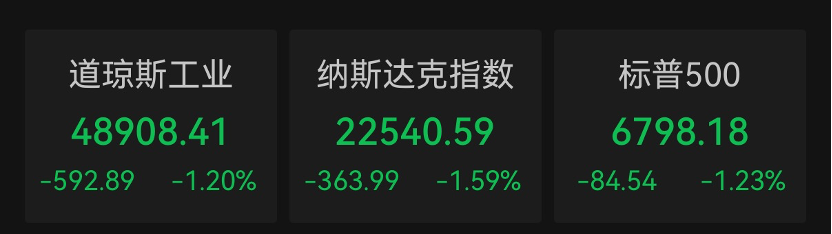
Market Overview - On February 5, U.S. stock indices closed lower, with the Dow Jones down 1.2%, S&P 500 down 1.23%, and Nasdaq down 1.59% [2][4] - Large technology stocks mostly declined, with the U.S. tech giants index falling 1.76% [4] Amazon's Financial Performance - Amazon reported Q4 sales of $213.39 billion, slightly above market expectations of $211.49 billion, but earnings per share were $1.95, just below the forecast of $1.96 [4] - The company anticipates capital expenditures of approximately $200 billion by 2026, significantly higher than the market estimate of $146.11 billion, representing a 37% increase [4] Chinese Stocks Performance - The Nasdaq Golden Dragon China Index rose by 0.9%, while the Chinese tech leaders index fell by 0.45% [4] - Notable movements included NIO rising over 6%, while Tencent Holdings dropped over 1% [4] Precious Metals Market - Precious metals prices fell sharply, with London gold spot prices dropping over 4% to $4,760.25 per ounce, and COMEX gold futures down over 2% to $4,825.50 per ounce [5][6] - London silver spot prices plummeted by 19% to $71.841 per ounce, with COMEX silver futures down over 14% to $72.565 per ounce [5][6] Electric Vehicle Strategy in Canada - Canada announced a new electric vehicle strategy, including the revival of purchase subsidies and collaboration with China to boost domestic production and export of electric vehicles [7] - The strategy aims to leverage existing and new trade agreements to promote large-scale investments in the electric vehicle sector [7]
瑞银全球首席经济学家:股票或是最值得配置的资产|全球财经连线
2 1 Shi Ji Jing Ji Bao Dao· 2026-02-05 11:22
Group 1: Global Economic Outlook - The global economy is expected to grow slightly above 3% in 2026, with emerging economies contributing about one-quarter of this growth, particularly from sectors like AI [2][10] - UBS predicts that US stocks may rise by approximately 10%, while European and Japanese markets could see gains of around 8% [1][18] - The impact of tariffs on trade has not yet fully materialized, with the effective tariff rate in the US around 11%, suggesting potential future declines in import demand [3][4] Group 2: US Economic Factors - The Federal Reserve is anticipated to lower interest rates twice this year, with a potential reduction of 50 basis points, which may not significantly impact the economy [7][8] - Concerns about inflation persist, with tariffs expected to contribute an additional 1.3 percentage points to inflation, indicating that the full effects of tariffs are yet to be seen [4][20] - The US labor market is showing signs of structural risks, with a significant portion of economic growth coming from AI investments and high-income spending [20][21] Group 3: Investment Opportunities - China and Brazil are highlighted as key emerging markets for investment, offering exposure to AI and favorable valuation and profit growth prospects [1][19] - The technology sector is driving significant investment, with a notable concentration of funds in a few major companies, raising concerns about market breadth and potential future winners [12][14] - Investors are advised to focus on data-intensive and labor-intensive companies that could benefit from new technologies, as the market seeks the next beneficiaries of technological advancements [13][15] Group 4: Geopolitical and Market Risks - Geopolitical risks are acknowledged but are expected to have limited direct impact on financial markets, primarily affecting oil prices [21] - The potential for increased fiscal stimulus in the US, especially ahead of midterm elections, poses a significant risk to market stability, with concerns about rising fiscal deficits [20][21] - The current high level of pessimism among high-income households regarding employment prospects is noted as an unusual phenomenon, which could affect market sentiment [21]
特斯拉第二增长曲线爆发:2025年储能部署激增49%,利润引擎超越造车?
Xin Lang Cai Jing· 2026-02-05 08:12
Core Insights - Tesla's energy generation and storage business has become a core pillar, with Q4 2025 revenues reaching $3.06 billion, a 25% year-over-year increase, indicating a shift from being a side business to a mainstay [2][3] - The energy sector's gross profit for 2025 was $3.8 billion, significantly higher than $2.64 billion in 2024, showcasing improved profitability amid challenges in the automotive sector [3][12] Financial Performance - Total automotive revenues decreased by 11% year-over-year to $19.8 billion in Q4 2024, while total revenues fell by 3% to $25.7 billion [1] - Energy generation and storage revenue increased by 25% to $3.06 billion in Q4 2025, with services and other revenue also rising by 18% [1][2] - Total gross profit for Q4 2025 was $5.01 billion, with a gross margin of 20.1%, up 386 basis points year-over-year [1] - Net income attributable to common stockholders (GAAP) dropped by 61% to $2.13 billion in Q4 2024, while non-GAAP net income decreased by 16% [1] Production and Capacity Expansion - Tesla is expanding its manufacturing network to meet global demand for grid-scale energy storage, with existing factories in California and Shanghai each having a capacity of 40 GWh [8] - A new factory in Houston is under construction, which will produce the innovative "Megablock" product, designed to enhance capacity and reduce installation costs for grid operators [9][11] Market Challenges - Despite strong performance, Tesla's management has warned of increasing competition in the energy production and storage sector, which may lead to declining retail or wholesale electricity prices [12] - The company acknowledges that lower electricity prices could diminish the attractiveness of its storage products for some customers, presenting a macroeconomic challenge for 2026 [12] Strategic Vision - Tesla's energy vision is taking shape, with significant growth in energy revenues and the introduction of new products like the Megablock, indicating a transition from an electric vehicle company to a comprehensive AI and energy giant [13]
洞察小型电动汽车市场竞争态势(2026):低利润、高销量的小型电动电动汽车使汽车制造商获得丰厚收益
易车· 2026-02-05 07:54
Investment Rating - The report indicates a strong investment opportunity in the small electric vehicle (EV) sector, particularly for Chinese brands, which are projected to capture nearly 96% of the market share by 2025 [6][21][98]. Core Insights - The small electric vehicle market in China is expected to grow from less than 500,000 units in 2020 to over 3 million units by 2025, marking a sixfold increase [6][98]. - Despite the surge in sales, the profit margins for small electric vehicles remain low, leading some manufacturers to strategically avoid this segment due to economic inefficiencies [7][98]. - The rise of small electric vehicles has significantly contributed to the market share of Chinese brands, which increased from approximately 30% to 60% between 2020 and 2025, with small EVs accounting for one-third of this growth [6][60][98]. Summary by Sections Market Growth - From 2020 to 2025, the sales of small electric vehicles in China are projected to increase dramatically, with Chinese brands benefiting the most, achieving a market share of nearly 96% by 2025 [6][9][98]. - The share of small electric vehicles in new car sales in China is expected to rise from less than 3% to over 14% during the same period [9][98]. Consumer Demographics - By 2025, nearly 60% of small electric vehicle buyers will come from households that previously owned foreign brands, with over 80% of these buyers being women [30][32][98]. - The shift in consumer demographics indicates a growing acceptance of Chinese brands among former foreign brand users, particularly in the small electric vehicle segment [32][49][98]. Competitive Landscape - Major Chinese brands such as BYD, Wuling, and Geely are expected to dominate the market, with BYD projected to exceed 3 million units in sales by 2025 [20][17][98]. - The report highlights that foreign brands like Volkswagen and Toyota are struggling to compete effectively against the rise of Chinese small electric vehicles, which are expected to capture a significant portion of the market by 2026 [21][68][98]. Cost Advantages - The total cost advantage of small electric vehicles over traditional internal combustion engine vehicles is a key factor driving their popularity, with significant savings in lifecycle costs [78][79][98]. - As the small electric vehicle supply chain matures, foreign brands are also expected to benefit from reduced manufacturing costs, although they still face challenges in competing with the pricing of Chinese brands [86][88][98].


BYD hits a January speed bump as China's EV market shows demand slowdown
Invezz· 2026-02-05 06:48
Core Insights - China's electric vehicle market is experiencing significant strain, with January sales indicating weaker domestic demand and heightened competition [1] Company Analysis - BYD, recognized as the largest electric vehicle manufacturer in China, is facing challenges due to the declining sales figures and increased competition within the market [1]