
电网

Search documents
能源早新闻丨1月15日,正式启动!
中国能源报· 2026-01-15 22:33
Regulatory Developments - The National Development and Reform Commission is seeking public opinions on the "Regulations on the Supervision and Management of Hydroelectric Dam Operation Safety," applicable to medium and large hydropower stations with a total installed capacity of 50,000 kilowatts and above [2] - The National Energy Administration has published a compilation of typical cases for electric power quality management, aimed at sharing successful experiences in managing electric power quality issues [2] Industry News - Three departments, including the Ministry of Industry and Information Technology, are taking steps to resist disorderly price wars in the new energy vehicle industry, emphasizing innovation and quality [2] - The Ministry of Natural Resources reported that China has exceeded its "14th Five-Year Plan" target for ecological restoration of historical mining sites, completing restoration of 3.35 million acres, which is 19.6% above the target [2] Energy Sector Updates - The People's Bank of China is expanding its carbon reduction support tool to include projects with direct carbon reduction effects, with an annual operation volume not exceeding 800 billion yuan [3] - The offshore wind power grid connection capacity in the Yangtze River Delta region is expected to exceed 19 million kilowatts by the end of 2025, with Jiangsu contributing the largest share [3] Water Resource Management - The South-to-North Water Diversion Project's eastern route has officially started its water diversion work for the 2025-2026 period, planning to increase water supply by 1.638 billion cubic meters [4] Power Load Records - The Heilongjiang power grid reached a maximum load of 18.728 million kilowatts, marking a historical high and a 25.1 thousand kilowatt increase compared to the previous winter peak [4] International Energy Market - The U.S. has officially begun selling Venezuelan oil, with the first transaction valued at $500 million, and more sales expected in the coming weeks [5] - OPEC forecasts that global daily oil demand will increase by 1.38 million barrels in 2026 compared to 2025, reaching 106.52 million barrels [5]


晚报 | 1月16日主题前瞻
Xuan Gu Bao· 2026-01-15 14:22
Semiconductor Industry - TSMC reported Q4 2025 revenue of $33.73 billion, a 25.5% year-over-year increase and a 1.9% quarter-over-quarter increase, with a gross margin of 62.3%, driven by strong demand for high-end chips due to the AI computing wave [1] - TSMC's capital expenditure is expected to reach $52-56 billion in 2026, exceeding market expectations, indicating robust future AI computing demand [1] Tungsten Industry - Domestic prices for tungsten products have increased, with black tungsten concentrate and ammonium paratungstate prices rising by 5,000 yuan/ton and tungsten iron by 10,000 yuan/ton [1] - Global tungsten supply growth is limited, with a projected compound annual growth rate of 2.57% from 2023 to 2028, while demand is expected to grow at 2.61% during the same period, driven by emerging industries [2] Commercial Aerospace - Beijing's Rocket Street project has completed its construction and will serve as China's first commercial aerospace research and production base, offering various shared services for the entire commercial aerospace development chain [3] - The U.S. aims to produce 10,000 Starship spacecraft annually, and the FCC has approved SpaceX's deployment of an additional 7,500 second-generation Starlink satellites, totaling 15,000 [3] Power Grid Equipment - The State Grid's investment plan for the 14th Five-Year Plan is set at 4 trillion yuan, a 40% increase from the previous plan, focusing on green transformation and new power system construction [4] - This investment is expected to lead to significant upgrades in China's power system, enhancing energy security and global competitiveness [4] Carbon Fiber Industry - A breakthrough in domestic T1000-grade high-performance carbon fiber has been achieved, with each fiber having 12,000 filaments and a tensile strength exceeding 6,600 MPa, marking a significant advancement in high-end materials [5] - By 2030, China's carbon fiber production capacity is expected to exceed 250,000 tons, with demand in the new energy vehicle sector projected to rise significantly [6] GaN Power Products - Onsemi has signed a collaboration agreement with GlobalFoundries to develop advanced GaN power products, starting with 650V devices, to meet the growing power demands in various sectors [6] - GaN technology is expected to enhance efficiency and reduce costs in applications such as AI data centers and electric vehicles [7]

4 万亿!史上最大电网投资敲定,利好光伏储能发展
Xin Lang Cai Jing· 2026-01-15 14:09
Core Insights - The State Grid Corporation plans to invest 4 trillion yuan during the "14th Five-Year Plan" period, representing a 40% increase compared to the previous plan, aimed at expanding effective investment and promoting high-quality development of the new power system supply chain [1][11]. Investment Plan Overview - The core objective of the 4 trillion yuan investment plan is to build a new power system, expand effective investment, and drive high-quality development in the industry chain, particularly benefiting the photovoltaic and energy storage sectors [3][13]. - Historical investment data shows a clear growth trend, with investments during the "13th Five-Year Plan" at approximately 2.64 trillion yuan, increasing to 2.85 trillion yuan during the "14th Five-Year Plan," which had a modest growth rate of 7.96%. The current plan's 40% year-on-year increase marks a significant qualitative improvement [8][18]. Future Competitive Landscape - Systemic competition will replace single-segment competition, focusing on providing integrated solutions that meet the new power system's requirements for flexibility, stability, and intelligence. Companies with system integration capabilities and digital platform technologies will have a competitive edge [4][13]. - The investment plan aims to position China as a global hub for original technology in the energy sector, allowing leading companies to export self-controlled technologies and standards for the new power system internationally [5][14]. - The deep integration of AI and energy is highlighted, with the State Grid's investment creating a robust, flexible, and intelligent power network that supports the explosive growth of AI computing power [6][16]. Industry Focus Areas - In the photovoltaic industry, companies should focus on enhancing product efficiency and reliability, developing smart generation and forecasting technologies, and exploring integrated solutions with energy storage [7][17]. - The energy storage sector should prioritize cost reduction in mainstream electrochemical storage technologies while also planning for next-generation technologies like long-duration storage and solid-state batteries. Business models should explore participation in the electricity spot market and providing grid ancillary services [7][17]. - Investors and observers should pay attention to leading companies with strong foundations in high-voltage equipment, grid digitization, system integration, and core technology autonomy, while also tracking policy implementations in distribution network upgrades and microgrid developments [7][17].
“一冷一暖“是何意图?深度理解政策和节奏
Hu Xiu· 2026-01-15 11:03
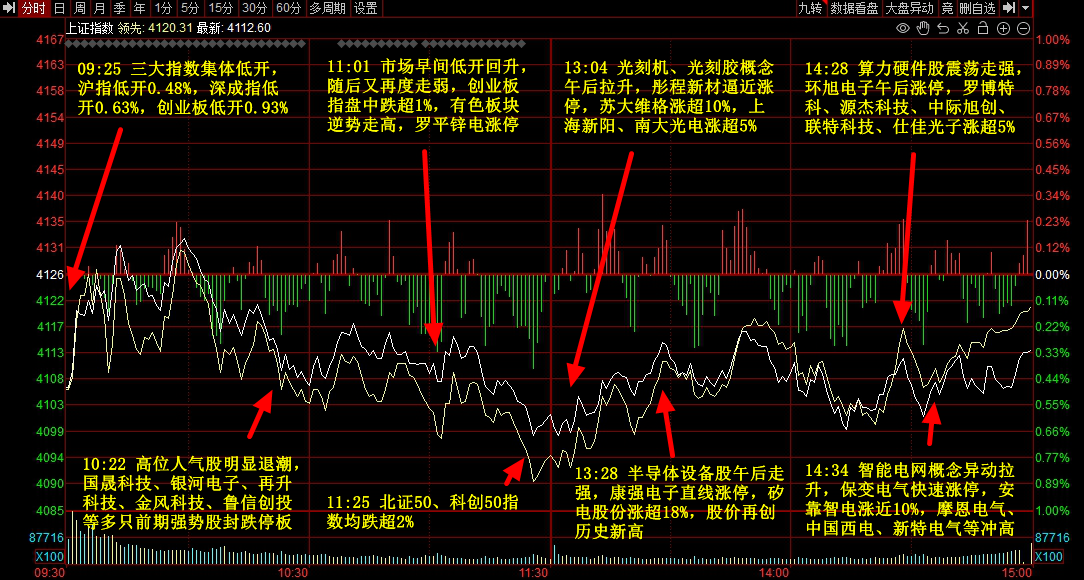
Group 1 - The core viewpoint of the article discusses the significant adjustment in hot sectors and identifies the main lines of investment opportunities [3] - The A-share market remained stable without significant declines, despite regulatory pressure affecting specific hot sectors, leading to substantial pullbacks in previously popular stocks [3] - The central bank announced a "structural interest rate cut," which is aimed at directing low-cost funds towards key industries such as technology, agriculture, carbon reduction, and private enterprises [3][4] Group 2 - The recent regulatory signals and the central bank's actions indicate a dual approach of controlling risks while ensuring liquidity in the market [4] - The market is expected to continue its upward trend after a short-term adjustment, suggesting that the overall market conditions in the first quarter remain favorable [3] - Observations of unusual funding phenomena have raised concerns among some investors, which are also analyzed in the context of market dynamics [5]
“十五五”电网投资4万亿元,创历史新高!
中国能源报· 2026-01-15 08:26
End 三、强化科技赋能,加快产业创新融合。 "十五五"时期 ,强化关键核心技术攻关,建成 具有全球影响力的能源电力领域原创技术策源地,推动新型电力系统产业链供应链关键核 心技术实现全面自主可控。积极发展新质生产力,推动科技创新和产业创新深度融合,深 化成果转化和产业发展,统筹传统产业升级、新兴产业壮大、未来产业培育,积极拓宽电 力服务广度和深度,建成核心技术领先、竞争优势明显、经济效益突出的产业集群。 四、注重挖潜增效,实现内涵式发展。 加强企业经营管理,将"五个价值"贯穿经营发展 全过程,牢固树立"过紧日子"思想,优化中长期经营策略和资源配置。在建设上控造价, 在经营上优成本,在投资上提质效。聚焦主责主业,持续优化业务布局,不断增强服务国 家战略能力,实现以价值创造为中心的内涵式发展。 电 网 等 重 大 基 础 设 施 是 经 济 社 会 运 行 的 底 座 。 国 家 电 网 公 司 将 继 续 发 挥 国 民 经 济 " 稳 定 器"和"压舱石"作用,通过持续稳定的高强度投资,加快建设以主干电网和配电网为重要 基础、智能微电网为有益补充的新型电网平台,全力保障国家能源安全,为加快建设新型 能源体系、 ...

广西新能源成第一大电源 装机容量突破6000万千瓦
Zhong Guo Jing Ji Wang· 2026-01-15 08:04
随着新能源快速发展与大规模接入,电网网架结构、调度模式、运行方式也要对应优化。"十四五"期间 南方电网广西电网公司投资超820亿元加强电网网架,实现了500千伏变电站设区市全覆盖、220千伏变 电站县域全覆盖,持续畅通能源输送动脉。 为了实现新能源高效消纳,南方电网广西电网公司将人工智能技术深度融入电网运行全流程,构建"技 术赋能+精准调度"的智能体系。南方电网广西电力调度控制中心水电及新能源科高级经理唐健介绍, 通过上线AI数字员工、调控智能体,升级迭代"人工智能算法+人工预报员"方式,强化"风光水荷"精准 预测,保障电力供应和新能源的最大程度消纳。 最新数据显示,五年来,广西新能源市场化电量逐渐扩大,2025年首次超500亿千瓦时。广西全面推动 集中式新能源发电企业全电量入市,新能源现货交易报量报价1个地市全覆盖。2025年,全区共组织绿 电交易70批次,交易绿电电量达167.31亿千瓦时。 南方电网广西电网公司电力大数据显示,截至2025年末,广西新能源装机规模突破6000万千瓦,达到 6000.1万千瓦,占比超过49.6%,成为广西第一大电源。 "十四五"是广西新能源的快速发展期。五年间,广西风电、光 ...
超73亿资金,“跑了”
Zhong Guo Ji Jin Bao· 2026-01-15 05:55
Group 1 - On January 14, the A-share market experienced a significant drop, with the three major indices showing mixed results, and the ChiNext index falling nearly 2% [2] - The total net outflow of funds from the stock ETFs exceeded 7.3 billion yuan, indicating a cooling market as some investors chose to cash out [5] - Despite the overall outflow, 49 stock ETFs saw net inflows of over 100 million yuan, with the software ETF, satellite ETF, and non-ferrous metals ETF leading the inflows [5][8] Group 2 - As of January 14, the total scale of stock ETFs reached 5.07 trillion yuan, marking the first time it surpassed the 5 trillion yuan threshold [3] - The total trading volume of stock ETFs on that day was 387.15 billion yuan, an increase of over 76 billion yuan compared to the previous trading day [3] - The software, big data, and cloud computing sectors led the gains among stock ETFs, while sectors like electric grid and innovative pharmaceuticals performed poorly [3][4] Group 3 - The top three stock ETFs by net inflow included the software ETF with 31.67 billion yuan, the D-star ETF with 26.48 billion yuan, and the non-ferrous metals ETF with 13.52 billion yuan [6] - Conversely, the top three stock ETFs by net outflow were the ChiNext ETF with 35.60 million yuan, the CSI 300 ETF with 28.26 million yuan, and the STAR 50 ETF with 15.42 million yuan [7] - Head fund companies like E Fund and Huaxia Fund saw significant inflows into their ETFs, with E Fund's software ETF and artificial intelligence ETF attracting 3.76 billion yuan and 3.73 billion yuan respectively [8]

80多家央企负责人薪酬信息披露:中石油董事长97.85万元、中石化董事长93.55万元、南方电网董事长95.83万元、南航董事长85.05万元
Sou Hu Cai Jing· 2026-01-15 03:35
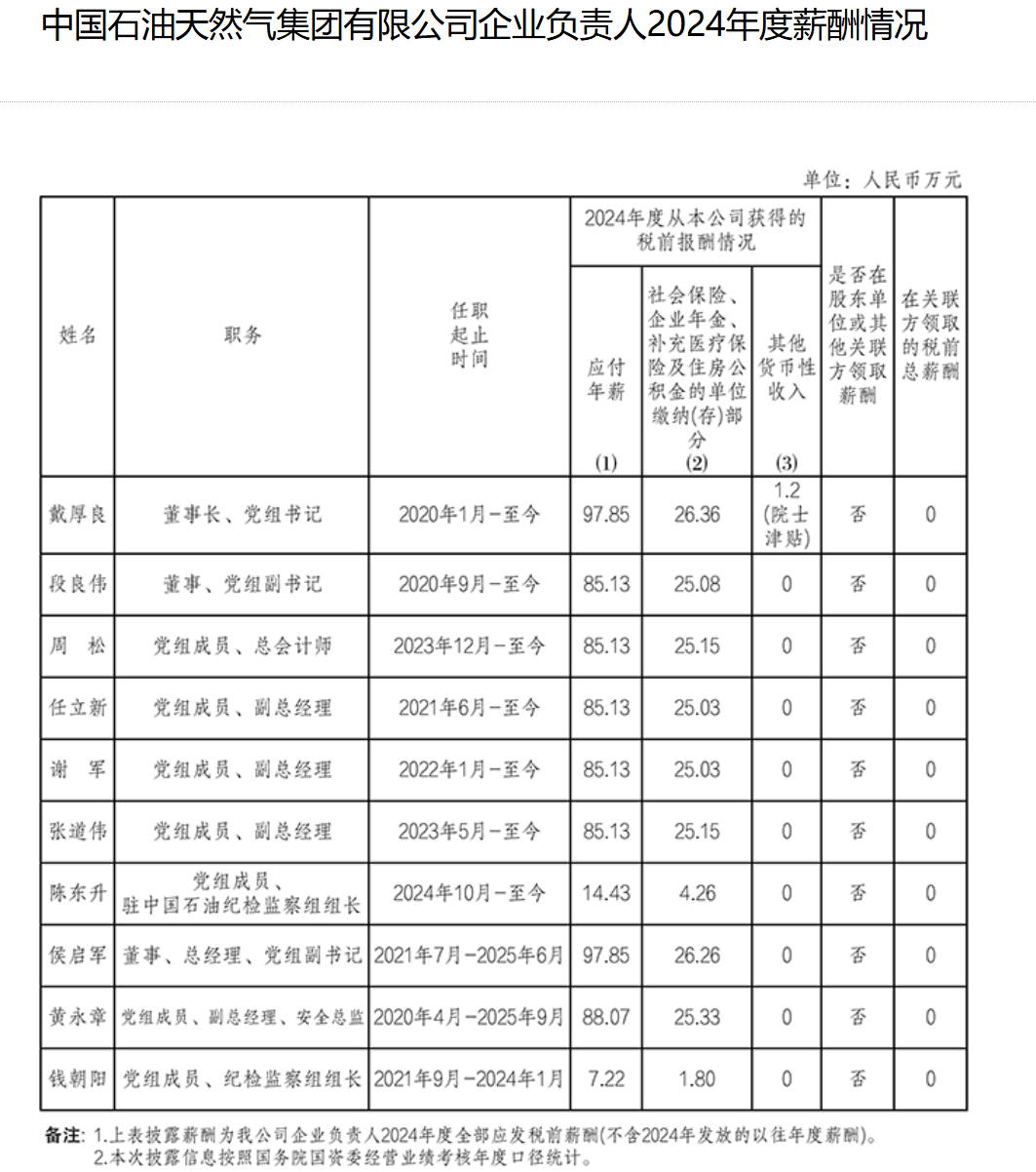
1月14日,国务院国资委网站通过提供各中央企业薪酬信息披露网页链接的方式,披露了所监管的80多家央企负责人2024年度薪酬信息。这是国资央企 持续抓好重点领域信息公开、回应公众关心关切的重要举措。 中国石油化工集团有限公司负责人2024年度薪酬情况 根据党中央、国务院深化国有企业负责人薪酬制度改革有关要求和国务院国资委相关规定,现将中国石油化工集团有限公司负责人2024年度薪 酬情况披露如下。 以下为部分央企负责人2024年度薪酬信息: 1.上表披露薪酬为公司负责人报告期内全部应发税前薪酬(不含发放的以往年度绩效年薪)。 2.本次披露薪酬按照国务院国资委经营业绩考核年度口径统计。 中国南方电网有限责任公司企业负责人2024年度薪酬情况 信息来源: 发布时间2026-01-07 | | | | | 2024年度从本公司获得的税前报酬情况 | | | 单位:人民币万元 | | --- | --- | --- | --- | --- | --- | --- | --- | | | | | | 社会保险、企 | | 是否在股 东单位或 | 在关联方 | | 姓名 | 职务 | 任职起止时间 | | 业年金、补充 | ...


成都汇阳投资关于电网投资进一步加大,看好电网智能化的发展
Sou Hu Wang· 2026-01-15 02:34
Group 1: Policy and Development Goals - The National Development and Reform Commission and the National Energy Administration released guidelines to promote high-quality development of the power grid, aiming for "West-to-East Power Transmission" to exceed 420 million kilowatts by 2030, with an additional inter-provincial power mutual assistance capacity of around 40 million kilowatts [1] - The guidelines support renewable energy generation to account for approximately 30% of total generation by 2030 and aim to enhance distributed renewable energy capacity to 900 million kilowatts, along with supporting over 40 million charging infrastructure units [1] Group 2: Technological Integration and Investment - The development of a new power system requires the integration of main and distribution networks, emphasizing the need for an open attitude towards various technologies to accommodate high proportions of renewable energy [3] - There is a call for increased investment in the power grid, with a focus on appropriate preemptive planning and significant upgrades to existing grid infrastructure, while encouraging private capital participation in grid investment [3] Group 3: Company Insights - State Grid NARI Technology Co., Ltd. (国电南瑞) is a leader in the smart grid industry, with over 75% market share in provincial dispatch systems and notable performance in AI diagnostics and overseas market expansion [6] - XJ Electric Co., Ltd. (许继电气) specializes in ultra-high voltage equipment, holding over 40% market share in DC converter valves, with significant growth in orders and breakthroughs in overseas markets [6] - Sifang Automation Co., Ltd. (四方股份) is a core supplier of power automation systems, leading in domestic relay protection devices and extending into emerging areas like virtual power plants [6] - TBEA Co., Ltd. (特变电工) holds over 30% market share in ultra-high voltage transformers and has a significant presence in over 60 countries, with synergistic effects in photovoltaic inverter business and grid upgrades [6] - Siyuan Electric Co., Ltd. (思源电气) focuses on high-voltage switchgear and has a strong technological advantage in grid safety monitoring, with an AI diagnostic false positive rate below 0.1% [6]

科技板块ETF领涨资金流向持续分化
Zhong Guo Zheng Quan Bao· 2026-01-14 20:51
Group 1: Market Overview - On January 14, the overall ETF market saw more gains than losses, with over half of the ETFs closing higher. Technology-themed ETFs, including software, big data, and fintech, dominated the top gainers, each with an increase of over 5% [1][2] - The total net inflow into the ETF market on January 13 reached 5.66 billion yuan, a significant increase from 1.157 billion yuan on January 12, with equity ETFs continuing to attract capital [3][4] Group 2: Technology-Themed ETFs Performance - Technology-themed ETFs were the market focus on January 14, with all top ten gainers being such products, many showing premiums in the market. Several technology-themed ETFs have seen cumulative gains exceeding 20% within just eight trading days this year [1][2] - The Software ETF (561010) led the market with a daily increase of 6.34% and a premium rate of 2.19%. The underlying index includes 117 stocks, with 10 stocks rising over 10% on the same day [1][2] Group 3: Sector Performance Disparity - In stark contrast to the technology sector, ETFs related to the electric grid and banking sectors saw multiple products in the top ten losers. The Electric Grid ETF (561380) experienced a decline of 5.81%, while another electric grid ETF (159320) fell by 1.75% [2][3] - Three ETFs tracking the banking index also reported daily declines exceeding 1.6%, with all but one of the 42 constituent stocks closing lower [3] Group 4: Fund Flow Dynamics - The inflow of funds into industry-themed ETFs was notably strong, with seven out of the top ten ETFs by net inflow on January 13 being industry-themed, including media, software, and satellite sectors. The Media ETF (512980) alone saw a net inflow exceeding 4 billion yuan [3][4] - Non-equity ETFs faced net outflows, particularly in money market ETFs, with significant outflows exceeding 2 billion yuan for specific funds [4] Group 5: Investment Focus Areas - Institutions have highlighted commercial aerospace and AI applications as key areas of interest, with a positive long-term outlook for technology sectors. The commercial aerospace sector is at a critical transition point towards commercialization [4][5] - The AI sector is also gaining attention, with expectations for significant investment opportunities driven by technological breakthroughs and application implementations [6]