
制造业

Search documents
海南自贸港以制度创新打造新时代对外开放重要门户
Zheng Quan Ri Bao· 2025-12-18 23:24
12月18日,海南自由贸易港(以下简称"海南自贸港")正式启动全岛封关。至此,进口征税商品目录、货 物流通税收政策、禁限清单、加工增值内销免关税政策、海关监管办法等一系列封关政策及配套文件同 步实施。 回溯多年探索实践之路,海南自由贸易港建设实现从"顺利开局"到"蓬勃展开""进展明显",再到"蓬勃 兴起"的喜人变化。此次封关运作正式启动,标志着高水平自由贸易港正式成型,成为新时代中国扩大 对外开放的标志性里程碑。 封关不是封岛,而是制度层面的重构,是更高水平的开放。这场牵动全球目光的制度变革,以"一线放 开、二线管住、岛内自由"为核心框架,用"零关税、低税率、简税制"的税收红利与金融领域的多维创 新,在南海之滨构筑起连接国内国际双循环的开放高地。 深圳前海深港现代服务业合作区咨询委员会主任郑磊对《证券日报》记者表示,这些制度创新既遵循了 市场经济规律和国际通行规则,又充分考虑了中国的制度优势和发展阶段,实现了"开放"与"安全"的有 机平衡,为资本运作提供了稳定、透明、可预期的制度环境,推动海南与粤港澳大湾区、长三角等区域 形成"功能互补、产业协同"的新格局。 资本聚势 构建开放"四梁八柱" 海南自贸港封关运作 ...
国际组织报告呼吁——弥合人工智能应用鸿沟
Jing Ji Ri Bao· 2025-12-18 22:10
Core Insights - The report by the World Trade Organization and the International Chamber of Commerce highlights the significant advantages of AI in trade, including efficiency, cost reduction, and risk management, while also addressing the need to bridge the AI application gap and reduce data and regulatory barriers [1] Group 1: AI Adoption in Trade - Among 158 surveyed companies, 49% have adopted AI technology, with 79% of these companies engaged in international trade, indicating a strong correlation between AI and trade activities [1] - AI adoption varies significantly by company size, with 62% of large enterprises using AI compared to only 41% of small and medium enterprises (SMEs) [1] - In terms of income levels, 66% of high-income economy companies have adopted AI, while only 27% of companies in low and middle-income economies have done so [1] - The manufacturing sector shows a lower adoption rate of AI at 22%, compared to 52% in finance and insurance and 61% in other services [1] Group 2: Benefits of AI in Trade - Nearly 90% of companies using AI report significant benefits in trade-related activities, with 22% noting improvements in trade process efficiency and productivity [2] - AI has been reported to enhance decision-making in trade, with 14% of companies indicating better market access, supplier selection, and pricing strategies due to AI [2] - AI helps SMEs better understand complex trade rules and utilize free trade agreements more effectively [3] - 86% of companies believe AI will significantly reduce communication costs, with about 25% expecting reductions exceeding 50% [3] - 80% of companies anticipate lower compliance costs, while 70% expect reduced logistics costs from AI usage [3] - AI is seen as a tool for expanding export product varieties and increasing foreign customer bases, particularly for companies in low and middle-income economies [3] - 56% of companies report improved trade risk management capabilities through AI, with SMEs showing a higher percentage in this area [3] - Companies believe AI will enhance their resilience to trade shocks and support innovation and product development [3] Group 3: Risks and Challenges of AI in Trade - Despite the benefits, there are notable risks associated with AI adoption, including lack of trust, fragmented regulations, and insufficient technological readiness among companies [4] - Data privacy and cybersecurity risks are the most common concerns, with 25% of companies worried about data breaches and system attacks [4] - 19% of companies express concerns about data privacy and security issues [4] - 37% of companies are uneasy about the lack of transparency and fairness in AI decision-making, leading to concerns about algorithmic bias [4] - Regulatory uncertainty and fragmented rules pose systemic risks, with 64% of AI-using companies expecting significant compliance costs due to varying data protection standards across regions [4] - The report warns that unresolved issues may exacerbate inequalities, making it harder for SMEs and low-income economy companies to meet complex compliance requirements [4]
南非11月生产者价格指数维持在2.9%不变
Zhong Guo Xin Wen Wang· 2025-12-18 17:08
Core Viewpoint - The Producer Price Index (PPI) in South Africa remained stable at 2.9% year-on-year in November, indicating a steady inflation rate in the production sector, which is a key indicator for consumer inflation and economic conditions [1] Group 1: PPI Data - The PPI for the electricity and water sector increased by 15.3% year-on-year in November, down from 16.1% in October [1] - The mining sector's PPI rose from 18.4% in October to 19.9% in November [1] - The PPI data reflects the cost changes of goods before reaching consumers, serving as an important reference for monetary policy and business decisions [1] Group 2: Consumer Inflation - The consumer inflation rate in South Africa slowed to 3.5% year-on-year in November, down from 3.6% in October [1] - Nedbank's economic report anticipated a slight decrease in the PPI to 2.8% due to falling fuel costs [1] - The report highlighted that despite the expected decrease in PPI, both CPI and PPI may trend upwards in the coming months due to low base effects from the previous year [1] Group 3: Food Prices - The report indicated that food prices are expected to remain stable overall, with high meat prices being offset by price declines in other categories [1] - Favorable weather conditions, improved logistics, and stable electricity supply are contributing factors to the stabilization of prices in certain categories [1]
外资来华挤破头!人民币升值,中国狂揽万亿顺差,打破关税魔咒?
Sou Hu Cai Jing· 2025-12-18 15:36
Core Viewpoint - In 2025, despite high tariffs, China achieved a record trade surplus of $1.07 trillion, indicating a significant shift in global capital flow towards China, surpassing traditional trade dynamics [5][14][31] Group 1: Capital Flow Changes - In 2025, capital inflow into China from foreign investments exceeded trade account inflows for the first time, highlighting a shift from trade-based interactions to investment opportunities [7][10] - The perception of China as merely a manufacturing hub has changed, with global capital recognizing the country's investment potential [5][10] Group 2: Manufacturing Competitiveness - China's manufacturing competitiveness is no longer solely based on low labor costs; it is attributed to a complete industrial system and modernized production processes [19][21] - The ability to rapidly develop and mass-produce new products gives China a significant edge over Western counterparts, which often take longer for similar processes [19][21] Group 3: Global Perception Shift - The global view of China has evolved from seeing it as a "population dividend industrial country" to recognizing its advanced manufacturing capabilities and technological innovations [24][26] - International visitors are increasingly interested in China's high-tech parks and advanced factories, reflecting a shift in perception towards China's industrial strength [26][28] Group 4: New Global Dynamics - The traditional Western-dominated narrative is being challenged as China promotes a model of mutual benefit and cooperation, aligning with the interests of various nations seeking their own development paths [28][30] - The 2025 trade surplus and capital inflow signify a new global order where China's approach to trade and investment is reshaping international relations [31]

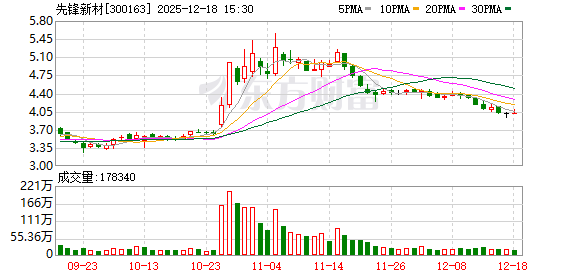
先锋新材(300163.SZ):马来西亚工厂目前处于设备安装调试和员工培训阶段,尚未投入生产
Ge Long Hui· 2025-12-18 15:26
Core Viewpoint - The company, Pioneer New Materials (300163.SZ), is currently in the process of installing and debugging equipment at its factory in Malaysia, and employee training is ongoing. The actual production start date is influenced by multiple factors and cannot be accurately estimated at this time [1]. Group 1 - The Malaysian factory is not yet in production and is still undergoing equipment installation and debugging [1]. - Employee training at the Malaysian facility is currently taking place [1]. - The timeline for actual production commencement is uncertain due to various influencing factors [1].

先锋新材:马来西亚工厂目前处于设备安装调试和员工培训阶段,尚未投入生产
Mei Ri Jing Ji Xin Wen· 2025-12-18 15:16
Group 1 - The company is currently in the equipment installation and employee training phase for its Malaysia factory, which has not yet commenced production [2] - The actual production timeline is influenced by multiple factors, making it difficult to provide an accurate estimate [2] - The Malaysia factory is expected to primarily handle existing finished product orders from the US and Australia, with revenue and profit details to be disclosed in future periodic reports [2]
11月进出口额同比增长4.3% | 高频看宏观
Sou Hu Cai Jing· 2025-12-18 13:29
Economic Activity Index - The China High-Frequency Economic Activity Index (YHEI) as of December 16, 2025, is 1.05, a decrease of 0.09 from December 9, 2025. The decline is attributed to drops in the "coastal coal transportation price index" and "import dry bulk freight index" by 0.23 and 0.05 respectively [1][3]. Consumption Data - In November, the total retail sales of consumer goods reached 43,898.0 billion yuan, with a year-on-year growth rate of 1.3%, down 1.6 percentage points from the previous month. Retail sales of goods grew by 1.0%, and catering revenue increased by 3.2% [24][25]. - The proportion of online retail sales of physical goods in total retail sales decreased from 26.7% in the same period last year to 25.9% [24]. Foreign Trade - In November, the total import and export value was 549.025 billion USD, showing a year-on-year increase of 4.3% after a brief period of negative growth. Exports and imports grew by 5.9% and 1.9% respectively, with the trade surplus increasing by 20.68 percentage points year-on-year to 14.74% [24][25]. Industrial Production - The industrial added value for large-scale industries grew by 4.8% year-on-year in November, a decrease of 0.1 percentage points from the previous month. High-tech industries saw an increase of 8.4%, up 1.2 percentage points from the previous month [25]. - The mining sector's added value growth rose from 4.5% to 6.3%, while manufacturing and electricity, gas, and water supply sectors saw declines to 4.6% and 4.3% respectively [25]. Monetary Policy - As of December 16, 2025, the central bank's net fund injection through open market operations was 55.6 billion yuan, with a reverse repurchase amount of 695.1 billion yuan and an expiration of 639.5 billion yuan. The 7-day reverse repurchase rate stood at 1.4% [5][10]. Interest Rates - The overnight interbank rate decreased by 3 basis points to 1.37%, while the 7-day repurchase rate remained stable at 1.50%. The 1-year and 5-year swap rates were consistent with previous levels at 1.54% and 1.63% respectively [10][15]. Real Estate Market - In the week ending December 16, 2025, new and second-hand housing transaction areas in first-tier cities increased by 22.62% and 9.18% respectively. In second-tier cities, the increases were 8.98% and 6.56%, while third-tier cities saw increases of 38.5% and 14.78% [35][41]. Shipping and Logistics - The China Coastal Bulk Freight Index (CCBFI) decreased by 66.79 points to 1,058.23 points, while the Baltic Dry Index fell by 353 points to 2,204 points. The China Export Container Freight Index (CCFI) rose by 3.18 to 1,118.07 [33][42].

博硕科技:董事杨传奇拟减持不超过9800股,财务总监周丹拟减持不超过8500股
Mei Ri Jing Ji Xin Wen· 2025-12-18 11:22
Group 1 - The company, Boshuo Technology, announced that its board member, Yang Chuanqi, plans to reduce his shareholding by up to 9,800 shares, representing 0.006% of the total share capital, within three months after a 15-trading-day notice period [1] - The company's financial director, Zhou Dan, also plans to reduce her shareholding by up to 8,500 shares, which accounts for 0.005% of the total share capital, under the same conditions [1] - As of the announcement, Boshuo Technology has a market capitalization of 5.7 billion yuan [1] Group 2 - For the year 2024, the company's revenue composition is entirely from the manufacturing sector, accounting for 100.0% [1]

硅谷顶尖风投 a16z 2026 大构想:从 AI 到现实世界的全面重塑 | RockFlow 解读
RockFlow Universe· 2025-12-18 10:39
Group 1 - AI is evolving from "digital assistants" to "autonomous execution clusters," with a significant transition expected by 2026 towards multi-agent systems that will redefine cloud speed and operational leverage for enterprises [3][5][7] - The integration of electrification, materials science, and AI is creating an "electro-industrial stack" that will serve as the foundational logic for the physical world, potentially leading to a renaissance in American manufacturing [3][5][21] - SaaS is transitioning from passive recording systems to proactive intelligent workflow engines, enabling personalized services tailored to individual needs rather than generic optimization for all [3][5][16] Group 2 - Multi-agent systems will reshape enterprise organizational structures, allowing for complex workflow management and significantly increasing revenue per employee compared to traditional companies [7][8] - The future of AI aims to minimize screen time by automating 90% of repetitive tasks, shifting investment focus from user engagement metrics to the quality of automated task completion [8][10] - The emergence of platforms that can efficiently manage unstructured data will be crucial, as 80% of enterprise knowledge is currently locked in non-structured formats, representing a significant opportunity in data infrastructure [9][10] Group 3 - The "electrification renaissance" in American manufacturing is characterized by the integration of software and AI to enhance operational efficiency, with a vision of producing complex products like nuclear reactors at scale [22][23] - The rise of the "electro-industrial stack" will enable software to control physical processes, creating a strategic advantage for nations and companies that dominate this sector [23][24] - Preventive healthcare services will become a new business model, focusing on long-term monitoring and care, thus shifting the healthcare paradigm towards proactive management rather than reactive treatment [24][25] Group 4 - Privacy will be a key competitive factor in the cryptocurrency space, with privacy-focused blockchains likely to dominate the market due to strong network effects [26][27] - The tokenization of real-world assets (RWA) will increase, with innovative financial products leveraging the unique characteristics of blockchain technology [27][28] - Stablecoins are set to become the foundational layer for global payments, facilitating real-time cross-border transactions and transforming the financial landscape [28][29]

11月经济数据点评:需求偏弱延续,政策加力必要性上升
LIANCHU SECURITIES· 2025-12-18 09:42
Production - In November, industrial added value increased by 4.8% year-on-year, with a month-on-month growth of 0.4%, indicating resilience in industrial operations[1] - The service production index grew by 4.2% year-on-year, down 0.4 percentage points from the previous month[1] Investment - Fixed asset investment in November saw a month-on-month decline of 12.0%, with a cumulative growth rate dropping to -2.6%, a decrease of 0.9 percentage points from the previous month[2] - Infrastructure investment showed a cumulative growth rate of 0.1% for broad infrastructure and -1.1% for narrow infrastructure, both continuing to decline[2] - Real estate investment fell by 15.9% cumulatively, with funding and sales also showing significant declines, indicating ongoing instability in housing prices[2] Consumption - Social retail sales grew by 1.3% year-on-year in November, a decrease of 1.6 percentage points from the previous month, primarily due to high base effects from last year[3] - Restaurant consumption showed relative resilience with a year-on-year growth of 3.2%, while retail sales of goods increased by only 1.0%, reflecting a notable slowdown[3] Policy Outlook - The necessity for policy support has increased due to continued weak demand, with the December Central Economic Work Conference emphasizing the need for proactive fiscal measures and enhancing macroeconomic governance[5] - The policy toolbox remains ample, with a focus on expanding domestic demand and optimizing supply[5]