
钢铁

Search documents
收评:创业板指跌超1%,传媒板块下挫,有色、石油等板块拉升
Sou Hu Cai Jing· 2026-02-11 07:35
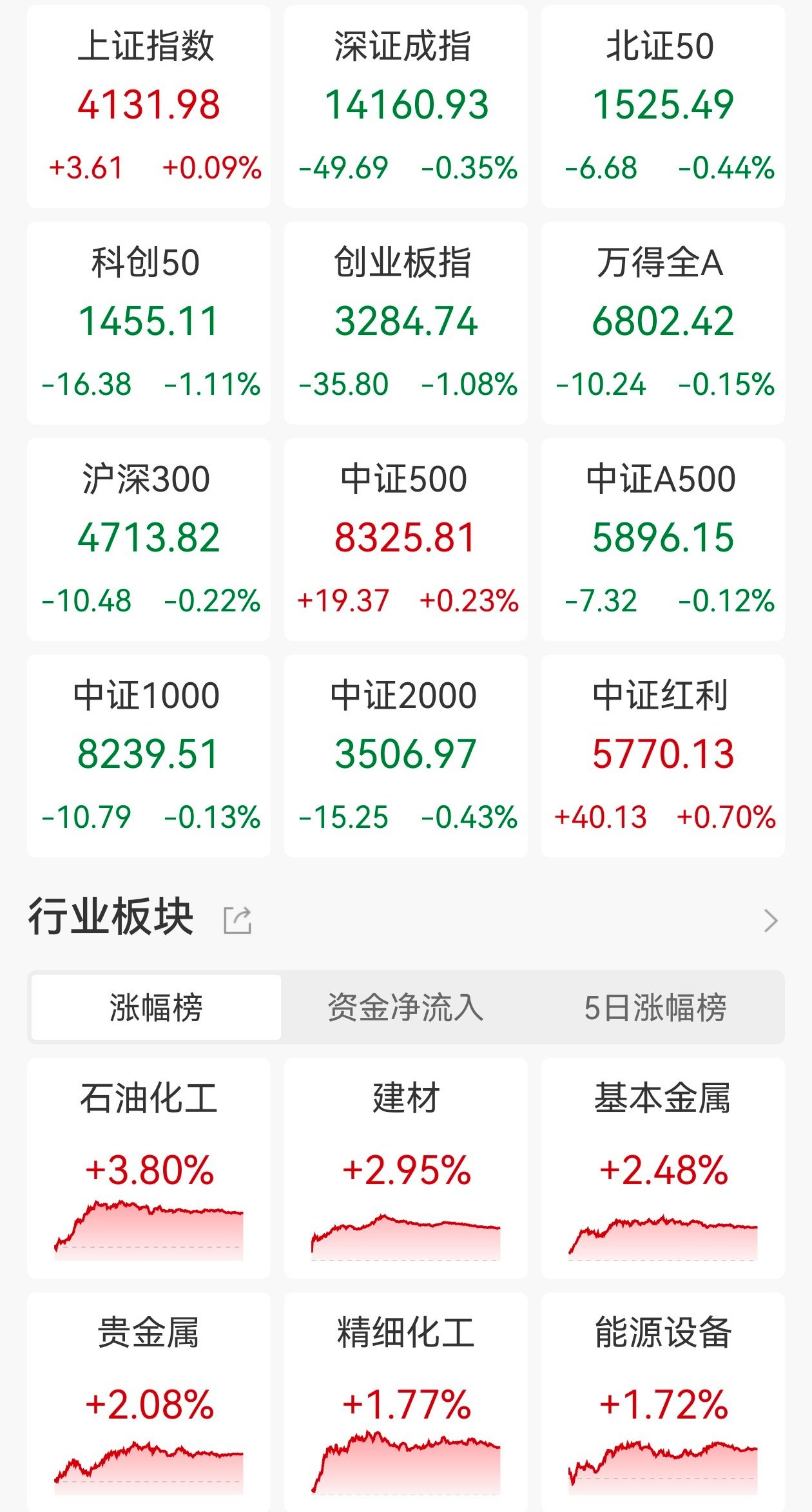
Market Overview - The Shanghai Composite Index experienced a slight increase of 0.09%, closing at 4131.98 points, while the Shenzhen Component Index fell by 0.35% and the ChiNext Index dropped by 1.08% [1] - The total trading volume across the Shanghai, Shenzhen, and North markets reached approximately 2 trillion yuan [1] Sector Performance - The media sector saw a significant decline, while tourism, catering, insurance, retail, and semiconductor sectors also faced downward pressure [1] - Conversely, sectors such as non-ferrous metals, chemical fiber, oil, coal, steel, and chemicals showed upward movement, with the fiberglass concept experiencing a surge and lithium, rare earth, and gold concepts being active [1] Market Sentiment and Predictions - Dongguan Securities indicated that with the upcoming long holiday, market fluctuations are expected to stabilize, leading to a general trend of consolidation [1] - The market may have completed a phase of capital digestion, and regulatory bodies are emphasizing the maintenance of stability before the holiday [1] - There is an optimistic outlook for the market in the medium to long term, supported by expected consumer boosts during the Spring Festival and a generally warm policy environment [1] Investment Recommendations - Investors are advised to remain rational, avoiding impulsive trading behaviors, and to focus on long-term strategies while managing their positions carefully [1] - Emphasis should be placed on high-quality assets with stable fundamentals and high profit certainty, particularly in sectors related to consumer recovery, technological self-sufficiency, and high-end manufacturing [1] - Attention should also be given to the potential risks of overheating in specific themes that could lead to adjustments [1]

A股收评 | 指数分化!沪指小幅上涨 三大涨价主题爆发
智通财经网· 2026-02-11 07:18
Market Overview - The market experienced fluctuations with the Shanghai Composite Index slightly up by 0.09% to 4131.98 points, while the ChiNext Index fell by 1.08% to 3284.74 points. The total trading volume was below 2 trillion yuan, a decrease of over 100 billion yuan compared to the previous trading day [1] - The number of declining stocks exceeded 3200, with 2050 stocks rising and 61 stocks hitting the daily limit up [1] Sector Performance - Key themes driving the market included price increases in small metals, dyes, and electronic fabrics, with the non-ferrous metals and chemical sectors leading the gains. Notable stocks included international composite materials and China Jushi, both hitting the daily limit up [1] - Resource stocks such as coal, oil and gas, and steel showed strong performance, with companies like CNOOC Engineering and Shanxi Coking rising significantly [1] Automotive Industry - The automotive industry in China maintained stable operations in January, with production and sales reaching 2.45 million and 2.346 million units, respectively. The production volume saw a slight year-on-year increase of 0.01%, while sales decreased by 3.2%. The new energy vehicle market remained stable, with production and sales of 1.041 million and 945,000 units, reflecting year-on-year growth of 2.5% and 0.1% [4] Consumer Spending Initiatives - The Ministry of Commerce announced a "New Spring Package" worth 2.05 billion yuan to benefit consumers during the Spring Festival, which includes the distribution of consumption vouchers, subsidies, and red envelopes [5] Semiconductor Industry - Semiconductor company SMIC reported an increase in orders related to AI, storage, and high-end applications, while orders for mid-to-low-end applications have decreased due to strong demand in the AI sector [6] Film Industry Outlook - China Galaxy Securities indicated that the upcoming Spring Festival holiday, lasting nine days, is expected to provide ample time for box office releases, with a high acceptance rate for quality films among audiences [7] Photovoltaic Industry - CITIC Securities projected that the photovoltaic battery component industry is likely to accelerate its "anti-involution" trend, driven by rising silver prices and a shift towards high-efficiency products. Leading manufacturers with core technologies and patent advantages are expected to stand out [8]
收评:创业板指跌超1% 影视院线概念集体调整
Xin Lang Cai Jing· 2026-02-11 07:12
Market Overview - The market experienced fluctuations throughout the day, with the ChiNext Index dropping over 1% [1] - The Shanghai Composite Index closed at 4131.99 points, up 0.09%, while the Shenzhen Component Index closed at 14160.93 points, down 0.35%, and the ChiNext Index at 3284.74 points, down 1.08% [2] Sector Performance - The non-ferrous metals sector showed strong performance, with companies like Dongfang Tantalum Industry, Zhongtung High-tech, Xianglu Tungsten Industry, and Zhangyuan Tungsten Industry hitting the daily limit [1] - The steel sector also performed well, with Baodi Mining reaching the daily limit [1] - The oil and gas sector saw fluctuations, with CNOOC Engineering hitting the daily limit [1] - The coal sector became active in the afternoon, led by Shanxi Coking Coal [1] - Conversely, the film and television sector experienced a collective adjustment, with Hengdian Film and Jin Yi Film hitting the daily limit down [1] - The education sector saw widespread declines, with Huatu Shandian leading the drop [1] - The communication equipment sector fell, with Xinyi Sheng showing significant losses [1][3] Hot Sectors Non-Ferrous Metals - The strategic metal bull market is supported by rising resource nationalism, the "weaponization" of strategic resources, and significant changes in demand-driven industries [4] - Recent geopolitical events, such as U.S. military actions in Venezuela and discussions regarding Iran, have further emphasized the strategic importance of metal resources [4] - Investment opportunities are seen in strategic metals characterized by strong scarcity and rigid supply, as well as industries benefiting from significant changes in demand [4] Oil and Gas - The oil sector's performance is primarily supported by geopolitical tensions and oil price expectations [5] - The oil and gas sector faces uncertainties due to recent global environmental changes, including the Russia-Ukraine conflict and U.S. tariff policies [5] - OPEC+ is expected to maintain a high fiscal balance oil price cost, with Brent crude oil projected to average between $55 and $65 per barrel by 2026, and WTI crude oil between $52 and $62 per barrel [5]




A股收评:三大指数今日涨跌不一,创业板指跌逾1%,玻璃玻纤、小金属板块走高
Ge Long Hui A P P· 2026-02-11 07:08
Group 1 - China's January CPI increased by 0.2% year-on-year, which is lower than expected [1] - The A-share market showed mixed results, with the Shanghai Composite Index rising by 0.09% to 4131.99 points, while the Shenzhen Component Index fell by 0.35% and the ChiNext Index dropped by 1.08% [1] - The total market turnover was 2 trillion yuan, a decrease of 123.7 billion yuan compared to the previous trading day, with over 3200 stocks declining [1] Group 2 - The glass fiber sector saw a surge, with leading companies like Guangyuan New Materials and International Composite raising prices for electronic fabrics, leading to stock price limits for several companies [1] - The small metals sector also performed well, with multiple stocks hitting their price limits [1] - The phosphate chemical and fertilizer sectors experienced gains, with Jinzhengda reaching its price limit [1] Group 3 - Conversely, sectors such as cultural media, film concepts, AI corpus, and Sora concepts saw declines, with stocks like Hengdian Film and Zhejiang Culture Industry hitting their price limits [1] - The tourism sector declined, with Haikan Co. dropping over 11% [1] - The cultivated diamond sector faced widespread declines, with Sifangda leading the drop [1]

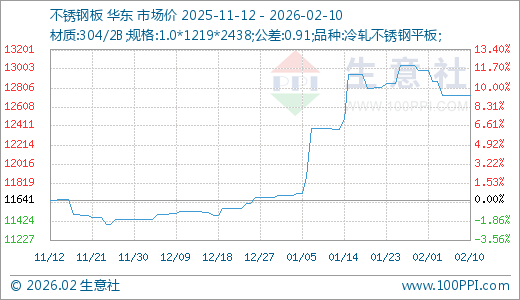
02月10日不锈钢板12725.00元/吨 60天上涨10.41%
Xin Lang Cai Jing· 2026-02-11 07:00
Group 1 - The latest price of stainless steel plate is 12,725.00 yuan per ton as of February 10, with a 10.41% increase over the last 60 days [2][4] - Relevant manufacturers include Benxi Steel Plate (000761), Taiyuan Iron & Steel (000825), Jiuli Special Materials (002318), Yongxing Materials (002756), Xining Special Steel (600117), Nanjing Steel (600282), Jiuquan Iron & Steel (600307), Fushun Special Steel (600399), Wujin Stainless Steel (603878), and Yongjin Co., Ltd. (603995) [2][4] Group 2 - Cyclical stocks refer to publicly listed companies in raw material production, whose profits are significantly affected by fluctuations in raw material prices [2][4] - Utilizing the price fluctuation data from the business community to identify buying signals for cyclical stocks before quarterly and annual reports is an important method for investing in cyclical stocks [2][4]


江苏经济为何有“高原”缺“高峰”?
Zhong Guo Fa Zhan Wang· 2026-02-11 06:35
Core Viewpoint - Jiangsu, a major economic province in eastern China, is characterized by a strong industrial foundation, dense manufacturing clusters, and robust foreign trade capabilities. However, it faces challenges in cultivating globally leading enterprises and industry clusters, which limits its high-quality development potential [1]. Group 1: Formation of the "Plateau" - The formation of Jiangsu's industrial economic "plateau" is attributed to multiple advantages, including a deep economic foundation, favorable geographical conditions, a complete industrial system, a dense network of educational and research institutions, and active innovation entities [2]. Group 2: Challenges in Establishing the "Peak" - Despite a solid industrial base, Jiangsu faces deep-rooted challenges in establishing industrial "peaks." Historical path dependence has led to a reliance on a processing and manufacturing model that yields low profits and added value, positioning Jiangsu more as an executor rather than a definitional leader in the global supply chain [3]. - Traditional industries dominate Jiangsu's economy, with leading enterprises primarily in heavy industries such as petrochemicals and textiles, lacking the high-tech and internet attributes that characterize modern innovation [4]. - The innovation ecosystem suffers from a transformation bottleneck, where a focus on academic publications leads to many patents remaining unutilized, and local government funding practices may not align with the needs of agile tech startups [4]. Group 3: Pathways to Breakthrough - To transition from a "plateau" to a "peak," Jiangsu must focus on cultivating "chain leader" enterprises by implementing a "Peak Enterprise" plan during the 14th Five-Year Plan, selecting 10-20 potential leading companies for targeted support in R&D and market expansion [5]. - Strengthening basic research is essential, with increased provincial funding and the establishment of frontier science centers to facilitate early-stage technology transformation [6]. - Attracting talent is crucial, requiring competitive policies that provide a conducive research environment and support for families, transforming Jiangsu into a destination for top talent rather than a transit point [6]. - Global collaboration in technology innovation is necessary, addressing critical technological challenges through an open and structured approach to attract global resources [7]. - Systemic reforms are needed to eliminate barriers to innovation, establishing a modern governance system that fosters trust and motivation, ultimately converting Jiangsu's industrial advantages into technological peaks [7]. Conclusion - Jiangsu's "plateau" serves as a foundation, while the "peak" represents the future direction. The transition from a manufacturing powerhouse to an innovation-driven province requires strategic vision and sustained effort, aiming for a shift from "Jiangsu manufacturing" to "Jiangsu creation" on the global stage [8].
春节错月致1月CPI同比涨幅回落,反内卷带动相关领域价格改善
第一财经· 2026-02-11 06:23
Core Viewpoint - The article discusses the recent trends in China's Consumer Price Index (CPI) and Producer Price Index (PPI), highlighting a decline in CPI and an improvement in PPI due to various factors including seasonal effects and policy implementations [3][5]. CPI Analysis - In January, the CPI increased by 0.2% month-on-month and year-on-year, with a notable decrease of 0.6 percentage points compared to December [3][5]. - The decline in CPI is attributed to the high base effect from the previous year's Spring Festival and a significant drop in energy prices, which fell by 5.0%, contributing approximately 0.34 percentage points to the CPI decrease [5][7]. - Core CPI, excluding food and energy, rose by 0.8% year-on-year and 0.3% month-on-month, marking the highest increase in six months, indicating a steady recovery in consumer demand [5][7]. PPI Analysis - The PPI rose by 0.4% month-on-month in January, marking the fourth consecutive month of increase, with the growth rate expanding by 0.2 percentage points from the previous month [7][8]. - Key factors driving PPI growth include the ongoing construction of a unified national market and increased demand in certain industries, leading to price increases in sectors such as photovoltaic, power batteries, cement, and steel [7][8]. - Specific price changes include a 0.1% increase in cement and lithium-ion battery manufacturing, a 1.9% increase in photovoltaic equipment manufacturing, and a 0.5% increase in computer and communication equipment manufacturing due to rising demand for digital technologies [7][8]. Future Price Trends - The National Bureau of Statistics indicates that favorable factors for moderate price recovery are accumulating, with expectations for expanded consumer demand supported by fiscal and financial policies [8]. - The emphasis on industry self-discipline and capacity management is expected to continue, contributing to price stabilization and recovery [8].

午后异动!002254,快速涨停
Shang Hai Zheng Quan Bao· 2026-02-11 06:23
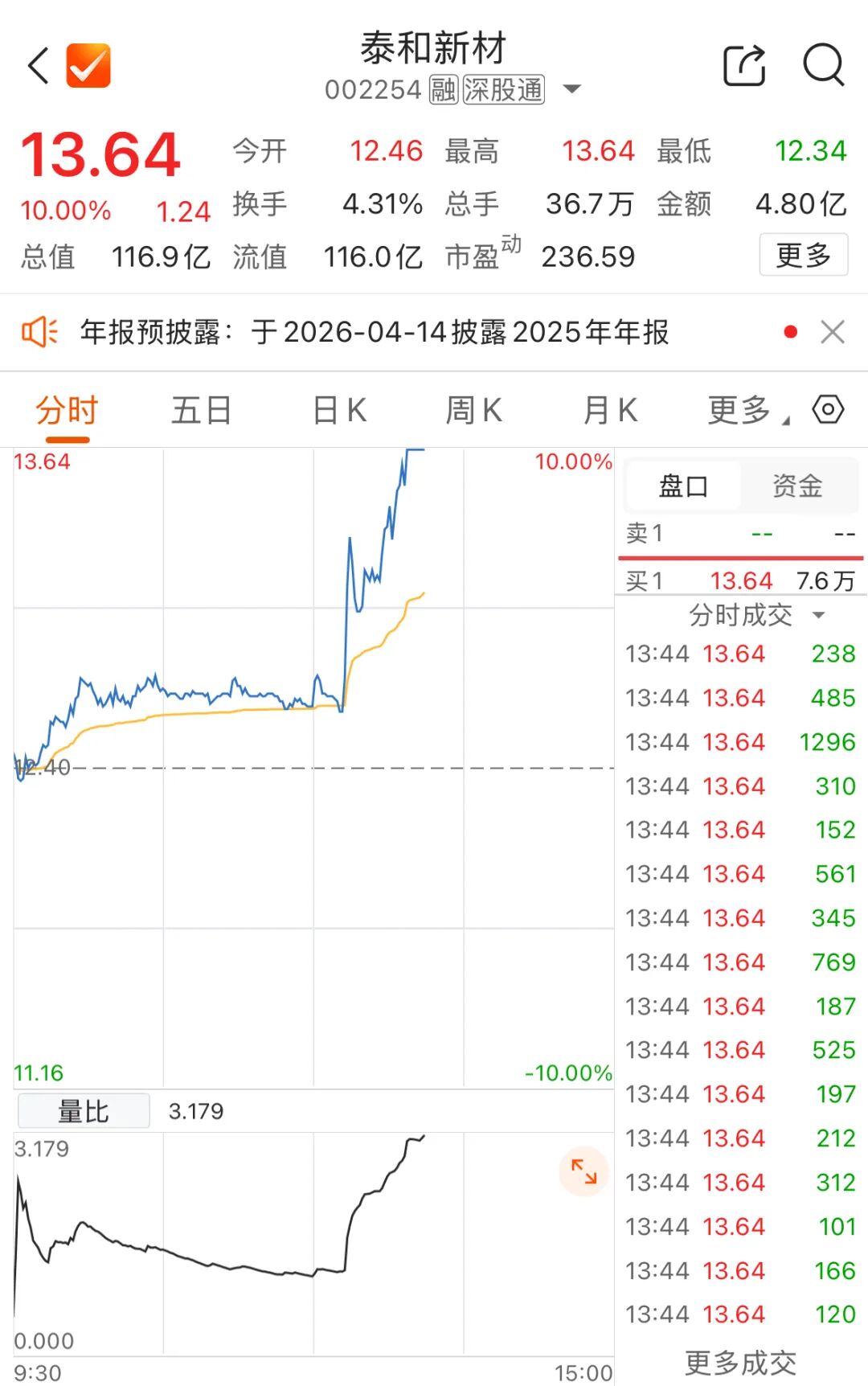
Group 1 - The steel sector experienced a midday rally, with Baodi Mining hitting the daily limit up, followed by gains in major companies such as Dazhong Mining, Ordos, Guangdong Mingzhu, and New Steel [4][5] - Key stocks in the sector included Baodi Mining at 8.71, up 9.97%, Dazhong Mining at 32.72, up 7.24%, and Ordos at 15.94, up 5.28% [5] - The overall steel index rose by 1.73%, indicating positive market sentiment in the sector [5] Group 2 - The stock of Taihe New Materials increased by 10.00% to 13.64, reflecting strong performance among component stocks [4] - Other notable gainers included Tongkun Co. at 23.85, up 7.24%, and Xin Fengming at 22.05, up 6.52% [4] - The market is advised to closely monitor intraday hot spots and sector movements to capture signals of fund flows [6]

突发拉升!钢铁板块午后暴走,宝地矿业涨停,多重利好撑腰复苏行情
Sou Hu Cai Jing· 2026-02-11 05:59
Group 1 - The steel sector in A-shares experienced a strong afternoon rally, with significant interest from investors, leading to multiple stocks hitting their daily limits, including Baodi Mining and others [1] - The overall market sentiment towards the steel industry has improved, reflecting optimism about the sector's future performance [1] Group 2 - Recent supportive policies have been crucial for the steel industry's development, with a comprehensive support system established to ensure stable long-term growth [2] - A joint document from five government departments outlines the steel industry's growth targets, aiming for an average annual increase of about 4% in value added from 2025 to 2026, focusing on capacity regulation, product optimization, high-end upgrades, green transformation, and consumption expansion [3] - Additional supportive measures include incentives for equipment upgrades and a push for green transformation, which are expected to enhance demand for high-end steel products and improve profitability for steel companies [4] Group 3 - Three key areas within the steel industry are expected to benefit from structural opportunities: high-end special steel and alloy materials, green low-carbon transformation, and recovery in downstream demand [5][6] - The demand for high-performance special steel is projected to grow at over 8% annually by 2026, significantly outpacing ordinary steel, driven by manufacturing upgrades and emerging industries [5] - The investment scale for green transformation in the steel industry is expected to exceed 500 billion yuan over the next two years, benefiting related sectors such as environmental governance equipment and energy-saving technology services [6][7] - The recovery of traditional manufacturing sectors like automotive and home appliances, along with the promotion of steel structures in construction and new energy infrastructure, is anticipated to boost demand for various steel products [8]

环保公用-市场大幅扩容-版图清晰
2026-02-11 05:58
Summary of Key Points from the Conference Call Industry Overview - The conference call discusses the expansion of China's carbon market, which now includes high-energy-consuming industries such as petrochemicals, chemicals, construction materials, non-ferrous metals, paper, and banking, with a full implementation expected by 2027 [1][2]. Core Insights and Arguments - The new industries added to the carbon market are expected to contribute an additional 1 to 1.5 billion tons of carbon emissions, which is relatively limited compared to the existing emissions from the power, steel, cement, and aluminum sectors that account for 70-80% of China's total carbon emissions [2][7]. - The carbon market is transitioning from energy consumption control to carbon emission control, with local governments facing assessments based on carbon intensity, impacting project approvals and officials' promotions [2][23]. - The pricing of carbon credits is expected to stabilize and gradually rise, with projections estimating prices to be between 150 to 200 yuan by 2030 [2][25][26]. Allocation of Carbon Quotas - New high-energy industries will likely have their carbon quotas allocated based on production output, with specific methods such as baseline allocation for different product concentrations in industries like caustic soda [4][9]. - For complex industries, historical total or intensity methods may be used, which could disadvantage advanced companies planning to expand production [4][10]. - The aviation sector is currently only partially included, with airports subject to carbon management while airlines will be managed separately by the Civil Aviation Administration [5][16]. Impact on Related Industries - The expansion of the carbon market will directly affect downstream industries such as petrochemicals, chemicals, construction materials, non-ferrous metals, and paper, requiring them to report and manage their carbon emissions [3]. - The clean energy sector is expected to benefit from this expansion, with opportunities arising in areas like green electricity, green hydrogen, and biofuels [3]. - Companies involved in energy-saving equipment and carbon monitoring technologies are also anticipated to gain from the market's growth [3]. Regulatory and Compliance Aspects - Companies failing to meet carbon quota requirements face severe penalties, as illustrated by a case where a company was fined 420 million yuan for not clearing its carbon emissions [20]. - The carbon quota distribution process includes a pre-allocation phase (typically 70%) followed by final adjustments based on actual verified data [19]. Future Projections and Considerations - The carbon market is expected to gradually tighten its regulations, particularly for new coal-fired power plants, while industries like steel and cement may benefit from historical production quotas [14]. - The transition to carbon emission control will require industries to adapt their operations, with different pathways for emission reductions depending on the sector [15]. Additional Important Points - The carbon market's current coverage includes approximately 7 to 8 billion tons of emissions, with the total carbon emissions in China around 10 billion tons [7]. - The methodology for quota allocation may evolve, with potential shifts towards more comprehensive management strategies that consider both historical production and emission intensity [10][11].