电动汽车

Search documents
大韩商工会议所报告:过去十年,中企营收增速6倍于韩企
Huan Qiu Shi Bao· 2025-09-23 23:02
Group 1 - The growth rate of Chinese enterprises over the past decade is more than six times that of South Korean enterprises, with the number of Chinese companies in the "Global 2000" increasing from 180 to 275, a growth of 52.7%, while South Korean companies decreased from 66 to 62, a decline of 6.1% [1][2] - In terms of revenue, South Korean "Global 2000" companies saw a modest increase of 15%, from $1.5 trillion to $1.7 trillion, while Chinese companies experienced a dramatic 95% increase, rising from $4 trillion to $7.8 trillion, indicating that the revenue growth rate of Chinese companies is 6.3 times that of South Korean companies [2][3] - The report highlights that the leading industries driving growth differ significantly between countries, with China and the US primarily relying on information technology and artificial intelligence, while South Korea's growth is mainly from manufacturing and finance sectors [2][3] Group 2 - The report suggests that the South Korean government has been insufficient in supporting its enterprises, with only 0.04% of small businesses growing into medium-sized enterprises and 1% to 2% of medium-sized enterprises becoming large ones, indicating a need for policy adjustments to foster disruptive startups [3] - China's growth is attributed to its focus on emerging industries such as electric vehicles, batteries, semiconductors, and artificial intelligence, which has led to the emergence of world-class companies and a robust enterprise ecosystem [3][4] - The stark contrast in growth between China and South Korea is rooted in differences in market size and industrial policies, with China benefiting from the largest single consumer market and strong strategic support for key industries, leading to significant competitive advantages [4]
21社论丨有效市场和有为政府共同成就中国创新速度
2 1 Shi Ji Jing Ji Bao Dao· 2025-09-23 22:12
Group 1 - China ranks 10th in the 2025 Global Innovation Index, marking its first entry into the top ten and leading among 36 upper-middle-income economies, having risen 25 places since 2013 [1] - In innovation output, China ranks 5th in 2025, up 2 places from 2024, while its innovation input ranks 19th, up 4 places [1] - China is the only middle-income economy in the top 30, with leading advantages in various fields, including being first in several intellectual property-related sub-indicators [1] Group 2 - Global innovation growth is slowing, with expected R&D spending growth of 2.9% in 2024, down from 4.4% in 2023, marking the lowest level since 2010 [2] - International patent applications are projected to grow by only 0.5% in 2024, significantly below the 2.5% average growth rate of the past decade [2] - China's R&D investment in 2024 is projected to exceed 3.6 trillion yuan, with basic research funding reaching 249.7 billion yuan and R&D intensity at 2.68%, surpassing the EU average [2] Group 3 - Chinese enterprises are driving innovation by shifting market resources towards the real economy and technological innovation, with 524 Chinese companies in the global top 2000 for industrial R&D spending, accounting for 26.2% of the total [3] - Notable companies like BYD, Dongfang Shenghong, Midea Group, and Tencent have seen significant increases in R&D investment, exceeding 10 percentage points [3] Group 4 - China's innovation achievements are significantly attributed to its advantageous position in emerging industries and a vast commercial application market, including sectors like robotics, electric vehicles, and high-speed rail [4] - The combination of proactive government policies and effective market mechanisms has accelerated technological and industrial innovation in China [4] - With ongoing technological accumulation and innovation acceleration, Chinese companies are expected to enhance industrial efficiency and achieve breakthroughs in various innovation metrics and technology fields [4]
巴菲特清仓比亚迪股份
Sou Hu Cai Jing· 2025-09-23 04:04
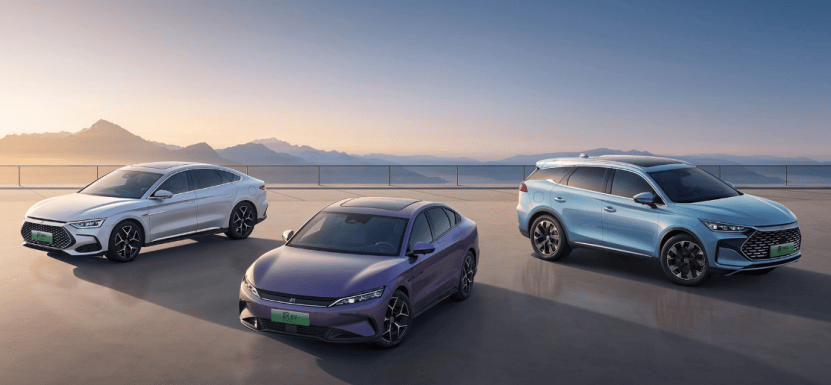
根据向香港交易所提交的披露文件,伯克希尔自2022年8月起开始出售比亚迪股份,截至2024年7月,其持股比例已降 至5%以下。持股比例降至5%以下意味着伯克希尔无需再披露任何进一步的出售情况以及是否完全退出持股。 图片来源:比亚迪 比亚迪集团品牌及公关处总经理李云飞在中国社交媒体平台微博上发文回应称:"股票投资,有买就有卖,这是很正 常的事情!感谢芒格和巴菲特对比亚迪的认可!也感谢过去17年的投资、帮助和陪伴!为所有的长期主义点赞!"李 云飞口中的"芒格"指的是已故的查理·芒格,他是巴菲特的长期合作伙伴,也曾担任伯克希尔的副董事长。 上述消息传出后,比亚迪的股价在中国香港市场跌至每股109.1港元的盘中低点,在中国深圳市场跌至每股107.15元人 民币的盘中低点,较9月19日收盘价分别下跌4%和近2%。 2008年,在芒格的建议下,伯克希尔以约10%的持股比例投资比亚迪。此举是押注电池、插电式混合动力汽车等新能 源领域的发展潜力。巴菲特原本打算将持股比例提升至近20%,但据称遭到了比亚迪创始人王传福的拒绝。 盖世汽车讯 据日经新闻报道,9月22日,中国电动汽车制造商比亚迪表示,沃伦·巴菲特旗下的投资公司伯克希 ...


20cm速递|创业板新能源ETF(159387)开盘涨超3%,机构:储能电池需求持续性超预期
Mei Ri Jing Ji Xin Wen· 2025-09-23 03:55
Core Viewpoint - The demand for energy storage batteries is exceeding expectations, leading to improved profitability in the sector [1] Group 1: Energy Storage Battery Demand - The demand for energy storage batteries in China is being driven by compensation for electricity prices, resulting in a significant increase in demand [1] - Global energy storage battery demand is revised upward by 25% to 500-550 GWh for 2025, representing a year-on-year increase of 60% [1] - For 2026, global energy storage demand is expected to grow by over 35% [1] Group 2: Supply and Capacity Utilization - In 2025, the capacity utilization rate for energy storage batteries is projected to reach 86%, with new capacity being released in 2026 [1] - The overall industry capacity utilization is expected to remain at 82%, while leading companies may achieve rates of 85%-90% [1] Group 3: Pricing and Profitability - The price of energy storage is showing signs of recovery, with an increase of 0.01-0.03 yuan/Wh, leading to noticeable improvements in profitability [1] Group 4: Technological Advancements - The trend towards larger energy storage cells is expected to enhance stability, with an internal rate of return (IRR) potentially increasing by 8-10 percentage points under similar conditions [1] - The solid-state battery supply chain is experiencing technological breakthroughs, entering a critical testing phase, with mass production expected to begin in small scale by 2027 and large scale by 2030 [1] Group 5: ETF and Index Information - The ChiNext New Energy ETF (159387) tracks the Innovation Energy Index (399266), which selects listed companies involved in clean energy production, storage, and application [2] - The index focuses on companies with technological innovation capabilities and high growth potential, primarily in solar energy, wind energy, and electric vehicles [2]

EU, Indonesia Set to Seal Trade Deal After Years of Talks
WSJ· 2025-09-23 03:19
Group 1 - The economic agreement aims to eliminate duties on labor-intensive sectors [1] - Sectors benefiting from the agreement include footwear, textiles, garments, palm oil, fisheries, renewable energy, and electric vehicles [1]

四大领域的可持续发展趋势
Sou Hu Cai Jing· 2025-09-23 03:04
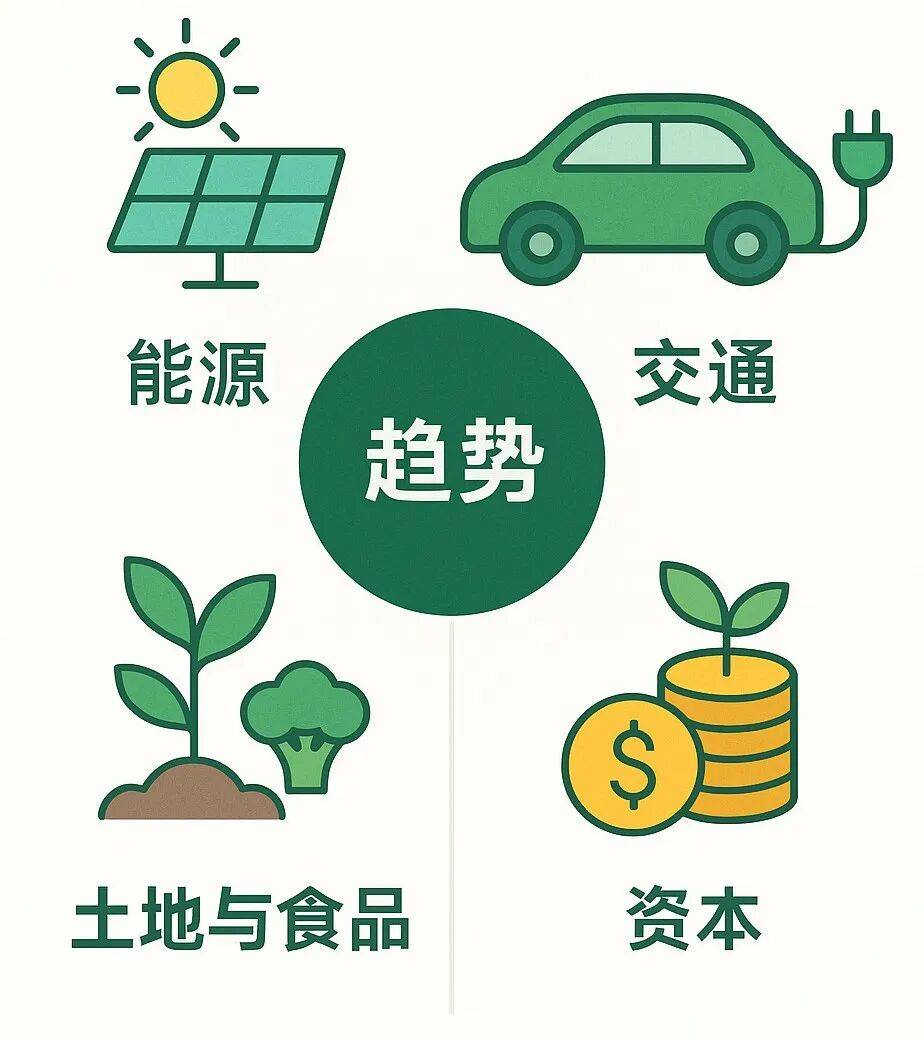
Group 1: Core Trends in Sustainable Development - The narrative around sustainability faces challenges due to political shifts, but technology and capital continue to advance, indicating a strong trend towards sustainability despite opposition [1][3] - The upcoming New York Climate Week (NYCW) plans over 1,000 events, marking a historic high and demonstrating the resilience of the sustainability movement [1] Group 2: Clean Energy Transition - Clean energy is evolving from merely providing cheap electricity to offering reliable supply during peak hours, with solar energy leading the way (+28%) and battery storage enhancing availability [3][5] - The combination of photovoltaic and battery technologies is crucial for transitioning clean energy from daytime to nighttime use, increasing the share of clean electricity [4][5] Group 3: Electrification of Transportation - The electrification of transportation is shifting from isolated demonstrations to widespread adoption, significantly reducing oil demand and urban emissions [4][5] - The industrial chain is being restructured around electric vehicles, with a focus on battery technology and digital solutions [5] Group 4: Land and Food Security - The approach to land and food is shifting towards maximizing yield on existing agricultural land while protecting natural ecosystems, rather than expanding farmland [6][7] - There is a concerning trend of decreasing global agricultural research funding, which has prompted warnings from over 150 Nobel laureates and World Food Prize winners [6] Group 5: Capital and Risk Reallocation - Investment strategies are evolving to prioritize not just growth but also certainty, with a focus on scalable cost reductions in energy generation and resilience in urban planning [8][9] - Emerging markets with stable policies and accelerated approvals are becoming attractive for clean investment opportunities, as they offer favorable conditions for growth [10][11] Group 6: Future Projections and Recommendations - By 2025, it is projected that one-quarter of new vehicles globally will be electric, with significant growth in electric vehicle adoption in China and emerging markets [7][10] - Companies are advised to integrate climate-related risks into their procurement and pricing models, while local governments should manage water and land use in conjunction with agricultural practices [13][14]
在变化中求发展的中国智慧(国际论坛)
Ren Min Ri Bao· 2025-09-22 22:02
Group 1 - The article highlights that the U.S. tariff policy is effectively a tax on American consumers and does not significantly revitalize U.S. manufacturing, which is unlikely to return in the short term due to the country's focus on high-tech and service industries [1] - Chinese companies, particularly in Guangdong and Fujian, have demonstrated remarkable adaptability in response to U.S. tariffs by expanding cooperation with businesses in other countries, showcasing their resilience and strategic business adjustments [1] - Despite the challenges posed by U.S. tariffs, China's industrial chain exhibits strong adaptability, and the country has become more confident in its diplomatic stance and resilient in its economic performance [1] Group 2 - China possesses unique institutional advantages and a robust policy support system that provide a solid foundation for gaining an active role in the new technological revolution and industrial transformation [2] - The country is driving development through technological innovation, achieving significant advancements in fields such as advanced manufacturing, robotics, artificial intelligence, and renewable energy [2] - The upgrading of China's industrial structure injects new momentum into high-quality economic development and enhances the complementary nature of its industrial landscape with ASEAN countries, facilitated by agreements like the RCEP [2] Group 3 - Long-term strategic planning and efficient execution in key technology areas will be crucial for China's continued ascent in the global industrial landscape [3] - Modernizing national governance requires maintaining high execution efficiency while improving feedback mechanisms and clearly communicating China's position to the world to avoid misunderstandings [3] - There is a growing trend among international mainstream media to adopt a more balanced perspective on China, reflecting the country's increasing national strength and fostering better international understanding [3]
DHL全球货运大湾区业务量占中国区25%
Sou Hu Cai Jing· 2025-09-22 20:57
Core Insights - DHL identifies the Guangdong-Hong Kong-Macao Greater Bay Area as a strategically significant region for its global freight operations in China, accounting for 25% of air freight and 20% of sea freight volumes [1][3] - The company highlights the rapid expansion of e-commerce and manufacturing in Shenzhen and surrounding areas, with BYD exemplifying the shift towards high-tech and precision manufacturing in China [1][3] Company Operations - DHL operates 54 branches in China, with 9 located in the Greater Bay Area, employing over 400 staff [3] - The total cargo volume at the major international air freight ports of Hong Kong, Guangzhou, and Shenzhen is projected to reach 9.2 million tons in 2024, representing 7.2% of global trade volume [3] Trade Dynamics - Despite global trade restructuring, China shows strong export performance in sectors like new energy and high-tech manufacturing, with DHL adjusting capacity and multimodal transport solutions to support Chinese enterprises [3][4] - Exports of new energy vehicles, lithium batteries, and wind turbines have seen significant growth, with electromechanical products making up over 60% of total exports and integrated circuit exports increasing by 23% [3] Market Trends - The trend of Chinese e-commerce companies expanding overseas is creating new logistics demands, with markets in the Middle East and Latin America emerging as growth points [3] - Companies are increasingly adopting "nearshoring" and "friendshoring" strategies to relocate production closer to markets, while DHL enhances its digital platform myDHLi to provide comprehensive supply chain services [3] Infrastructure and Efficiency - DHL utilizes consolidation services and multimodal transport solutions to efficiently integrate inland cargo for export through Greater Bay Area ports, helping clients reduce costs and improve efficiency [4] - The strategic infrastructure and connectivity of the Greater Bay Area allow for flexible resource allocation to adapt to changing trade routes [4]

深夜!金价大涨!中概股盘中跳水
Sou Hu Cai Jing· 2025-09-22 15:33
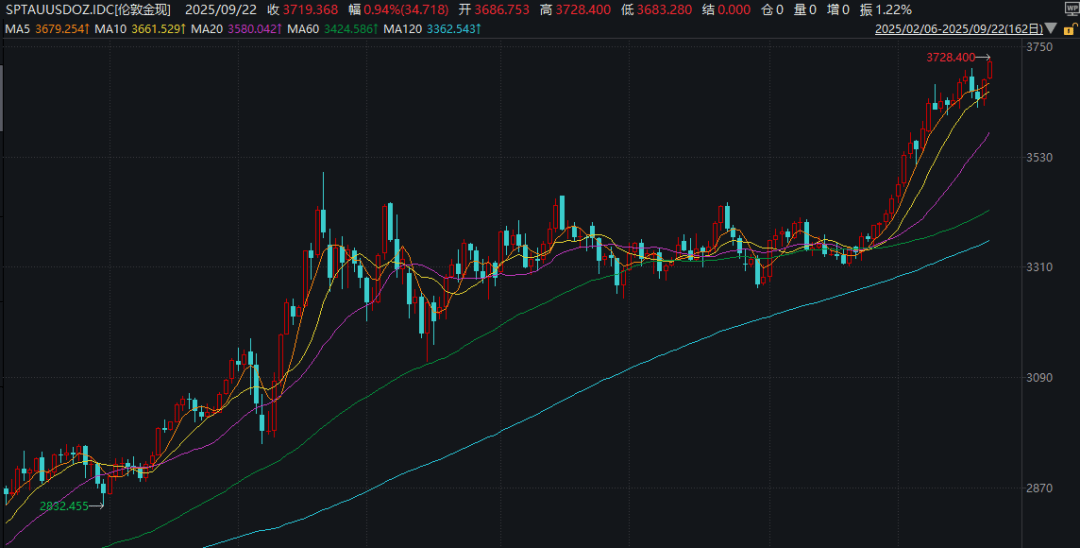
Group 1: Gold Market - International gold prices reached new historical highs, with London gold peaking at $3728.4 per ounce and COMEX gold reaching $3763.1 per ounce [1] - Following the Federal Reserve's recent interest rate cut of 25 basis points, there is an expectation of further rate cuts by the end of the year, which may lead to increased investment in gold ETFs and subsequently higher gold prices [3] - Major financial institutions like JPMorgan and UBS have raised their gold price forecasts, with JPMorgan predicting a spot gold price of $3800 per ounce by Q4 2025 and UBS forecasting $3800 per ounce by the end of 2025 [3] Group 2: Federal Reserve and Economic Outlook - The Federal Reserve's dot plot indicates an increase in the median number of rate cuts for 2025 from two to three, with expectations of further cuts in 2026 and 2027 [3] - Some Federal Reserve officials expressed hawkish views, suggesting limited room for further rate cuts, with Atlanta Fed President Bostic expecting only one cut in 2025 [4] Group 3: Stock Market Performance - On September 22, U.S. stock indices showed mixed performance, with the Dow Jones Industrial Average down 0.15%, while the Nasdaq and S&P 500 saw slight increases [4][5] - Notable stock movements included significant gains for companies like Astra Solar and declines for firms such as NIO and Tiger Brokers [11] Group 4: Mergers and Acquisitions - Pfizer announced the acquisition of Metsera, a developer of anti-obesity drugs, for up to $7.3 billion, aligning with Pfizer's strategy to focus on impactful investment opportunities [7]
贾跃亭“跨界”控股药企?标的公司困境待解
2 1 Shi Ji Jing Ji Bao Dao· 2025-09-22 08:53
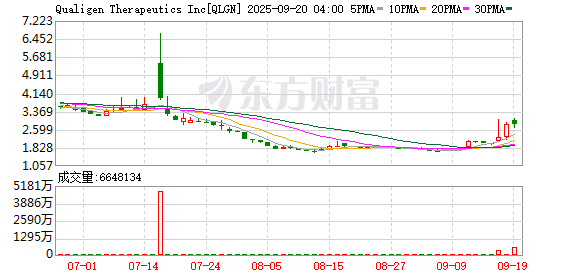
Core Viewpoint - Qualigen Therapeutics has entered into a PIPE agreement with Faraday Future, involving a $41 million investment focused on cryptocurrency and Web3 business planning [2][4] Group 1: Investment Details - The financing amount is approximately $41 million, led by Faraday Future and its CEO Jia Yueting, with participation from other investors including the SIGN Foundation [2] - Faraday Future will invest about $30 million in Qualigen at a price of $2.246 per share, acquiring approximately 55% of the common stock [2] - Jia Yueting plans to invest around $4 million personally, corresponding to about 7% of Qualigen's common stock [2] Group 2: Strategic Shift - Following the investment, Qualigen is expected to rebrand as CXC10 and shift its focus towards cryptocurrency and Web3, moving away from its current biopharmaceutical operations [4] - The new business model will emphasize a "three-horsepower" strategy involving Crypto, a decentralized AI trading exchange, and a value stabilizer [4] - After the investment, Faraday Future and Jia Yueting will collectively hold 62% of Qualigen's shares, with plans for management involvement [4] Group 3: Company Background and Challenges - Qualigen has faced significant challenges, including a risk of delisting from NASDAQ due to stock price issues, with a recent notification received for failing to meet minimum price requirements [6][7] - The company has experienced leadership changes, with recent resignations of key executives due to strategic disagreements [6][7] - Qualigen's core product pipeline is focused on rare cancer treatments, but progress has been slow, with key projects still in early development stages [7][8]