啤酒

Search documents
非白酒板块10月16日涨0.29%,古越龙山领涨,主力资金净流出1.29亿元
Zheng Xing Xing Ye Ri Bao· 2025-10-16 08:20
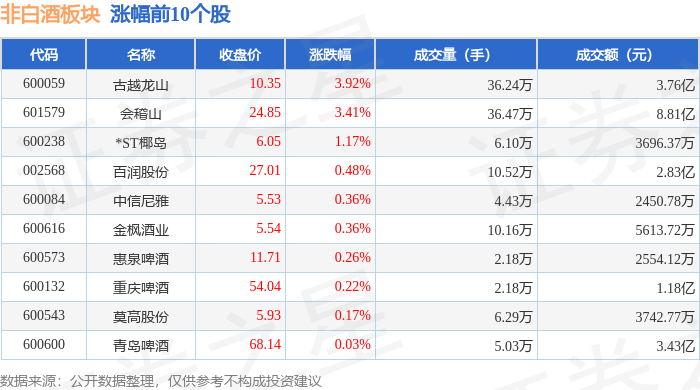
Market Overview - On October 16, the non-liquor sector rose by 0.29% compared to the previous trading day, with Guyue Longshan leading the gains [1] - The Shanghai Composite Index closed at 3916.23, up 0.1%, while the Shenzhen Component Index closed at 13086.41, down 0.25% [1] Stock Performance - Guyue Longshan (600059) closed at 10.35, up 3.92% with a trading volume of 362,400 shares and a turnover of 376 million yuan [1] - Kuaijishan (601579) closed at 24.85, up 3.41% with a trading volume of 364,700 shares and a turnover of 881 million yuan [1] - Other notable performers include *ST Yedao (600238) up 1.17%, Zhirun Co. (002568) up 0.48%, and Chongqing Beer (600132) up 0.22% [1] Capital Flow - The non-liquor sector experienced a net outflow of 129 million yuan from institutional investors, while retail investors saw a net inflow of 184 million yuan [2] - The table of capital flow indicates that *ST Yedao had a net inflow of 1.58 million yuan from institutional investors, while it faced a net outflow of 2.22 million yuan from retail investors [3] Individual Stock Analysis - *ST Yedao (600238) had a net inflow of 158,810 yuan from institutional investors, but a net outflow of 221,770 yuan from retail investors [3] - Mogaogufen (600543) saw a net inflow of 152,120 yuan from institutional investors, with a net outflow of 206,640 yuan from retail investors [3] - Chongqing Beer (600132) faced a net outflow of 652,000 yuan from institutional investors, while retail investors contributed a net inflow of 346,940 yuan [3]


百威集团CEO邓明潇:为上海夜间经济发展建言献策
Zheng Quan Ri Bao Wang· 2025-10-16 07:47
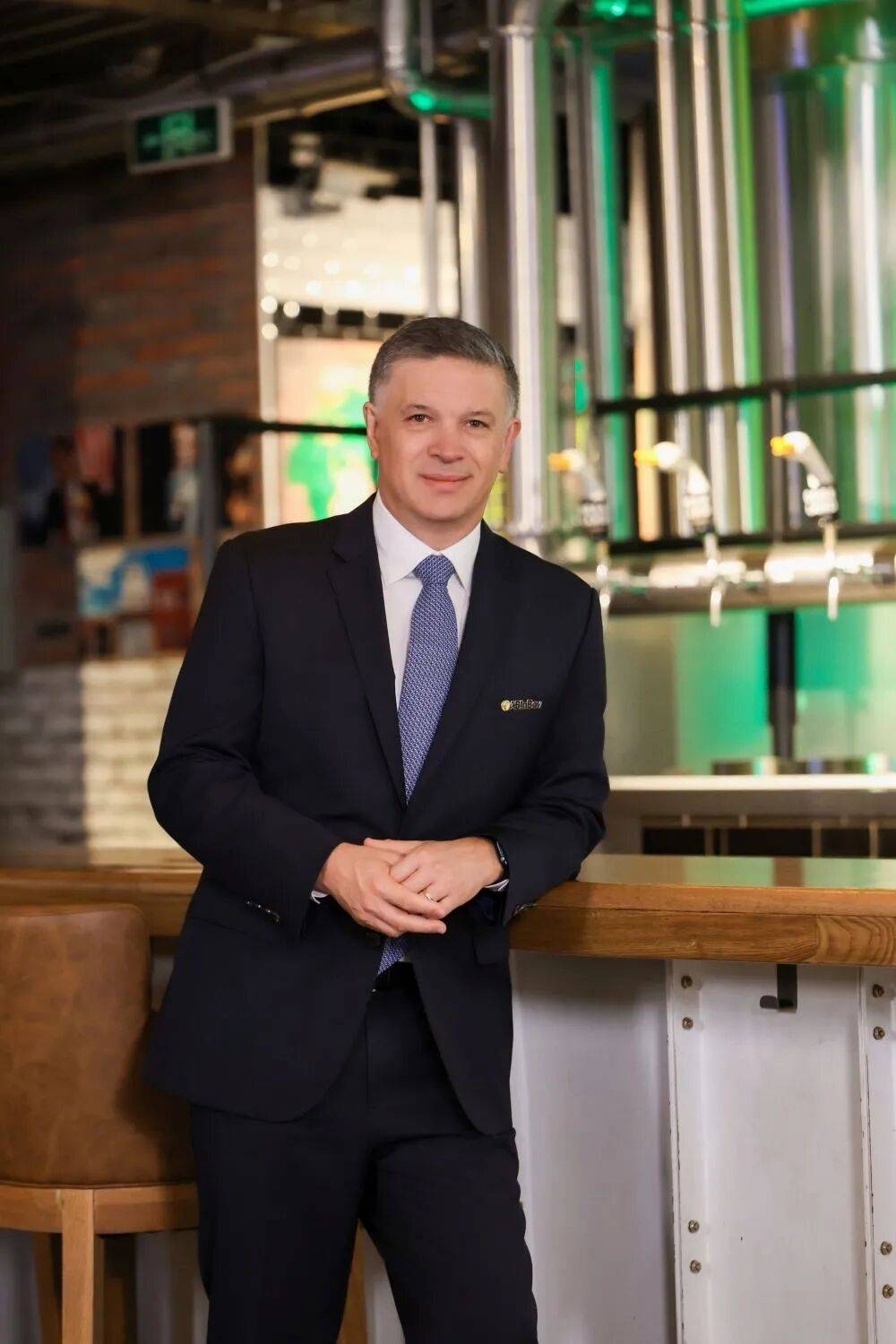
Core Insights - Budweiser Group's CEO Michel Doukeris participated in the 37th Shanghai International Business Leaders Advisory Council (IBLAC), emphasizing the company's commitment to contributing to Shanghai's international urban development and the night economy [1][2] Group 1: Company Strategy - Budweiser Group has introduced the "Tomorrowland" electronic music festival to Shanghai, marking its first indoor version in Asia, scheduled for November 2025 [2] - The company has established nearly 30 breweries across China since entering the market in 1984, with over 50 brands including Budweiser, Harbin, and Corona, laying a solid market foundation [2] - Budweiser Group aims to deepen its premium strategy and leverage the growth of the night economy to seize broader opportunities in the Chinese market [2] Group 2: Night Economy Development - The active development of the night economy is a key indicator of a city's modernization and vitality, with Shanghai leading in this area [1] - Doukeris highlighted the alignment of goals between Shanghai and Budweiser Group in promoting the night economy, proposing a systematic plan that combines global perspectives with local practices [1] - Budweiser Group plans to enhance its contributions to Shanghai's night economy by introducing iconic IPs and sharing international experiences [1]

智通港股沽空统计|10月16日
Zhi Tong Cai Jing· 2025-10-16 00:49
Short Selling Ratios - The top three stocks with the highest short selling ratios are China Resources Beer (100.00%), Anta Sports (100.00%), and Great Wall Motors (100.00%) [1] - The short selling amounts for Alibaba, SMIC, and Tencent are 2.856 billion, 1.634 billion, and 1.593 billion respectively [1][2] Short Selling Amounts - The top three stocks by short selling amount are Alibaba (2.856 billion), SMIC (1.634 billion), and Tencent (1.593 billion) [2] - Other notable short selling amounts include Xiaomi (1.198 billion), Pop Mart (1.005 billion), and Meituan (985 million) [2] Deviation Values - The stocks with the highest deviation values are Tencent (44.24%), Xingda International (42.83%), and Weibo (40.65%) [1][2] - The deviation values indicate the difference between the current short selling ratio and the average short selling ratio over the past 30 days [2]

蜜雪集团(02097.HK):收购福鹿家53%股权 进一步拓宽品牌矩阵
Ge Long Hui· 2025-10-15 20:32
Group 1 - The core point of the article is that Mixue Group plans to acquire a 51% stake in Fulu Family for a total investment of 286 million yuan, which will allow Fulu Family to become a non-wholly-owned subsidiary of Mixue Group, consolidating its financial performance [1] - After the acquisition, Mixue Group and its partners will hold varying stakes in Fulu Family, with Mixue Group holding 53% [1] Group 2 - Fulu Family offers fresh beer products at a price range of 6 to 10 yuan per 500 milliliters, focusing on high-quality and affordable offerings, and has developed a diverse product matrix including classic and innovative beer types [2] - As of August 31, 2025, Fulu Family aims to have approximately 1,200 stores across 28 provinces in China, primarily expanding through a franchise model [2] - Fulu Family has established a stable supply chain covering procurement, production, logistics, research and development, and quality control to ensure product quality and operational efficiency [2] - The financial outlook for Fulu Family indicates a pre-tax loss of approximately 1.53 million yuan in 2023, with a projected post-tax profit of about 1.07 million yuan in 2024 [2] - As of August 31, 2025, Fulu Family's total assets and net assets are projected to be approximately 927 million yuan and 195.2 million yuan, respectively [2] Group 3 - Following the acquisition, Mixue Group will expand its brand matrix into the beer market, which has a large market size and consumer base, capitalizing on the growing demand for high-quality and diverse products [3] - Mixue Group's existing advantages in supply chain and franchise operations are expected to enhance its brand presence in the fresh beer sector while maintaining its positioning in affordable quality products [3] - Profit forecasts for Mixue Group indicate net profits of 5.425 billion yuan, 6.586 billion yuan, and 7.670 billion yuan for 2025-2027, with year-on-year growth rates of 22.28%, 21.40%, and 16.46% respectively [3] - The current price-to-earnings ratios for the respective years are projected to be 26.88, 22.14, and 19.01 [3] - Mixue Group is expected to continue expanding its market share both domestically and internationally, maintaining a "buy" rating [3]
消费-乐观看待板块,关注四类机会
2025-10-15 14:57
Summary of Conference Call Notes Industry Overview - The consumer sector is currently viewed positively, with valuations at low levels and market attention extremely low. Certain assets like beer and frozen foods have dropped to levels seen in 2017-2018, despite significant earnings growth, indicating low risk and potential for reversal [1][4][5]. - The white liquor industry, while impacted by alcohol bans, has seen sufficient adjustment in expectations. Leading companies like Moutai are nearing bottom pricing, enhancing cost-effectiveness, and consumer demand is expected to recover in the long term [1][19]. - The white goods sector shows strong cost-performance advantages, with companies like Midea demonstrating global competitive strengths and stable growth in overseas market share, making them attractive for long-term investment [1][20][22]. Key Investment Opportunities - Focus on four investment directions: absolute cheap stocks, high dividend yields, low valuations, and companies expected to double in three years. Examples include Kangtong, Yihai, and Haidilao for high dividends, and CR Beer and Haier for low valuations [1][12][15]. - New consumption trends highlight a growing demand for quality and innovative products among new middle-class and Gen Z consumers, who are willing to pay for technologically advanced products [1][6][24]. Market Dynamics - The current market environment is characterized by a narrow funding situation, with limited incremental capital despite an increase in overall funds. The opening of the Hong Kong market has led to a diversion of funds to new consumption stocks [8][9]. - The anticipated return of long-term overseas funds to the Chinese market is expected as global interest rates decline, potentially increasing overseas allocations to Chinese assets [2][11]. Consumer Sector Insights - The consumer sector is expected to experience a 3 to 4-month rally from November to January, driven by macroeconomic factors and potential bottom reversals [3]. - The current consumer landscape differs significantly from April, with lower valuations and reduced market attention. Many stocks have reached their lowest points, with minimal risk [4][5]. Specific Company Insights - Companies like Hisense and AUX in the air conditioning sector have low P/E ratios (5-7 times), indicating growth potential despite slightly lower quality. Midea's strong earnings stability is noted with a P/E ratio of around 12-13 times [5]. - The liquor sector is expected to see a bifurcation, with Moutai's pricing nearing a bottom and consumer willingness to purchase increasing, suggesting a recovery in C-end consumption [19]. Emerging Trends - New consumption fields, such as tea and trendy toys, show clear cash flow and payment willingness, with some companies projected to grow over 20% next year [1][6]. - The experience-based consumption and medical beauty sectors are also highlighted as having strong growth potential, particularly among the new middle-class and female consumers [13][14]. Conclusion - The consumer sector presents various investment opportunities, particularly in undervalued stocks with strong fundamentals. The anticipated recovery in consumer spending and the return of overseas funds could further enhance market dynamics in the coming months [1][11][12].
蜜雪冰城看上的鲜啤,能复制「奶茶神话」吗?
36氪· 2025-10-15 13:53
Core Viewpoint - The article discusses the strategic entry of Mixue Ice City into the fresh beer market by acquiring a majority stake in "Fresh Beer Fulu Family," highlighting the potential for growth in this relatively untapped sector of the beverage industry [4][6][7]. Summary by Sections Acquisition and Business Model - Mixue Ice City announced the acquisition of 53% of "Fresh Beer Fulu Family" for approximately 297 million RMB, making it a wholly-owned subsidiary [7]. - Fresh Beer Fulu Family, founded by the wife of Mixue's CEO, focuses on fresh beer products priced between 6-10 RMB, primarily operating through a franchise model [7][8]. Market Potential - The fresh beer market in China is projected to exceed 800 billion RMB by 2025 and reach 1.5 trillion RMB by 2030, with a compound annual growth rate of 12%-15% [10]. - The shift in consumer preferences towards quality and experience in beer consumption is driving the growth of fresh beer, particularly among younger consumers [12][14]. Competitive Landscape - The fresh beer sector is still considered a blue ocean market, with no dominant national brands, presenting opportunities for scalable players like Mixue [14]. - Existing brands such as Youblau and Taishan Original Beer are also expanding, with Youblau having over 2,000 locations and significant sales figures [16][17]. Operational Strategy - Mixue plans to leverage its existing supply chain and logistics capabilities to support the fresh beer business, ensuring timely delivery and maintaining product freshness [30][31]. - The pricing strategy of Fresh Beer Fulu Family aims to position itself competitively within the market, similar to Mixue's successful pricing model in the tea beverage sector [26][27]. Challenges Ahead - The success of Fresh Beer Fulu Family in scaling to thousands of locations will depend on the robustness of its supply chain and logistics, particularly in maintaining product quality during distribution [31].
百威集团全球CEO邓明潇:深耕中国市场 共筑城市“夜间活力”
Sou Hu Cai Jing· 2025-10-15 10:24
Group 1 - The core viewpoint of the article emphasizes the importance of the night economy as a driving force for urban vitality and economic growth, particularly in major cities like Shanghai [3][7] - The night economy is described as a deep integration of urban culture, technology, and commerce, rather than just a simple combination of dining and entertainment [7] - The CEO of Budweiser Group expresses confidence in the continuous investment in China, highlighting the country as a key market and strategic support for the company's global strategy [9] Group 2 - Budweiser Group has been operating in China for over 40 years and considers it the largest market in Asia, focusing on business expansion and talent cultivation [9] - The company employs a "super platform" strategy to enhance consumer experience, integrating global IP resources with local operations to create a unique market presence [9] - Budweiser Group plans to strengthen brand building and product diversification to meet the quality demands of Chinese consumers, while fostering ecological cooperation with distributors and retailers [9]
蜜雪冰城卖啤酒,是降维打击?
投中网· 2025-10-15 08:44
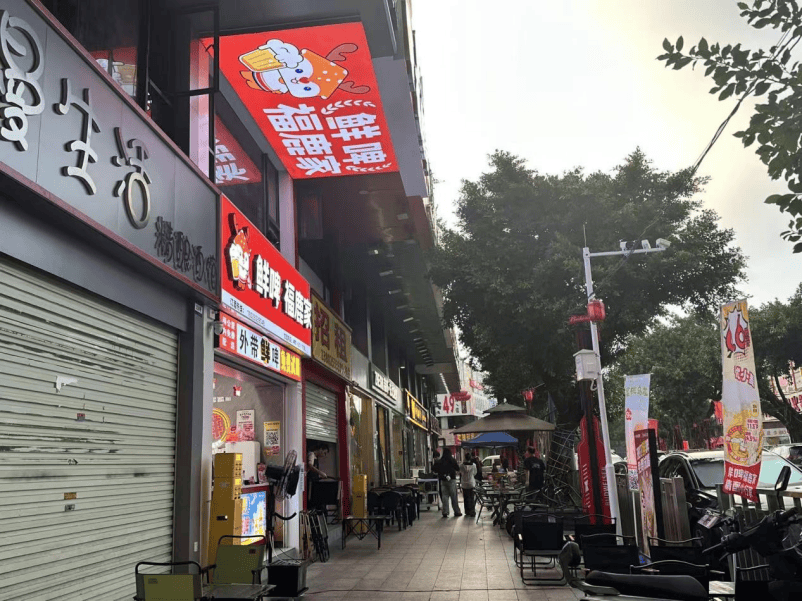
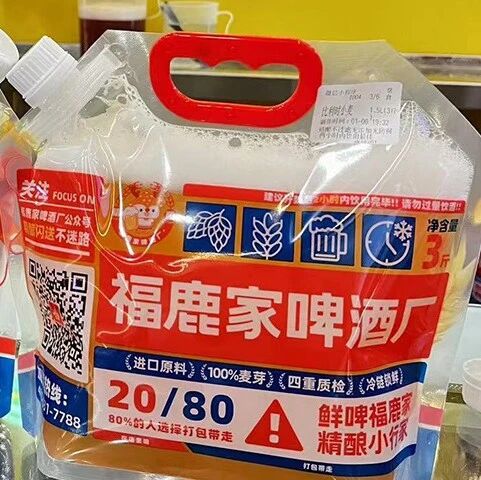
Core Viewpoint - The article discusses the recent acquisition of a 53% stake in Fresh Beer Fulu Family by Mixue Group for nearly 300 million yuan, marking its entry into the fresh beer market, expanding its product portfolio beyond tea and coffee [4][11]. Group 1: Company Overview - Fresh Beer Fulu Family has a similar store design to Mixue Ice City, featuring a prominent red and cartoon style, and offers a takeaway and delivery model [6][10]. - The pricing strategy of Fresh Beer Fulu Family is comparable to that of Mixue Ice City, with standard fresh beer priced at 5.9 yuan per jin (500ml) and flavored beers ranging from 6.9 to 9.9 yuan [7][11]. - The store offers around 16 SKUs of fresh beer, including standard, fruit, tea, and milk beers, along with various snacks priced between 1 to 15 yuan [7][10]. Group 2: Expansion Strategy - Fresh Beer Fulu Family has adopted a rapid expansion strategy similar to that of Mixue Ice City, starting with a franchise model and offering incentives such as no franchise fees and reduced raw material costs to attract franchisees [10][11]. - As of August 2025, Fresh Beer Fulu Family has opened over 1,400 stores across 27 provinces and cities, with plans to exceed 1,000 stores by June 2025 [10][11]. Group 3: Market Context - The craft beer market in China is experiencing growth, with the market size expected to reach 11 billion yuan by 2028, indicating a blue ocean market for fresh beer and craft beer bars [17]. - The article highlights a trend where consumers are shifting from industrial beer to fresh and flavorful craft beer, aligning with the consumption upgrade trend [17]. - The competitive landscape includes several established craft beer brands, but there is still no dominant player in the fresh beer segment, presenting opportunities for new entrants like Fresh Beer Fulu Family [17].

上亿元股权被冻结,即墨黄酒“卖身”再添阻碍
2 1 Shi Ji Jing Ji Bao Dao· 2025-10-15 07:29
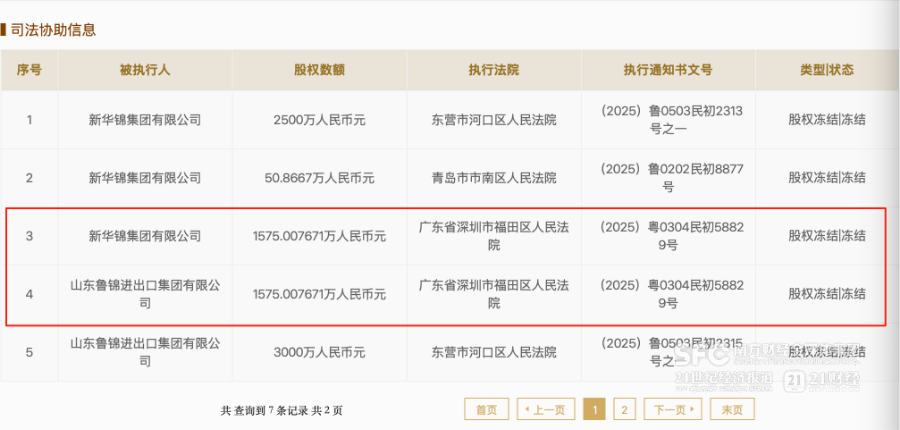
Core Viewpoint - The acquisition of Jimo Huangjiu by Qingdao Beer faces significant challenges due to the freezing of shares and financial difficulties of its shareholders, which may jeopardize the transaction and the financial stability of the involved parties [1][4][13]. Group 1: Shareholder Financial Issues - Jimo Huangjiu's shares worth approximately 15.75 million RMB have been frozen by the Shenzhen court, with the freezing period lasting until October 9, 2028 [1][3]. - This is the seventh instance of share freezing for Jimo Huangjiu, totaling around 127 million RMB in frozen shares within just over a month [3]. - The major shareholders, Xinhua Jin Group and Shandong Lujin Group, are facing severe financial issues, including a non-operational fund occupation of 406 million RMB by Xinhua Jin Group, which has led to its stock being marked as ST (special treatment) [4][8]. Group 2: Acquisition Challenges - Qingdao Beer proposed to acquire 100% of Jimo Huangjiu for 665 million RMB, which was seen as a high valuation given the market conditions [3][15]. - The acquisition is complicated by the fact that the receivables from Qingdao Beer have not yet been paid, and the agreement's validity period has lapsed [6][14]. - The financial instability of Xinhua Jin Group raises concerns about the completion of the acquisition and the potential for further delays due to ongoing legal and financial disputes [7][12]. Group 3: Market Context and Valuation - Jimo Huangjiu's projected revenue for 2024 is 166 million RMB, with a net profit of 30.47 million RMB, leading to a static price-to-earnings ratio of 21.8 times based on the acquisition price [14][15]. - Comparatively, leading brands in the yellow wine industry have significantly higher price-to-earnings ratios, indicating a competitive market environment [15]. - The acquisition is part of Qingdao Beer's strategy to diversify its product offerings and explore new growth avenues amid declining sales and revenue [17].

蜜雪冰城3亿收购鲜啤福鹿家53%股权,现打鲜啤赛道再添巨头
Sou Hu Cai Jing· 2025-10-15 04:07
Core Insights - Recently, Mixue Ice City announced the acquisition of a 53% stake in Fresh Beer Fulu Family for nearly 300 million yuan, expanding its product offerings from tea and coffee to fresh beer [1][10] - The Fresh Beer Fulu Family stores feature a similar design to Mixue Ice City, emphasizing a vibrant red and cartoon style, and offer promotions like free tastings and no delivery fees within 2 kilometers [1][3] Company Overview - Fresh Beer Fulu Family operates small stores around 20 square meters, focusing on self-pickup and delivery, with a layout akin to tea shops [3] - The pricing strategy for Fresh Beer Fulu Family is competitive, with standard fresh beer priced at 5.9 yuan per 500ml and flavored beers ranging from 6.9 to 9.9 yuan [3][5] - The store offers approximately 16 SKUs of fresh beer, including standard, tea, milk, and fruit beers, along with various snacks priced between 1 to 15 yuan [5][9] Operational Model - Fresh Beer Fulu Family stores utilize a specialized cold storage for fresh beer, with a shelf life of only one month, emphasizing freshness [7][9] - The brand has rapidly expanded through a franchise model, with plans to exceed 1,000 stores by June 2025, having already opened over 400 new locations in just two months [9][10] Market Context - The craft beer market in China is experiencing growth, with the market size expected to reach 11 billion yuan by 2028, indicating a blue ocean opportunity for fresh beer and craft beer segments [19] - The industry is witnessing a shift in consumer preferences from industrial beer to fresh and flavorful craft options, aligning with Mixue Ice City's strategic entry into the fresh beer market [19] Competitive Landscape - The craft beer sector has seen significant investment and growth, with several brands like Helen's Tavern and Taishan Original Beer gaining traction [11][12][15] - Despite the presence of established brands, the fresh beer market remains fragmented, presenting opportunities for new entrants like Mixue Ice City to leverage their existing franchise networks for rapid expansion [19]