
美妆

Search documents
大消费渠道脉搏:毛戈平华南商场同店增长优异,潮宏基强势获取份额
Haitong Securities International· 2025-08-17 14:05
Group 1: Beauty Sector Insights - Mao Ge Ping's department store same-store sales growth exceeds 10% YoY, while shopping plaza stores show over 20% growth[2] - Average customer spending in department stores is around 600-900 yuan, higher than 300-600 yuan in shopping centers, reflecting different customer demographics[2] - Mao Ge Ping expects over 20% sales growth for the full year of 2025[2] Group 2: Skincare and Product Focus - Mao Ge Ping's product mix consists of approximately 50% makeup, 45% skincare, and 5% perfume, with a strong reliance on star products in skincare[3] - The skincare segment still heavily depends on caviar star products, which account for over half of skincare sales[3] Group 3: Jewelry Market Trends - From January to July 2025, sales of Chow Tai Fook, Chow Sang Sang, and Zhou Liu Fu declined by 10%-20% YoY, while CHJ Jewellery increased by 40% YoY[4] - CHJ Jewellery's growth is attributed to lower gold prices and fixed-price products that attract consumers[4] Group 4: Sports Apparel Performance - Adidas and Nike's average customer spending decreased to 800-1500 yuan, while Anta and Li Ning increased to 500-700 yuan[5] - Columbia's sales grew by 10-15% YoY, while The North Face and Jack Wolfskin saw declines of 5-10% YoY[5]


一周新消费NO.322|王小卤新品老卤系列上线;全时段宠物生活品牌落地上海
新消费智库· 2025-08-17 13:07
New Product Launches - Gu Ming launched the Super Berry Cup, featuring juice from 9 types of fruits using HPP technology [3] - Three Sany launched the Zero Sugar Coconut Milk series, including banana, sweet potato, and red tea flavors, with over 8.8% coconut content [4] - Xinqing launched the Natural Sweet Dried Fruits, made from 100% fresh fruit without sulfur fumigation [4] - Nestlé's KitKat introduced mini mousse cakes in three flavors, combining mousse with KitKat wafers [6] - Mengniu's Daily Fresh Cheese launched a new pistachio cheese product, crafted with 33 steps of French cheese-making [7] Industry Events - Lotte's burger chain, Lotte Li, opened its first store in California, USA, offering five types of burgers and Korean BBQ rice bowls [10] - Zhengzhou Coca-Cola and Fantawild Resort signed a strategic cooperation agreement to enhance immersive experiences [10] - BornTooth, a pet food brand, opened its fourth store in Shanghai, focusing on fresh food for pets [12] Investment and Financing - Guoquan announced a multi-million strategic investment in "Xiong Miao Master," focusing on community cooking solutions [17] - Chongqing Beer plans to invest 600 million yuan in its subsidiary to optimize its asset structure [19] - Marumi, a leader in medical nutrition, completed over 100 million yuan in B+ round financing for product development [20] - Zhi Nuo Technology secured several million yuan in Pre-A round financing for production capacity and team expansion [20] New Trends in Food and Beverage - Feng Wei Pai launched a rich Hong Kong-style milk tea, now available on JD platform [23] - OIKOS introduced a new yogurt specifically designed for GLP-1 users, featuring a patented blend of whey protein and vitamins [25] - Wang Xiaolu released a new series of marinated products, including duck feet and chicken feet, using low-temperature marination [24] Beauty and Personal Care Developments - Louis Vuitton announced the launch of its new beauty line, La Beauté Louis Vuitton, featuring 55 lipsticks and 10 lip balms [30] - Youthforia, a clean beauty brand, announced its closure and is clearing inventory at a discount [31] - Streamlined collaboration between Shanghai Jahwa's Yuzhu brand and retail pharmacies is underway to enhance market presence [31]





黄益平:如何打破低价内卷?|宏观经济
清华金融评论· 2025-08-16 09:31
Core Viewpoint - The article emphasizes the importance of brand development in the digital economy, highlighting two main paths: enhancing product quality and providing emotional experiences to consumers [1]. Group 1: Consumer Spending and Economic Growth - A significant challenge for the Chinese economy is to expand consumption, increase its share in GDP, and enhance its contribution to economic growth. Currently, only about 56 yuan out of every 100 yuan of GDP is used for consumption, which is approximately 20 yuan less than the international average [3]. - The low consumption ratio not only affects the quality of life but may also lead to oversupply and excess capacity issues. Additionally, there is a phenomenon of consumption downgrade, where the quality of consumer goods is declining [3]. Group 2: Quality Indicators and Market Dynamics - There is currently no effective indicator to reflect the quality of consumer goods. The CPI index has remained around -0.1%, which may indicate quality issues, but price does not always correlate with quality due to market supply and demand complexities [4][9]. - The "lemon market" concept by Nobel laureate George Akerlof illustrates the consequences of information asymmetry, where buyers focus on price rather than quality due to the difficulty in obtaining quality information [5]. Group 3: Solutions to Information Asymmetry - To address the lemon market problem, it is crucial to provide consumers with more information about product quality. This approach is applicable not only to the second-hand car market but also to other consumer goods, especially in e-commerce [6]. - A recent study developed two indices and a ranking system to inform consumers about brand quality and purchasing power, aiming to enhance the understanding of product quality alongside price [6][10]. Group 4: Brand Index Findings - The online consumer brand index in China has been slowly rising, indicating that consumption downgrade is not a universal phenomenon. Different industries show significant disparities in brand index values, with sectors like 3C, furniture, and beauty products having higher brand recognition compared to women's clothing [10][12]. - The average brand index is higher in new first-tier and second-tier cities compared to first-tier cities like Beijing and Shanghai, suggesting regional differences in brand perception and consumer behavior [10][13]. Group 5: Consumer Behavior and Economic Implications - The study found that cities with a higher proportion of migrant workers tend to have a higher brand purchasing power index but a lower average brand index, indicating a complex relationship between labor demographics and consumer preferences [14][15]. - The research also highlights that cities with stable populations tend to have higher average brand indices, while those experiencing significant population outflows may struggle with brand recognition and consumer spending [15]. Group 6: Emerging Brands and Consumer Trends - The study identified several emerging brands that resonate with younger consumers, such as Pop Mart and products catering to pet care, indicating a shift in consumer preferences towards quality and experience rather than just price [16]. - The overall conclusion stresses the need to focus on product quality information rather than solely on price signals, as brand importance is particularly pronounced in the digital economy [16].
三个方法论,破译美妆消费分化密码
FBeauty未来迹· 2025-08-16 09:04
Core Insights - The Chinese beauty market is undergoing a profound transformation in consumer choice dynamics, characterized by the coexistence of niche and high-premium products, professionalism and experiential support, as well as personalization and authenticity becoming core dimensions of brand value assessment [3][4][6] Group 1: SPOT Model and Consumer Behavior - The SPOT model (Small is Beautiful, Professionalism, Optimal User Experience, True Identity) captures the evolving consumer preferences in 2025, indicating a shift from brand and price dependency to a multi-faceted driving system [6][14] - "Small is Beautiful" highlights the rise of niche markets, with platforms like Douyin becoming battlegrounds for emerging brands, evidenced by Douyin's monthly active users exceeding 1 billion and a beauty category penetration rate of 25.9% [7][9] - "Professionalism" reflects consumers' extreme pursuit of efficacy, with 31% opting for professional skincare brands, showing a significant growth rate of 6% compared to the overall market's 1% [10][12] - "Optimal User Experience" emphasizes the dual focus on efficiency and emotional connection, with consumers seeking high-quality, time-saving solutions alongside emotional wellness products [12][14] - "True Identity" necessitates brands to maintain clear positioning in the digital age, with personalized experiences like AI skin assessments gaining traction among consumers [14][18] Group 2: Consumer Segmentation - Worldpanel's 2025 study identifies seven distinct consumer segments in the beauty market, including Connoisseurs, Holistic Beauty Seekers, Strugglers, Thrifty Survivors, Traditional Enthusiasts, Passive Participants, and Classic Essentials [18][20] - The "Connoisseurs" segment, representing 15% of consumers, contributes 2.24 times the average market spending, indicating their potential as a key target group for brands [22][24] - The "Holistic Beauty Seekers" segment, accounting for 14%, shows a willingness to invest in comprehensive beauty care, presenting opportunities for brands to educate and elevate their value perception [22][24] - Lower engagement groups like "Traditional Enthusiasts" and "Classic Essentials" are more price-sensitive, with over one-third of the latter relying on promotions for purchases [24][25] Group 3: Hair Care Market Dynamics - The hair care segment, traditionally viewed as stable, is experiencing significant structural upgrades driven by consumer demand for refined products and brand innovation [26][29] - Advanced hair care products like hair masks and scalp serums are growing faster than basic shampoos, reflecting a shift in consumer perception towards hair management as part of overall self-care [29][30] - Innovative concepts like pre-wash treatments and the "sandwich washing method" are gaining popularity, enhancing the ritualistic aspect of hair care [31][34] - The emergence of tools and instant solutions, such as AI color testing and styling devices, is expanding the at-home care market, allowing consumers to achieve salon-like results [35][36] - The competitive landscape is shifting, with emerging brands leveraging functional differentiation and experiential value to capture market share from established players [36][37]

外资美妆“利润保卫战”
经济观察报· 2025-08-16 08:17
Core Viewpoint - Foreign beauty companies are focusing on profit recovery and operational efficiency through a series of transformation and restructuring plans from 2023 to 2024, with the common goal of restoring profits as they navigate a challenging market environment [1][4]. Summary by Sections Performance Results - Shiseido's sales in the first half of 2025 fell by 7.6% to 469.83 billion yen, but its core operating profit increased by 21.3% to 23.37 billion yen. L'Oréal's sales reached 22.473 billion euros, a 3% increase, while its operating profit was approximately 4.74 billion euros, up 3.1%, but lower than the previous year's growth of 8%. Estée Lauder's net sales dropped by 10% to 3.55 billion USD, with net profit declining by 52% to 159 million USD, although it turned a profit compared to the previous quarter [2][5]. Measures Taken - The companies have focused on three main strategies: 1. **Cost Control and Operational Efficiency**: Estée Lauder's restructuring plan includes layoffs affecting 1,800 to 3,000 employees, with further cuts of 5,800 to 7,000 jobs planned. L'Oréal has reduced advertising and promotional expenses to 7 billion euros and administrative costs to 4.2 billion euros, reflecting a commitment to cost control [6]. 2. **High-Margin Product Strategy**: Estée Lauder is expanding its high-end fragrance offerings, while L'Oréal has noted stronger growth in high-end brands compared to mid-range brands in the Chinese market [7]. 3. **Innovation and New Revenue Streams**: L'Oréal is implementing a "multi-polar model" to drive growth through technology, local supply chains, and forward-looking investments [8][9]. Market Transition - The shift towards profit recovery indicates a transition from growth-focused strategies to prioritizing profitability due to intensified market competition and shrinking profit margins. Companies like Estée Lauder have initiated profit recovery plans, emphasizing cost structure improvements and reduced high-risk innovations [11][12]. Future Goals - Shiseido aims to restore profitability by 2026, while Estée Lauder targets a return to double-digit profit margins by 2027. L'Oréal remains confident in maintaining high profit margins [14][15]. The companies are also adjusting their strategies to reduce reliance on the Chinese market, which has been a significant source of pressure due to declining sales [16].



第十五届喀交会开幕,上海元素点亮新疆好物
Di Yi Cai Jing· 2025-08-16 05:33
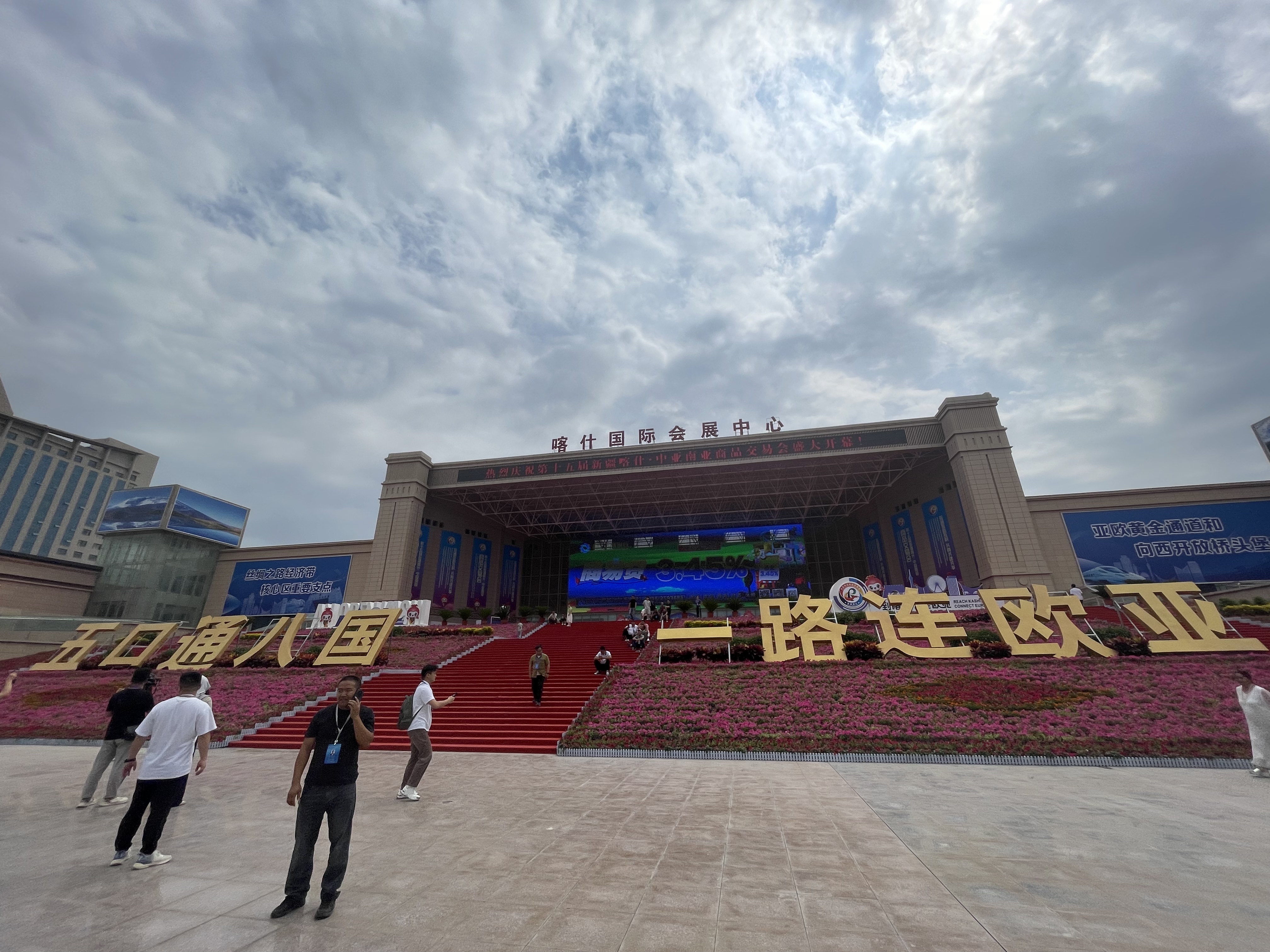
Core Viewpoint - The 15th Xinjiang Kashgar Central Asia and South Asia Commodity Fair highlights the strong momentum of foreign trade growth in Kashgar, which serves as a frontier for China's westward opening [1][14]. Group 1: Event Overview - The fair opened on August 15 at the Kashgar International Exhibition Center, showcasing various products from Central Asia and South Asia [1]. - Exhibitors included companies from Tajikistan and Kazakhstan, featuring unique clothing, honey, and cultural products [4]. Group 2: Product Highlights - Carbon Source Material (Xinjiang) Technology Co., Ltd. showcased diamond jewelry produced using international leading MPCVD technology, with production established in Shache County, Kashgar [6]. - Xinjiang Fusha Biotechnology Co., Ltd. presented almond essential oil, with a 9,000 square meter R&D production base under construction, focusing on the deep processing of almond plant products for beauty and health industries [8]. - General Water Purification, a foreign company, aims to expand its market in Central and South Asia by showcasing water purification products at the fair, with plans to establish a production line in Shache County [10]. Group 3: Economic Impact and Collaboration - The Shanghai industry aid to Xinjiang and consumption assistance model combines Kashgar's products with Shanghai's market and R&D capabilities, enhancing local industries [12]. - The fair featured a diverse range of exhibitors, including state-owned enterprises and foreign companies, reflecting a collaborative effort in industrial aid to Xinjiang [13]. - The total import and export value of Kashgar reached 99.44 billion yuan in 2024, marking an 18.8% year-on-year increase, accounting for 22.9% of Xinjiang's total foreign trade [14].
外资美妆“利润保卫战”
Jing Ji Guan Cha Wang· 2025-08-16 04:00
Core Insights - Foreign beauty companies are focusing on "profit first" strategies, with significant changes being implemented as they approach the 2025 mid-year report [2][8] - Companies like Shiseido, L'Oréal, and Estée Lauder are experiencing varying degrees of sales and profit fluctuations, indicating a collective shift towards profit recovery [2][10] Financial Performance - Shiseido's sales fell by 7.6% to 469.83 billion yen in the first half of 2025, but core operating profit rose by 21.3% to 23.37 billion yen [2] - L'Oréal reported a 3% increase in sales to 22.473 billion euros, with operating profit growing by 3.1% to approximately 4.74 billion euros, although both figures were lower than the previous year's growth rates [2] - Estée Lauder's net sales dropped by 10% to 3.55 billion USD in the first three months of the year, with net profit down by 52% to 159 million USD, although it managed to turn a profit compared to the previous quarter [2] Strategic Initiatives - Companies are implementing cost control and operational efficiency measures, with Estée Lauder announcing significant layoffs as part of its restructuring plan [3][6] - L'Oréal has focused on strict management of operating expenses, resulting in a record operating profit margin of 21.1% in the first half of 2025 [4] - Shiseido's action plan aims to restore profits through cost reductions and improved operational efficiency, targeting a core operating profit margin increase from 4.97% to 7% by 2026 [8][10] Product Strategy - Estée Lauder is expanding its high-margin product offerings, including a new perfume line in collaboration with luxury brand Balmain [6] - L'Oréal's CEO noted that high-end brands are experiencing stronger growth compared to mid-range brands, indicating a strategic shift towards premium products [6] Innovation and Technology - Companies are leveraging technology and innovation to drive growth, with L'Oréal adopting a "multi-polar model" and investing in local supply chains [7] - All three major beauty companies are embracing AI for various applications, including virtual try-ons and data insights [7] Market Challenges - The shift towards profit recovery reflects the increasing market competition and pressure on profit margins faced by these companies [8][12] - L'Oréal's sales in the Chinese market have shown signs of recovery, but overall performance remains challenged by declining consumer sentiment and competition [11][12] - Estée Lauder has faced multiple quarters of declining sales in the Asia-Pacific region, prompting a strategic pivot to reduce reliance on the Chinese market [12]
毛戈平(1318.HK):业绩稳健高增 品牌势能向上
Ge Long Hui· 2025-08-15 18:55
Core Viewpoint - The company is expected to achieve significant growth in H1 2025, with net profit projected to be between 6.65 and 6.75 billion RMB, reflecting a year-on-year increase of 35% to 37%, slightly exceeding expectations [1][2] Group 1: Financial Performance - The company forecasts revenue for H1 2025 to be between 25.7 and 26.0 billion RMB, representing a year-on-year growth of 30.4% to 31.9% [2] - The net profit margin is expected to improve by 0.93% to 1.01%, reaching a historical high of 25.88% to 25.96% [2] - The company has slightly raised its earnings per share (EPS) forecasts for 2025 to 2.43 RMB, for 2026 to 3.12 RMB, and for 2027 to 3.94 RMB [1] Group 2: Market Expansion and Strategy - The company is expanding its product categories and channels, maintaining robust growth through a focus on high-quality products and services [2] - During the 618 shopping festival, the brand experienced over 70% growth online, becoming one of the fastest-growing brands [2] - The company is entering the perfume category with the launch of the "Wen Dao Dong Fang" series, which includes 13 fragrance options tailored to Eastern aesthetics [3] Group 3: Brand and Competitive Position - The company leverages the founder's IP and strong brand influence to drive growth across various categories and channels [1][3] - The expansion into high-end department stores, including new locations in Beijing and Hangzhou, indicates an increase in brand recognition and consumer acceptance [2]
毛戈平(01318.HK)首次覆盖:中国高端美妆品牌 从SKU和店效看毛戈平发展空间
Ge Long Hui· 2025-08-15 18:55
Core Viewpoint - 毛戈平 is positioned as a high-end beauty brand in China, with a focus on offline high-end department store channels, holding a 3.7% market share in the Chinese color cosmetics market in 2024, ranking 6th overall and 4th among brands [1] Sales and Revenue - In 2024, 毛戈平's total revenue is projected to be 3.88 billion yuan, representing a year-on-year growth of 34.6% [5] - The revenue from offline channels slightly exceeds 50%, reaching 1.949 billion yuan, with a year-on-year increase of 21.6% [1] - Online sales are rapidly growing, with an expected revenue share of 48% in 2024 [1] Product Composition - Color cosmetics account for approximately 60% of 毛戈平's revenue, while skincare products make up about 40% [1] - The company has around 400 SKUs in total, with approximately 350 in color cosmetics and 50 in skincare [3] Market Position and Competition - 毛戈平's market share in the color cosmetics sector is 3.7%, surpassing brands like Nars, Mac, and Bobbi Brown [3] - The brand's pricing strategy is aligned with high-end brands like Chanel and Dior, but it faces limited room for price increases [3] Customer Engagement - 毛戈平's membership base grew by 46.6% in 2024, reaching 1.51 million members, indicating improved customer loyalty [2] - The offline member repurchase rate is 34.9%, higher than the online rate of 27.5%, with an overall repurchase rate increasing from 26.8% to 30.9% [2] Future Projections - 毛戈平's operating profit and net profit attributable to shareholders are expected to continue growing, with projected revenues of 5.19 billion yuan, 6.66 billion yuan, and 8.36 billion yuan from 2025 to 2027, with growth rates of 34%, 28%, and 26% respectively [5][6] - The gross profit margin is expected to remain stable around 84% through 2027 [5][6]
毛戈平(01318.HK):从品牌资产价值角度看毛戈平发展空间
Ge Long Hui· 2025-08-15 18:55
Core Viewpoint - The company is a leading high-end beauty group in China, demonstrating strong revenue growth and high profitability, with a projected revenue increase to 3.88 billion yuan by 2024 and a CAGR of 35.0% from 2021 to 2024 [1] Group 1: Company Overview - Founded in 2000 by renowned makeup artist Mao Geping, the company owns two major beauty brands, MGP and Zhi Ai Zhong Sheng, along with a makeup training business [1] - MGP is the only domestic brand among the top fifteen high-end beauty brands in the Chinese market [1] Group 2: Financial Performance - Revenue is expected to reach 3.88 billion yuan by 2024, with a CAGR of 35.0% from 2021 to 2024 [1] - The net profit attributable to the parent company is projected to increase to 880 million yuan by 2024, with a CAGR of 38.6% [1] - The gross margin is forecasted to be 84.4% and the net profit margin is expected to be 22.7% in 2024 [1] Group 3: Brand Analysis - MGP's brand value has long-term growth potential, with increasing brand awareness through its unique Eastern characteristics [2] - The brand has established strong perception quality with significant sales in key products, such as over 400 million yuan in retail sales for the Light Sensation Powder and over 800 million yuan for the Luxury Caviar Mask in 2024 [2] - The brand's loyalty is supported by a comprehensive membership system, with a total of 15.1 million registered members and a repurchase rate of 30.9% by the end of 2024 [2] Group 4: Growth Drivers - The company's growth is driven by product matrix expansion and systematic channel development [3] - The introduction of new product categories, such as perfume, is expected to enhance brand positioning and create new growth points [3] - The company is optimizing its offline stores in high-end shopping areas and enhancing online channel operations to achieve synergistic growth [3] Group 5: Future Projections - Revenue projections for 2025-2027 are 5.15 billion, 6.68 billion, and 8.43 billion yuan, with year-on-year growth rates of 32.6%, 29.6%, and 26.2% respectively [4] - Net profit forecasts for the same period are 1.19 billion, 1.55 billion, and 1.99 billion yuan, with year-on-year growth rates of 34.6%, 30.7%, and 28.2% respectively [4] - The estimated PE ratio for 2026 is 27.5X, indicating a reasonable valuation considering the brand's competitive advantages and growth potential [4]