
旅游业

Search documents
“十五五”目标@奋斗者|丰富高品质旅游产品供给 让文旅焕发新生机
Xin Hua She· 2025-12-01 01:11
Group 1 - The core viewpoint of the articles emphasizes the importance of advancing the construction of a strong tourism nation, enhancing the supply of high-quality tourism products, and improving service quality in the tourism sector [1] - During the "14th Five-Year Plan" period, the tourism industry in China is expected to see continuous optimization in product supply and service quality, with a sustained high growth rate in domestic travel participation and total spending by residents [3] - The integration of culture and tourism is being deeply promoted, creating new momentum and advantages for the cultural tourism industry through a dual empowerment approach of "using culture to enhance tourism and using tourism to highlight culture" [3][5] Group 2 - The deep integration of culture and tourism is generating more new tourism products, business models, spaces, scenes, and functions, further enriching the quality of life for the public and empowering economic and social development through culture [5]


“雪假”不只是“旅游假” 因地制宜设假期或是趋势
Nan Fang Du Shi Bao· 2025-12-01 00:20
Core Viewpoint - The introduction of "snow holidays" in provinces like Xinjiang and Jilin aims to boost tourism and enhance family engagement in winter sports, while also promoting student health and cultural experiences [1][2]. Group 1: Policy Implementation - The "snow holiday" concept is rapidly being adopted in provinces such as Xinjiang and Jilin, following the earlier implementation of spring and autumn holidays in regions like Zhejiang, Sichuan, and Guangdong [1]. - Jilin's "ice and snow holiday" specifically targets compulsory education students without encroaching on existing winter and summer breaks [1]. Group 2: Economic Impact - The introduction of spring and autumn holidays has shown a positive impact on the tourism market, particularly during off-peak seasons, indicating a trend towards enhancing tourism consumption [1]. - The "snow holiday" is expected to invigorate the winter tourism market by encouraging family participation in ice and snow activities, thus driving economic benefits for local tourism sectors [1][2]. Group 3: Educational and Social Benefits - Beyond economic gains, "snow holidays" are designed to improve student physical fitness, broaden their horizons through educational activities, and foster family bonding [2]. - The initiative aligns with national policies aimed at promoting the ice and snow economy, as outlined in the State Development and Reform Commission's plan for revitalizing the Northeast region [2]. Group 4: Local Adaptation and Future Trends - The concept of establishing local holidays based on regional characteristics is gaining traction, allowing for tailored approaches to tourism and cultural promotion [3]. - While local holidays may primarily attract regional tourists, there is a need to explore strategies to draw in visitors from outside the area to maximize economic benefits [3].
高铁就像一股活水
Ren Min Ri Bao· 2025-11-30 20:11
Core Insights - The opening of the Panzhou to Xingyi high-speed railway marks a significant milestone for transportation in Guizhou, achieving full high-speed rail coverage across the province's major cities [2][4] - The railway, which spans approximately 99 kilometers with a bridge-tunnel ratio of nearly 91%, faced numerous geological challenges during construction, including karst topography and high gas levels [2][3] Infrastructure Development - The construction utilized innovative technologies such as geological radar and advanced drilling techniques to navigate complex geological conditions, ensuring timely completion of 46 bridges and 38 tunnels [3] - The railway is expected to enhance connectivity between major tourist attractions in the region, facilitating a more efficient travel experience for visitors [4] Tourism Impact - The high-speed railway is anticipated to boost local tourism, with initiatives like "high-speed rail + scenic area" travel routes being developed to improve visitor access to attractions like the Wanfenglin Scenic Area [3][5] - Local businesses, including homestays and restaurants, are preparing for increased tourist traffic, with projections of daily visitor numbers potentially reaching 30,000, significantly benefiting the local economy [5] Economic Opportunities - The integration of high-speed rail with tourism is expected to stimulate growth in related sectors such as hospitality, dining, and cultural industries, creating new job opportunities for local residents [5] - The local government is actively promoting a year-round tourism model, offering seasonal attractions to maximize visitor engagement throughout the year [5]

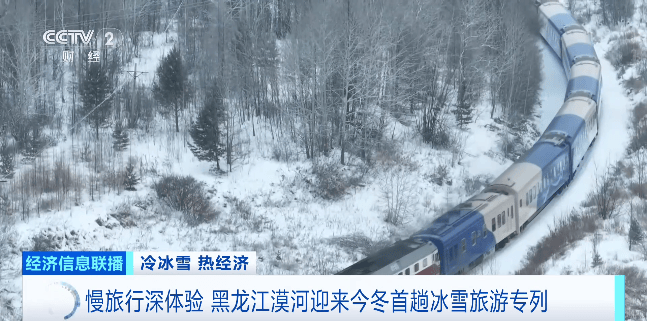
漠河迎来今冬首趟冰雪旅游专列 南方游客开启“找北追光”之旅
Sou Hu Cai Jing· 2025-11-30 14:59
(央视财经《经济信息联播》)进入冬季,冰雪旅游快速升温。29日,地处我国最北的黑龙江漠河迎来 今冬首趟冰雪旅游专列,这趟冰雪专列日前从哈尔滨出发,300多名游客开启赏冰玩雪之旅。 伴着大兴安岭的冬雪美景,满载300多名游客的Y783次旅游列车抵达漠河,这是漠河今冬迎来的首趟冰 雪旅游专列,该趟专列的特点是"慢旅行、深体验",乘坐这趟列车游客开启了找北追光、赏冰玩雪之 旅。 乘坐该趟专列的游客主要来自长三角、珠三角地区,带着对北国冰雪世界的向往走进北极村,乘坐马爬 犁"找北"、打卡最北地标、体验界江冬捕、感受冰情雪趣。 据了解,为了满足冬季旅游旺季交通运力需求,近期,铁路部门还增开了哈尔滨至漠河的列车。同时, 民航部门也加密了漠河与黑龙江省内各旅游城市之间的串飞航线,截至目前,漠河机场今年的旅客吞吐 量已突破24.4万人次,同比增长14.01%,立体交通不仅方便了游客出行,更有效助推了地方的冰雪经 济。 编辑:令文芳 转载请注明央视财经 ...
(文化中国行)千年徽杭古道从商贸动脉到文旅热土
Zhong Guo Xin Wen Wang· 2025-11-30 08:20
Core Viewpoint - The ancient Huizhou-Hangzhou Road has transformed from a commercial artery into a cultural and tourism hotspot, reflecting a shift in its significance over time [1]. Group 1: Historical Significance - The Huizhou-Hangzhou Road, established during the Tang Dynasty, spans approximately 25 kilometers and is recognized as the third major ancient road in China after the Silk Road and the Tea Horse Road [1]. - Historically, the road facilitated the trade of salt, tea, and mountain goods, serving as a vital route for merchants like Hu Xueyan to expand their businesses [1]. Group 2: Tourism Development - Recent initiatives by the Anhui provincial government aim to leverage local advantages to develop a comprehensive tourism sector, positioning cultural tourism as a pillar industry [1]. - The road has seen a significant increase in visitor numbers, particularly during holidays, with a diverse demographic including hiking enthusiasts, families, and educational groups [2]. Group 3: Local Economic Impact - Local businesses, such as guesthouses and restaurants, have flourished due to the influx of tourists, with over 120 farmhouses established along the road [2]. - Traditional foods and local specialties have become popular among visitors, effectively converting tourism traffic into tangible benefits for local residents [2]. Group 4: Broader Context - The revival of the Huizhou-Hangzhou Road is part of a larger trend of ancient road revitalization across China, with over 100 ancient paths identified in the Huizhou region alone [3]. - The "Walking Ancient Roads" initiative, launched by four provinces, aims to collaboratively enhance regional branding and promote historical tourism [3].
中国赴日航班数量大幅削减引日方担忧
Yang Shi Xin Wen· 2025-11-30 00:36
(文章来源:央视新闻) 在中国政府发布赴日旅游风险提示后,中日间航空出行及日本旅游市场已出现明显波动。当地时间11月 29日,最新数据显示,12月原计划执行的5548个中国飞往日本的航班中,904个已确定取消,取消比例 达16%。具体来看,日本与中国之间共有172条定期航线,截至27日上午,中国各大航空公司已削减72 条航线,涉及904个航班,相当于约15.6万个座位。除航班数量减少外,机票价格也受到了此次风险提 示的连带影响。日本舆论担忧,若两国关系持续恶化,相关影响将会进一步加剧。据日本政府观光局统 计,今年1月至10月,约有820万中国游客到访日本,中国游客是日本旅游业及相关行业的重要客源。如 果航班进一步削减,可能会抑制日本旅游需求的增长,日本方面也对本国旅游业受影响的程度表示担 忧。 ...
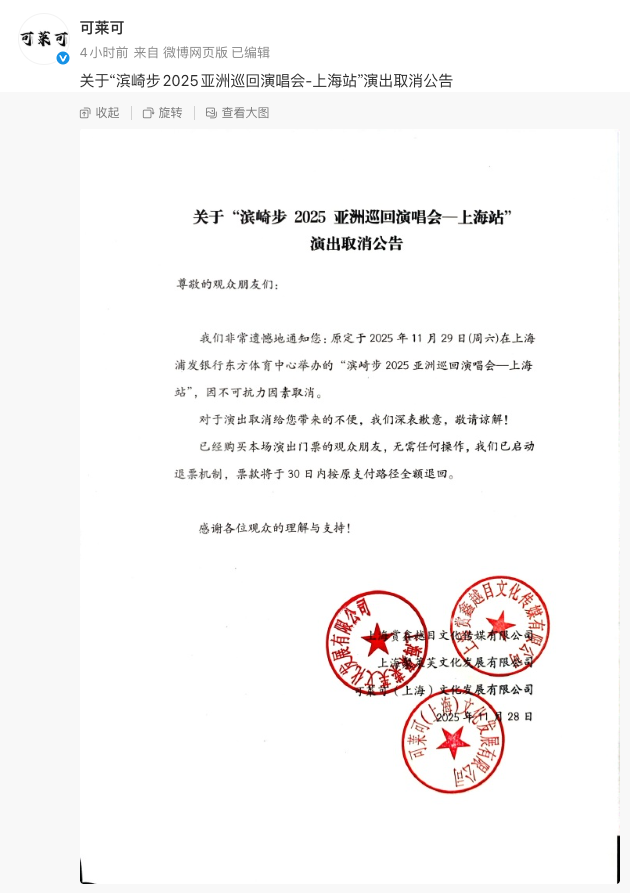
多个日本艺人在华活动取消,包括滨崎步演唱会、《美少女战士》音乐剧!12月中国赴日航班减少904个,旅行社:赴日团体游几乎全部取消
Mei Ri Jing Ji Xin Wen· 2025-11-29 12:57
Core Viewpoint - The recent comments made by Japanese Prime Minister Kishi Nobuo regarding Taiwan have led to heightened tensions between China and Japan, resulting in the cancellation or postponement of various events involving Japanese artists in China [1][7][8]. Event Cancellations - Ayumi Hamasaki's concert scheduled for November 29 in Shanghai was canceled due to "force majeure," with ticket refunds initiated [1][4]. - Two concerts by Kaoru Wada, planned for November 28 and 30 in Beijing and Shanghai, were also canceled for similar reasons [7]. - A musical performance of "Sailor Moon" in Hangzhou was canceled, along with other events by artists such as natori and chilldspot [7]. Impact on Tourism - The number of planned flights from China to Japan has significantly decreased, with a reported 56% increase in cancellations from November 24 to December 31 compared to the previous month [8][10]. - As of late November, 904 flights (16% of the total) from China to Japan were canceled, affecting approximately 156,000 seats [10]. - Major Chinese airlines have reduced flights, with China Southern Airlines cutting 118 flights and Spring Airlines reducing 182 flights [10]. Changes in Travel Plans - Chinese tourists are shifting their travel preferences to other countries such as Russia, Thailand, and Singapore, leading to concerns within Japan's tourism industry [8][10]. - A travel agency in Osaka reported that 80% of its clients are from China, and nearly all group tours to Japan have been canceled [8]. Adjustments by Companies - Adora Cruises announced changes to its 2026 itinerary, focusing on destinations in South Korea and Southeast Asia, removing Japanese ports from its plans [12].
多地宣布中小学放雪假,有地区鼓励机关企事业单位职工带薪休假
第一财经· 2025-11-29 12:11
Core Viewpoint - The introduction of "snow holidays" in various regions, particularly in Jilin and Xinjiang, aims to promote winter sports, tourism, and overall student well-being while stimulating local economies through increased travel and leisure activities [3][5][6]. Group 1: Policy Implementation - Jilin Province has established a "snow holiday" from December 3 to 7, 2025, for all compulsory education students, encouraging paid leave for parents to engage in winter activities with their children [3][5]. - Urumqi and Altay in Xinjiang have also announced a "snow holiday" from December 1 to 5, 2025, allowing for a continuous 9-day break when combined with weekends [5][6]. Group 2: Economic Impact - The "snow holiday" initiative is expected to alleviate academic pressure on students and promote physical and mental health, similar to previous "autumn holidays" implemented in other regions [5][6]. - The introduction of these holidays is anticipated to boost tourism, with significant increases in flight bookings reported, such as a 51% and 99% year-on-year rise in Urumqi and Altay, respectively, during the holiday period [6]. Group 3: Regional Adaptation - The concept of "spring and autumn holidays" is being explored across various regions, with adaptations based on local climate and tourism potential, emphasizing the need for tailored approaches [4][6]. - Experts suggest that the "snow holiday" aligns with local climate conditions and tourism development, fostering a sustainable tourism market by encouraging off-peak travel [6].

多地宣布中小学放雪假,吉林鼓励机关企事业单位职工带薪休假
Di Yi Cai Jing· 2025-11-29 11:44
Group 1 - The introduction of "snow holidays" in various regions, such as Jilin and Xinjiang, aims to promote winter tourism and encourage family participation in winter sports and activities [1][2][3] - Jilin Province has designated a "snow holiday" from December 3 to 7, 2025, allowing all students in compulsory education to take time off, while also encouraging parents to take paid leave to engage in winter activities with their children [1][2] - The implementation of "snow holidays" is part of a broader trend to reduce academic pressure on students and promote their overall development, similar to previously established "autumn holidays" in other regions [2][3] Group 2 - The Ministry of Commerce and other departments have emphasized the need to optimize student holiday arrangements to stimulate service consumption, suggesting adjustments to the academic calendar based on local climate and conditions [3] - Experts believe that the introduction of "snow holidays" can help cultivate the winter tourism market, making off-peak seasons more vibrant and sustainable for the tourism industry [3] - Data from Southern Airlines indicates a significant increase in flight bookings in regions with "snow holidays," with a year-on-year growth of 51% in Urumqi and 99% in the Altay region, highlighting the potential for youth travelers to become a key demographic in seasonal travel [4]

2025年,我国GDP预计达到140万亿!在全球经济增长稳排第一?
Sou Hu Cai Jing· 2025-11-29 06:52
Core Insights - The National Development and Reform Commission predicts that China's GDP will exceed 140 trillion yuan by 2025, marking a significant milestone in the country's economic history [1][12] - China's GDP growth rate is projected to be around 5% in 2024, nearly double the global average of approximately 3%, positioning China among the top economies in terms of growth [1][10] - In terms of global contribution, China accounts for about 17% of the world's economy while contributing nearly 30% to global economic growth, indicating its increasing influence on the global stage [4][12] Economic Growth and Projections - By 2024, China's GDP is expected to reach approximately 134.9 trillion yuan, translating to about 18.92 trillion USD, with a slight increase to around 18.95 trillion USD in 2025 [2][4] - The nominal growth rate in yuan terms is anticipated to be around 3.5%, despite the depreciation of the yuan against the dollar affecting the USD-denominated GDP figures [2][4] Global Economic Position - China is projected to contribute 26% to global GDP growth in 2024, leading all major economies, with India and the US following at 15.2% and 11.3% respectively [4][12] - The increase in GDP from 134.9 trillion yuan in 2024 to 140 trillion yuan in 2025 represents an economic output greater than the entire annual GDP of Poland [4][12] Sectoral Developments - High-tech manufacturing in China is expected to grow by 8.9% in 2024, significantly outpacing overall industrial growth [5] - The electric vehicle sector continues to thrive, maintaining its position as the global leader in production and sales for ten consecutive years [5] - The semiconductor self-sufficiency rate has surpassed 70%, reflecting advancements in domestic production capabilities [5] Trade and Employment - China's total goods trade is projected to reach a record 43.8 trillion yuan in 2024, with a notable increase in trade with countries involved in the Belt and Road Initiative [6] - The country added 12.56 million urban jobs in 2024, indicating a robust employment landscape across various sectors [6] Comparative Analysis - In 2025, the US GDP is expected to exceed 30.4 trillion USD, with a growth rate of around 2%, while Germany, Japan, and India are projected to have GDPs of 5 trillion USD, 4.4 trillion USD, and over 3 trillion USD respectively [7] - The combined GDP of China and the US will surpass the total GDP of all countries ranked third to twentieth, highlighting the significant economic weight of these two nations [7] Future Considerations - Despite the positive growth indicators, challenges such as income disparity, environmental issues, and an aging population remain pressing concerns for China's economic future [9][14] - The transition towards a more balanced and sustainable growth model is underway, with a focus on domestic consumption and innovation in high-tech industries [11][12]
