汽车制造

Search documents
领湃科技取得锂电池极柱模块和锂电池顶盖专利
Sou Hu Cai Jing· 2026-02-17 00:59
Group 1 - Hunan Lingpai Technology Group Co., Ltd. has obtained a patent for "a lithium battery pole module and lithium battery top cover," with authorization announcement number CN113054298B, applied for on March 2021 [1] - Hunan Lingpai Technology Group Co., Ltd. was established in 2002, located in Hengyang, with a registered capital of 1,719.51354 million RMB [1] - The company has invested in 11 enterprises, participated in 14 bidding projects, and holds 30 trademark records and 370 patent records, along with 25 administrative licenses [1] Group 2 - Hunan Lingpai Lithium Energy Co., Ltd. was established in 2019, also located in Hengyang, with a registered capital of 380 million RMB [1] - The company has invested in 1 enterprise, participated in 56 bidding projects, and holds 382 patent records, along with 26 administrative licenses [1] - Hengyang Gaipai New Energy Technology Co., Ltd. was established in 2022, with a registered capital of 50 million RMB, focusing on electrical machinery and equipment manufacturing [1] Group 3 - Hunan Lingpai New Energy Research Institute Co., Ltd. was established in 2022, with a registered capital of 50 million RMB, focusing on technology promotion and application services [2] - The institute has invested in 1 enterprise, participated in 10 bidding projects, and holds 351 patent records, along with 6 administrative licenses [2] - Hunan Lingpai Energy Storage Technology Co., Ltd. was also established in 2022, with a registered capital of 50 million RMB, focusing on research and experimental development [2]

中国一汽取得一种控制方法、装置、设备及存储介质专利
Sou Hu Cai Jing· 2026-02-17 00:48
Group 1 - The State Intellectual Property Office of China has granted a patent to China First Automobile Works Group Co., Ltd. and FAW (Nanjing) Technology Development Co., Ltd. for a method, device, equipment, and storage medium related to control, with the announcement number CN116580218B and application date of May 2023 [1] - China First Automobile Works Group Co., Ltd. was established in 2011, located in Changchun, with a registered capital of 7.8 billion RMB. The company has made investments in 32 enterprises, participated in 5,000 bidding projects, and holds 264 trademark records and 5,000 patent records, along with 385 administrative licenses [1] - FAW (Nanjing) Technology Development Co., Ltd. was established in 2020, located in Nanjing, with a registered capital of 50 million RMB. The company has participated in 18 bidding projects, holds 9 trademark records and 543 patent records, and has 6 administrative licenses [1]

广汽本田取得基于车载氛围灯的转向提示系统专利
Jin Rong Jie· 2026-02-17 00:28
广汽本田汽车研究开发有限公司,成立于2007年,位于广州市,是一家以从事科技推广和应用服务业为 主的企业。企业注册资本50000万人民币。通过天眼查大数据分析,广汽本田汽车研究开发有限公司参 与招投标项目283次,财产线索方面有商标信息3条,专利信息854条,此外企业还拥有行政许可44个。 声明:市场有风险,投资需谨慎。本文为AI基于第三方数据生成,仅供参考,不构成个人投资建议。 财经频道更多独家策划、专家专栏,免费查阅>> 国家知识产权局信息显示,广汽本田汽车有限公司、广汽本田汽车研究开发有限公司取得一项名为"基 于车载氛围灯的转向提示系统和汽车"的专利,授权公告号CN116872834B,申请日期为2023年7月。 天眼查资料显示,广汽本田汽车有限公司,成立于1998年,位于广州市,是一家以从事汽车制造业为主 的企业。企业注册资本86721.596万美元。通过天眼查大数据分析,广汽本田汽车有限公司共对外投资 了5家企业,参与招投标项目3888次,财产线索方面有商标信息950条,专利信息2177条,此外企业还拥 有行政许可945个。 ...
消费主义打败民族主义,这是中国消费者身份的理智回归
Sou Hu Cai Jing· 2026-02-16 23:07
Core Viewpoint - Post-pandemic, consumerism in China is overtaking nationalism, with consumers focusing more on quality and value rather than national origin, despite ongoing diplomatic tensions with Japan and the U.S. [2] Group 1: Consumer Behavior Changes - The rise of consumerism over nationalism is evident as consumers prioritize quality, cost-effectiveness, and emotional value in their purchasing decisions [2][8] - The younger generation and urban middle class are increasingly making purchasing decisions based on rationality rather than nationalism, indicating a shift in consumer identity [8][21] - The demand for affordable luxury products has surged, with brands like Xiaomi thriving by offering high-quality products at reasonable prices [20][21] Group 2: Impact of Diplomatic Tensions - Recent diplomatic disputes between China and Japan have not led to widespread boycotts of Japanese products, as seen in the sales growth of Toyota and Sushi restaurants [9][12] - Despite official warnings against travel to Japan, many consumers continue to visit, showing a disconnect between government sentiment and consumer behavior [9][12] - The success of Japanese brands in China, such as Toyota and Sushi restaurants, highlights the diminishing impact of nationalism on consumer choices [9][12] Group 3: Cultural Influence - American cultural products remain popular among Chinese consumers, with Disney's "Zootopia 2" achieving record box office success in China, indicating that cultural ties can transcend political tensions [14] - The appeal of brands like Ralph Lauren is growing among urban consumers, who value quality and brand image over nationalistic sentiments [16] Group 4: Emotional Consumption Trends - Emotional consumption is becoming a significant trend, as consumers seek products that provide emotional comfort and align with their lifestyles, regardless of the brand's origin [21] - The shift towards emotional consumption reflects a broader societal change, where consumers are less influenced by nationalist sentiments and more by personal values and experiences [21]


德国人冻得受不了,以前看不上广东大铁箱,后来求着中国发货
Sou Hu Cai Jing· 2026-02-16 13:53
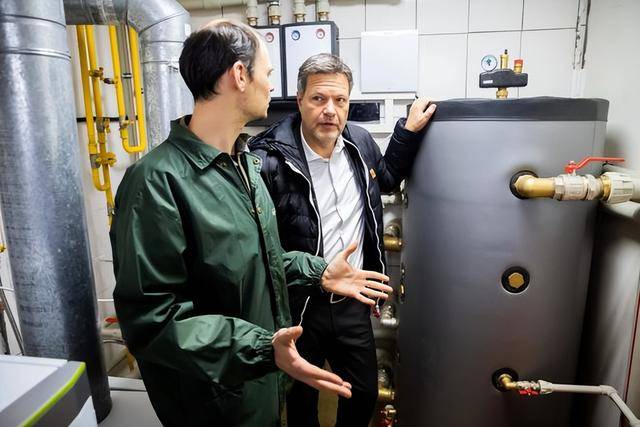
Core Insights - The energy crisis in Europe, exacerbated by the Russia-Ukraine conflict, has led to a significant shift in energy sourcing, with German households increasingly turning to Chinese air-source heat pumps as a viable alternative to Russian natural gas [3][5][22] Group 1: Energy Crisis and Market Shift - Natural gas prices in Europe have surged to ten times their 2020 levels, with some German households experiencing over 200% increases in electricity bills [3] - Prior to the conflict, Europe relied heavily on Russian energy, with approximately 40% of EU natural gas imports coming from Russia [5] - The cessation of the "Nord Stream 2" project and intensified sanctions against Russia have drastically reduced gas supplies to Europe, leading to widespread energy poverty affecting about 17% of EU households [5][12] Group 2: Rise of Air-Source Heat Pumps - Air-source heat pumps, a technology well-established in China, have become increasingly popular in Europe due to their energy efficiency and environmental benefits, aligning with the region's low-carbon policies [7][8] - The Chinese heat pump industry has advanced to a leading global position within a decade, with significant technological breakthroughs enhancing efficiency and application range [8][14] - The cost-effectiveness of high-temperature air-source heat pumps is notable, providing hot water at significantly lower costs compared to traditional electric heating [14] Group 3: Changing Perceptions of Chinese Manufacturing - European consumers are shifting their views on Chinese products, moving from skepticism to actively seeking partnerships with Chinese heat pump manufacturers [10][12] - The complete industrial chain and scale of production capabilities in China are now seen as competitive advantages, moving beyond traditional cost benefits [18] - Chinese heat pump companies are strategically focusing on long-term market integration in Europe, establishing sales and service centers to enhance customer support [16][22] Group 4: Collaborative Opportunities - The collaboration between Germany and China in the heat pump sector reflects the complementary nature of their economies, with Germany excelling in precision manufacturing and China in scalable production [20] - German companies are increasingly recognizing China as not just a market but also a source of innovation, with significant investments in R&D and production facilities [20][22] - The ongoing energy crisis has catalyzed a transformation in the perception of Chinese manufacturing from a price advantage to a value advantage in high-end markets [22]
小鹏为什么这么“烦”L3
虎嗅APP· 2026-02-16 13:01
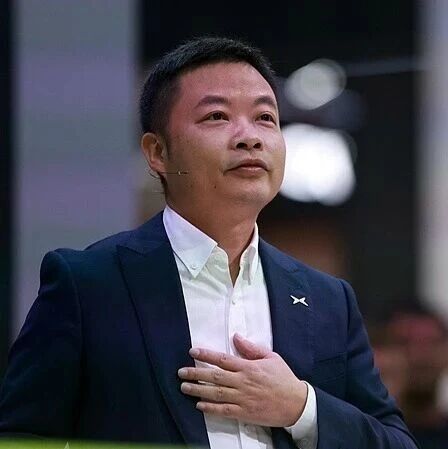
Core Viewpoint - Xiaopeng Motors is shifting focus from L3 to L4 autonomous driving technology, arguing that L3 is a transitional technology that hinders progress due to regulatory constraints and safety concerns [12][20]. Group 1: Industry Context - The Chinese autonomous driving sector is projected to see total investments of 700-750 billion yuan by 2025, a 40% increase year-on-year, while the overall automotive industry's profit margin is only 4.1%, indicating a mismatch between profit growth and R&D investment [3]. - Many automakers are constrained by current regulations, with L3 technology being limited in its operational design domain (ODD), primarily restricted to urban and highway scenarios [8][24]. Group 2: Technological Development - Xiaopeng's GX model is currently undergoing L4 road tests, utilizing a high computing power of 3000 TOPS, which surpasses competitors like Li Auto's new L9 [5][7]. - The L4 technology is being validated through successful commercial trials, with companies like Pony.ai and RoboTaxi demonstrating profitability in specific applications [17][19]. Group 3: Challenges and Considerations - Transitioning directly to L4 from L2 requires substantial data accumulation, as L4 relies on insights gained from L3 operations [23]. - Regulatory frameworks pose significant challenges, as L3's operational limitations are defined by legal and liability considerations, which differ from L4's clearer responsibility structure [24]. - The current L4 implementations face hurdles, including the need for advanced perception systems that can handle diverse environmental conditions, which may not be achievable with a purely vision-based approach [28][30].

庆铃汽车股份订立新能源车辆回购协议
Zhi Tong Cai Jing· 2026-02-16 09:30
Core Viewpoint - The company has entered into a repurchase agreement for five new energy vehicles, which is expected to enhance sales and market share in the new energy vehicle sector [1][2]. Group 1: Repurchase Agreement Details - The repurchase agreement involves a maximum repurchase price of 1.0288 million yuan, with the book value of the leased assets also approximately 1.0288 million yuan [1]. - The company will utilize its own funds to pay the related amounts under the repurchase agreement [1]. Group 2: Strategic Implications - The repurchase obligation is a common guarantee measure in the automotive financing leasing business, which is beneficial for driving sales of new energy vehicles [2]. - The company can monitor the leased assets through vehicle networking technology, reducing risks associated with asset damage and non-return by dealers [2]. - A digital monitoring platform will be established to oversee asset integrity, rental rates, usage efficiency, and payment recovery, facilitating data sharing with the financing leasing company [2]. Group 3: Financial and Operational Benefits - The agreement allows the company to expand its used car leasing or sales business, as well as after-market services such as vehicle refurbishment, which will help increase revenue [2]. - Dealers are required to pay a repurchase deposit and performance guarantee to offset any amounts owed to the company, enhancing financial liquidity and flexibility [2]. - The terms of the repurchase agreement, including deposits and repurchase price, are deemed fair and reasonable, aligning with the overall interests of the company and its shareholders [2].
美国刚加税,越南就引进星链?中国连特斯拉都收了,为啥拒绝星链
Sou Hu Cai Jing· 2026-02-16 09:12
Core Viewpoint - Vietnam's decision to introduce SpaceX's Starlink amid ongoing trade tensions with the U.S. highlights a strategic move to address internet connectivity issues in remote areas, particularly where traditional infrastructure is lacking [1][5] Group 1: Vietnam's Strategic Decision - Vietnam's Ministry of Science and Technology clarified that the primary goal of introducing Starlink is to fill the internet coverage gap in mountainous and island regions where fiber optics cannot reach [1] - The pilot program for Starlink is set to last until 2031, with a cap of 600,000 terminal devices, ensuring national defense security is prioritized [1] - This move reflects Vietnam's pragmatic approach to leverage U.S. technology for its digital infrastructure while maintaining control over its implementation [7] Group 2: Comparison with China - The article raises questions about why China has not adopted Starlink, noting that the service is more than just internet provision; it has strategic implications highlighted by its use in the Ukraine conflict [3] - China's experience with Starlink, including incidents where satellites approached its space station, has led to strict regulations on satellite communications, emphasizing the need for domestic gateways [3] - The contrasting choices of Vietnam and China illustrate different national strategies: Vietnam seeks to utilize foreign technology for development, while China focuses on self-reliance and control over its technological infrastructure [7] Group 3: Starlink's Global Impact - Starlink currently operates in over 100 countries, serving more than 3 million users, with its key selling point being comprehensive coverage in diverse geographical areas [5] - Despite the advantages, Vietnam is aware of potential risks associated with data security and monitoring by the U.S., indicating that the government has likely prepared for these concerns [5]
2026年央视春晚节目单发布,合作伙伴超20家知名公司,宇树机器人今年将表演武术
Jin Rong Jie· 2026-02-16 08:09
Group 1: Event Overview - The 2026 Spring Festival Gala will be broadcasted live on 10 TV channels, 9 radio frequencies, and 6 new media platforms, covering various genres including comprehensive, variety, and ultra-high-definition channels [1] - CGTN will collaborate with over 3,500 media outlets in more than 200 countries and regions to provide comprehensive coverage of the event in 85 languages [1] Group 2: Technology and Partnerships - The gala will feature significant technological elements, particularly in robotics and artificial intelligence, with confirmed partners including Yushutech, Volcano Engine, and Magic Atom [2] - Notable performances will include a martial arts display by Yushutech robots in collaboration with Henan Tagou Martial Arts School, and a skit by Songyan Power with celebrities [2] Group 3: Corporate Participation - Over 20 partners have been announced for the gala, spanning various sectors such as smart mobility, AI robotics, and the liquor industry, including companies like Huawei and Great Wall Motors [4] - At least 8 publicly listed companies are among the partners, representing industries such as liquor, automotive, and video platforms, including Wuliangye and Bilibili [5]





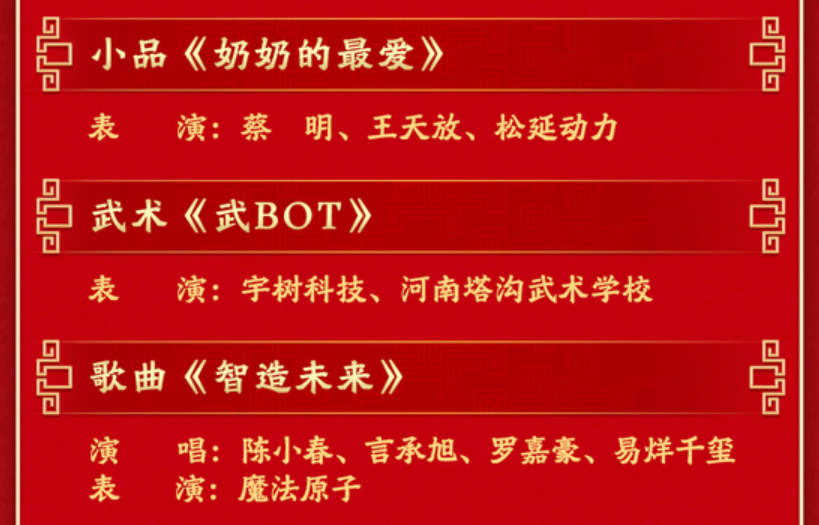
今晚春晚节目单公布,20家合作公司曝光
21世纪经济报道· 2026-02-16 07:42
Core Viewpoint - The article discusses the official program list for the 2026 Spring Festival Gala, highlighting various performances and collaborations with companies across different sectors, including smart travel and artificial intelligence [1][9]. Group 1: Performance Highlights - The opening performance features "Miracles Are Coming" with artists such as Mi Xue and Xu Di [3]. - Notable performances include songs by Zhou Huimin and Liu Mintao, as well as a skit titled "Grandma's Favorite" featuring Cai Ming [3][4]. - The gala will showcase a variety of acts, including martial arts, dance, and comedy, with participation from various artists and groups [3][5][6]. Group 2: Corporate Collaborations - Over 20 partners have been officially announced for the gala, covering sectors like smart travel, artificial intelligence, and liquor [9]. - Eight of these partners are publicly listed companies, including Wuliangye, Yanghe, and Kuaishou [9]. - Specific collaborations include Jianghuai Automobile and Huawei for smart travel, and Magic Atom for intelligent robotics [10]. Group 3: Industry Impact - The gala's partnerships reflect a growing trend of integrating technology and entertainment, particularly in the fields of AI and smart travel [10]. - The involvement of major companies indicates a strategic move to enhance brand visibility during a high-profile event like the Spring Festival Gala [9][10].