
液化天然气

Search documents
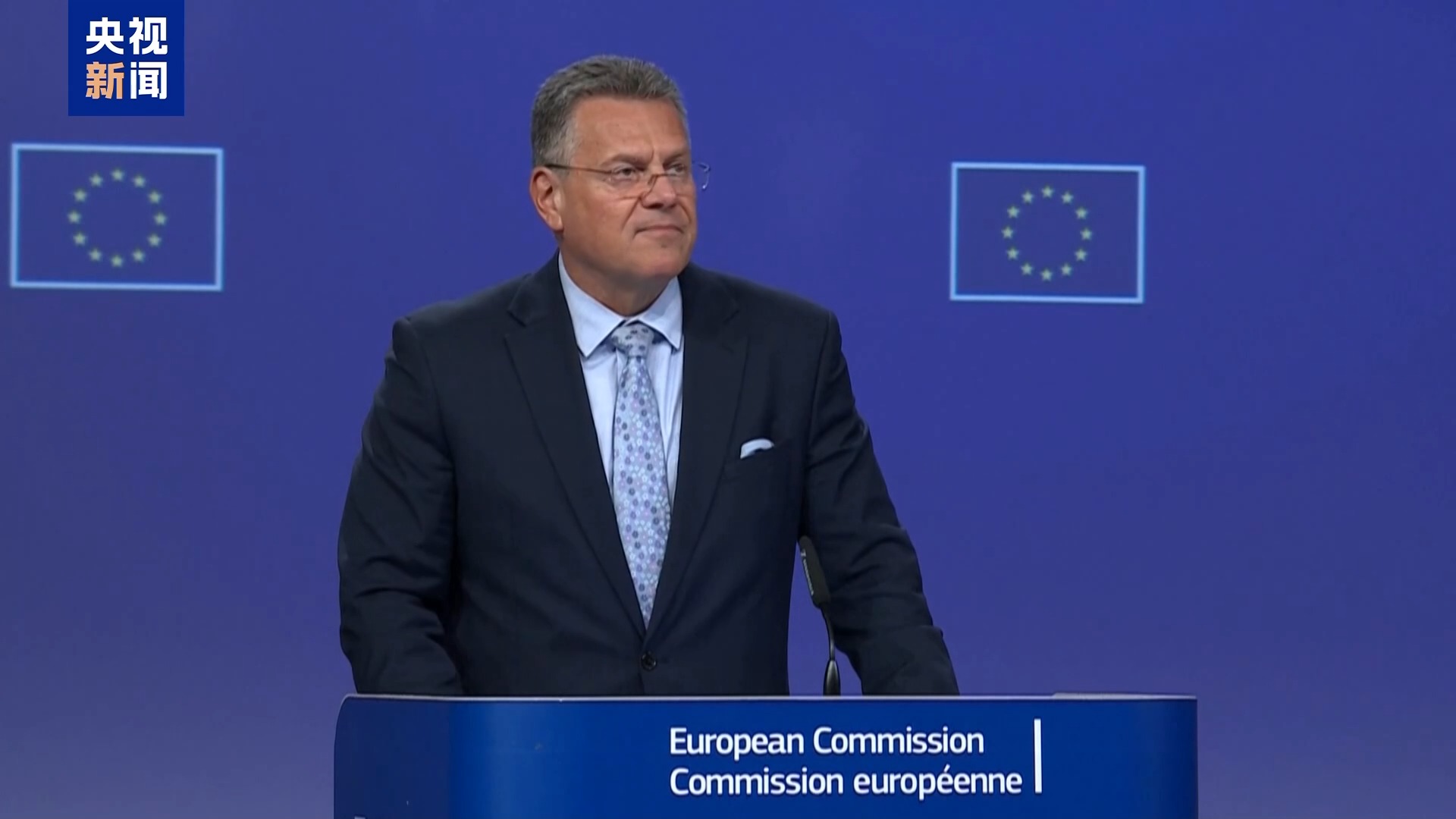
欧美贸易协议细节公布 欧盟官员和专家:关键诉求未获突破
Yang Shi Xin Wen· 2025-08-22 02:16
Group 1 - The EU and the US announced a new trade agreement on August 21, detailing that the US will impose a 15% tariff on most EU goods, including cars, pharmaceuticals, semiconductors, and timber, while exempting certain natural resources, aircraft, and generics [1] - The EU will eliminate tariffs on US industrial products and provide preferential market access for US seafood and agricultural products, with plans to purchase $750 billion of US liquefied natural gas, oil, and nuclear products by 2028, along with $40 billion in US AI chips [1] - The EU is expected to increase its investment in US strategic industries by $600 billion, indicating a significant shift in economic relations [1] Group 2 - EU officials and experts express concerns that the agreement is unfair and will negatively impact the European economy, highlighting an imbalance favoring the US [3][5] - The EU's trade commissioner confirmed that important sectors like wine and spirits were not included in the tariff reduction list, indicating ongoing negotiations to address these key interests [3] - The agreement is viewed as a "loss control document" for the EU, reflecting a deeper dependency on the US and potential friction points that may arise in the future [5]

美欧贸易框架协议终于落地,但汽车、钢铝关税悬念犹存
Di Yi Cai Jing· 2025-08-21 13:19
Core Points - The U.S. and EU have reached a significant breakthrough in trade negotiations, agreeing on a framework for a "Reciprocal, Fair, and Balanced Trade Agreement" [1][2] - The framework includes commitments from both sides regarding tariffs, market access, and investment, with the EU agreeing to eliminate tariffs on all U.S. industrial goods [5][6] - The U.S. will maintain a 15% tariff on most goods imported from the EU, with specific conditions for reducing auto tariffs [1][4] Tariff and Market Access - The EU will eliminate tariffs on all U.S. industrial products and provide better market access for various U.S. seafood and agricultural products [5] - The U.S. will apply the most favored nation (MFN) rate or a 15% tariff on goods from the EU, whichever is higher, starting from September 1, 2025, for certain products [5][6] - The U.S. has committed to reducing tariffs on pharmaceuticals, semiconductors, and wood products from the EU, ensuring rates do not exceed 15% [5][6] Procurement and Investment - The EU has committed to purchasing $750 billion worth of U.S. liquefied natural gas (LNG), oil, and nuclear products by 2028 [7] - The EU plans to invest $600 billion in strategic sectors in the U.S. by 2028, enhancing transatlantic economic cooperation [7] - Both parties will work to reduce non-tariff barriers, particularly in the automotive sector, and simplify sanitary certificate requirements for food and agricultural products [7] Environmental and Climate Change - The EU has promised to provide more flexibility in the implementation of the Carbon Border Adjustment Mechanism (CBAM) to support U.S. small and medium-sized enterprises [8] - The EU will ensure that sustainability directives do not impose undue restrictions on transatlantic trade [8]
美国LNG行业反对USTR新规
Zhong Guo Hua Gong Bao· 2025-08-19 03:21
Core Viewpoint - The U.S. Trade Representative's Office (USTR) has proposed new regulations for liquefied natural gas (LNG) exports, mandating that starting in 2028, 1% of LNG exports must be transported by U.S.-flagged vessels, increasing to 15% by 2047, which has faced strong opposition from industry analysts and organizations [1][2]. Group 1: Regulatory Changes - USTR's new regulations aim to revitalize the U.S. shipbuilding industry by requiring a gradual increase in the percentage of LNG exports transported by U.S.-built and U.S.-flagged vessels [1]. - The regulations will start with 1% of LNG exports in 2028, increasing incrementally until reaching 15% by 2047 [1]. Group 2: Industry Response - The American LNG industry, represented by the Center for LNG (CLNG) and the American Petroleum Institute (API), has submitted a joint letter opposing the new regulations, citing potential harm to U.S. LNG exports [1]. - Industry analysts argue that while 1% may seem minor, the current lack of U.S.-built LNG vessels makes compliance nearly impossible, as only one U.S.-flagged LNG vessel exists in the global fleet [1][2]. Group 3: Current Industry Challenges - The U.S. lacks both domestic LNG transport vessels and sufficient U.S.-flagged ships to meet current and future LNG export demands [2]. - There are significant challenges in shipbuilding capacity, including a shortage of dry docks, technical capabilities, and supply chains, compounded by a lack of skilled personnel to operate and maintain LNG vessels [2]. - In 2024, the U.S. is expected to export 1,396 batches of LNG, but the global LNG fleet consists of only 792 operational vessels, with just one U.S.-flagged vessel, which has a capacity only half that of modern LNG ships [2].
不忍了!美国持续打压,中国放下“道德包袱”,雷霆反击让西方胆寒
Sou Hu Cai Jing· 2025-08-12 02:08
Core Points - The ongoing economic and geopolitical rivalry between the US and China has created significant uncertainty in the global economy, affecting ordinary citizens with high prices and economic instability [1] - The trade conflict is rooted in long-standing tensions that escalated after the Trump administration adopted a comprehensive strategy to pressure China, starting from January 2025 [2] - The US has implemented a series of tariffs and trade restrictions on Chinese goods, significantly increasing the total tariff level and impacting Chinese exports [2] - In response to US actions, China has enacted strong countermeasures, including export bans on critical materials and increased tariffs on US goods, which have disrupted US supply chains [6][10] - The trade war has led to a rise in effective tariff rates in the US, reaching the highest level since 1934, and has resulted in market volatility and negative employment data [12] Trade Policies - The US imposed a 10% tariff on all Chinese imports in March 2025, which escalated to a total tariff level of 54% by April 2025, affecting various sectors from agriculture to electronics [2] - The US further increased tariffs on Chinese goods to 104% and initiated investigations into Chinese maritime logistics and shipbuilding, targeting key industries [2] - China's countermeasures included banning exports of gallium, germanium, and other critical materials to the US, which are essential for various advanced technologies [6] Geopolitical Dynamics - The US has sought to strengthen alliances in the Indo-Pacific region to counter China's influence, criticizing China's actions in the Taiwan Strait and South China Sea [5] - Despite tensions, there remains potential for cooperation between the US and China in areas such as climate change and technology exchange, depending on the US's approach [14] Economic Impact - The trade war has resulted in an additional tax burden of approximately $1,300 per American household due to the tariffs imposed by the Trump administration [2] - The escalation of tariffs has led to increased costs for US consumers and businesses, contributing to economic instability and market downturns [12]
特朗普为何急于访华?最新贸易数据进白宫后,他终于低头了
Sou Hu Cai Jing· 2025-08-04 23:04
Group 1 - The recent trade data reveals that the U.S. energy exports to China have dropped to zero for crude oil, LNG, and coal, marking a significant blow to the U.S. energy sector [1][3][4] - In June 2022, U.S. crude oil exports to China were valued at $800 million, but by June 2023, this figure fell to zero, the first occurrence in three years [3] - LNG exports to China ceased in March 2023, leading to a drop in utilization rates of U.S. LNG export terminals from 85% to 40% [3][10] Group 2 - The U.S. initially aimed to leverage energy exports to reduce China's trade surplus and boost its own energy sector, but underestimated China's adaptability [3][10] - China has diversified its energy import sources, strengthening ties with Russia and Middle Eastern countries, which has filled the market gap left by the U.S. [6][8] - China's domestic energy production, including shale gas and renewables, is rapidly increasing, reducing reliance on foreign energy and enhancing its negotiating power [8][10] Group 3 - The cessation of U.S. energy exports has led to significant economic losses, with the U.S. energy sector losing over $20 billion in the first half of 2023 [3][10] - U.S. shale oil companies are facing inventory buildup and are forced to cut jobs and reduce production due to the loss of Chinese orders [10][11] - The overall production costs in the U.S. have risen, making it difficult for manufacturing companies to return to the U.S. from overseas [11] Group 4 - Trump's recent signals of goodwill towards China, such as allowing GE to export engines for the C919 aircraft, indicate a shift in strategy under economic pressure [11][13] - The upcoming significant events, such as China's military parade, may provide a political opportunity for Trump to visit China, but he must demonstrate sincerity by addressing tariffs and corporate pressures [14][15] - The dynamics of U.S.-China trade relations are shifting, with the U.S. pressure tactics becoming less effective as China responds with more mature strategies [14][15]

马来西亚林吉特兑美元短线波动不大,马来西亚在关税协议中承诺超过2400亿美元的对美采购与投资
news flash· 2025-08-04 08:27
Group 1 - The Malaysian government is committed to purchasing goods from the United States and investing in the U.S. to reduce its trade surplus with the country [1] - Malaysia Aviation Group plans to procure Boeing aircraft worth $19 billion [1] - Multinational companies are expected to purchase goods worth $150 billion in the semiconductor, aerospace, and data center sectors over the next five years [1] Group 2 - Petronas will procure liquefied natural gas (LNG) worth $3.4 billion annually [1] - Telekom Malaysia is set to purchase telecommunications products valued at $119 million [1] - Tenaga Nasional Berhad will procure coal worth $42.6 million annually [1] - Malaysia plans to invest $70 billion in cross-border investments in the U.S. over the next ten years [1]
马来西亚同意增加美国技术和液化天然气购买!五年斥资1500亿美元从美国跨国公司购买设备,对美投资700亿美元
Ge Long Hui· 2025-08-04 08:21
Group 1 - Malaysia plans to invest up to $150 billion over the next five years to purchase equipment from U.S. multinational companies in the semiconductor, aerospace, and data center sectors as part of a tariff reduction agreement with Washington [1] - The U.S. announced a 19% tariff on Malaysia starting August 8, down from the previously threatened 25% [1] - Malaysia's national oil company will purchase $3.4 billion worth of liquefied natural gas annually, and Malaysia commits to $70 billion in cross-border investments in the U.S. over the next five years to address trade imbalances [1]

马来西亚同意增加美国技术和液化天然气的购买
news flash· 2025-08-04 07:49
Core Insights - Malaysia has agreed to increase its purchases of technology and liquefied natural gas from the United States, committing up to $150 billion over the next five years for equipment in the semiconductor, aerospace, and data center sectors [1] - The agreement is part of a tariff reduction deal, with the U.S. announcing a 19% tariff on Malaysia starting August 8, down from a previously threatened 25% [1] - Malaysia's national oil company will purchase $3.4 billion worth of liquefied natural gas annually, while Malaysia commits to $70 billion in cross-border investments in the U.S. over the next five years to address trade imbalances [1]
特朗普宣布与韩国达成贸易协议:15%关税和3500亿美元投资
Hu Xiu· 2025-07-31 03:14
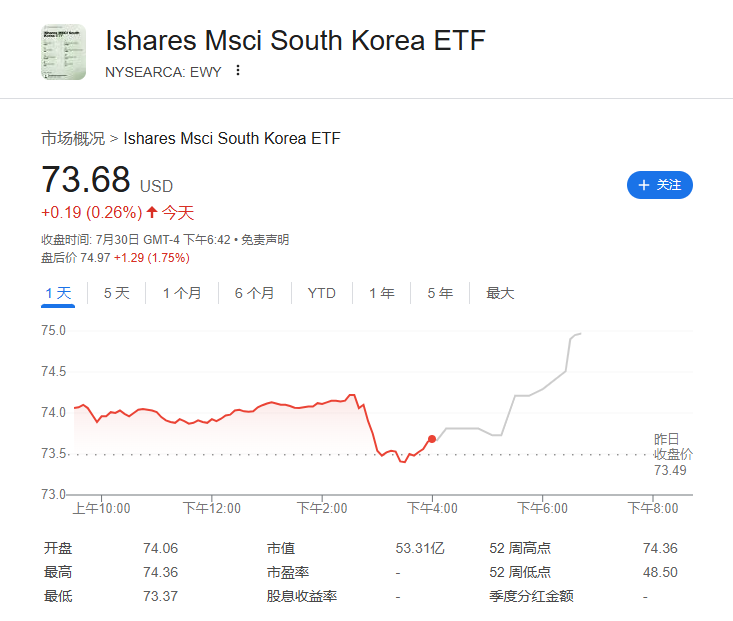
本文来自:华尔街见闻,作者:鲍奕龙,题图来自:视觉中国 美国总统特朗普宣布与韩国达成了一项"全面完整"的贸易协议,以一份包含15%普遍关税和韩国对美投 资3500亿美元的承诺方案,取代了此前可能高达25%的惩罚性关税威胁。 据央视新闻,当地时间7月30日,特朗普称与韩国达成贸易协议,将对韩征收15%关税。特朗普称: 韩国将向美国提供3500亿美元,用于由美国拥有、控制并由我本人作为总统挑选的投资项 目。 报道分析,韩国的3500亿美元资金中,可能包括贷款,主要是担保贷款。韩国方面回应称,美国同意将 汽车关税降至15%。在对美投资中,2000亿美元将用于芯片、核电、生物技术。 对投资者而言,该协议消除了一个关键的短期不确定性。消息公布后,在美上市的韩国ETF在盘后交易 中上涨1.75%。 一、汽车关税落地,半导体待遇看齐他国 根据协议细节,特定行业的关税待遇也得以明确。 美国商务部长卢特尼克在社交平台上发文确认,韩国同意采购价值1000亿美元的液化天然气,韩国输美 汽车的关税将降至15%。他同时补充说: 在半导体和制药领域,韩国将不会受到比任何其他国家更差的待遇。 不过,钢、铝、铜等金属产品不包括在此次协议内, ...
欧盟承诺在三年内每年购买2500亿美元的美国液化天然气后,美国液化天然气公司的股价在盘前上涨。
news flash· 2025-07-28 09:12
Core Viewpoint - The European Union has committed to purchasing $250 billion worth of American liquefied natural gas (LNG) annually over the next three years, leading to a pre-market increase in the stock prices of U.S. LNG companies [1] Group 1 - The EU's commitment translates to an annual purchase of $250 billion in U.S. LNG, which is a significant boost for the American LNG industry [1] - Following the announcement, U.S. LNG companies experienced a rise in stock prices during pre-market trading, indicating positive market sentiment [1]